I’ve Spent 3 Months Renting Campers in Europe. Here’s How I Keep it Cheap.

I drove a rented campervan through Europe for seven weeks and kept every receipt. Here are the ten things that actually saved me money, from aires to deposit protection.
*This post may contain affiliate links. Please read our disclosure policy for more info.
I’ve rented campervans in Europe three times, roughly three months on the road all told exploring Italy, Germany, Switzerland and France.
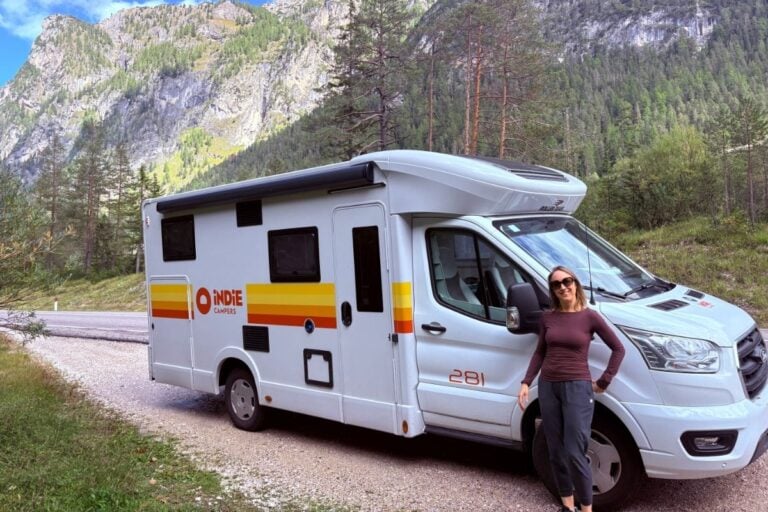
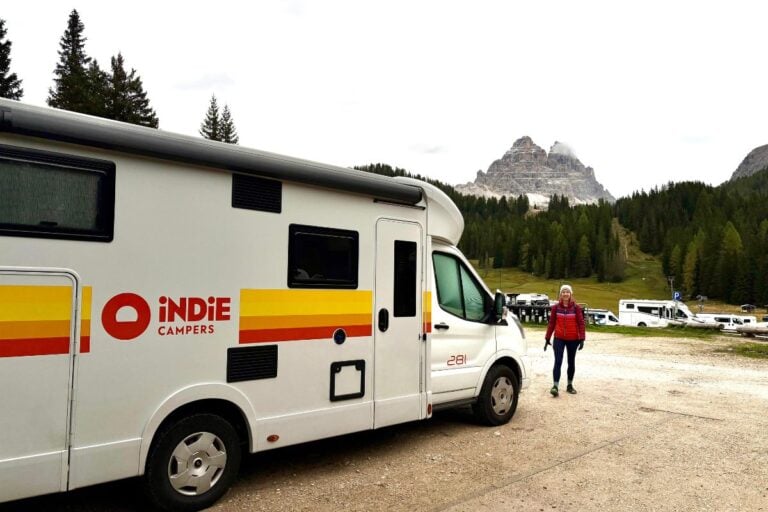
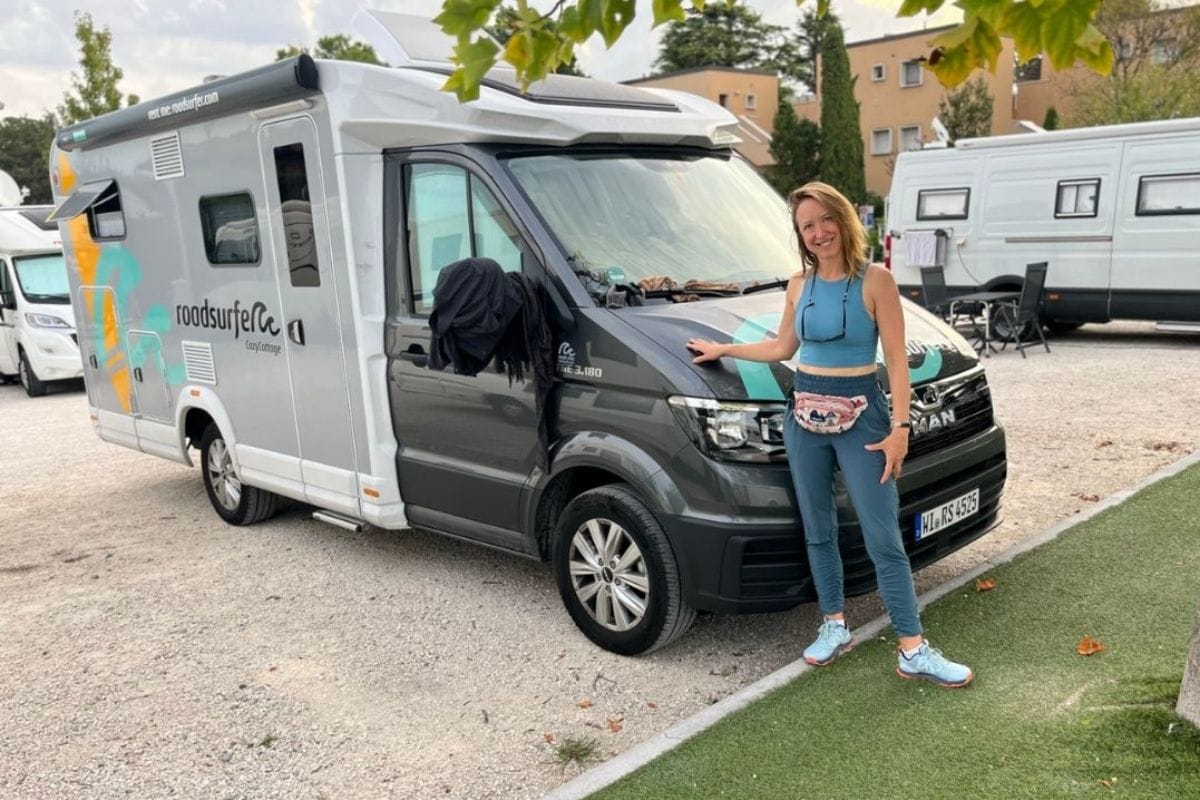
I’m lucky enough that many of those weeks were part of a trade agreement with companies like Roadsurfer, Indie Campers and Anywhere Campers in exchange for honest reviews, but I also footed the bill several times on my own.
Here’s the honest news: van life in Europe does not work like van life in the United States. There are way fewer free campsites, and no public lands, really. But a campervan trip over there can still be surprisingly affordable, if you know where the money actually goes. Here are ten things that saved me real money, with my real numbers.
1. Sleep at aires, not campgrounds
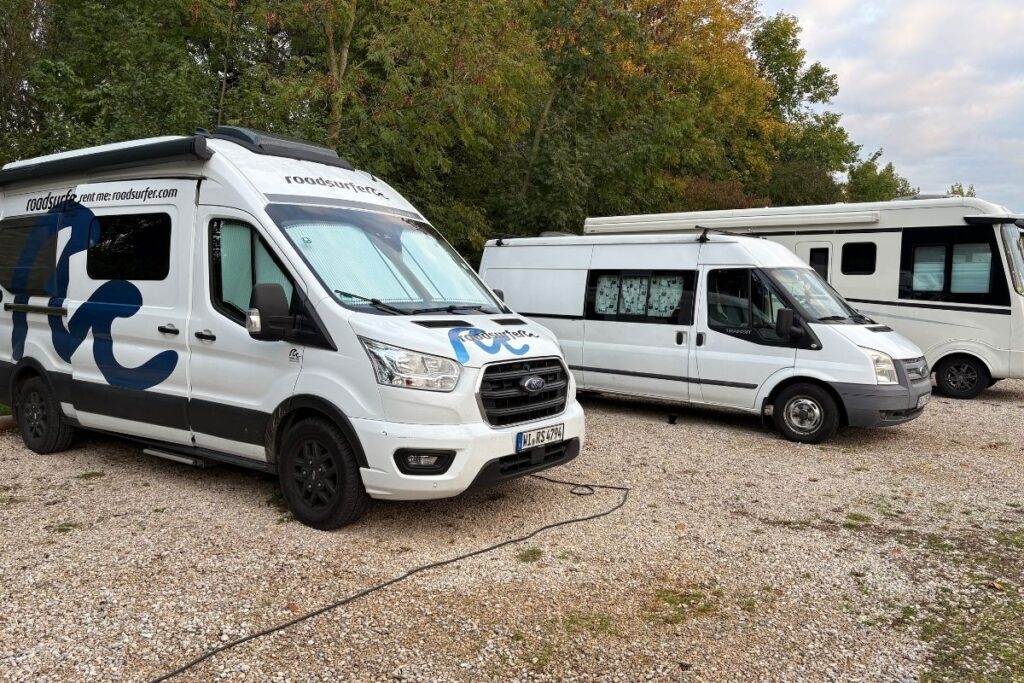
Aires (called Stellplatz in Germany and Sosas in Italy) are Europe’s network of simple camper stopovers, and they’re the single biggest money-saver on a European van trip. I paid nothing at an aire in Digne-les-Bains, France, about €11.50 in Morzine, €10 cash in La Salle-les-Alpes, and €12 in Baden-Baden. Compare that to campgrounds, where I paid anywhere from €25 to €60 a night. We even found a couple of free sostas in the Italian Dolomites! The aires are parking-lot simple, but your van is your bedroom anyway, and you usually get power, water and a place to dump your cassette toilet.
2. Don’t plan on boondocking like you would in the US

European rental campers mostly are not built for off-grid life: no solar, no house batteries, no inverter. And free camping is genuinely rare; but doable if you use apps like Park4Night. We found some free campsites at ski hills in the Dolomites, and in a vineyard parking lot in Germany. Read reviews carefully in the Park4Night app.
Budget for a paid spot most nights (see tip 1 for keeping that cheap), and you’ll never be caught out.
3. Minimize your Switzerland nights
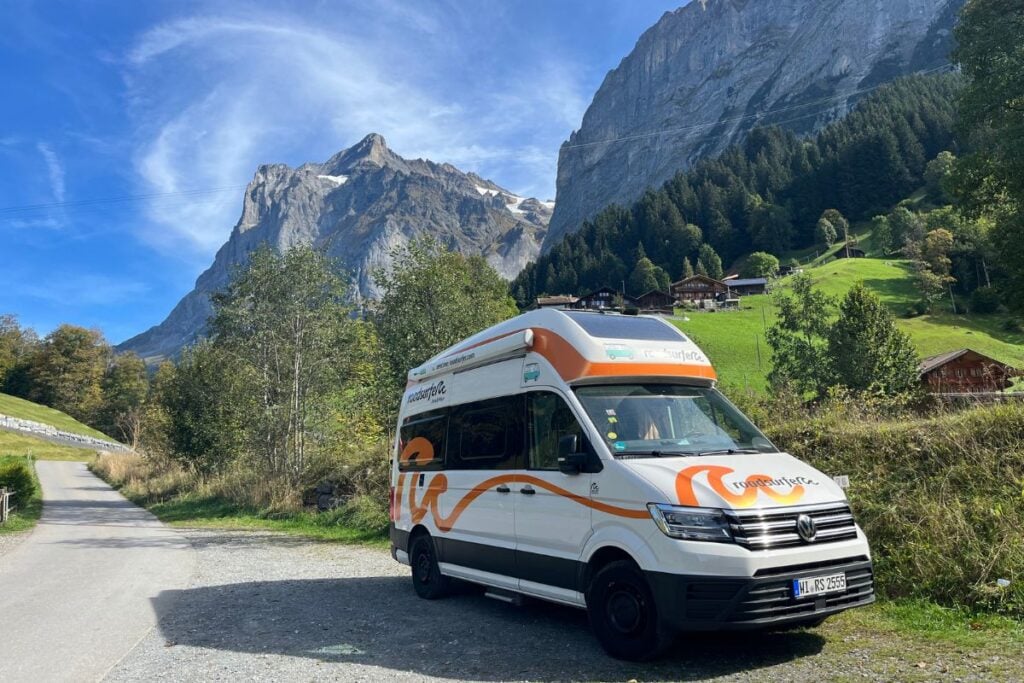
Switzerland was the budget-killer of my whole trip. A TCS campground in Geneva ran 65 CHF, and I paid about $80 for what was essentially a grassy parking area in Orbe. The scenery is unbeatable, but sleep across the border in France when you can and day-trip in.
4. Travel in the shoulder season
My trip ran late August into October, and prices dropped as the crowds thinned. Rental rates fall too, sometimes dramatically: I once got a Roadsurfer relocation deal in Switzerland for $99 a week. Deals like that exist mostly in the off-season, when companies need vans moved.
HOWEVER, you have to make sure campgrounds in the Alps are still open. Many campgrounds and lifts start to close mid-September, but you can also enjoy way fewer crowds.
5. Compare rental companies, and inspect the layout, not just the price
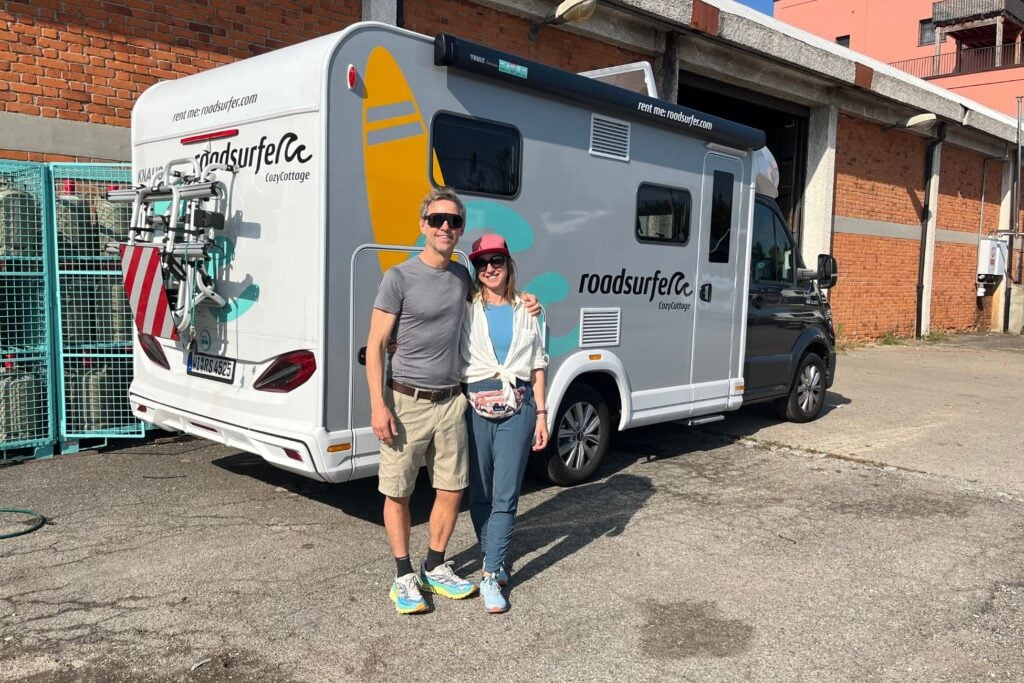
Quality varies wildly between rental companies. One van I rented had a shower hose that leaked under the pan; the next, from a different company, was brand new with a separate shower and toilet room. The cheapest quote is not always the cheapest trip. I keep a full breakdown of the major European campervan rental companies and how renting in Europe works.
To compare prices across multiple rental companies at once (Indie Campers included), you can search the whole fleet on CampervanPlanet.
Or jump straight to a camper: the Indie Campers Comfort Compact is bookable in Italy, with the pickup city and dates yours to change.
6. Watch the pickup logistics
The rental depot is rarely at the airport. My taxi from Geneva airport to the depot cost $100 in bad traffic, and I paid €82 for a hotel the night before pickup. Before you book, check how you’ll actually reach the depot, and whether an early flight forces a hotel night. Those two lines can quietly add $200 to the trip.
7. Cook from the supermarket

My grocery stops ran $19 to $69, and European supermarkets are half the fun of the trip. Groceries are cheaper than in the United States and the vegetables are very fresh. Keep in mind that at many grocery stores you will have to weigh your own vegetables before going to the register.
Things like wine are also very cheap in countries like Italy and France. Stock up at the grocery store or enjoy a $3 glass with your meal.
One thing Americans don’t expect: campfires are not part of European camping culture, so plan your meals around the van’s stove. Most rental vans come with a two burner propane stove and a bunch of pots and cooking utensils.
8. Skip the toll highways where the route allows it
France’s autoroutes charge real money, while some of the most beautiful driving I did, like the Route des Grandes Alpes, cost nothing but fuel. Build your route around the free roads when the scenery is the point. Watch for vignette requirements (windshield stickers) in countries like Switzerland and Austria before you cross a border.
9. Use everything the campground includes

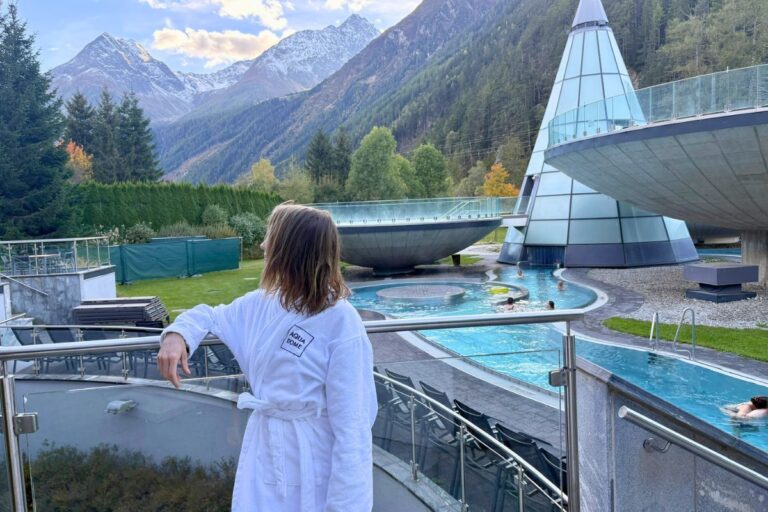
When you do pay for a campground, squeeze it. My $25 night in Bad Dürrheim included three hours in the town’s thermal baths. In Füssen, the campsite fee was paid at the gym across the street, showers included. Read what’s bundled before you write a campground off as expensive.
10. Protect your deposit like it’s cash
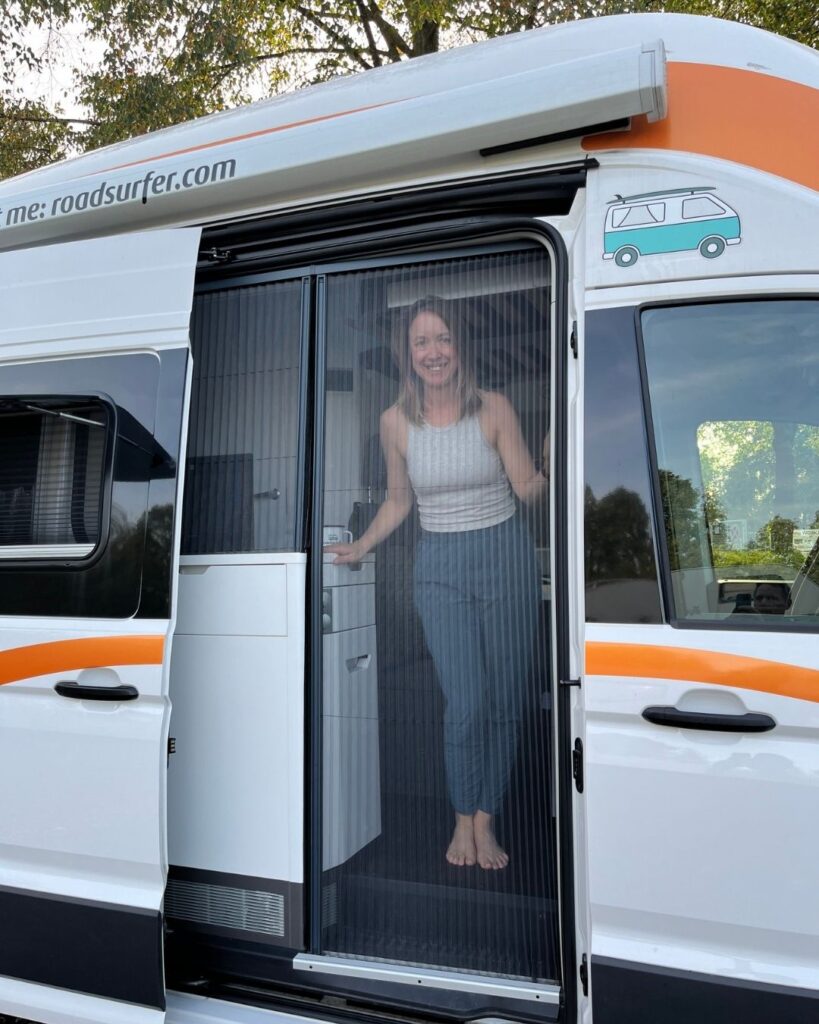
Because it is. When my rental’s shower hose leaked, I stopped using the shower and filed a report with the company the same day, with photos. Document every defect at pickup and the moment it appears. And test the window seals early: one beach aire night taught me that a rental van’s screens are not your dialed-in rig at home. Worst night of van camping of my life, and I’ve done a lot of van camping.
Bonus: use eSIMs, not roaming plans
Skip the phone-store hunt entirely. On my Italy and Dolomites trip I ran everything on eSIMs: Airalo data packs cost me between $10 and $19 each, and a 10-day unlimited Saily plan was $36. Install before you fly, land connected, and put the roaming savings toward a nicer campground.
How cheap can a Europe campervan trip really get?
With aires most nights, supermarket cooking, shoulder-season timing, and Switzerland kept to a minimum, my nightly sleeping costs averaged far below an American road trip’s motel bill, and about on par with US campgrounds. The van is your hotel, your kitchen, and your ride. Get the big three right (the rental rate, where you sleep, and where you eat) and Europe by campervan is one of the best travel deals going.
If you’re starting from zero, begin with the Europe camper hub; it links every guide I’ve written on this.
Want the whole system in one place? I put everything from my trips into the Europe Camper Toolkit, the planning bundle behind these tips.
FAQ
How much does it cost to camp per night in a campervan in Europe?
Aires (simple camper stopovers) run free to about 30 dollars a night, and full campgrounds typically 20 to 50 dollars. On a seven-week trip, my real receipts ranged from a free aire in Digne-les-Bains to a 49 dollar beach campground on the Cote d’Azur.
Can you wild camp in a rental campervan in Europe?
Rarely. Rules vary by country and free camping is far less available than in the American West. In seven weeks I free-camped once. Most European rental campers also lack solar and house batteries, so plan on paid stopovers most nights. Check out our guide to wild camping in Europe here.
What is the cheapest way to rent a campervan in Europe?
Travel in the shoulder season, compare companies rather than booking the first quote, watch one-way and depot-transfer fees, and look for relocation deals. Off-season relocation offers can drop to a fraction of normal rates.
Do European rental campervans have solar power for off-grid camping?
Mostly no. Typical European rental campers come without solar panels, house batteries, or inverters, so you cannot charge laptops off-grid the way a built-out American van allows. Plan for powered sites or aires with electric hookups when you need to charge.