

We Spend €1,600 Monthly Living on Our Sailboat in Greece (How We Make it Work)

Eddie and Kelli are living their dream on a 29-foot sailboat. Here’s their budget breakdown.

*This post may contain affiliate links. Please read our disclosure policy for more info.
(This is a guest post by Eddie and Kelli of The Vanabond Tales)
Living aboard our sailboat for the last four summers has been a dream realized. At the same time, it’s allowed us to live below our means and save for the future—but neither happened by accident.
Our lifestyle is grounded in careful budgeting and mindful choices. Here’s how we make it sustainable without sacrificing comfort, experiences, or our long-term goals.
Budget Breakdown: Where the Money Goes

Right now, we’re cruising in Greece, a place where sailing culture runs deep and where sailing isn’t just a hobby for the wealthy but a way of life for many. Because of that, sailing here is far cheaper than in many other parts of the world.
Our weekly budget usually looks something like this:
Groceries: €150/week
This is our biggest expense, and it’s crept up noticeably recently—partly thanks to inflation and partly thanks to the newest member of our crew, Nora, whose appetite for milk, tropical fruit, and diapers has us carting home bags that weigh more than our anchor.
Eating out & entertainment: €100/week

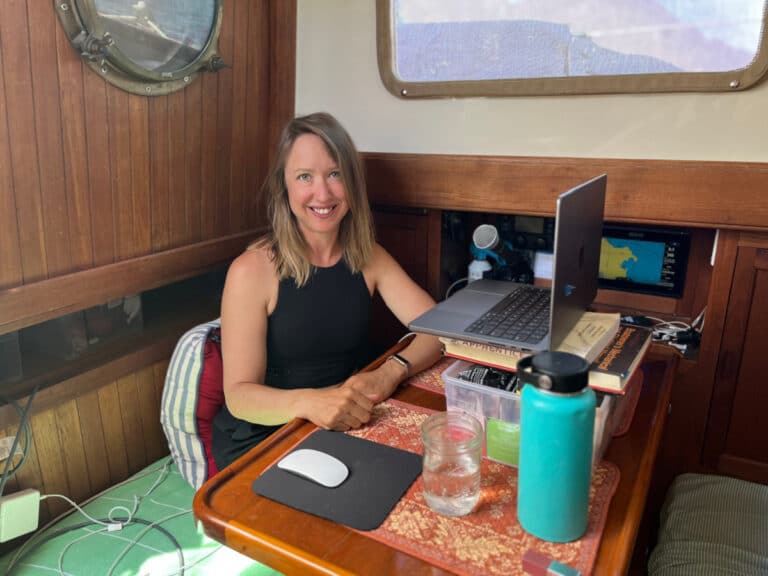
This usually covers a couple of meals at a restaurant, a few drinks at a bar, or coffee at a café while we squeeze in some work. Now and then we splurge on a tour or activity, but mostly it’s meals out—which, at least for us, are one of the best parts of traveling in Greece.
Mooring: €50/week
Mooring is refreshingly cheap here, which is one of the reasons we love sailing Greece. We anchor for free as much as possible, but when we do need to head into port—because of weather or to stock up on water, fuel, or electricity—public moorings are dotted around the country at affordable rates, and sometimes free of charge.
Diesel: €20/week
Our little 20-hp diesel engine isn’t particularly thirsty. Plus, we sail whenever we can and don’t move especially fast, which means we usually only top up every two or three weeks, rarely more than 20 or 30 litres at a time.
Mobile / Internet: €20/week
We get by on prepaid SIMs in Greece, which work well as long as we’re near shore and within reach of a town or cell tower. Occasionally, though, we end up in a black spot where the signal disappears. For that reason, we’re seriously considering satellite internet in the near future, to give us more freedom to roam without worrying about dropping a call mid-Zoom.
Laundry: €10/week
Without a washing machine on board, laundry day means lugging a salty, overstuffed bag through the backstreets and praying the only working machine hasn’t already been claimed by someone else’s bedding.
Other costs: €50/week
We keep €50 in the kitty each week for whatever pops up—maybe a visit to the pharmacy, or a powerful fan to get us through heat wave.
All up, that’s about €400/week, or roughly €1,600/month.
But that’s just the daily cost of living.

Annual boat expenses—maintenance, storage, insurance, cruising tax— we add another €5,000–€10,000 each year – and we are on the lowest end of the scale with a tiny 29-foot boat.
These are the costs that can catch new liveaboards off guard if they’re not planned for.
And, of course, this budget doesn’t include non-sailing related expenses such as flights home to see family, our medical or travel insurance, or savings.
Still, it gives a realistic picture of what it costs us to live afloat in Greece.
If you’re curious about running the numbers for your own adventure, we’ve put together a Sail Life Budget Template that you can use to plan and track your costs.
Living the Dream: How We Make It Work

Anchoring: The Ultimate Saver
Our biggest savings comes from anchoring instead of using marinas. Greece, especially the Ionian, is full of free, safe, and stunning anchorages—perfect for slipping into a quiet bay, dropping the hook, and enjoying the kind of views hotels charge hundreds for.
For us, this isn’t just about saving money. The whole point of sailing is spending more time in nature and away from busy ports. Some of our favorite memories are arriving in unmarked anchorages at dusk, glassy water beneath us, cicadas humming on shore, and waking up in the morning with a cove all to ourselves.
The only time we head into a marina is when we need to reprovision or to shelter from a blow.
Smart Mooring: Paying Only When It Pays Off

When we do dock, we look for value. Town quays are common in Greece—some are free, others charge a token one or two euros per meter. Usually these quays are simple, sometimes without water or electricity, though occasionally those services are available for a small fee—or free if you’re lucky.
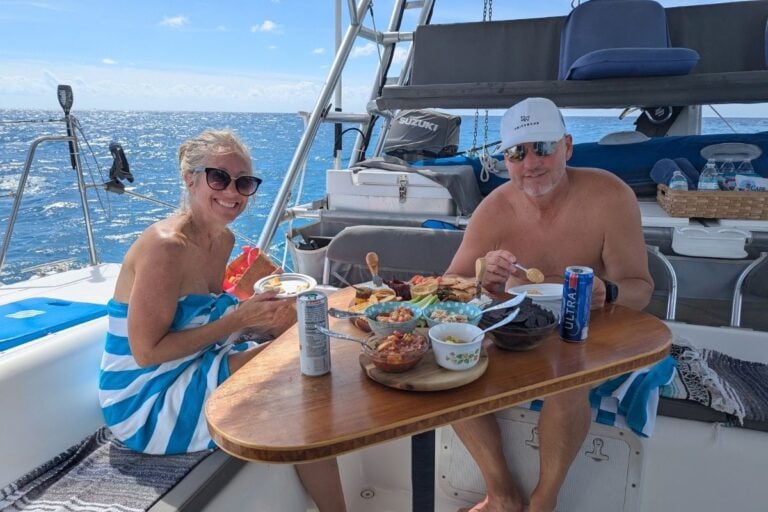
Another trick we love is seeking out tavernas with moorings. Many seaside restaurants will let you tie up if you dine with them. There’s something special about stepping ashore, salt still on your skin, and sitting down to grilled locally caught fish, a carafe of local wine, and the sound of the boat rocking just meters away.
Food & Provisions: Local and Seasonal to the Rescue
If it’s not already obvious from the budget, eating well is a priority for us. We don’t skimp, but we do spend carefully.
We avoid marina shops whenever possible, opting instead for open-air markets and little fruit and veg stores, and save big shops for supermarkets where prices are lower.
And when it comes to eating out, the best meals in Greece are often the humblest. A gyros from a smoky backstreet grill, a family-run taverna at the end of a dusty road, or fresh fish grilled to order and handed over in paper, eaten while perched on a stool outside. These are the meals that stick with us.
Fuel Costs: Sail More, Motor Smart
Diesel runs between €1.60 and €2.00 per liter, so we sail whenever we can and only motor when we must.
Not being on a strict schedule is one of our greatest luxuries. We can wait for the afternoon breeze to carry us along, or stay put when the conditions don’t suit.
Connectivity: Staying Online Without Overspending
Staying connected is surprisingly affordable. A local SIM (Cosmote, for example) costs about €15 for unlimited data for 30 days.
Back when we first started working remotely in 2018, we were buying 5GB of data for $5 in Ecuador and praying for a shaky 3G signal. Things have come a long way. Even in the last few years of sailing in Greece, we’ve seen 5G coverage expand across the islands, while at the same time prices have plummeted.
Still, for us as remote workers, as the price of satellite internet drops, Starlink is becoming harder to resist.
Maintenance & Long-Term Costs: Investing in the Lifestyle

Budgeting for life afloat means more than covering groceries and fuel. Even with daily spending under control, boat ownership comes with long-term costs that can take the unwary by surprise. Boats have a reputation as money pits, and it’s not entirely unfair.
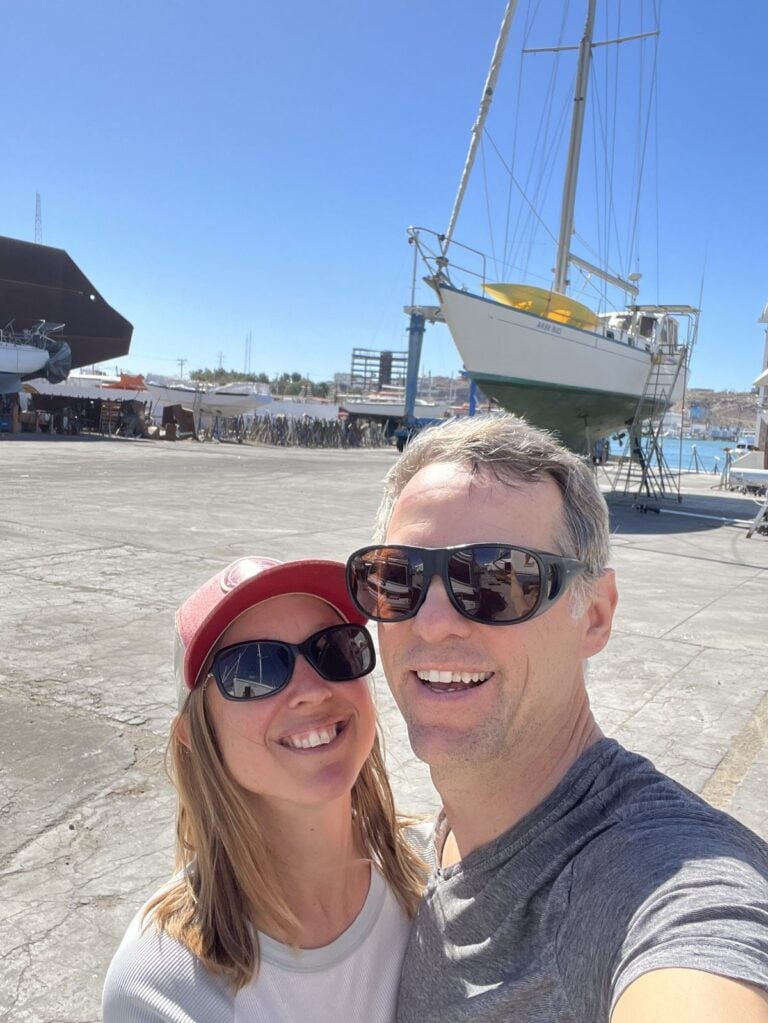
Haul-out and storage fees vary widely by region and facility, so we do our research and plan ahead. If we’re not sailing year-round, keeping the boat in dry dock is usually the cheapest option.
We also tackle what jobs we can do ourselves. Nothing below the waterline—yet—but jobs like antifouling, flushing the engine, fixing and upgrading non-critical components are manageable and save us hundreds in labour costs. Plus it can be fun…or at the very least rewarding.
And then there’s the admin. Registration, cruising taxes, insurance—it all adds up. Shopping around and knowing your options can make a big difference, especially when it comes to where your boat is registered and the tax rules that follow.
Living Below Our Means = Living the Dream Now and Later

Living simply doesn’t mean living less. We spend less living our dream of full-time travel than we ever did living in a city and working the nine-to-five. And while it’s not always glamorous, it works for us.
Careful budgeting allows us to live this dream while building for the future. Everyday costs are kept in check, anchoring and cheap moorings keep us afloat affordably, thoughtful provisioning keeps us well-fed without overspending, and DIY maintenance saves us from bigger bills down the line.
The result? We not only meet our sailing goals—we also save a significant portion for stability and future adventures. By keeping lifestyle inflation in check, we’ve turned sailing from a distant fantasy into a sustainable reality.
The truth is, this life doesn’t require a lottery win or limitless wealth. It requires intention, planning, and a willingness to trade a little comfort for a lot of freedom. And for us, every time the sun drops behind an empty bay and the boat rocks gently at anchor, we’re reminded—this is the best investment we’ve ever made.
If you’d like to dive a little deeper into costs of sailing here, check out our full breakdown : The Cost of Sailing in Greece.





Hi,
I got 60 and older sailboat 36 feet after a company Insolvency And a divorce This is all of what God left over for me. Not bad, but I have to restart at a very low ground. Your budget To read was very impressing for me. When you live at a boat, I guess complete you also a In winter, I was wondering why you spend so much for the boat cost itself storage and the one. Could you explain that for me, That I can meet my budget based on your experiences?
Regards Klaus
Mail address lemminger65@yahoo.de