

I’m a Van Lifer. Here’s Why San Francisco’s RV Ban Goes Too Far

I used to live in a vehicle in San Francisco.
Here’s what’s wrong with the new RV parking ban.
*This post may contain affiliate links. Please read our disclosure policy for more info.
San Francisco just passed a controversial new measure that limits RV parking to two hours on city streets. The law, which takes effect in the fall of 2025, will impact over 400 individuals currently residing in RVs. The campers have become a problem and an eyesore for the city, and Mayor Daniel Lurie vowed to clean up the streets.
According to the Associated Press, to ease the impact, the city allocated over $11 million to help 65 households transition to temporary subsidized housing. Additionally, a six-month permit program is available, exempting current registered RV residents from parking limits if they participate in housing transition programs. The city will also purchase RVs at a rate of $175 per foot.
This measure does two things wrong: It fails to address the housing affordability problem in San Francisco, and it punishes people visiting the city in an RV.
The RV Ban Doesn’t Solve The Housing Affordability Crisis
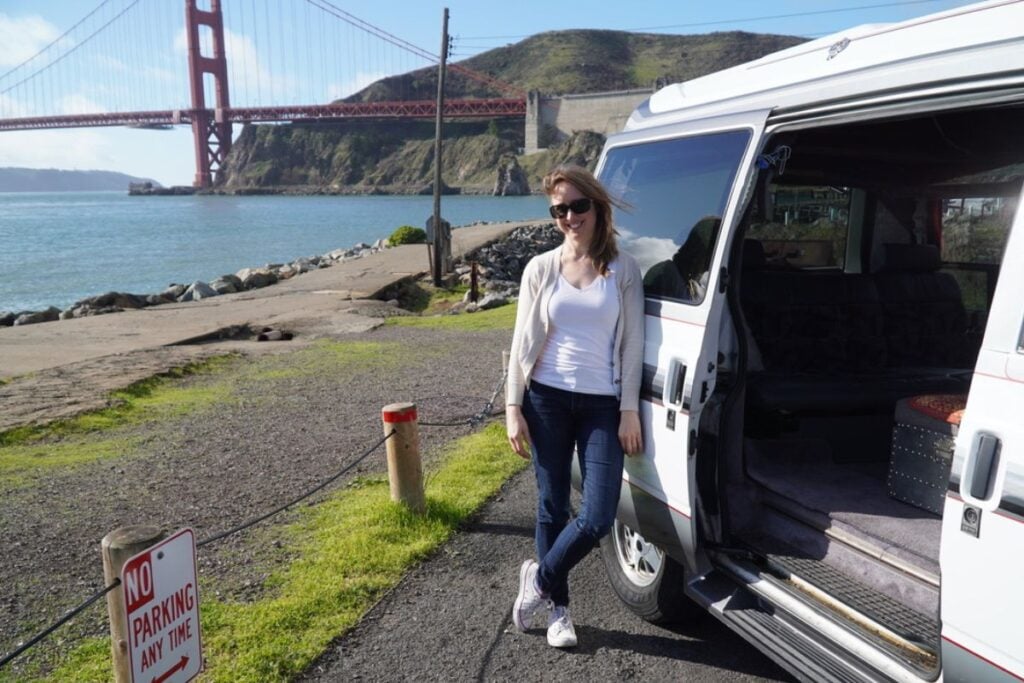
San Francisco and the Bay Area have had a housing crisis for years. This is the reason why I first lived in a Toyota Prius back in 2015, and gave up my apartment once again in 2016 when I was laid-off from my job at KGO radio. I understand just how challenging it is to live and work in San Francisco, and why so many people are forced to live in cars and RVs. The city consistently ranks among the nation’s most expensive, where even middle-income earners struggle. For lower-income families, seniors, and single workers, securing affordable housing is nearly impossible.
The RV ban in San Francisco isn’t solving the housing crisis at all. People living in RVs won’t miraculously be able to afford rent. Instead, they will most likely move their campers to different parts of the Bay Area, such as Oakland, Berkeley, Richmond or the Peninsula. San Francisco is allocating money to help only 64 residents move into housing, which is a far cry from what’s necessary given the hundreds of RVs parked on city streets.
Yes, Some RVers Are Part of the Problem—But That’s Not the Whole Story
To be fair, there’s another side to this conversation that I can’t ignore.
While I understand the need for people to live in RVs and vehicles due to the affordability crisis in cities across the country, I can’t condone the actions of many full-time urban RV-dwellers. I’ve driven down many streets in both San Francisco, the East Bay, and Portland, Oregon, and see unkempt RVs with tarps and gigantic holes and piles of trash and garbage. No wonder these cities feel compelled to clean up the streets since so many RVers show such blatant disregard for their free parking spots.
I believe people who want to park and live for free on city streets should create an exemplary example. They should maintain their RVs, keep them drivable, and properly dispose of trash. Nobody who pays for rent or a mortgage, or property taxes, wants to look at this type of eyesore.
That frustration is valid. But we need to separate those abusing the system from those trying their best to live cleanly and responsibly.
Of course, there are full-time RVers and van lifers who try to stay clean and respectful. Carlos Perez, who’s lived in his RV in San Francisco’s Bayview neighborhood for over a decade, exemplifies the responsible RV dweller. According to AP, Perez works full-time, cares for his disabled brother who requires regular dialysis, and maintains his RV meticulously.
Similarly, Zach, another RV dweller interviewed by AP, works as a ride-hail driver and photographer. Living in his RV near Lake Merced, Zach regularly pays for waste disposal and freshwater refills. For him, RV living offers autonomy and dignity compared to shelters with restrictive rules.
And then there’s a whole other group of RVers—those of us who are visitors, travelers, and part-time nomads. This ban impacts us too, even though we’re not the ones causing the problems city officials are pointing to.
San Francisco Should Emulate Europe’s Take on Campers

Other cities around the world have figured out more balanced, sustainable approaches. During our travels in Europe by camper, we often happily paid $10–$15 per night for a safe, legal place to park—complete with electrical hookups, fresh water, and access to clean bathrooms.
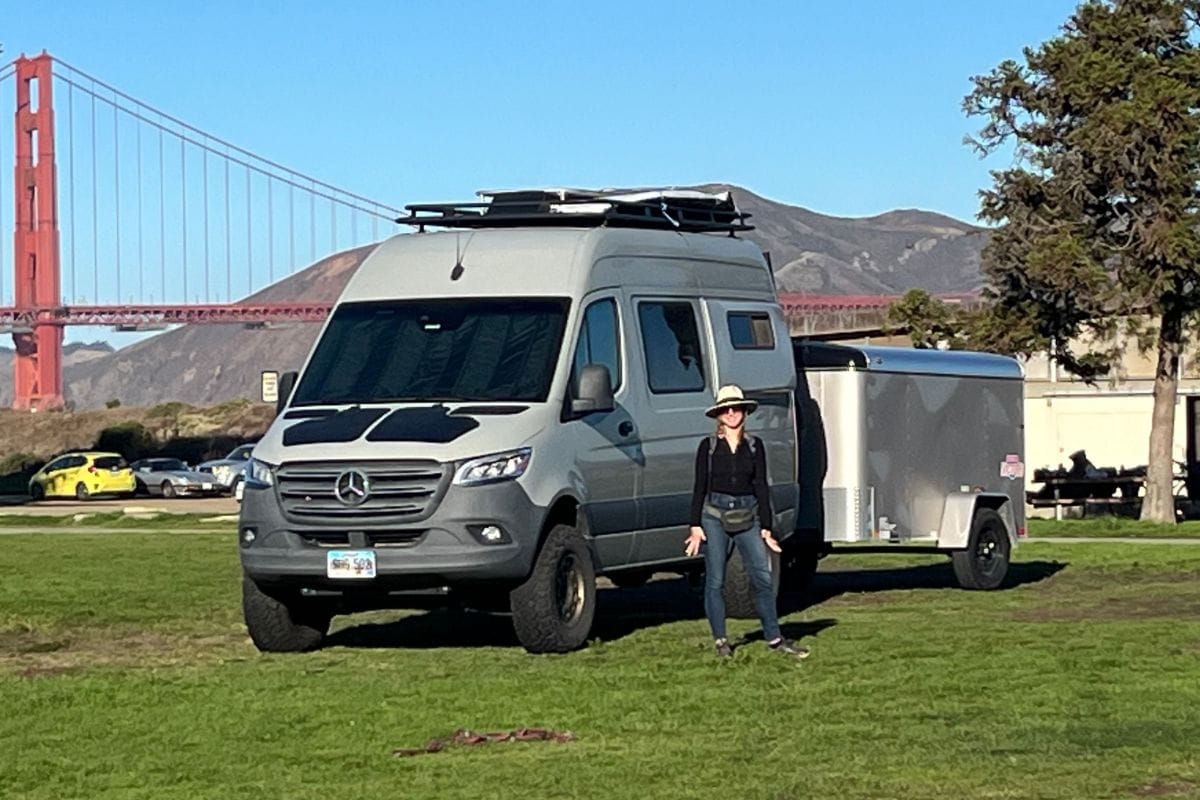
We live the van life in a 22’ Sprinter van that’s about 9’ tall, and enjoy stopping in San Francisco on our way through California. We have family located within the city limits, and we park on city streets to enjoy restaurants, shops, and bars.
The two-hour parking limit for vehicles over 22’ in length or over 7 feet in height will negatively impact us and other RVers who are passing through. Parking for a Sprinter van is already hard enough in this jam-packed city, and this makes it even worse.
Instead of promoting RV tourism by offering paid parking areas and camping areas for RVs, San Francisco is effectively shutting down this sector of tourism. RVers and van lifers with jobs and money could offer a revenue boost for the city’s tourist attractions if the city provided safe parking areas, much like you see in major cities throughout Europe.
Many RVers in San Francisco, who are impacted by this new ban, work full-time jobs but cannot afford the astronomical rents. They should be able to pay small parking fees at secure facilities, like those seen in Europe. This would also help keep garbage at bay, as people would have a place to easily dispose of their trash.
A Smarter, More Compassionate Path Forward

San Francisco has every right to want clean streets and functional neighborhoods—but banning RVs across the board is the wrong approach. It punishes the poor, discourages RV tourism, and does little to address the deeper issue: housing insecurity.
Instead of pushing people out, the city should look toward practical, compassionate solutions, like low-cost, regulated RV parking with trash services, restrooms, and enforcement of basic standards. These kinds of facilities already work in Europe, and they could work here too.
As a van lifer who loves visiting San Francisco, I want to see this city thrive, for residents, travelers, and everyone in between. But that can’t happen if we continue to criminalize poverty while ignoring its root causes.


Well said. Very short sighted for a large city.
Well said, Kristin. Thank you for sharing your thoughtful and balanced view of the RV ban. As you pointed out, it’s a lose/lose superficial solution to deeper, more complex problem.
Good article, it is very relatable & honestly, disturbing because I am an RVer who has a family in San Francisco that I must visit regularly.
We had bad experience with this city and wanted to avoid coming here, but we can’t. We have family here. We were violated & robbed of more than $20,000.00 personal properties in December of 2017 (on our first Sprinter). The SFPD just shrugged their shoulder and said, we are just one of the thousands broken into that year. Still trying to forget that horrible experience.
I recently got cited for the exact violation (Large Vehicle) and was denied when we protested about lack of signage and our van being 19’1″ long. The penalty is not much, just annoying. We do not live in the Sprinter RV, we are just passing through, visiting our new-born twin grandsons.
I’m seeing this a year later. Are there any updates? Are there any towns or states that have paid cheap legal parking? I wish this could happen in every state. We need to stay in our home state for medical reasons but it’s too expensive. 🙁
This is a ridiculous ban and I don’t understand how it can even be legal. How can you single out a particular kind of vehicle and place extreme restrictions on it?
I live in San Francisco and own an home. My wife and I are also most-time nomads in a large van. Sometimes I use my van in the city as our second vehicle. It has some few advantages when I want to pick up something large or if I want a place to hang between separate events in the city. Why should I suffer a fine for using my own vehicle in a way that other city citizens use theirs. I’ll fight that fine should I am ever graced with it.
As nomads, we are very respectful and careful everywhere we park in every town and city we visit. We spend our money in places that we would never visit if it weren’t for the ability to do long-form travel in a van. I’d argue that we are a net positive to the places we visit.
But you can’t do this in San Francisco. This kind of backward regulation helps make the city a tourist no go zone. It’s the last thing we need. SF needs to approach the problem of destructive camping directly rather than relying on discriminatory practices to group all vehicle dwellers together for punishment. This kind of tactic is unfit for any city, especially SF. It reflects a small minded understanding of the greater picture.
I’ll argue this is the kind of unreasonable regulation you get when you put wealthy, out of touch people in positions of power.