

Living in Your Van or RV Is Illegal in These States (Even on Your Property!)

How to work around the rules and stay legal while living on the road
*This post may contain affiliate links. Please read our disclosure policy for more info.
Living in your van or RV full-time is illegal in eight states even on land you own: Delaware, Hawaii, Michigan, Indiana, Georgia, Nevada, New Hampshire and Kentucky restrict long-term vehicle living to licensed RV parks, designated campgrounds or permitted sites with hookups, and the fines and move-along orders are real.
In most other states it comes down to county zoning, utility rules and how long you stay in one place, which is why the map matters more than the headline. This is the state-by-state breakdown, the friendlier states, the workarounds full-timers actually use, and how to check your own county in five minutes. For the city-level bans, which are a separate and faster-moving list, see the cities where sleeping in your vehicle is now illegal; for the night-to-night question, is it illegal to sleep in your car.
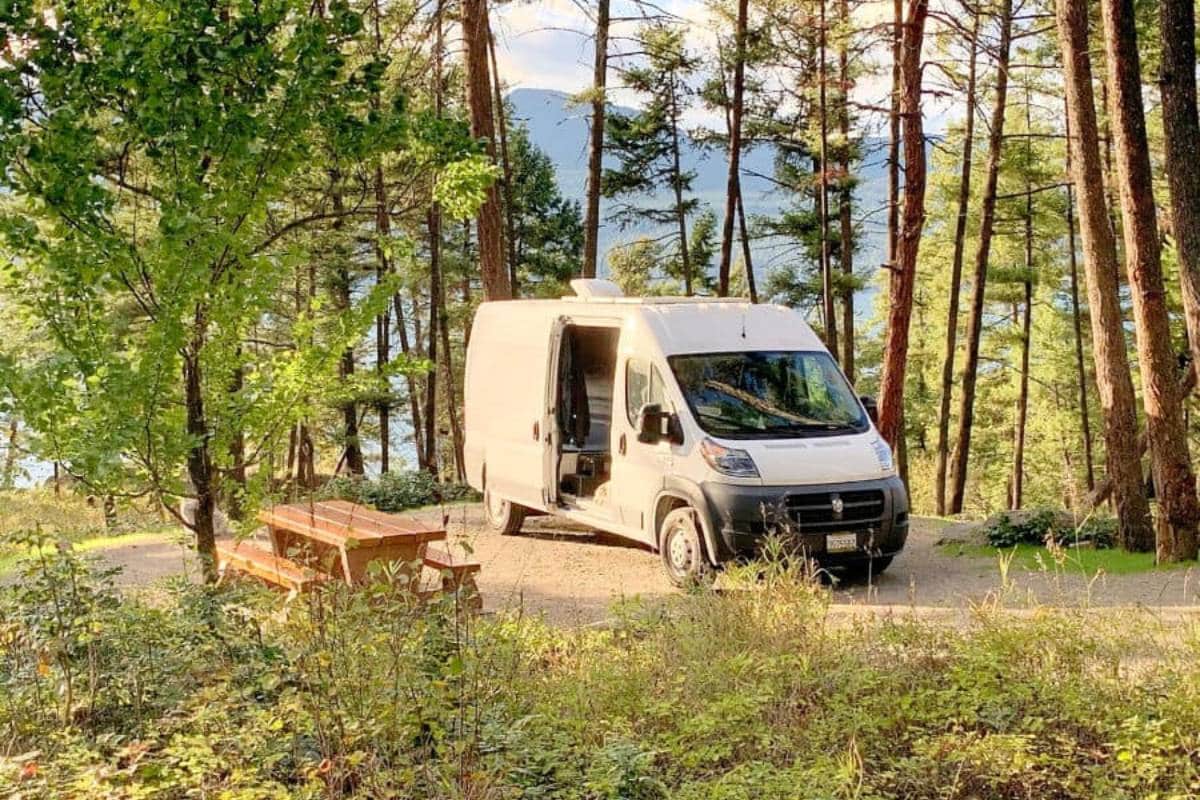
We’ve all fallen for the van life fantasy at some point: coffee steaming in an enamel mug, dawn light flooding through the doors, a view of endless mountains or desert stretching beyond your bed.
But in many parts of the United States, sleeping in your van or RV full-time isn’t just frowned upon. It’s illegal – even if the vehicle’s parked on land you own.
Many of the laws meant for RV parks also apply to van living. Park in the wrong spot for too long, lack proper utility hookups, or breach a local zoning code, and you could face fines, eviction, or a knock on the door in the middle of the night.
Why More Americans Are Living Out Of Vehicles
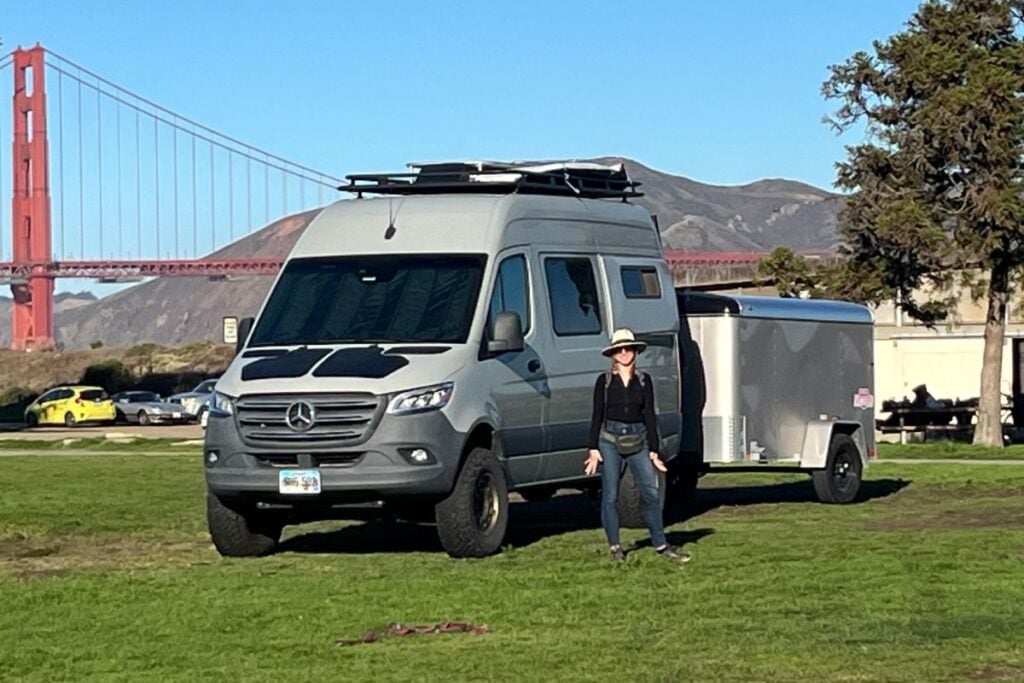
Not everyone chooses the van life for the adventure. For many, it comes down to numbers that don’t add up: median home prices topping $400,000, wages that haven’t kept up with inflation, and rents rising at record speed.
A vehicle – whether a vintage RV, a converted school bus, or a minimalist cargo van – is a practical escape route. It offers mobility, minimalism, and the freedom to take your home wherever the road takes you.
The shift to remote work and the rise of the gig economy have made this choice more viable.
Why Van Life and RV Living Fall Under the Same Rules
In much of the U.S., housing rules are designed for houses on permanent foundations. So in the eyes of many municipalities, a vehicle is still a vehicle.
No matter how well-fitted, an RV or van often fails to meet the requirements for permanent residency. That might mean missing the right utility hookups, not meeting health and safety standards, or violating local ordinances that ban overnight parking outside designated areas.
Even setting up camp on your own land doesn’t automatically give you the right to live there.
States Where Living In Your Vehicle Long-Term Is Illegal

These states have made it illegal to live in an RV on your OWN private property. Unbelievable, right?
- Delaware – if you live in a vehicle outside licensed sites, you can be fined up to $100 and ordered to move.
- Hawaii – full-time vehicle living is only allowed in designated campgrounds.
- Michigan – can’t live long-term in a vehicle on private land without a house.
- Indiana – no full-time vehicle living outside approved parks.
- Georgia – vehicle living is limited to licensed campgrounds or RV parks.
- Nevada – living out of a vehicle is banned outside approved zones.
- New Hampshire – full-time vehicle living is only allowed in authorised campgrounds.
- Kentucky – you can live long-term in a vehicle in permitted sites with proper hookups.
Enforcement varies. In rural areas, local officials often turn a blind eye as long as you’re not causing problems. In cities and suburbs, you’re more likely to get a knock on the door or find a citation tucked under your wiper.
Kristin’s road toolkit
What I actually use in the van
- Harvest HostsOvernight stays
- RoamlyVan insurance
- Campervan HQBuild parts
- Free Facebook GuideFund the trip
States Where It’s Easier to Live in Your Van or RV

Not every state takes a hard line. Some are more accommodating, especially in small counties where space is plentiful and regulations are looser.
Texas, Florida, Arizona, Oregon, and Colorado are among the most van- and RV-friendly.
- Texas – often allows vehicle living in rural areas if the vehicle is registered and inspected.
- Florida – generally permitted with proper hookups, though some areas limit the number of days per year.
- Arizona – known for lenient rules, especially on state trust and BLM land.
- Oregon – allows it in some rural zones; SB 1013 supports alternative dwellings if they meet code.
- Colorado – often OK in rural counties, but cities can be stricter.
Other states, including Pennsylvania, South Carolina, Tennessee, Virginia, Wisconsin, and Wyoming, allow it under the right circumstances.
- Pennsylvania – possible with permits and approved utilities.
- South Carolina – often fine in unincorporated areas if septic and water requirements are met.
- Tennessee – varies by county; rural areas tend to be more relaxed.
- Virginia – allowed in some rural counties with permits and sanitation systems.
- Wisconsin – generally requires an RV permit and proper utility connections.
- Wyoming – more permissive in rural areas, especially on large plots.
The Loopholes And Legal Alternatives You Can Use
There are several ways nomads get around the restrictions to stay legal.
- The shuffle strategy: Moving every few days to avoid overstaying local limits and attracting attention.
- Public lands: Staying on Bureau of Land Management (BLM) and National Forest land, where dispersed camping is often free and legal for set periods.
- Hybrid setups: Parking the vehicle under a carport, inside a barn, or beside a structure to make it look less like a standalone residence.
- Private communities and co-ops: Joining purpose-built RV and van villages, legally zoned for full-time vehicle living.
- Staying on friends’ or family’s land is sometimes tolerated in rural areas if it’s low profile.
- ADU loophole: In some states, a van or RV parked on a property with the right permits can be classified as an Accessory Dwelling Unit.
That said, none of these tricks replace doing your research. What’s perfectly acceptable in one county might earn you a ticket just a few miles down the road.
Knowing the local rules before you park can mean the difference between a restful night and a rude awakening.
How to Check If You’re Legal

Before you park in a new spot for the night, dig into:
- City and county zoning rules: they tell you if living in your vehicle is allowed, restricted, or completely banned in the area.
- Utility and sanitation rules: many places require proper hookups for water, sewage, and electricity.
- HOA and property rules: if there’s a homeowners’ association, they might have extra (and sometimes stricter) rules.
- State residency rules: some states require a fixed address for things like your license, voting, and taxes.
Online van life and RV forums are goldmines for first-hand experience. Local nomads can tell you not just what the law says, but how it’s actually enforced. It’s always worth having a look.
If you’re planning to be on the move a lot, consider keeping a spreadsheet of each county’s rules so you know where it’s safe to go next.
Final Thoughts
Van life is still going strong. Thousands of people are on the road, from retirees chasing the sun to remote workers logging on from national park trailheads.
Knowing the rules and working around them helps you avoid trouble and keep living life on your terms.
Plus, there’s good news: interest in alternative housing is growing, so there is a push for more flexible laws. The more people embrace life on the road, the harder it becomes to dismiss it as a fringe choice.
Frequently asked questions about where van and RV living is illegal
In which states is it illegal to live in a van or RV?
Eight states restrict full-time vehicle living even on private property: Delaware (fines up to $100 and an order to move), Hawaii (designated campgrounds only), Michigan, Indiana, Georgia, Nevada and New Hampshire (licensed parks and approved zones only), and Kentucky (permitted sites with proper hookups). Enforcement is strictest in cities and suburbs and often a shrug in rural areas.
Can I live in an RV on my own land?
It depends on the state and, more often, the county. In the eight restrictive states the answer is generally no outside a licensed park. Elsewhere, rural counties in Texas, Florida, Arizona, Oregon and Colorado often allow it with the right permits, registration and sanitation setup, while cities and HOAs usually forbid it. Check county zoning first, then utility rules, then any HOA.
Why do RV park laws apply to a van?
Housing rules are written for buildings on foundations, and a van or RV fails the residency test in most municipalities: no fixed utility hookups, no health and safety inspection, and local ordinances that ban overnight parking outside designated areas. That is why owning the land under your tires does not automatically make it legal to sleep there.
Which states are friendliest to full-time van and RV living?
Texas often allows vehicle living in rural areas if the vehicle is registered and inspected; Florida generally permits it with hookups, sometimes with a cap on days per year; Arizona is lenient, especially on state trust and BLM land; Oregon allows it in some rural zones; Colorado is usually fine in rural counties. Pennsylvania, South Carolina, Tennessee, Virginia, Wisconsin and Wyoming allow it under the right permits and sanitation setups.
How do I find out if living in my van is legal where I am?
Read the city and county zoning code for vehicle habitation and overnight parking, then the utility and sanitation rules (water, sewage, power), then any HOA covenants. Some states also require a fixed address for your license, voting and taxes. Local van life and RV forums tell you what the law says and how it is actually enforced, which are often two different things.


What a great article. Government lack of handling their money/budget, and requiring fines to offset their mess, (government hands always stretched out) forces people to live in their vehicle. Even worse, their own land? Wow.
How about BLM in other states, not just AZ? Great idea for BLM
This was the best ever. I’m 75 years old so I could really relate to the van life back then it’s funny thing because I camped all the time but I went to camping places I didn’t camp in a van. I have a pick up truck that I converted with a camper and all that that’s what I use but then again I have a homebase too, but I loved what you wrote and I’m appreciating the legal things because I don’t go all over the United States but I do go into different counties in different things and for certain things and I wanna make sure I’m legal. I’ve never had a problem, but that doesn’t mean I might not ever have one so I’d rather know ahead of time and then not have to worry that advice was very very good.
In the small communities of mostly rural states, checking in with the local police saying that you really need to sleep and are parked (name location), “Is that okay with you guys?” seems to put them on your side. Of course, stealthy camping is not possible in a 40 foot, fancy bus.