

Losing Your Rudder at Sea Is Every Sailor’s Nightmare — Here Are 10 Solutions Sailors Talk About

From steering with sail trim to building a jury-rigged rudder, these are the techniques and strategies experienced sailors recommend when you lose steering at sea.

*This post may contain affiliate links. Please read our disclosure policy for more info.
Three people just had to be rescued 950 miles off the coast of Alaska due to a rudder failure aboard. And just recently here in the Sea of Cortez, a panga had to tow a sailboat with a disabled rudder to Puerto Penasco, Mexico.
Losing steering control at sea – especially when your emergency tiller isn’t working – is a frightening failure. Although I’ve never experienced it myself, it’s something I’ve wondered about on the occasional sleepless night.
Recently, I posted a question on my sailing Facebook page where hundreds of experienced sailors shared how they would handle a rudder failure at sea.
Many had faced the situation themselves and shared what worked, what didn’t, and what they’d do differently next time. As I read through the comments, the same ideas kept coming up.
Here are the 10 that stood out most.
1. Stay Calm And Assess The Situation
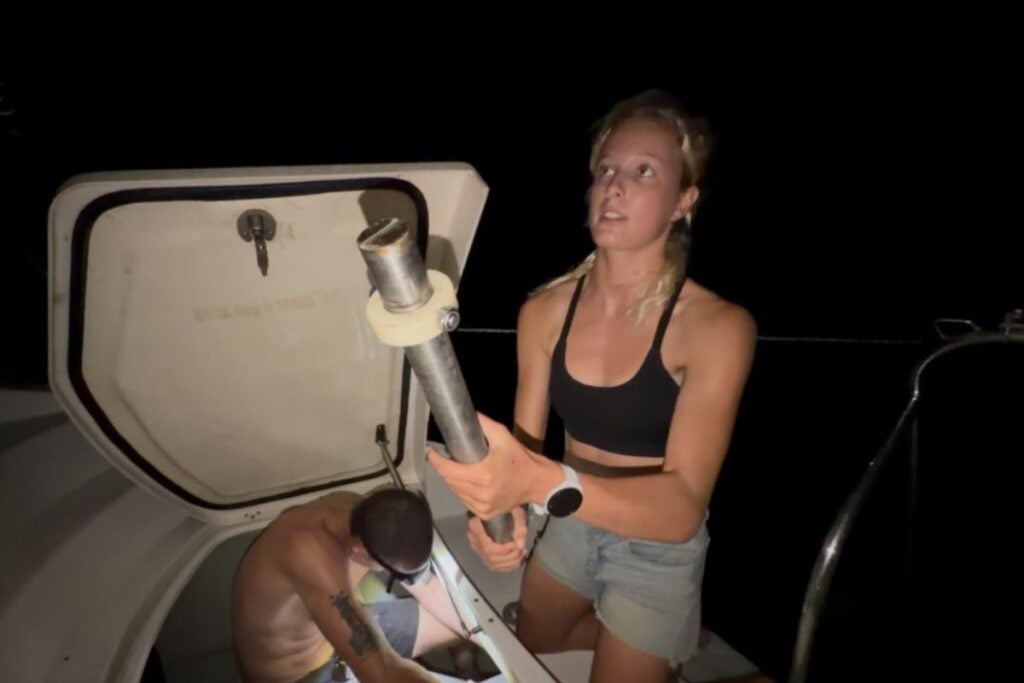
Shona Fothergill/Sailing with Six, who lost one rudder on the way to the Marquesas
Your first instinct might be to try every steering trick you’ve ever heard of. But many experienced sailors say the first step is much simpler: slow down, get the boat under control and work out what’s actually happened.
As Alex Bruner puts it: “Don’t panic. Work the problem.”
In the comments section, many seasoned sailors pointed out that a loss of steering doesn’t always mean you’ve lost the rudder itself. A steering cable may have snapped, a fitting may have come loose, or another part of the steering system may have failed while the rudder is still intact.
One piece of advice came up repeatedly: reduce sail, heave-to if conditions allow, or even drop anchor, if possible, before trying to fix it.
Michael Cross recommends: “First of all, unless you’re actually being swept into Corryvreckan, do nothing.”
So, before reaching for your trusty tools, take a breath, understand exactly what you’re dealing with, and then decide on your next move.
2. Try Your Emergency Steering First
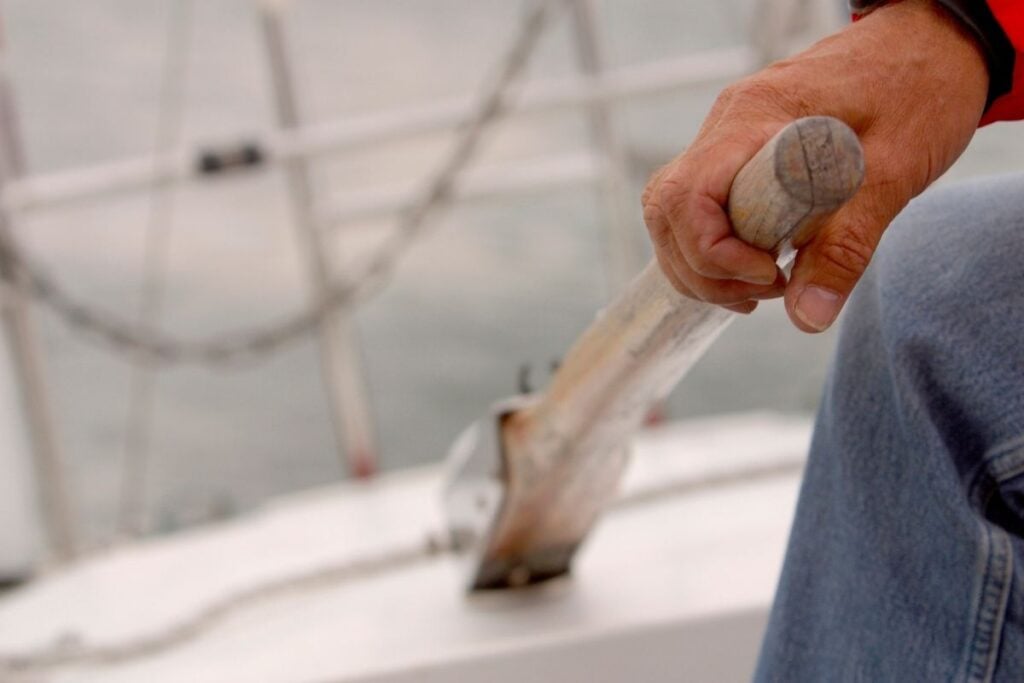
Many sailboats are fitted with an emergency tiller, while others can be steered using the autopilot if it’s connected directly to the rudder, rather than the wheel. Before trying anything else, use your backup steering if you can.
But, as Tedd Gwilliam points out: “How many people actually have tried to use their emergency tiller? I have found that most don’t work[…]”
Christopher Jones, who’s been sailing for decades, says: “Always check you know how the emergency steering works and that it actually does. [It should be] part of annual maintenance.”
3. Learn How To Steer With Your Sails

By changing the balance between the mainsail and headsail, you can move the boat’s center of effort and encourage it to turn into or away from the wind. It won’t replace a rudder, but it may give you enough control to keep moving in the right direction.
This isn’t something you want to figure out in an emergency, though. As Van Brown puts it: “Learn how to steer with sails BEFORE you need to.”
Many sailors say they learned this technique as part of their sailing training and have relied on it after losing steering at sea before.
That said, several people pointed out that it doesn’t work equally well on every boat. John Johnson, who sails a Manta 42 catamaran, explained that his boat has so much weather helm that he can’t move the centre of effort far enough forward to steer using the sails alone.
Take time to practise while everything is working normally, so you already know what your boat is capable of if you ever lose your rudder.
4. Use A Drogue, Bucket Or Other Drag Device
If you can’t control the boat using sail trim alone, many experienced sailors recommend creating drag behind the boat to help control its direction.
The simplest option is a bucket tied to a line, although the sailors who commented have improvised with everything from drogues and sea anchors to jerry cans and heavy ropes.
By running separate lines to the port and starboard sides of the boat, you can move the drag from side to side and encourage the boat to stay on course. Bill Hooper explains: “Steer with a sea drougue dragging behind you. A line to each primary winch. Pull the port line to turn left, [the] starboard line to turn right. Been there, done that.”
Experienced cruisers recommend thinking through your drag steering setup before heading offshore. David Evans says he keeps a dedicated bucket that he’s already modified with holes and removable caps, so he can quickly rig it as an emergency steering device.
Like many of the ideas in this article, drag steering won’t work equally well in every boat or every sea state.
5. Build A Jury-Rigged Rudder
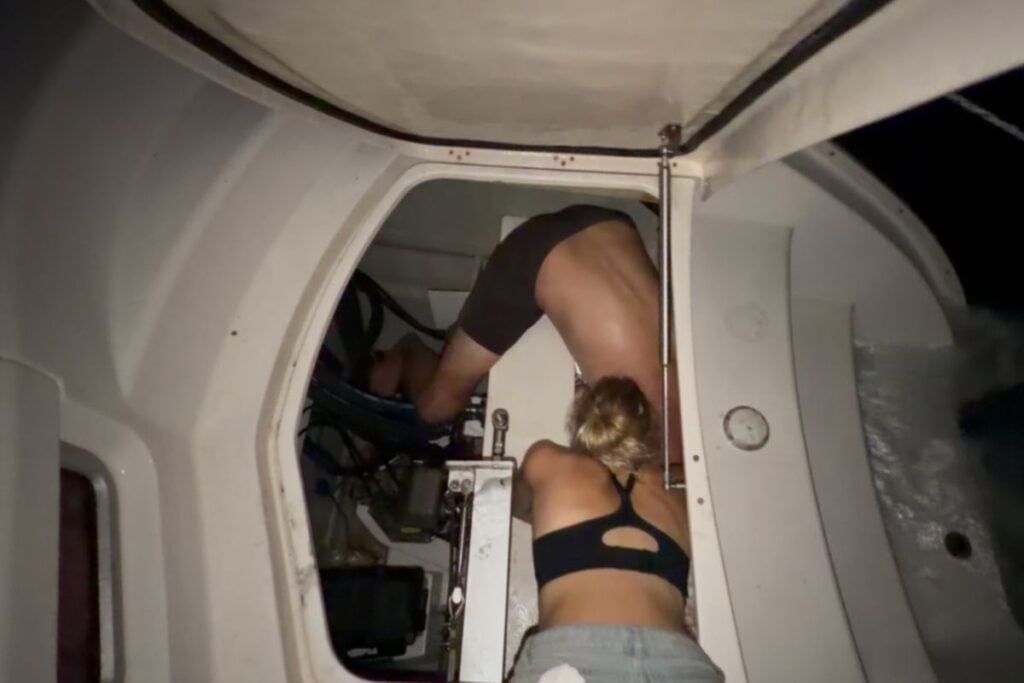
Shona Fothergill/Sailing with Six They had to repair a rudder thousands of miles from the Marquesas
If you can’t steer your boat with sail trim or drag alone, many sailors recommend building a temporary rudder using whatever you have on board.
Some sailors say they used a spinnaker pole, boat hook, or oar as the shaft, and attached a hatch board, locker lid, cupboard door, or even a table to create the blade.
Randall Alcorn, who lost his rudder 1,000 miles offshore while competing in the 2015 Transpac Race, says: “We used a drouge in the higher winds and a hatch cover from under a seat in the cabin, screwed to a broken spinnaker pole.”
When the rudder blade broke off his 51-foot fin-keel boat, Jens Marklund built a replacement from plywood. It got him safely to a port four days away, where he could carry out proper repairs.
If you’re preparing for offshore sailing, carrying a spare piece of plywood could save you from sacrificing a locker lid or cupboard door.
6. Use An Outboard Or Twin Engines
If you have an outboard or twin engines, you might be able to regain enough control to get back to safety.
Several sailors say they’ve successfully steered their sailboat with an outboard after losing their rudder. Others with twin engines have relied on differential thrust – using one engine more than the other to help keep the boat on course.
Dave Marshall shares one of the most dramatic examples: “I lost both rudders once on a catamaran with 50 people on board. I brought the boat in by using just the 2 motors.”
Kelly White also says she’s simply dropped the sails and used the outboard to steer back to the dock after a steering failure.
Of course, this approach depends on your boat. Not every sailboat has twin engines or an outboard that you can use for steering.
If all you have is a single inboard, you may still be able to help keep the boat on course by using short bursts of power alongside sail trim.
7. Use A Backup Steering System
Some sailors already use a Hydrovane or other windvane self-steering system for long passages to save on power. Because these systems have their own rudder, they can provide an independent way to control the boat if the main steering fails.
Brendan McInerney explains: “[I] use my Hydrovane with its tiller, [which is] completely independent from the yacht’s normal steering.” Others mentioned using a Monitor or Aries windvane in a similar way.
Of course, this isn’t something you can improvise once you’re at sea.
8. Don’t Wait Too Long To Call For Help
Many sailors point out that asking for help isn’t a sign of failure. If you’re close to a lee shore, the weather is deteriorating, or you can’t regain control of the boat, calling for assistance early can stop the situation from becoming more serious.
Several recommend making a PAN-PAN call if the situation isn’t immediately life-threatening but you need assistance. Others suggest a Sécurité call to alert nearby vessels that you’ve lost steering but aren’t in immediate danger.
Ted Sherrin, who lost his rudder around midnight just five miles from shelter, says: “I put out a non-urgent radio call. [I] got an offer of a tow, so took it.”
Gail Thomas recalls she would have called a PAN-PAN if her husband hadn’t managed to repair their steering after it jammed at night in rough seas.
Experienced sailors agree: don’t let pride stop you from asking for help. It’s far better to make an early call than wait until a difficult situation becomes an emergency.
9. Make Your Rudder Easier To Control In An Emergency
Billy Parr shared a tip from “an old sailor friend” that could make a huge difference if your tiller or steering cable ever fails. He recommends drilling a hole near the top of the rudder and reinforcing it with a short length of PVC pipe.
If the tiller or steering cable fails but the rudder is still intact, you can run lines through the hole and use your winches to control the rudder manually.
As he puts it: “Better to have the “hole” and never use it than to not have the hole when you do.”
Like many emergency solutions, this won’t suit every boat. It only really works if you can reach the top of the rudder from the boat.
10. Know Your Boat Before An Emergency
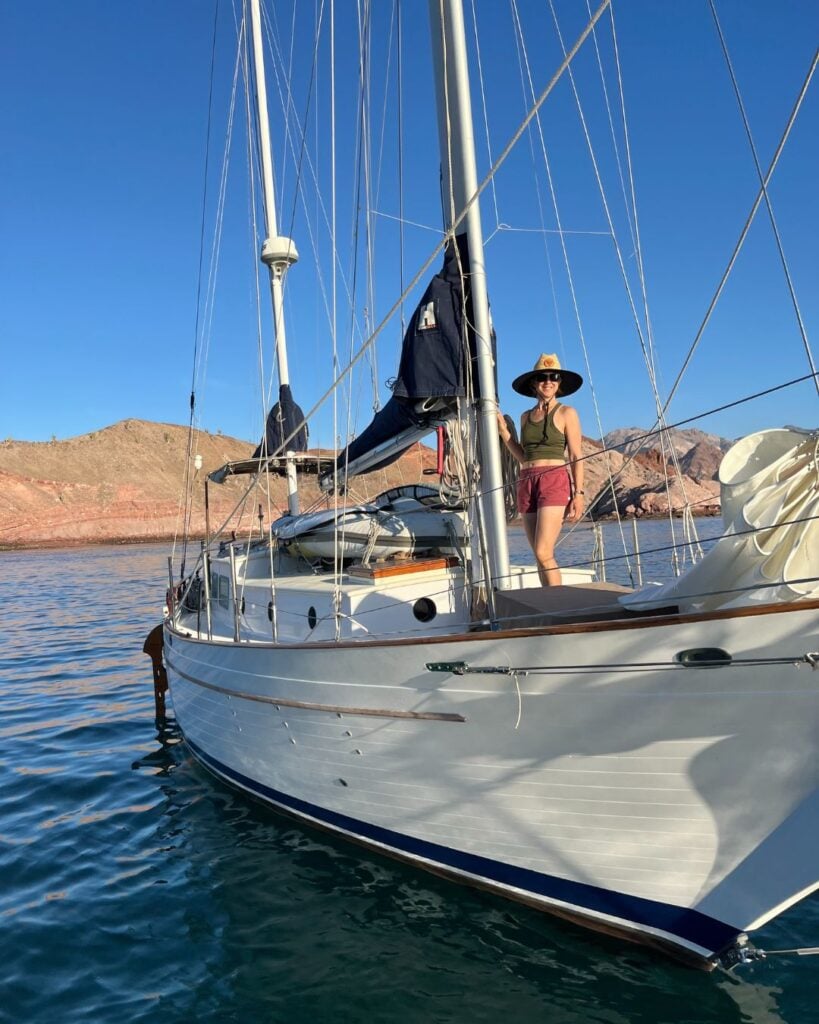
As I read through hundreds of comments, one thing became clear: there isn’t a single solution that works for every sailboat.
The best strategy depends on your boat, your equipment, the weather, the sea state, and how far you are from safety. As Greg Stenström points out, there are “different solutions for 24, 30, 42, 60+ foot boats, sail rig configs, engines, screws, bow thrusters, sea state, wind speed, etc.”
Dominik Tabisz says: “No boat is equipped for everything, yet no boat is unequipped if you can improvise.”
The more familiar you are with your own boat, the more options you’ll have if something goes wrong. Practise steering with your sails, test your emergency steering, think through your options, and make sure your crew knows the plan too.
Hopefully you’ll never lose your rudder. But if you do, a little preparation now could make all the difference.
Can you really sail without a rudder?
Yes. By balancing the sails, you can steer many boats and make your way to safety. However, this technique doesn’t work on every sailboat, so it’s worth practising before you ever need it.
Should I carry an emergency rudder?
If you regularly sail offshore, an emergency rudder or an independent backup steering system can give you extra confidence offshore. Many sailors also carry the materials needed to build a jury-rigged rudder.
What should I do first if I lose my rudder?
Stay calm and work out what has actually failed. A loss of steering doesn’t always mean you’ve lost the rudder itself. Reduce sail if necessary, stabilise the boat, and assess your options before doing anything.
Is a bucket really useful for steering a sailboat?
Many experienced sailors recommend using a bucket, drogue or other drag device to help steer the boat. While it won’t replace a rudder, it may provide enough control to keep you on course.
Should I call for help straight away if I lose my rudder?
If you’re unable to regain control or you’re being pushed towards danger, don’t wait too long to ask for assistance. An early call is often much safer than waiting until the situation becomes an emergency.
Can I steer with the engine if I lose my sailboat’s rudder?
An outboard or twin engines may help you steer the boat. A single inboard is less effective but can still help you stay on course.
Does every sailboat have an emergency tiller?
No. Check your boat’s manual and make sure you know where it is and how to use it.
Do I need to practice emergency steering on my sailboat?
Yes. Many experienced sailors recommend practising sail steering and testing your emergency steering system while everything is working normally.





Gets to the heart of matter in regards to one of the very top vital knowledge areas. What to do, IF?
Yeah we don’t have an emegency tiller on our 38ft Seawind Catamaran. Instead we can disconnect the bar that controls both rudders and just use the direct helm to the remaining side. We do have the two engines that could help but not really a good solution in a the middle of an ocean!
The Autohelm ram connects to the rod that we would disconnect and so might only work if we lost the Stbd rudder. Hand steering would be the go I guess. If we are sailing a passage, we will in all probability be heading downwind so a small headsail would hopefully be enough to keep us pointed downwind. Other than that the direction of the waves and current would push us to the downwind destination.