Is It Illegal to Sleep in Your Van in Europe? Wild Camping Rules, Country by Country

Wild camping rules in Europe, country by country — from a van lifer who learned the difference between ‘parked’ and ‘camping’ the practical way.
*This post may contain affiliate links. Please read our disclosure policy for more info.
Here’s what surprises Americans renting in a camper in Europe: free camping isn’t nearly as easy as it is to find in the United States.
If your mental picture of van life is American-style boondocking on public lands, Europe runs on completely different rules. Wild camping is illegal or restricted in most of Europe, and enforcement is real in the places you most want to go. But here’s the good news the scary headlines skip: Europe replaces free camping with something America doesn’t have — a vast network of cheap, legal overnight stops — and there’s a legal distinction that works in your favor almost everywhere.
I’ve done three European campervan trips. Here’s how the rules actually work, country by country.
The distinction that matters everywhere: parked vs. camping
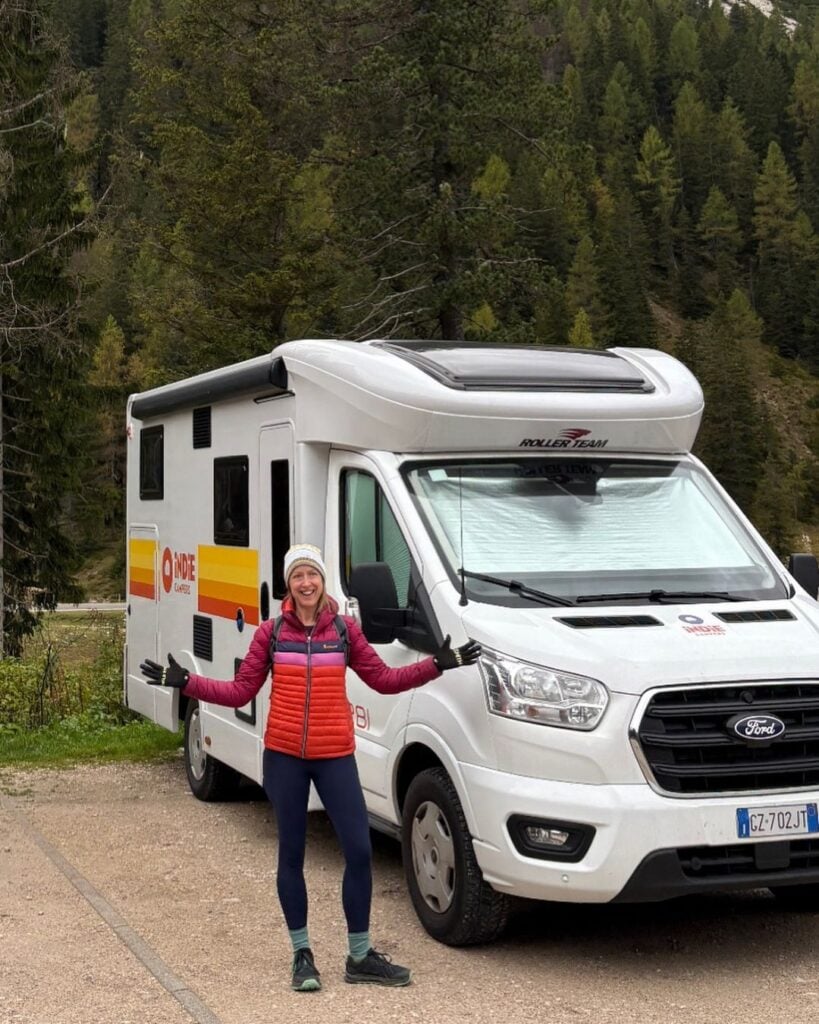
Across most of Europe, the law draws a line between a vehicle that is parked and one that is camping. Parked means: wheels on the ground, nothing outside the vehicle, no leveling blocks, no awning, no chairs, no cooking outside. Camping is the moment your footprint extends beyond the van and that’s when fines happen.
A van legally parked overnight in an ordinary parking spot, lights off and gone in the morning, is treated far more leniently than the same van with the awning out. This isn’t a loophole to abuse, it’s how millions of European campers actually operate: drive, park legally, sleep, move on. One night, discreet, no trace.
Country by country: where you can and can’t sleep in your van
France
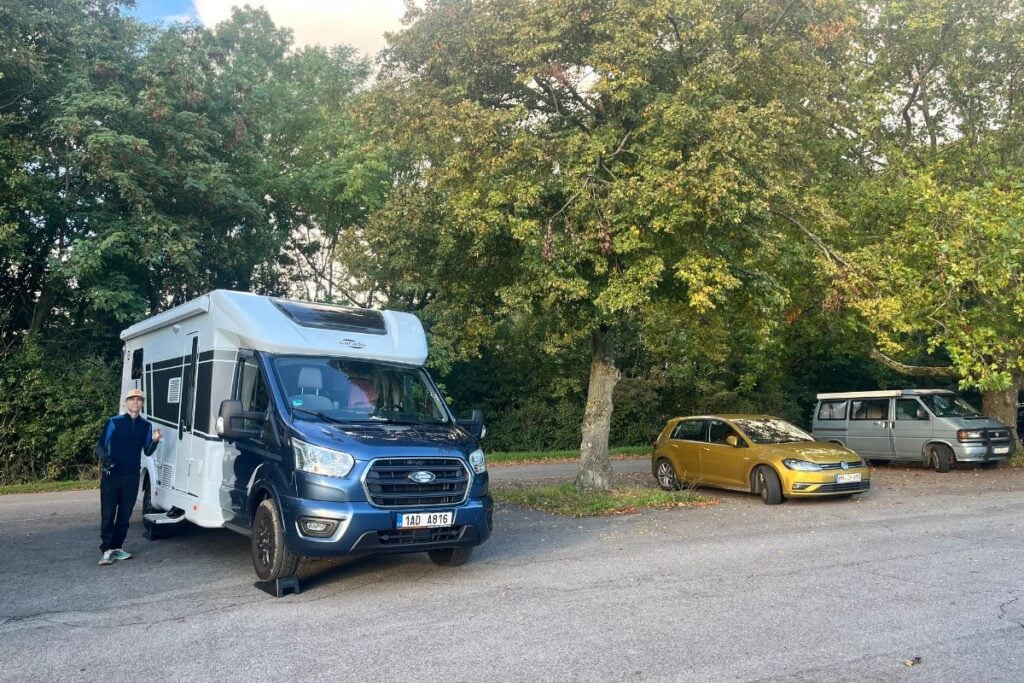
Wild camping is prohibited, but discreet single-night stops are often tolerated in rural areas. The practical rule locals follow: one night parked is a grey area; two nights — or chairs on the grass — is camping, and that’s when the knock on the window comes. France’s real answer is its aires network: thousands of designated camper stops, free to about €15 a night. We used them constantly.
Germany
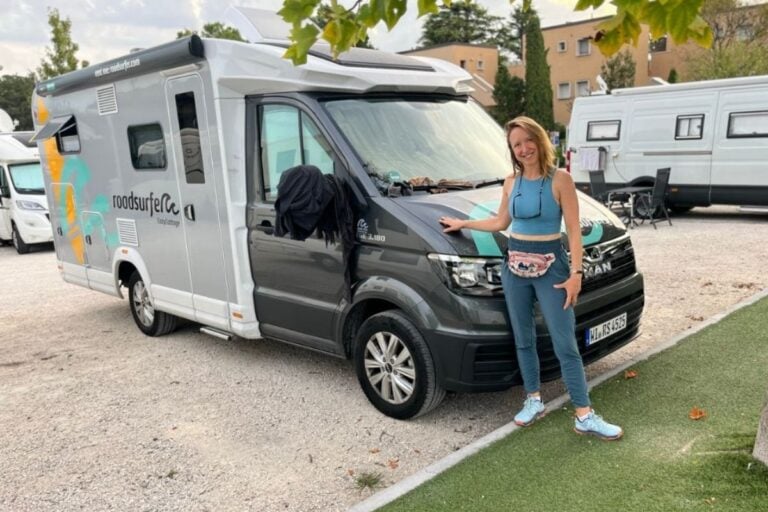
Wild camping is illegal, with fines that typically run modest (€5–80) but can climb to €500 — and far higher on private land in some states. What Germany allows instead: a single night’s rest stop to restore driving fitness, parked, not camped. And Germany’s Stellplätze (designated camper parking areas) are everywhere and cheap — we paid €12–20 a night, sometimes steps from a thermal spa.
Switzerland
Rules vary by canton, most prohibit it, and the Swiss enforce their rules. Campervans should stick to designated areas, which are, fair warning, the most expensive in Europe. Our honest strategy: sleep in France or Germany, day-trip into Switzerland.
Austria
Prohibited nationwide for vehicles, with strict enforcement near lakes and in tourist regions and fines up to €500. Use campgrounds and designated camper stops.
The Netherlands
Overnighting outside official spots is prohibited and actively enforced. The Dutch camping infrastructure is excellent — use it.
Italy
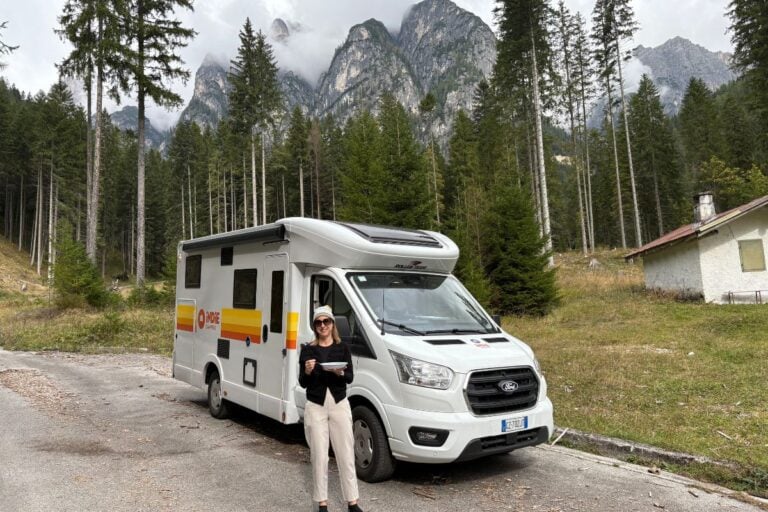
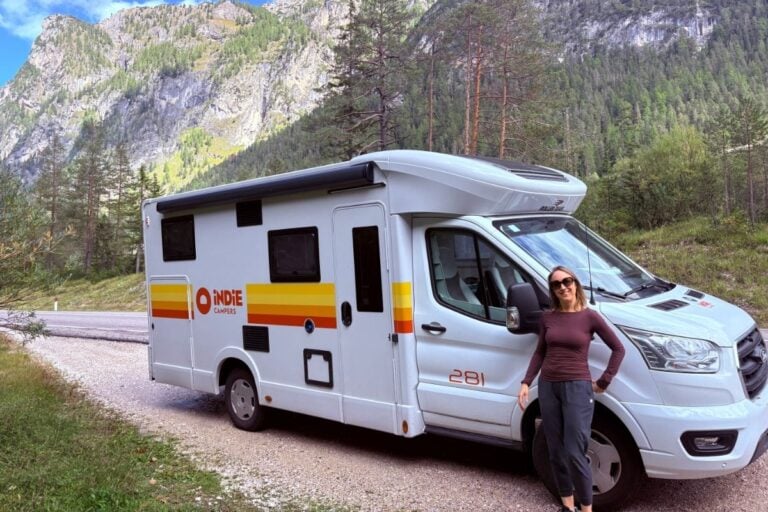
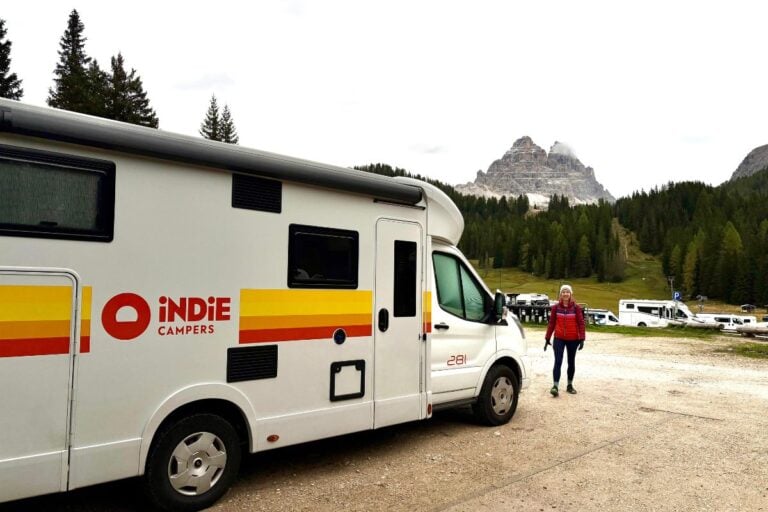
Officially, rules are set commune by commune and fines can reach €500. In practice, Italy was the most relaxed country we’ve traveled by camper: we free-parked repeatedly in the Dolomites — town lots, a ski-hill lot with a million-dollar view — without a raised eyebrow, especially outside high season. Italy also runs its own version of the aire, the sosta: we paid $23 for one with a view of Tre Cime. Off-season (November–March), enforcement famously softens. Coastal tourist zones in August are a different story, don’t push it there. To access Cinque Terra, we stayed in a lot that was about €20 per night, and we bused downtown and took a train to the famous villages.
Spain
Generally not legal, with €100–500 fines on the coasts and real regional variation: the northwest (Galicia, Castilla y León) is more tolerant, Catalonia stricter. Spain leans hard on the parked-vs-camping distinction. A van with nothing deployed, wheels down, is “parked.”
Portugal
Banned nationwide since a 2021 law, fines €60–600, and the Algarve enforces hard. Municipalities differ outside protected zones, but plan on campgrounds and official motorhome areas on this coast.
Croatia, Slovenia, and Greece
All three officially prohibit wild camping (fines up to €400, €500, and €1,000 respectively), and all three widely tolerate discreet stops away from the honeypots. The pattern repeats: coasts, islands, and national parks are enforced; rural inland is relaxed. Lake Bled is not the place to test this.
Scandinavia and Scotland — the myth that needs busting
You’ve heard that Norway, Sweden, and Scotland have a legal “right to roam” that lets you camp anywhere. True — for people on foot with tents. The allemansrätten does not apply to motor vehicles. In a campervan you can’t drive off-road onto grass, beaches, or forest floor; you’re limited to hard surfaces (gravel pullouts, road shoulders where parking is legal), at least 150 meters from houses, one night and move on. Still the most generous rules in Europe — just not the “park anywhere” fantasy.
So where do you actually sleep? The legal playbook
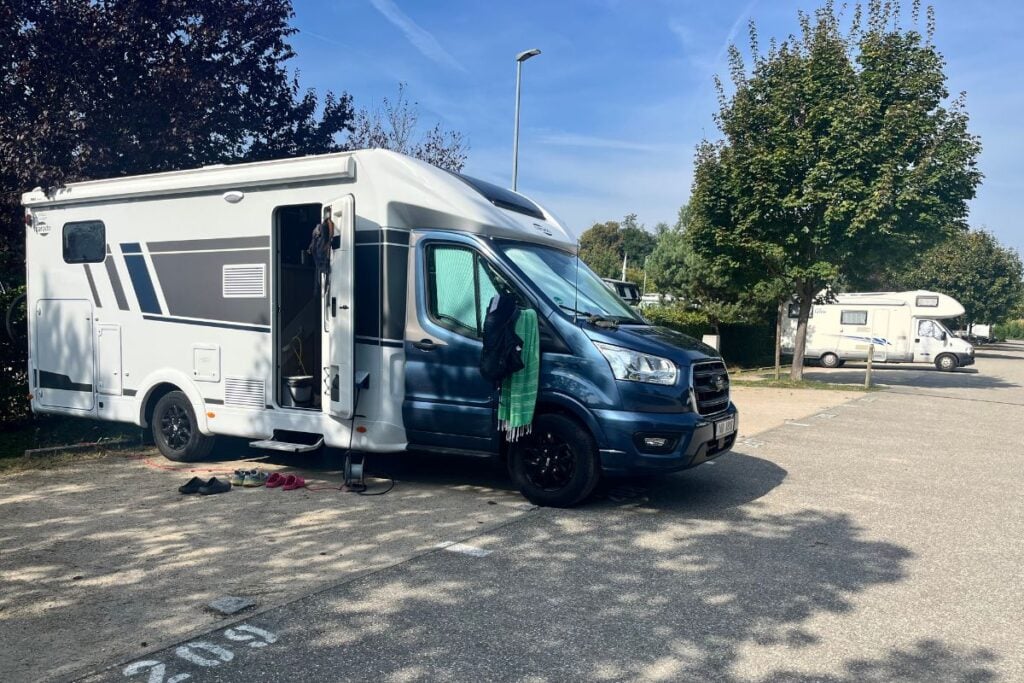
- Aires, sostas, and Stellplätze — Europe’s designated camper stops: free to ~€20, everywhere, completely legal. This is the backbone of a European van trip.
- Campgrounds — €20–50, with the infrastructure America forgot: bakery orders at reception, separate dish sinks, spotless facilities.
- The discreet legal park — where local rules allow overnight parking: wheels down, nothing outside, one night, leave it cleaner than you found it.
- Apps — Park4Night and CamperGuru show legal spots near you, with recent reviews that tell you whether the rules are enforced this summer.
The Europe camper renter’s reality check
One more thing nobody tells you: most European rental campers aren’t built for off-grid nights anyway: no solar, no big house batteries, no inverter. On our rentals, a night without hookups meant no laptop charging and careful battery math. We had to run the van to charge computers and use our Starlink to work. The legal question and the practical question have the same answer: plan on paid stops most nights, and treat the free night as a bonus.
Want to Learn How to Rent a Camper in Europe?
Want the whole system in one place? My course and toolkit, How to Plan an Epic Camper Road Trip in Europe, includes campsite-finding guides, the apps I use, and country-planning worksheets.

Learn everything there is to know about renting a camper in Europe and planning an amazing road trip. My complete toolkit demystifies the process of renting a camper, finding places to camp (you don't need reservations!) and dealing with fresh, gray and black water tanks.
Still choosing your rental? You can compare campers from multiple rental companies at once (Indie Campers included) on CampervanPlanet.
Is wild camping illegal everywhere in Europe?
Is wild camping illegal everywhere in Europe?
Nearly everywhere for vehicles, yes — but “parked overnight, nothing deployed” is treated far more leniently than “camping,” and every country offers cheap legal alternatives (aires, sostas, Stellplätze).
What happens if you get caught wild camping in Europe?
Nearly everywhere for vehicles, yes — but “parked overnight, nothing deployed” is treated far more leniently than “camping,” and every country offers cheap legal alternatives (aires, sostas, Stellplätze).
Can you sleep in your van at rest stops in Europe?
Generally yes for a single night — resting to restore driving fitness is protected in many countries — but treat it as parking, not camping. However, we have heard that rest stops can be more subject to burglaries, especially along busy highways. We chose not to stay at highway rest stops.
Where is van camping most tolerated in Europe?
In our experience: Italy (especially off-season and inland), rural Spain’s northwest, rural Greece and the Balkans. Scandinavia has the most generous formal rules, with the vehicle limits above.
Do the rules apply to rental campervans?
Identically — and the fine goes to you, plus rental companies can pass along penalties. Know the rules of each country on your route before you cross the border.
SOURCES:
- France/Germany/general + parked-vs-camping: tripgen.co.uk motorhome wild camping guide; roamlife.ai wild camping laws 2026; hinterland.camp (Germany); campernight.com 2026
- Spain: siestacampers.com wild camping Spain 2026
- Portugal: vancowork.com Portugal laws (2021 reform, fines)
- Switzerland/Austria/Netherlands: camping.info wild camping rules; nearva.eu country-by-country 2026; bergzeit journal
- Croatia/Slovenia/Greece: supervolt.de (Croatia); wandering-bird.com Croatia guide; momgoescamping.com country list
- Scandinavia/Scotland: visitnorway.com right of access (official); benzinicampers.com Norway; mycamper.com; we12travel.com (Sweden)
- My lived experience: 2024 + 2025 trip journals (once-in-7-weeks France/Germany; repeated free nights Dolomites; sosta and aire receipts)