

Renting a Campervan in Europe: Everything I’ve Learned From 3 Trips

I’ve rented campervans in Europe three times, from three different companies. Here’s what it really costs, where you’ll actually sleep, and the mistakes I made so you don’t have to.
*This post may contain affiliate links. Please read our disclosure policy for more info.

I’ve rented campervans in Europe three times, from three different companies, and driven them through the French Alps, the Côte d’Azur, the Black Forest, Bavaria, and the Dolomites. I’ve stayed at €10 aires where you text a woman who bikes down to collect cash. I’ve survived the worst mosquito night of my van life on a beach near St. Tropez. And I’ve learned the hard way that every grocery store in Europe closes exactly when you need it most.
Here’s the thing I wish someone had told me before my first trip: traveling Europe by camper is nothing like van life in the United States. It’s not worse. In some ways it’s far better. But almost everything you know from American van travel such as free camping, big parking lots, your dialed-in rig…works differently over there.
This guide is everything I know now, three rentals in. What it costs night by night, which companies delivered (and which handed me a full toilet cassette at pickup), where you’ll actually sleep, and the mistakes I made so you don’t have to.
What renting a campervan in Europe is really like
The short version: you’ll drive a cute fully-equipped campervan, sleep in organized campgrounds and cheap “aires” more than in the wild, spend less than you fear on camping and more than you hope on Switzerland, and come home wondering why America doesn’t have any of this infrastructure.
European rental campers are usually compact vans — think pop-top minivans and mid-size campers, not giant Class A or C builds. Most rentals are NOT set up for off-grid living: on my trips there was no solar, no house battery bank, no inverter. If you can’t plug in, you can’t charge a laptop. Plan on paid stops with hookups most nights, and treat any boondocking as a bonus.
The Europe Camper Rental Companies I’ve Used
I’ve done three trips with three companies so this comparison is from the driver’s seat, not a directory.
Full transparency: all three companies provided my rentals free of charge for review. My opinions — including the complaints — are entirely my own, as you’re about to see.
Roadsurfer
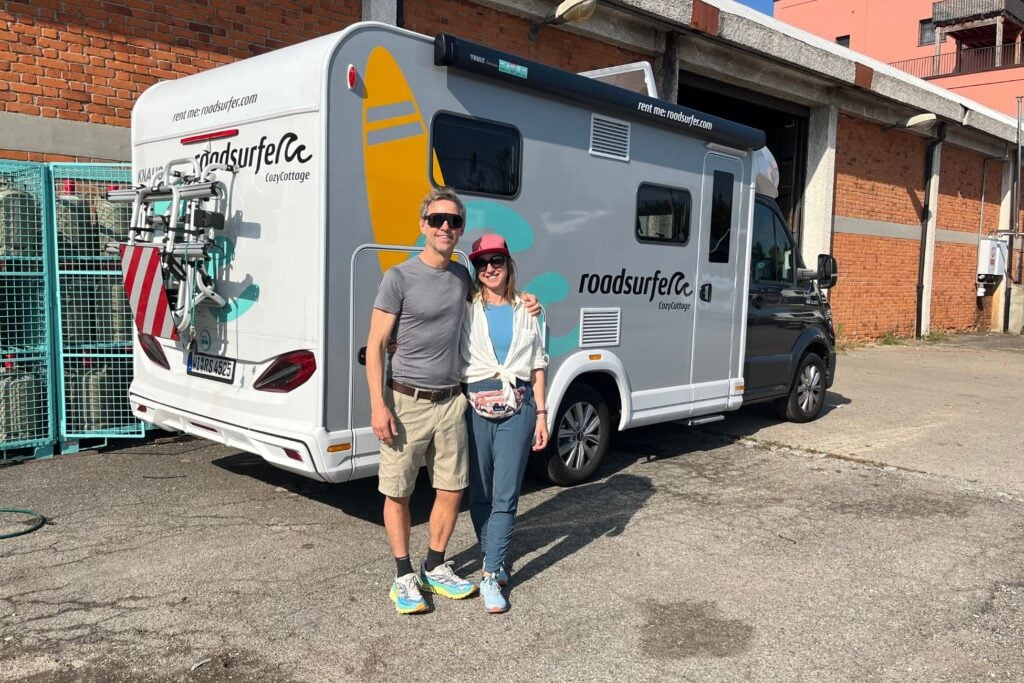
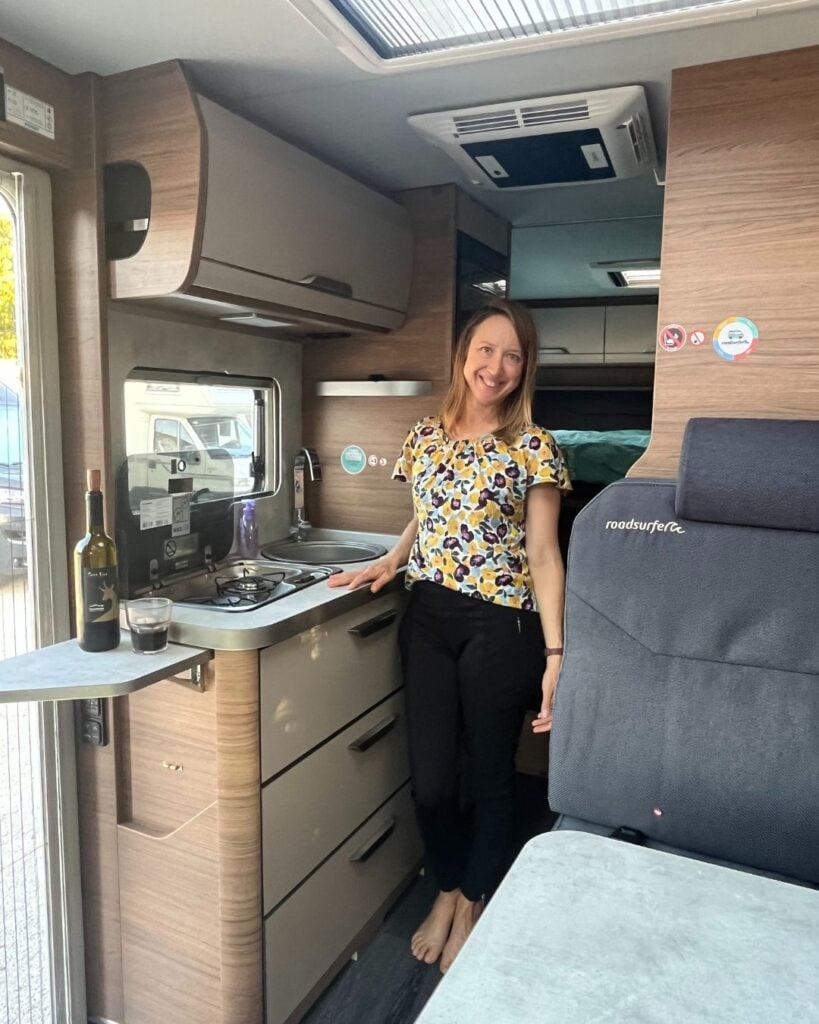
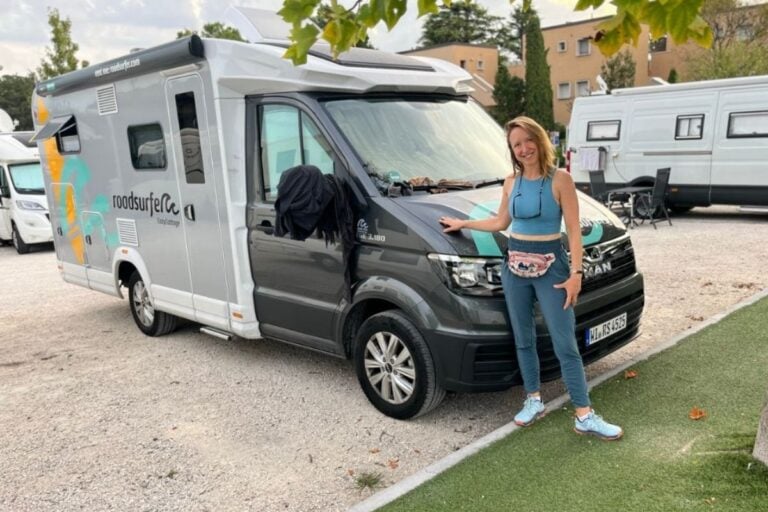
My first rental was from Roadsurfer, picked up in Milan. Solid, well-equipped, and the return was painless. Our rig had some age on it: the fridge had some problems throughout the trip (report problems to the company THE DAY they happen — it protects your deposit), and the screens weren’t insect-tight, which mattered enormously one humid night on the Med. Roadsurfer doesn’t offer Point A to Point B rentals…you have to return to the same city. There offer a variety of van sizes for rent and depots all over Europe. Despite some minor issues with the campers every time, Roadsurfer remains affordable and good quality. We’d definitely use them again.
Anywhere Campers

Anywhere Campers was our surprise favorite. Our camper was brand new….it felt like stepping aboard a new sailboat…with the shower and toilet in separate rooms, which you will appreciate every single day. The handoff was personal and thorough, in an airport parking lot. Anywhere Campers stands out from the other two in that they will DELIVER your camper anywhere in Europe. You can do one-way trips, and they’ll PICK UP your van anywhere in Europe, too. This is the easier campervan to rent as you don’t have to trek to a depot after your long-haul flight. Anywhere Campers will cost you more than the others, though.
Indie Campers
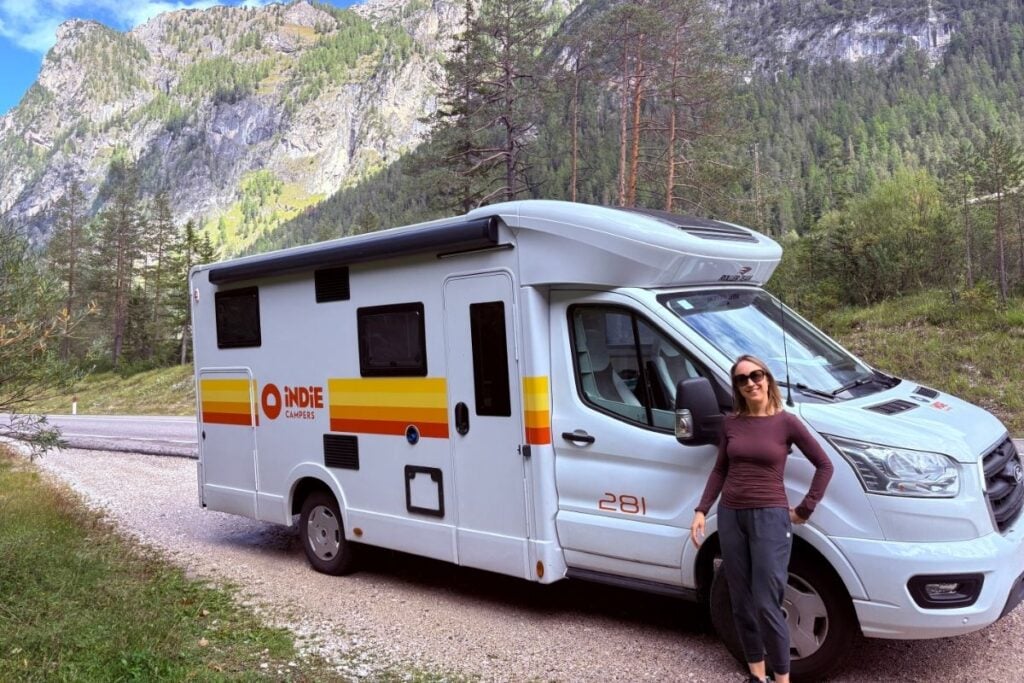
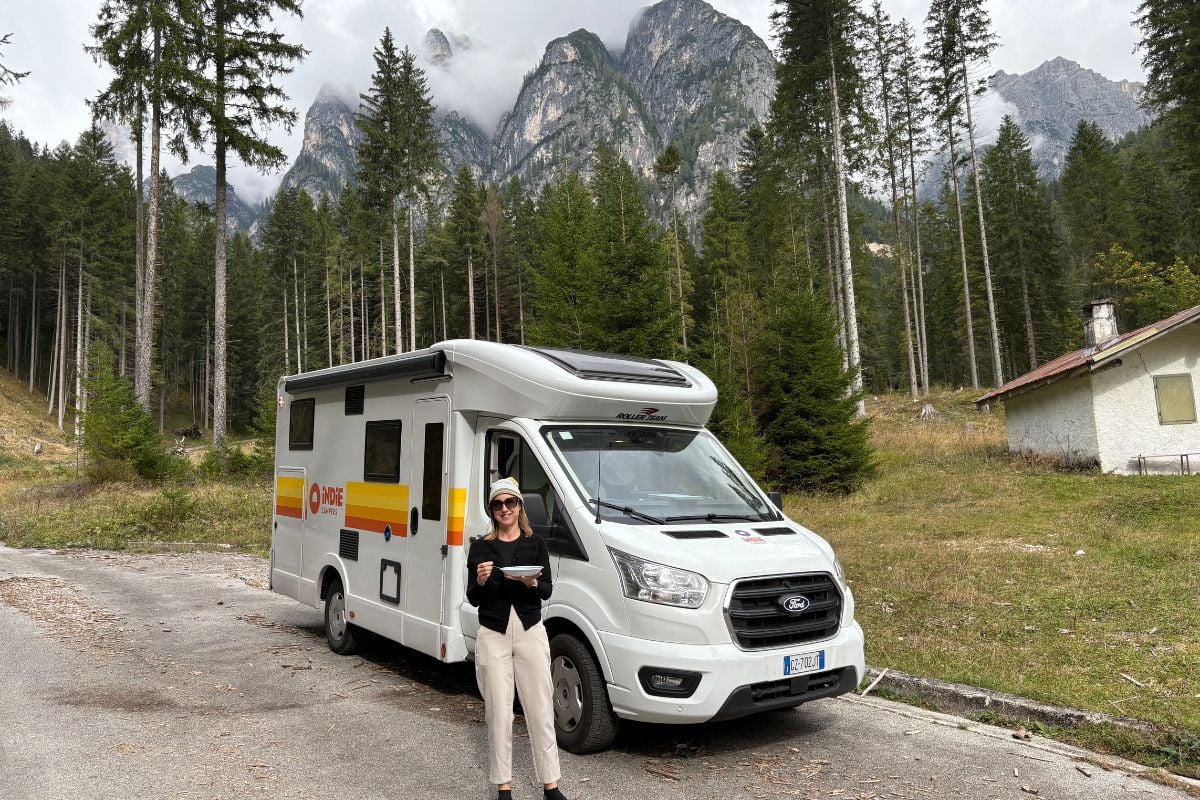
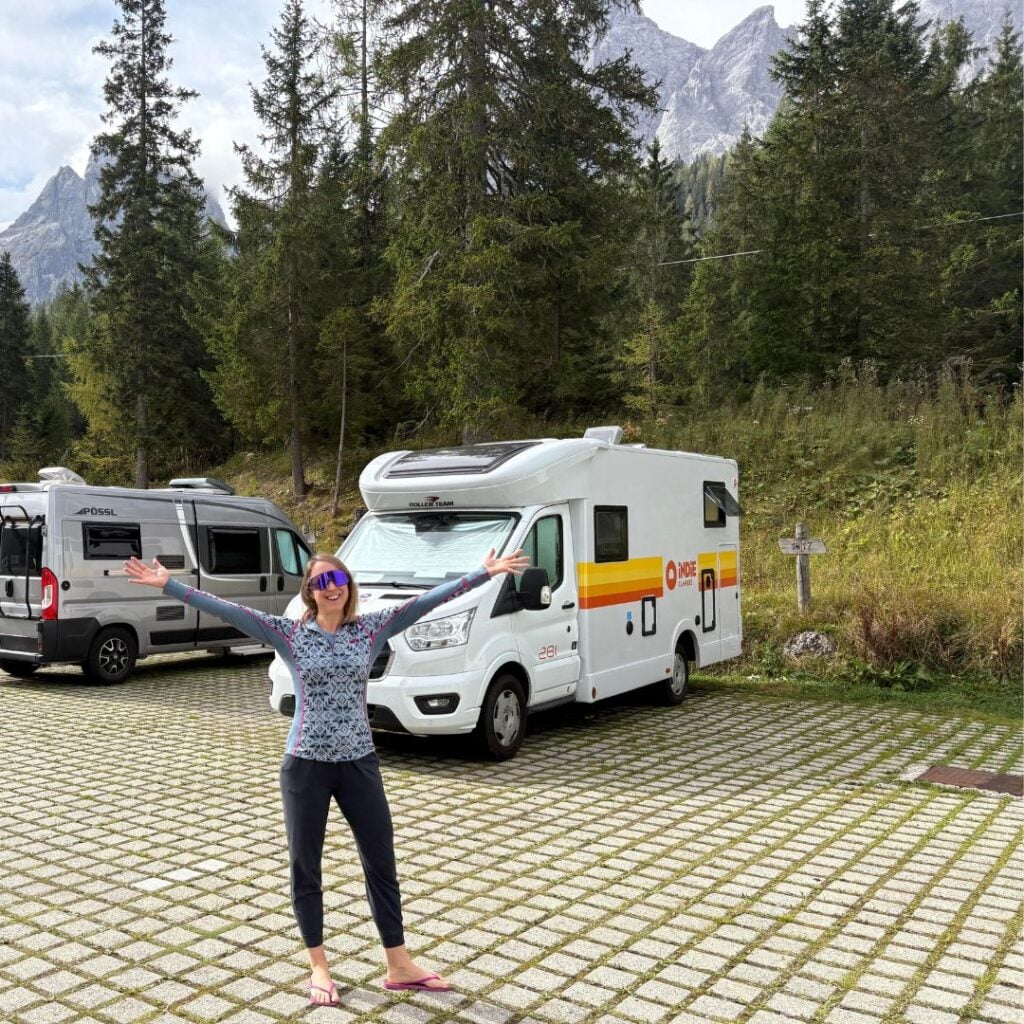
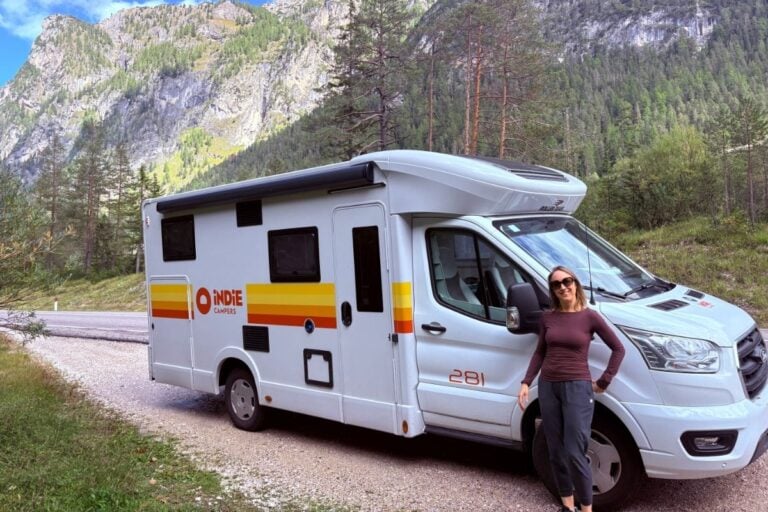
Indie Campers has the biggest depot, the busiest operation, and the bumpiest experience. Check-in took about an hour because the app’s code never arrived; the toilet cassette was handed over full and had to be swapped; and the replacement never sealed right, which we discovered in the worst way a campground later. The van itself was newer and comfortable…. but bring your patience to the counter, and inspect everything.
We ended up having a good experience with Indie, but the reviews and a Facebook group dedicated to issues with this company would have me thinking twice about using them, or at least doing a lot of research first.
The Campervan Rental Pickup Checklist I Swear By
Photograph and video the entire rig before you drive away: every panel, the fuel gauge, the mileage. Then check the things I learned to check: is the toilet cassette empty and seated properly? Does every light work? Are there leveling blocks? Hooks for towels and jackets? Do the window screens actually seal? Ten minutes at the counter saves days of aggravation.
For the full list of rental companies across Europe, see my roundup: https://www.thewaywardhome.com/best-campervan-rental-companies-europe/
Where you’ll sleep in your Europe Camper Rental

Campgrounds in Europe are organized, clean, and small. Some are little more than striped parking with grass; even the nice ones have sites that would qualify as “compact” in America. But the infrastructure is wonderful: separate sinks for dishes and laundry, food trucks, and bakeries that take your baguette order the night before. (Quirk to know: the toilet paper often lives OUTSIDE the stall. Grab it first. Trust me.)
Aires and sostas are Europe’s secret weapon: cheap, legal overnight camper stops — sometimes a bare lot, sometimes a lovely spot lined with bamboo near a beach. Pay at a machine, or sometimes to an actual human you text. Many have no bathrooms, so your rig’s facilities matter.
Free camping depends enormously on the country. On seven weeks through France and Germany we truly free-camped ONCE. In Italy, we did it again and again…. town lots in the Dolomites, a ski-hill lot above Cortina with a million-dollar view. Know each country’s rules before you assume anything.
What Does Camping Cost Per Night in Europe?
I’ve camped in five different countries using camper rentals in Europe, and the costs can vary dramatically. Here are real numbers from my receipts, not estimates:
- Aires (France/Germany) and sostas (Italy): Aires and sostas are basically rest stops in Europe. We heard the ones on the larger freeways can be dangerous. Some people have experienced break-ins so we avoided those. But many within towns are really nice to use! These range from free to about €20. I paid €11.50 outside Morzine, France (power was €3 for four hours — power is often metered), €12 in Baden-Baden, €10 cash in a French alpine village, $23 for an Italian sosta with a view of Tre Cime.
- Campgrounds: roughly €20–50. Chamonix ran $34, the Dolomites $40–55, the Côte d’Azur $41–49 in September. Switzerland was our budget killer for campgrounds: $50–65 for what is honestly a grassy parking area. Sleep in France or Germany, day-trip into Switzerland.
- The costs nobody budgets: the taxi to the rental depot ($100 in Geneva — rental depots are never at the train station), metered electricity, water and dump fees (€4), and paid day parking at trailheads (€4.50 the first hour in the Dolomites).
Two adults, moving every day or two, cooking most meals: we averaged well under a typical European hotel-trip budget, and the €8 wine and $6 Aperol Spritz in Italy don’t hurt.
How much does the rental itself cost per night?
Camping fees are the small line item — the van is the big one. Here’s where the three companies I’ve used actually land:
Roadsurfer publishes its rates: campervans start around €65 per night, with Sprinter-style vans and bigger RVs from about €85. Book early — prices climb with demand, and their off-season and early-booking deals are real.
Indie Campers is the widest range: basic vans start as low as €33 per night in low season, but a typical trip prices out around €70–85 per night depending on vehicle and dates. Their long-trip discounts stack up nicely: 5% off at 7+ nights up to 20% off at 26+ nights.
Anywhere Campers doesn’t publish pricing at all — you request a quote, which I know feels sketchy in 2026, but stay with me. Their model is different: all-inclusive pricing with unlimited mileage, insurance included, and they’ll deliver the van to you — an airport curb in Paris, a dock in Oslo — instead of making you taxi to a depot (remember my $100 Geneva taxi?). There’s a minimum spend of around $500 per rental, and it suits longer trips. Request the quote early in your planning — their all-inclusive number covers things the others charge separately for (mileage, insurance, delivery), so compare final totals, not sticker rates.
The honest math: for a two-to-three-week trip, expect €65–100 per night for the van before camping, fuel, and tolls — and remember the quoted price isn’t the final price anywhere. Watch for cleaning fees, bedding and kitchen “kits,” extra-driver fees, and one-way charges. (Every fee I’ve encountered is broken down in my Camper Rentals in Europe Toolkit.)
The rules and quirks that catch Americans off-guard in Europe
- Sundays and holidays are real. Grocery stores close early or entirely — we got caught by a 1 p.m. Sunday closing in Italy and by German Reunification Day, when everything shuts. Shop like it’s 1985: plan ahead.
- Parking is the daily puzzle. Height barriers block campers from many lots; towns have narrow lanes; in high season, do your shopping early and outside city centers.
- High season means reservations. In early September on the Côte d’Azur, every campground near St. Tropez was full. We found a spot on day two after a night I’ll describe below.
- Produce is weigh-it-yourself in many stores — weigh, print the label, THEN go to the register (except when it’s sold by the piece — you’ll get the hang of it).
- Licenses: a standard U.S. license covers a normal campervan rental, and several countries also want an International Driving Permit alongside it. Get one before you fly — it’s $20 at any AAA branch (often same-day, no membership required; bring two passport photos or pay $2 for them there) or from $30 online.
- Time limits and the new travel authorization: Americans can spend 90 days in any rolling 180-day window across the Schengen countries — plenty for a rental trip. One change to watch: Europe’s new ETIAS travel authorization (a €20 online pre-approval, valid three years) is slated to launch for Americans in late 2026, with the exact date still unannounced. It doesn’t change how long you can stay — it’s just a form to file before you fly. Check the EU’s official ETIAS site before your trip.
My worst night in a Europe camper rental (so yours doesn’t happen)
Near St. Tropez, we took a beautiful beach aire — bamboo groves, boardwalk to the sand. It was hot, so we slept with windows screened. Except the rental’s screens didn’t seal, and this was mosquito country. They poured in all night. By 5 a.m. we were driving away with the heaters on high trying to flush them out, blood spatter on the ceiling, having slept maybe an hour.
The lesson isn’t “skip the beach.” It’s this: a rental is not your own dialed-in rig. You haven’t tested it in the rain, in the heat, in bug country. So test what you can at pickup, carry a backup plan (repellent, a net, a fan), and when something fails — document it and tell the company that day.
Where should you go? The regions I’ve done by camper

- The French Alps (Chamonix, Morzine): lift-served hiking and biking, Mont Blanc out the windshield, excellent campgrounds. The Route des Grandes Alpes is the drive of a lifetime — white-knuckle passes included.
- Provence and the Côte d’Azur: Moustiers-Sainte-Marie and Port Grimaud are two of the prettiest towns I’ve seen anywhere. Go in shoulder season. We also dropped down to St. Tropez for a few nights of Med time.
- The Black Forest and Bavaria: spa towns where the campground fee sometimes INCLUDES thermal-bath entry, plus castles — I waited 30 cold minutes for a last-minute Neuschwanstein ticket and it was worth every shiver.
- The Dolomites: the most dramatic mountains I’ve ever hiked, rifugios where you eat dumplings at 7,000 feet, and Italy’s camper-friendly sostas. Skip the Instagram-famous hikes for the quiet valleys.
Want all of this in one organized bundle? I put everything from my trips into How to Plan an Epic Camper Road Trip in Europe — a minicourse plus 14 printable planning guides: company comparisons with fee breakdowns, a roadsigns cheat sheet, itinerary and budget templates, and more.

Learn everything there is to know about renting a camper in Europe and planning an amazing road trip. My complete toolkit demystifies the process of renting a camper, finding places to camp (you don't need reservations!) and dealing with fresh, gray and black water tanks.
FAQ: renting a campervan in Europe
Still choosing your rental? You can compare campers from multiple rental companies at once (Indie Campers included) on CampervanPlanet.
How much does it cost to rent a campervan in Europe?
Van rental rates vary by season and company; on top of the rental itself, budget roughly €20–50/night for camping (less at aires, more in Switzerland), metered power at some stops, and fuel.
Can you sleep anywhere in a campervan in Europe?
No — most countries restrict wild camping, and enforcement is real in tourist areas. The good news is the aire/sosta network makes legal overnighting cheap and easy. Italy is notably more relaxed than France.
Do Americans need a special license to rent a campervan in Europe?
A standard U.S. license covers normal-size campervans, and several countries also expect an International Driving Permit with it — $20 at AAA, often same-day.
What’s the best campervan rental company in Europe?
I’ve rented from Roadsurfer, Anywhere Campers, and Indie Campers. My best overall experience was Anywhere Campers as they pick up and drop off anywhere in Europe, but they are also the most expensive. I also love Roadsurfer for afforability and variety.
When is the best time to rent a camper in Europe?
Shoulder season: September was ideal: warm on the coast, quiet(ish) campgrounds, and no July crowds. But watch for seasonal closures by October in mountain towns, and book coastal spots ahead in early September.





3 Comments