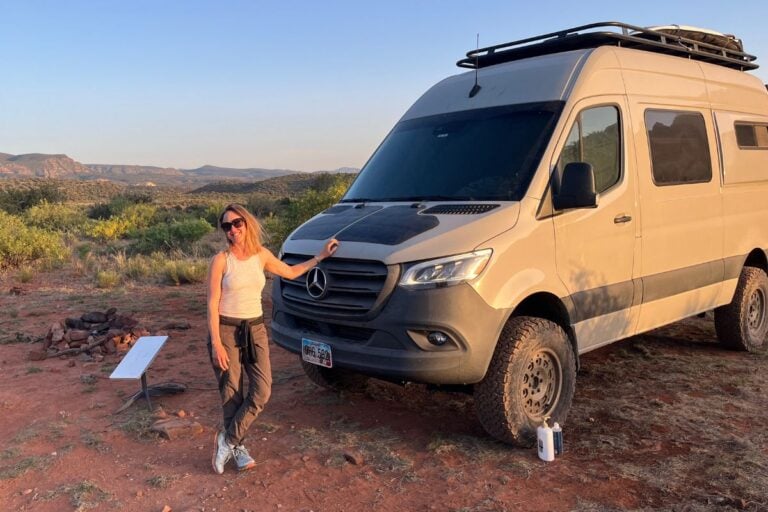
I Traveled the Bavarian Alps in a Campervan. Here’s My Best 9-Day Road Trip (Saunas Included)

Nine days by campervan from Munich through Königssee, Berchtesgaden, Tegernsee, Mittenwald, Garmisch, Linderhof and Neuschwanstein, with every camper park and its price, the hut hikes, and the four thermal saunas that made the trip.
*This post may contain affiliate links. Please read our disclosure policy for more info.
Somewhere on day four of this trip, I was sitting in a sauna built on a boat on Lake Tegernsee, still dripping from a plunge into 45-degree lake water, looking out the window at the Alps, and I thought: nobody plans a campervan road trip around this, and everybody should.
I’m obsessed with saunas, mountains, and German beer, so this Bavarian road trip is based on those things.
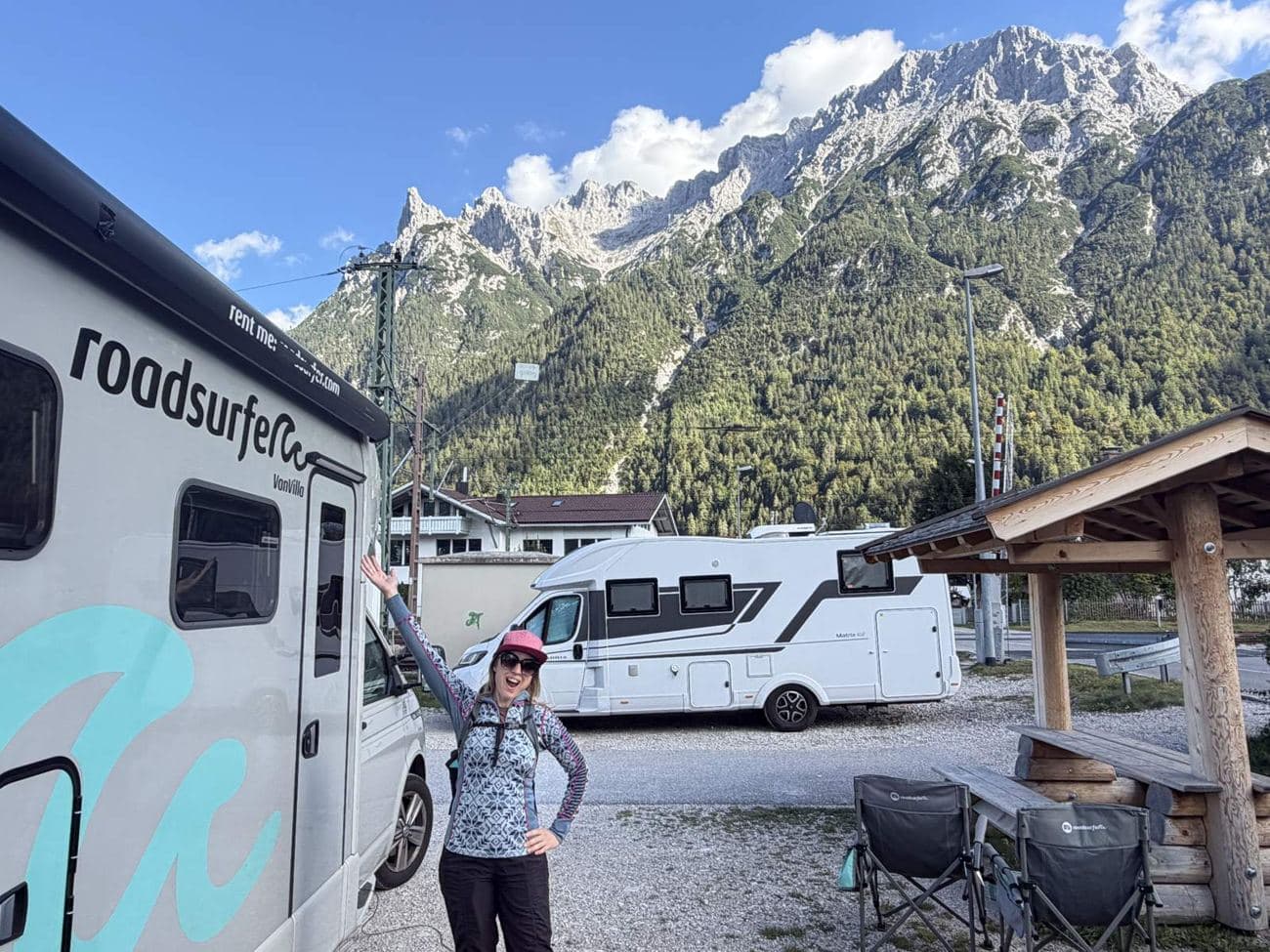
Here’s how I would structure a Roadsurfer campervan rental trip: pick up a campervan in Munich, head southeast to Königssee and Berchtesgaden National Park, then work west along the Alps on the German Alpine Road through Tegernsee, Mittenwald and Garmisch, with a king’s palace and a swim-up bar on the way back. Almost every stop has a thermal spa beside it, and several of those spas let a camper park for the night, one of them for free.
One honest catch before you fall for the idea: the cheapest way to camp in Germany is to use a Stellplatz parking area, which often don’t have power. Our battery-only van gave us only one night off-grid, which cut our stay short in some places. More on that below.
Roadsurfer provided our camper rental for this trip. As always, everything here is my honest experience.
Below: every stop in order, where we slept and what it cost, the hikes and the mountain huts, and the four saunas we tried, three of which made the trip. If you want the paperwork side (licenses, deposits, what the rental includes), that is in my complete guide to renting a campervan in Germany.
The route at a glance
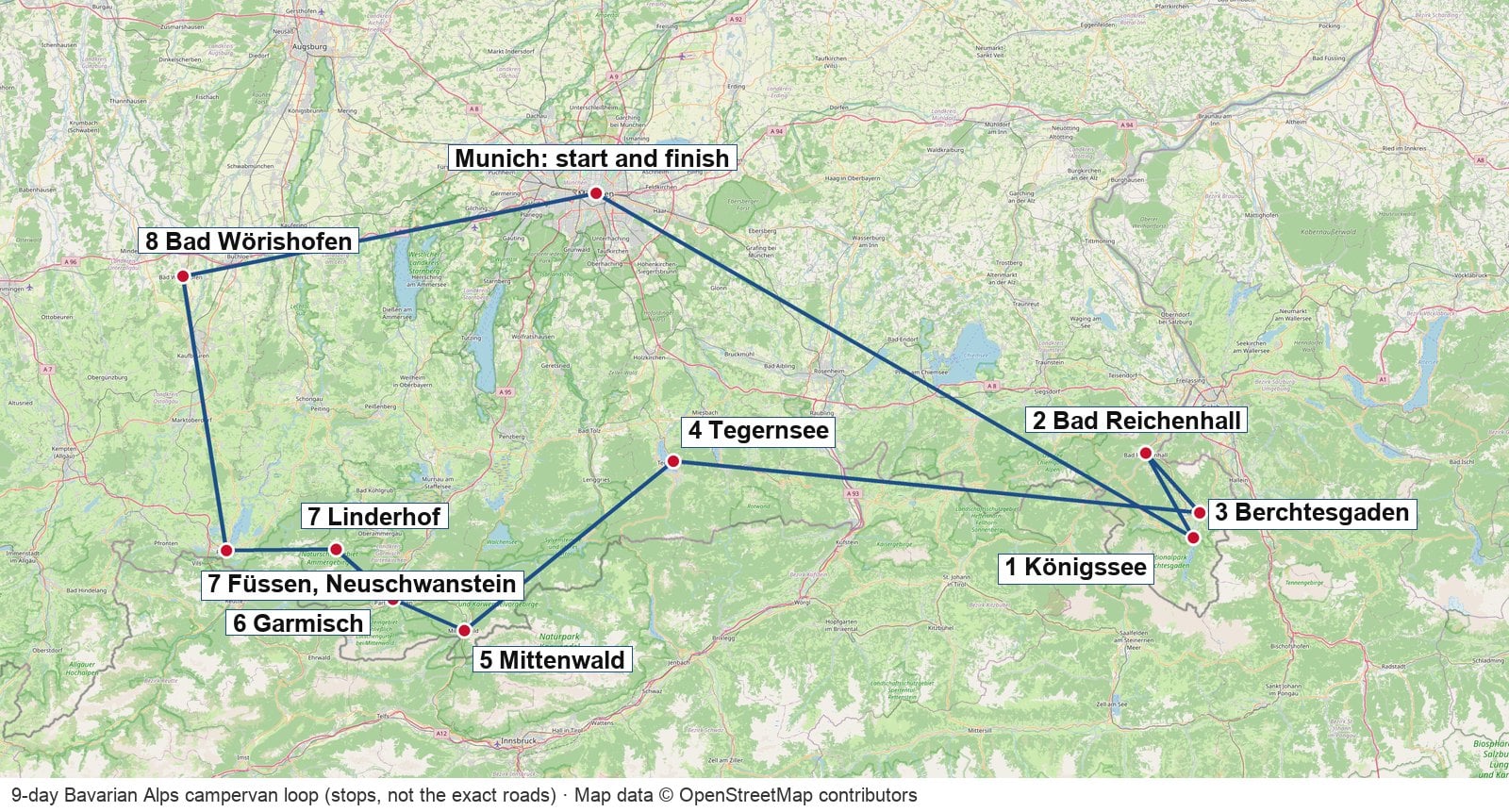
- Munich to Königssee. Pick up the van, stock up, drive a couple hours southeast.
- Berchtesgaden National Park and Bad Reichenhall. Electric boat across the Königssee, a mountain hut, Germany’s tallest waterfall, then a salt-town spa with a free camper lot. The big tourist draws here are the salt mine tour and the Eagle’s Nest; we skipped both due to time constraints but hear they are worth seeing.
- The Jenner. Cable car, a five-mile loop to a hut on the Austrian border, and the one spa on this route I would skip.
- Lake Tegernsee. A sauna on a boat, a lake plunge, and the best Aufguss of the trip.
- Mittenwald. Painted houses under the Karwendel, a steep hut hike, schnitzel. The violin-making museum and the Karwendelbahn cable car are the usual stops.
- Garmisch and the Zugspitze (or the Wank). Most people ride up Germany’s highest mountain. We hiked 3,000 feet up the Wank instead and ate meatloaf with a fried egg at the top.
- Linderhof Palace, then Neuschwanstein. A gorge to skip, a king’s grotto with a boat in it, then the fairy-tale castle an hour west. Sleep in Füssen, the town under it.
- Bad Wörishofen. A spa-town camper park for €18 and a whole afternoon and evening in the Therme: four Aufguss rituals and a swim-up bar.
- Back to Munich. An easy drive, tanks dumped and diesel filled on the way, and the van returned by noon.
Our Roadsurfer Campervan Rental: The Van Villa
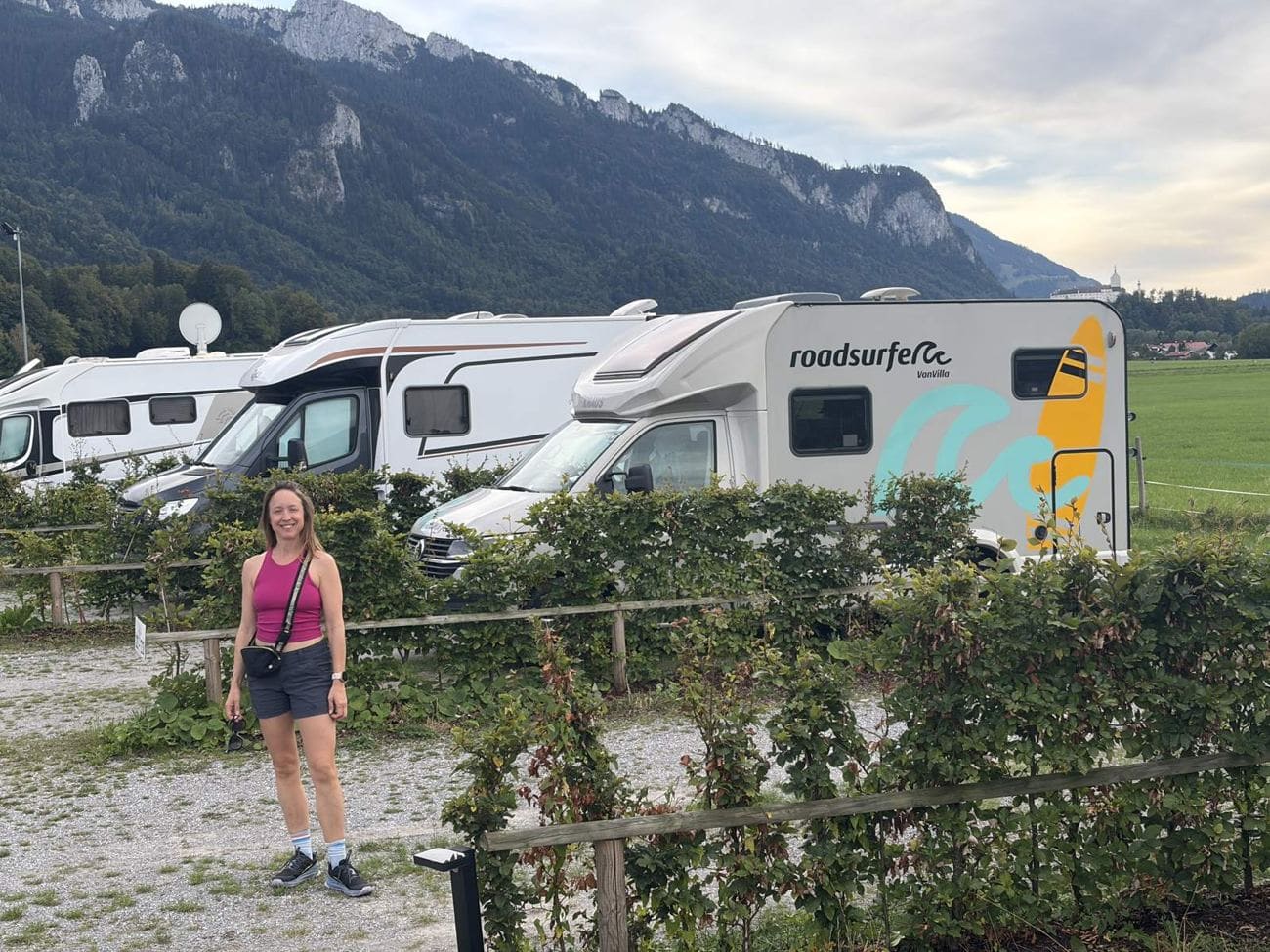
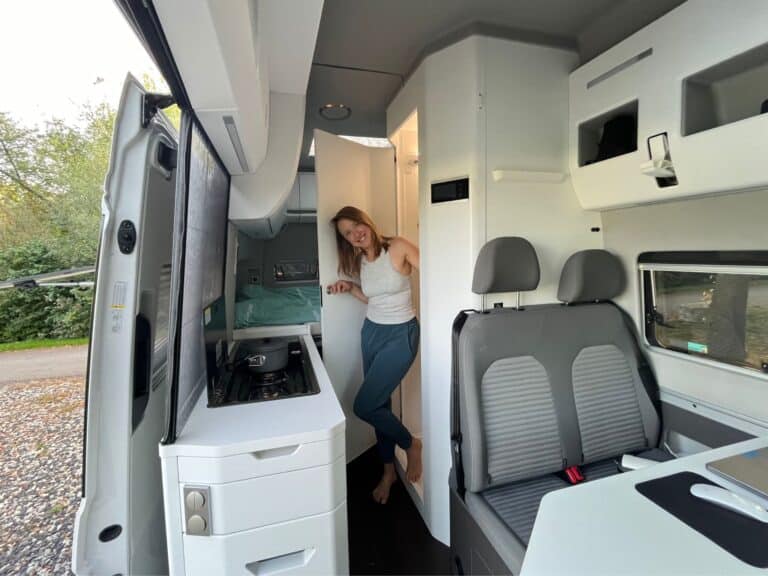
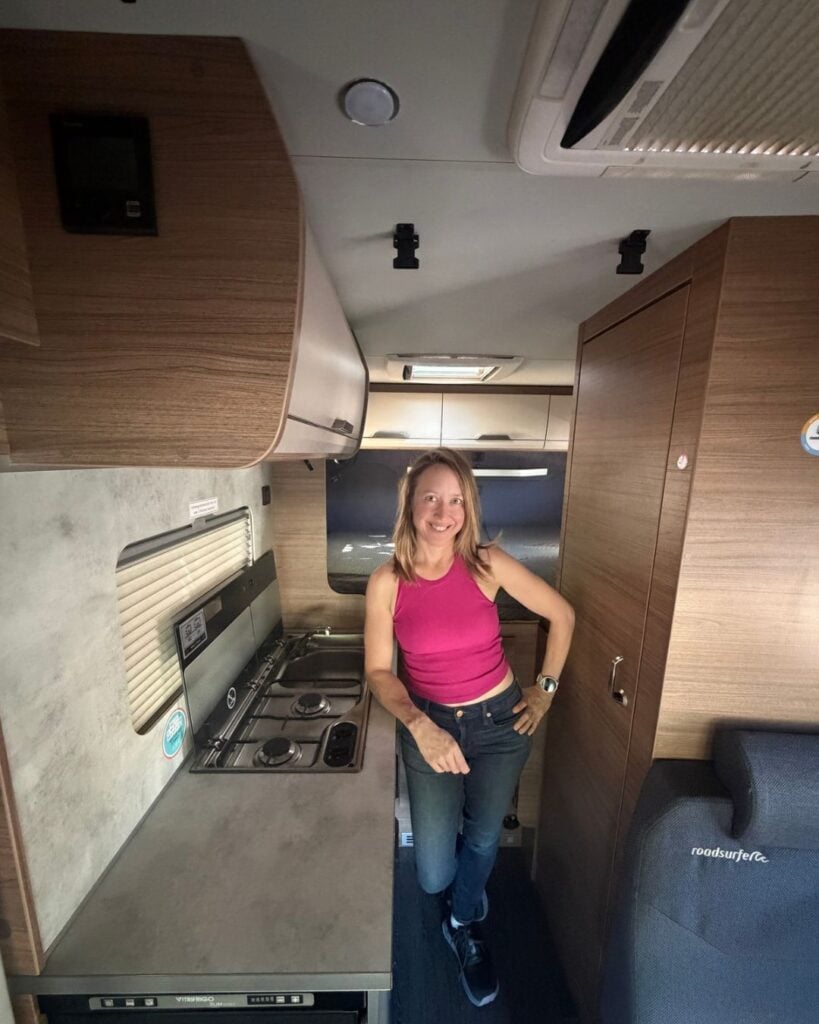
This was our fourth campervan rental in Europe and our third with Roadsurfer. We had the Van Villa, a semi-integrated camper on a VW T6.1 base with a Knaus body that seats four and sleeps four, with a proper bathroom. It drives like a big car and the depot handover was the cleanest we have had. Plus, the gas bill was astonishing: our entire trip only required one tank fill.
For two of us, though, it was a little small: the drop-down upper bed is claustrophobic once it is lowered, and the shower has a lot of fiddly doors and contraptions. If I were booking again for a couple, I would take the Cozy Cottage, which we rented on an earlier trip and which has a real walk-around bed and a roomier bathroom for about the same starting price.
One thing went wrong. Near the end of the trip, the water stopped at the faucets and started leaking out the back of the van, which meant no dishes, no shower, and no toilet flush until we moved to a campground with facilities. Roadsurfer gave us a credit for it afterward, and in our experience they have been good about credits when something goes wrong. Things break on rental vans. What matters is how the company makes it right, and they did. The return in Munich was quick and easy.
You can check Roadsurfer’s current Munich prices and availability here.
Before you pick up your Roadsurfer rental van: what I would tell a friend
Book a hotel for your first night, before you touch the camper. You land jet-lagged, the pickup and the app check-out take hours, and the first night in an unfamiliar van is not where you want to be at 2:30 in the morning when the body clock gives up. One night in a hotel is the minimum. Then collect the van rested.
Write off the first and last day. Pickup, the walk-through, and driving to our first campsite ate most of day one, and the return ate the last morning. Plan the itinerary around the days in between.
Bavaria’s national park campgrounds like long stays. Two of the campgrounds we tried had minimum stays, one of seven nights and one of three, which makes a one-night-per-stop road trip hard. The answer is camper parks (Germans call them Stellplätze): paved or gravel lots with power, often beside a lake or a spa, nearly always cheaper, and no minimum. Every price below is one of those.
Plan on plugging in every other night. In our Van Villa camper, the fridge, the heater, and the hot water all drew on the house battery, and it was low after a single night off power. Book electricity at every second stop and the whole trip is easy. If you have a camper like the Cozy Cottage, the fridge, heater and hot water run on propane, so you can last longer off-grid.
Pay for parking with an app. EasyPark covered our camper spot in Mittenwald and the trailhead parking for the gorge hike. Set it up before you leave home.
Park4Night app: We used the Park4Night app to find free and paid campsites, and have used this for four years in a row. The best app for finding campsites in Europe!
Day 1: Munich to Königssee
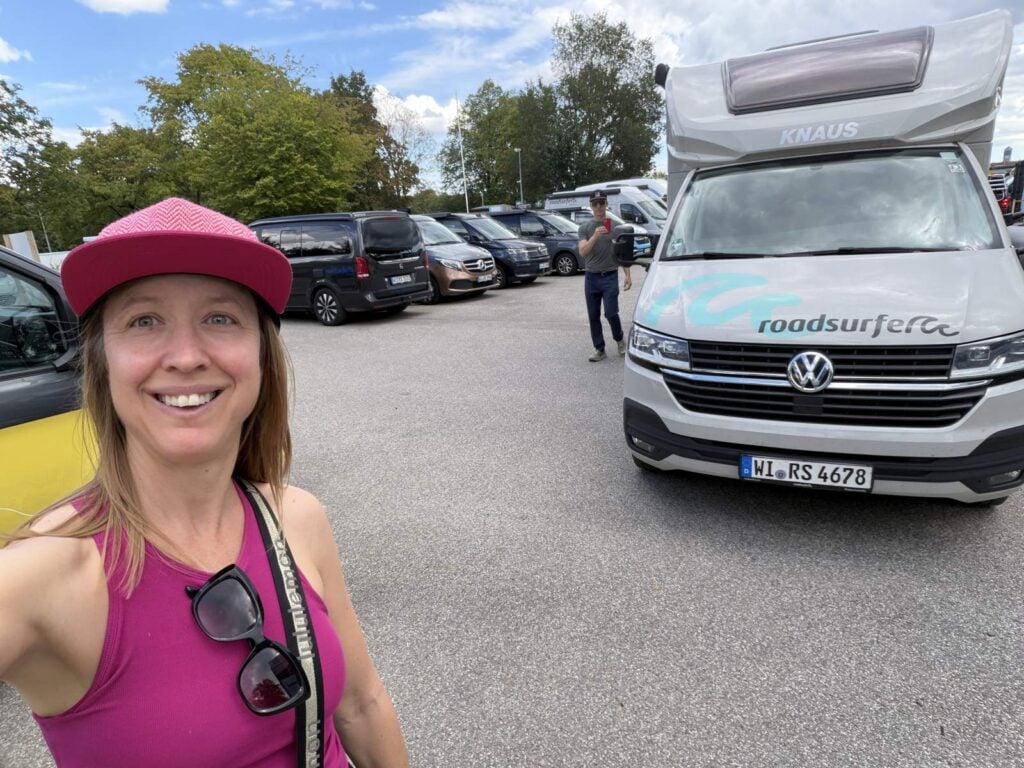
Our van was still being cleaned when we arrived at the Munich depot, so we waited about an hour, then spent a couple more on the app-based check-out, photographing every scratch and testing every system. (It was the cleanest Roadsurfer depot we have seen, and the staff were friendly and apologetic about the wait.) There is a Lidl near the depot: take a €1 coin for the shopping cart, and buy more than you think you need, because you will not want to stop again today.
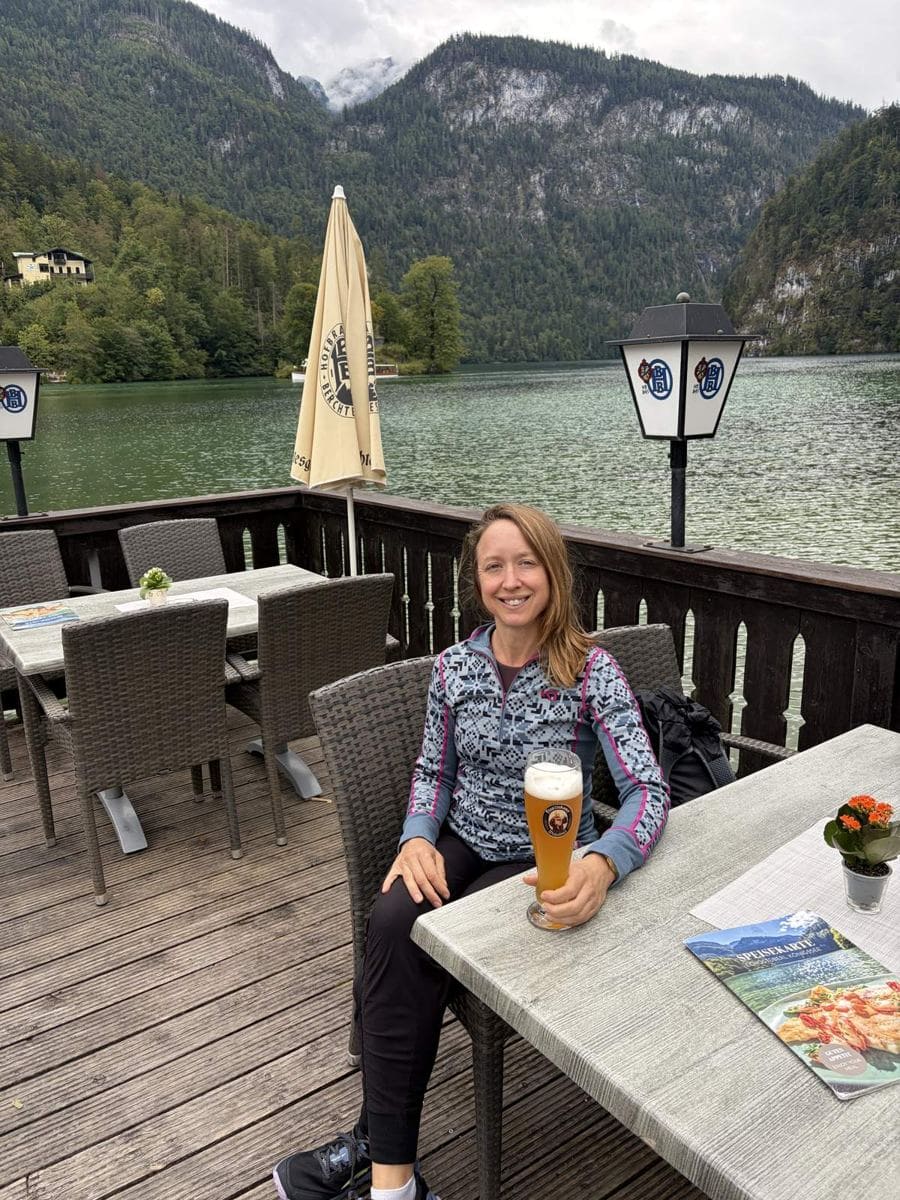
Then it rained on us for most of the two-hour drive southeast to Königssee, tucked against the Austrian border. It is the lake on every Bavaria postcard: a long emerald fjord with cliffs straight up on both sides and the Watzmann massif behind it. We parked in the camper lot at the lake for €25 (no power, which started the battery clock) and spent what was left of the afternoon by the water with a beer, which I recommend as the correct response to a day of logistics and jet lag.
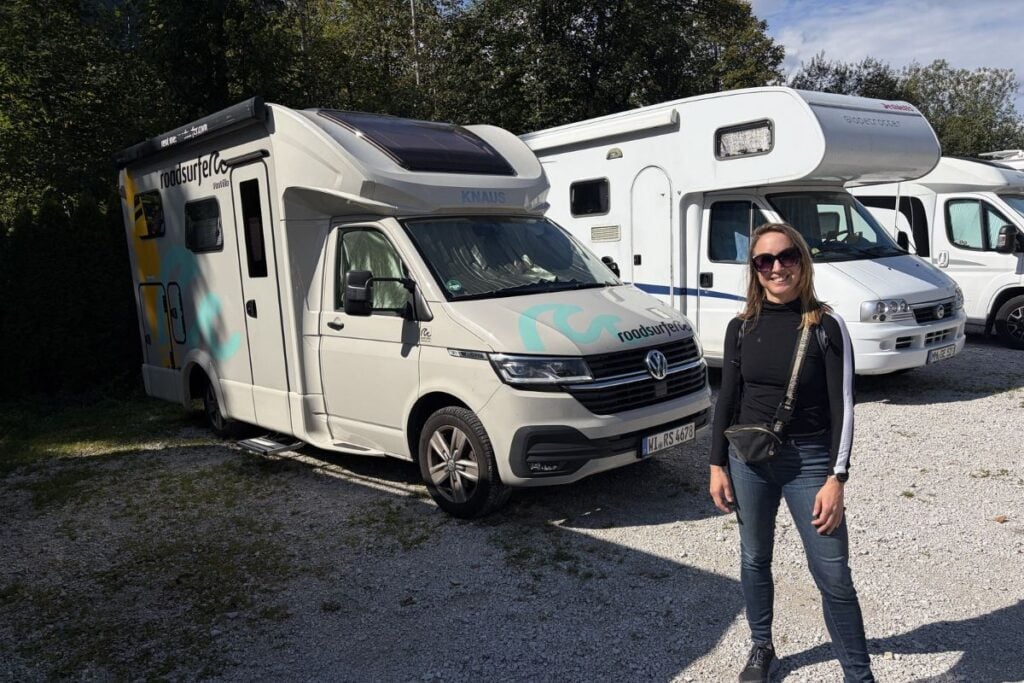
Where we slept: camper parking at Königssee, €25, no electricity.
Day 2: Berchtesgaden National Park, then a salt-town spa
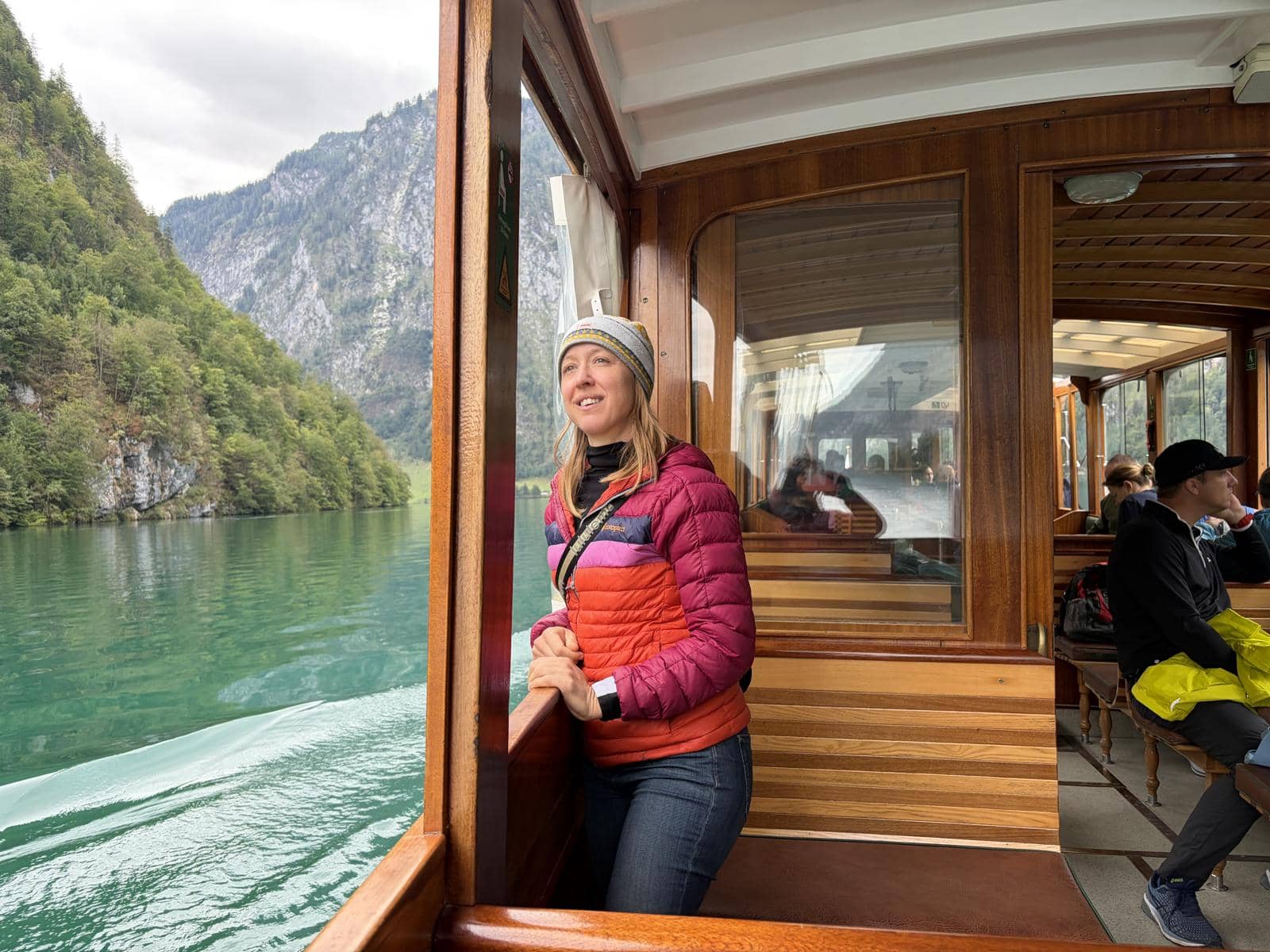
Get on the first electric boat of the morning. Only electric boats have been allowed on the Königssee since 1909, so the crossing is nearly silent, about 50 minutes to Salet at the far end of the lake. From the Salet pier it is a 15-minute walk to the Obersee, a second, smaller lake that sits so still the mountains reflect in it twice.
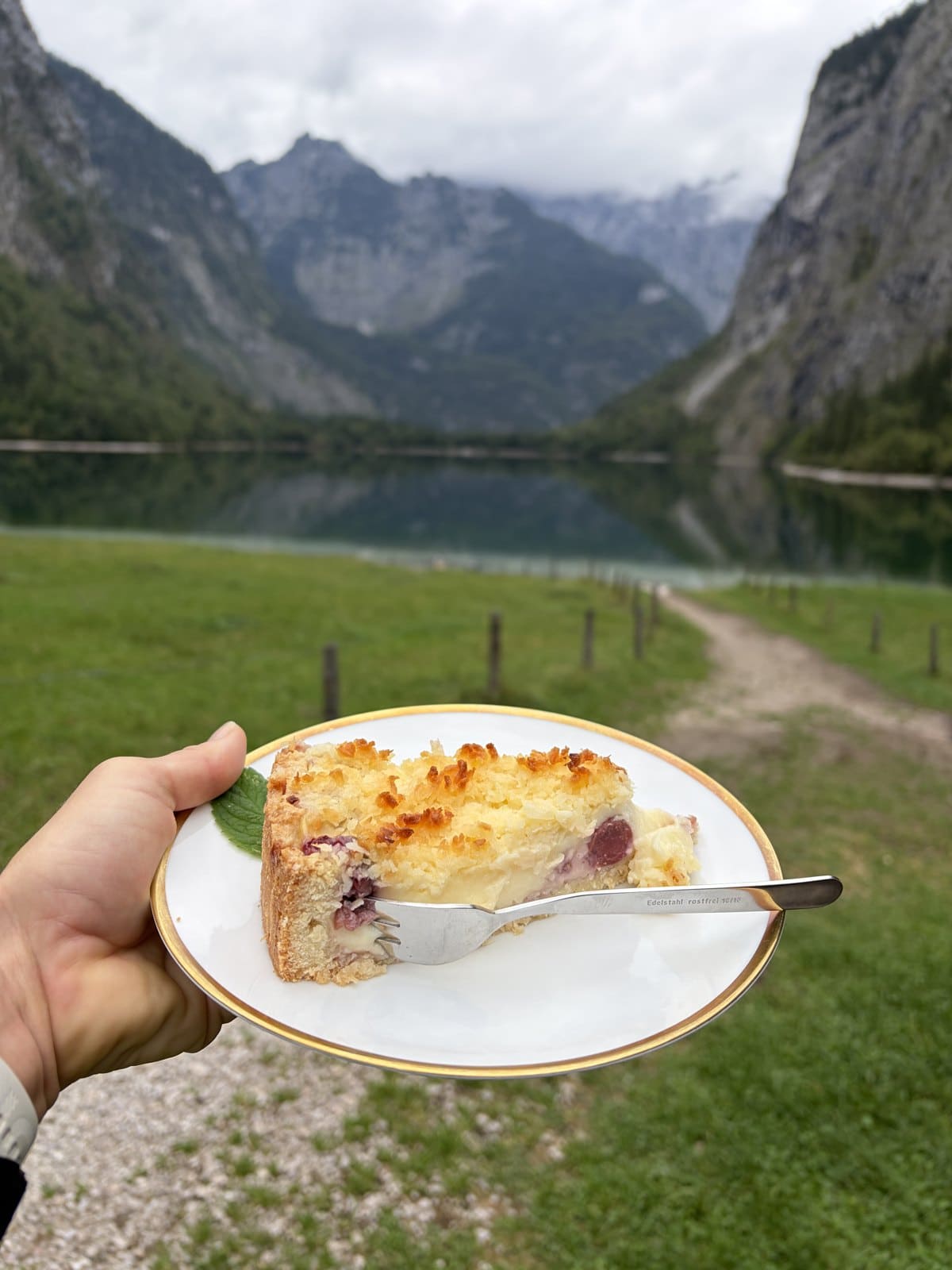
Keep walking along the Obersee to the mountain hut at the far end. We ate cherry cheesecake, dark brown bread, alpine cheeses and fresh milk from the farm’s own cows while looking at the Röthbach waterfall, which drops 470 meters (about 1,540 feet) and is the tallest waterfall in Germany. Most people never see it because it only exists at the end of a boat ride and a hike.
By the time we got back to the van the battery was low, and every campground with power we called was full. So we drove 30 minutes north to Bad Reichenhall, an old salt town, and parked for free in the lot beside the RupertusTherme, the town’s thermal spa. It was enough driving to charge the batteries for one more night without power A 3-hour pass at the therme was €35 each. The water here is naturally salty; there is a salt-and-mineral mud ritual in the steam room that leaves your skin feeling brand new, and the spa restaurant served a goulash for €5.90 and a beer for about €5.50, which is cheaper than most campground meals. We slept in the lot. Free.
Where we slept: the free lot beside RupertusTherme, Bad Reichenhall. Sauna: RupertusTherme, €35 each for three hours.
Day 3: The Jenner, and the spa I would skip
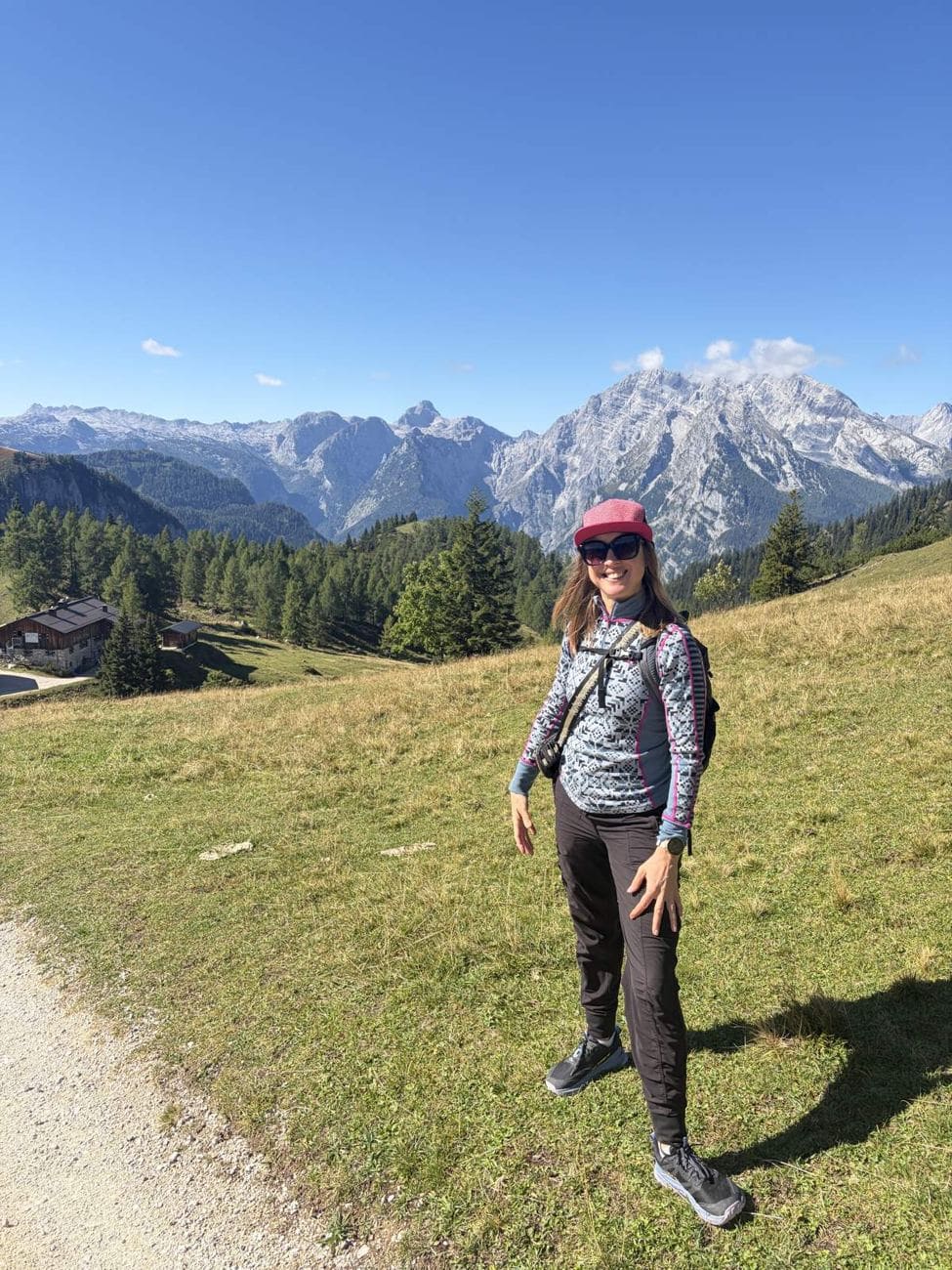
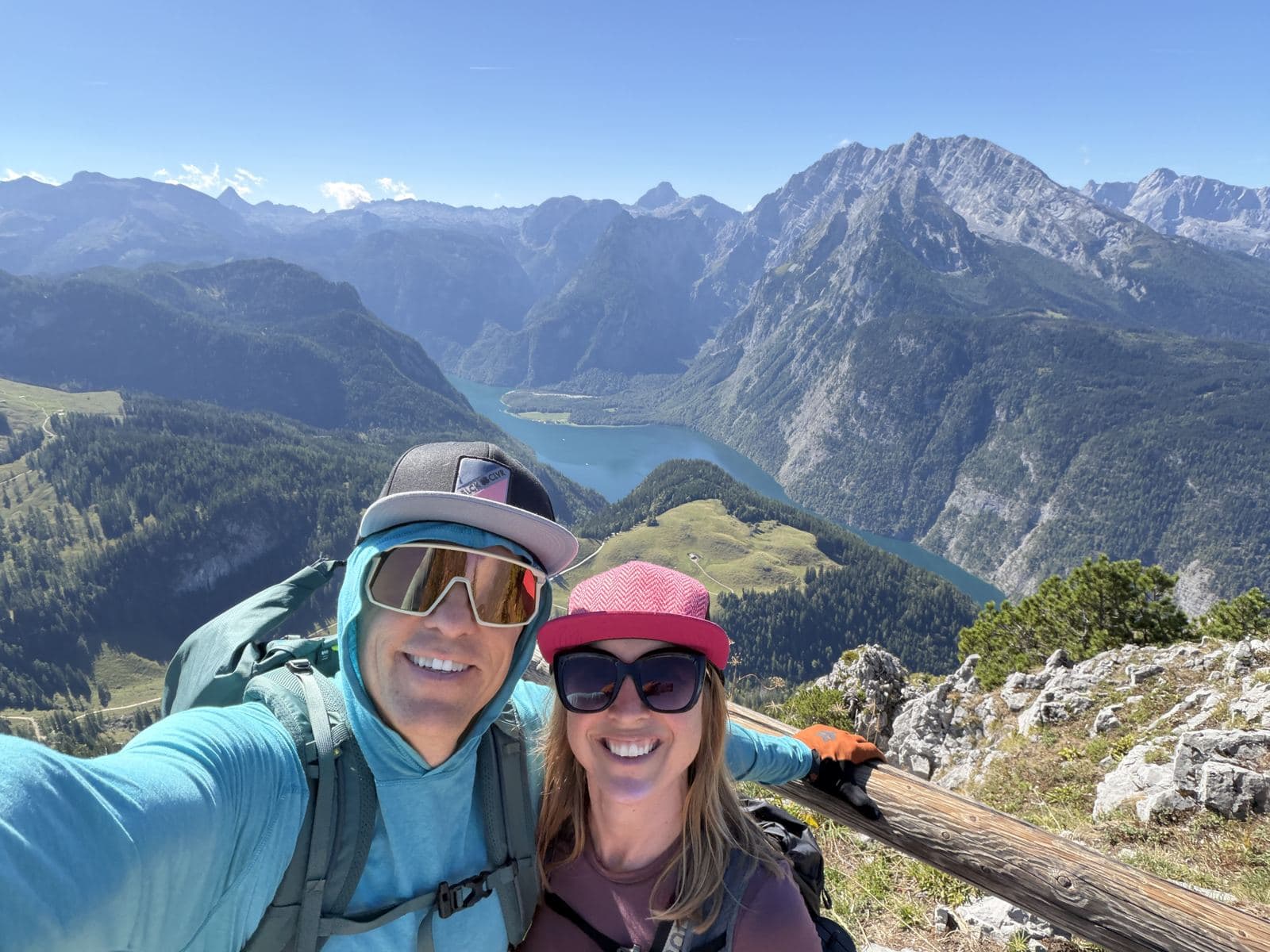
We moved into Camping Resort Allweglehen above Berchtesgaden, which has a camper area below the main campground, for €28 with electricity. Then we took the Jenner cable car up from Königssee, a 20-minute ride in a cabin of our own, and walked a five-mile loop to a mountain hut that sits right on the Austrian border, with the whole lake laid out 2,000 feet below. The descent back to the cable car is the 2,000 feet you just admired.
That evening we tried the Watzmann Therme in the town of Berchtesgaden, which is cheaper than the RupertusTherme and has four saunas, and I would not recommend it. It is small, there was too much smoking around the outdoor areas, and it felt more like a city pool than a thermal spa. The one thing I will remember is the mine sauna, built to look like the inside of the salt mine the region is famous for, down to a mining car and a tunnel; it was my favorite single sauna of the trip, but one good room does not make a spa. If you want a sauna night in this corner of Bavaria, drive back to the RupertusTherme, or save it for Tegernsee.
What we skipped here due to time constraints: two of Berchtesgaden’s biggest draws, because the hikes won. The Berchtesgaden salt mine tour takes you 650 meters into the mountain on a mine train, down two wooden miners’ slides of up to 40 meters, and across an underground salt lake by boat, with an audio guide; it runs daily from 9 to 5 and takes about an hour, and tickets are a bit over €20 for adults (check the current price on its site). The Eagle’s Nest (the Kehlsteinhaus) is the mountaintop house built for Hitler’s 50th birthday, now a restaurant with an enormous view; you reach it by a special bus up a cliff road and a brass elevator through the rock, roughly €31 per adult for the bus and elevator, admission to the house itself free, open from about May to October, and worth booking online because the buses fill. Both are a few minutes from Allweglehen.
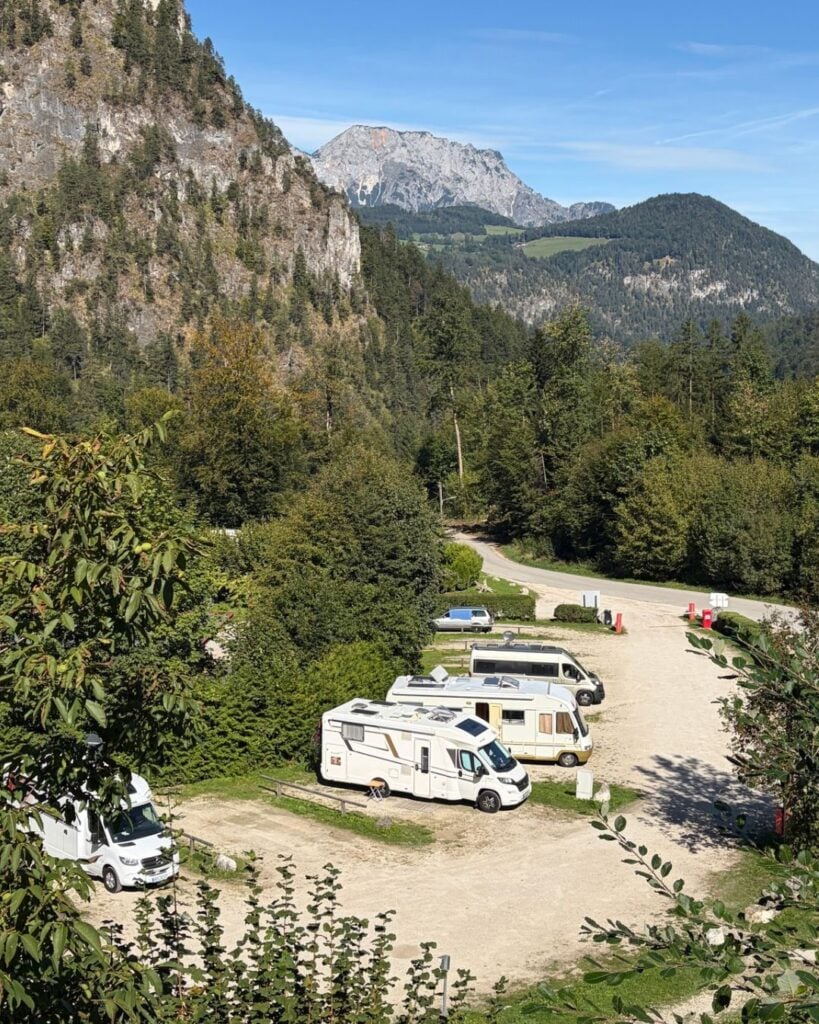
Where we slept: Camping Resort Allweglehen, €28 with electricity. Sauna: Watzmann Therme, Berchtesgaden. Not recommended.
Day 4: Lake Tegernsee and the sauna on a boat
Two hours west, Lake Tegernsee is where Munich goes on a Sunday, and the lake spa, monte mare’s Seesauna, is where I would go back first. About €40 each bought us four hours, and I used every minute of them.
There is a sauna on a boat moored at the lakeshore, which is my favorite sauna place anywhere now. There is a cold plunge straight into the lake, which was 7.5 °C (about 45 °F) the day we went. There are Aufguss rituals, where a sauna master pours scented water over the stones and fans the heat around the room with a towel; we caught one at sunset, and then a peppermint-ice Aufguss that I can only describe as transcendental. And there is an outdoor pool at around 95 °F that faces the mountains, where you float and wonder why American spas are so loud.
If the naked part is making you nervous, it should not. German saunas are nude and nobody cares; I wrote a whole guide to German thermal baths by camper, including the etiquette, so I will not repeat it here. The short version: bring a big towel, sit on it, and relax.
Sauna: monte mare Seesauna, Tegernsee, about €40 each for four hours. From here it is an easy drive on to Mittenwald.
Day 5: Mittenwald
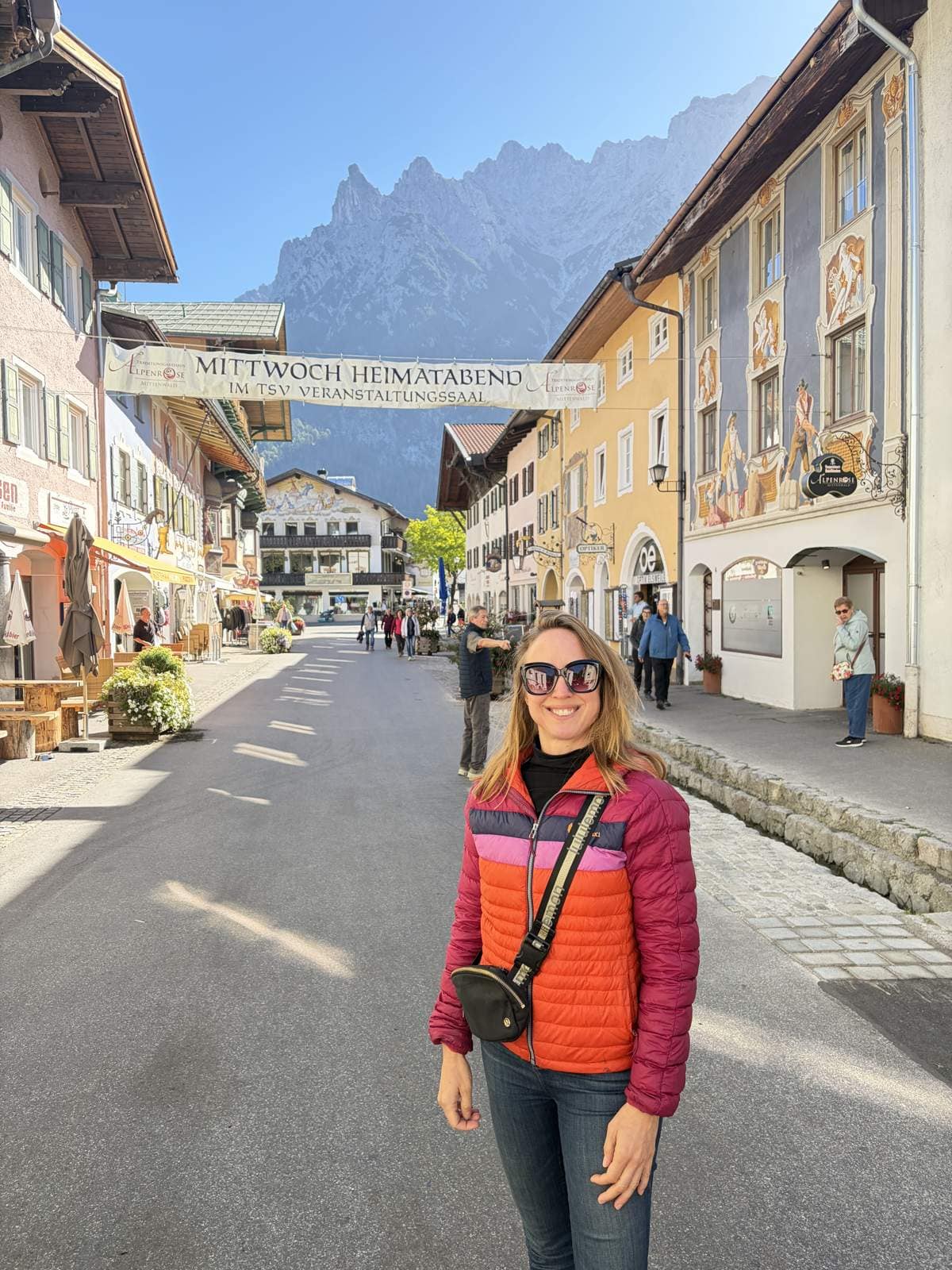
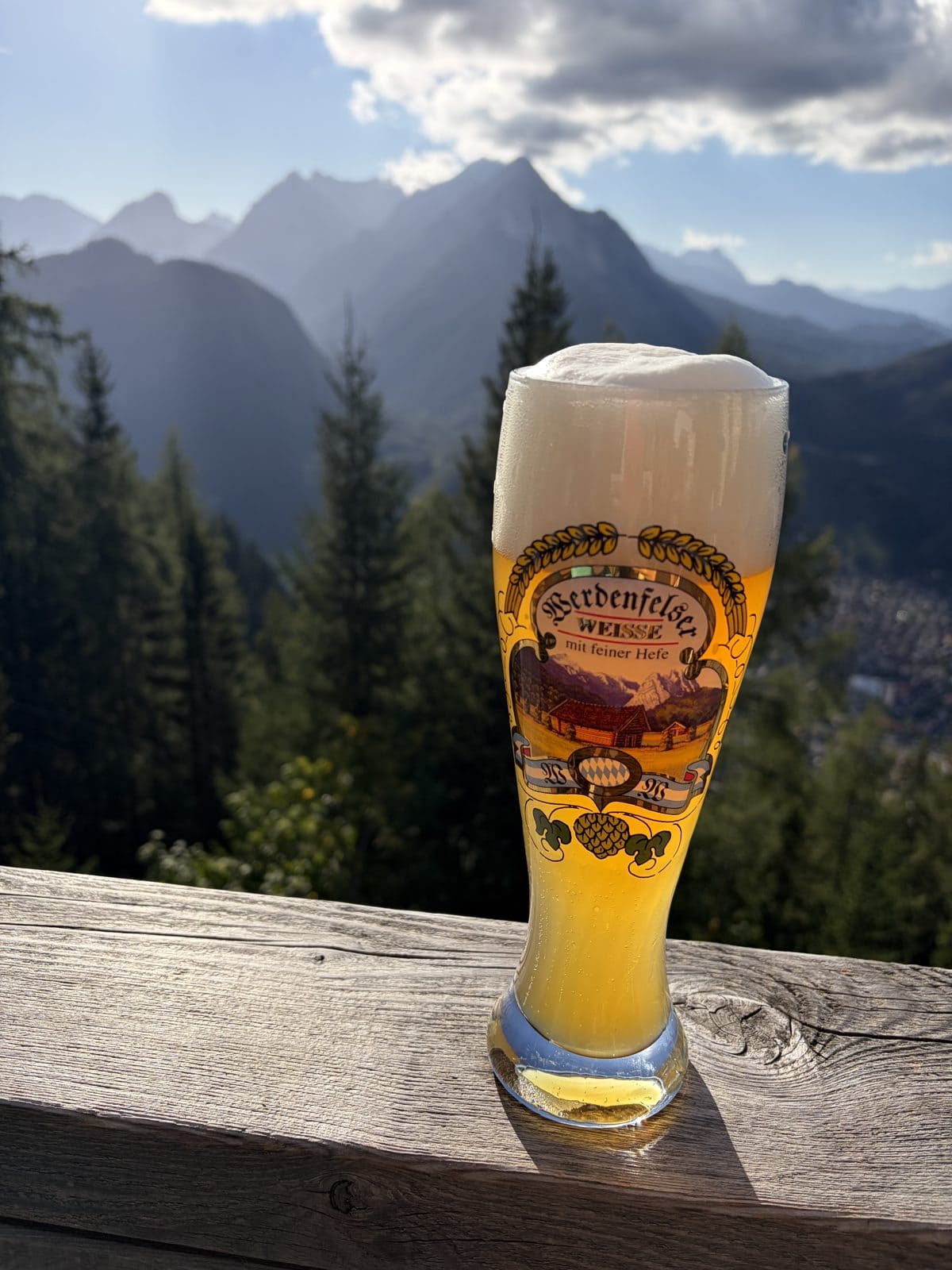
Mittenwald is the Bavarian town you picture when someone says Bavarian town: painted facades, flower boxes, church spire, and the craggy wall of the Karwendel standing straight up behind it. We hiked 2,000 feet in a mile and a half to a mountain hut for goulash and beer, came down, and had schnitzel in town for dinner. That is a complete day.
What we skipped here: Mittenwald has been making violins since the 1680s, when Matthias Klotz came home from his apprenticeship in Italy and started a trade that still runs in the town’s workshops; the Geigenbaumuseum (violin-making museum) on Ballenhausgasse tells that story with Klotz instruments and a working shop, for a few euros, closed Mondays. And if your legs do not want the hut hike, the Karwendelbahn cable car goes from town to 2,244 meters, Germany’s second-highest mountain railway, with a nature center shaped like a giant telescope hanging over the drop at the top; about €39 per adult round trip on the operator’s most recent price sheet. We did not do either one; we hiked, ate and slept.
The camping area in Mittenwald was about €20 a night with power and a camper wash, paid through EasyPark, but no toilets or showers. For one night, with a shower already in the van, that is a fine trade.
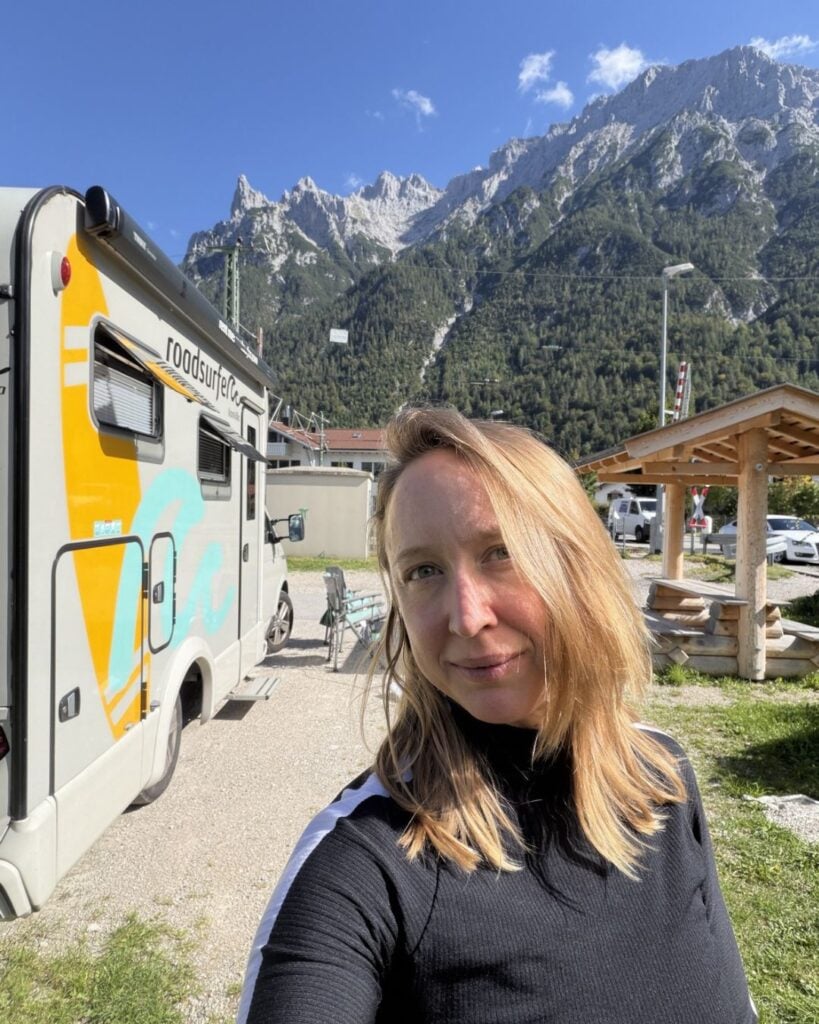
Where we slept: the Mittenwald camping area, about €20 with electricity and a camper wash, no toilets or showers.
Day 6: Garmisch and the Wank
Garmisch-Partenkirchen is the big resort town under the Zugspitze, Germany’s highest mountain. We skipped the Zugspitze itself, and I want to be honest that it is the big one: at 2,962 meters it is the top of Germany, with a glacier, a summit cross you can walk to and a view into four countries on a clear day. You go up from Garmisch on the cogwheel train or from the Eibsee on the Zugspitze cable car, and the summer round-trip ticket is €78 per adult, which covers any combination of the train, the glacier lift and the cable car. For us it was far, it was pricey, and we had better plans; if you go, the Eibsee itself, the turquoise lake at the foot of the cable car, is worth the walk around even if you never ride up. We stayed at Camp am Wank, a camper park at the base of the Wank cable car, for €28 with power and showers, and it was crowded; no reservations, you just sign in at the hut.
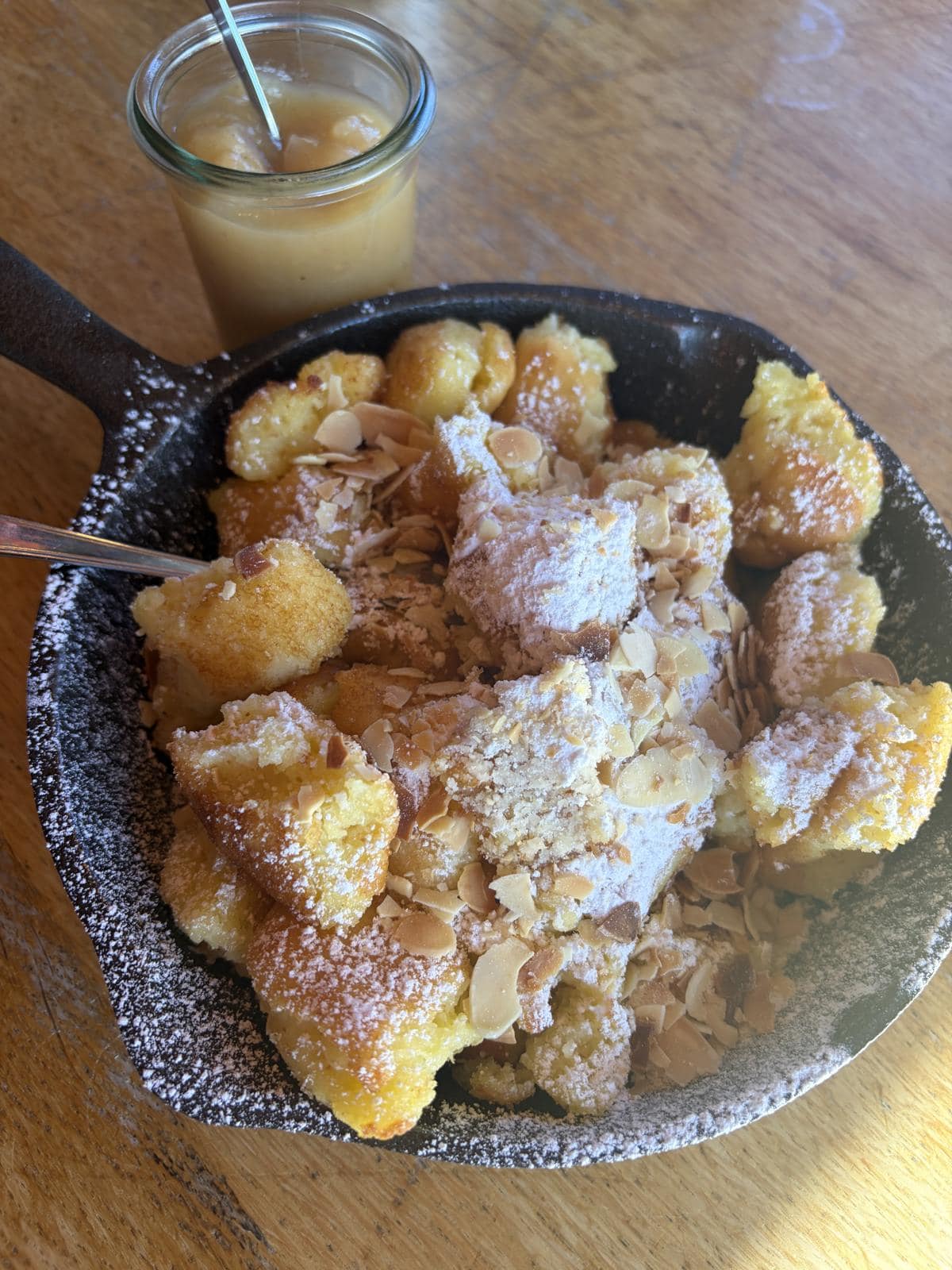
Then we hiked 3,000 feet up the Wank on foot instead of taking the cable car, and ate at the hut on top: Bavarian meatloaf with a fried egg on it, which was weird but doable, and a shredded, sugared pancake with applesauce, which was not weird at all.
Where we slept: Camp am Wank, Garmisch, €28 plus power, with showers.
Day 7: A gorge to skip, a palace, and the castle
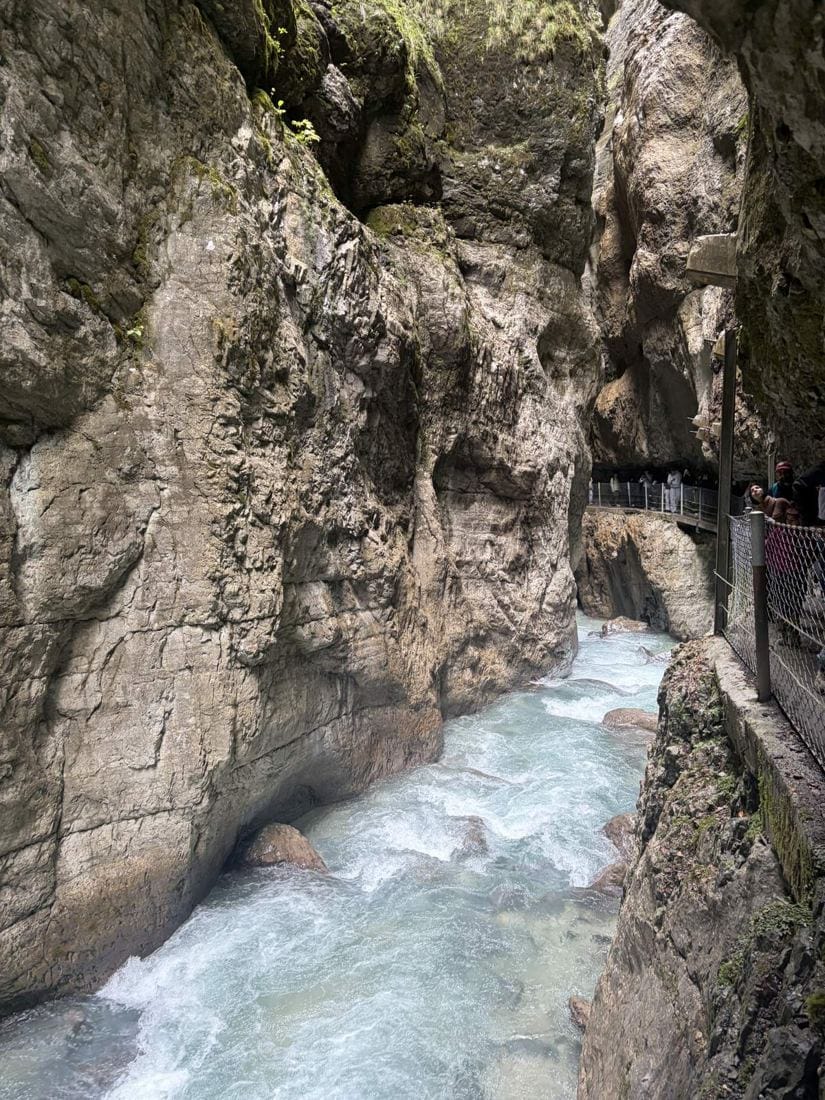
Every guide to Garmisch sends you to the Partnach Gorge, a slot canyon with a walkway carved into the rock and the river roaring underneath. I am going to be the one who does not. We paid €20 for the two of us in late September and it was a crowded mess, shuffling single-file behind a hundred other people. If you can go in the off-season, early in the morning, it is probably spectacular. Otherwise skip it and spend the time on the Wank.
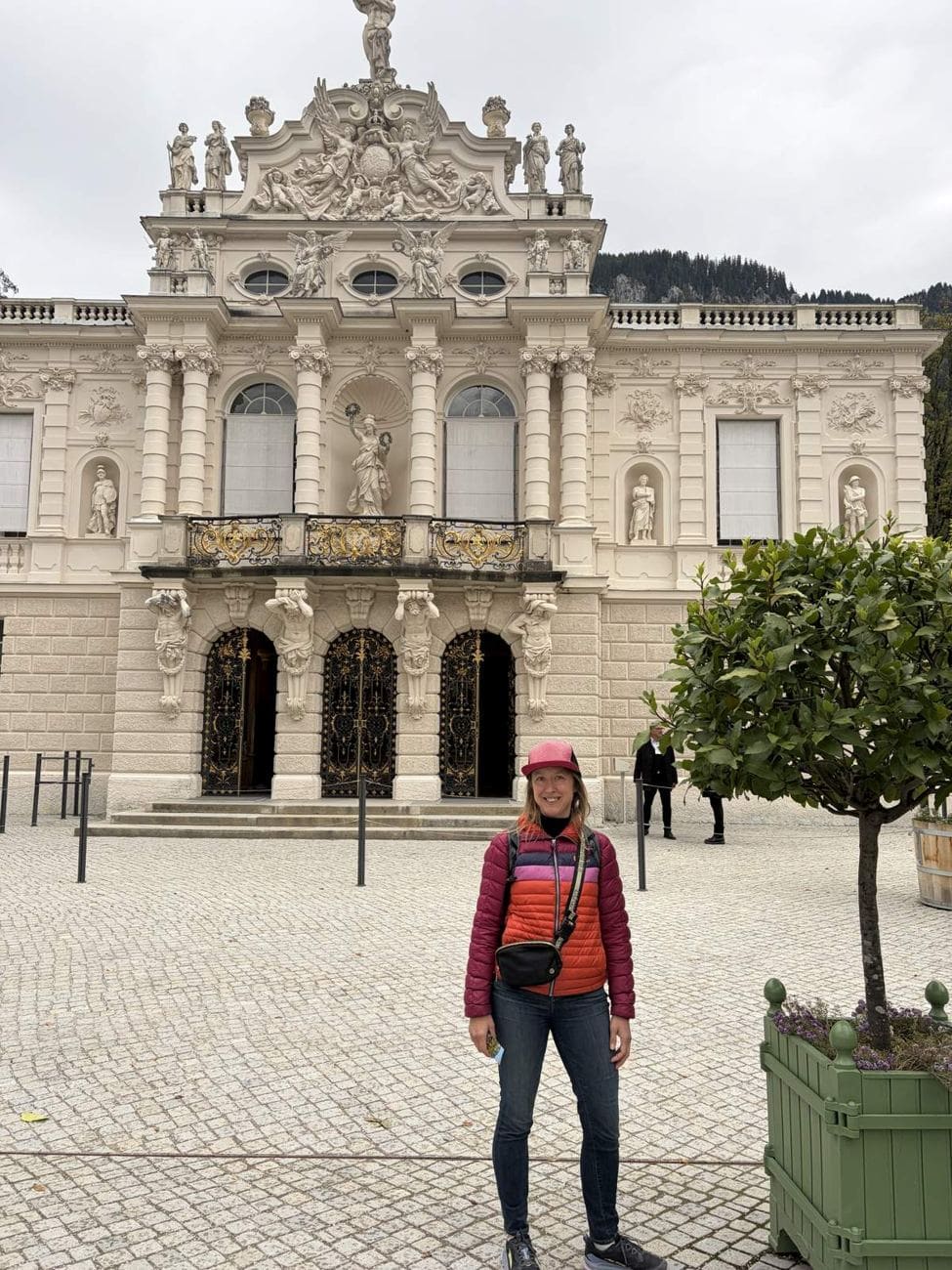
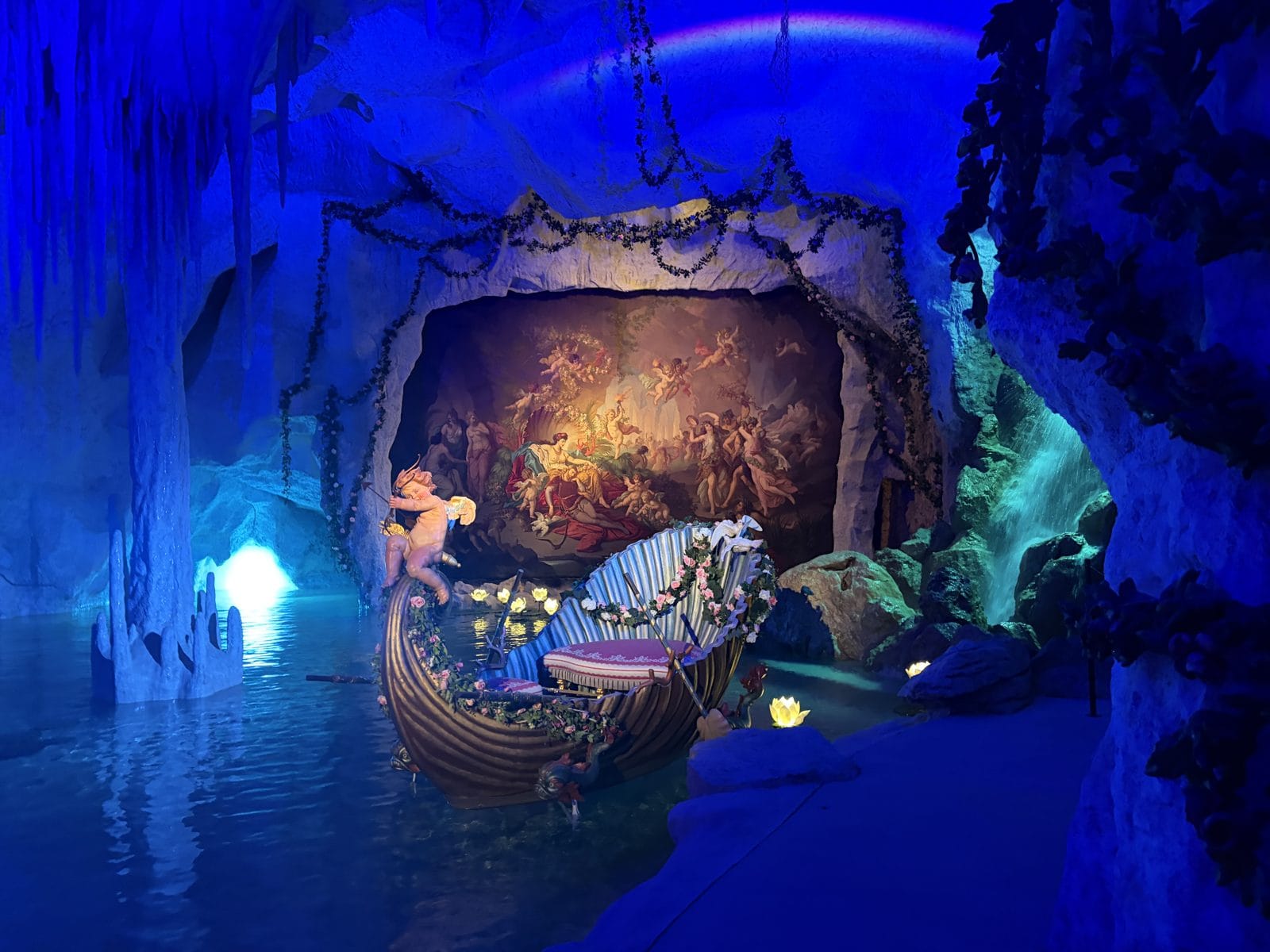
Linderhof Palace, 40 minutes west, is the better stop. It was King Ludwig II’s small, private palace, inspired by Versailles (he idolized the Sun King) and modeled most directly on the Petit Trianon in its park, and it is the only one of his palaces he lived to see completed. Buy the combination ticket, because the thing you came for is in the garden: the Venus Grotto, an artificial cave Ludwig had built so he could sit in a lit cavern watching scenes from Wagner’s Tannhäuser, with a heated lake and a gilded shell boat floating on it. It only recently reopened after a ten-year restoration. I am so glad we added the grotto.
Then Neuschwanstein, and yes, go. The fairy-tale castle that Disney copied is about an hour west of Linderhof by road, and we recommend it: we have been, and it was worth it. Tickets are €21 per adult plus a €2.50 fee from the official online shop, entry is by timed tour, and in summer the slots sell out weeks ahead with only a small same-day allotment at the ticket center, so book an afternoon slot before you fly. Do Linderhof first thing in the morning and you will make it comfortably. (Ludwig’s third palace, Herrenchiemsee, the full Versailles copy on an island in Lake Chiemsee, is an hour east of Munich if you want the set. We skipped that one.)
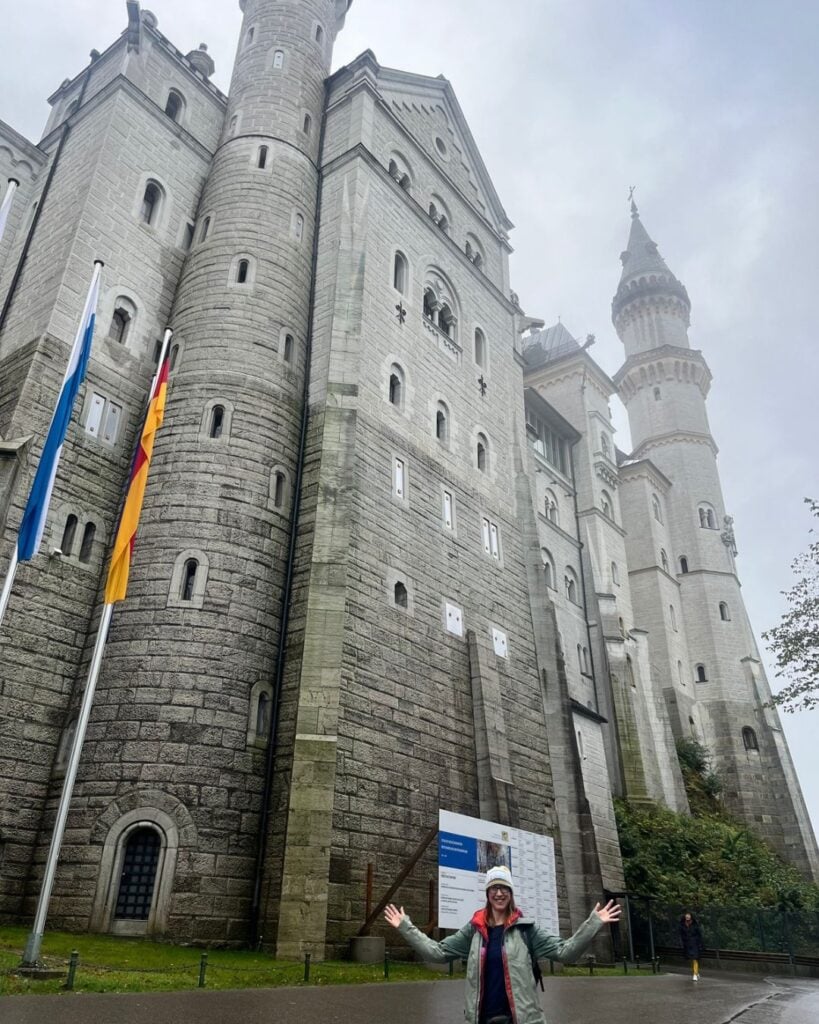
Sleep in Füssen, the small town right under the castle. We stayed in Füssen on our visit, and it is the easy base: the town has a camper park on its edge at around €25 a night (Wohnmobilpark Füssen, electricity extra), plus campgrounds on the Forggensee a few minutes north.
Where to sleep: Füssen, camper park about €25 or a Forggensee campground.
Day 8: Bad Wörishofen, and a whole day in the Therme
From Füssen it is a little over an hour north, out of the mountains, to Bad Wörishofen, a spa town an hour and a half from Munich. Park at the camper park beside the Therme Bad Wörishofen: €18 for the night with electricity and a camper wash, the best value of the trip.
We spent a whole day inside the Therme, and it earned it. Four Aufguss rituals in one afternoon: a honey Aufguss, a hammam with singing bowls, a gong meditation in a sauna built above a koi pond, and a big outdoor cabin sauna where the sauna masters wave flags to move the heat. In between there was pasta with shrimp and crispy pesto, a currywurst, and a beer at the swim-up bar.
Sauna: Therme Bad Wörishofen, a day pass.
Day 9: Back to Munich
The last day is the drive, and it is an easy one: an hour and a half to the Munich depot, with the toilet cassette and both tanks emptied and the diesel and AdBlue filled on the way, because the company checks all of it. Our return was quick and easy, and the day in Munich afterward was for Bavarian food: cheese spätzle with fried onions, and a roast with dumplings and dark gravy.
Do not fly home the same day. Give yourself a night in Munich after the return; the first-and-last-day rule above cuts both ways.
The sauna thread, in one table
| Spa | Where it sits on the route | What we paid | The thing to do |
|---|---|---|---|
| RupertusTherme, Bad Reichenhall | Day 2, after Berchtesgaden National Park | €35 each, 3 hours; camper lot free | The salt-and-mud ritual in the steam room, then goulash for €5.90 |
| Watzmann Therme, Berchtesgaden | Day 3, after the Jenner | Cheaper than Rupertus; camper at Allweglehen €28 | Skip it: small, smoky, more city pool than thermal spa. The mine sauna is the only reason to go |
| monte mare Seesauna, Tegernsee | Day 4 | About €40 each, 4 hours | The sauna on the boat, the lake plunge, the sunset Aufguss |
| Therme Bad Wörishofen | Day 8 | Day pass; camper park €18 with power | Four Aufguss rituals and a beer at the swim-up bar |
Four spas in nine days is not excessive, it is the point, even with one miss. If you want more, the 11-sauna circuit covers Erding, Sinsheim, Baden-Baden and the Black Forest, and none of them repeat.
What a night of camping costs
All of these are camper parks or spa lots, not full campgrounds, and this is what we actually paid:
- Königssee camper parking: €25, no power
- RupertusTherme lot, Bad Reichenhall: free
- Camping Resort Allweglehen: €28 with power
- Mittenwald camping area: about €20 with power and a camper wash
- Camp am Wank, Garmisch: €28 plus power, with showers
- Therme Bad Wörishofen camper park: €18 with power and a camper wash
Over the whole rental our nights averaged somewhere around $25 to $30, with one free. That is cheaper than almost anywhere we have camped in Europe, and my tricks for keeping a European camper trip cheap all still apply: grocery stores over restaurants, Stellplätze over campgrounds, and the spa lot whenever there is one.
Before you go
Three documents will save you a day of head-scratching: the complete guide to renting a campervan in Germany for the paperwork and the rules of the road, my guide to where you can and cannot sleep in a van in Europe for why this route runs on camper parks, and if this is your first European camper trip at all, the Europe camper trip toolkit, which is everything we have learned across four rentals, organized so you can skip our mistakes and go straight to the sauna on the boat.
Go in September. The summer crowds have thinned everywhere except the gorge, the huts are still open, and sauna season is just beginning. Bring a big towel.
Frequently asked questions
How many days do you need for a Bavarian Alps campervan road trip?
Nine days covers the loop from Munich through Königssee, Berchtesgaden, Tegernsee, Mittenwald, Garmisch, Linderhof, Neuschwanstein and Bad Wörishofen with time for hikes and spas, counting the pickup morning as day one and the return as day nine. Add a hotel night in Munich before you collect the van.
Can you park a campervan overnight at Königssee?
Yes. The camper parking lot at Königssee charged €25 a night with no electricity when we stayed. Camping Resort Allweglehen above Berchtesgaden has a camper area with power for €28.
Can you sleep in a campervan at a German thermal spa?
Often, yes. We slept free in the lot beside the RupertusTherme in Bad Reichenhall and paid €18 with electricity at the camper park beside Therme Bad Wörishofen. Not every spa allows it, so check the spa’s own parking page before you count on it.
Is the Partnach Gorge worth visiting?
In the off season and early in the morning, probably. In late September it was a crowded, single-file shuffle for €20 per couple. If you have one day in Garmisch, hike the Wank instead.
Do you need a vignette to drive a campervan from Bavaria into Austria?
Not on local roads, but the moment you use an Austrian motorway you need a digital vignette registered to the van’s plate before the first kilometer. A 1-day vignette costs €9.60 and a 10-day costs €12.80, bought online at asfinag.at. Germany has no vignette for vans under 3.5 tons.
Sources (prices checked October 2026): camper, spa, hut and ticket prices are what we paid on this trip; Bayerische Seenschifffahrt (electric boats since 1909, Salet and the Obersee walk); Röthbach Waterfall (470 m, Germany’s tallest); Linderhof Palace and the Bavarian Palace Administration (Versailles and the Petit Trianon, the only completed palace, the Venus Grotto restoration, combination ticket €18); austria.info and oesterreich.gv.at (vignette prices and immediate online validity); Camp am Wank (no reservations, sign in at the hut); Roadsurfer vehicles (Van Villa and Cozy Cottage specs and starting prices); the stops we skipped: Herrenchiemsee (admission €11, boat from Prien), Salzbergwerk Berchtesgaden (mine train, slides, daily 9 to 5), Berchtesgaden tourism and kehlsteinhaus.de (bus and elevator about €31, admission free, May to October), Alpenwelt Karwendel (Geigenbaumuseum), Karwendelbahn price sheet (2,244 m, adult round trip €38.90), zugspitze.de (summer ticket €78, 2,962 m), neuschwanstein.de (€21 plus €2.50 booking fee).