I Just Spent 10 Days in a Rental Campervan in Germany. Here’s the Complete Guide to Renting One Yourself.

How to rent a campervan in Germany, from someone who just did it: who can rent, what to bring to the depot, which camper to choose, what it costs, where you can legally sleep, and what happens when something breaks.
*This post may contain affiliate links. Please read our disclosure policy for more info.
We love exploring Europe by camper: it makes our trip flexible, we don’t have to move baggage constantly, and we can drive gorgeous alpine roads.
Kristin’s Europe toolkit
What I actually use in Europe
- Daily DropCheap flights on points
- AiraloPhone data
- Free Packing ListWhat I bring
Plus, it’s super easy. If you are American: you can rent one with a regular US license at 21 (18 with a European license), a credit card for a deposit that was €800 for us in Munich, and a passport. Unlimited mileage, a second driver and basic camping gear are included. Nightly starting prices run from about $65 for a small VW camper to $95 for a semi-integrated van with a bathroom, before fees and insurance. Wild camping is generally illegal in Germany, but camper parks are everywhere and cost us €18 to €35 a night.
The honest part: the first and last days are a wash, some of the campgrounds in the Bavarian Alps have minimum stays that make one-night hops hard, and a battery-only van gives you about one night off-grid. None of that is a reason not to go. It is just the stuff nobody tells you.
Roadsurfer provided our camper rental for this trip. As always, everything here is my honest experience.
This was our fourth campervan rental in Europe and our second with Roadsurfer, so this guide is Germany-specific and written from the driver’s seat. For the continent-wide picture, start with everything I have learned renting campervans in Europe, and for the route we actually drove, the 8-day Bavarian Alps itinerary is its own article.
Camper or hotels and Airbnbs in Germany? The honest pros and cons
We have done Germany both ways on the same trip: hotel nights in Munich at the start and the end, and the camper for everything in between. That is the combination I would recommend to almost anyone, and here is why.
Where the camper wins
- You unpack once. Nine stops in nine days with a hotel means nine check-ins, nine suitcases up nine staircases. In the van the drawer is the drawer the whole trip.
- You sleep where the view is. Our camper spots were a lakeside lot at Königssee, a meadow campground above Berchtesgaden, a field under the Karwendel in Mittenwald and the parking lot of a thermal spa. Hotels with those views cost real money; we paid €18 to €35 a night, and one night was free.
- The plan can change at lunch. When the Watzmann Therme turned out to be a dud, we were not tied to a reservation. When the battery ran low, we drove to a spa with a free lot instead. A hotel itinerary cannot do that.
- Your kitchen comes with you. A Lidl run and a two-burner stove replaced most restaurant meals, and the mountain huts covered the rest. In resort towns like Garmisch, that is the difference between a cheap trip and an expensive one.
- The drives are the point. The German Alpine Road through the Alps is one of the best road trips in Europe, and a camper turns every pull-off into a lunch stop or a nap.
- Dogs are welcome. Every Roadsurfer model takes dogs for a one-time fee; try that with nine hotels.
Where hotels and Airbnbs win
- The first night. You land jet-lagged after a long flight, and a hotel bed, a real shower and a sauna floor fix that better than an unfamiliar van in a parking lot. We book a hotel for the first night (two or three is even better) and collect the camper rested. The last night in Munich is the same story.
- Cities. Munich is a hotel town. A camper in a city is a parking problem and a low-emission-zone problem; you want it for the mountains, not for the beer halls.
- Bad weather and jobs to do. It rained on us the first day, the upper bed was claustrophobic for Tom, the shower doors were fiddly, and on day nine a pipe burst behind the bathroom wall. A hotel has none of those chores: no tanks to dump, no toilet cassette, no battery to watch.
- Power and comfort. A battery-only camper gives you about one night off-grid before the fridge and the heater need a hookup, so the itinerary bends around electricity. A hotel room just has it.
- The lost days. Pickup and the walk-through eat most of day one, the return eats the last morning, and the deposit sits on your card for up to a month. None of that exists with a hotel key.
- Long stays in one place. If you want a week at one lake, a campground or an Airbnb beats a camper on price and comfort, and the Bavarian campgrounds with minimum stays were built for exactly that.
- Checkout. You leave a hotel room as it is. A rental camper goes back swept, wiped, with the tanks and the toilet cassette emptied and the fuel and AdBlue topped up, or you pay for each one. That is a couple of hours of your last evening.
The honest verdict: for a mountain road trip with a new place every night, the camper wins, and it is not close. For a city break, a long stay in one spot, or your first jet-lagged night, book the room. We do both on every trip, and the camper is the part we talk about afterward.
How to Choose a Camper Rental in Germany
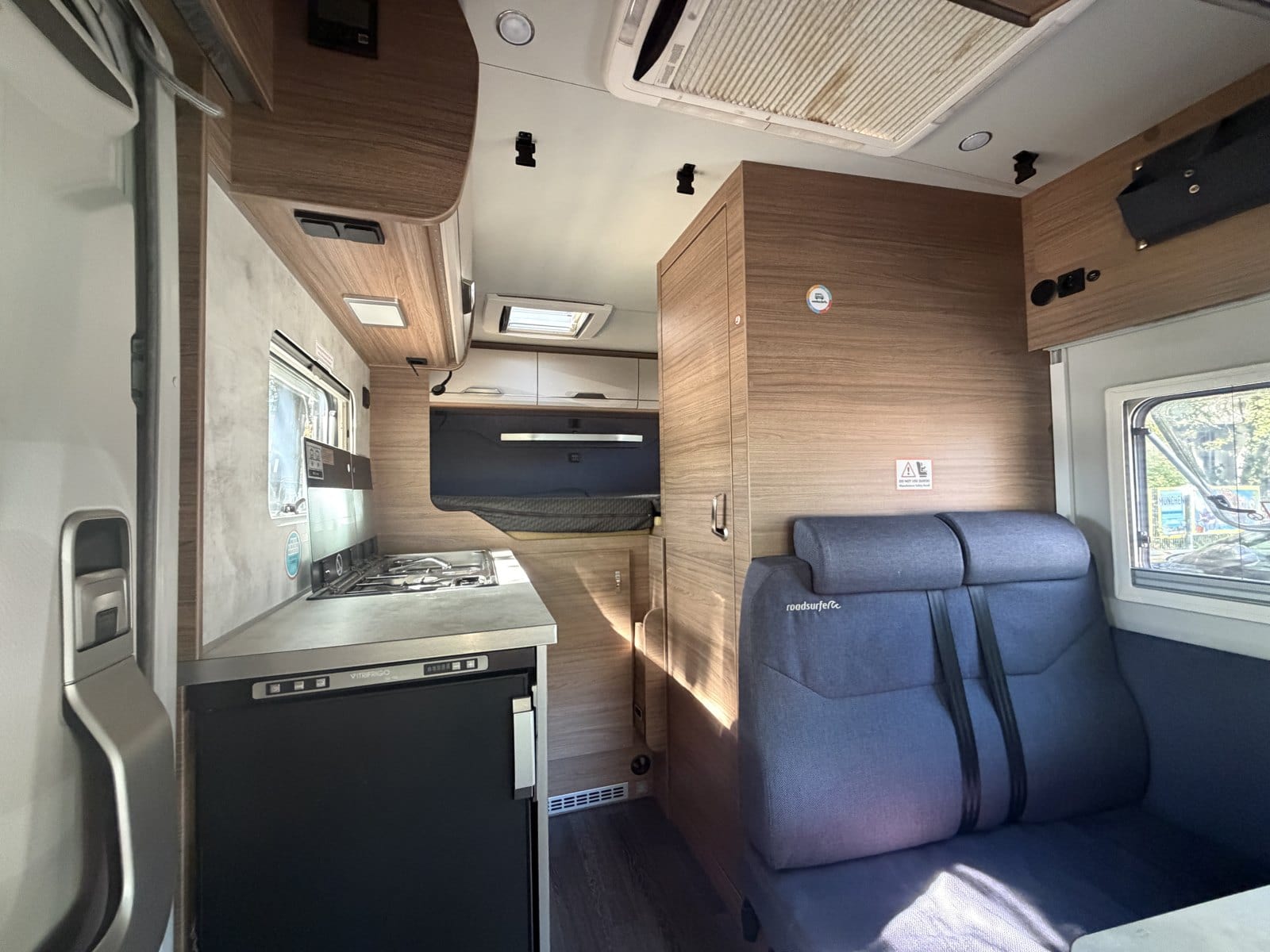
Roadsurfer‘s European fleet runs from a VW pop-top with no toilet to a full motorhome. These are the models we would consider for two people, with Roadsurfer’s starting prices on its US site, before fees:
| Model | What it is | Seats / sleeps | Starting price |
|---|---|---|---|
| Beach Hostel | VW California Beach pop-top, no toilet or shower | 5 / 4+1 | from $65 a night |
| Surfer Suite | VW camper van with a kitchen | 4 / 4 | from $69 a night |
| Couple Cottage | Sprinter-style van with a bathroom | 4 / 2 | from $75 a night |
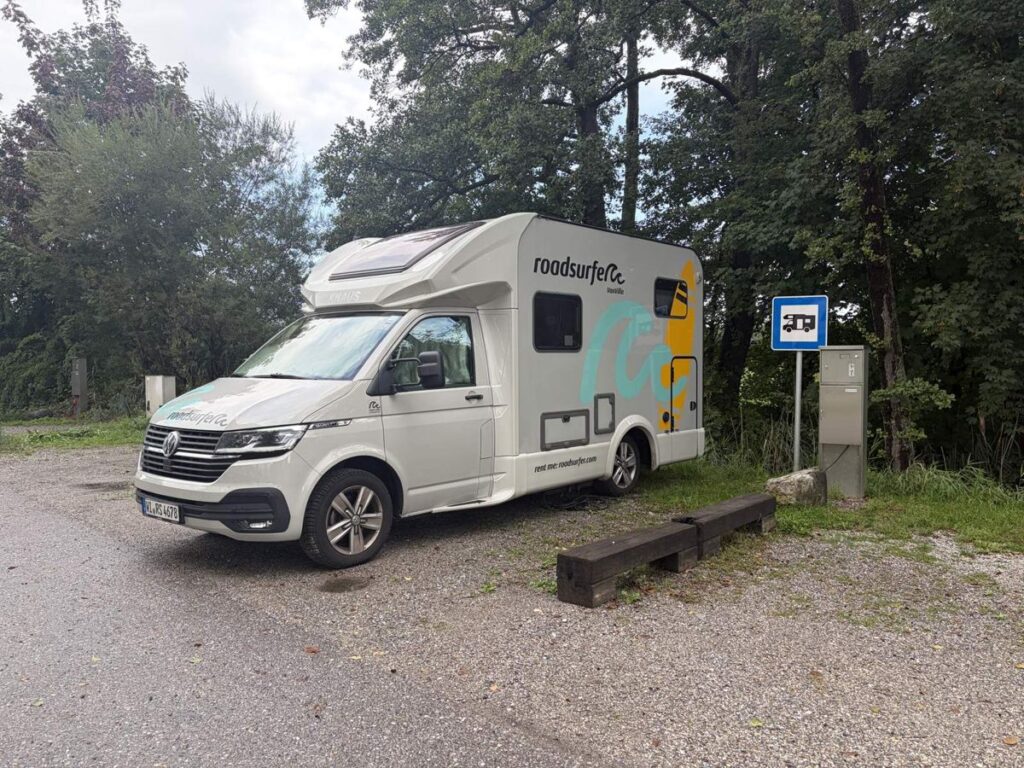
| Van Villa | Semi-integrated camper on a VW T6.1 with a Knaus body; bathroom with shower and toilet | 4 / 4 | from $95 a night |
| Cozy Cottage | Semi-integrated camper; bathroom with warm shower and toilet, a fixed bed | 3 / 2+1 | from $95 a night |
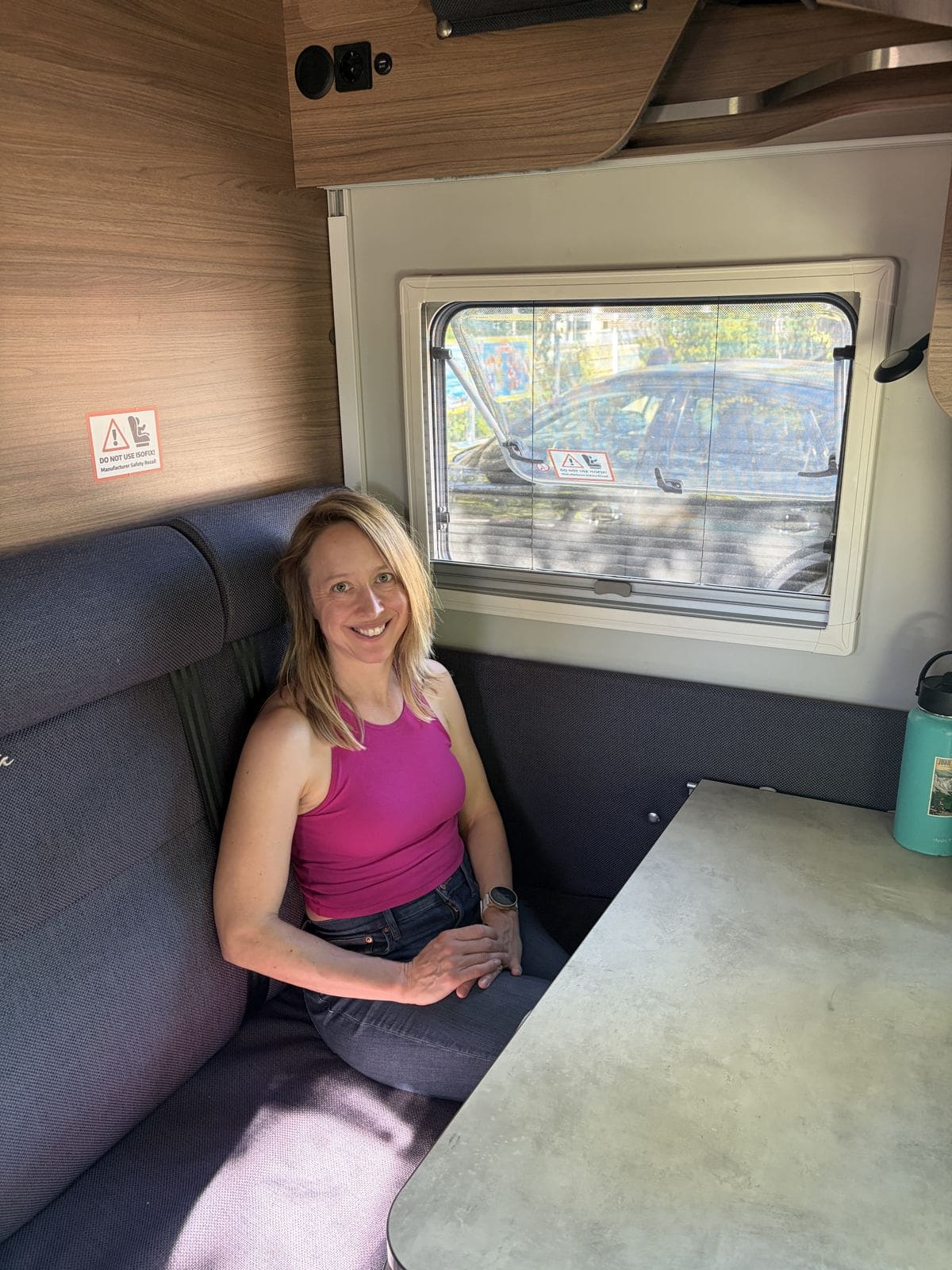
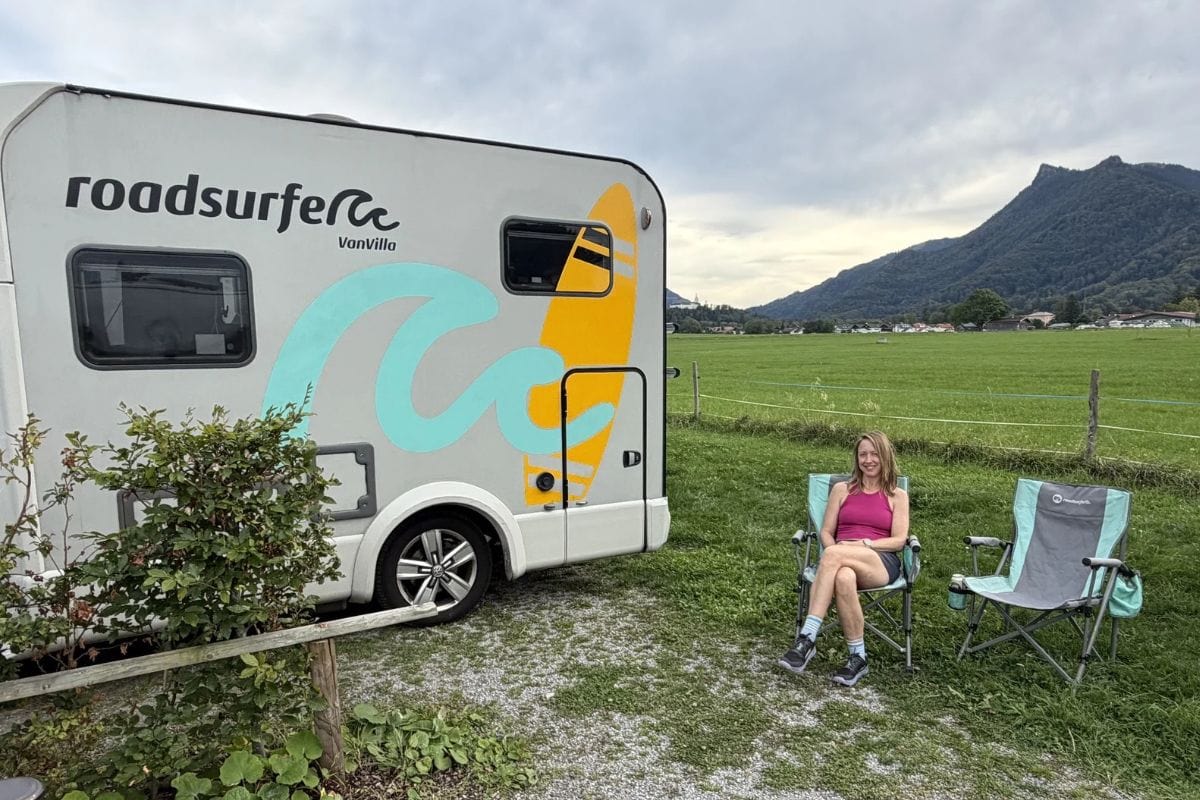
Our verdict after ten days in the Van Villa: it drives beautifully, it has a real bathroom, and it was a little small for the two of us. The upper bed drops down from the ceiling and feels claustrophobic once it is lowered (Tom gave up on it at 2:30 one morning), and the shower has a lot of fiddly doors and weird contraptions to fit together. If you are a couple, I would recommend the Cozy Cottage, which we rented on an earlier trip: a larger bed, a roomier bathroom, a bigger kitchen, and the same starting price. My Roadsurfer review has a full tour of it.
Whatever you choose, know how your van is powered. In our Van Villa the fridge, the heater and the hot water all ran off the house battery, and it was low after one night without hookups. That is normal for European rentals, which are built for campgrounds rather than for boondocking, so plan on electricity every other night at least. The Cozy Cottage ran the fridge, hot water and heater on propane, so it lasted longer without a hookup.
What to check before you pick a model, whether it is Roadsurfer or anyone else:
- The bed. A fixed bed you can walk around (the Cozy Cottage) or a drop-down bed from the ceiling (the Van Villa)? After one night under the drop-down, Tom slept in the dinette.
- Toilet and shower. The VW pop-tops have neither. A bathroom is what lets you use the cheap camper parks that have no facilities, like ours in Mittenwald.
- Standing room and the kitchen. Can two people pass each other, and is there a real two-burner and a fridge that runs on the road? Then check whether the kitchen box is included or an extra.
- How it is powered. Ask what runs on the house battery and how long it lasts without hookups. Ours gave us one night.
- Mileage. Roadsurfer’s is unlimited; not every company’s is.
- Weight and length. Under 3.5 tons keeps you on a regular license and off the toll and parking rules for bigger rigs; shorter parks in town lots.
- What is included. Bedding, towels, chairs, the kitchen box and the insurance package are the lines that move the price. Read the extras page before you compare two quotes.
- The dog fee, if you bring one.
What to bring to the Roadsurfer rental depot
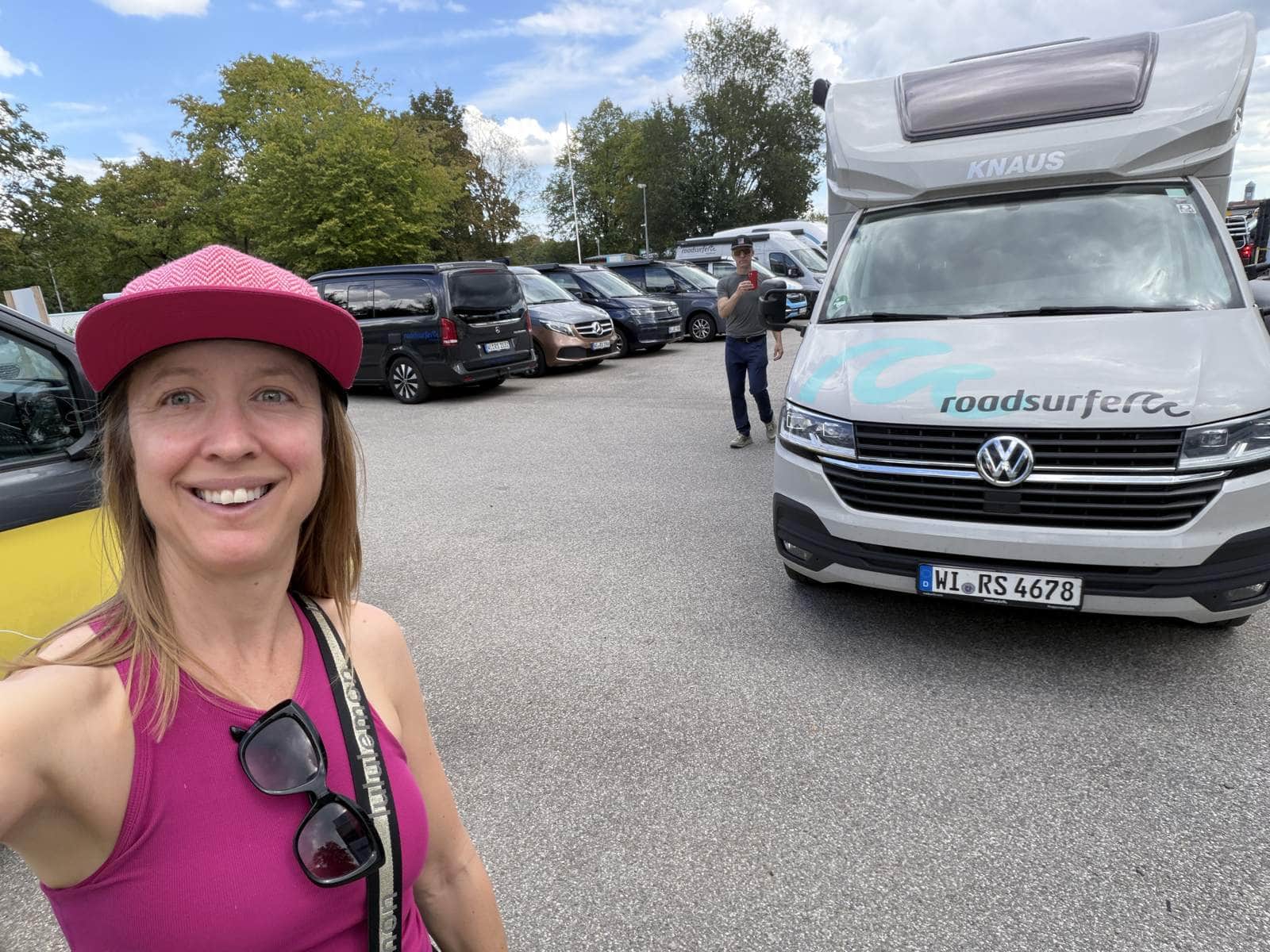
- Your original driver’s license (no photos or scans accepted), plus your passport.
- A credit or debit card for the deposit. The amount depends on the location and the date; ours was €800 at Munich. It is refunded after the return inspection, which can take up to 30 days on a credit card, so do not plan to spend that money in the meantime.
- Your booking confirmation, with the online check-in already done. Roadsurfer asks you to check in online before you arrive.
- Time. Budget half a day. The handover is done in an app: you walk around the van photographing every existing scratch and dent, then test every system (water pump, heater, fridge, lights, the toilet cassette) and mark anything that does not work. Ours took a couple of hours, on top of an hour waiting for the van to be cleaned. Do not skip a single photo; those pictures are what stands between you and a damage charge at the return.
Two things we learned at the depot: the staff were friendly and apologetic about the wait, and the facility was the cleanest Roadsurfer depot we have seen. And there is a Lidl within reach of the Munich depot. Take a €1 coin for the shopping cart.
What is included in your Germany camper rental, and what is not
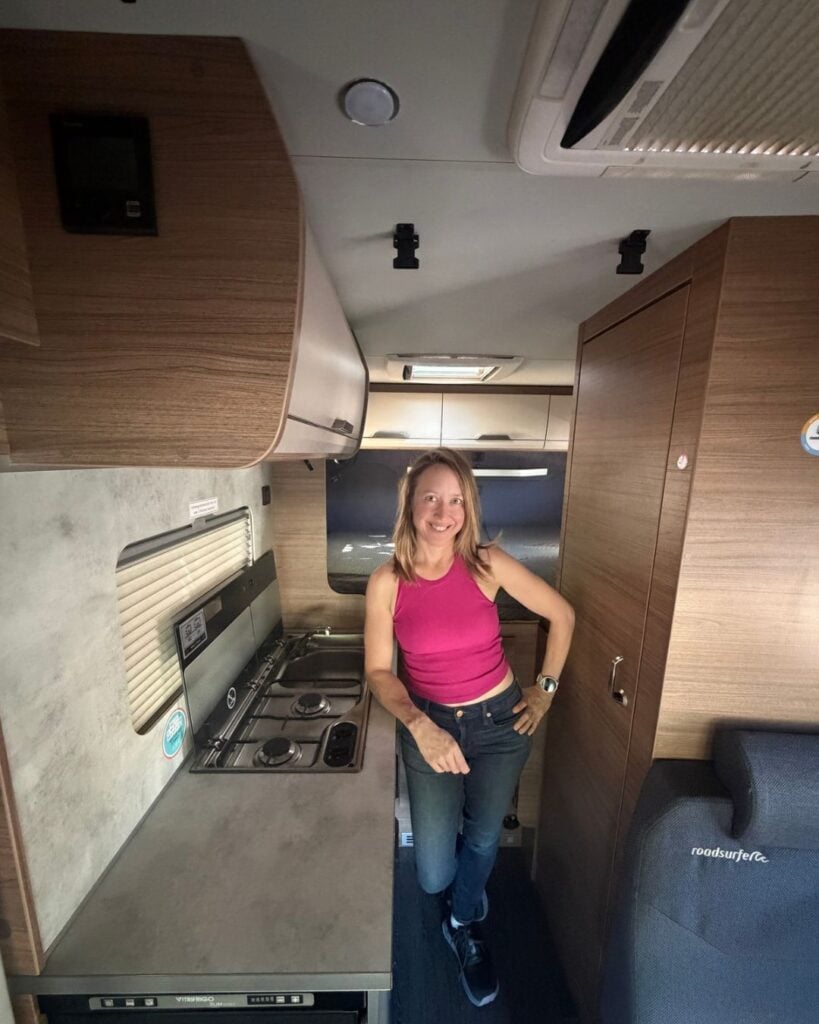
Every Roadsurfer van comes with unlimited mileage, a free second driver, basic camping gear (camping chairs and a bed) and 24/7 roadside assistance. A Flex option lets you change or cancel the booking. Bedding kits and towels are extras: on an earlier trip our two bedding kits came to €70, and we have learned to pack our own towels because a German trip runs on towels (more on that below).
One change since our first rental: the kitchen box (pots, pans, plates, bowls, cutlery and a cutting board) used to be included and is now a paid extra, listed from about €15 per trip on Roadsurfer’s accessories page. Add it when you book for everything you need to cook and make coffee on the road.
The insurance package is the line that moves the price most. We take the top package, which Roadsurfer calls Complete Carefree, and on our earlier trip it added €29 a night. Even the top package does not cover everything, so read the next section twice.
What a week in a German campervan rental actually costs
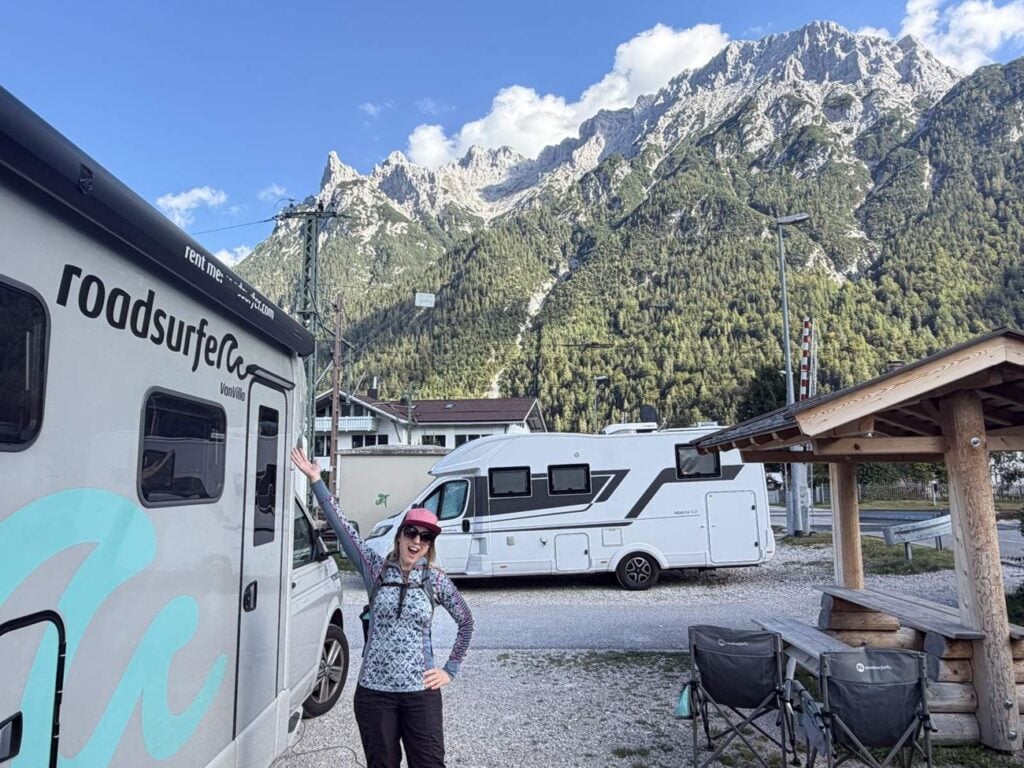
Beyond the nightly rate and the insurance, here is what we spent on the ground for two people over ten days with the van, in round numbers:
- Camper parks and lots: €18 to €35 a night, averaging about $25 to $30, with one free night at a spa lot. (Full campgrounds cost more and often want you for three or seven nights.)
- Fuel: under $200 for our entire trip along the Bavarian Alps. A VW T6.1 diesel sips, and the Alps are closer together than they look.
- Food: the biggest line. We shopped at Lidl, Aldi and Edeka and ate at mountain huts, where a goulash and a beer is cheaper than a campground meal in the US.
- Thermal spas: about €35 to €40 per person per visit, and we went to four. Worth every euro, and the reason to come.
- Parking and tolls: EasyPark for camper spots and trailheads, the Königssee boat, a couple of lake-road tolls. Budget a little; it adds up.
- Phone data: an Airalo eSIM, which throttled after 3 GB. Buy a bigger plan than you think you need if you plan to work.
The rental itself was provided by Roadsurfer for this trip, so I cannot give you our bill; its starting prices are in the table above, and you can check real dates in Munich here. For how we keep the rest cheap, there is a whole post on budget tips for van life in Europe.
When to go, and when to book
We went in the second half of September and I would do it again: the summer crowds had thinned everywhere except the Partnach Gorge, the mountain huts and cable cars were still running, the lakes were still swimmable for the brave, and sauna season was just beginning. The one thing to know about September is that Munich’s Oktoberfest runs from the Saturday after September 15 to the first Sunday in October, so the city’s hotel nights at the start and end of your trip need booking early, and the depot is busier than usual that week.
For the camper itself, book as early as you can. Roadsurfer‘s rates move with the season and with availability, and the starting prices in the table above are the low end; the company’s own advice is that the earlier you book, the more choice and the lower the price. Summer school holidays (July and August) are the expensive, crowded months, and the Bavarian campgrounds with minimum stays are at their strictest then. May, June and September are the sweet spot. From November into April many camper parks in the Alps close or go unserviced, and winter needs a winter-ready van.
Where you can (and cannot) sleep
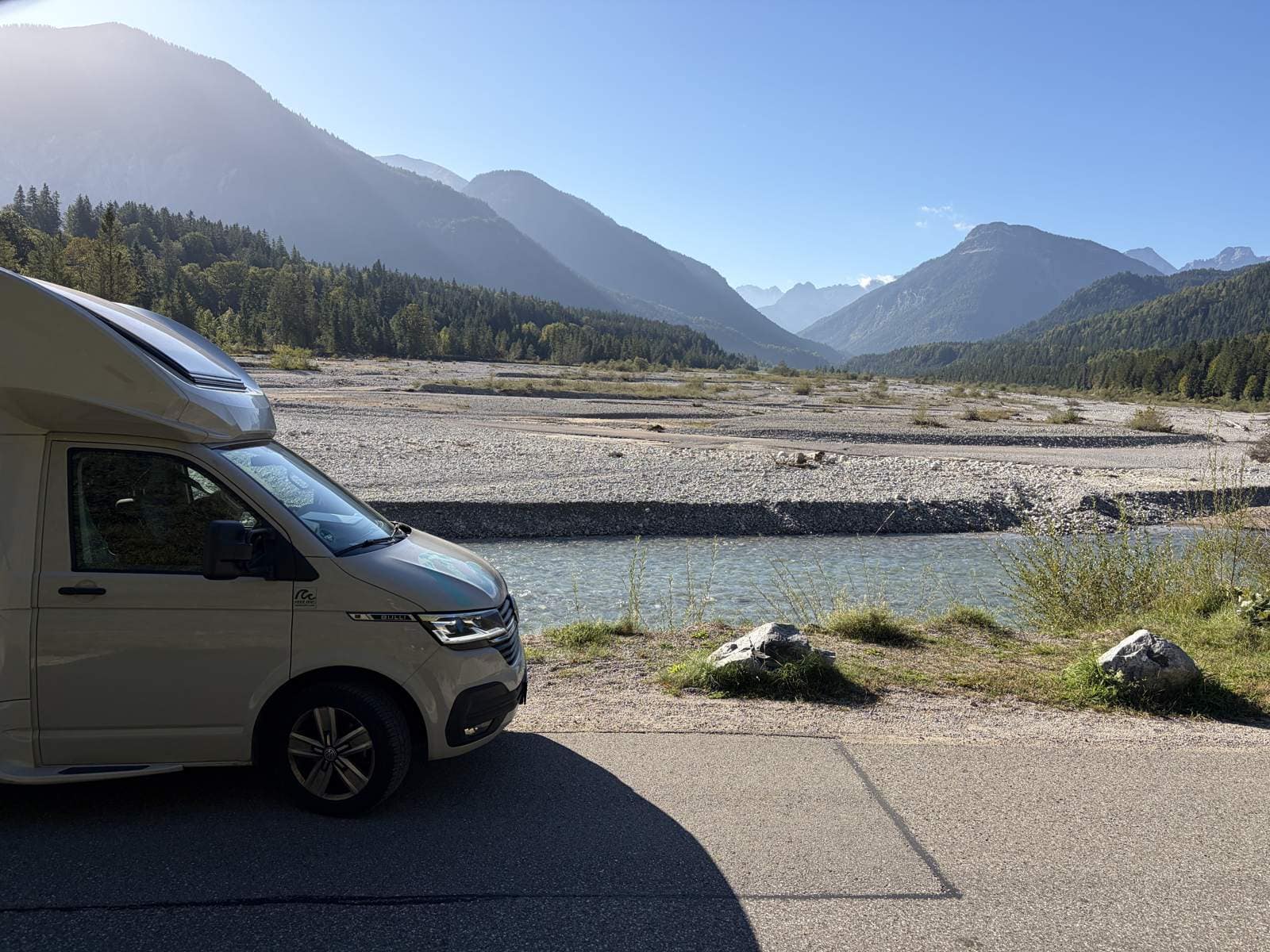
Wild camping is illegal in Germany. Spending the night in open countryside without the landowner’s permission breaks the nature conservation law, fines run from small change to several hundred euros and much more in protected areas (Berchtesgaden National Park is one), and the city-states are strictest of all. A single night’s rest in the vehicle to restore your fitness to drive is tolerated in many places, but only if you stay parked and do not camp: no chairs out, no awning, no stove, gone in the morning. I go through this country by country in is it illegal to sleep in your van in Europe.
The good news is the Stellplatz. Germany has camper parks everywhere: a gravel or paved lot, usually with power and a camper wash, often beside a lake, a spa, a cable car or a town, with no minimum stay and prices far below a campground. Every night of our trip except one was a Stellplatz or a spa lot, from €18 at the thermal spa in Bad Wörishofen to €35 at Lake Chiemsee. Two camper parks we used had no toilets or showers, which is fine when the van has them.
Some Campgrounds in the Bavarian Alps like long stays. We ran into a seven-night minimum at one and a three-night minimum at another, which killed the idea of one night per stop. Check the minimum before you fall in love with a campground, and treat camper parks as the default.
Spa lots are the hack. Several German thermal spas let campers park overnight, sometimes free (the RupertusTherme in Bad Reichenhall) and sometimes for a few euros with power (Bad Wörishofen). You get a sauna in the evening and a quiet lot at night. The 11-sauna circuit lists the ones we know.
How we find the night’s spot: one app, park4night. It maps camper parks, campgrounds, spa lots and service stations with other campers’ photos, prices and reviews, and it is how we found most of the places in our Bavarian Alps route. For the spots that charge by app rather than by a person at a hut, we paid with EasyPark, which also covered trailhead parking.
Day to day in the van: water, dumping, trash, showers and fuel
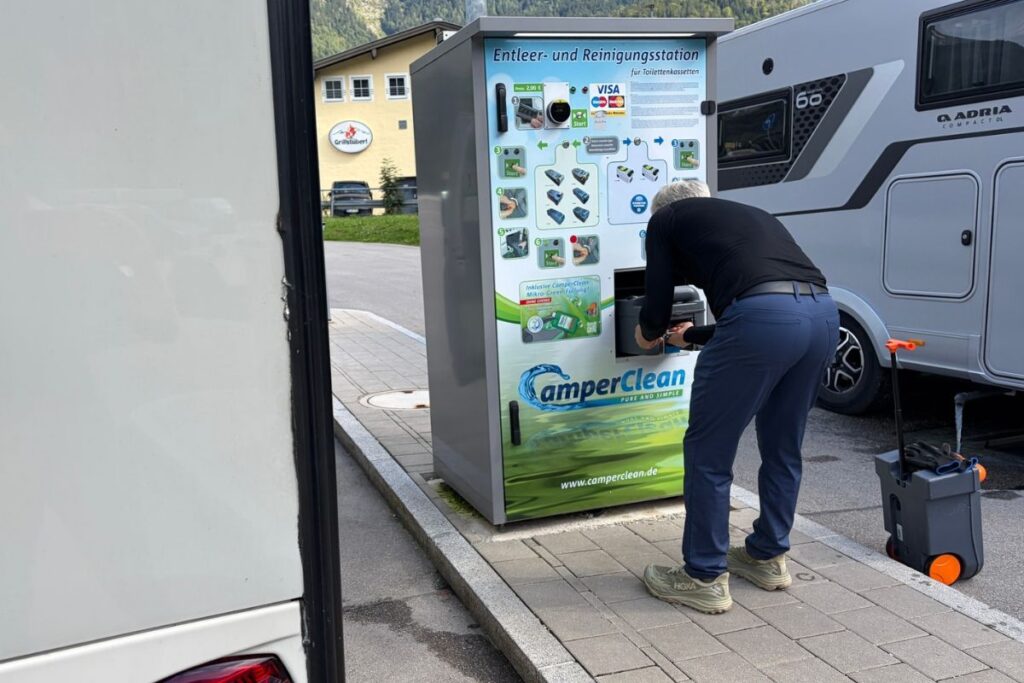
This is the part nobody writes about and everybody asks about once they are standing in a gravel lot with a full toilet cassette.
Water and dumping. German camper parks and campgrounds have a service station, marked Ver- und Entsorgung: a fresh-water tap, a grate in the ground for grey water, and a hatch for the toilet cassette. The taps are often coin-operated, a euro or so for a tank’s worth, so keep coins in the van. Fill the fresh tank and empty the cassette every couple of days rather than waiting for a crisis, and do not rinse a cassette at the drinking-water tap. Before the return, empty everything; the company checks.
Trash. Campgrounds sort it: paper, packaging, glass, food scraps, the rest. Bottles and cans carry a deposit (the Pfand), €0.25 on single-use plastic bottles and cans and 8 to 15 cents on reusable glass, which any supermarket refunds through a machine by the entrance. A bag of empties from a week of Lidl runs pays for the next round.
Showers. Camper parks are hit or miss: Camp am Wank in Garmisch had them, the Mittenwald camping area had none. Our answer was the thermal spas. A day pass at RupertusTherme or Bad Wörishofen is a shower, a sauna and a swim, and the van’s own shower covers the nights in between. A camper wash, where a camper park offers one, is for the outside of the van, not for you.
Fuel. German stations are self-serve: fill up, note the pump number, pay inside or at the pump. Our Van Villa took diesel and, like every modern diesel, AdBlue, which the station sells at a separate pump or in bottles; the return wants both full. The whole Bavarian loop cost us under $200 in diesel.
Groceries. Lidl, Aldi and Edeka are everywhere, and the carts need a €1 coin (you get it back). Mountain huts cover lunch on hiking days for less than a resort-town restaurant.
Driving: tolls, stickers and the roads to avoid
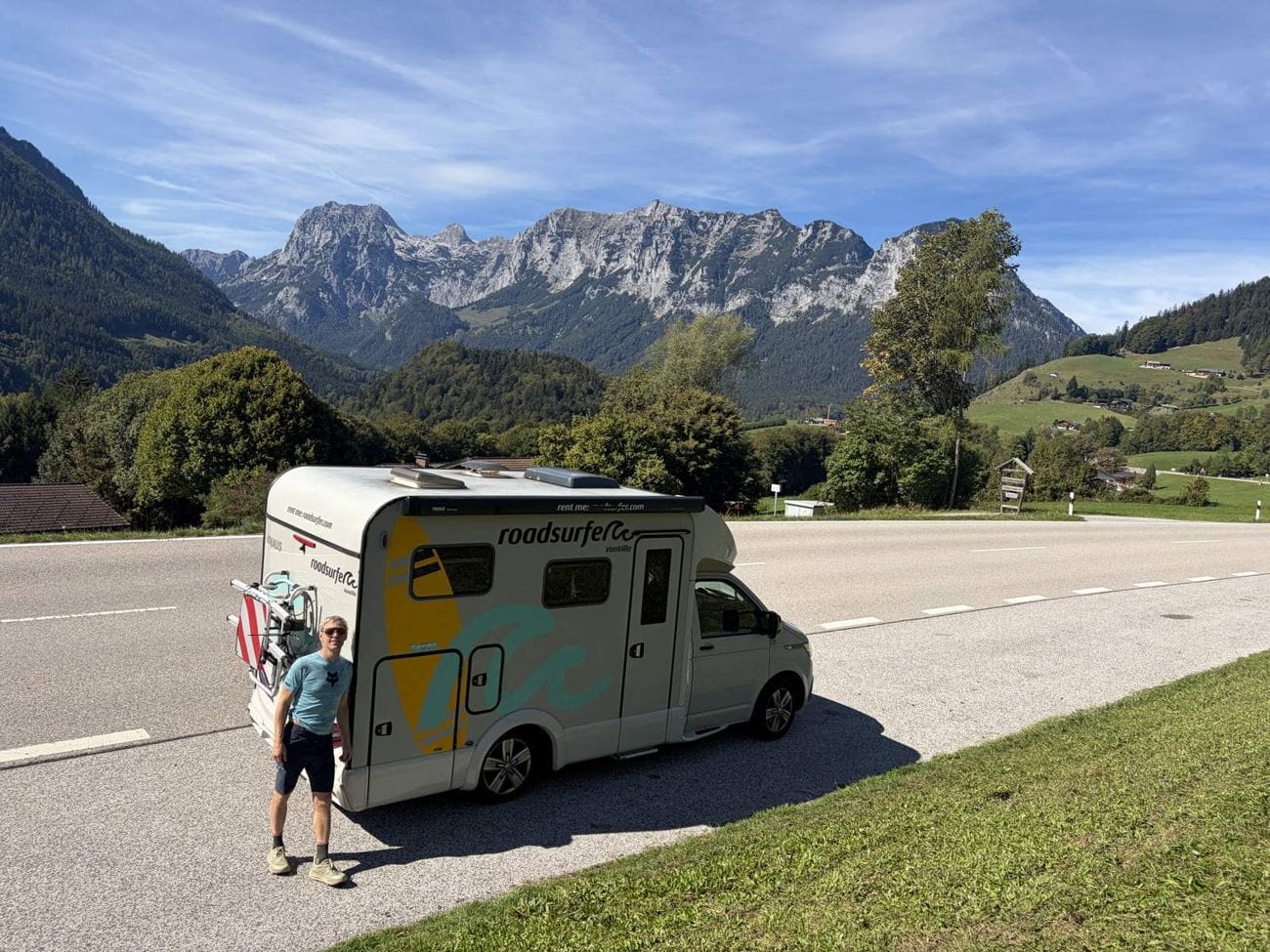
- No toll highways in Germany. German motorways are free for vans under 3.5 tons.
- The green sticker is on the van. Many German cities (Munich included) have low-emission zones that require an emissions sticker; every Roadsurfer van carries the German green Euro 6 sticker.
- Pay tolls and parking yourself. Under the rental terms we signed, Roadsurfer charges €19 for every toll or fine it has to forward to you. Pay at the booth, pay in the app, keep the receipt. While highways are free, we did encounter one toll road through a national scenic river byway.
- Stay on pavement. Driving on unpaved roads counts as improper use, and damage, towing and tire costs from it land on you no matter which insurance package you bought. That rules out dirt-road boondocking in a rental, which in Germany you were not going to do anyway.
- The awning stays in. Never out in wind or rain, never left out unattended. A replacement awning can exceed the deposit.
- Right liquid, right tank. Water in the water tank, diesel in the fuel tank, AdBlue in the AdBlue tank. Get one wrong and the whole water system is replaced at your cost.
- Most EU and Schengen countries are allowed for border crossings, but insurance and permitted countries vary by route, so confirm your itinerary with the company before you book.
Dogs
Dogs and other pets are welcome in every Roadsurfer model if you add the one-time dog fee when you book; the price varies by season and country. Bring a dog without booking it and you will pay a cleaning fee at the return. We did not travel with a dog, but we met plenty in the camper parks.
When something goes wrong
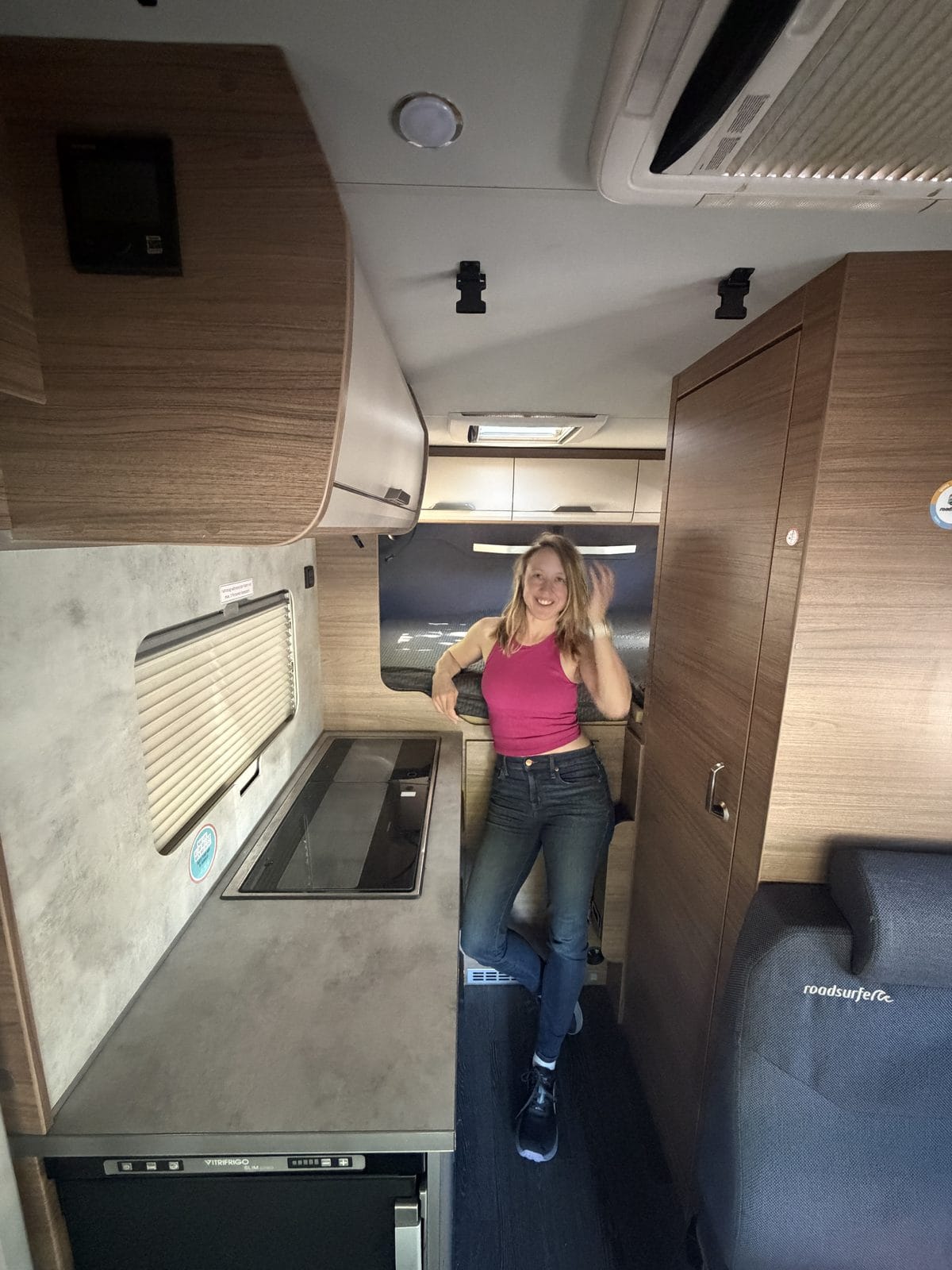
On day nine of our trip the water stopped at the faucets and the garage area under the bed flooded: a pipe had burst behind the bathroom wall. No dishes, no shower, no toilet flush. Roadsurfer‘s support was hard to reach that day; we moved to a campground with showers and water and carried on, which is what you do. Afterward, Roadsurfer gave us a credit for the trouble, and in our experience they have been good about credits when something goes wrong.
I am telling you this because things break on rental vans, all of them, from every company. What matters is whether the company makes it right, and what you can do in the moment: photograph the problem, note the time, keep the receipt from wherever you ended up sleeping, and ask for the credit in writing after you get home.
The return (and the cleaning nobody mentions)
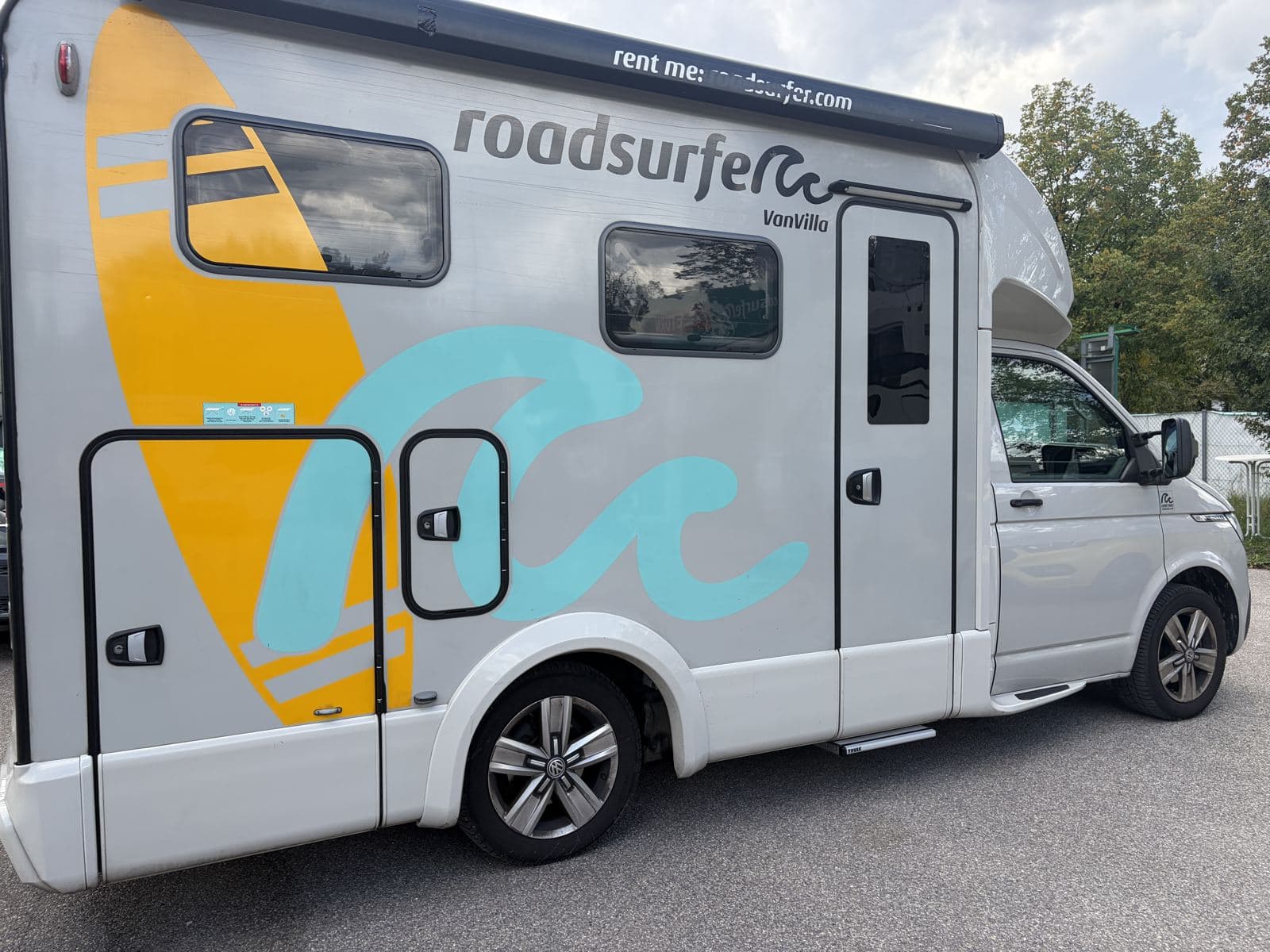
The handover itself was quick: a walk-around, the gauges, the keys. The work is the day before or half day before the return, because you return the van clean, and “clean” means the whole rig. What the company checks: a full diesel tank (a refill at their rates runs from about €64 to €199), full AdBlue (€50 if not), the inside swept and wiped down, the kitchen and fridge emptied and wiped, the toilet cassette and both water tanks emptied, and the time. A late return costs €50 an hour. Get all the cleaning down and the walk-through takes ten minutes.
Five things I would tell a friend
- Book a hotel for your first night, before you pick up the van. Sleep off the flight, then collect the camper rested. Two or three nights is even better.
- Write off the first and last day. Pickup, groceries and the walk-through take most of a day; the return takes a morning.
- Book electricity every other night. The house battery is good for about one night off-grid, and in a battery-only van that includes the fridge.
- Shop at Lidl and Aldi, with a €1 coin for the cart, and eat at the mountain huts. Restaurants in the resort towns are where the budget goes.
- Pack a big towel. German thermal spas are the best thing about a German camper trip, they are nude, and they run on towels. Rentals exist but add up.
Before you book
If you are still choosing a company, I have rented from three of them and compared them honestly, and I keep a roundup of the best campervan rental companies in Europe. For Roadsurfer specifically, the full review covers the Cozy Cottage, and you can check current Munich prices here.
And if this is your first campervan trip in Europe, the Europe camper trip toolkit is everything we have learned across four rentals, organized so you can skip our mistakes. Then go drive the Bavarian Alps loop. Bring the towel.
Frequently asked questions
Can an American rent a campervan in Germany with a US driver’s license?
Yes. Roadsurfer rents most of its vans, which are under 3.5 tons, on a regular driver’s license, with a minimum age of 21 and one year of licensed driving for US license holders. Bring the original license and your passport; photos and scans are not accepted.
How much does it cost to rent a campervan in Germany?
Roadsurfer’s starting prices run from about $65 a night for a VW pop-top with no toilet to $95 a night for a semi-integrated camper with a bathroom, before fees, insurance and extras like bedding. On the ground, camper parks cost us €18 to €35 a night and fuel came to under $200 for ten days in the Alps.
Can you wild camp in a rental campervan in Germany?
No. Wild camping is illegal in Germany, with fines that climb steeply in national parks and protected areas. A single overnight rest in the vehicle to restore driving fitness is tolerated in many places if you do not set up camp. Use camper parks (Stellplätze), which are everywhere and cheap.
How much is the deposit for a Roadsurfer campervan?
It depends on the pickup location and the date. Ours was €800 at the Munich depot, held on a card and released after the return inspection, which can take up to 30 days on a credit card.
Do you need a vignette to drive a German rental campervan into Austria?
Yes, if you use an Austrian motorway. Buy a digital vignette registered to the van’s plate before the first motorway kilometer: €9.60 for one day or €12.80 for ten days at asfinag.at, valid immediately. Germany itself has no vignette for vans under 3.5 tons.
What happens if something breaks on a rental campervan?
Call the company’s 24/7 roadside line, photograph the problem, and keep receipts for anywhere you have to stay as a result. When a pipe burst behind our bathroom wall, Roadsurfer credited us for the trouble after the trip.
Sources (checked October 2026): Roadsurfer rental FAQ (license and age rules, documents, deposit, what is included, pets, borders, the Euro 6 sticker); Roadsurfer vehicles (models, seats, starting prices in USD); Roadsurfer accessories (kitchen box from €15 per trip); Roadsurfer rates (prices vary by season and availability; book early); container-deposit legislation (Pfand amounts); muenchen.de (Oktoberfest dates rule); camper-park service stations as described on park4night listings and in our own use; Roadsurfer’s rental terms as signed for this trip (unpaved roads, awning, tanks, fuel and AdBlue, late return, forwarded tolls); austria.info and oesterreich.gv.at (vignette prices and online validity); hinterland.camp and stellplatz.info (wild camping law, fines and the one-night rest); camper park, spa and food prices are what we paid.