I’ve Anchored From San Francisco Bay to the Sea of Cortez. These Are the 14 Signs an Anchorage Is Going to Wreck Your Night.

Fourteen red flags that an anchorage will be a bad night, from the cruisers who learned them the hard way: swell exposure, the wrong depth, boats pointing everywhere, the wrong fleet, and the moment to pull the hook and leave.
*This post may contain affiliate links. Please read our disclosure policy for more info.
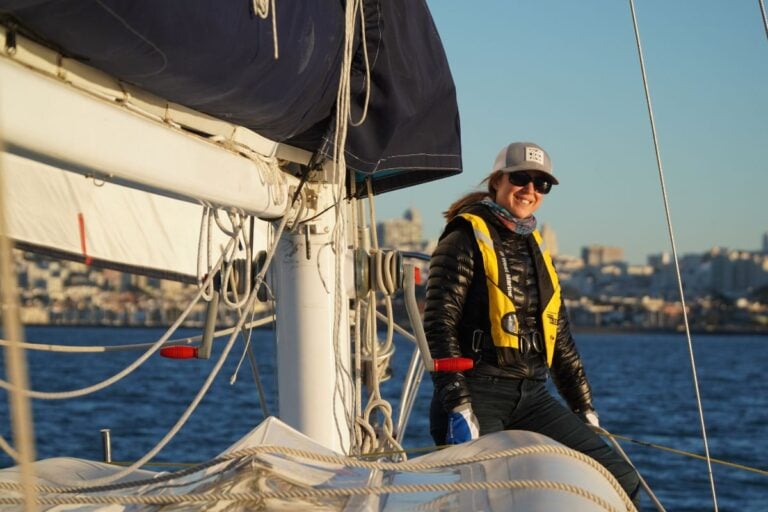
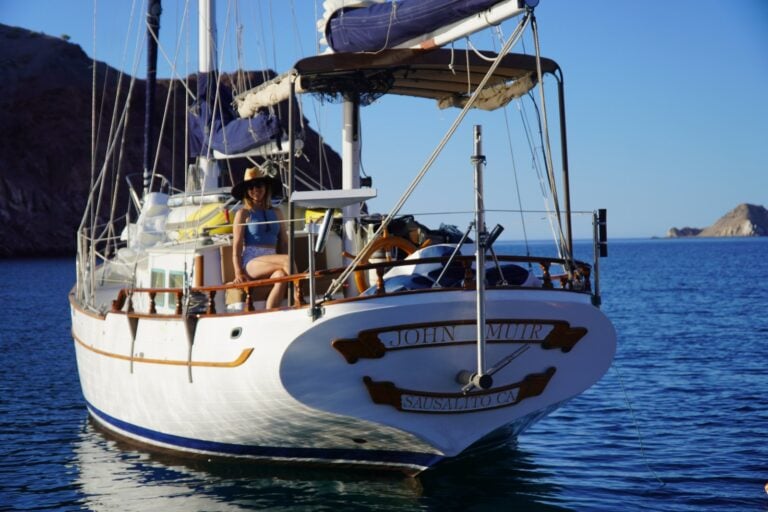
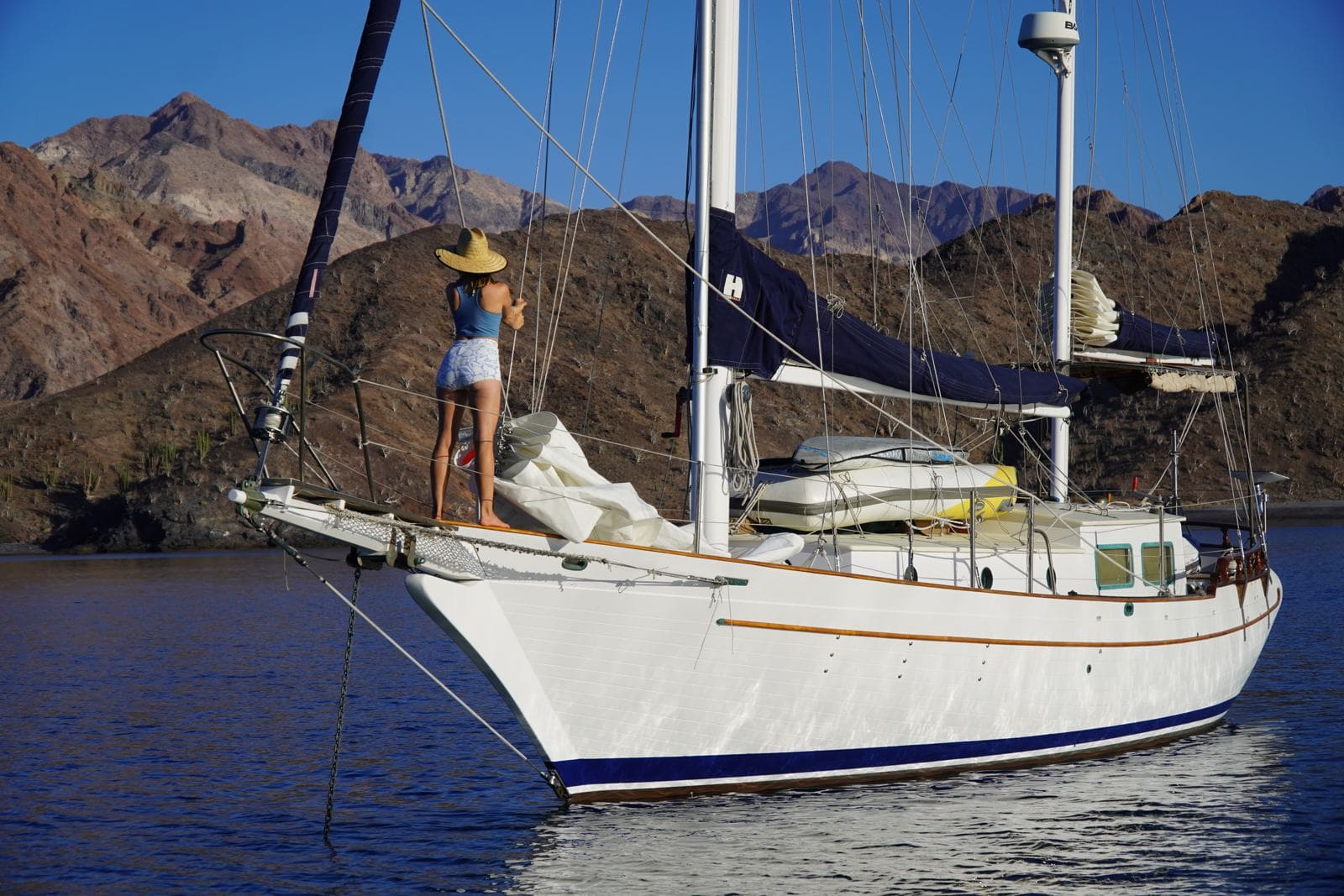
Our most beautiful anchorage ever was a cove in the Sea of Cortez with nobody else in it, and it felt like paradise right up until the swell wrapped around the point at two in the morning. Nothing about our anchor was wrong. The anchorage was wrong, and the signs had been there at four in the afternoon if I had known how to read them.
So I asked the readers of our sailing page for the instant red flag that an anchorage is going to be a bad night, and more than a hundred cruisers answered. Here are the fourteen signs they named most, roughly in the order you meet them: what you see on the chart, what you see from the water as you come in, what you see once you have dropped, and the moment you should stop arguing with the anchorage and leave.
One honest catch: most of the worst nights in the thread were other boats behaving badly, and I have already written the unwritten rules of cruising life with the readers’ help, so this piece is about reading the anchorage, not policing the neighbors. The legal side, where you may anchor at all and for how long, is in our guide to anchoring rights for cruisers.
Before you drop: what the chart and the forecast are telling you
1. The anchorage is open to the swell
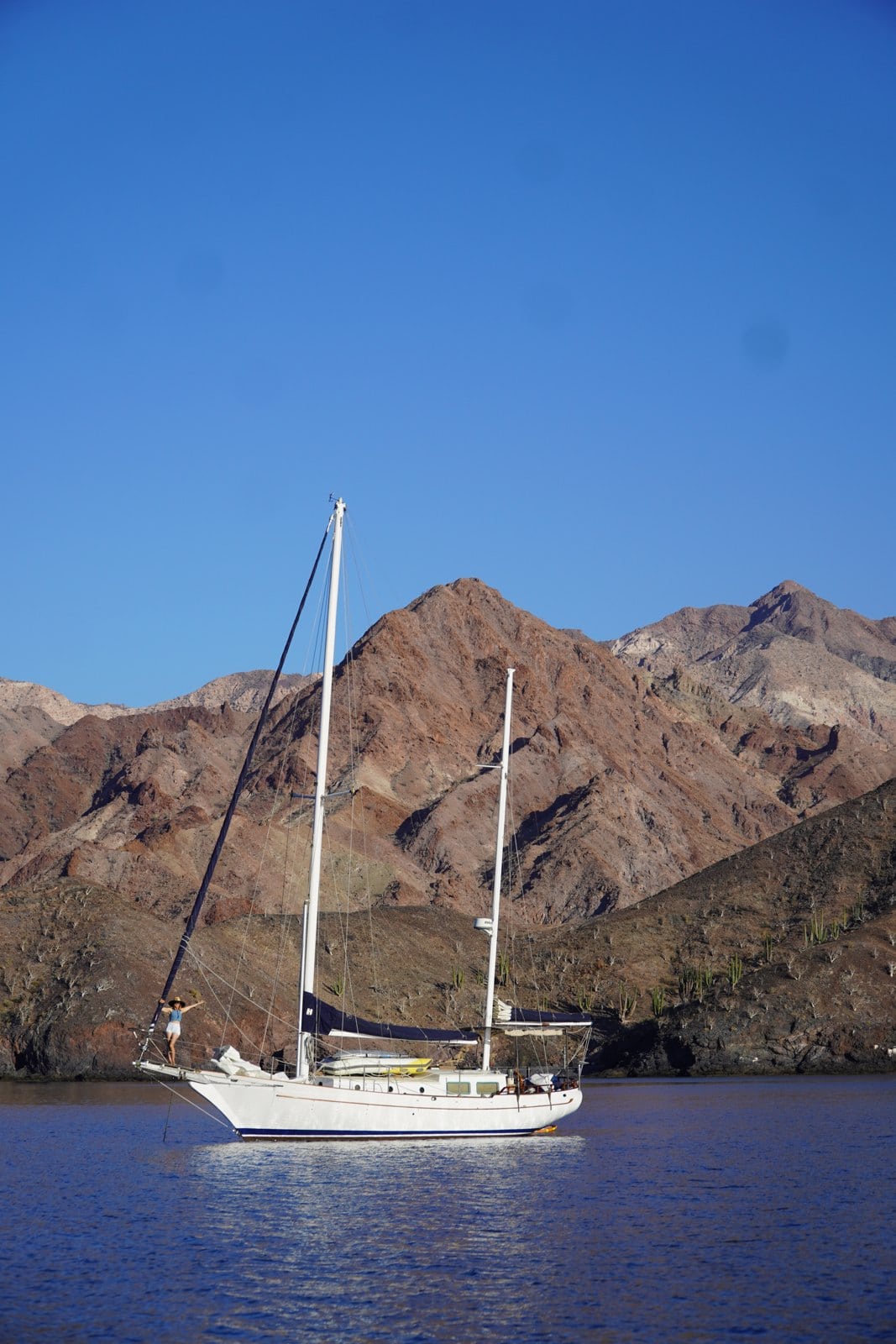
“Anchorage is exposed to ocean, lake or channel waves” was the first thing one reader listed, and it was my two-in-the-morning cove exactly. Look at the chart and the swell forecast together: if the anchorage is open to the direction the swell is coming from, or to a point it can wrap around, no amount of scope will fix the night. A reader who works on the water described living it for two months: “dominant southwest winds but open to southeast ocean swell. Some horrible nights have been had.” The tell from the water, once you are in: “almost no monohull sailboats, and when stopping, you feel the swell roll in and realize you’re going to roll 24/7 here.” Monohulls leave rolly anchorages first; catamarans and powerboats can stand them. An anchorage full of flopper stoppers is an anchorage that rolls.
2. The depth is wrong in either direction
Two readers described the same trap from opposite ends. One: “A crowded anchorage, all the mooring balls are taken, it’s turning dark, and you just dropped 120 feet of anchor chain and haven’t hit bottom.” Another: “They’ve put moorings everywhere it’s less than 80 feet, so the 80-foot anchorage will be filled with weekend warriors swinging on a 300-foot West Marine anchor package.” Too deep means not enough chain for a safe scope; too shallow means every boat is on the same patch and the bottom is close enough to touch at low water. Scope is measured from the bow roller to the bottom, not from the waterline (BoatUS has a whole piece on that mistake), and the cruisers’ rule of thumb is about 5:1 as the minimum and 7:1 in wind or a crowded bay, so a 40-foot-deep anchorage with a 4-foot bow wants more than 200 feet of rode before it is comfortable. “Bottom gradient is too steep,” said another reader: a shelving bottom means your anchor is on one depth and your boat swings over another.
3. The wind is going to switch, and the lee will go with it
“The wind switches and you are no longer in the lee,” one reader wrote, and that is the forecast question every cruiser learns to ask: not what the wind is doing now, but what it will be doing at three in the morning. A cove that is a millpond in the afternoon sea breeze can be a lee shore when the land breeze fills in after dark, and an anchorage that is only protected from one direction is a bet on the forecast being right. Check it against the swell direction too, because wind and swell can come from different places; the readers’ phrase for that was “waves perpendicular to the wind,” which means the boat will lie to the wind and take the swell on the beam all night.
4. The chart name is a warning
A reader’s checklist was “proximity of the channel, depth, and refer to the chart’s name, like if it’s Mosquito Point, may be a sign.” Charts are honest. Anything with Mosquito, Rolling, Windy or Foul in the name earned it, and an anchorage drawn right beside a shipping channel or a ferry route comes with wakes on a schedule. One reader’s red flag was Reedville, Virginia: “three fish factories 120 degrees apart, so no matter which way the wind blows…”
Coming in: what the water is telling you
5. The boats are all pointing in different directions
“Each boat pointing in a different direction” was one of the most-named signs, and the readers explained what it means. Boats lie to whatever is strongest, wind or current, so a fleet pointing every which way means the wind has died, or the tide is slack, or, worst, “the wind and current are having a serious fight.” Slack is temporary and so is calm, as one reader pointed out, but the fight is not: boats on short scope and boats on long scope swing through different circles, chains cross, and “swirly wind, where boats point any direction, makes for popping anchors and messy chains.” Figure out which one you are looking at before you pick a spot.
6. Nobody is here, and it is six o’clock in a popular place
“When no one else is there and it’s 6 PM in the evening outside a popular area.” That one started an argument, because some readers’ favorite anchorages are always empty. But an empty anchorage on a busy stretch of coast at dinnertime usually means the locals know something: a swell that wraps, a ferry wake, a bottom that will not hold, a fish farm that was not on the chart. “Not crowded, because local knowledge,” as a reader put it. If it looks too good, ask yourself what the boats that passed it knew.
7. Things are sticking out of the water that should not be
“Multiple masts sticking out of the water.” “Tops of masts sticking up from the depths.” “Derelict boats everywhere with some sunken boats sticking out of the water.” The thread said it three ways. Wrecks mean two things: a bottom that is foul with chain, rigging and debris to snag your anchor, and a history. Harbors full of boats that have not moved in months, with a foot of growth on the waterline, are the same signal; readers named “boats that have 12 inches of growth on the bottom” and “anything that can’t move under its own power or hasn’t moved in a month” as the things they would ban. “Ruins in remote areas means hanging up on discarded equipment is more likely,” one reader added, and in the Pacific Northwest, “the amount of logs scattered on the beach” tells you what will be floating through the anchorage at night.
8. The mooring field is mixed, or missing its gear
“Mooring balls mixed with anchored vessels can get interesting,” a reader wrote, and that is a polite version. A moored boat swings in a tight circle; an anchored boat swings in a wide one; put them together and someone’s stern meets someone’s bow at the change of tide. “Mooring balls are missing gear” is the other half: a field with empty pennants and rusted shackles is a field that is not maintained, and the tempting empty ball with “Big Bertha” painted on it, as one reader learned, “seemed like a good idea at the time.”
9. The fleet is the wrong fleet
The readers were specific about which neighbors predict a bad night, and it was not a matter of boat size so much as who was aboard. “Crowded with charter boats.” “A large raft-up of motor yachts.” “A raft-up of noisy powerboats with a Sea Ray for the mothership, all on one 25-pound Danforth and half-inch anchor rode. I’m not exaggerating. This was upwind of me earlier this summer at Block Island.” “Watching weekend warriors put out one-to-one scope and run ashore while the boat is dragging toward you.” A boat that will drag is a boat upwind of you on too little gear, and you can see that from the dinghy before you commit. The readers’ other tell: “not a snubber in sight,” meaning a fleet that will snatch at its chain all night and nobody aboard who has done this before.
10. The party has already started
“If a big yacht shows up and offloads toys and starts playing house music at 7 AM.” “A cocktail bar boat comes alongside while setting your anchor.” “The power boat with disco lights.” “Giant lit underwater lights,” which several readers would ban outright. Noise is the one red flag you can hear from outside the anchorage, and sound carries across water in a way it never does on land, so a boat with its speakers on at the far end of the bay is in your cockpit by dark. The quiet version of the same sign is the generator fleet: “every boat around you has a generator running and doesn’t shut it down until morning.” If you can hear them at five in the afternoon, you will hear them at five in the morning.
Once you have dropped: the signs you should not ignore
11. The anchor will not set, or sets too well
“Your anchor refuses to set no matter what you try.” “You drag on the first two times you try to set.” Two failed sets are the bottom telling you something, usually grass, hardpan or a layer of soft mud over rock, and the third try is rarely the charm. The opposite is its own warning: “when you feel the anchor slide into a ledge crevice, snugly,” one reader wrote, and another finished the thought, “immediate sinking feeling when you know diving down with a trip line is in your future tomorrow morning.” A rocky bottom that grabs your anchor like that may not give it back. Back down hard, watch two fixed points on shore for twenty minutes, and only then open a beer.
12. Someone else is dragging, and nobody is on deck
“Someone else is dragging, and you don’t see anyone on deck.” That is the sign that turns a bad night into a collision, and the thread had the story: “High winds, rough water. The guy near us dragged his anchor and ran into us. I tied him to our boat while he got his anchor up, and then he left and took our line with him.” A boat dragging through an anchorage with nobody aboard is not your problem to solve, but it is your problem to avoid: move, or set an anchor watch, and if it is coming for you, fenders out and the engine on.
13. The anchorage has a schedule you are not on
“Morning fishing fleet departures rolling you awake at 5 AM.” “The go-fast boat in the 55-foot planing hull right down the middle.” “When 20 dugouts row out and never leave.” Working harbors work early, and a channel through the anchorage is a wake machine on a timetable. The tell is on the chart and on the shore: a fuel dock, a fish plant, a ferry terminal, a boat ramp with trucks lined up at dusk. None of it is dangerous. All of it is a 5 AM alarm you did not set.
14. The neighbor with the flashlight
One reader’s red flag was a specific man: “the guy who got there before you looped his anchor rode around his own keel and feels it necessary to shine his flashlight on you every 15 minutes saying you’re too close when you are not.” Another’s was “a big fishing boat anchored nearby that won’t turn off his high beam” after dark. A neighbor who is anxious about you at dusk will be anxious about you all night, and whether or not he is right, you are the one who will not sleep. The readers’ answer was the same as the rule in the etiquette piece: the boat that arrived second moves. If that is you, move early, while there is light.
When to stop arguing with the anchorage and leave
Nobody wants to re-anchor once the beer is open, and the thread was full of people who wished they had. The signs above come in two kinds: the ones you can fix with a better spot in the same bay, and the ones you cannot fix at all. Noise, a dragging neighbor, a mixed mooring field and the wrong fleet are the first kind; move a quarter mile and the night improves. Swell in the anchorage, a wind shift that turns your cove into a lee shore, a bottom that will not hold, and a wreck-strewn harbor are the second kind, and the answer is the one that cove in the Sea of Cortez taught me: no amount of scope fixes a swell. “Sometimes the rule is to leave” is the line I wrote in the etiquette piece, and it is the most useful thing in either article.
Here is the five-minute check the thread adds up to, in the order you meet the questions:
- The forecast, twice: wind direction now and at 3 AM, and the swell direction, against the chart. Is the anchorage closed to both?
- The chart: depth at low water, bottom type, channels, wrecks, cables, and the name.
- The fleet: which way the boats are lying, how far apart, how much chain is out on the boat upwind of your spot, whether anyone is aboard it.
- The sound: generators and speakers from outside the anchorage mean the same inside it.
- The set: back down, watch two points on shore for twenty minutes, then decide whether you are staying.
If the night goes wrong anyway, you will be in good company; the things nobody tells you about living on a sailboat includes a few of ours, and the sailors in our survival-at-sea stories had worse. What cruisers mean when they say they are “on the hook,” and the rest of the vocabulary, is here.
What is your instant red flag, the one that makes you keep going to the next bay? And which anchorage taught it to you?
Frequently asked questions
What makes an anchorage rolly?
Swell entering the anchorage from a direction it is not protected from, or wrapping around a point, especially when the boat lies to a wind that is coming from a different direction than the swell, so the waves hit the beam. Catamarans and powerboats tolerate it; monohulls roll rail to rail. An anchorage full of flopper stoppers, or with no monohulls in it, is the tell.
How much anchor scope should you put out?
The common rule of thumb is about 5:1 as the minimum and 7:1 in wind or a crowded anchorage, with the depth measured from the sea bottom to the bow roller, not to the waterline (BoatUS warns that the waterline shortcut overstates your scope). In 30 feet of water with a 4-foot bow, that is 170 to 240 feet of rode. Short scope is the most common reason boats drag into their neighbors.
Why are the boats in an anchorage pointing in different directions?
Boats lie to whatever force is strongest on them. When the wind dies or the tide goes slack, boats drift to random headings; when wind and current oppose each other, boats on different scope and different hull types lie differently and swing through overlapping circles. The first two are temporary; the third is a reason to anchor farther away.
Do you need an anchor light at night?
Yes. Under Navigation Rule 30 an anchored vessel shows an all-round white light (one is enough on boats under 50 meters), unless it is under 7 meters and away from channels, or under 20 meters inside a designated special anchorage area. A spotlight, deck floodlights and underwater lights are not anchor lights, and they are what the readers would ban.
When should you leave an anchorage at night?
When the problem is the anchorage rather than your spot in it: swell has come in, the wind has shifted and put you on a lee shore, or the anchor will not hold after two tries. Re-anchoring a quarter mile away fixes noise, a dragging neighbor or a crowded corner; it does not fix swell. Leaving early, with light, beats leaving at two in the morning.
Sources (checked October 2026): reader comments on That Sailing Life’s “instant red flag that an anchorage is going to suck” and “the one thing you’d ban from anchorages” posts (about 220 comments and replies, quoted without names); BoatUS, How to Calculate Anchor Scope (scope is measured from the bow roller to the bottom) and BoatUS, Anchoring Etiquette (about 5:1 for setting the hook); 33 CFR 83.30, Navigation Rule 30 (anchor lights and the special-anchorage exemption); our own nights at anchor on San Francisco Bay and in the Sea of Cortez.