Survival at Sea: 12 True Stories of Sailors Who Came Back

A raft built for one, 438 days in an open boat, and four men living inside an upside-down hull: twelve true survival-at-sea stories.
*This post may contain affiliate links. Please read our disclosure policy for more info.
I’ve lived aboard a sailboat for years now, and the stories that stick with me aren’t the record-breaking ones. They’re the ones where everything went wrong and somebody kept going anyway.
Every sailor carries a private version of the question these stories answer: what would I actually do? Not in theory, not with a full liferaft and a working EPIRB, but on the day the boat is gone and the horizon is empty in every direction. I’ve written before about the great jury rigs — the repairs sailors improvised to get home. This is the harder version of that story: the times there was nothing left to repair.
Here are twelve true survival-at-sea stories, from a whaleship sunk by a whale in 1820 to a woman lifted off her dying boat by a cargo ship’s crane in 2018. Some of these people drifted for more than a year. All of them came back.
1. 438 days: the longest survival adrift ever verified
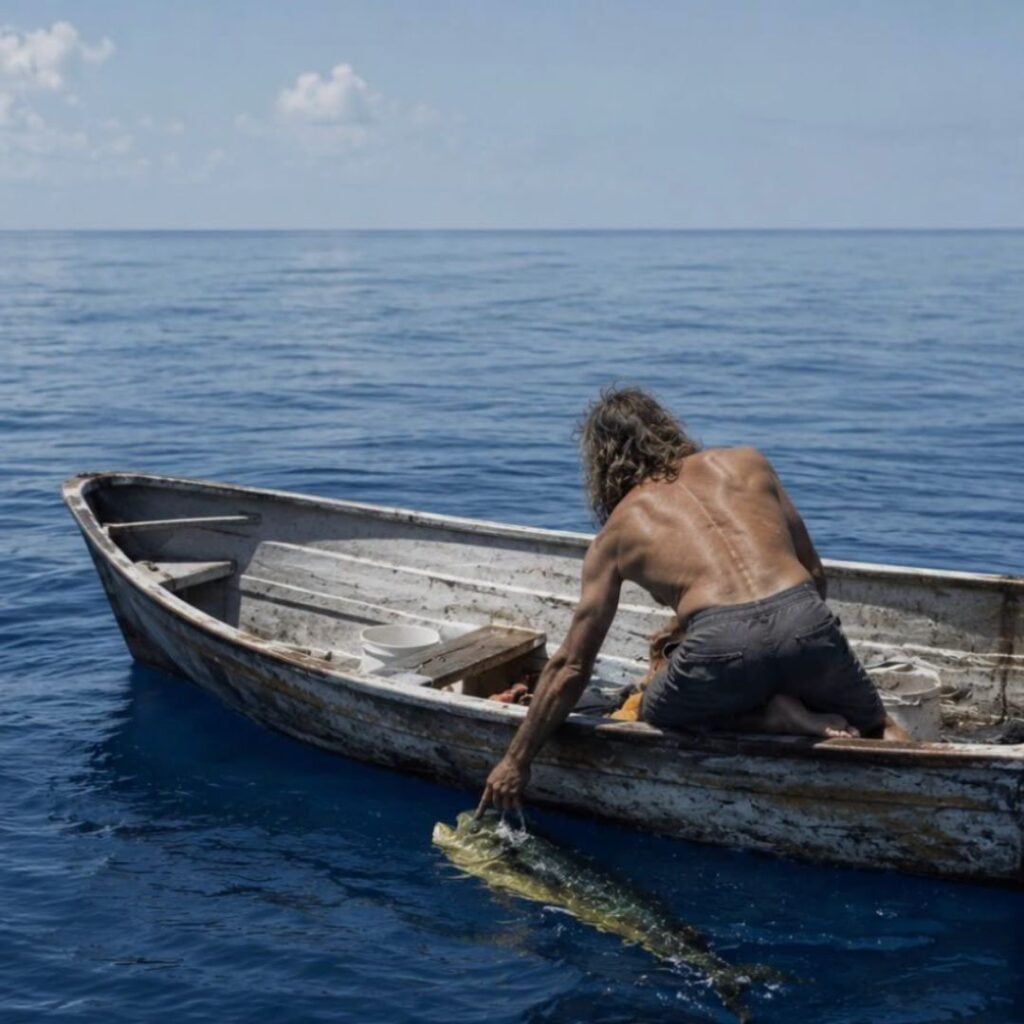
Salvador Alvarenga left the Mexican coast in November 2012 for a two-day fishing trip. He stepped back onto land 438 days later, on the other side of the Pacific Ocean.
A storm killed the engine on his small open boat, and the sea simply took him — roughly 6,700 miles of drifting with no mast, no sail, and no chart. He caught fish and turtles with his hands, collected rainwater, and watched ships pass without seeing him. His young crewmate did not survive the drift; Alvarenga promised the man’s mother he would carry the story home, and that promise is part of what kept him moving.
When he finally waded ashore on a remote atoll in the Marshall Islands in January 2014, he had crossed more ocean than most sailors cover in a lifetime. It remains the longest survival adrift that anyone has been able to verify — and the drift analysis, done afterward by people who badly wanted to disprove it, matched his account.
2. Poon Lim: 133 days on an eight-foot raft
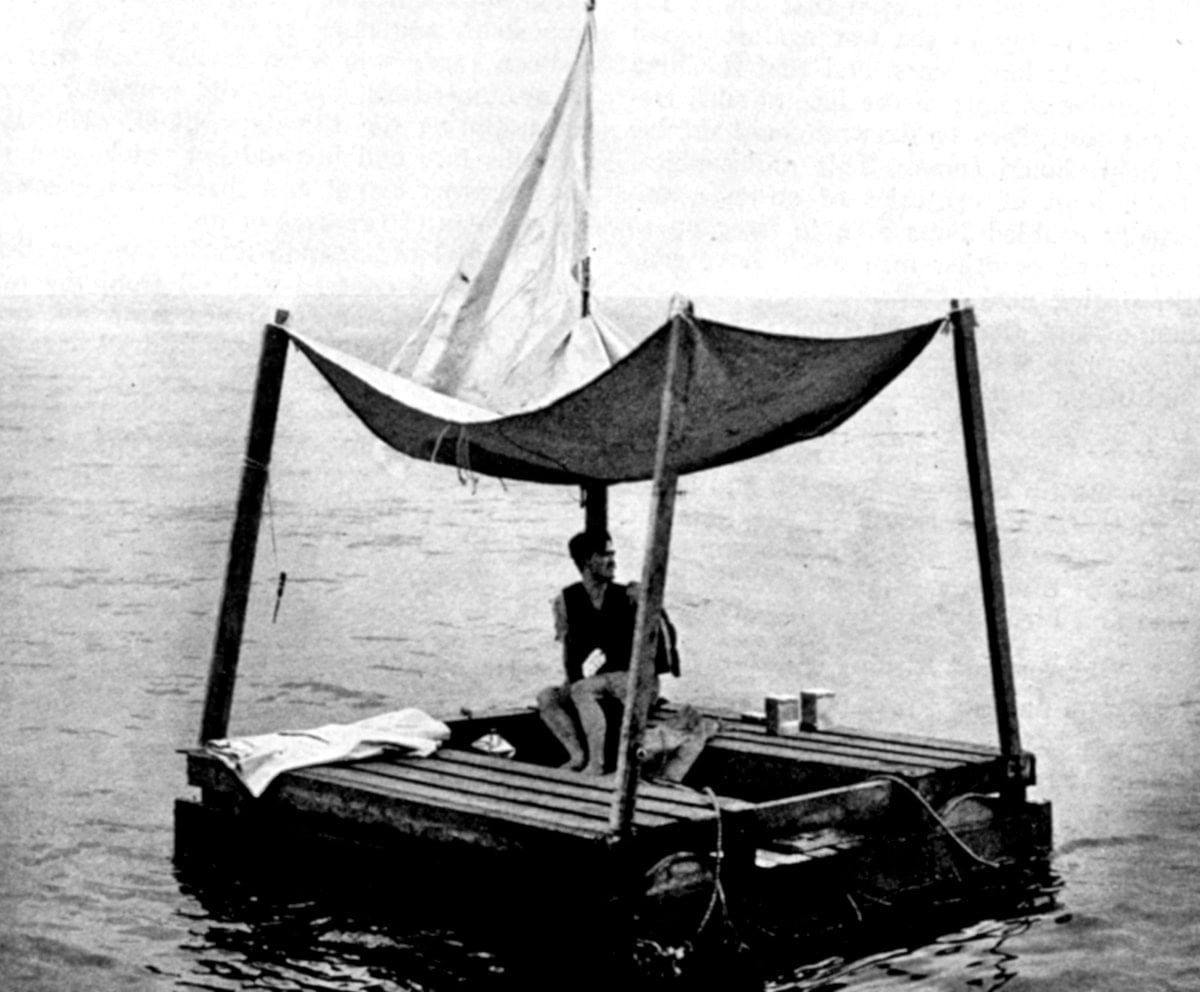
Photo: U.S. Navy, public domain, via Wikimedia Commons
Poon Lim was a 24-year-old mess steward, and by his own account he could barely swim. In November 1942, a German U-boat torpedoed the British cargo ship SS Benlomond about 250 miles off the coast of Brazil. Of the 55 other people aboard, not one survived. Poon Lim got into a life jacket, went into the water, and pulled himself onto a wooden raft eight feet square.
The raft held a few tins of biscuits and some water. When those ran out, he made fishhooks from the spring of a flashlight and wire unwound from the raft’s rope, caught seabirds with his bare hands, and collected rainwater in a canvas tarp. He marked time in knots. Ships passed him — one reportedly turned away — and he went back to fishing.
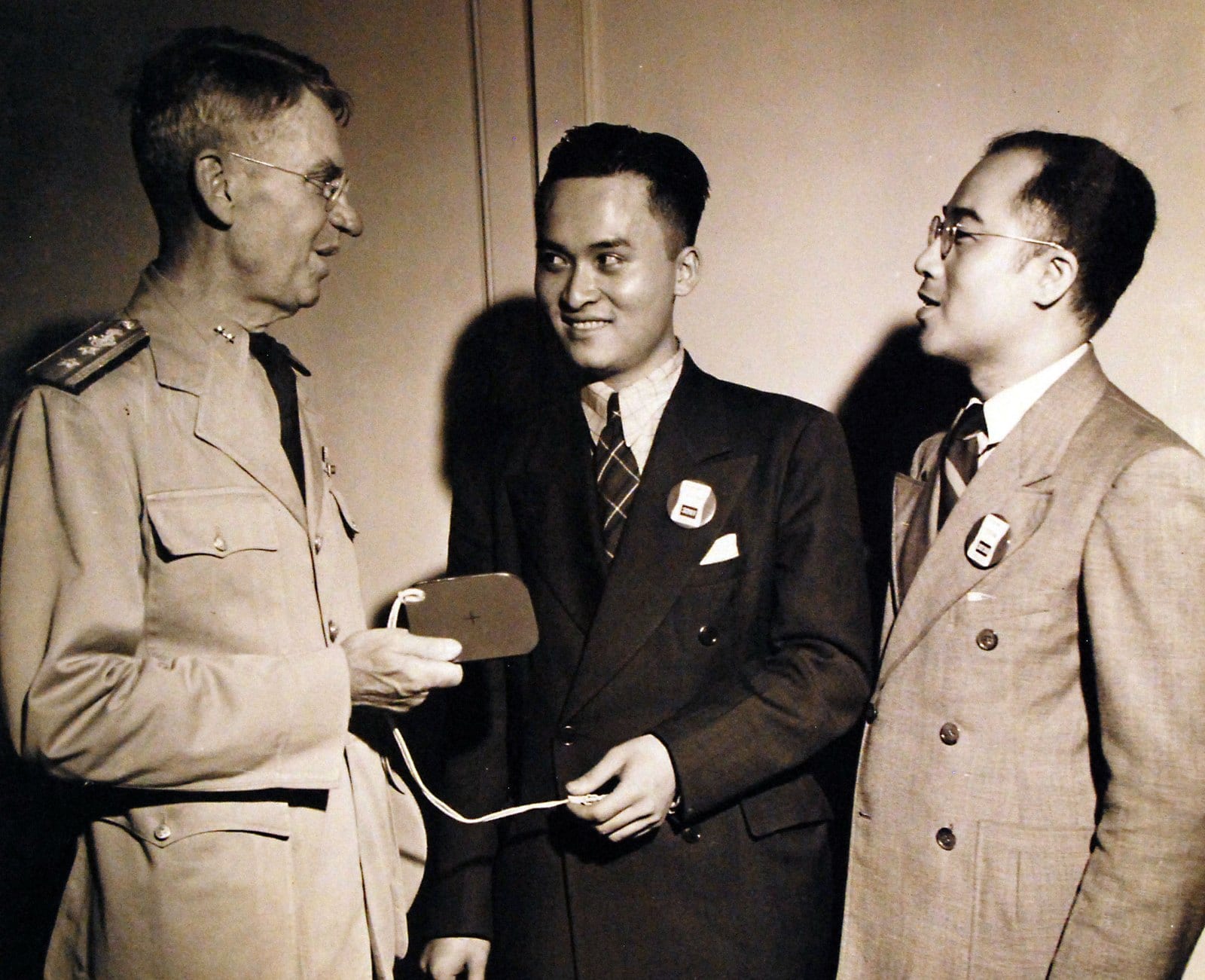
Photo: National Museum of the U.S. Navy, public domain
Brazilian fishermen found him on April 5, 1943, 133 days after the sinking and some 750 miles from where he started. He walked ashore under his own power. King George VI awarded him the British Empire Medal, and the techniques he improvised went into the survival kits that ride on liferafts to this day.
Told that he held the record for surviving alone at sea, he said he hoped nobody would ever have to break it.
3. The upside-down house: 119 days inside a capsized trimaran
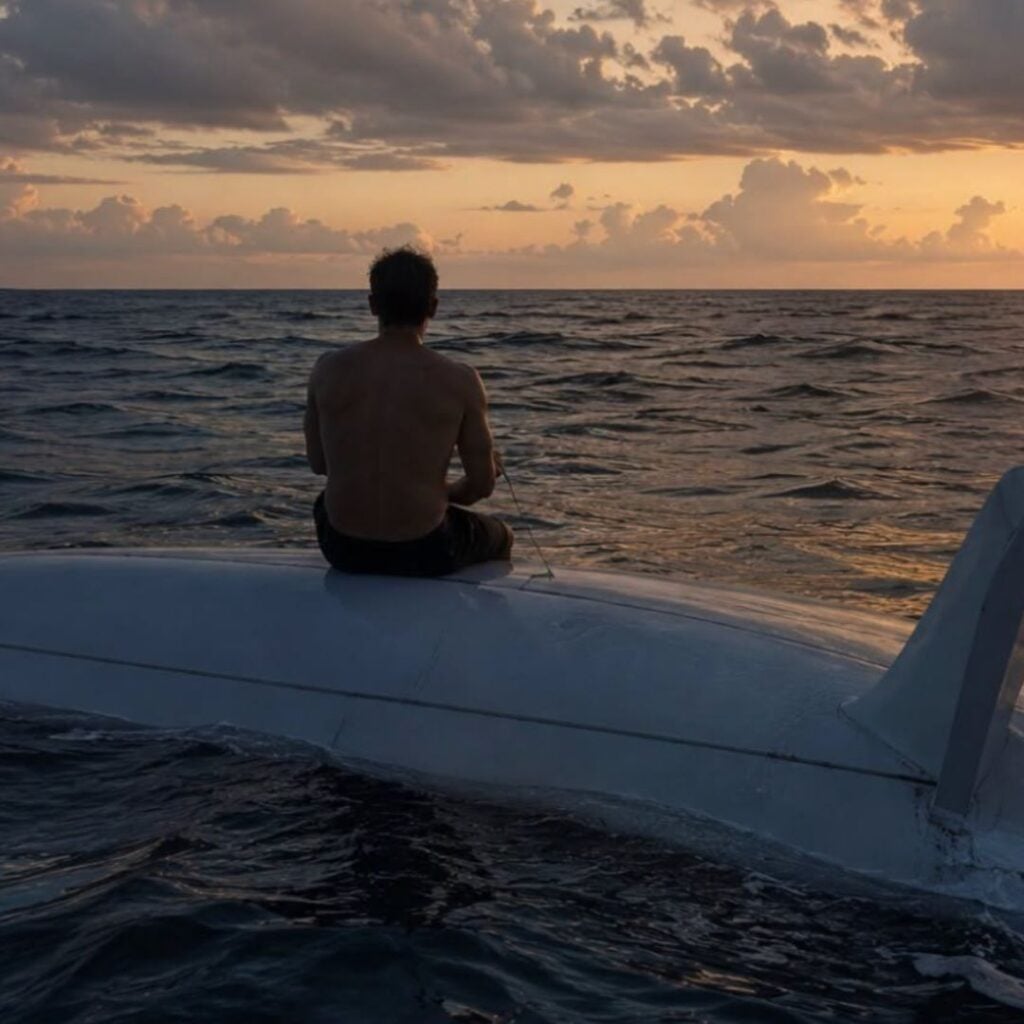
When a rogue wave flipped the trimaran Rose-Noëlle east of New Zealand in June 1989, four men found themselves living in an air pocket inside the upturned hull. They expected to be found within days.
They were in there for 119 of them. They caught rainwater with a scavenged tarp, fished through a hole they cut in the hull, and built the thing that survival actually runs on: a routine. They argued. They made peace. They drifted.
When the wreck finally washed onto Great Barrier Island and all four walked ashore, rescuers had an awkward problem — the men looked too healthy. Officials quietly doubted the whole story until the drift analysis and the boat’s log backed up every part of it. Four months under an upside-down boat, and nobody was lost.
4. Maurice and Maralyn Bailey: 117 days, and a stronger marriage
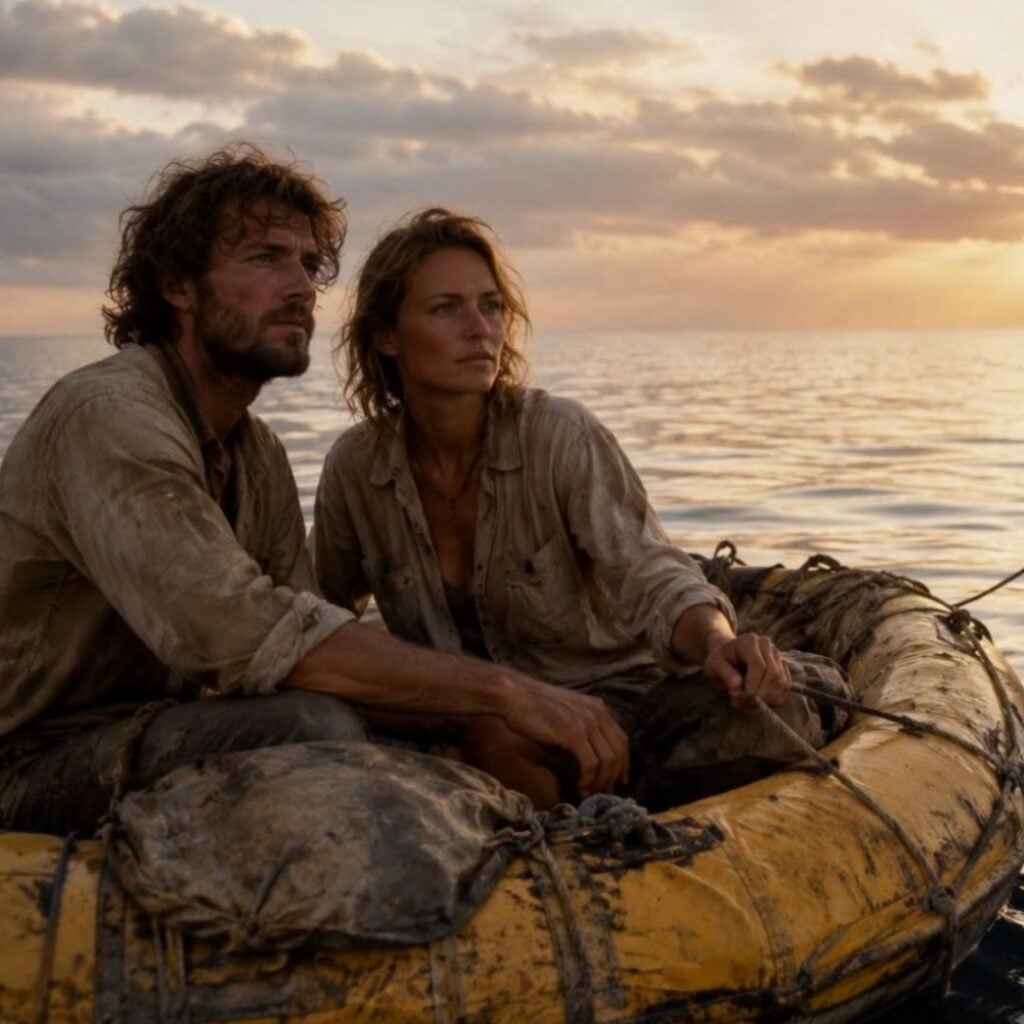
The Baileys sold their house in England, put everything into a 31-foot yacht called Auralyn, and set out in 1973 to start a new life in New Zealand. That March, about 300 miles from the Galápagos, a sperm whale struck the hull. Auralyn sank in minutes.
They stepped into a rubber raft with a small dinghy in tow, a handful of tins, and no radio, and they drifted across the Pacific for the next 117 days. They caught fish and seabirds with safety-pin hooks and bare hands. They collected rainwater in anything that would hold it. Seven ships passed without stopping. By every account, including Maurice’s own, Maralyn was the iron in the operation — rationing the food, inventing games to keep both their minds working, refusing to let either of them quit.
A Korean fishing crew pulled them aboard on June 30, 1973. They had drifted around 1,500 miles and lost roughly forty pounds each. Within three years they had written a book, bought a new boat named Auralyn II, and sailed back to the Pacific.
5. The 26-mile weekend sail that lasted 112 days
Photo: U.S. Navy, public domain
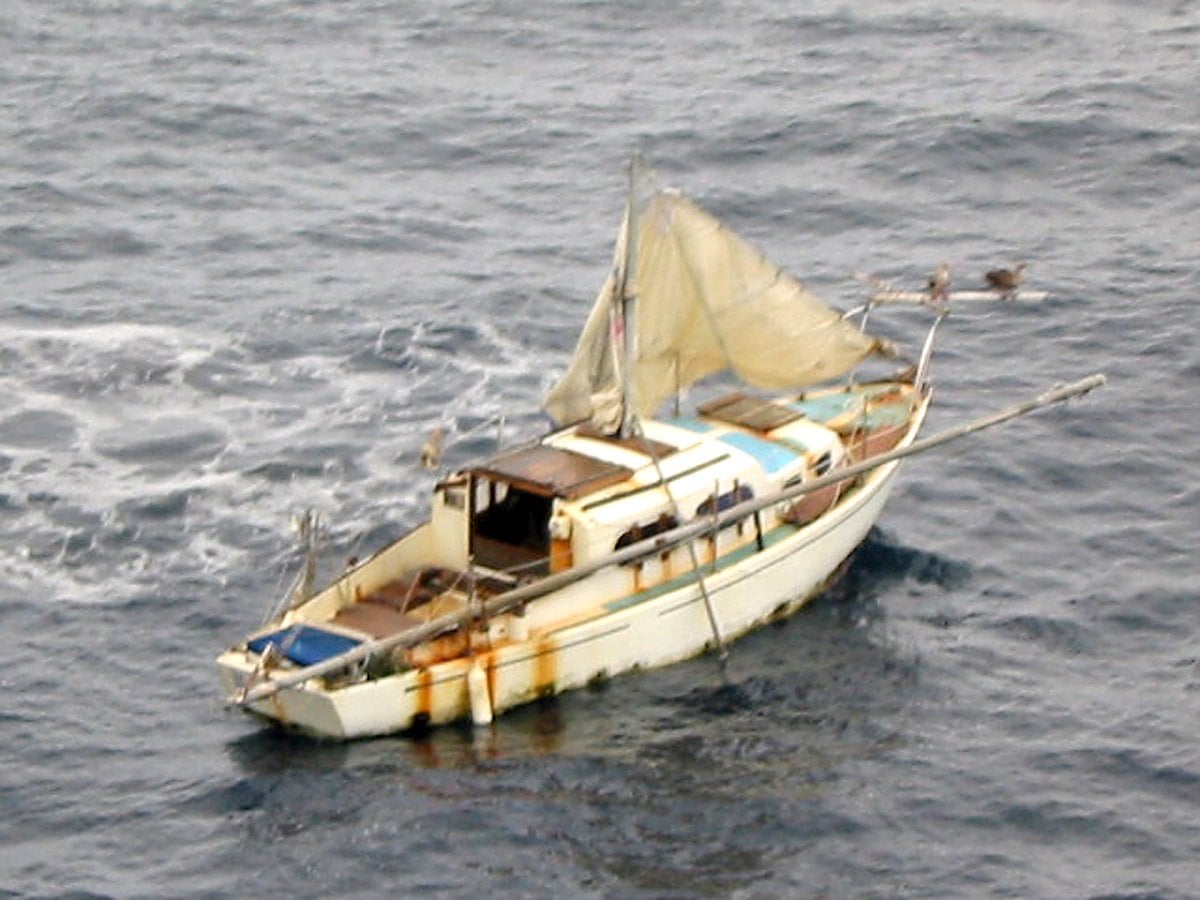
Richard Van Pham left Long Beach, California, for the easiest trip in Southern California sailing: 26 miles across to Catalina Island. A night storm snapped his mast, killed his outboard, and drowned his radio, and the Pacific quietly carried him away.
Nobody reported him missing. He lived alone, and his neighbors assumed he had moved. For 112 days he drifted south on his crippled 26-footer, catching fish and seabirds and cooking them over a small fire he fed with pieces of his own boat.
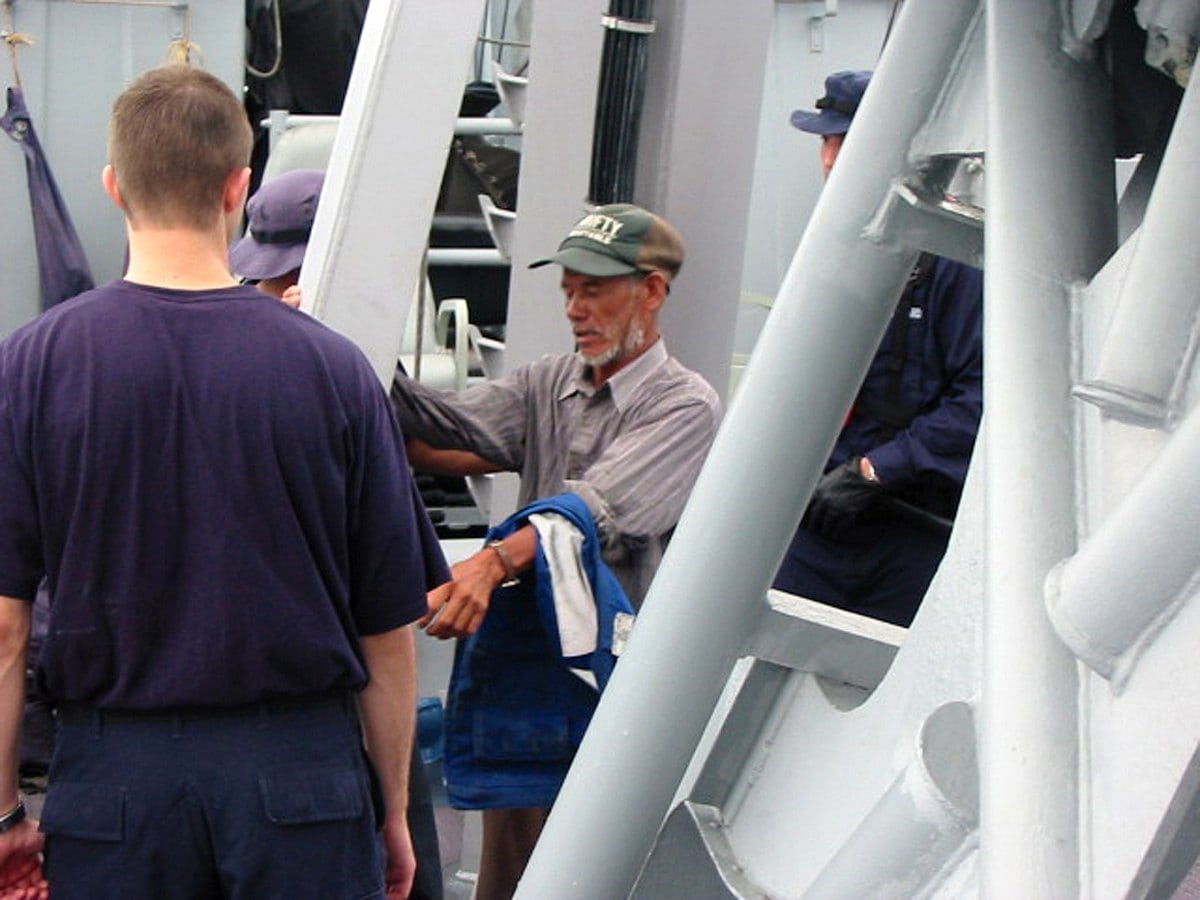
Photo: U.S. Navy, public domain
When the crew of the USS McClusky spotted the wreck in September 2002, he was 275 miles off Costa Rica — about 2,500 miles from home. The Navy offered to fly him back to California. He asked instead whether they could help him fix the boat.
6. Steven Callahan: 76 days in a nine-foot raft

Photo: North Yarmouth Academy, CC BY 2.0, via Wikimedia Commons
Callahan was crossing the Atlantic alone in early 1982 aboard Napoleon Solo, a 21-foot sloop he had designed and built himself, when something large — most likely a whale — holed the hull in the dark. He had time to grab an emergency bag and cut free an inflatable raft. Then the boat was gone and he was alone in a rubber circle nine feet across, 800 miles from land.
What kept him alive for the next 76 days reads like an inventor’s field manual. He speared fish and dried the meat in strips. He coaxed pints of fresh water out of sunshine and seawater with solar stills. When the raft tore, he patched it and pumped for days to keep it inflated — the repair that earned him a place in our jury-rig hall of fame. He tracked his drift by the stars and watched nine ships pass without seeing him.
By April he had covered 1,800 miles. Fishermen off Marie-Galante, near Guadeloupe, spotted him — drawn, they said, by the cloud of seabirds that had learned to follow his raft and the fish living under it. He had lost a third of his body weight, and he walked ashore. His book, Adrift, spent more than 36 weeks on the New York Times bestseller list and changed the safety gear cruisers carry.
7. Bill and Simonne Butler: 66 days after the whales
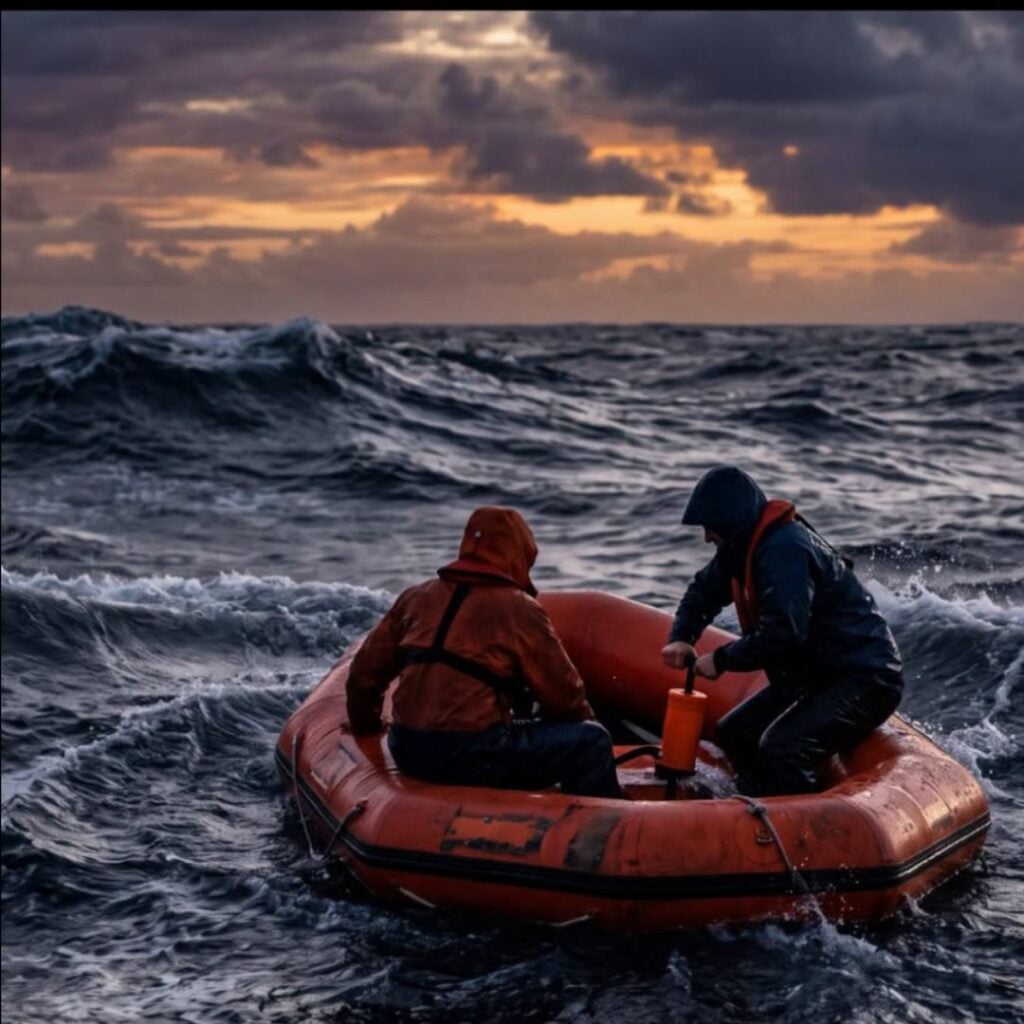
Three weeks into the voyage of a lifetime, on June 15, 1989, the Butlers were 1,200 miles offshore aboard Siboney, their 40-foot yacht, when a pod of pilot whales slammed into the hull. Fifteen minutes later the boat was gone.
What followed was 66 days in a rubber raft. A hand-pumped desalinator made each day’s water, hour by hour of pumping. They caught an estimated four hundred pounds of fish by hand. When sharks punctured the raft, Bill patched it in the water while more sharks circled.
When the Costa Rican coast guard finally spotted them, Bill was 60 and Simonne was 52, and both of them walked off the rescue boat. The sea took their yacht in a quarter of an hour and couldn’t take them in two months.
8. Alain Bombard: 65 days adrift on purpose

Photo: Philippe Roos, CC BY-SA 4.0, via Wikimedia Commons
The strangest entry on this list is the one man who chose it. In 1952 the French physician Alain Bombard set out from the Canary Islands in a 15-foot inflatable called l’Hérétique — the Heretic — to prove a theory everyone around him called suicidal: that shipwrecked sailors die of despair long before they die of thirst, and that the sea itself can keep a castaway alive.
He packed food and water for the whole crossing, then had a notary seal it so he couldn’t touch it. For 65 days he ate raw fish and plankton, drank fish juices and small rationed amounts of seawater, and drifted 2,700 miles. He lost 55 pounds and became severely anemic. Two days before Christmas, l’Hérétique washed onto a beach in Barbados with the sealed provisions untouched.
His book became survival doctrine for a generation of sailors. One important caveat, though, because this is the internet and somebody will try it: modern survival medicine does not endorse drinking seawater, and Bombard’s own methods have been disputed by researchers ever since. Read his story as courage, not as a protocol.
9. Howard Blackburn froze his hands into hooks so he could keep rowing
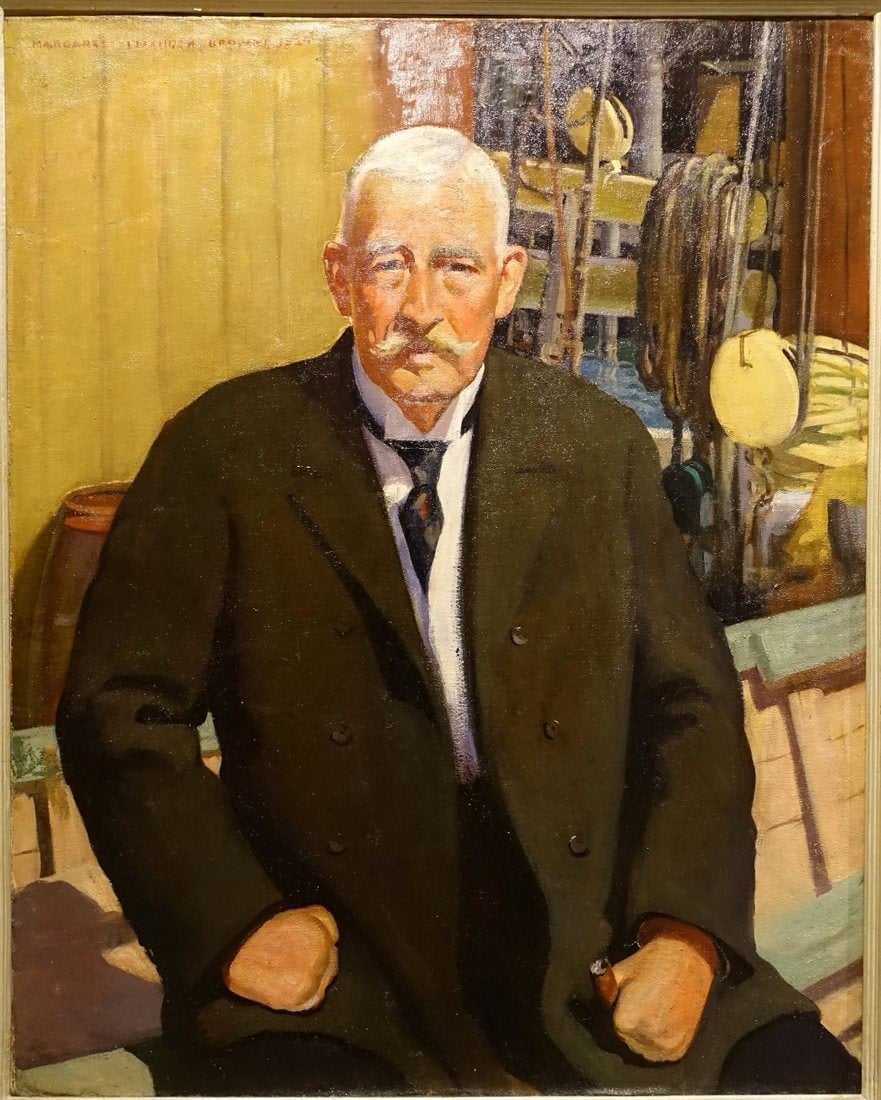
Portrait by Margaret Fitzhugh Browne, Cape Ann Museum. Photo: Daderot, public domain, via Wikimedia Commons
In January 1883, Gloucester fisherman Howard Blackburn and his dorymate were separated from their schooner in a sudden winter storm on the Banks. His dorymate died of exposure. Blackburn had lost his mittens, and he made a decision most of us can’t imagine: he watched his hands begin to freeze and deliberately curled them around the oars, so they would freeze in a shape that could still row.
He rowed roughly five days without food or water until he reached the coast of Newfoundland. He survived, and lost his fingers, along with the toes and heels of both feet, to frostbite.
That would be story enough. It isn’t half of it. Blackburn went home, opened a business in Gloucester, and then went back to the sea that had maimed him. In 1899, fingerless, he sailed a 30-foot sloop alone across the Atlantic to Gloucester, England, in 28 days. In 1901 he did it again in a 25-foot boat of his own design, and did it faster.
10. The whaleship Essex: the disaster behind Moby-Dick
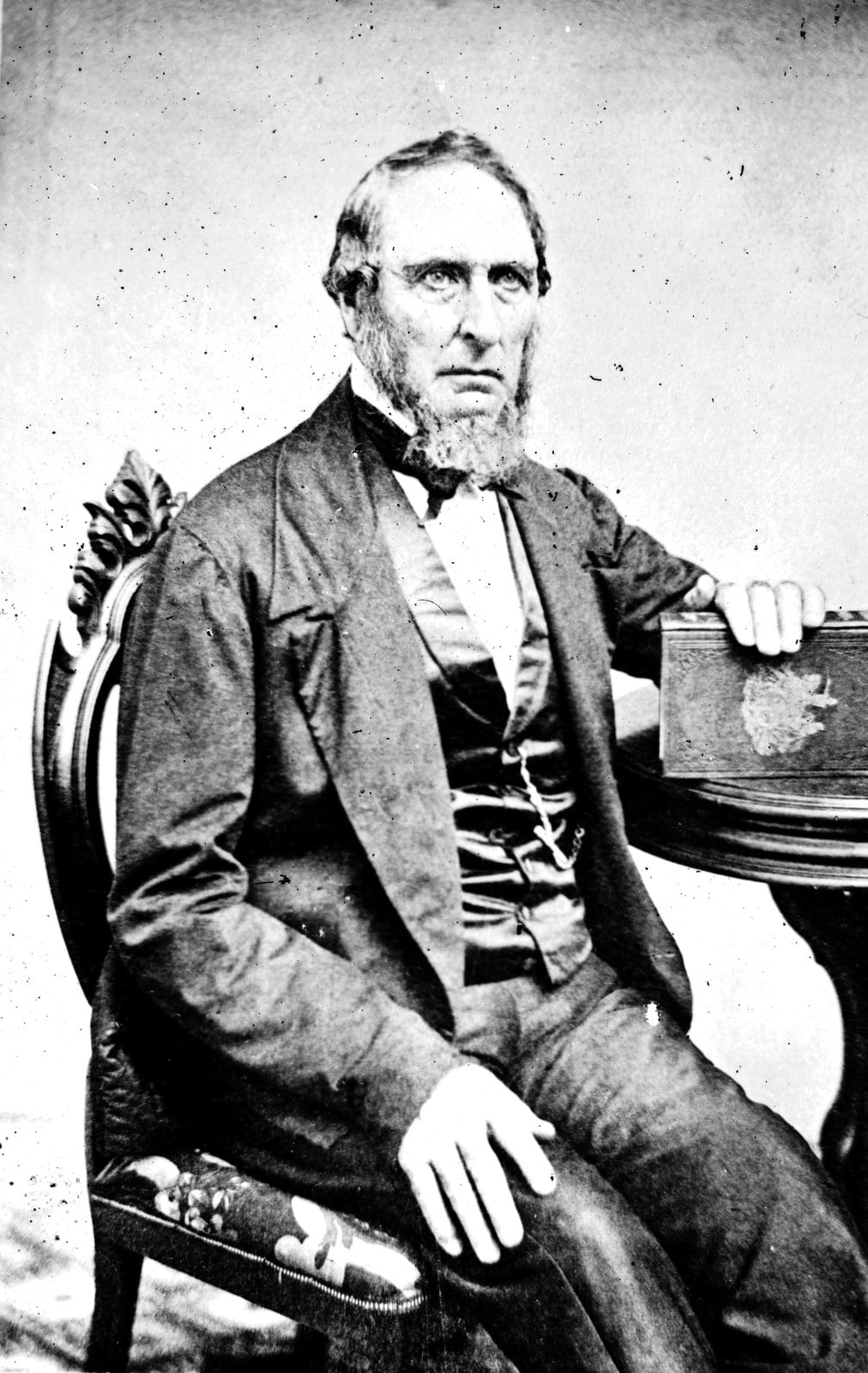
Photo: public domain, via Wikimedia Commons
Everyone knows Moby-Dick. Fewer people know the whale was real.
In November 1820, the Nantucket whaleship Essex was hunting in the remotest part of the Pacific when an enormous bull sperm whale — survivors put it near 85 feet — turned on the ship itself. It rammed the hull head-on, circled, and struck again. The Essex went down roughly 2,000 nautical miles from South America, leaving 20 men in three small open whaleboats.
What followed was one of the worst survival ordeals in maritime history: months adrift, impossible choices that the survivors carried for the rest of their lives, and only eight men alive at the end of it. First mate Owen Chase published his account the following year.
Three decades later a former whaleman named Herman Melville, who had met Chase’s son at sea and read that narrative, used the Essex’s fate as the climax of his novel. The white whale that sinks the Pequod wasn’t invented. It was Nantucket memory.
11. Tony Bullimore: four days inside an upside-down hull
For four days in January 1997, the world believed Tony Bullimore was dead. His keel had snapped in 100-mph Southern Ocean winds, 1,400 miles from land, and his yacht had flipped upside down with him inside it.
He lived in a black air pocket under the hull with freezing water to his knees, one chocolate bar, no way to signal, and the sound of the fiberglass groaning around him. When an Australian Navy frigate finally reached the drifting wreck, a sailor leaned down and knocked on the hull.
From inside the dark, a knock came back. They cut him out into daylight and a bank of television cameras. Asked later what had kept him alive, he said he had made up his mind he was coming out.
12. Susie Goodall left her boat swinging from a cargo ship’s crane
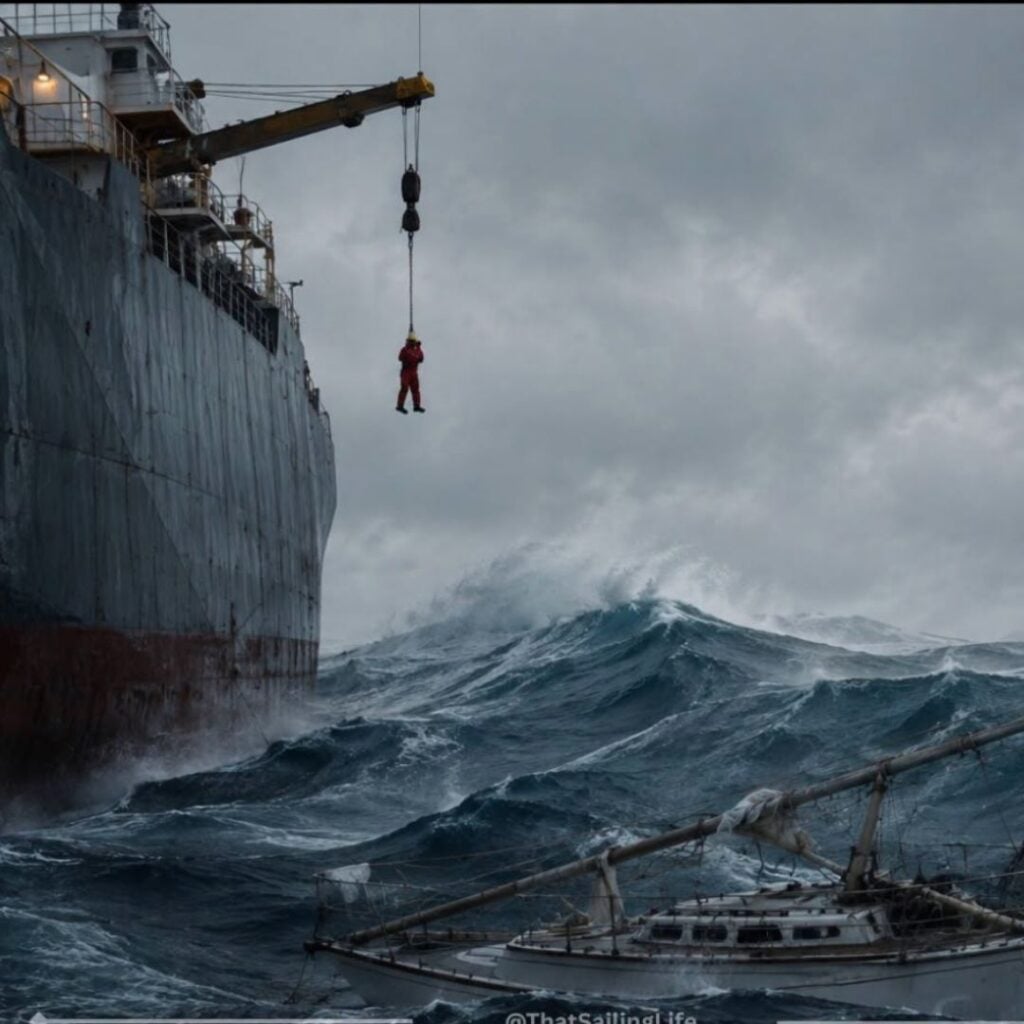
The wave pitchpoled her end over end, 2,000 miles west of Cape Horn. Susie Goodall — the youngest skipper and the only woman in the 2018 Golden Globe Race — came to concussed, her mast gone, her cabin turned into a washing machine, with one working message line to shore. What she sent has become one of sailing’s famous understatements: totally and utterly gutted.
For two days she rigged pumps and waited while a 40,000-ton cargo ship diverted toward the dot on the map that was her boat. Then came the hardest part. In heavy swell, the freighter lowered a crane, and Goodall rode its hook up out of the yacht she loved — a small figure in red foul-weather gear swinging over the Southern Ocean between a dying boat and a wall of steel the size of a building.
She landed on the deck, turned around, and watched DHL Starlight drift away behind her. Gutted, and alive.
What the survivors had in common
Read enough of these and the pattern stops being inspirational and starts being practical. Four things show up again and again:
- Water first, always. Poon Lim’s tarp, Callahan’s solar stills, the Rose-Noëlle’s cut tarpaulin — every long survival is a water story before it is a food story.
- They made routines. Fishing schedules, log-keeping, games, knots tied to count days. The people who lasted longest built a structure for their days instead of waiting.
- Improvised tools beat no tools. Flashlight-spring fishhooks, safety-pin hooks, a fire fed with pieces of your own boat. Everything aboard is raw material.
- Being seen is its own problem. Poon Lim watched ships turn away. Callahan watched nine pass. The Baileys watched seven. Modern EPIRBs and AIS exist because of exactly this.
None of these people planned to be a story. They were on a delivery, a fishing trip, a race, or a 26-mile hop to an island in sight of home. If reading this makes you want to check your own gear, that’s the correct reaction — and if you’re still choosing a boat for the kind of water where this happens, we wrote about what size boat you actually need for an ocean crossing.
Survival at sea: common questions
What is the longest anyone has survived adrift at sea?
The longest verified survival adrift is Salvador Alvarenga’s 438 days in the Pacific, from November 2012 to January 2014. He drifted roughly 6,700 miles in a small open fishing boat from the coast of Mexico to the Marshall Islands. The longest survival on a liferaft is Poon Lim’s 133 days in the Atlantic in 1942-43.
How did castaways get fresh water before modern equipment?
Almost entirely from rain, caught in tarps, canvas, and any container aboard. Steven Callahan also used solar stills, which evaporate seawater and condense the fresh water. Some survivors drank fluid from fish. Drinking seawater is dangerous and is not recommended by modern survival medicine, despite Alain Bombard’s 1952 experiment.
Do ships really pass without seeing people adrift?
Yes, and it is one of the most common threads in survival accounts. Poon Lim reported a ship that turned away, Steven Callahan counted nine ships passing during his 76 days, and the Baileys watched seven. A liferaft is very small and radar-poor, which is why EPIRBs, AIS beacons, and radar reflectors matter so much.
What caused most of these boats to sink?
Whale strikes account for a striking share of them: the Essex in 1820, the Baileys’ Auralyn in 1973, most likely Callahan’s Napoleon Solo in 1982, and the Butlers’ Siboney in 1989. The rest were storms, rogue waves, and structural failures such as Tony Bullimore’s snapped keel.
Are any of these survivors still sailing?
Several went straight back to sea. The Baileys bought a second boat and sailed back to the Pacific within three years. Howard Blackburn crossed the Atlantic alone twice after losing his fingers. Richard Van Pham’s first question to the U.S. Navy crew who rescued him was whether they could help him repair his boat.
Sources
- Alvarenga: Wikipedia, José Salvador Alvarenga; contemporaneous wire coverage of the Ebon Atoll landfall, January 2014.
- Poon Lim: Wikipedia, Poon Lim; National Museum of the U.S. Navy photographic records; War History Online.
- Rose-Noëlle: Wikipedia, Rose-Noëlle (John Glennie, 119 days, Great Barrier Island landfall and the official doubt that followed).
- The Baileys: Wikipedia, Maurice and Maralyn Bailey; New Zealand Herald obituary of Maurice Bailey; Classic Sailor interview.
- Van Pham: Associated Press and U.S. Navy coverage, September 2002 (USS McClusky).
- Callahan: his memoir Adrift: 76 Days Lost at Sea; Cruising World documentary coverage.
- The Butlers: UPI and Deseret News wire reports, August 1989.
- Bombard: Wikipedia, Alain Bombard; Giornale della Vela retrospective.
- Blackburn: Wikipedia, Howard Blackburn; Cape Ann Museum; American Heritage.
- Essex: Britannica; Smithsonian Magazine; Nantucket Historical Association; Owen Chase’s 1821 narrative.
- Bullimore: Wikipedia, Tony Bullimore; Royal Australian Navy account of the 1997 rescue.
- Goodall: Wikipedia, Susie Goodall; 2018 Golden Globe Race reports of the MV Tian Fu transfer.