

I’ve Been Sick Over the Rail Once in Ten Years at Sea. Here’s What Sailors Actually Do About Seasickness, and What’s a Myth.

Ten years living on a sailboat, one trip over the rail. Here is what cruising sailors and the medical reviews say works for seasickness.

*This post may contain affiliate links. Please read our disclosure policy for more info.
I have been seasick over the rail exactly once in ten years of living on a sailboat, on a passage from Puerto Peñasco to Isla Ángel de la Guarda in the Sea of Cortez. The swell was particularly bad that day, close together and choppy like a washing machine.
We’d caught a fresh tuna off the stern, and I ate it with glee, only to throw it up a few hours later. That passage was the most miserable of my cruising career.
So, how do sailors deal with seasickness?
Here is the short version of what sailors on the cruising forums and the medical reviews agree on. The scopolamine patch and the old, drowsy antihistamines are the only remedies with solid evidence, and both have to be in your system before the boat starts moving. Everything else that genuinely helps is free: the horizon, the helm, sleep, plain food, and time, because most people adapt within a day or two.
The catch is that nothing reliably stops seasickness once it has started, and the two remedies people recommend most, ginger and wristbands, have the weakest evidence of the lot.
Below is every remedy graded honestly, the myths sailors still repeat, and what I actually do on our CT-41 when the swell comes from the wrong direction.
Seasickness is a wiring problem, not a weakness

Seasickness happens when your inner ear and your eyes disagree about what your body is doing, and it has nothing to do with toughness. The CDC Yellow Book puts 55 to 70 percent of the variation in susceptibility down to genetics. Women and migraine sufferers get it more, and it peaks in children between seven and twelve.
It is also far more common among experienced sailors than the salty-dog image suggests. When Yachting World surveyed 456 sailors after an Atlantic Rally for Cruisers crossing, 26 percent had been seasick on the way. On the round-the-world Global Challenge crews, 62 percent had been seasick at some stage. Those were people who chose to race around the planet.
My own lesson came the first time we sailed under the Golden Gate. The chop turned into four to five foot swells, and I learned that direction is everything. Bow-first, I liked it. From behind and from the side, all I could do was breathe and stare at the horizon. That is the whole condition in one afternoon, and one of the brutal truths about sailboat living nobody puts in the brochure.
The medicines that work are the ones that reach your brain
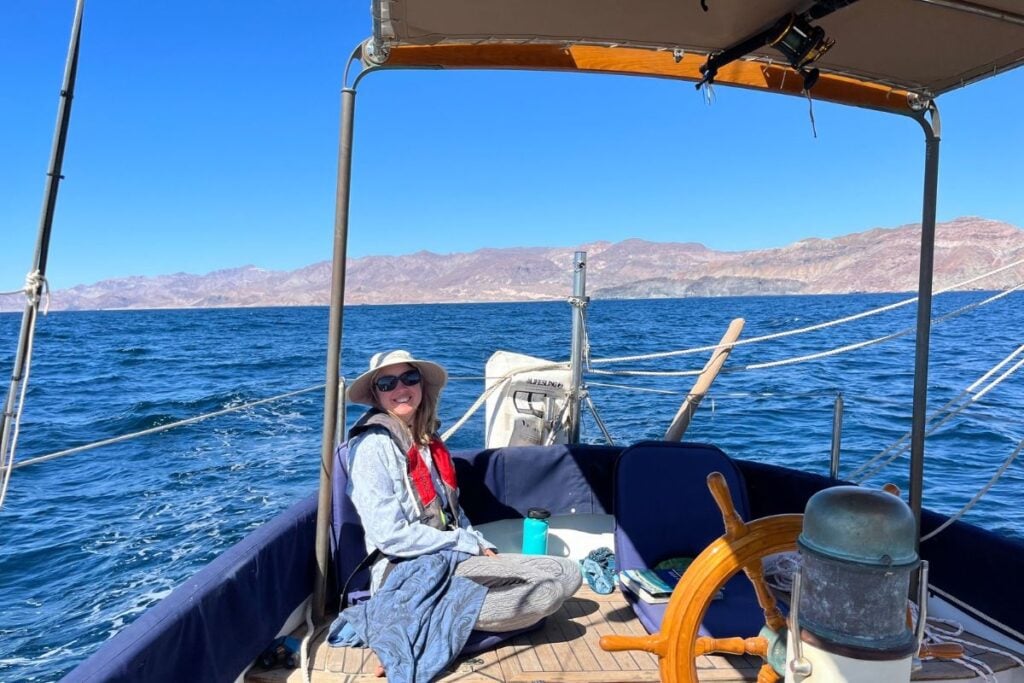
The remedies with real evidence are the scopolamine patch and the first-generation antihistamines: meclizine, dimenhydrinate, promethazine, and, outside the United States, cinnarizine. The CDC explains why: every effective anti-motion-sickness drug crosses into the brain, which is why the non-drowsy allergy pills (loratadine, cetirizine, fexofenadine) do nothing at sea. American Family Physician says the same.
None of this is medical advice. I live on a boat, not in a clinic. Talk to your doctor or pharmacist before taking anything, especially if you have glaucoma, prostate trouble, a heart condition, or you are pregnant.
The scopolamine patch is the strongest tool, with a dry-mouth tax
The patch (Transderm Scop in the US) is prescription-only, goes behind one ear, and per the Mayo Clinic needs several hours before departure to start working, then protects for three days. A Cochrane review of 14 trials and 1,025 people found it clearly beats placebo at preventing nausea, is not shown to beat the antihistamines, and causes less drowsiness than they do. The trade is dry mouth and sometimes blurred vision, and the CDC rules it out for anyone with glaucoma or at risk of urinary retention.
Sailors rate it highly: in Yachting World’s Global Challenge data, half the crew who used hyoscine patches (the British name for the same drug) said it helped a lot. On the Cruisers Forum, the standard play is to wear it for the first three days and peel it off once sea legs arrive. A few posters describe vivid dreams or hallucinations on it, and several warn against cutting a patch in half: the dose becomes unpredictable, not smaller.
The over-the-counter pills work if you take them early and can live with the drowsiness
Meclizine (Bonine, Dramamine Less Drowsy) and dimenhydrinate (original Dramamine) are the American standbys. Mayo says take them 30 to 60 minutes before you leave; the CDC gives them about two hours to full effect. The Cochrane review of antihistamines (nine trials, 658 adults, real boats rather than a spinning chair) found about four in ten people stayed symptom-free on the drug versus one in four on placebo. The price is sleep: two-thirds reported drowsiness, against 44 percent on placebo. Promethazine (Phenergan) is the prescription option the CDC reserves for the roughest conditions, and the most sedating of all.
Gary Jobson’s advice in Cruising World matches the forums: whichever pill you pick, try it on land first, so you know what it does to you before you are the one on watch.
Stugeron is the drug sailors cross borders for

Cinnarizine, sold as Stugeron, is the cruising world’s favorite seasickness pill and it is not available in the United States or Canada. It is sold over the counter in the UK and in Mexico, which is why the letters to Latitude 38 are full of West Coast sailors stocking up south of the border. On the Cruisers Forum thread “Anything Better than Stugeron?” the recurring answer is that it worked when Dramamine did not.
The evidence is more measured than the fan club. In the Yachting World survey it split evenly, 35 percent “helps a little” and 35 percent “helps a lot,” with drowsiness the common complaint. It is an antihistamine, so the Cochrane numbers above include it, and the Latitude 38 letters carry a warning: in one group of six, one person became very ill on it and another slept for eight hours. If you buy it abroad, check the rules on bringing medication home.
Ginger and wristbands are comfort, not proof
Ginger and acupressure bands are harmless and popular, and the controlled trials mostly say they do no better than a sugar pill. The NHS lists ginger as worth trying, as a tablet, cookie, or tea. The CDC calls the evidence “weak and contradictory,” and the AFP review notes the best-known trial, 80 naval cadets in heavy seas, found no statistically significant effect. Sailors like it anyway: when Practical Sailor surveyed 37 offshore sailors, nearly two-thirds of the dozen who had tried ginger said it took the edge off mild queasiness.
Wristbands fare worse. The CDC states that laboratory trials show acupressure bands “are no more effective than placebo,” and a 77-person study that tested both the elastic bead bands and the electrical version found neither prevented motion sickness, worn correctly or not. In the Practical Sailor survey, three of seven band users found them useful. Cheap, no side effects, and not something to bet a passage on.
Every remedy graded in one table
| Remedy | What it is | Evidence | The catch |
|---|---|---|---|
| Scopolamine patch | Prescription patch behind the ear, lasts 72 hours | Strong. Cochrane: beats placebo, less drowsy than pills | Dry mouth, blurred vision; not for glaucoma; useless once sick |
| Meclizine (Bonine) | OTC antihistamine | Good. Cochrane: 40% symptom-free vs 25% on placebo | Drowsiness in two-thirds of users |
| Dimenhydrinate (Dramamine) | OTC antihistamine | Good, same review | The drowsiest OTC pill |
| Promethazine | Prescription antihistamine | Good; CDC’s pick for intense motion | Most sedating of all |
| Cinnarizine (Stugeron) | Antihistamine sold in the UK, Mexico, elsewhere | Good; 70% of sailors surveyed said it helped | Not sold in the US or Canada; drowsiness |
| Ginger | Capsules, candy, tea, cookies | Weak. Cadet trial not significant | The taste can turn on you |
| Acupressure bands | Elastic wristband with a bead | Weak. Lab trials: placebo | None: harmless, unproven |
| Horizon, helm, midships | Free, on deck | Good. CDC: horizon and control both protect | Someone else makes lunch |
| Time (habituation) | Staying out there | Strongest of all. CDC: beats any drug | One to three days, fades ashore |
The free remedies are the ones sailors actually lean on

Ask a cruiser what they do about seasickness and the answer is rarely a pill. Every item below has a medical body behind it as well as a forum.
- Look at the horizon. The CDC says a horizon reference gives “some protection” on ships, the NHS says fix your eyes on it, and gCaptain’s list from professional mariners puts it first. It is the only thing out there not moving.
- Take the helm. Being in control is protective, in the CDC’s words, the way the driver rarely gets carsick. Jobson calls steering with your eyes up one of the most effective fixes there is.
- Stay amidships, in fresh air. The NHS says the middle of the boat; Mayo says the middle, near the waterline; the mariners say a ship balances at its center, so the motion is least there.
- Put the phone away. No reading, no screens, no chart-plotter staring. The NHS, CDC, and Mayo all list close work as a trigger.
- Sleep before you leave. Jobson has watched racing crews party the night before a distance race and pay for it offshore, and gCaptain cites US Navy research tying sleep loss to worse symptoms.
- Eat light, drink water, skip the bar. Mayo suggests plain crackers and cold water; Cruising World says cut fried food and alcohol. An empty stomach is not the goal, a quiet one is.
- Keep breathing. The NHS suggests closing your eyes and breathing slowly, and the Yachting World survey found apprehension itself feeds seasickness.
On our boat, the one galley job that cannot be skipped in a seaway is coffee, so the pour-over stands inside the pressure cooker on the gimballed stove, where it cannot launch itself across the cabin. Thirty seconds below, then straight back up to the horizon. That is the entire system, and it has kept me on the right side of the rail for all but one passage.
It passes, usually within a day or two
Most people get their sea legs within one to two days, and that adaptation beats every drug on the market. The CDC calls habituation “the most effective countermeasure,” better than any current drug. The AFP review puts the timeline at one to two days of continuous exposure.
The sailor surveys agree. On the Atlantic rally, 58 percent of those who got sick were over it within one or two days, 27 percent took three or four, and only 7 percent were still suffering after a week. Even the worst affected Global Challenge crews recovered in three to five days. Sixty percent of the seasick rally sailors said it never stopped them taking part in life on board, which matches what people who have crossed the Atlantic tend to say afterward.
One honest footnote: the CDC adds that habituation fades without re-exposure, which is why the first passage after a season on the hard can feel like your first passage ever. If you are new to boats, the queasy stretch is part of what no one tells you about your first month aboard, right alongside the damp.
The myths sailors still repeat
Half of what gets passed along at the marina bar is wrong. Each of these is checked against the sources above.
- “Real sailors don’t get seasick.” A quarter of the Atlantic rally fleet did, and 62 percent of round-the-world racing crews have at some point. The ones claiming immunity adapted and forgot.
- “Take the pill once you feel it coming on.” The CDC and the AFP review both say medication works best taken before exposure, and the Cochrane scopolamine review found no trials showing it treats symptoms once they have started. Early or not at all.
- “Non-drowsy allergy pills do the same job.” They do not. The drugs that work cross into the brain; the non-drowsy ones are designed not to.
- “Wristbands are clinically proven.” Lab trials say placebo. Wear them if you like them, and take a real remedy too.
- “It’s all in your head.” Partly. Apprehension raises your odds, but genetics explains more than half of who gets it. Nobody is choosing to be sick.
- “An empty stomach is safer.” Every source says the opposite: eat light, keep water going, skip the grease and the alcohol. Hungry and dehydrated is the worst combination.
- “Go lie down below.” Mixed. Some Yachting World respondents went straight to bed and it worked, but below deck has no horizon, which the CDC notes is where the trouble starts. If you go down, go horizontal and go quickly.
Seasickness is a lousy way to spend a passage, and it is not a verdict on you. Get the medicine in early if you need it, keep your eyes up and your hands on something, and give your body the two days it is asking for. If you are weighing the whole lifestyle, the five questions I get asked most about living on a sailboat cover the rest. The sea keeps all of us humble, and once in ten years it reminds me personally.
How long does seasickness last?
Usually one to two days. The CDC Yellow Book calls habituation the most effective countermeasure, and the American Family Physician review says symptoms typically subside within one to two days of continuous exposure. In Yachting World’s survey of an Atlantic crossing, 58 percent of seasick sailors were over it within two days and only 7 percent were still sick after a week. Adaptation fades without re-exposure, so the first passage after time ashore can feel rough again.
What is the best seasickness medicine for sailing?
The prescription scopolamine patch and the first-generation antihistamines (meclizine, dimenhydrinate, promethazine) are the only remedies with strong evidence. A Cochrane review found scopolamine beats placebo for prevention with less drowsiness than the pills; a second Cochrane review found antihistamines kept about 40 percent of people symptom-free versus 25 percent on placebo. All must be taken before the motion starts, and non-drowsy allergy antihistamines do not work. Ask your doctor or pharmacist which suits you.
Do acupressure wristbands work for seasickness?
Controlled trials say no better than placebo. The CDC Yellow Book states laboratory trials show acupressure bands are no more effective than placebo, and a 77-person study found neither elastic bead bands nor electrical stimulation bands prevented motion sickness. In Practical Sailor’s survey of offshore sailors, three of seven band users found them helpful. They are harmless and cheap, so wear them if you like, but pair them with a proven remedy.
Does ginger help with seasickness?
The evidence is weak but ginger is popular and harmless. The NHS lists it as worth trying, the CDC calls the evidence weak and contradictory, and the best-known trial, 80 naval cadets in heavy seas, found no statistically significant effect. In Practical Sailor’s survey, nearly two-thirds of sailors who tried ginger said it eased mild queasiness. Treat it as comfort, not prevention.
Can you take seasickness medicine after you already feel sick?
It rarely helps. The CDC and the American Family Physician review both say motion sickness medication is most effective taken before exposure, and the Cochrane scopolamine review found no studies showing it treats symptoms once started. Take pills 30 to 60 minutes before leaving and apply the patch several hours before. Once sick, the best tools are the horizon, fresh air, the helm, slow breathing, and time.
Why can’t you buy Stugeron in the United States?
Stugeron (cinnarizine) is not approved for sale in the United States or Canada, so US pharmacies do not stock it. It is sold over the counter in the UK, Mexico, and many other countries, which is why cruising sailors often buy it abroad. It is a first-generation antihistamine, so the same evidence and the same drowsiness apply as for meclizine and dimenhydrinate. Check customs rules before bringing medication home and ask a pharmacist about dosing.
Sources
- CDC Yellow Book: Motion Sickness (risk factors, drug table, habituation, ginger and acupressure evidence)
- Cochrane: Scopolamine for preventing and treating motion sickness
- Cochrane: Antihistamines to prevent and treat motion sickness
- Mayo Clinic: Motion sickness first aid
- NHS: Motion sickness
- American Family Physician: Prevention and Treatment of Motion Sickness
- Miller and Muth, Efficacy of acupressure and acustimulation bands for the prevention of motion sickness (Aviation, Space, and Environmental Medicine)
- Cinnarizine (availability by country)
- Yachting World: ARC seasickness survey (456 sailors)
- Yachting World, Elaine Bunting: Seasickness cures (Global Challenge crew data)
- Practical Sailor: Drug-free Seasickness Solutions (survey of 37 offshore sailors)
- Cruising World, Gary Jobson: Surviving Seasickness
- Cruising World: 8 Ways to Prevent Seasickness
- gCaptain: 50 Ways Professional Mariners Tackle Seasickness
- Letters to Latitude 38 on Stugeron
- Cruisers Forum: Anything Better than Stugeron for Seasickness?
- Cruisers Forum: Scopolamine patch for up to 3 weeks
Sources checked October 2026.






I agree, looking at the horizon. As a diving instructor, I was on a boat in South FL, a converted lobster boat. I was on the floor doing a regulator repair and boom, it hit me. I stood up, and the only thing I could think of was to look at the horizon. It took a few minutes, but I got relief. As a result, the customer was advised to bring his equipment to the shop and get a full service. I’m like you never got sick, but when it hits, it hits. I have some other stories about this subject from travelling to Vietnam on the troop ships!