

8 Mistakes New Sailors Make in the Galley (and How to Avoid Them)

Learning to cook in a small galley kitchen can be challenging if you’re coming from a house. Carolyn Shearlock of The Boat Galley has tons of amazing tips on cooking and eating well from a sailboat.
*This post may contain affiliate links. Please read our disclosure policy for more info.
Cooking aboard a sailboat can feel like an impossible balancing act. There’s limited counter space, ingredients spoil faster, and propane suddenly feels more precious than gold.
I had to learn a lot about food storage and prep before embarking on the cruising lifestyle in 2020, and one incredible resource for me was Carolyn Shearlock, founder of The Boat Galley and creator of the online course, Eating Well with a Tiny Fridge. I also purchased her cookbook called The Boat Galley Cookbook, which has AMAZING recipes perfect for a tiny galley.
Carolyn has been cooking and cruising for many years and has seen just about every galley mistake. Here are her top tips to help you avoid frustration and eat well at sea.
1. Stocking Up Like Your Crossing an Ocean
“One mistake I see all the time,” says Carolyn, “is new cruisers buying six months of food before they even leave the dock.”
While it might feel comforting to have every locker packed, it usually backfires — food gets lost, goes bad, and the boat becomes a floating pantry.
“Most of us cruise in places where we can shop every couple of weeks,” she explains. “Unless you’re crossing an ocean or going somewhere really remote, there’s no need to carry more than a month’s worth of food.”
✅ Keep a small stock of essentials and restock as you go — it’s easier, fresher, and saves space. Plus, you won’t forget where you put everything!
2. Letting Bruised Produce Ruin the Rest
Keeping food fresh on a boat is an art form, and Carolyn swears it starts before you even leave the store.
“I’m super-super-super picky about my produce,” she says. “No bruises! A single bad apple really does spoil the bunch — it’ll start rotting in just a day or two.”
She also checks her fruits and veggies every day for early signs of spoilage. There are also special ways to store produce that you should learn as well, like which fruits spoil other fruits if they are stored together. Carolyn’s course, Eating Well with a Tiny Fridge, goes into all this in-depth! After reading her book, I learned to wrap cabbage in newspaper to keep it fresh.
✅ Inspect your produce like a hawk, use delicate items first, and store hardy vegetables like cabbage, carrots, and onions separately.
3. Cramming Your Fridge with Items That Don’t Need to Be There
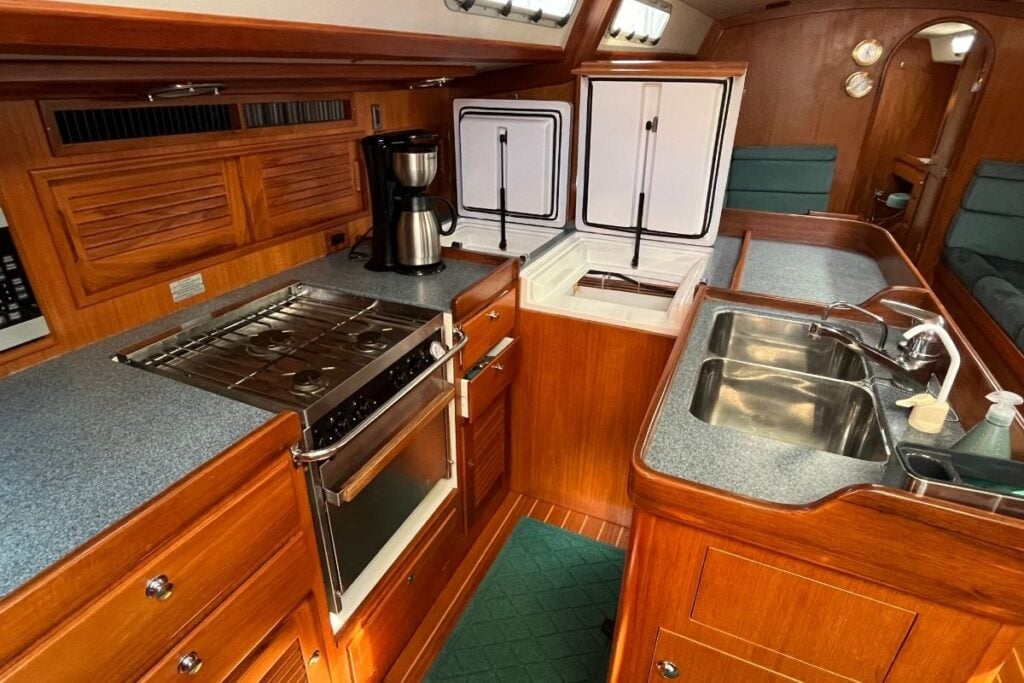
Tiny fridges (or no fridge at all) are part of life afloat, but Carolyn says you can make it work.
“You’d be surprised at how little really has to be refrigerated,” she says. “The first thing I tell people is to get everything out of the fridge that doesn’t absolutely HAVE to be in there.”
Her course, Eating Well With a Tiny Fridge, teaches how to make the most of limited cold storage.
✅ Move shelf-stable foods out, organize by priority, and use clever hacks to maximize space.
4. Cooking Like You’re Still on Land

If you’re firing up the oven in the tropics, you’re doing it wrong. Carolyn’s favorite trick keeps the boat cool and saves propane:
“Using a thermal cooker! It’s like a giant Thermos — you get food simmering, slip it inside, and it continues cooking with the stove off.”
This allows her to prep dinner when it’s convenient, then go off for a hike or happy hour while the food cooks itself.
“It makes it so much easier to plan late afternoon hikes or sight-seeing — dinner’s ready whenever we get back.”
Another thing Tom and I do on our sailboat is use a solar oven. We love the GoSun Fusion solar oven as it’s large enough for a full loaf of bread or large dinner. We use it ALL the time when in Mexico’s hot climate.
✅ Save fuel and sanity with a thermal cooker — it’s Carolyn’s #1 galley game-changer.
5. Forgetting That Less is More
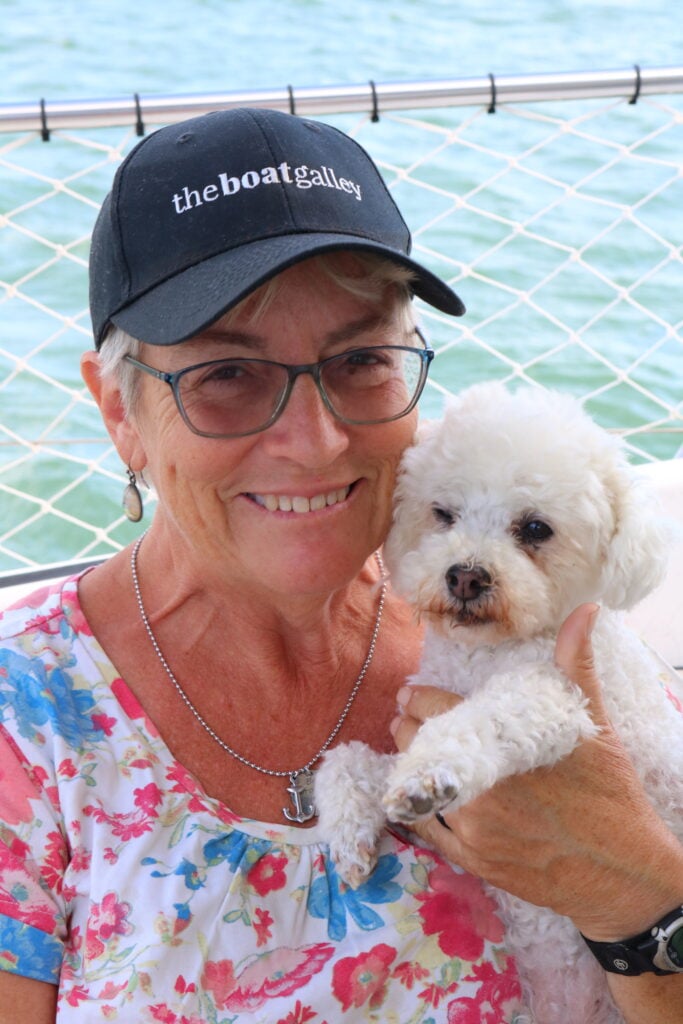
Organization is everything when your kitchen moves with the waves.
“Keep small quantities of things you use often in easy-to-access places,” Carolyn says. “Then refill weekly from your main stock.”
And resist the urge to stash everything “just in case.”
“Not becoming a hoarder is huge. Unless you’re going somewhere truly remote, you don’t need to carry enough food for six months!”
✅ Simplify your space — it’ll make cooking (and living) a lot calmer.
6. Skimping On The Right Tools
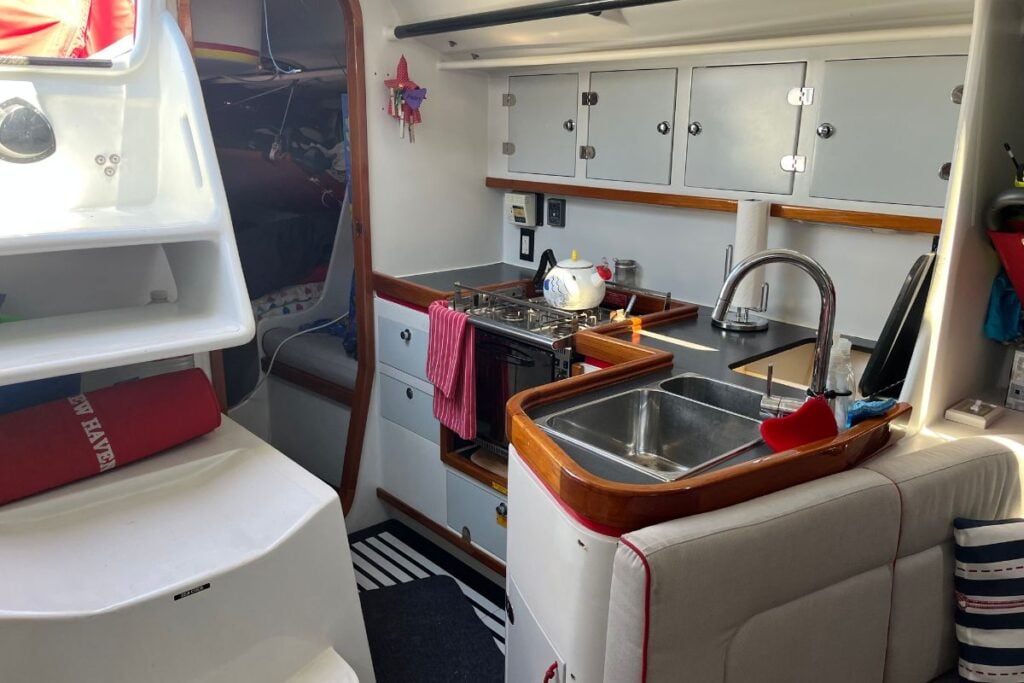
You don’t need a lot of fancy gadgets — just the right ones.
“Really good knives,” Carolyn insists. “But you only need three: a chef’s knife, a bread knife, and a paring knife.”
On our sailboat, we use a very good Santoku knife made in Germany that’s been with us for YEARS.
She also swears by her hand can opener.
“I like the original Swing-A-Way — and I always carry a spare, just in case.”
✅ Invest in quality basics that last. You’ll thank yourself halfway through a rolly anchorage dinner prep.
7. Stressing Over Running Out of Food
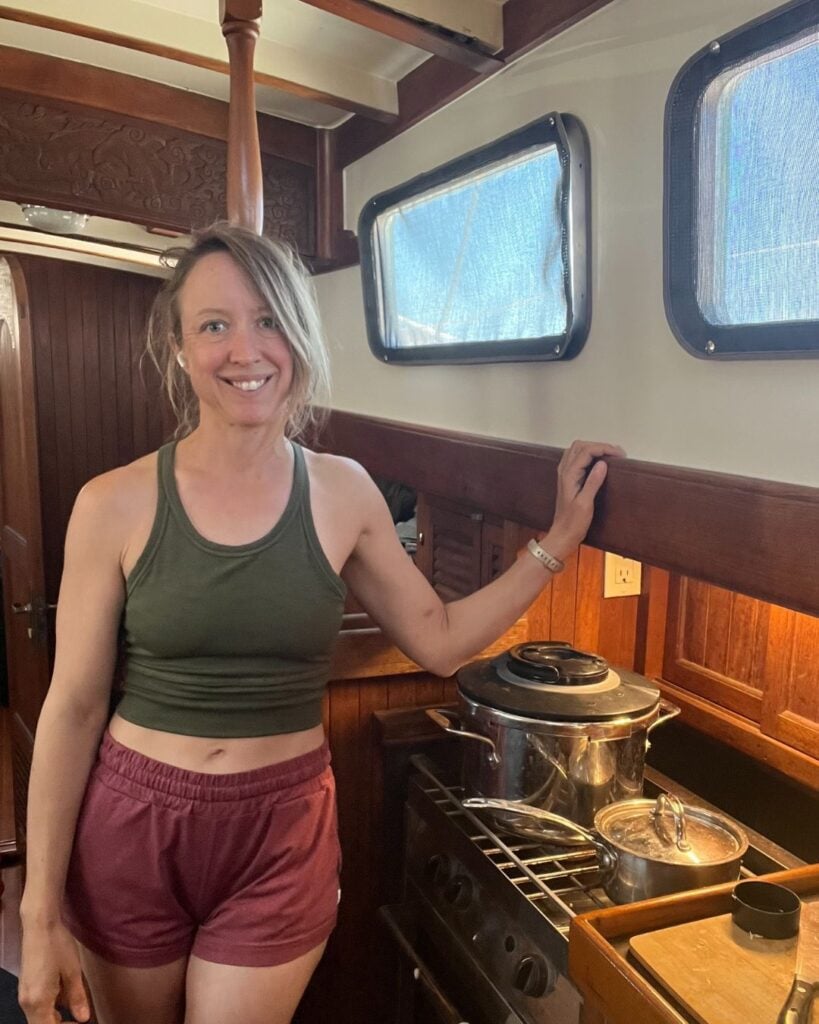
Perhaps Carolyn’s most comforting advice: don’t panic about food.
“Don’t worry!” she says with a smile. “If there are people where you’re headed, there will be food. Everybody eats!”
And while it might not be exactly what you’re used to, she believes that’s part of the adventure.
“Trying new things is just part of cruising.”
✅ Trust that you’ll find what you need — and enjoy discovering local flavors along the way.
8. Not Using Electrical Appliances
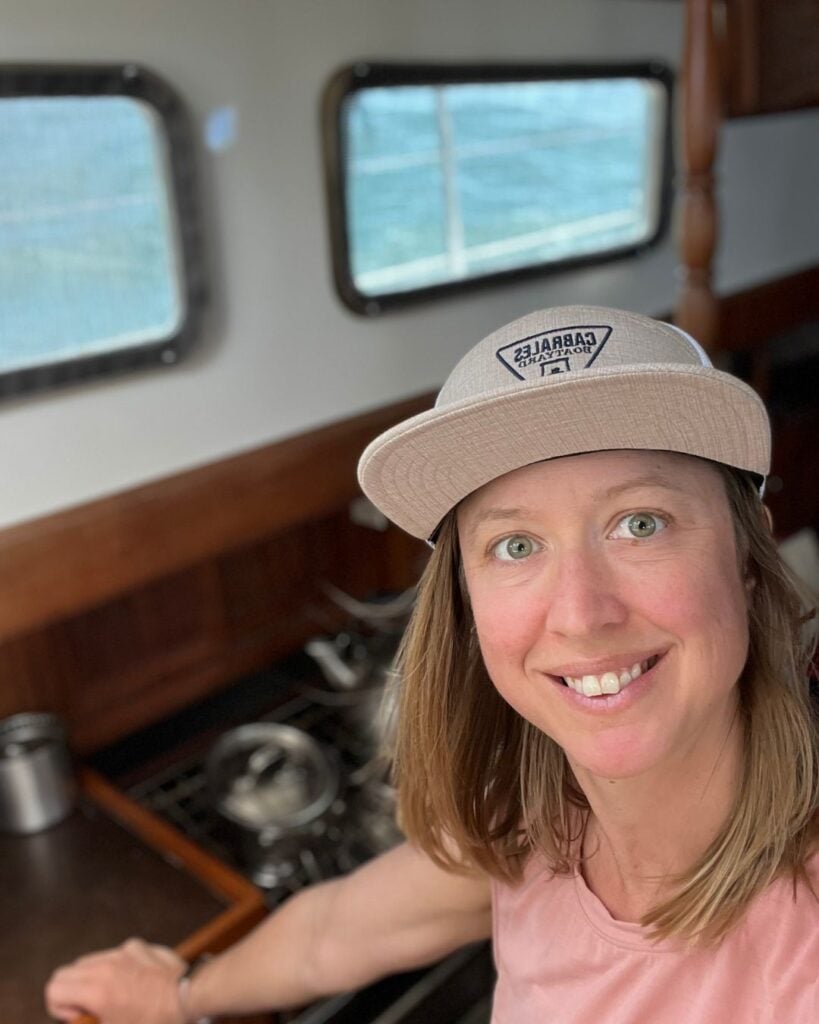
A lot has changed with sailboats these days, with many boasting huge battery banks and a robust solar setup. This is a big change from when Carolyn first started cruising back in 2002, when they were one of the only boats with solar in the anchorage. Still, solar nor battery technology were good enough to power electrical appliances in those days.
Now, everything has changed.
“With much better solar efficiency and lithium batteries, it’s possible to have things like a food processor, ice maker, instant pot, waffle maker, and even an induction stove. I do still watch for energy efficient items, but I don’t immediately reject the idea of anything electric . . . one of my biggest luxuries is an electric coffee maker and bean grinder. When we first started, we used instant,” said Carolyn.
As long as you’re monitoring your solar systems, there’s no need to leave everything electric at home.
Bonus: Carolyn’s Happy Hour Favorite — Dill Pickle Dip 🥒
Because boat snacks deserve an upgrade, here is one of Carolyn’s favorite recipes!
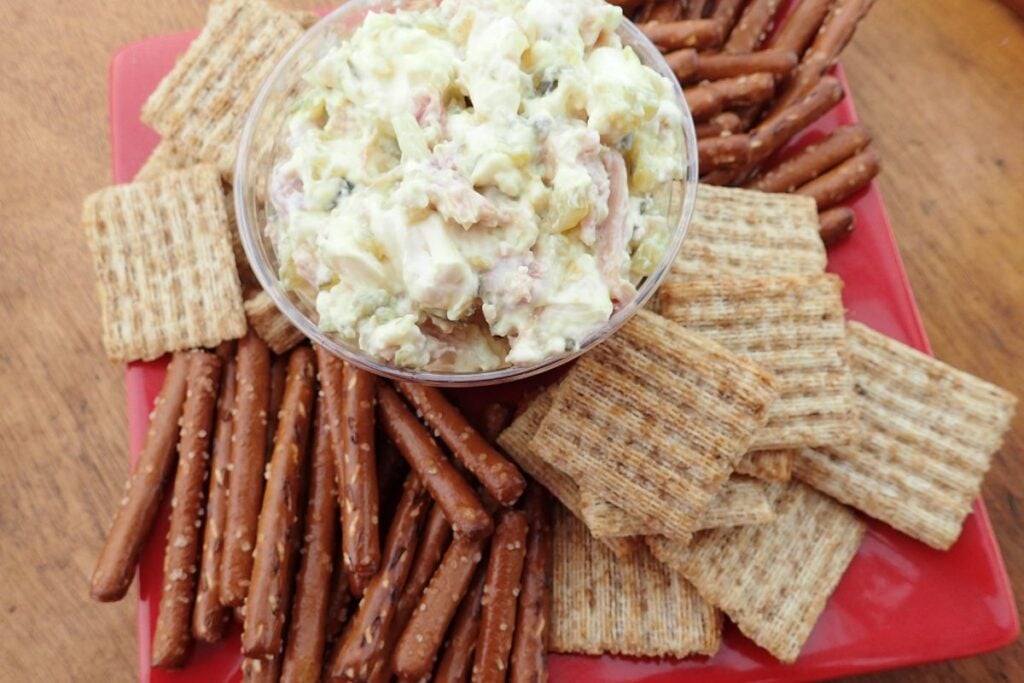
Ingredients
- ½ cup dill pickle relish or chopped pickles
- 8 oz. cream cheese (softened)
- ½ tsp. garlic powder
- 6 oz. canned or deli ham (or substitute tuna or make it vegetarian)
Instructions:
Mix it all together, chill, and serve with pretzels or pita chips.
“It’s always a hit — and the ingredients can be found almost anywhere,” she says.
Sailors often say the galley is the true heart of the boat — and with Carolyn’s wisdom, it can also be the most enjoyable place on board.
🌊 Want more of Carolyn’s cruising wisdom? Here are her courses and books that I love:




“ Stocking Up Like Your Crossing an Ocean” like *you’re* (you ARE crossing an ocean – wrong spelling)