

Sailing vs. Land Life: The 9 Biggest Surprises I Didn’t See Coming

The unexpected ways everyday life changes after leaving land behind.
*This post may contain affiliate links. Please read our disclosure policy for more info.
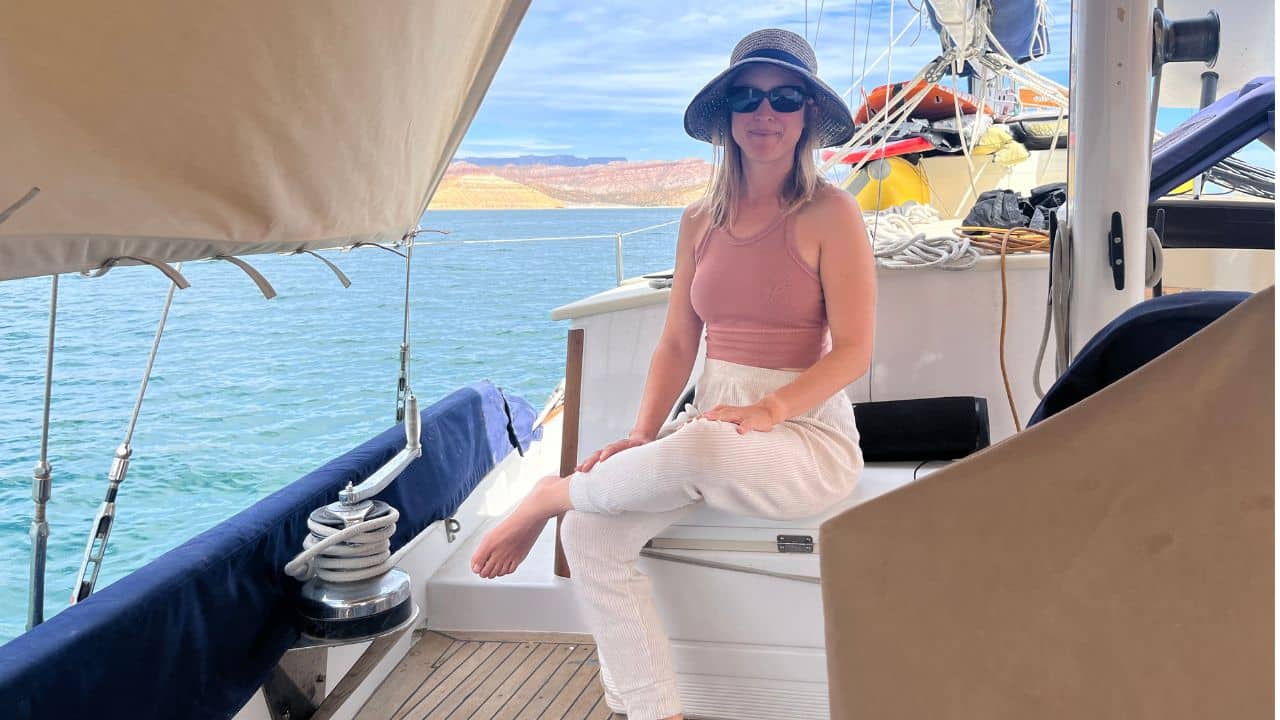
When we moved aboard our CT41 sailboat, we weren’t prepared for how differently everyday life would function. We had watched the YouTube videos and read the blogs, but none of them captured the subtle differences that only show up once you’re living it.
Some things became easier almost immediately, others more demanding, and many of the biggest changes were mental.
In this article, I share the 9 ways sailing life surprised me most — not as pros or cons, but as the unexpected realities of living on a boat.
1. Time Feels Different

On land, time is mostly organised by the clock. Days are broken into hours, meetings, and deadlines that aren’t really affected by daylight, weather, or how you feel. If something needs doing, you usually just push through it.
Afloat, time works differently.
Your day is shaped by conditions. Light, wind, temperature, and tides all matter. What you do and when you do it depend on what the day allows. You might have to fix the wind gauge at the top of the mast at sunrise because it’s the short window when there’s enough light to see, and the wind is forecast to be calm.
Some days are slow because very little happens. Others are busy and slightly chaotic. Plans change often. Over time, you stop judging days by how much you got done and start judging them by whether it was the right day to do something.
We adjusted to this way of organizing our days surprisingly quickly.
2. Your Status Matters Less

On land, who you are tends to come up quickly. What you do for work, where you live, how busy you are, what you’re working towards — it all quickly comes up in conversation.
Among other cruisers, none of that really matters.
Fewer people know what you do, and there aren’t many signals to place you. No job title, no car, or no postcode.
People still form an impression, of course. They notice your boat, what you wear, and how comfortable you look moving around on deck. But instead of judging you by titles or possessions, they tend to judge you by how you live.
Without all the usual comparison points, there’s less pressure to explain your life as a series of milestones. Conversations stay closer to the present. You talk about weather, boats, repairs, and plans for the next few days, not careers or property.
I’ve rarely felt more comfortable just being myself than I did after moving aboard.
3. Mental Load Shifts
On land, a lot of mental energy goes into keeping track of things you don’t really see. Bills, deadlines, admin — they sit there quietly and add up, even when nothing feels urgent.
Living on a sailboat changes your mental load.
Some of those vague worries drop away. In their place are very practical things: how much water you have left, whether the batteries are charged, what the weather’s doing, and how long it’s been since you last checked the engine.
The difference is that these problems come with clear responses. If the water’s low, you use less or refill. If the batteries are down, you change how you use power or wait for the sun or the wind. If something breaks, you fix it, work around it, or accept that it’s not working today.
You do take on more responsibility. There’s no ignoring an issue and assuming someone else will deal with it. But it also feels more contained. Instead of having a long list of half-formed worries, you’re usually dealing with a shorter list of practical ones.
I assumed the mental load would mostly disappear, but between managing the boat and running an online business, it mostly just changed shape.
4. Stuff Becomes Just Stuff

On land, it’s easy for things to pile up without noticing. Living in a house lets you keep items you don’t really use but don’t want to deal with. You hang on to things because you might need them “one day”, because you paid for them, because they were a gift, or because they remind you of something.
There’s no room for that on a sailboat.
Space is limited, and everything on board has to earn its place. Weight matters, and there’s no spare cupboard where unused items can disappear.
That forces a more practical way of thinking. Instead of asking whether you like something or might need it one day, you ask whether it’s actually useful now. Does it get used? Does it solve a real problem? Is it worth the space it takes up?
What surprised me was how unemotional this became. Over time, possessions stopped feeling tied to who I am and started feeling more like tools.
5. Waiting Becomes Normal
On land, waiting usually feels like a problem. You’re stuck in traffic, on hold, or in a queue, and the assumption is that things should be moving faster. Waiting feels like wasted time or something to fix.
On a boat, waiting is just part of daily life.
You wait for the wind to drop, for daylight, for the weather window you need, for parts to arrive, for the tide to turn. A lot of progress depends on things you can’t speed up, no matter how organised you are.
Waiting stops being frustrating and starts being practical. There’s no point forcing a job when it’s unsafe or pointless, so you don’t. You make tea, check the forecast again, tidy up, or do something else that fits the moment.
I was surprised by how quickly this felt normal. Waiting didn’t feel like giving up time — it felt like using it differently.
6. You Gain And Lose Privacy

I never really thought about this. On land, if you work outside your home, you spend most of the day around other people. Being properly alone usually means going to the bathroom or having your own office.
Living on a sailboat flips that.
You’re far less exposed to the outside world. If you want, you can stay on the boat all day without seeing or speaking to anyone. There’s a sense of being tucked away that’s hard to find on land.
At the same time, there’s nowhere to be alone without your partner. No spare room, no door to close when you need space — unless one of you gets in the dinghy and leaves for a bit.
I love being able to choose when to be sociable — to go and spend time with other cruisers or locals — and when to retreat back to the boat. Having very little privacy on the boat has its challenges, but over time, we found our own ways to give each other space.
7. Risk Feels Clearer
On land, most risks feel distant. Small mistakes, like bumping into things or knocking something over, are easy to recover from. And when something more serious happens, you rely on insurance.
Risk is harder to ignore on a sailboat.
Misjudge a step on a boat, and you might fall in the water, damage something, or get hurt. A line left loose can tangle or snap. A poor call on a weather window can turn an uncomfortable situation into a dangerous one. The cause and effect are clear and immediate.
I didn’t expect this to feel reassuring, but it does. Knowing when to pay attention makes it easier to switch off when it’s safe to do so. Plus, I learned to move more intentionally.
8. Weather Stops Being Background

On land, the weather sits in the background of most plans. It might influence what you wear or whether you bring an umbrella, but it rarely determines whether something happens at all — unless you’re spending the day outdoors.
Living on a sailboat means you depend on the weather.
Wind strength and direction, swell, rain, temperature, and visibility all shape what’s possible on a given day. Some plans only make sense in very specific conditions. Others are abandoned entirely because the forecast isn’t good enough.
You don’t just check the weather once and move on. You watch it change, compare forecast models, and adjust plans accordingly. A good weather window can open up unexpectedly and you take it. A bad one can close things down for days.
I didn’t expect the weather to carry this much weight in daily life. But, over time, it stopped being something to work around and became something to work with.
9. You Stop Taking The Basics For Granted

On land, power, water, and waste sit quietly in the background. You flip a switch, turn on a tap, and everything works. If something goes wrong, someone else is usually responsible for fixing it.
When you move onto a boat, those systems become very visible.
You need to keep track of how much water you have left, how much power you’re using, and where waste goes. When you forget, you feel it quickly. Run the batteries too low, and you can’t watch a TV series before bed. Use too much water, and you’re suddenly looking for a tap on land. Skip maintenance, and something eventually stops working.
I didn’t expect to spend this much time thinking about power and water, but it soon started to feel normal.
Final Thought
Living on a sailboat changes how everyday life works in quiet, practical ways.
The surprises aren’t dramatic, but they do teach you something about patience, attention, and what actually matters day to day.




Hi there
I’m really interested to learn how to create some income . I’ve been living / travelling on my sailboat ( 42 ft monohull Catalina ) for a year . I’ve also travelled around Australia with a van and 2 kids before . I write in Substack and I’ve self published a book . I’m not very computer literate and I have a tiny following .
Thanks for any tips .
Great to connect x
You are really talented – I love your blogs, even the layout and look of them is so clean and nice looking. And the way you capture people’s attention on Facebook is perfect. Well done Kristin. 😀⛵👌