

7 Questions I’m Always Asked About Living on a Sailboat (Answered After a Decade Aboard)

Seven questions people always ask about living on a sailboat full time, answered after a decade aboard: the bathroom, the real costs, learning to sail, safety, water and power, and what changed since 2018.

*This post may contain affiliate links. Please read our disclosure policy for more info.

Living on a sailboat full time means your home floats, your toilet needs a holding tank, your water comes from a tank or a watermaker, and the weather decides your week. I have lived aboard sailboats since 2015, first a 1972 CT-41 ketch in the San Francisco Bay and now two boats in Mexico’s Sea of Cortez, and I have not lived in a house since 2016. These are the seven questions people ask me most, answered honestly, with what changed over a decade.
I wrote the first version of this post in 2018, three years into boat life, when our sailboat John Muir was still mid-restoration and we were dodging the marina’s liveaboard rules. A lot has happened since. We sailed to Mexico. We bought a second boat. I now split the year between a Sprinter van in the United States and the boats in Mexico, and I still get asked the same questions at every dock, campground and family dinner. So here is the updated version, with the old answers kept where they still hold and the new reality where it does not.
1. Where do you go to the bathroom on a sailboat?

I will be honest, because everyone secretly wants to know. When we first moved onto the sailboat, there was no bathroom. The boat was old and mid-restoration, and there was no toilet and no holding tank. It was like camping in a small cabin with no plumbing.
At night, if we truly had to go, there was a bucket. We tried very hard not to need the bucket. Most of the time we walked down the dock to the marina bathroom, or went straight to the gym where we were both members.
Today the boat has a marine toilet and a holding tank, which Tom spent many agonizing hours installing. I have never been so happy to see a toilet in my life. The holding tank gets pumped out at a marina or emptied offshore where that is legal, and when we are hauled out in the boatyard we walk to the yard bathrooms like everyone else.
Living on a sailboat teaches you never to take the smallest things for granted. A toilet you do not have to pump is a luxury. So is a long hot shower at a marina. I wrote a whole list of the tiny luxuries that feel huge on a boat, and the bathroom is on it.
2. What does it cost to keep a sailboat somewhere?
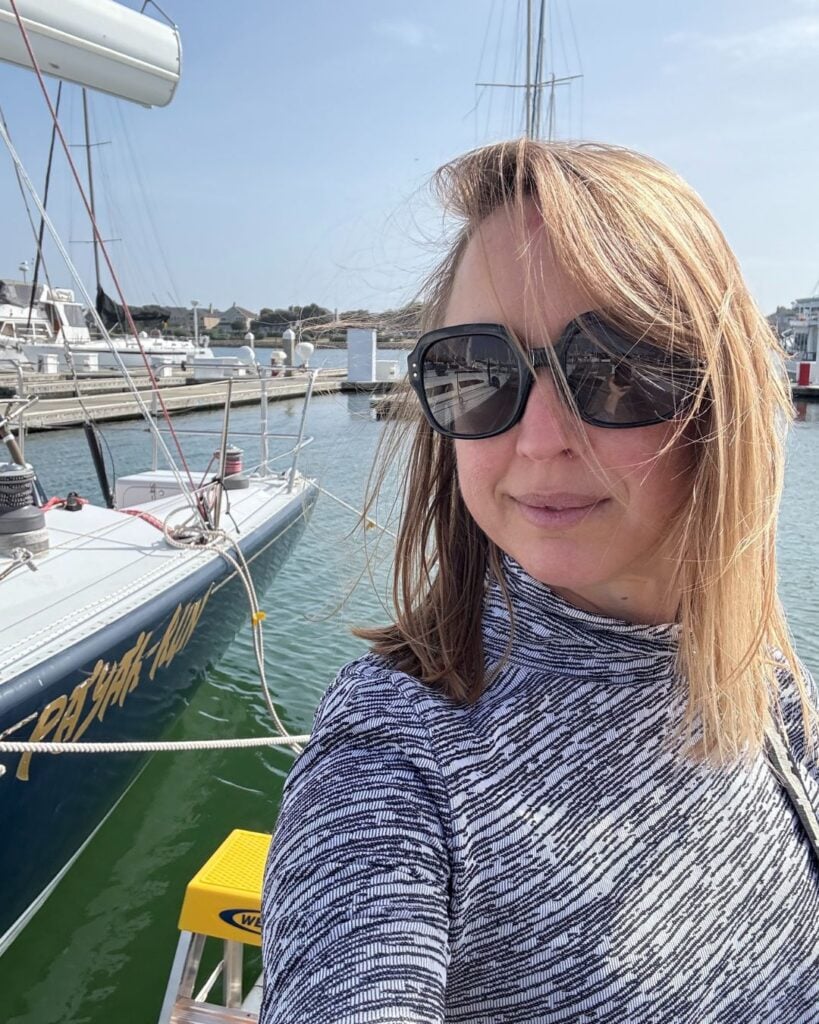
Here is a secret from our San Francisco years: we never had official liveaboard status. Only about 10 percent of slips in each Bay Area marina were set aside for liveaboards, the waitlists were long, and liveaboard slip fees ran up to $1,500 a month. Without that status we paid about $400 a month for our slip and around $5 for utilities, and in exchange we could only stay aboard a few nights a week.
So we got creative. We anchored out for days at a time at Angel Island, China Camp, Tiburon, Treasure Island and Richardson Bay off Sausalito. We house and pet sat. We slept in our van. Not having liveaboard status kept our costs way down, and it taught us how to live at anchor, which turned out to be the whole point of owning a sailboat.
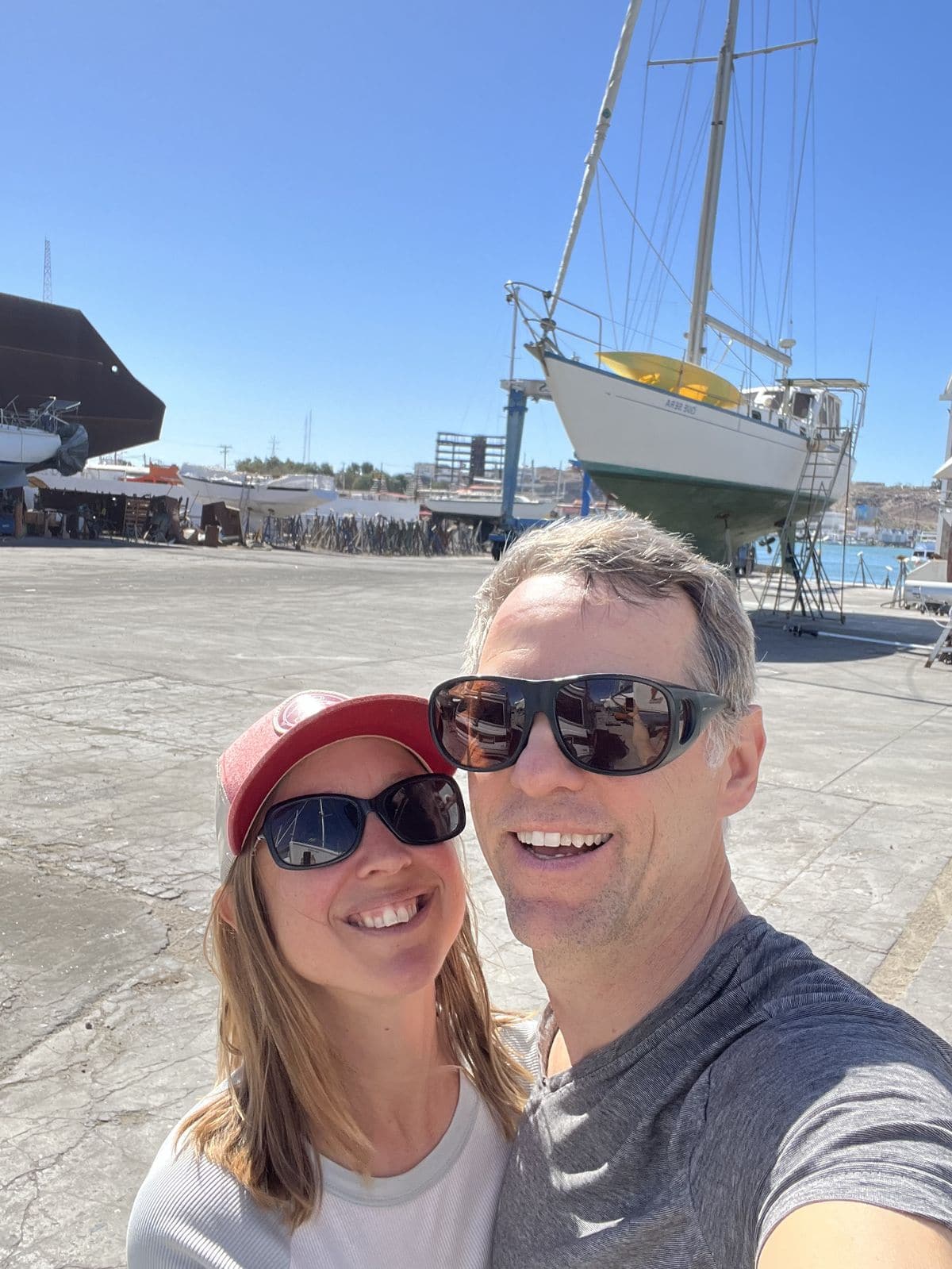
Now the boats live in Mexico. We have hauled out at Cabrales Boatyard in Puerto Peñasco every year since 2021, both to work on the boats and to store them through hurricane season. While marinas are on par with costs in California, the boatyard is way cheaper and you can do your own work.
When the yard gets too hot in summer, we head north in the van.
If you are budgeting for this life, my full breakdown of how much a sailboat really costs covers purchase prices, surveys, insurance and the maintenance bills that never stop.
3. How much did your sailboat cost?
Our slip fees were cheap. The boat was not. Tom bought our CT-41 in Canada for $30,000 and then spent years restoring her: new rigging, a marine toilet and holding tank, new fuel tanks, three new sails, a marine stove and propane system, a new sink and countertop, and countless smaller projects I have lost track of. We figured out long ago that the true cost is well over $100,000 once you count the work, and most of that work will last a very long time.
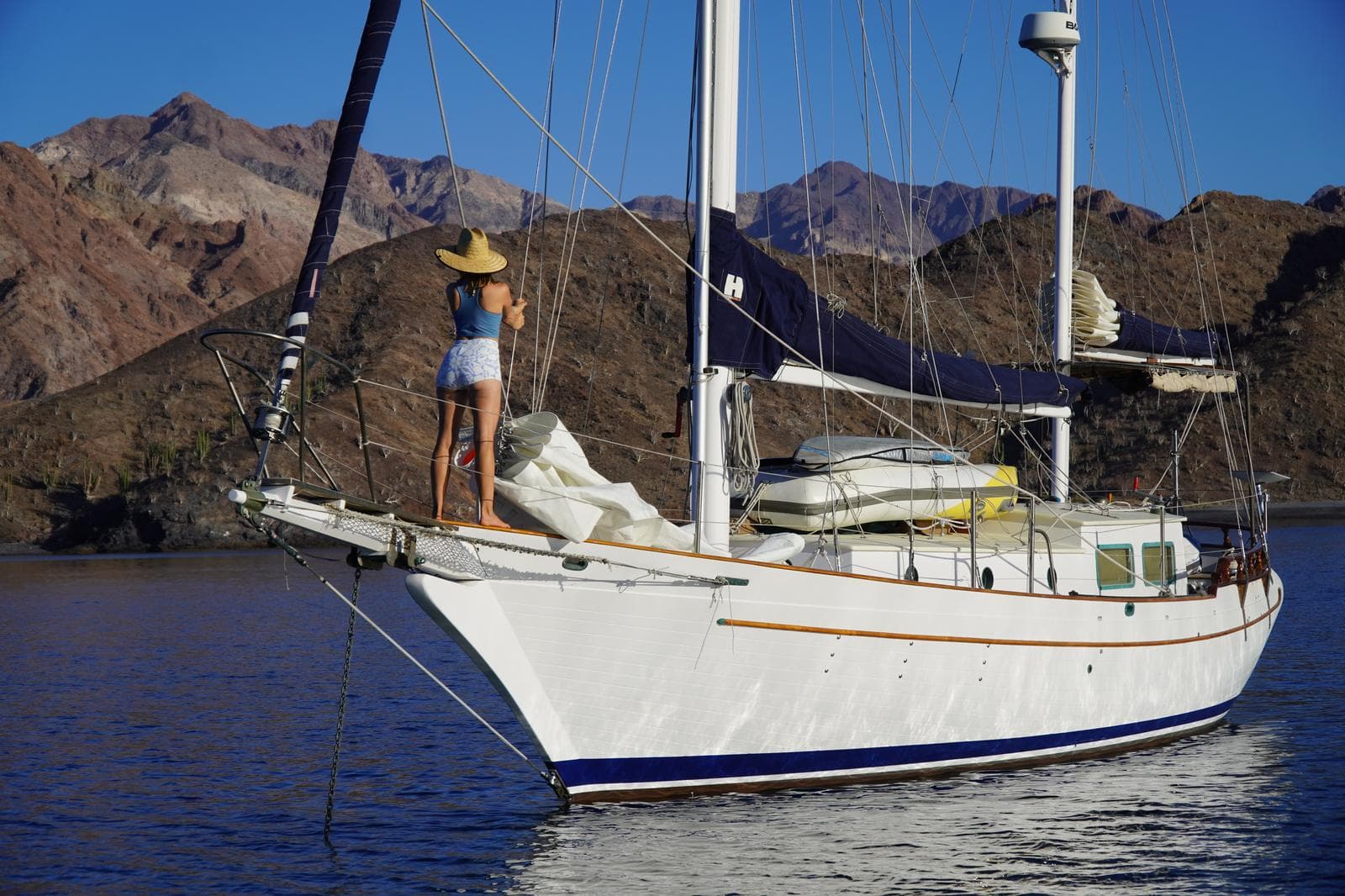
Then we did it again. Our second boat is a Nelson Marek 46 named Payah Kun. We sailed her down from the San Francisco Bay area, and she had not had a bottom job in something like ten years when we got her, so she is currently being retrofitted at the boatyard. Sailors joke that boat stands for bring out another thousand, and with two of them, we know exactly why.
Buying an old boat is the affordable way in, but only if someone aboard can do the work. If that is not you, the 80 best liveaboard boats is where I would start looking, and these brutal truths about sailboat living are worth reading before you fall in love with a listing.
4. Did you know how to sail before you moved aboard?
No. I did not know how to sail before I lived on a sailboat. Tom had sailed extensively and lived aboard for years in Sausalito, so I learned as I went, and I am still learning.
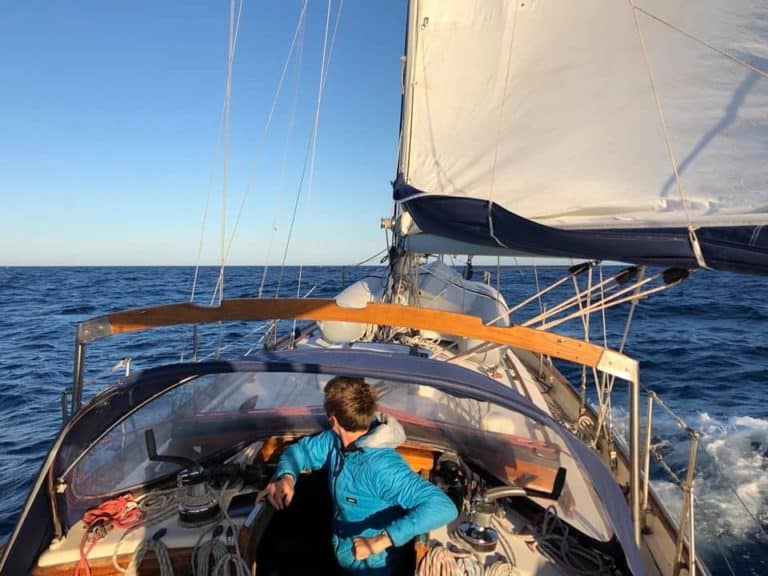
What I knew from the first day is that I love it. The wind in the sails, the boat heeling happily through the water, the quiet of it. When I hold the wheel or crank a winch, I can feel the power of the boat. Oddly, sailing reminds me of horseback riding: with gentle guidance and a little pressure, the boat goes where you ask, and the person at the helm has to stay in tune with her the way a rider stays in tune with a horse.
A decade later the sailing is bigger. Passages in the Sea of Cortez mean waiting days, sometimes weeks, for the right wind and sea state, and then long stretches with no town in sight. That patience is a skill too, and nobody is born with it.
You do not have to own a sailboat to learn. Sailing clubs, lessons and crewing on other people’s boats are how most of the cruisers we know got started, and the people who learn that way tend to buy the right boat later.
5. Is living on a sailboat safe?
This is the question people ask quietly, usually after the fun ones. The honest answer is that sailing carries real stakes. Storms, big waves, the chance of falling overboard, a system failing when you are far from help, and the sheer unpredictability of the sea. After years of both, I can tell you van life feels easy by comparison. One lifestyle deals with parking and the occasional ticket; the other deals with Mother Nature herself.
What keeps us safe is not bravery. It is waiting for weather windows even when we are impatient, keeping the boat and her systems maintained, knowing where we are allowed to anchor, and Tom’s years of experience. Sailing requires expertise and the ability to stay calm when things go sideways, and both of those are learnable.
Two reads if this is the part that worries you: what sailors actually keep on board for protection, and where you are legally allowed to anchor.
6. Where do you get water, power and internet on a sailboat?

Our sink has a foot pump, which sounds primitive until you realize how little water it wastes. We carry water in tanks, make more with a watermaker, and run everything else on solar panels and a battery bank. Off-grid capability is the sailboat’s superpower: we can travel on wind and sit in a remote cove for weeks without plugging into anything.
Internet is the part that changed most since 2018. I work from the boat every day, so staying connected is not optional, and the setups cruisers use now would have sounded like science fiction when I moved aboard. The current options are in this guide to internet at sea, and if you are wondering how anyone affords this life, here are 40+ ways to make money while living on a sailboat.
7. What is next for you and the boat?
In 2018 my list was the Channel Islands, a couple of months in the Sea of Cortez, Vancouver Island and the Inside Passage, and eventually the South Pacific. Mexico happened, and then it became home. The Sea of Cortez is where we cruise, Puerto Peñasco is where the boats live, and the van covers the months when the boatyard is too hot to think.
The second boat is the current project, and anyone who has restored one sailboat knows better than to put a date on a second. What has not changed is the reason. Our home comes with us. We can change the backyard and go anywhere in the world, without booking a hotel or hunting for the next rental. That was true at a San Francisco dock with no toilet, and it is true at anchor in Baja with a working one.
If you are thinking about moving aboard, start with what no one tells you about your first month on a sailboat, then the 15 lessons full-time boat life taught us. And if you are weighing a boat against a van, I have lived in both and compared them honestly. Boat life is one branch of the alternative living family, and every branch has its own version of the bucket story.
What is the question you would ask a liveaboard? Leave it in the comments and I will answer it in the next update.
Frequently asked questions about living on a sailboat
Can you live on a sailboat full time?
Yes. I have lived aboard sailboats since 2015, first in the San Francisco Bay and now in Mexico’s Sea of Cortez, and I have not lived in a house since 2016. Full-time boat life means handling your own water, power, toilet and weather decisions every day, and most liveaboards balance time at a marina or boatyard with time at anchor.
Where do you go to the bathroom on a sailboat?
Most liveaboard sailboats have a marine toilet, called a head, that flushes into a holding tank you pump out at a marina or offshore where legal. In a marina or boatyard, many liveaboards simply walk to the shore bathrooms. Our boat had no toilet at all when we moved aboard, so we used the marina bathroom and the gym.
How much does it cost to live on a sailboat?
It depends on the boat, where you keep it and how much work you do yourself. Our 1972 CT-41 cost $30,000 to buy and well over $100,000 once the restoration is counted. Slip fees in the San Francisco Bay ran $400 a month without liveaboard status and up to $1,500 with it; marinas and boatyards in Mexico are far cheaper. Repairs never stop, which is why sailors joke that boat stands for bring out another thousand.
Do you need to know how to sail before living on a sailboat?
No. I moved aboard without knowing how to sail and learned as I went, with a partner who had years of experience. Plenty of liveaboards learn through sailing clubs, lessons or crewing on other people’s boats first, and you do not need to own a boat to start.
Is living on a sailboat safe?
It can be, with preparation and patience. The real risks are storms, falling overboard and system failures far from help, so safe cruisers wait for weather windows, keep their gear maintained and know their boat. Compared with van life, sailing carries higher stakes and demands more skill and calm.
5 essential sailing books I love
From diesel mechanics, to predicting the weather, to heaving-to a boat in a storm, sign up to see which five essential books will never leave our sailboat's shelf. Enter your info to download the PDF!








WOW! What an experience! I have always wanted to try living on a boat! Thank you for sharing this!
this is awesome, glad to hear your making it work in SF bay.
Kevin
Hi Kristin! I’m truly inspired by your website. My husband and I plan to set sail in 5 years after our youngest goes away to college. I’m nervous and excited at the same time! We’re looking at boats currently and researching ways to make money while abroad. I love reading all of these adventurous ideas. I’m staying tuned! Thanks for sharing!
That’s so exciting, Carrie! Please let me know if I can help with anything.
That’s really helpful Kristin. I’m in the UK and have always had a hankering to live aboard and do a (leisurely) circumnavigation.
Now that retirement is approaching those dreams are beginning to become a bit more solid.
Currently researching suitable yachts. I guess something in the 35′-45′ range is ideal especially as I’ll be sailing short-handed most of the time.
All the best
Paul
Awesome!
We lived 21 years on a 1976 CT 41, starting in May 1984 at Fortman Marina. I did away with the dinette making a galley with storage on Stbd. I made a nav station and 2 refrigeration units where the stove and sink was on Port. We left SF in June of 1989, and headed South. It was a lot of work, but definitely worth it. Check our blog for travels, http://candgchronicles.blogspot.com/