I’ve Lived at Anchor on and off Since 2016. These Are the Unwritten Rules of Cruising Life Nobody Tells You

Sixteen unwritten rules of cruising life, from the anchorage to the marina to two people on forty feet, with the red flags more than 150 readers of That Sailing Life named.
*This post may contain affiliate links. Please read our disclosure policy for more info.
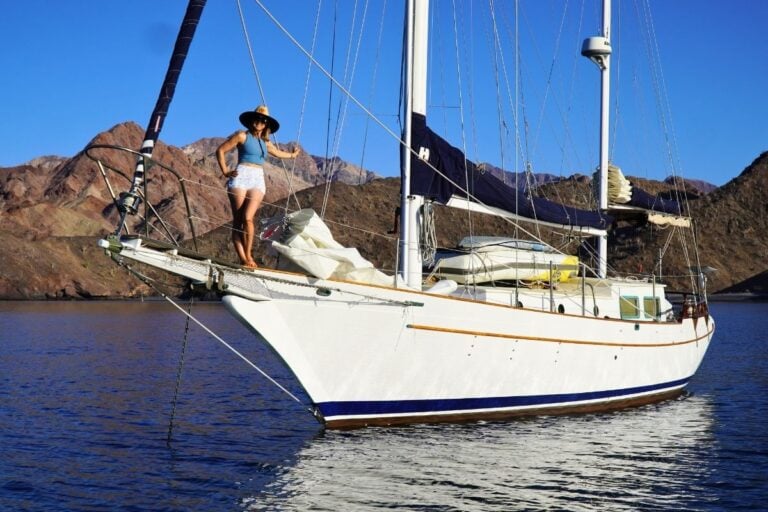
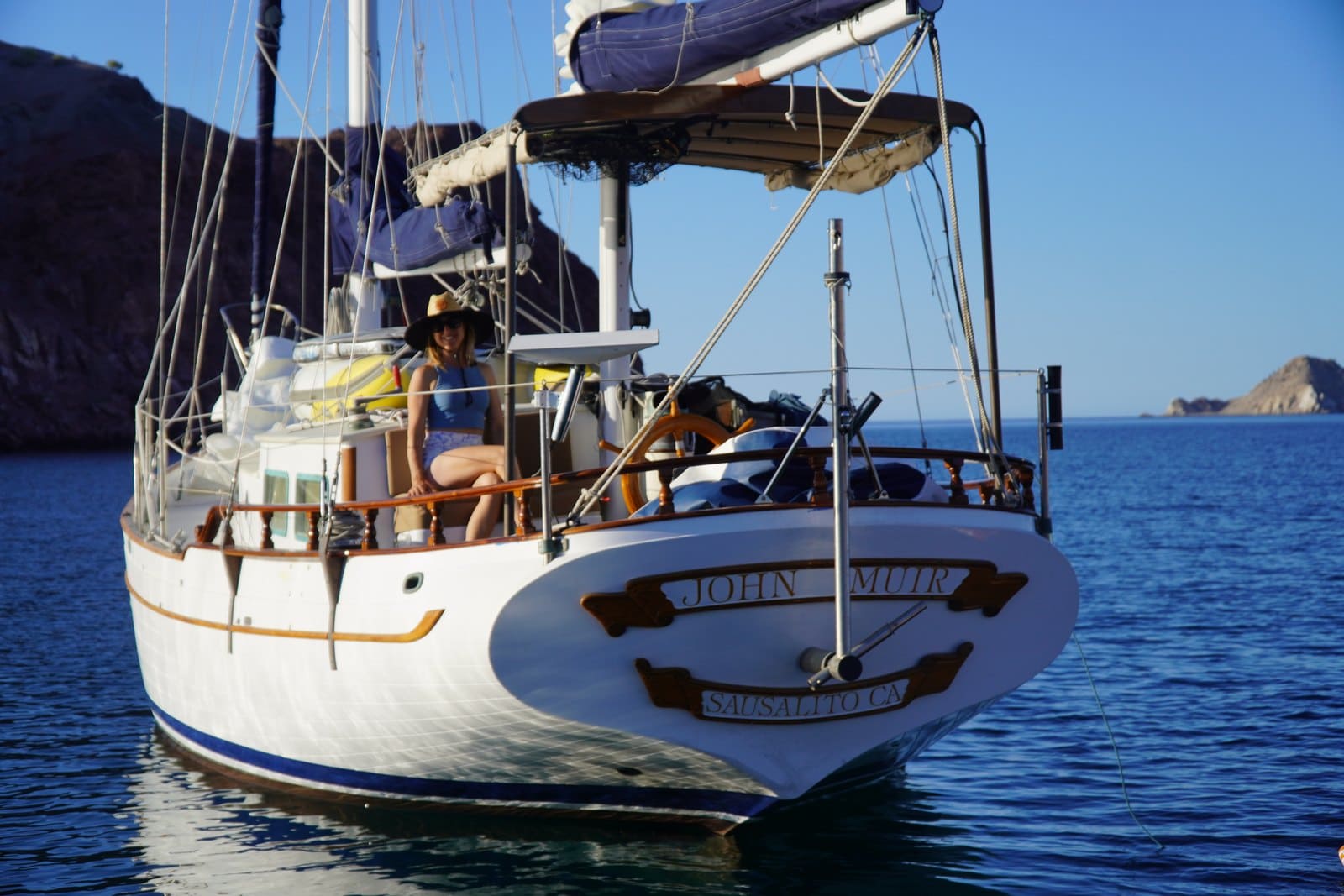
We were the only sailboat in a remote cove in the Sea of Cortez enjoying sundowners on the stern when we heard the distinct sound of an engine. We looked up and saw another sailboat chugging into the anchorage.
What they did next broke one of the unwritten rules of cruising life: they anchored right next to us! Ugh!
After nearly a decade of living at anchor on and off, from San Francisco Bay to the Sea of Cortez, I can tell you the rules are real, they are mostly the same everywhere, and almost all of them come down to one idea: the water carries everything. Your wake, your generator, your music, your anchor chain and your holding tank all land on somebody else’s boat.
So here they are, the sixteen unwritten rules of cruising life, from the anchorage to the marina to the forty feet of boat you share with one other person, with the rules the readers of That Sailing Life added when I asked them what makes an anchorage go bad.
The rules of the anchorage
1. The first boat sets the pattern
Anchoring is first come, first served, and there is no law about it, only the custom that every boat that arrives after you has to fit around the space you already take up. BoatUS puts it plainly: later boats respect the full swinging circle of the boats already there, rode stretched out. Sail-World’s eight rules go further: if the first boat in is a cabin cruiser yawing all over the place on a long rode in shallow water, that boat has set the precedent, and you give it room, however you feel about its anchoring.
The practical version, from 48 North: look at how the boats already there are lying to the wind and current, how far apart they sit, and copy it. The last boat in does not get to invent a new pattern.
2. If you are too close, you move, not them
The boat that arrived second moves first. It sounds obvious until it is nine at night and you have just set. Here’s the most common way people end up in someone’s bubble: dropping the hook ahead of a boat and settling back on top of it. The fix is to drop farther upwind and farther away than feels necessary, then watch for twenty minutes before you open a beer.
If the owner is in the cockpit, ask. BoatUS suggests the simplest script there is: compliment the boat, say where you plan to drop, and ask where their anchor is and how much scope they have out. Do not be offended if the answer is no. Readers named “someone else pulls up ten feet away” and “the boat that shows up last and drops a stern anchor” among the surest signs a night was about to go wrong, and both are this rule, broken.
3. Pass behind anchored boats, never over their rode
When you thread through an anchorage, in the big boat or the dinghy, go behind the sterns. Crossing in front of a boat means crossing its anchor chain, and it’s incredibly nerve-wracking to watch someone motor over your line. One reader’s red flag was a boat anchoring “with their pick over yours”; another told the story of a neighbor who dragged in high wind and ran into them, got tied off, got his anchor up, and left with their line. The anchorage has a long memory for that kind of thing.
4. Scope is a courtesy, not just a setting
Short scope is how you drag into the boat downwind of you. Readers watched “weekend warriors put out one to one and run ashore while the boat is dragging toward you,” and one described a raft-up of powerboats upwind of him at Block Island hanging on a single small Danforth and half-inch line. Let out proper scope, set the anchor by backing down on it, and put a snubber on the chain so the boat is not snatching at every gust. “Not a snubber in sight” was another reader’s red flag, because a fleet with no snubbers is a fleet that will be loud all night and dragging by dawn.
If the anchorage has a swell wrapping into it, this is also where you find out. Our most beautiful anchorage ever felt like paradise until the swell wrapped around at two in the morning, and nothing about the scope would have fixed that. Sometimes the rule is to leave.
The rules of quiet
5. The generator runs at midday, not all night
This was the single most-named complaint in both threads: “every boat around you has a generator running and doesn’t shut it down until the morning,” “gen sets after dark,” “diesel fumes from all the generators and the rhythmic pulsing of AC.” The custom, as the Blue View’s anchorage etiquette lays it out, is to run a generator mid-morning or afternoon, when it bothers the fewest people, and if you truly need it all night for air conditioning, to anchor as far from the quiet boats as you can, or near other boats that will be running theirs. A completely silent cove in the Pacific Northwest hears a well-insulated generator on every boat in it.
6. Music stays inside the hull after dark, and voices carry half a mile
Sound travels over water in a way it never does on land. Everyone within half a mile can hear a normal cockpit conversation, which is why the etiquette is simple: keep the music low, keep it inside after dark, and keep the parties short. Readers would ban “loud music and jet skis” first and “parties after midnight” second, and the red flags they listed read like a playlist: a big yacht “offloading toys and playing house music at 7 AM,” a powerboat “cranking up the country music and putting out fenders for more boats to raft up,” a go-fast boat twenty yards off with “extremely loud hip hop.” If you can hear your own music from the bow, your neighbors can hear it from their bunk.
7. Lights go down and the anchor light goes up
An anchor light at the masthead is a legal requirement and a courtesy. A spotlight is neither. One reader’s red flag was a big fishing boat nearby that would not turn off its high beam after dark, another’s was a neighbor who “shines his flashlight on you every fifteen minutes saying you’re too close,” and readers would ban “giant lit underwater lights” outright. Deck lights off, underwater disco lights off, anchor light on, and if you need to check the boat beside you at midnight, a quick look is not a searchlight.
The rules of the dinghy

8. No wake in the anchorage, in either boat
Enter under five knots: a wake upsets the sundowners and the dinner on the stove on every boat you pass. Keep the dinghy slow enough to throw no wake anywhere near other boats, and take fast toys well away from the fleet before you open them up. “Speeding, NO WAKE” was a reader’s one-line ban, and the dinghy is where most of it happens, because the person driving it is not the person whose coffee just went over.
9. Jet skis and tender slalom stay out of the fleet
If you asked us to ban one thing from anchorages, the answer is jet skis, by a wide margin, with “kids zooming around in the tender” close behind. The custom is not that nobody may have fun. It is that the fun happens on the far side of the anchorage, away from the boats, and at a civil hour. A reader described a cocktail-bar boat coming alongside while he was still setting his anchor. That is the kind of neighbor people remember.
10. Leave room at the dinghy dock
Tie the dinghy with a long painter so the boats behind you can get in, lock it if the harbor calls for it, and do not leave it bow-on across three spaces because you were in a hurry for the showers. On a busy morning the dinghy dock is the anchorage’s only front door, and everyone is coming through it with laundry.
The rules of the radio
11. Channel 16 is for calling and distress, and then you leave it
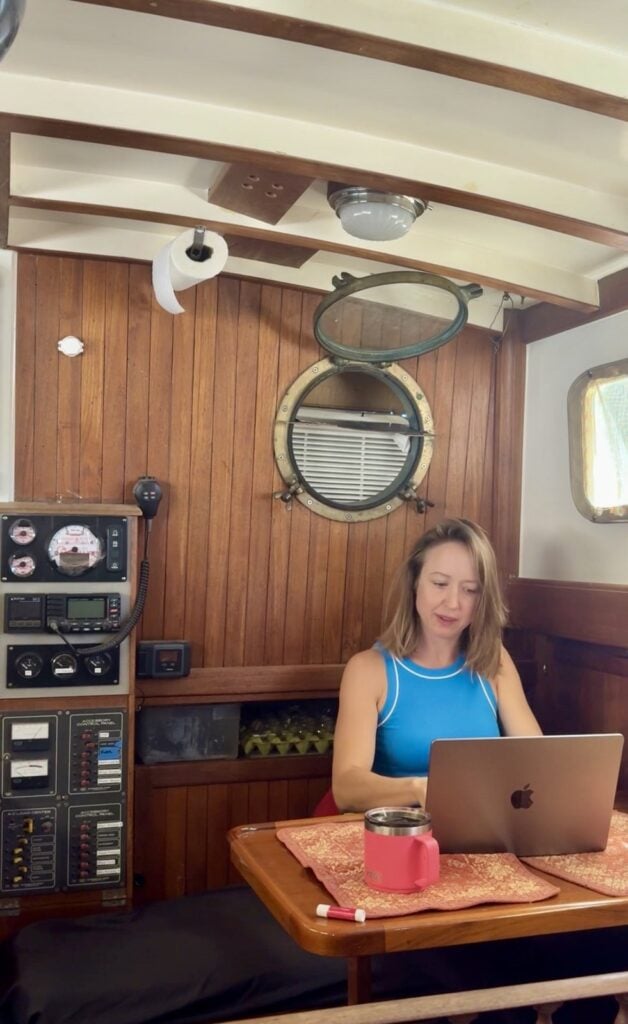
The VHF has one channel everybody listens to, and that is why you do not chat on it. Channel 16 is the international distress and calling channel; you hail a boat there (or on 9, which the Coast Guard’s First District guide lists as the recreational hailing channel) and move to a working channel such as 68, 69 or 71 as soon as the other boat answers, per Connecticut DEEP’s VHF basics. No radio checks on 16, no conversations, and MAYDAY is reserved for a boat or a person in real danger. In a crowded anchorage the whole fleet hears every word, so the radio is also where your reputation gets made.
12. The local net has a channel and an hour, and you listen before you talk
Most cruising ports run a morning net. In La Paz it is on VHF 22 at 8 AM, Monday to Saturday, and Noonsite describes it as the daily information exchange: weather, arrivals and departures, swaps, help wanted. Club Cruceros keeps the clubhouse radio on the patio for it. The etiquette is to listen for a few mornings before you check in, keep your check-in short, and take long conversations to another channel. The net is a public utility, and the people who treat it as their personal phone line are the ones everyone talks about at the dinghy dock.
The rules of the head and the water
13. Nothing goes over the side in an anchorage
Our toilet hose once clogged completely in the Sea of Cortez, and we pulled the whole toilet out, tied it off and towed it behind the boat under sail to let the sea rinse it. That is fixing things in exotic places. What you never do is empty a holding tank in an anchorage. The EPA’s boater’s guide to vessel sewage is clear: untreated sewage cannot be discharged within three miles of shore, no-discharge zones ban even treated sewage, and inside those zones a holding tank is the only legal setup, with the overboard valve secured. The EPA’s FAQ adds that violations carry federal fines on top of state ones. Pump out at the marina, which on our boat means a visit to what I once called the little poo-poo vacuum cleaner, or empty offshore where it is legal. Dishwater is its own question in some places; a bucket and a long walk to the marina sink is never wrong.
14. Tie off the halyards, and silence anything that squeaks
A slapping halyard is the one noise that will get a dinghy sent over to your boat at midnight. “Multiple boats with slapping halyards” made the red-flag list, and so did “those noisy and squeaky wind generators.” Before dark: halyards bungeed away from the mast, the dinghy snugged so it does not bang the hull, and whatever on deck clinks, taped. The boats that do this are the boats that sleep.
The neighborly rules
15. Boat people help boat people
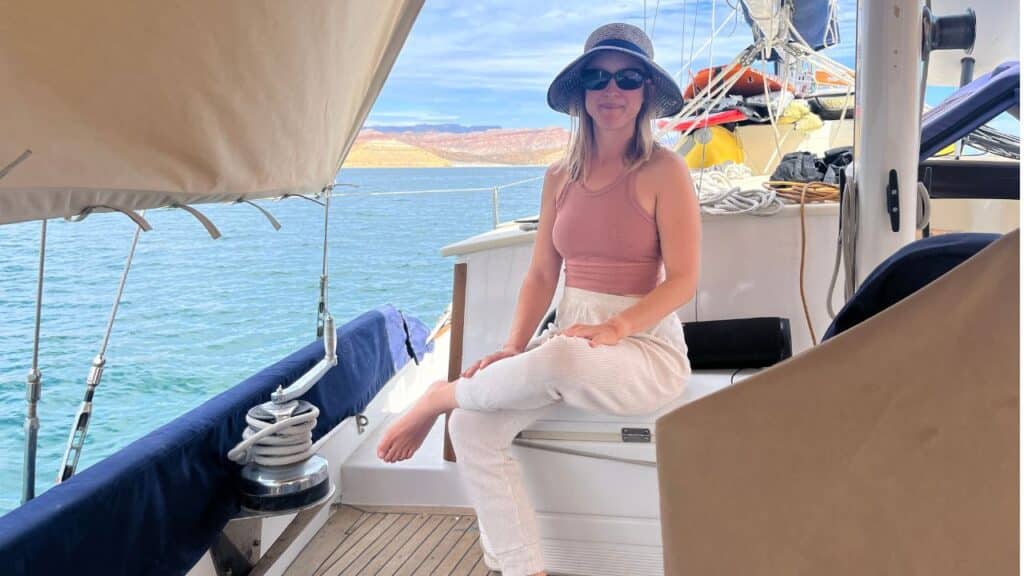
There is an unspoken code out here, and I have written about it before: boat people help boat people, because every one of us has been stuck, scared or unsure, and someone rowed over. That means you take a line when a boat comes into the dock, you go on deck when a neighbor is dragging in a blow even if it is three in the morning, you lend the tool and the spare impeller, and you tow the dinghy with the dead outboard back to its boat without being asked. The reader who tied a dragging stranger to his own boat in high wind was annoyed about his lost line, but he tied him off first. That is the rule.
16. Sundowners have their own etiquette
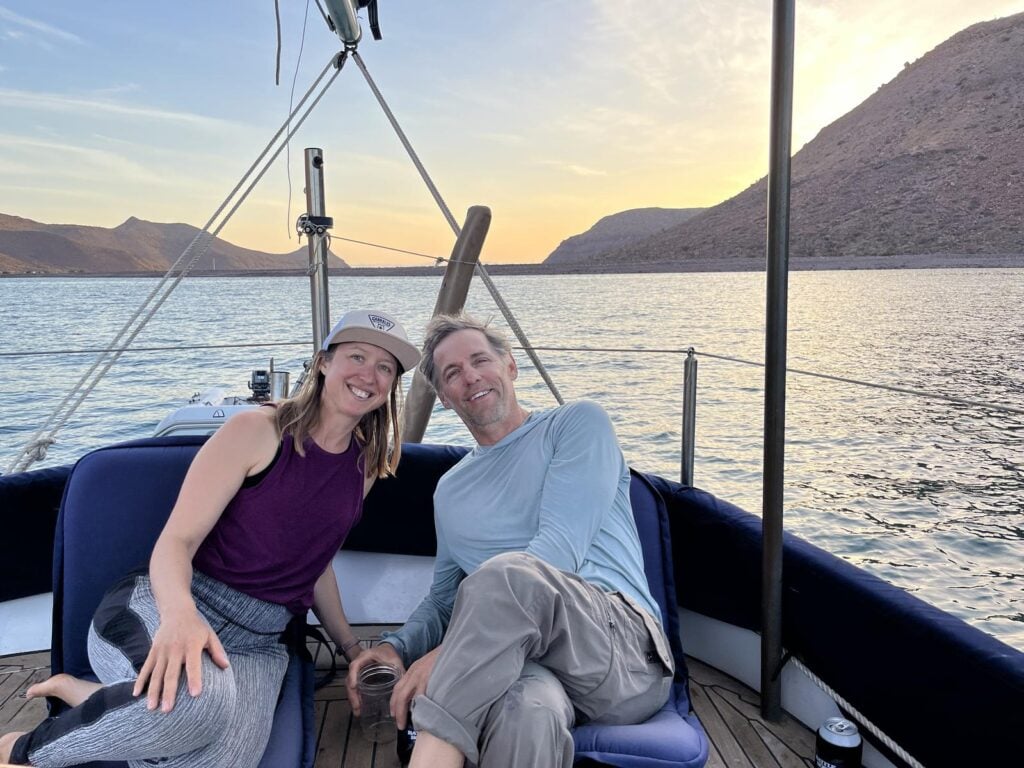
The invitation to come over for sundowners is how cruisers meet, and it comes with customs that nobody states. Bring your own drinks and your own glass, bring something to share, arrive at the hour named and leave before dinner unless you are asked to stay, and take your trash home in the dinghy. Boat cards, the little business cards with your boat’s name and your contact details, are how you find each other again two countries later. And the quiet after anchoring, the silence that one of our writers called a tiny luxury that feels huge, belongs to everyone in the bay. Protect it and you will be invited back.
The rules of the marina and the yard
Marinas and boatyards have written rules, which is a relief after the anchorage, but the unwritten ones still run the place. Help with lines when a boat is coming in, especially in wind. Return the dock cart. Keep the shower line moving; a hot, long shower at the marina is one of the ten tiny luxuries of boat life and everyone in line knows it. Run power tools at civilized hours and never at sunrise. Pump out at the station, not at the dock. Readers would ban the “dock admiral,” the neighbor who narrates your docking from his cockpit, and I would only add that the correct response to a dock admiral is to take his line next time and thank him.
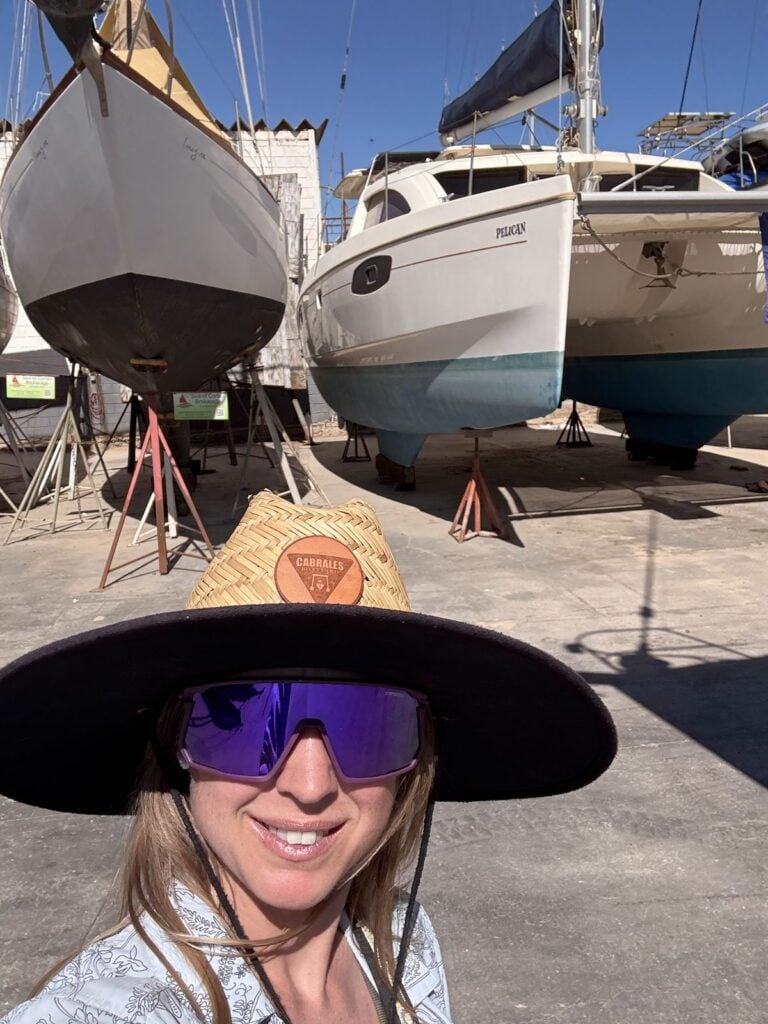
In the yard the rules get more practical. We have spent two seasons living on the hard at Cabrales Boatyard in Puerto Peñasco, and the yard etiquette is about dust, noise and water: sand downwind of nobody, warn the boat next door before you grind, do not leave hoses running, and walk to the yard bathrooms like everyone else, because a boat on stands has nowhere for a holding tank to go.
The rules of two people on forty feet
When I asked the sailing page about this last summer, the post that took off was not about anchorages at all. It was about couples: forty feet of boat, two people, and the rules you learn fast or not at all. The ones that hold on our boat: Tom knows not to talk to me until the coffee is finished. We plan the anchoring and the docking before the pressure is on, not while the bow is drifting. Nobody keeps score of the dishes. And when one of us needs a door to close, there is no door, so one of us gets in the dinghy and leaves for a while. The twelve relationship rules every cruising couple should know is the longer version, and living in a small space without killing each other is the one for the days it does not work.
The golden rule of the anchorage
Every one of these rules is the same rule: the water carries everything, so act as if your neighbors can hear, feel and smell what you are doing, because they can. Anchor as if the boat downwind is yours. Run the generator as if you were the one trying to sleep. Drive the dinghy as if the coffee on the next boat were yours. Cruisers are the most generous people I know, and the generosity has a price of admission, which is this list. Where you are allowed to anchor at all is the legal half of the story, and what cruisers mean when they say they are on the hook will get you through your first sundowner.
Which unwritten rule did you learn the hard way? And which one do your neighbors keep breaking?
Cruising etiquette questions, answered
What is the most important rule of anchoring etiquette?
The first boat sets the pattern. Later arrivals fit around the swinging room of the boats already there, copy how they are lying and how far apart they sit, and if the newcomer ends up too close, the newcomer moves. Asking the neighbor where their anchor is and how much scope they have out is normal and welcome.
When is it acceptable to run a generator at anchor?
The custom is midday, mid-morning to afternoon, when it bothers the fewest boats, and never through the night in a quiet anchorage. A boat that must run air conditioning overnight anchors away from the quiet boats or near others doing the same. Readers of That Sailing Life named all-night generators as the top thing they would ban from anchorages.
Which VHF channel do cruisers use to call another boat?
Hail on channel 16, the international distress and calling channel (or channel 9, which the Coast Guard’s First District lists as a recreational hailing channel), then switch to a working channel such as 68, 69 or 71 as soon as the other boat answers. No radio checks or conversations on 16. Many cruising ports also run a morning net on a local channel; La Paz uses VHF 22 at 8 AM.
Can you empty a holding tank at anchor?
Not inside three miles of shore, and not at all in a no-discharge zone, where even treated sewage is banned and a holding tank with the overboard valve secured is the only legal setup. Pump out at a marina station or discharge offshore where it is legal. Violations carry federal and state fines.
What are the unwritten rules of sundowners on a cruising boat?
Bring your own drinks and your own glass, bring something to share, arrive at the hour you were invited for, leave before dinner unless asked to stay, keep the volume down because sound carries across the anchorage, and take your trash back in the dinghy. Boat cards are how cruisers find each other again later.
Sources
Anchoring custom: BoatUS, Anchoring Etiquette; Sail-World, Anchor Etiquette: The Eight Rules; 48 North, 4 Keys to Being a Good Neighbor On the Water; American Sailing, Basic Anchoring and Anchoring Etiquette. Noise, wake and generators: The Blue View, Anchorage Etiquette. Radio: Connecticut DEEP, Marine VHF Radio: The Basics. Sewage: EPA, A Recreational Boater’s Guide to Vessel Sewage and EPA, Vessel Sewage FAQ. The La Paz net: Noonsite, La Paz and Noonsite, Club Cruceros de La Paz. Reader rules: two question posts on That Sailing Life, October 2026, more than 150 replies read in full, readers unnamed. Rules and channels checked October 2026; local nets and harbor rules change, so confirm on arrival.