

Can You Really Anchor Anywhere? What Every Cruiser Should Know About Anchoring Rights

Anchoring in the US is a right tied to navigation, but states keep chipping away at it. Here’s where you can drop the hook, for how long, and what’s changing.

*This post may contain affiliate links. Please read our disclosure policy for more info.
After nearly a decade of living at anchor on and off, from San Francisco Bay to the Sea of Cortez, I can tell you the question every new cruiser asks first: can I just… anchor here?
The short answer is usually yes. The longer answer is that the rules are changing fast, especially in Florida, and the anchorages that felt like a right five years ago now come with time limits, permits, and in a few places, patrol boats checking dates. Here’s how anchoring rights actually work in the US, what’s changed recently, and how full-time cruisers stay on the right side of the rules.
One note before we start: I’m a liveaboard, not a lawyer. Rules change and local enforcement varies, so treat this as a map of the landscape and verify the current rules for any spot you plan to stay.
The Foundation: Anchoring Is Part of Navigation

In US law, anchoring has long been treated as a right incidental to navigation. Navigable waters are held in public trust, and courts have consistently found that states cannot unreasonably prevent a vessel from anchoring, because anchoring is part of using the waterway. That’s why nobody can charge you to simply drop a hook in open, navigable water.
The key word is unreasonably. States and, where allowed, local governments can regulate anchoring: how long, where, and under what conditions. And over the last few years, several of them have.
Florida: The New Rules Everyone Is Talking About
Florida is the busiest cruising ground in the country, so its rules matter to a huge portion of the liveaboard world. Two things to know:
Anchoring Limitation Areas. Under Florida Statute 327.4108, certain designated areas limit how long a vessel can stay. Each anchoring limitation area must be under 100 acres and cannot cover navigation channels. In Monroe County (the Keys), a vessel may anchor in the same location for a maximum of 90 days.
The 2025 law for big counties. A newer law (passed as HB 481) restricts anchoring in counties with populations over 1.5 million: boaters are limited to 30 days at anchor in the same area within a six-month window. In practice, that covers the Miami-Dade and Broward waters of South Florida, and enforcement has been strict enough that local boaters are pushing back.
The silver lining: Florida law also expressly forbids cities and counties from inventing their own anchoring ordinances outside these frameworks. The state sets the rules, which at least keeps them consistent.
The West Coast: Time Limits Are the Norm

On the West Coast the pattern is different: fewer outright bans, more clocks running.
California harbors widely run on a 72-hour custom: many designated anchorages in San Francisco Bay, San Diego Bay, and smaller harbors allow anchoring for about 72 hours, with extensions at the harbormaster’s discretion. Richardson Bay, long famous for its anchor-outs, now enforces its 72-hour rule. Some areas, like Monterey, use a 30-days-per-six-months formula instead.
Washington puts it in plain numbers: on state-owned aquatic lands, you can’t anchor in the same area more than 30 consecutive days, or more than 90 days total in a year (WAC 332-52-155).
Mexico’s Sea of Cortez: Anchoring the Way It Used to Be
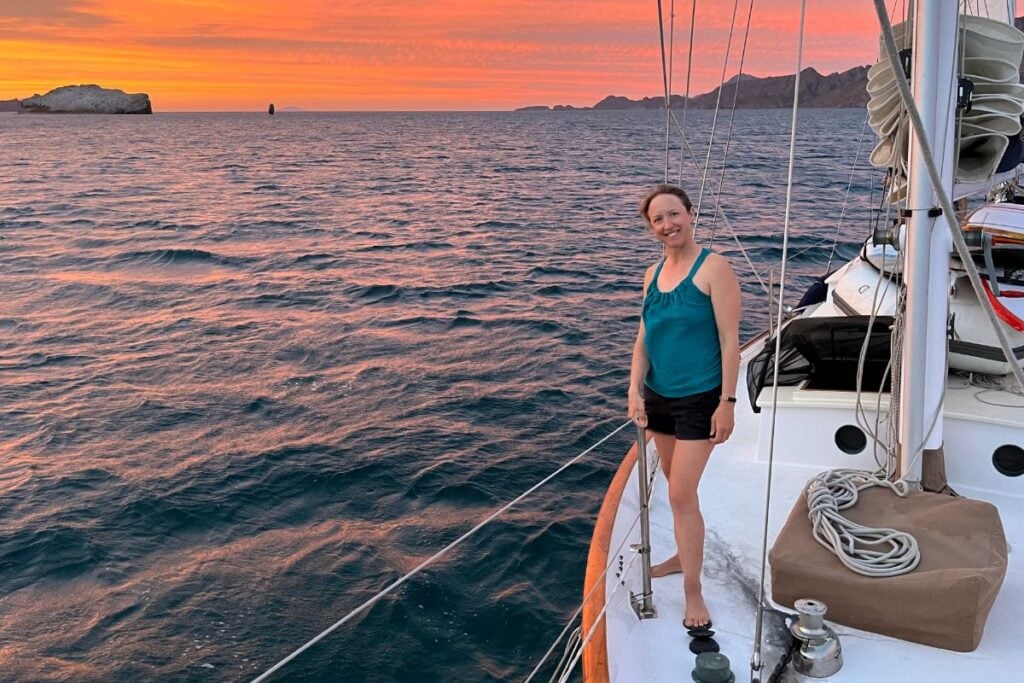
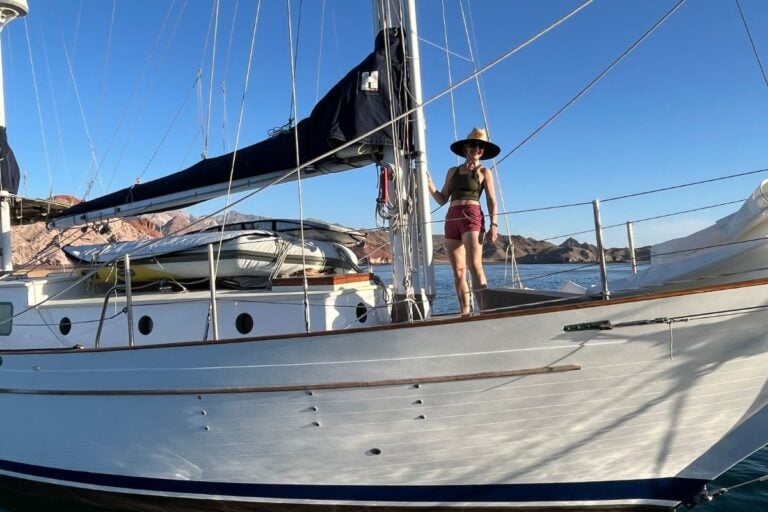
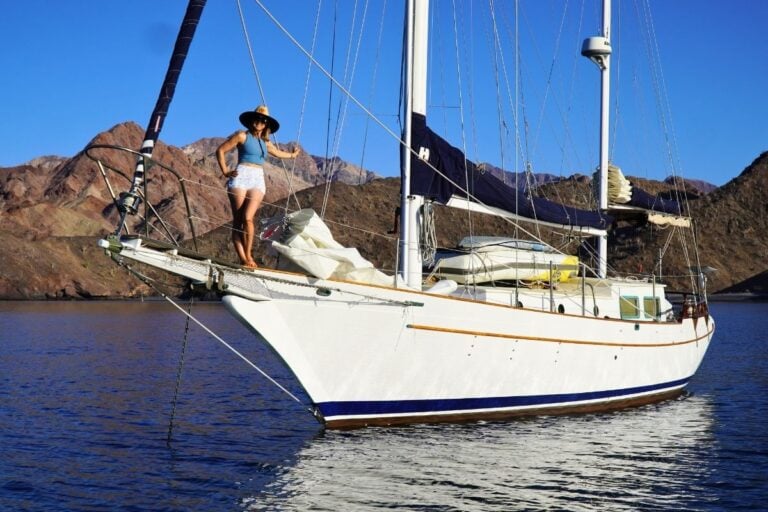
After all those American clocks and ordinances, here’s what keeps us sailing in Baja: in most of the Sea of Cortez, you simply pick a cove, drop the hook in sand, and stay. No fee, no permit, no 72-hour timer, no harbormaster’s discretion. We’ve anchored for days at a time in empty bays where the only traffic was a panga heading out to fish at dawn. Mexico treats its sea as genuinely public in a way that feels almost old-fashioned, and cruisers organize their whole seasons around it.
The one asterisk: some of the best islands are national parks, and those want a parks pass. The Espíritu Santo archipelago near La Paz and the islands of Bahía de Loreto National Park (Coronados, Carmen, Danzante and their neighbors) are protected areas managed by CONANP, Mexico’s park service. To anchor there and go ashore, each person aboard needs a park bracelet: about 150 pesos (roughly $7 USD) per day, or an annual conservation passport if you’ll be around all season, purchased at the CONANP office in La Paz or Loreto before you sail out.
A few park-specific rules matter once you’re there: at Espíritu Santo, the sea lion colony at Los Islotes is closed to overnight anchoring, San Gabriel bay is closed to anchoring entirely, and everywhere in the parks the rule is sand, never coral, so the reefs stay alive. Rangers do come by in pangas to check bracelets in high season, and they’re unfailingly friendly about it if your paperwork is in order.
Honestly? The annual bracelet is the best dollars in cruising. It buys you anchorages that would be crown jewels anywhere else in the world, and the money goes to keeping them that way.
Alternatives to Anchoring Out
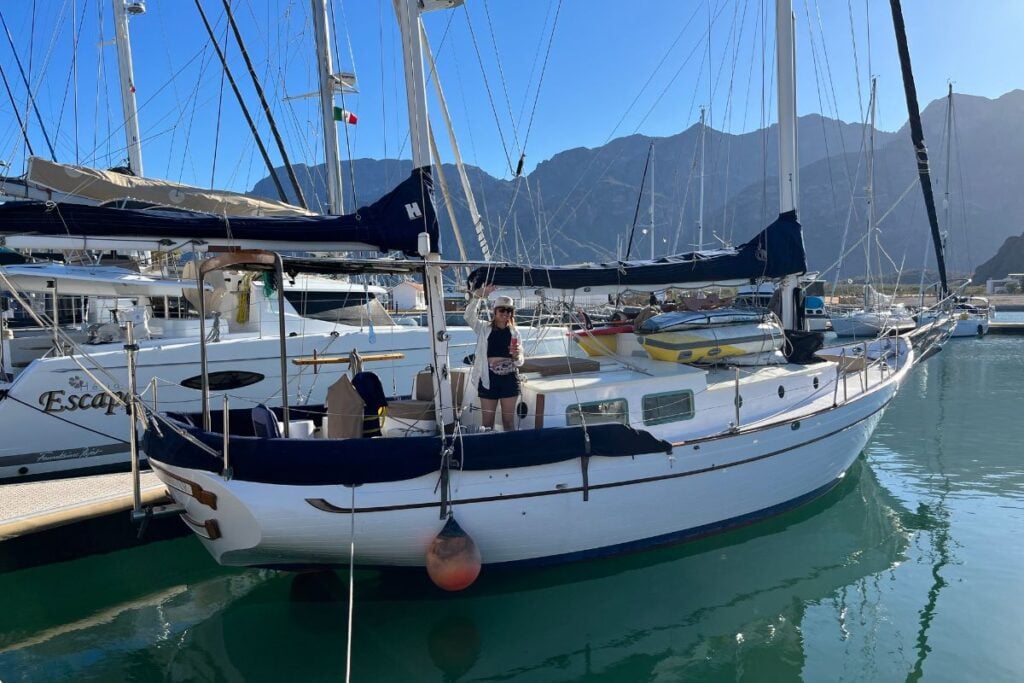
Anchoring isn’t the only way to stop, and sometimes it isn’t even the best one. When you actually want to visit a city (groceries, laundry, a restaurant that isn’t your own galley), two alternatives do the heavy lifting.
Transient slips. Nearly every marina keeps guest slips for visiting boats, rented by the night and usually priced per foot of boat. Call the harbormaster a day or two ahead (or use an app like Dockwa where the marina supports it), and you get a cleat to tie to in the middle of everything, plus the underrated luxuries: unlimited hot showers, laundry, shore power, and a real dock to roll a grocery cart down. We once worked our way down the California coast this way, San Francisco to Los Angeles, hopping transient slips the whole run and finishing at Alamitos Bay in Long Beach. Every harbor felt like a backstage pass to its city, and after days of passages, that first marina shower is a religious experience.
Mooring balls. Where anchoring is restricted or the bottom is poor, many harbors maintain mooring fields instead: you pick up a maintained ball for a nightly fee that’s typically well below a slip. Some fields are first-come, first-served; the famous ones (Avalon at Catalina Island is the classic) take reservations in season. A mooring buys you most of the swing-at-rest feeling of anchoring with none of the will-it-hold worry, and harbor patrol usually runs a shuttle or you dinghy in.
The practical rhythm most cruisers settle into: anchor out for free where it’s beautiful, take a mooring where the harbor requires it, and buy a slip night when the city (or the laundry bag) demands it. The mix is what makes the budget work.
How the Rest of the World Handles It
Our cruising grounds are American and Mexican, but the world’s anchoring rules mostly rhyme with what you’ve just read. They fall into three recognizable patterns.
Free, with ecology rules. The Mediterranean is the big example: anchoring is broadly free and legal, but since 2019 France has issued strict decrees protecting posidonia seagrass meadows along the Riviera and Corsica, and Spain, Italy, Greece, Croatia, Malta and Monaco have followed with similar protections. The rule of thumb every Med cruiser learns: drop in sand, never in the dark seagrass patches, and check the local decree maps. (The harshest penalties target superyachts over 24 meters, but everyone is expected to stay off the meadows.)
Pay-to-play permit systems. Some island nations charge for the privilege directly. The Bahamas overhauled its rules in April 2026: anchoring fees now apply only when you actually anchor (not while in a marina or on a mooring), at roughly $200 per year for boats under 50 feet, $350 for 50 to 100 feet, and $1,500 over 100 feet, layered on top of the cruising permit. In the British Virgin Islands, the marine parks run on maintained mooring balls that require a National Parks Trust permit, and at famous spots like The Baths on Virgin Gorda, moorings are mandatory and anchoring is prohibited outright.
And everywhere, the same three constants. Protected ecology means restricted anchoring. Popular harbors grow rules faster than empty ones. And a polite question to the local harbormaster (or the cruiser who got there first) is worth more than any regulation summary, including this one. Wherever you sail, the pattern you learned in this article travels with you.
How Cruisers Actually Stay Legal
After years of doing this, here’s the honest playbook:
- Move before the clock runs out. Most time limits reset when you genuinely relocate. Cruisers who keep moving almost never have a problem; the rules are aimed at boats that never do.
- Use mooring fields where they exist. A permitted mooring ball trades a small fee for zero time pressure, and often a dinghy dock and showers.
- Keep the boat obviously seaworthy. Nearly every crackdown is aimed at derelict vessels. Registration current, anchor light on, boat capable of moving under its own power: that alone puts you outside the profile enforcement is looking for.
- Mind the sanitation rules. Holding-tank enforcement is the lever local authorities actually use. In a No Discharge Zone, keep the tank closed and use pumpouts; it is the first thing they check.
- Ask the harbormaster. Ten minutes on the phone has saved us more grief than any statute reading. Local knowledge beats the letter of the law.
Where This Is Heading
The trend is unmistakable: waterfront property values keep rising, more people are living aboard, and legislatures keep responding with time limits. The good news is that the core right to anchor is intact and repeatedly defended. The realistic take is that free, unlimited anchoring near big cities is fading, and the cruisers who thrive are the ones who treat anchoring time limits like weather: something you plan around, not something you fight.
If you’re weighing the liveaboard life, this is one more reason I tell people the dream is still absolutely doable. You just need to know the rules of the neighborhood. For the full picture of what this life costs and feels like, start with what living on a boat is really like and the 13 brutal truths about sailboat living.
Is it legal to anchor anywhere in the US?
Generally yes, in navigable waters: anchoring is treated as a right incidental to navigation and states cannot unreasonably prohibit it. But states and some designated areas impose time limits and location rules, so check the local rules for any spot you plan to stay more than a few days.
How long can you anchor in one spot in Florida?
It depends on the area. In designated Anchoring Limitation Areas the limit can be as short as 45 days; Monroe County allows up to 90 days in one location; and in counties over 1.5 million people, a 2025 law limits anchoring to 30 days in the same area per six months.
Can a city ban anchoring outright?
In most cases no. Anchoring rights flow from federal navigation law, and states like Florida expressly forbid cities and counties from creating their own anchoring ordinances. Restrictions generally must come through state frameworks like permitted mooring fields or designated limitation areas.
Do you have to pay to anchor?
Anchoring in open navigable water is free. You pay only for managed infrastructure: mooring balls, marina slips, or permits in specific managed anchorages. If someone demands a fee for plain anchoring in public water, ask under what authority.
What gets boats in trouble at anchor?
Overstaying posted time limits, appearing derelict (expired registration, no anchor light, inability to move under power), and sanitation violations in No Discharge Zones. Boats that stay seaworthy, move periodically, and use pumpouts rarely have problems.
Sources: Fla. Stat. 327.4108 and 327.4109; WLRN reporting on South Florida enforcement; Washington WAC 332-52-155; Richardson Bay Regional Agency; Southern Boating on Florida’s 2025 laws.



It’s apparent you’ve not spent any time ion the East Coast. The problems in Florida are bad and are getting worse. In southeast Florida there are seven boats for every Marina slip that comes open. There are thousands more boats than there are available slips or moorings. The problem is that the communities that are having problems with anchoring – especially Miami Beach, Miami and Palm Beach – have refused to build mooring fields that will handle this overflow, because it’s not that they want to get rid of the derelicts. It’s that their wealthy shoreside homeowners have demanded that the community get rid of all boats at anchor.
As a result, is impossible is becoming impossible to even own a large, cruising boat in Florida. There is no place to keep it.
And while you and I may be cruisers and not spend a great deal of time in one place, there are people who choose to make their lifestyle living aboard, working in the community. They have a right to live as they wish as well, this is America. Accommodation has to be made for them as well. Unfortunately, those same wealthy shoreside homeowners, and their pet politicians don’t see that, despite a rich history in America of mariners living aboard their boats.