

Free Camping Is Disappearing In the U.S.: Every Closure and Ban We’re Tracking (2026)

Free camping is disappearing from some of America’s favorite public lands. Here’s the running list of closures, why they’re happening, and where you can still go.
*This post may contain affiliate links. Please read our disclosure policy for more info.
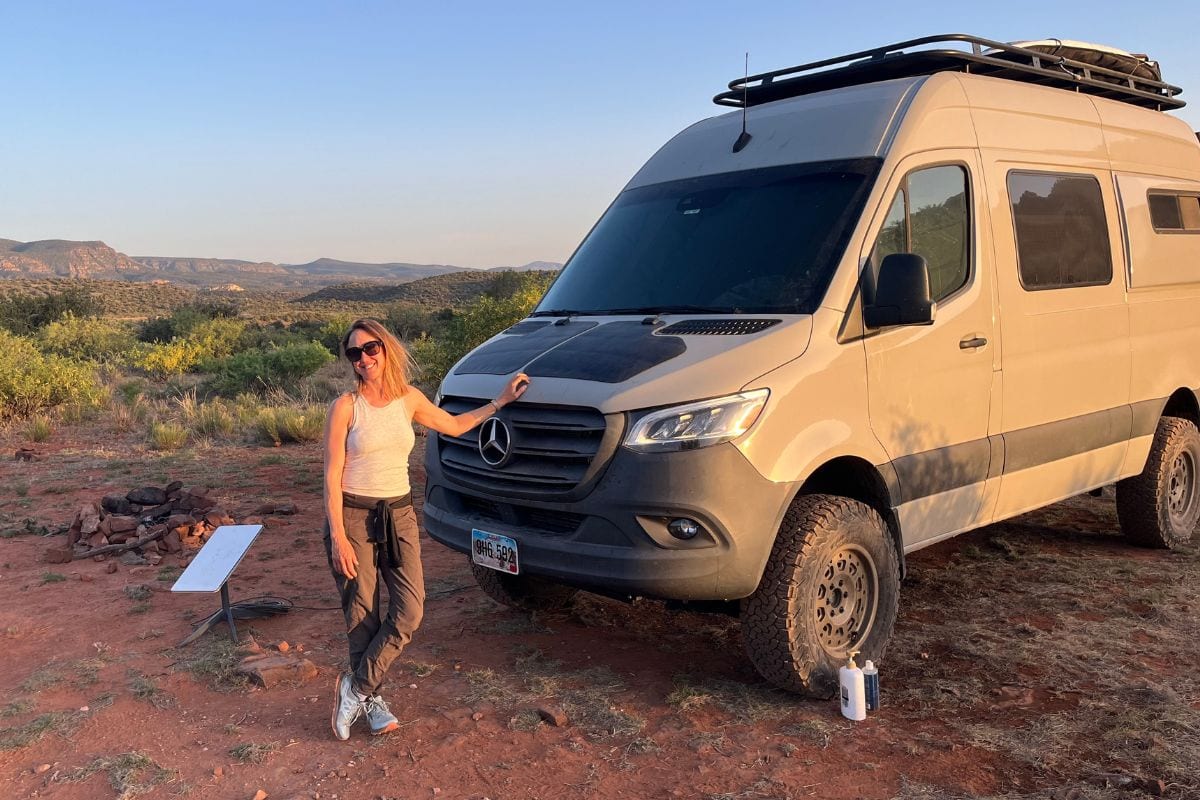
I’ve been camping on public lands in my van since 2018 and it’s my very favorite way to camp. There are so many free, beautiful campsites all over the United States on both national forest service land BLM land (Bureau of Land Management).
But I’ve also noticed a problem with boondocking: people trashing our public lands. Or simply too many people camping in one place.
Now campers are paying the price. More and more public lands are closing to camping. So, to help others out, I’ve decided to keep a running list of places restricting or ending free camping and what it actually means for us.
I’ll update it as new closures land — and my Facebook communities (nearly 400,000 campers and van lifers) are my early-warning system. When rangers start turning people away somewhere new, I usually hear about it within days.
Which national forest just banned full-time camping?

The Stanislaus National Forest in California’s Sierra Nevada. A revised Forest Order, effective now through at least 2029, targets people living full-time in the forest. The limits: 14 consecutive days in a developed campground within one ranger district per 30-day period, and a hard cap of 21 days per calendar year for dispersed (undeveloped) camping. Fines run up to $5,000 for individuals.
The Forest Service points to over a million annual visitors, rising long-term stays, human waste, trash accumulation, and camper conflicts; similar orders have existed there for 35 years, but this one runs longer and reads stricter (source: Forest Order signed by Supervisor Jason Kuiken, reported by myMotherLode, August 8, 2026).
The part worth understanding: a 14-day limit is standard across most national forests. A 21-day annual cap on dispersed camping is much stricter than most — and if that model spreads, the free-camping map tightens everywhere.
What happened to free camping near Zion?

In March 2026, the BLM finalized its SR9 Campground Management Project covering the corridor into Zion National Park in Washington County, Utah. Dispersed camping — long free across this area — is eliminated on roughly 1,400 acres, with overnight use restricted to designated sites. The plan trims the area’s free camping down to about 30 designated dispersed sites (from 56) and proposes two developed campgrounds — but the decision itself concedes those campgrounds will only be built if future funding becomes available (sources: BLM SR9 decision; coverage by GearJunkie and Explore, 2026).
Advocacy groups like the BlueRibbon Coalition have objected, and their affordability argument is the one I keep thinking about: developed campgrounds near Zion run $40–60 a night and book out months ahead. In their words, dispersed camping is “the pressure valve that keeps the system functional for everyone.” The group also points to earlier BLM restrictions at Beas Lewis Flat and the Wedge Overlook in Utah’s San Rafael Swell as evidence of a broader pattern (source: GearJunkie, 2026).
Here’s Our Running List of Free Camping Closures
- Stanislaus National Forest, CA — full-time camping banned through 2029+; 21 dispersed days/year cap. (Added August 2026)
- Zion / SR9 corridor, UT — dispersed camping eliminated on ~1,400 acres; 56 free sites cut to ~30 designated. (BLM decision March 2026; added August 2026)
- San Rafael Swell, UT (Beas Lewis Flat, Wedge Overlook) — earlier BLM restrictions converting dispersed areas to designated/fee sites; the precedent the Zion objectors cite. (Added August 2026)
- Angeles National Forest, CA — not a full ban, but tight limits in force through December 15, 2026: no more than 7 consecutive days outside developed campgrounds, no more than 3 days within 300 feet of any road, and a 21-day annual cap. (Forest Service order; added August 2026)
- Alabama Hills, CA — the famous open dispersed camping here is gone: camping is now designated-sites-only, and a free permit is required. (BLM Alabama Hills; added August 2026)
- Sedona & West Sedona, AZ — the earlier wave of this same pattern: year-round restrictions closed the Sedona/Oak Creek Canyon area to camping (January 2023, Order 03-04-06-23-03), and the land west of Sedona is designated-areas-only (August 2024, Order 03-04-06-23-25). (Coconino NF alerts; added August 2026)
- North Wildwood, NJ — a city-level example: overnight street parking banned for RVs. (Cape May County Herald; added August 2026)
- San Francisco, CA — a sweeping RV parking ban aimed at vehicle dwellers. I have history with this city, and strong feelings about this one: here’s why I think it goes too far. (Added August 2026)
Proposed and pending — what may be next
- Salt Lake City, UT — the city council is weighing a ban on sleeping in cars and RVs on public property. (Salt Lake Tribune, April 2026) When votes like this happen, this list updates — that’s the point of a running list.
Why are these closures happening?

Three forces keep showing up in every order I read:
- More of us. Free camping went mainstream — it’s now America’s most popular way to camp, something I wrote about in this study breakdown. Popularity brings pressure.
- A minority leaving damage. Every order cites the same list: waste, trash, degraded vegetation. The many pay for the few.
- Housing reality. Full-time forest living is the stated target of the Stanislaus order. The line between recreation and residence is becoming an enforcement question, which is also reshaping where van dwelling is legal.
Where can you still camp free?

Everywhere these orders don’t touch, which is still most of the West. The 14-day rhythm on national forest and BLM land remains the norm; the skills that matter are knowing the local order before you park and leaving your site cleaner than you found it. My working guides: how to do free camping right, and for travelers heading further afield, Europe’s wild-camping rules.
Know of a closure I’ve missed? Tell me in the comments or on the pages — this list only works because thousands of campers report what they’re seeing.
Frequently Asked Questions
Is free camping being banned everywhere?
No. These are specific orders in high-pressure areas. The overwhelming majority of national forest and BLM land still allows dispersed camping under standard 14-day limits.
Can you still live full-time on public land?
Increasingly, no — not in one place. Orders like Stanislaus’s specifically target long-term residence. Full-timers who keep moving between districts and jurisdictions remain within the rules; staying put is what draws enforcement.
What are the fines?
In the Stanislaus order, up to $5,000 for an individual ($10,000 for an organization). Penalties vary by order — always read the specific forest or field office’s current rules.




Not pointing fingers but sometimes content providers are worse than Outside magazine. Not everyone is a good steward of the land and open spaces . Too much money in uncaring pockets.
Sadly the west has been ruined by uncaring users.
Sadly, I can corroborate what Steve has posted here. I have lived in or near the Sierra Nevada all my life, and some humans have no sense of decency or stewardship for our precious forests. Social Media has had a big influence on making once-unknown areas way too popular. I grew up in Lake Tahoe in the sixties and only live 20 miles from there now. It’s no fun to go there, especially in the summer. Overwhelming crowds and all the while, YouTube influencers posting their videos about Tahoe.
I grew up in Lake Tahoe in the sixties and only live 20 miles from there now. It’s no fun to go there, especially in the summer. Overwhelming crowds and all the while, YouTube influencers posting their videos about Tahoe octordle free.