

One Washington City Will Now Let You Legally Live in Your Car for 6 Months. Here’s the Catch.

Olympia, Washington launched a pilot program making it legal to live in a car or RV with a permit. Here’s how it works.

*This post may contain affiliate links. Please read our disclosure policy for more info.
Olympia, Washington has made it legal to live in a car or RV inside city limits, with a permit, for up to six months. The pilot program, launched this week, reverses the city’s longstanding rule that a vehicle used for camping could not stay parked in one place for more than 24 hours.
City Manager Jay Burney authorized the program under an ordinance declaring a public health emergency around homelessness, KIRO 7 News reported on August 28, and the Olympia City Council endorsed it. While a growing list of American cities is banning vehicle dwelling outright, Olympia went the other direction: it wrote sleeping in your vehicle into the rules, permit and all.
How the pilot program in Olympia works
The program legalizes hosted vehicle residency in two kinds of locations:
- Residential driveways: a homeowner can host one vehicle resident on their property.
- Faith-based parking lots: a church or other faith-based organization can host up to two vehicles.
Permits run for up to six months. Permit fees are waived for residential hosts, and for faith-based properties that are not already operating under an Emergency Housing Permit.
The conditions are aimed at keeping the arrangement workable for neighborhoods: every participant must have real bathroom access (the host’s home, the church building, or a portable restroom), outdoor storage and garbage are prohibited, RVs may not connect to septic systems, and vehicles must minimize impact on neighboring properties.
What the permit costs, and the bathroom requirement
Two details readers keep asking about have clear answers in the city’s plan.
The permit is free during the pilot. KIRO 7 reported that permit fees will be waived for residential property owners hosting a vehicle, and for faith-based properties that are not already operating under an Emergency Housing Permit.
Bathrooms are built into the rules, not left to chance. Every host site must provide restroom access: a private bathroom in the home, the church’s restroom, or a portable toilet on the property. RVs cannot connect to a septic or sewer system, and outdoor storage and garbage are not permitted at the host site, per the same reports.
The tough camping rule it replaces
Before the pilot, Olympia’s parking code (Chapter 10.16 of the municipal code) held vehicle camping to a 24-hour limit: a vehicle used for camping could not stay in one spot longer than a day. Time-limit ordinances like that are standard in cities across the country, and they are the reason vehicle residents live with the knock on the glass at 2 a.m. and the nightly search for somewhere new to park.
A resident’s petition started this new car living program

The change did not originate at city hall. C.C. Coates, a disabled, retired union carpenter who lives in her van, began appearing before the Olympia City Council in April, asking the city to change its vehicle camping laws, according to KIRO 7. Months later, the city responded with the pilot, and Coates thanked the council for what she called a compassionate response.
“I hope the city moves forward with this and other programs that make it easier for people who are already facing great challenges,” advocate Annette Razika told the station.
The program is explicitly an experiment. “This is a pilot program, so periodically it will be evaluated to determine whether it should continue, end, or be permanently codified within our code,” Community Development Director Tim Smith told KIRO 7.
A counterpoint to a national wave of bans
Olympia’s pilot cuts against the direction most cities are moving. Fifteen U.S. cities and counting have banned sleeping in vehicles this year; we keep a running list in this article, and it keeps growing. Those bans do not house anyone; they move people at 2 a.m. and attach fines to poverty. Olympia looked at the same problem and asked a different question: what if people simply had a legal place to exist?
Our take: this is the model other cities should copy
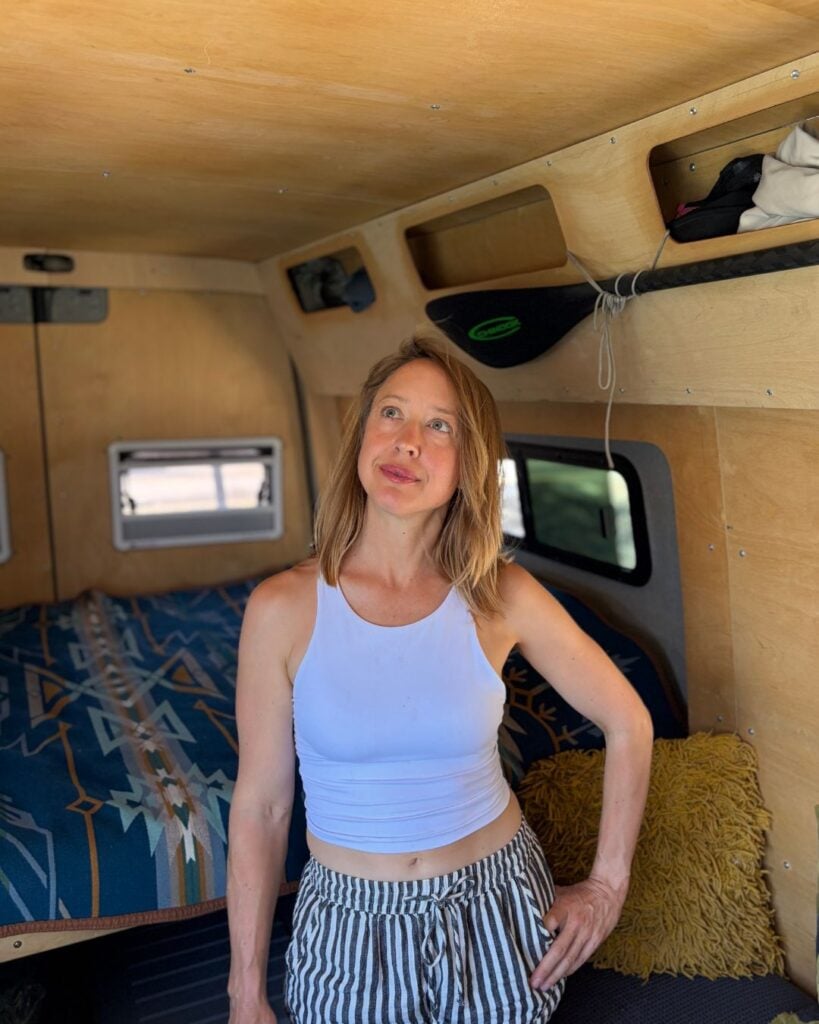
I’ve lived in a Prius, a Chevy Astro, and a Sprinter van, and I’ve written plenty about the cities like San Francisco making that life harder. Here is why this small program matters more than its size suggests: the host model solves the three things that actually make vehicle living hard. A legal place to park, so the knock never comes. Bathroom access, which anyone who has lived this life knows is the difference between dignity and desperation. And a host relationship, which means somebody notices if things go wrong.
It also costs the city almost nothing. No shelter construction, no land acquisition. The infrastructure already exists; it’s called driveways, and every city in America has hundreds of thousands of them sitting empty.
A pilot is a promise, not a result, so there are honest questions worth watching. What happens at month six, when the permit expires and the person in the vehicle is exactly as housed as they were at month one? Will hosts actually step up, or will fear of liability keep driveways empty? And will the periodic evaluation measure the right thing: not complaints per neighbor, but nights of safe sleep per person?
One more distinction matters. I chose vehicle life, and I love it. Many of the people this program serves did not choose it. The policies that work for both groups start from the same premise: a person sleeping in a vehicle is not a crime in progress. They’re a person, sleeping.
What this means if you live in a vehicle in Olympia, Washington
If you’re living the vehicle life yourself, by choice or by circumstance, know the rules where you park: our guides to where sleeping in your car is and isn’t legal and finding free, legal places to camp are kept current, and the city-ban list updates as the map changes. And if your own city council is debating its vehicle-residency rules, Olympia’s pilot is a ready-made template: hosted parking on private and faith-based property, waived fees, bathroom access as the baseline, simple neighborhood-impact rules, and an honest evaluation.
Sources
- KIRO 7 News: “Olympia launching pilot program allowing people to live in their cars” (August 28, 2026)
- Syndicated report of the same story via Yahoo News (corroboration)
- City of Olympia Municipal Code, Chapter 10.16: Stopping, Standing and Parking (the prior 24-hour vehicle camping restriction)
FAQ
Is it legal to live in your car in Olympia, Washington?
Under Olympia’s new pilot program, yes, with a permit: vehicle residents can park long-term in a host’s residential driveway (one vehicle) or a faith-based organization’s lot (up to two vehicles) for up to six months, with bathroom access required. Outside the program, the city’s prior 24-hour limit on vehicle camping applied.
What is a safe parking program?
A safe parking program gives people living in vehicles a legal, designated place to park overnight, usually with bathroom access and sometimes services. They range from city-run lots to Olympia’s host-based model using private driveways and church parking lots.
Can churches let people sleep in their parking lots?
It depends on local ordinances. Olympia’s pilot explicitly allows faith-based organizations to host up to two vehicle residents with a permit, and fee-waived. Many other cities allow it under emergency housing rules; some prohibit it. Check the specific city’s code.
How long can the pilot’s permits last?
Olympia’s permits allow vehicle residency for up to six months, and the pilot itself will be evaluated periodically to decide whether it ends, continues, or becomes permanent city code.
How much does Olympia’s vehicle-residency permit cost?
Nothing during the pilot. KIRO 7 reported that permit fees are waived for residential hosts and for faith-based properties not already operating under an Emergency Housing Permit.
Where do people in the program use the bathroom?
Every host site must provide restroom access: a private bathroom, the church’s restroom, or a portable toilet. RVs cannot hook up to septic or sewer systems under the pilot’s rules.


Are they charging for these permits?
I believe she said the pilot program is currently free. There was no mention of how much and when it would start charging.
who pays the permit, host or vehicle owner? amount of permit cost, payable to whom? Are there limits on types of bathroom facilities (is portapotty allowed)
I believe she said it is paid by the vehicle owner, but is currently free to sign up for the pilot.
What can actually hppen if a person in a van refuses to move on and insists that it is a human right to sleep in one own home that is a medical necessety to remain fit and healthy?
And what if at the time the Police wrongfully demand that a person moves his or her home when he or she is simply not well enough to move it and refuses to move it until that person is well enough to move the vehicle safely?
Basically, although cetainly not on the same level or scale of starving the jews to death and gassing them to death, the philosophy is in the same sort of cruel act, because basically it is removing the right to sleep when it is necessary that causes misery and ill health for the victim being deprived of sleep that the perpetrator of the crime has been chosen to inflict upon that person is a cruel nasty and unecessary demand.
Surely there must be a law that ststes its contravenes human rights and is an act of prejudice that is as wicked as it is to treat a person badly because of his or her colour and is social discrimination and therefore illegal?