

Sleeping in Your Vehicle Is Now Illegal in These 15 U.S. Cities (And the List Keeps Growing)

Since a 2024 Supreme Court ruling, hundreds of cities have restricted sleeping or living in vehicles.
*This post may contain affiliate links. Please read our disclosure policy for more info.
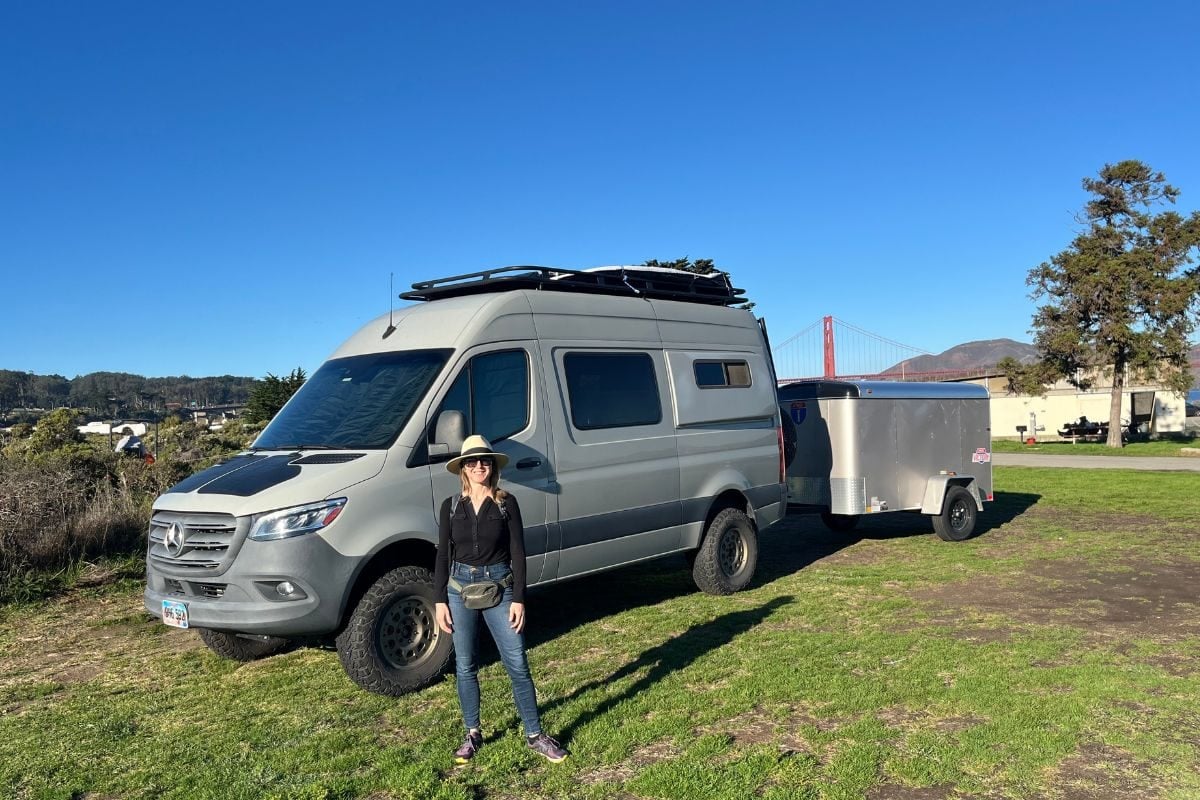
I’ve slept in vehicles all over this country: a Prius on city streets, marinas and my work parking lot, our Sprinter and Astro in trailheads and truck stops and quiet neighborhoods.
We’ve only gotten the knock ONCE. We choose our spots carefully and stay in tune with regulations in cities across the U.S.
Things are getting more and more difficult for van lifers and RVers traveling to cities. Since a Supreme Court decision in 2024, American cities have been passing vehicle-sleeping bans faster than anyone can track them, and the rules have real teeth now. Fines. Tows. In some places, jail time on repeat offenses.
I went through the ordinances, the court coverage, and the enforcement reporting to map where things actually stand. Here’s what changed, which cities have the strictest rules, how the bans actually work, and… because this shouldn’t just be a list of bad news…. where legal safe parking still exists.
One honest note before we start: I’m a van lifer, not a lawyer. Ordinances change monthly and enforcement varies block to block, so treat this as a map, not legal advice, and check the current municipal code anywhere you plan to stay.
NEW UPDATE, September 26, 2026: A city just tried to attach mandatory jail time to sleeping in a vehicle, and backed off within a week. Bismarck, North Dakota commissioners pulled Proposed Ordinance 6688 on September 22 after residents and shelter operators filled the meeting. It would have required a minimum of four consecutive days in jail for a second public-camping conviction in a year, seven for a third and fifteen for a fourth, with no suspended or deferred sentences, and its definition of a campsite listed vehicles alongside tents, tarps and sleeping bags, The Dakotan reported. The mayor’s line on the night: “It is not illegal to be homeless.” The city’s 2024 ban on camping in streets, parks and other public property stays on the books, per US 103.3; instead of the jail ladder, commissioners voted to study a low-barrier shelter site, KFYR reported. Worth knowing if you pass through: the ban is real and comes with 24 hours’ notice to move, but the jail line is one this city would not cross once its own people showed up to say so.
What Changed: The Grants Pass Decision

In June 2024, the Supreme Court decided City of Grants Pass v. Johnson, ruling 6-3 that cities can enforce bans on sleeping and camping on public property, including in vehicles, without violating the Eighth Amendment. Before that ruling, a lower-court precedent had limited how aggressively western cities could enforce these bans. Grants Pass removed that barrier.
The result was immediate. The ACLU, which tracks these ordinances, counts more than 350 cities that have passed laws criminalizing sleeping in public, including in vehicles, in the two years since. In California alone, over 140 municipalities now have some form of vehicle residency restriction. Within six months of the decision, six cities in southwest Washington had passed new ordinances.
The important thing to understand: these laws were mostly written with homelessness in mind, but the ordinances don’t ask why you’re sleeping in your vehicle. A traveler in a $150,000 Sprinter and someone living in a 30-year-old sedan are the same thing in the eyes of a vehicle-habitation ban.
The Three Shapes These Bans Take

Reading dozens of these ordinances, they come in three flavors, and knowing which one you’re dealing with matters:
1. Vehicle habitation bans. These make it illegal to “dwell” or “live” in a vehicle, sometimes at all hours, more often overnight. Los Angeles is the classic example: dwelling in a vehicle is banned in residential areas from 9 p.m. to 6 a.m., and at all times within 500 feet of a park, school, or daycare.
2. Oversized vehicle bans. These don’t mention sleeping at all; they simply ban vehicles over a certain size (LA uses 22 feet long or 7 feet high) from parking on certain streets during certain hours, usually 2 a.m. to 6 a.m. If your rig is a van or RV, a parking ban at sleeping hours is a sleeping ban with extra steps.
3. Time-limit rules. Lacey, Washington caps RV street parking at four hours a day. Aurora, Oregon allows recreational vehicles on the public right-of-way for no more than 24 hours in any seven-day period, and they must then stay off it for 72 hours. You can’t get ticketed for sleeping, but you get ticketed for existing in place too long.
The 15 Cities Where the Rules Bite Hardest
Los Angeles, California
The layered approach: the vehicle-dwelling ban (residential overnight, 500-foot buffer zones) plus a growing map of oversized-vehicle restrictions. In 2025 the City Council voted to ban overnight oversized-vehicle parking on additional West LA and coastal streets, and the restricted zones keep expanding district by district. West LA and the beach communities are the most heavily enforced areas.
San Diego, California
A strange middle state: a class-action settlement forced the city to pause enforcement of its overnight ordinances, and yet enforcement of the oversized-vehicle rules has surged anyway, with tickets more than doubling since a crackdown began. San Diego is the clearest example of why “the law is paused” and “you won’t get a ticket” are different sentences.
Palo Alto, California
NEW UPDATE, September 2026: On August 24 the City Council approved a permit pilot that opens in March 2027: vehicle dwellers apply for a permit and park only on designated stretches of Embarcadero Road and Coyote Hill Road, about 37 spaces in all, Palo Alto Online reported. City staff count more than 100 RVs on Palo Alto streets, and one councilmember has already proposed making the permit the only legal place to park one, with everyone else told to move on. The mayor summarized the plan as “none in residential, none as second homes.” The city already bans overnight RV parking in residential zones and has ordered staff to close the zoning gaps that left some neighborhoods uncovered; a ban on inoperable vehicles and a proposed “vanlord” ordinance (aimed at people who rent out vans for others to live in) are part of the same push. The model is San Francisco’s: a six-month permit for low-income vehicle dwellers who work with case managers, and a two-hour limit or a tow for everyone else. Even the city attorney called the legal ground unsettled, with two Ninth Circuit cases (Berkeley’s encampment sweep and Sebastopol’s citywide vehicle-dwelling ban) still open. When a city starts issuing permits for where you may sleep, the era of quietly parking anywhere is over.
Portland, Oregon
Portland’s camping ordinance explicitly covers vehicles on public property (streets, sidewalks, parks), and after pausing enforcement in early 2025, the city resumed enforcing it in November 2025. The daytime rules hit vehicle dwellers especially hard, since a parked, occupied rig can qualify as “camping” even in daylight.
Lacey, Washington
The four-hour rule: RVs and other large vehicles can’t park on streets or in lots for more than four hours a day. One of six southwest Washington cities that moved quickly after Grants Pass.
Jackson, Wyoming
The one that teaches the most important lesson: sleeping in your vehicle overnight on city streets is illegal in Jackson, and we’ve never found that rule posted on a single sign. It lives in the ordinance book. The town nearest to Grand Teton, in a state famous for public land freedom, and you only learn the rule when the flashlight hits the window.
Mountain View, California
Silicon Valley’s testing ground: voters approved Measure C with 56.6% of the vote, banning oversized vehicles (over 22 feet long, 7 feet wide, or 7 feet high) from narrow streets and streets with bike lanes. A federal lawsuit delayed enforcement for years; the settlement let it begin in late 2022, with one telling condition: the city must keep at least three miles of roadway where RVs may still park, and hand RV residents maps showing where. When legal parking comes with a map of the last three miles, you’re watching the end of an era in real time.
The Southwest Washington Wave: Vancouver, Battle Ground, Washougal, Camas, and Ridgefield
Within months of Grants Pass, a cluster of cities in Clark County, Washington moved almost in unison. Vancouver and the county already had camping bans on the books. Washougal passed its ordinance in December 2024. Battle Ground followed with Ordinance 2025-02 in early 2025, notable because it explicitly restricts using vehicles as dwellings on public property, with escalating fines. Camas passed its ban unanimously in August 2025, and Ridgefield has its own unlawful-camping ordinance. Five neighboring cities plus the county, one legal template, barely a year. This is what the post-Grants Pass wave looks like at ground level, and it’s why this list will be longer by the time you read it.
Aurora, Oregon
The time-limit model described above, in its purest form: recreational vehicles may not sit on the public right-of-way more than 24 hours in any seven-day period, and once moved must stay off it for 72 hours. There’s no sleeping ban on the books at all, and no practical way to sleep a week in town legally.
Grants Pass, Oregon
The city that gave the ruling its name enforces its camping ordinances with fines that escalate on repeat offenses. It’s a small town, but it’s now the legal template every other city cites.
Honolulu, Hawaii
Hawaii broadly confines vehicle living to designated campgrounds, and Honolulu’s street rules are among the strictest in the country. The islands are the wrong place to improvise an overnight.
The Enforcement Reality
Here’s the honest, on-the-ground version, from someone who’s been on the receiving end: tickets and tows are still the exception. The overwhelming majority of enforcement is the knock, where an officer or security guard telling you to move along. Politeness works. Apologizing works. Asking “where CAN I go?” works surprisingly often.
But the trend is unmistakable. The knock is increasingly backed by a citation on the second encounter, fines escalate, and in the strictest cities a towed rig, which for a full-timer means a towed home, is a real risk. The Grants Pass decision didn’t just permit these ordinances; it emboldened the enforcement behind them.
The Other Side of the Map: Safe Parking Programs

The same years that produced the bans also produced something better: legal, organized places to sleep in your vehicle.
Safe parking programs are designated lots run by nonprofits with city funding where vehicle dwellers can park overnight legally, typically with bathrooms, security, and support staff. They were built for people experiencing vehicle homelessness, and they’re the clearest sign that some cities are choosing management over criminalization:
- Santa Barbara County: the New Beginnings Safe Parking program manages about 200 spaces across 31 lots in Santa Barbara, Goleta, Carpinteria, Lompoc, and nearby unincorporated areas. It’s the oldest and most-copied program in the country.
- San Diego: Jewish Family Service runs five secured lots (one open 24 hours), and the county opened an additional program in Grantville.
- Everywhere else: a national directory of safe parking programs is maintained at vehicleresidency.org, worth bookmarking even if you never expect to need it.
How to Check Any City in Five Minutes
For the deeper dive on the car-sleeping side specifically, naps vs. overnights, rest-area limits, and stealth etiquette, we keep a full guide at is it illegal to sleep in your car.
The rules are almost never on a sign. Here’s the routine that has saved us the knock more times than I can count:
- Search “[city name] municipal code vehicle habitation” and then try “oversized vehicle” and “camping” as backup terms. Municipal codes are online and searchable for nearly every city now.
- Look for time-window parking bans (2 a.m.–6 a.m. is the classic): those are sleeping bans in disguise.
- Check the height and length numbers in any oversized-vehicle rule against your actual rig. A high-roof Sprinter clears 7 feet easily.
- Mountain View Voice / KQED / City of Mountain View: Measure C oversized-vehicle ordinance, lawsuit settlement, enforcement
- The Reflector: Battle Ground Ordinance 2025-02 (vehicle-dwelling restrictions); OPB: Washougal (Dec 2024); Camas Post-Record: Camas Ordinance 25-015
- When in doubt, don’t burn energy on the gray zone: rest stops (check the state’s limits), BLM and National Forest land, and actual campgrounds remain the stress-free answers.
If you’re new to finding legal spots, our guide to finding free campsites covers the public-lands side, and the state-by-state picture, including where living in your rig is restricted even on your own property, is in our state laws guide. The public-lands closures we’re tracking are on this running list, which grows every time another forest or city makes a move.
What This Means If You Live or Travel in a Vehicle

I don’t write this to scare anyone off the road. We still travel full-time, we still sleep in the van, and 95% of nights are as easy as they ever were. especially outside city limits, where public land remains generous and legal.
But the direction is clear: the cities are closing, the public lands are tightening, and the era when you could count on ignorance as a defense, yours or the city’s indifference. is over. The travelers who thrive in the next decade will be the ones who know the three shapes the bans take, check the code before the sun goes down, and keep the safe-parking directory bookmarked for the nights when nothing else works.
The road’s still free. You just have to know where it isn’t.
Frequently Asked Questions
Is it illegal to sleep in your car in the United States?
There is no federal law against sleeping in your vehicle. The rules are set city by city and county by county, which is why the same van can be perfectly legal in one town and ticketable twenty minutes down the road. Since the 2024 Grants Pass v. Johnson Supreme Court decision, cities have far more power to enforce bans, and hundreds have passed new restrictions.
What was the Grants Pass Supreme Court decision?
In June 2024, the Supreme Court ruled 6-3 in City of Grants Pass v. Johnson that cities can enforce ordinances banning sleeping and camping on public property, including in vehicles, without violating the Constitution’s ban on cruel and unusual punishment. The ruling removed the main legal barrier that had limited enforcement in western states, and hundreds of cities have passed or strengthened bans since.
Which cities have banned living in vehicles?
The list changes monthly, but the 15 cities detailed in this guide include Los Angeles (no vehicle dwelling in residential areas overnight and new oversized-vehicle bans on coastal streets), Portland (camping ordinance covers vehicles on public property), Lacey, Washington (four-hour limit for RVs), and Jackson, Wyoming (overnight vehicle sleeping banned on city streets). More than 140 California municipalities have some form of vehicle residency restriction.
What is a safe parking program?
Safe parking programs are designated lots, often run by nonprofits with city funding, where people living in vehicles can legally park overnight, usually with bathrooms, security, and case workers. Santa Barbara’s New Beginnings program manages about 200 spaces across 31 lots, and Jewish Family Service of San Diego runs five secured lots. A national directory is maintained at vehicleresidency.org.
How do I find out if sleeping in my vehicle is legal in a specific city?
Search the city’s municipal code online for terms like ‘vehicle habitation,’ ‘oversized vehicle,’ and ‘camping.’ Many cities never post their rules on street signs, so the ordinance book is the only reliable source. Also check for time-window parking bans, typically 2 a.m. to 6 a.m., which function as sleeping bans in practice.
Sources
- Congressional Research Service: City of Grants Pass v. Johnson (2024): the ruling and its scope
- ACLU: Two Years Since Grants Pass: tracking 350+ city ordinances
- The Columbian: Six SW Washington cities pass ordinances post-Grants Pass
- NBC Los Angeles / CBS Los Angeles: LA council expands overnight oversized-vehicle bans
- CBS 8 San Diego: San Diego settlement pauses overnight ordinance enforcement; Voice of San Diego: oversized-vehicle tickets double in crackdown
- Palo Alto Online: Palo Alto’s proposed vehicle-dweller permit program (Aug 2026)
- Portland.gov: Portland camping ordinance (vehicles included); OPB: enforcement resumed Nov 2025
- City of Aurora, Oregon: RV parking ordinances
- City of Santa Barbara: New Beginnings Safe Parking; JFS San Diego: Safe Parking Program; National safe parking directory
- The Dakotan: Bismarck pulls proposal mandating jail time for repeat public camping (Sept. 23, 2026); US 103.3: How Bismarck’s camping rules shifted after public input (Sept. 23, 2026); KFYR: City Commission addresses public camping ordinance (Sept. 22, 2026)


One thing that confuses me – I’ve heard of people being denied permission to park at places such as Walmart or Cracker Barrel based on citywide ordinances. How does/could private property be involved here? Or, is this merely an excuse to say no?