

How to Start Van Life: The Complete Beginner’s Guide

Everything you need to start van life: choosing a van, downsizing, insurance, mail, internet, income, legal parking, and the habits that make the road stick, from eight years of living it.

*This post may contain affiliate links. Please read our disclosure policy for more info.
Starting van life comes down to six moves: choose a van that fits your budget and body (you should be able to sit up, sleep flat, and stand if you can afford it), downsize your belongings, sort the four logistics that follow you everywhere (insurance, mail, internet, and income), build a simple budget, take a one-week test trip before committing, and learn where you can legally park and sleep. Most people go from decision to full-time in three to six months, and you do not need a $100,000 build to do it.
I’m Kristin Hanes, a former radio journalist and the founder of The Wayward Home. I’ve lived nomadically since 2016, first in a Toyota Prius, then a Chevy Astro van, and now between a 4×4 Sprinter and a sailboat, and I’ve helped hundreds of thousands of readers make this exact transition. This guide is everything I know about starting van life, in the order you’ll actually need it, along with hard-won advice from van lifers Kaylin and Danielle, whose stories you’ll meet throughout.
How to start van life: the short version
- Get honest about the tradeoffs. The freedom is real and so are truck-stop mornings; read the benefits and downfalls below before you buy anything.
- Choose your van. Budget, stealth, and standing headroom decide it; see vans you can stand up in and what campervans really cost.
- Make a plan for your stuff, your home, and your income, in that order (the full transition checklist is below).
- Sort insurance, mail, and internet before you leave; mail on the road and mobile internet each have a full guide.
- Learn the parking rules. Where you can sleep legally changes city by city; start with is it illegal to sleep in your car? and how to find free campsites.
- Test, then go. Rent or borrow before you build, take a shakedown week, and trust your gut on the road.
Now the long version: what van life actually gives you, what it takes, and every step of the transition.
What are the Benefits of Van Life?
I’ve been living in vehicles since 2016: first a Toyota Prius (yes, really), then a Chevy Astro, and now a 4×4 Sprinter that I split with a sailboat. The question I hear most is when I’ll stop and go back to “normal” living. My answer is the same every year: whenever it stops being fun, and it hasn’t yet.
For me, van life is generally a positive experience. Of course, I have my bad days. There are moments when all I want is a house with endless amounts of running water and a hot shower. However, I typically enjoy life on the road. If you are starting van life, here are some benefits you will likely experience along your journey.
Every day is an adventure
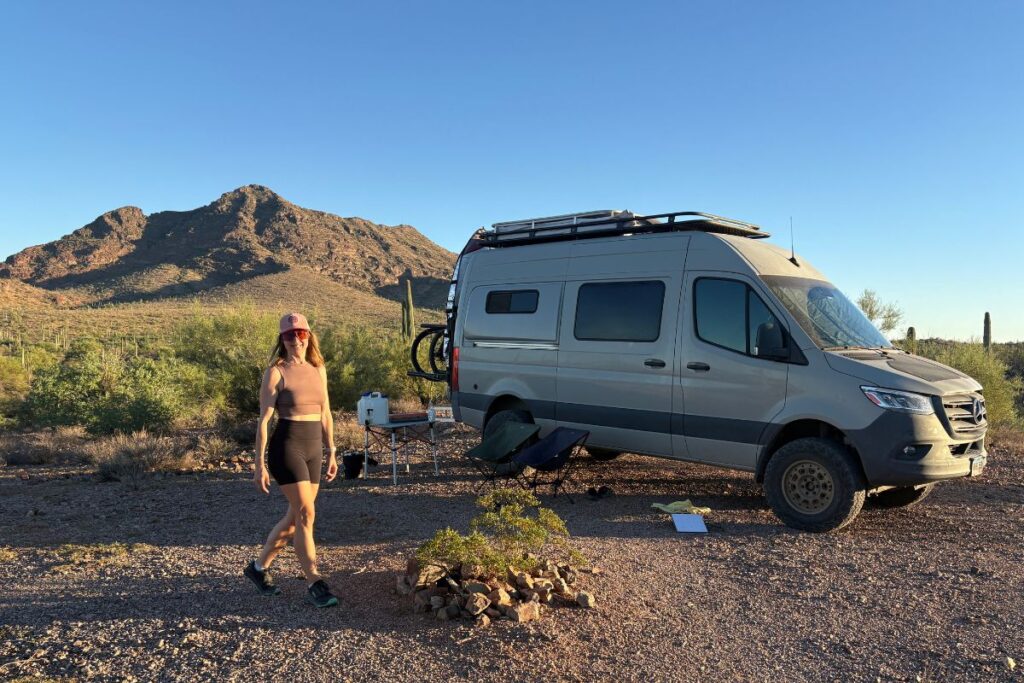
No two days are ever the same when it comes to van life. Depending on your job or circumstances, you typically get to choose where you want to wake up, how far you want to drive, and how you want to spend your time. You never know who you might meet or become friends with at the places you visit.
You can decide to boondock in the Arizona desert and then drive to the California coast the next day. You might find a spot and plan to stay there for a night, then discover that you love it and decide to spend weeks there.
Part of the fun of van life is embracing the lack of structure it provides to go where the wind takes you. Unless you work an in-person job, you no longer need to make plans or commitments to be in specific places at certain times.
Endless opportunities for outdoor recreation
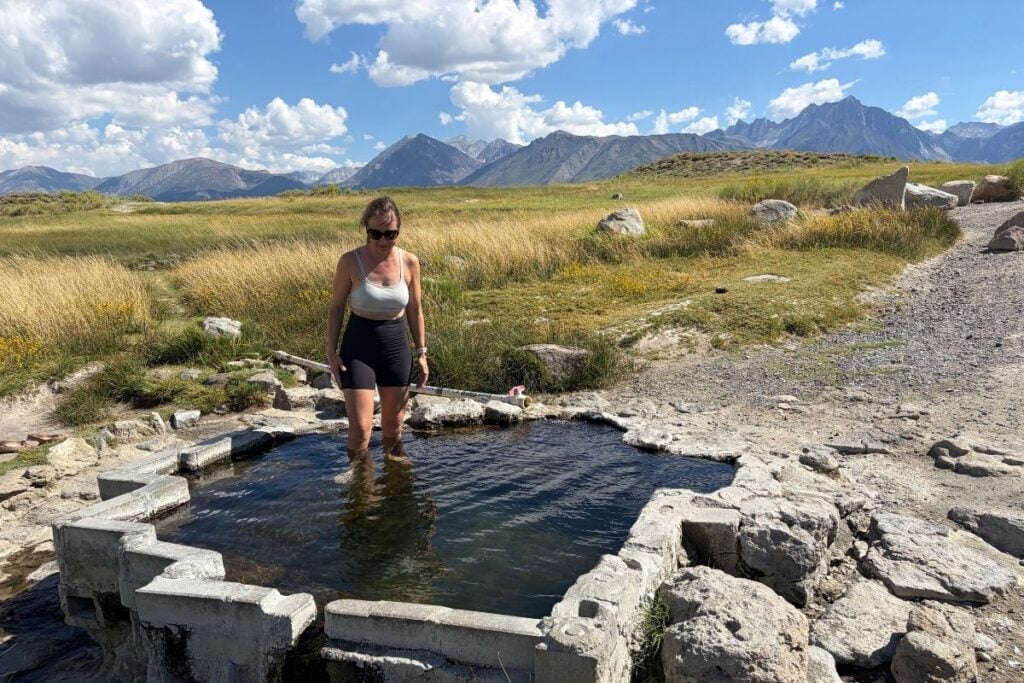
If you want to get into van life to spend your days reconnecting with nature through movement, then this lifestyle could be perfect for you. Van life lends itself well to adventure sports for all types of outdoor enthusiasts.
For us it’s mountain biking and windsurfing: the bikes live on the back of the Sprinter, the sail gear rides wherever it fits, and camps get chosen with a trail or a windy launch in mind. For other van lifers it’s surfing, climbing, or skiing. Either way, your van becomes a gear closet on wheels that sleeps at the trailhead.
If you enjoy running or walking your dog, van life provides endless opportunities for new scenery. Gone are the days of walking the same loop around your neighborhood or jogging down the same streets every day.
Even when you don’t feel like moving, you can easily catch sunrise or sunset by looking out your window or opening the door. You can crack a window for fresh air and feel the warm sun on your face. Depending on where you are camping for the night, you may even be able to admire the stars.
Save money on rent and mortgage payments

If you love living in beautiful areas but do not want to pay the high price of monthly rent or mortgage payments, van life is a great solution. You can wake up to mountain views in Colorado and beaches in Florida for a fraction of the price.
You may still have a monthly payment on your van loan, but this is often far cheaper than rent. Kaylin, a Wayward Home writer who lives in her converted van with her husband, rented in various apartment complexes across Colorado for six years before living in a van. As rent continued to rise each year, she found she could no longer justify the cost.
“I felt like I was spending a lot of money for a small apartment that I barely spent any time in,” Kaylin recalls. “After all, I had moved to Colorado to work and then get outside on the trails as much as possible on the weekends.”
Some may wonder if there is a significant cost for campsites and fuel. In reality, there is an abundance of free, dispersed campsites on BLM land that you can easily find on apps like iOverlander, and many van lifers will share their spots with you (remember to leave no trace and take care of the land).
In terms of fuel, you can typically stay in a dispersed campsite for up to 14 days. If you are driving across the county and do not need to be in a specific place, you can take your time while traveling and stay longer than usual. By staying in one spot for multiple days, you won’t be driving long hours all of the time and can save money on gas.
Minimize everyday living expenses
In addition to saving on rent and mortgage payments, you can save on everyday living expenses such as food, drinks, and entertainment.
You can make a monthly budget for yourself when visiting new places. Although it might initially feel like you are on a “vacation” while traveling in your van, these feelings will quickly wear off.
If you used to go out for lunch every day at your traditional office job, you can switch to making your lunch in your van. Instead of going out for expensive cocktails at a bar, you can buy a cheap pack of beer to enjoy at a sunset on the beach.
In terms of entertainment, you have nature to enjoy. Since you will travel to gorgeous places in your van, you will probably start spending more of your free time outside. You no longer need to pay for Uber rides, nightclubs, movies, and restaurants if you don’t want to.
Work with a scenic view
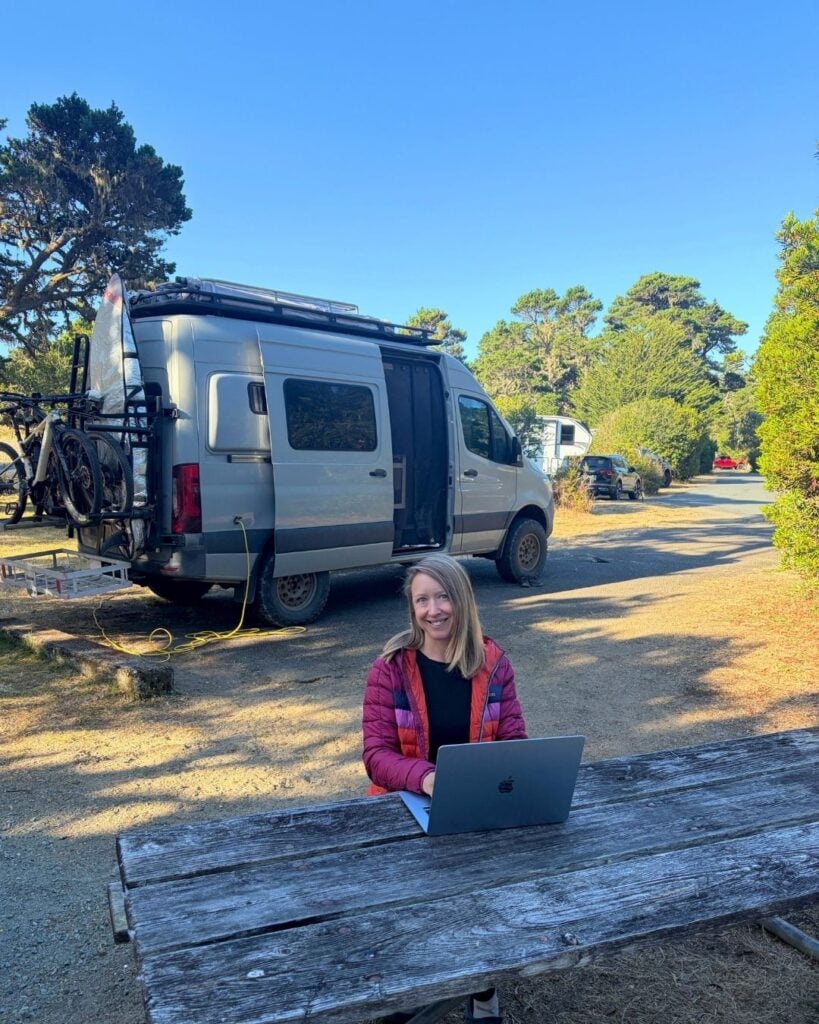
If you plan on working remotely in your van, you can have an incredible view right outside your window wherever you choose to go. Whether you work among the pine trees or near a peaceful lake, you can feel inspired as you do your work.
One of Kaylin’s favorite parts of working remotely in her van is working wherever she wants to go on a given day: “If I’ve been boondocking for a while and want to be around people, I’ll go to a coffee shop. If I need to be away from distractions and noise, I’ll find a quiet park to work in for the day.”
Feel proud of yourself
While you live on the road, you will learn more about yourself (and your partner if applicable) than you have previously. Van life forces you out of your comfort zone in facing new problems and learning how to respond to them.
There will likely come a time when your van has a malfunction, ranging from fixing a handle on a drawer to changing a tire. If you camp alone in dispersed areas, you must problem-solve and use critical thinking skills to handle the situation.
Danielle Campbell (@stumblinguponserendipity) has lived in her 2020 Ram ProMaster on and off for the last 1.5 years. She says she quickly learned to “embrace the uncomfortable.”

She explains, “Solo female van life and the discomfort that can accompany it can be overwhelming at times, but those challenges and discomfort has pushed me to grow tenfold. When I learned to embrace that discomfort and let it come as it will, van life became even better. For the girls out there that are afraid of embracing discomfort, with a mindset shift, you may just find that it’s the best thing you’ve ever done for yourself.”
Instead of always asking or expecting others to fix things for you, you will learn to take care of many things yourself. You will quickly develop skills of independence and self-reliance.
And even though there are times when you may doubt yourself, you will feel proud of yourself for keeping calm in stressful moments and staying solution-oriented.
Minimizing your possessions

One of the most freeing aspects of van life is living with less. Instead of having junk drawers and boxes of random items in a house, you know exactly what you have and can find things quickly when you need them.
You only have space for a few possessions, so you can only keep the things you need and value. If you try to keep too much stuff, your van will feel cluttered and unorganized.
Although it may feel hard to minimize initially, you will quickly experience the benefits and joy of owning less. You will learn that you do not need to own many possessions to have a happy and fulfilling life.
Downfalls of Van Life
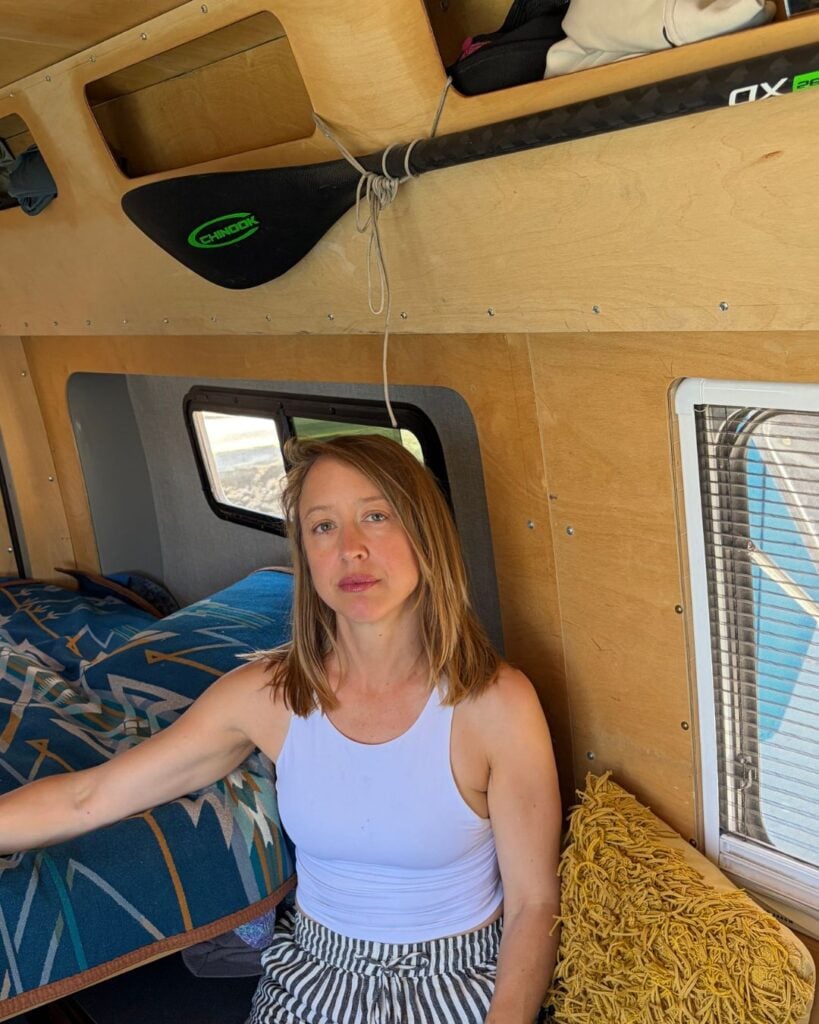
Although I generally love van life, there are certainly some downfalls not shown on Instagram. From living in a cramped space to finding a parking spot every night, some aspects of van life are unenjoyable. There are also risks of mechanical issues and a unique set of chores associated with living in a van that you will have to do.
And just when you think you have it all figured out, van life has a funny way of humbling you. Most days will test your patience and your ability to adapt to situations on the fly.
If you are starting van life, these are some downfalls you might experience that many van lifers face.
Finding parking spots
After spending your day driving, adventuring, or working, you want to get somewhere in your van and relax for the night. Unfortunately, some places are challenging to find free, safe, and legal overnight parking spots.
Although Danielle knew she would need to find places to park her van overnight, she explains, “I had to get used to finding a new sleeping spot every single night. I had to get used to sleeping alone in the middle of nowhere land with noises of animals I didn’t know. I had to get used to sleeping in parking lots with no idea what was happening outside of the van… I had to get used to learning how to feel safe at night by myself wherever I happened to be.”
While you can be proactive and research spots ahead of time using apps like iOverlander or asking van life friends for recommendations, things will not always go according to plan. The campsite you saved may be closed, require 4×4 to access (which could be hard to navigate depending on your vehicle and the time of day), or already full for the night.
If you arrive at a crowded or noisy spot or have a bad gut feeling, you may need to leave and quickly make a backup plan. This process can be extra stressful when you are tired or when it is dark outside.
Even when you find a spot, it does not guarantee a pleasant sleep. Kaylin says she has woken up when stealth camping in a parking lot to the sound of people driving around doing donuts without a muffler at 1 a.m., a man doing karate in the middle of the night, and drunk people singing in dispersed camping areas.
Maintaining your vehicle

Since your vehicle is also your home, you must be on top of things to keep it safe and comfortable. If you do not schedule regular maintenance and repairs, your van could break down, leaving you stranded.
Schedule regular oil changes, tire rotations, brake inspections, etc. If you are parking your van in temperatures below freezing without running the heater, you need to winterize the pipes.
There is always a chance of getting into a car accident or having an engine light turn on. If you are living in your van full-time, it is a matter of preparing for when (not if) this happens to you. It is vital to have an emergency fund set aside at all times.
Lack of privacy and space

Although there is freedom in minimizing your items and living with less in a small space, the lack of space can be challenging, especially if you are living in your van with a partner or pet.
“I often find myself telling my husband things like, ‘When you’re done doing that, move over because I need to do this.’ It is a constant act of dancing around each other in an attempt to share the space,” Kaylin explains.
The tight space also makes privacy difficult. When traveling with someone else, you rarely have moments alone unless you intentionally take them.
There is also a lack of privacy from onlookers outside of your van. Of course, purchasing curtains and window covers helps. However, people tend to be curious about vans and walk closely to your windows to pee inside, or they may even knock on your door and ask to see it.
Doing van chores
Unlike living in an apartment or home, there is a unique set of chores to do when you live in a van. These chores include things like filling up your water tank, stopping at laundromats to do laundry, finding places to dump your trash, locating restrooms and showers (if you don’t have these), washing your vehicle more often, and tidying up constantly to keep your small space feeling fresh.
Although none of these chores are terrible, they can be inconvenient. If you work from your van all day, the last thing you might want to do is drive to a laundromat, and you do not want to give up your precious free time in an area doing laundry. It can also be tiring to constantly stay organized and put things away right after you use them since clutter accumulates quickly in a small space.
Finding ways to make income

This is the downfall I know best, because income is the problem that started my whole nomadic life. I got laid off from my radio job while I was already living small, and there was no salary waiting to make van life comfortable. I patched things together the way most van lifers do at first, and then spent years building an online business (this website and my Facebook pages) that I can run from anywhere with a signal. You can read this article if you want to learn how I make money with Facebook pages.
Here is the honest version: reliable income on the road takes longer to build than anyone admits, whether that’s landing remote work or growing something of your own. The stress of an uncertain paycheck is real when the gas tank and the grocery bill don’t wait. Start working on your income plan months before you leave, not after. I keep a full guide to the options that actually work in how to make money living on the road.
Another option is to work a seasonal or stationary job while living in your van, but these can limit your ability to travel.
If you have enough funds saved to live off of for a while, you may not need to worry about this. However, the thought of eventually needing to find a way to make an income again may be in the back of your mind and could detract from your van life experience.
Things I Wish I Would Have Known Before Starting Van Life
Although you may think you know what to expect when it comes to van life, you may be surprised by reality. Below are some common surprises van lifers experience while living on the road.

No day is ever the same
Something that has surprised me about van life is how difficult it can be to start and maintain routines while living on the road. In your head, you may plan to wake up, work out, shower, work, and eat at set times.
However, life on the road rarely follows a traditional daily structure. There are days when you will need to drive all day to get to your next spot. You might wake up one day and realize you have no water left in your tank, meaning you need to change your plans and head somewhere to refill your water.
Danielle explains, “I had to get used to going with the flow – during breakdowns, changing of plans (almost daily), figuring out when to workout if I wanted a shower after, and so much more.”
Even on days when you stay in the same spot and do not move, factors outside your control can quickly change. For example, you may encounter unexpected weather conditions or need to move your van due to loud neighbors.
You will appreciate common luxuries
Most of us go into van life knowing there are certain luxuries we sacrifice for this lifestyle. For example, depending on the build of your van, you might not have an oven, microwave, toilet, shower, hot water, air conditioning unit, or dishwasher.
Although you know you will not have these things when you start van life, you may not realize how much you will miss having them. Living without these luxuries gives you a greater appreciation of what you once took for granted.
Once you have access to unlimited running water again, you will feel like you have won the lottery. After not showering for several days, a hot shower is the best feeling in the world.
Danielle says she went into van life knowing she would need to make sacrifices: “I knew van life wouldn’t be ‘comfortable.’ Of course not. You obviously don’t have the comforts of a normal apartment. I knew I wouldn’t have freely running water, hot water, a shower, a microwave. I knew I wouldn’t have a couch to lounge on or a space to walk around inside… And although I cherish my time home with every comfort, you don’t even realize what is ‘comfortable’ until you don’t have it. I find myself wanting to get back to the discomfort to push myself to grow more.”
You will use public spaces in new ways

When you live in a van, you will likely utilize public spaces more frequently than you used to.
Kaylin and her husband rarely went to public parks before starting van life. Now, they go to parks almost every day to spend their days working remotely from their van. “I love parks because they often have good cell service for us to work off our Verizon hotspots,” Kaylin explains. “They also tend to have scenic views, public restrooms, running water, trash, and grass for our dog.”
You may also find yourself going to public libraries on days you want to work in the air conditioning without spending money. If you used to have a community center or gym membership that you rarely used, that will likely change once you live in a van and rely on these places for showers.
You will talk to many strangers
Something surprising to Kaylin is how many people approach her and her husband in their van.
“We always have people asking us about our van and wanting to know if they can see it,” Kaylin says. “They often ask us about our travels and what we do for work.”
While it can be fun to talk to strangers, you should set boundaries for moments when you are too busy to chat or feel unsafe. “I have been in the middle of Zoom calls when people approach my van and ask for a tour. I politely ask them to leave,” Kaylin explains.
However, the strangers you meet while traveling can also become friends. You can initiate conversations with your neighbors when camping or attend van festivals to meet other van lifers. Social media is also an excellent way to meet and connect with other van lifers on the road.
You will get lonely

Although van life gives travelers a sense of independence, it is natural to miss the people you once spent a lot of time with. You will no longer see your friends and family members daily, weekly, or even monthly, and you likely won’t have coworkers you see regularly (depending on your job).
Especially if you are a solo traveler, these feelings of loneliness can be hard to bear. Danielle has traveled alone for much of her van life journey and says, “I had to get used to being alone – for days and weeks at a time. I had to get used to not seeing a single person I knew for over a month at a time.”
It is possible to make new friends, build community, and go to places where you can interact with other people. There is also social media. While these might help ease your loneliness, remember these feelings are normal and valid.
How to Transition into Van Life

Once you have weighed the benefits, downfalls, and realities of van life, you may be ready to transition into van life. This section offers some things to consider before you hit the road to have a smooth transition.
Make a plan for your belongings
You probably have items in your apartment or home that you will no longer need on the road. These items include things like furniture, extra clothes, decorations, etc. You have a couple of options for making a plan for the belongings you do not want to take with you: sell your stuff or pay for a storage unit.
To help you decide which option might be best for you, I recommend considering the quality and value of the items you own. Consider selling everything if you do not love your furniture or it is worn down or cheap to replace. However, if you have an abundance of precious souvenirs or irreplaceable items, the storage unit may be the better route.
Go through your place room by room, one drawer at a time, sorting everything into three piles: keep, donate, and sell (or store). One drawer a day keeps minimizing from feeling overwhelming.
If you decide to sell your items, this is a great way to start van life with extra cash and savings. Apps like Facebook Marketplace, Poshmark, Mercari, and Depop make it easy to sell household items and clothes. You can also consider selling to consignment shops, Plato’s Closet, or a garage sale (depending on where you live).
Remember that you do not need to sell everything that you do not want to take with you. A couple of storage totes at a parent’s or friend’s house handles the sentimental things like Christmas ornaments. You can always ask a friend or family member to store boxes in their garage or home.
If you decide not to sell your items, you will want to pay to rent a storage unit. The storage unit is also a convenient way to store seasonal items (like skis or backpacking gear) to swap out as needed while on the road.
Since you will probably not visit your storage unit often, look for one in a safe area with climate control features and good security. You will also want to consider renting a storage unit in a convenient location that is easy to access when you are on the road.
Make a plan for your current home and vehicle

Depending on your situation, you may need to consider selling your home and vehicle before hitting the road. If you only plan to do van life for a few months, you might consider renting your home and leaving your car with a trusted friend or family member to look after.
If you rent, find out early whether you can break your lease or time your departure to its end. Many van lifers also sell a car they won’t need for extra starting cash; one of our writers sold her Jeep Wrangler to CarMax for extra money when starting their journey.
Make a plan that makes sense for you based on your budget, travel plan, and life circumstances. If you are uncertain about van life, I recommend keeping your vehicle and home until you decide if this lifestyle fits you.
Choose the right van for you
With so many options, picking the right van for you can feel overwhelming. You will find a wide range of van chassis with various features and capabilities. Plus, there are endless options for floor plans.
You will want to spend some time thinking about where you want to go in your van, the features you want to have in your build, and your budget. If you are traveling with a partner, discuss these decisions with them to ensure you are on the same page.
Remember that the newest or biggest van is not always the best choice. Large vans are often hard to drive compared to smaller, compact vans. I recommend test-driving different chassis and sizes of cargo vans (including the popular Sprinter, ProMaster, and Transit) to see which feels best to you.
There are pros and cons to buying new or used vans. If you want to save money, you can buy a used van. One option is to buy a used van that has not yet been converted and either do the conversion yourself or hire a company to convert the van. Another option is a used van from a van lifer looking to get out of van life. The downside to buying a used van is there often tends to be more wear and tear on the interior and exterior.
Buying a new van can be more expensive, but it often comes with a warranty and some peace of mind. With a new van, you can also save money by converting it yourself. Or, you can hire a professional conversion company to design the van based on your dream layout.
Whichever route you go, you will want to decide which capabilities and features are most important to you. Do you plan on doing a lot of off-roading? If so, you probably want a van with 4-wheel drive. Are you going to be working remotely from your van? You probably want a powerful battery and enough solar to charge your laptop.
Other considerations include the bed layout, kitchen set-up, toilet, and shower. You will need to decide what makes sense for what you need. Some beginners getting into van life say having a toilet and shower are non-negotiables; however, while these might seem essential, you can live without them and save space and money on your build.
Decide if you will convert the van yourself

Once you have your van and layout in mind, decide if it makes more sense to convert it yourself or hire a company to do it for you.
If you have the time to learn the skills required to convert a van and feel confident doing the electrical wiring, insulating, plumbing, woodworking, etc., then the DIY route can be cheaper. You can also tell people that you converted the van yourself and feel confident in knowing how your van works and how to repair it if something malfunctions.
If you do not want to spend months (or years) converting your van or do not feel confident in your craftsmanship, professional conversion companies can convert your van for you. You also often have a warranty with your build in case anything breaks within a certain amount of miles or years of owning it.
If you decide to pay a professional to convert your van, I recommend researching people and companies thoroughly. Kaylin and her husband attended van festivals like Adventure Van Expo and the RV Convention show in Denver to check out different options and tour finished vans in person. Although they went to the show with one company in mind, they discovered a new company (Vanworks) and ultimately decided to go with them for their van build.
Make a budget and a plan for income
Before getting on the road, it is crucial to establish a monthly budget for yourself. How much will you spend on necessities like groceries, gasoline, internet, a phone plan, and insurance? If you are taking out a loan on your van, you must account for this in your budget.
You will ideally want to have some fun money to spend on the road while traveling. For example, if you plan on visiting national parks, you will want to invest in an annual park pass. You may also want to set aside funds for eating out occasionally and subscriptions like Spotify, Netflix, etc.
Once you figure out your total monthly expenses, you can make a plan for what you need to do for income. As mentioned previously, you might consider working seasonal jobs to enjoy long stretches of travel without working. Or, you might choose to work remotely throughout the entire year. If you have saved enough money and only plan to do van life for a short time, you may be able to live off of your savings and not need to work at all.
If you plan on switching to a remote job when you start van life, I recommend applying for jobs early, especially if you are counting on this income to make ends meet. Securing a new position can take longer than you think in the current job market. You do not want to start your van life journey feeling stressed or burdened by money.
Figure out auto and health insurance
Something else you will need to decide on is insurance, both for your van and for yourself. Insurance provides peace of mind and coverage in a worst-case scenario.
If your van qualifies as a class B motor home, you may be able to get a cheaper rate for insurance. Standard providers like State Farm will often cover converted vans. Some RV insurance companies are established with van lifers in mind (i.e., Roamly).
Whichever policy you choose, ensure it covers your van and your belongings. You will want coverage in case of theft or car accidents and roadside assistance in case of mechanical failures or breakdowns.
Several providers offer discounts for van lifers, so research your options for an affordable rate with good coverage.
In terms of your health insurance, you may or may not have this covered, depending on whether or not you are working a job that offers health insurance as a benefit. If you work a freelance or seasonal job, you may need to pay for your health insurance out of pocket.
You will want to make sure that you choose an insurance plan that you can afford and that makes sense for your health needs. Also, pick one with ample locations to get coverage and prescriptions when and where you need them. For non-emergencies, you may also want to look into telehealth services.
- They insure DIY campervans, custom builds and RVs
- Provide excellent coverage for your stuff inside the van
- Also allows you to rent out via apps like Outdoorsy

Decide how you will get mail
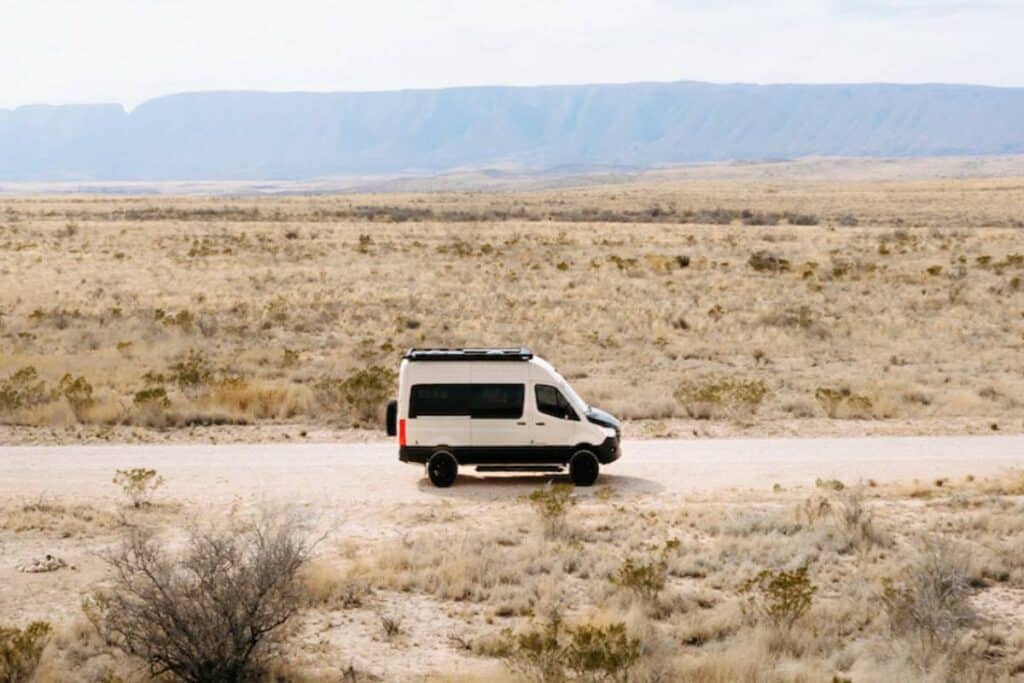
Getting mail while living on the road can be one of the most confusing parts of preparing for van life, but it does not need to be. Although it requires some planning, you can establish a system for receiving mail or use the address of a friend or family member.
One option is to use a mail forwarding service for your mail. If you still have a home address, you can have your mail forwarded to a post office near where you plan to live in your van.
Another option is to rent a P.O. box in a central location that you frequently travel through or use general delivery at a post office in a town you plan to drive through. Update your address with USPS, your bank, your employer, and any other essential services or people.
To receive packages on the road, you have several options. There are Amazon Lockers where you can schedule packages to be delivered. You can also use stores like Walgreens to have FedEx packages delivered. If you have a friend in an area you are traveling to, you can ask them for permission to use their address for a package.
Make a plan for internet access
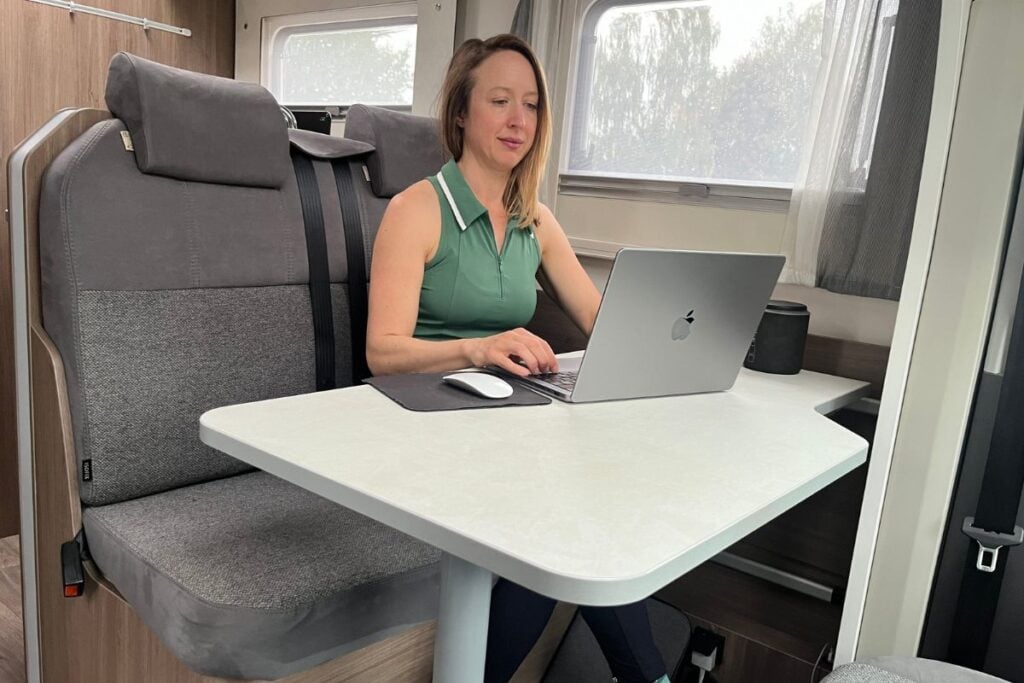
Internet is essential for accessing online resources on the road, staying in touch with friends and family, working (depending on your job), and entertainment via streaming services. You can purchase mobile hotspot data or get a portable Wi-Fi service for internet on the road.
My own setup follows what I call the two-connection rule: a cellular plan for everyday work, plus Starlink for the remote spots where no tower reaches. Between the two, I have run my entire business (this website and three Facebook pages) from deserts, forests, and boatyards; my full setup is in my mobile internet guide.
Kaylin and her husband work remotely and primarily use hotspot data through Verizon. They intentionally choose to camp in suburban areas and dispersed camping areas with cell service so they can work on the road. You can also purchase a signal booster to improve your connection in remote areas.
Another option is to purchase a portable Wi-Fi device and service plan. Although Kaylin and her husband mostly use hotspot data, they also have Starlink for camping in spots without service.
The downside to Starlink is that it is expensive to purchase the equipment and pay for the monthly plan (though you can pause service as needed). Also, it requires a lot of battery power. It is inconvenient for dispersed camping when you are not driving and recharging your battery through the alternator. When dispersed camping and using Starlink, you will need plenty of solar to use Starlink regularly.
A final option is to use Wi-Fi only when you need it at places like public libraries and coffee shops. You can use VPN services to secure your connection and protect your personal information on public Wi-Fi.
How to Start Living on the Road

Now that you have made arrangements and prepared for life on the road, here are some tips for handling essential services such as finding restrooms, filling your water, and more.
Find toilets, showers, & laundromats
Depending on the build of your van, you may or may not have essentials like a toilet and shower. If you do not have them, you must intentionally seek them out.
In terms of a toilet, Kaylin and her husband do not have one. In dispersed camping areas, they dig a hole and go outside while following Leave No Trace principles. When staying in urban areas, they use gas station toilets and often park near public parks during the day to use the restroom as needed. For desperate situations, they have a pee jug in their van.
After eight years of this, my answer is a gym membership: it has been my shower in more towns than I can count, with a workout attached. I’ve also used marinas, campgrounds, and a pump sprayer in the desert; every option is in my van life shower guide.
For showers, Kaylin and her husband often rely on recreation facilities and recently joined Planet Fitness as a way to exercise and shower on the road. They have also paid to shower in RV parks and public swimming pools. You can use apps like iOverlander to find showers wherever you stay.
You can also use iOverlander to show laundromats in an area. Most towns have laundromats, and many RV parks offer this as an amenity. Keep coins, detergent, etc. in your van to use as needed.
- Read More: How to do Laundry in a Campervan
Cook and eat on the road

Your options for cooking and eating food on the road depend on your setup.
Kaylin has a single-burner induction stove that requires a lot of battery power to operate. For this reason, her husband often cooks their meals outside on a separate Coleman propane stove. The Coleman stove is also convenient because it has two burners.
The size of your freezer and fridge may affect how much food you can store and the types of meals you can make. Produce often does not last if you are camping out in a dispersed area for multiple weeks. You may need to search for new recipes that are easy to make on the road and fit your new lifestyle.
Know where to fill your water
Depending on the size of your water tank and how much water you use, you may need to fill your water more than you think. Kaylin remembers feeling surprised when she rented a van with her husband for a weekend before starting full-time van life and seeing how quickly they went through 5 gallons of water in 2 days.
Thankfully, it is easy to find places to fill your water. Gas stations and RV parks often have water spigots you can use (or pay to use) to refill. You will want to ensure it is potable water (safe to drink). I also recommend getting a potable water hose and a water filter to attach to the spigot before filling your tank.
Apps like iOverlander are also great for finding places to fill your water and dump stations (if you need them). Depending on if you have a toilet in your van (and what type you have), you may need to use dump stations. These are also typically found at RV parks and available for noncampers to use for a small fee.
Invest in necessary gear

Although this may seem counterintuitive to downsizing your possessions, you will likely need to buy some new items as you begin to live on the road.
Think nesting pots and pans that fold into each other, sturdy plates and bowls that fit your drawers, and a small organizer for silverware.
Other common first purchases: a pee jug, portable coffee system, mini trash can, quick dry towels, shower shoes, new bedding, van decorations, baskets for organization, tubs for the garage area, a camping table, and new camping chairs. You may need to make similar purchases depending on what you already have or need in your van.
If there is an item you are not sure about, don’t buy it at first. If you find you can live without it, you just saved money and space.
Test things out
Before you throw away receipts or hit the road for an extended road trip, test all of the features of the new gear you purchased and the interior and exterior components of your van.
Ensure you are comfortable using your stove, fridge, fans, heater, awning, water tank, shower, toilet, etc. If you purchased a new gadget like Starlink, practice setting it up.
The benefit of testing things out ahead of time is the ability to see if anything is broken or not working. You can also look up videos and directions and take your time without feeling stressed.
It is crucial to know how to use the things you have before you are in a situation where you need them.
Trust your gut

If you find yourself in a situation where you have a bad feeling about a spot or need to change plans, avoid overthinking it and leave. It is not worth putting yourself or your van in a risky situation.
This might come into play when driving up a questionable road to reach a campsite, the people who approach you at a spot, or a wide range of other situations. Your gut instinct is almost always right, and part of van life is trusting your intuition.
Although it can feel frustrating to abandon a plan or an epic campsite, remember that you can always go back to a spot and try again another time.
The prospect of starting van life might seem exciting and a little scary. It is common to feel apprehension when preparing for a major life shift.
While it is crucial to realize that not every day will go according to plan or look like a picture-perfect moment on social media, you will find that most days are enjoyable if you go into them with realistic expectations, patience, and the willingness to be flexible.
Eight years in, I can tell you the learning curve is real and so is the payoff. Start smaller than you think you need, sort the boring logistics before they sort you, and trust your gut once you’re out there. I hope to see you on the road: I’ll be the one with the bikes on the back and the laptop at a picnic table.
15 habits that make van life stick
Getting on the road is step one. Staying happy out there is a different skill, and these are the habits that separate people who thrive from people who quit by month three. (This section began life as its own article; it lives here now so everything a beginner needs is in one place.)
Figure out your plan for work ASAP
Kaylin learned this one the hard way: when she started van life she was overly optimistic about finding remote work, stayed picky, and applied only for dream positions instead of casting a wider net. It backfired as the job market was more competitive than I thought, and it took me about six months of applying to jobs before I finally landed a few steady positions.
Establish a morning routine
Waking up somewhere new in your van each morning is exciting, but it can also make it difficult to establish a consistent routine if you’re not intentional about it. You may also be tempted to sleep in if you don’t have a purpose for waking up.
Set aside time each week for chores
Devote some time on a specific day each week for your chores. These include refilling the water tank, doing laundry, organizing your van, getting groceries, and possibly dumping your waste or showering (depending on your set-up).
Prioritize quality time
If you’re living on the road with a partner, you spend pretty much 24/7 together. If it’s a romantic relationship, you need to continue to prioritize quality time and dates to do fun things together and enjoy one another’s company.
Research easy recipes
Sometimes, you’ll pull into a campsite late and not want to make an intricate meal. Make a list of about 1-2 weeks’ worth of simple, healthy meal ideas you can whip up quickly.
Trust me, if you make beans and rice for every meal, you’ll start to dread it!
Maintain a budget
Calculate how much you spend on monthly necessities (fuel, groceries, insurance, van payment, internet, subscriptions, etc.). Set aside an emergency savings fund in case something unexpected happens to your van (or yourself) on the road.
Downsize as much as possible
If you don’t use or wear something frequently now, you won’t once you’re in your van. Decide which items are necessities to keep, and either sell, donate, or store the rest. You’ll probably continue to downsize as you live on the road once you realize how little you need!
Be spontaneous
If you are a type A planner, it can be tempting to map out a plan for your entire week, month, or year on the road. One of the best parts of van life is being spontaneous.
Stay flexible, adaptable, and open when plans change or new opportunities arise!
Take safety precautions
It is important to think about safety before you hit the road. Check that your van has a fire extinguisher, carbon monoxide detector, smoke alarm, first aid kit, and locked storage for your valuable items. Decide if you want to invest in security systems like cameras, take self-defense classes, or purchase a weapon to protect yourself.
Seek community and connection
Life on the road can be lonely if you don’t intentionally seek out connections and build a community. I recommend connecting with other travelers online, attending van festivals, and getting to know your campground neighbors. It’s helpful (and fun) to swap stories, tips, resources, and recommendations with other travelers!
Keep in touch with family and friends
Although it may require more effort to maintain a relationship with your friends and family when you’re not seeing them in person, it’s worth it to continue to invest in these relationships. Make a plan for when you’ll talk to family and friends. Consider investing in a mobile hotspot or portable internet device (like Starlink) so you can keep in touch.
Slow down to avoid burnout
When you first start traveling in your van, it’s tempting to cram in as much as possible and visit all of your bucket list destinations quickly. Avoid this urge to rush from place to place because it can lead to quicker burnout.
Research and plan
Although this may seem contradictory to my tip about being spontaneous, figure out how you’ll find places to sleep each night. Download helpful van life apps (like iOverlander) to help you find campsites, showers, and laundromats on the road.
Take care of yourself
When you’re constantly traveling, it can be easy to disregard the importance of eating healthy, exercising regularly, and scheduling medical and dental appointments. Don’t forget to make time to take care of yourself each day to avoid unanticipated health issues or illness down the line.
Respect the land
Follow Leave No Trace principles as you travel and try to leave each place better than you found it. Picking up after yourself (and others), disposing of your waste properly, and minimizing your water usage will help to reduce your environmental footprint.
Van life FAQ
How much does it cost to start van life?
It varies enormously by van choice: a used high-top cargo van or minivan can get you started for well under $20,000, while a professionally converted Sprinter can pass $100,000. Beyond the van, budget for insurance, a basic build or gear, and one to three months of living expenses. Monthly life on the road often costs less than rent, with gas as the biggest variable.
What is the best van for a beginner?
The best beginner van is the one that fits your budget and lets you sleep flat, with standing headroom if you can afford it. Many beginners start with a used cargo van, a minivan, or a high-top conversion rather than a new build, and upgrade once they know how they actually live on the road.
Can you legally live in a van?
Living in a van is legal, but where you park and sleep is regulated locally: some U.S. cities ban sleeping in vehicles and rules change block by block. Van lifers rely on legal options like public land (BLM and national forests), campgrounds, and businesses that allow overnight parking, and they check local rules before settling in for the night.
How do van lifers make money?
Most combine remote work with the road: remote jobs, freelancing, seasonal work, or online businesses. Reliable internet (cellular plus satellite) is what makes working from a van possible, and most people sort their income plan before they leave.
How long does it take to transition into van life?
Most people go from decision to full-time in about three to six months: enough time to downsize, choose and prepare a van, sort insurance, mail, internet, and income, and take a test trip before committing to the road.


Thank you! This is Very helpful! I will definitely read it more than once! ❤️
I am so happy to hear that!! Yay!