

New Study Shows Free Camping Is Now America’s Favorite Way to Camp. Here’s Why, and How to Do It Right

We’ve used public lands to camp for free for years. Now, more and more campers are picking up the trend.

*This post may contain affiliate links. Please read our disclosure policy for more info.
For decades, “going camping” meant a campground: a numbered site, a fee envelope, a bathroom, and neighbors close enough to critique your firewood technique. Not anymore. According to a July 2026 industry roundup from Go RV Rentals, dispersed camping — free camping on public land, with no hookups and no reservations – is now the most popular camping option in America, ahead of traditional campgrounds.
As someone who has spent years living and camping on public land, I have two reactions to this news. The first is: welcome, everybody, it’s wonderful out here. The second is a little more complicated, and we’ll get to it, because it involves trash.
Why everyone’s ditching campgrounds
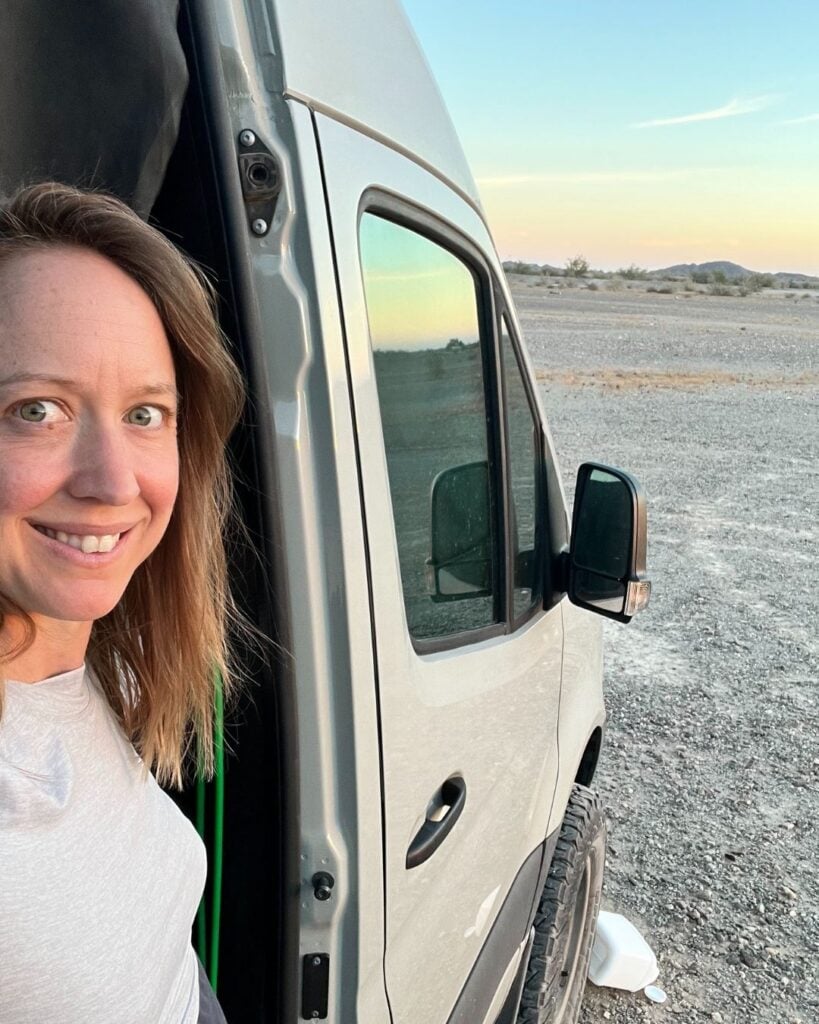
The shift isn’t mysterious. Campground prices have climbed to the point where a week of “roughing it” can cost as much as a motel, and the reservation systems for popular parks now feel like trying to score concert tickets which book six months out, refresh at midnight, hope. We spend a lot of time looking for campground cancellations when we’re traveling through a popular area.
Meanwhile, National Forest and BLM land offers something easier: show up, find a spot, camp free, usually for up to 14 days.
Now, with Starlink and decent cell boosters, the person in the van at the end of the forest road might be on a conference call. When work stopped requiring an office, camping stopped requiring a weekend, and free public land became the biggest, cheapest office park in the country.
If you’re new to the idea, our full boondocking guide covers where it’s legal and how to find spots. The short version is National Forests, BLM land, and apps like iOverlander and The Dyrt, with recent reviews mattering more than star ratings.
How I stay clean while dispersed camping

The number one question I get about living on public land is some polite version of: “But… how do you not smell?” Fair question. Here’s my honest system, refined over years of van and boat life.
Gym memberships are the secret weapon. A national gym chain membership is the best shower deal in America. I’ve taken more Planet Fitness showers than I can count. There’s hot water, real pressure, and a workout. If your route crosses towns, this alone solves most of it.
The solar shower earns its space. A simple solar shower bag warms up on the dashboard while you hike, and a few gallons of sun-heated water behind the van at golden hour is honestly nicer than half the campground bathhouses I’ve paid for.
Water discipline is hygiene. Carry more water than you think you need and split it: drinking water is sacred, washing water gets rationed. A pump sprayer or a jug with a spigot turns two gallons into a real rinse-off. Biodegradable soap, used well away from streams and lakes — grey water never goes where water flows.
Wipes and a wash basin cover the gaps. Between real showers, a basin, a washcloth, and unscented wipes keep you civilized. It’s not glamorous. It works. (More setups in our van life shower guide.)
Now, about the trash when dispersed camping
Here is where I stop being polite, because I’ve earned it.
Few things make me angrier than pulling into a beautiful free campsite, a spot that belongs to all of us, that costs nothing, that asks nothing, and finding someone’s garbage. Bottles in the fire ring. Toilet paper behind the bushes. A bag of trash left leaning against a tree like the forest employs a janitor.
There is no cleaning crew on public land. There is only the next camper, and the land itself.
Camping on public land involves responsibility and respect. That’s the whole deal. We get millions of acres of forest and desert, free, and in exchange we’re asked to do exactly one thing: leave it the way we found it…or better. Pack out every scrap, including food waste. Use existing fire rings instead of scarring new ground. Camp on durable surfaces that have already seen use. Bury human waste properly, far from water, or better yet carry it out.
And understand what’s at stake: land managers close areas because of trash and abuse. Every littered campsite is a vote to end free camping…..for you, for me, for the family in the borrowed pop-up who just discovered this life. One lazy camper can lock a gate for everyone. Don’t be the reason a place you loved gets a barrier and a “CLOSED” sign.
If dispersed camping is going to be America’s favorite way to camp, then America needs to camp like it deserves the privilege.
The short code, if you’re new out here

1. Know the rules. Most National Forest and BLM land allows dispersed camping up to 14 days; ranger district websites and a five-minute phone call confirm the local rules.
2. Arrive before dark. Setting up in daylight means finding the existing site, the level ground, and the fire ring — instead of accidentally creating new damage at 10 PM.
3. Leave no trace, for real. Everything you carried in, you carry out. Yes, including that.
4. Keep it quiet. No generators droning through the evening, no speakers competing with the creek. People drove a long way for the quiet.
5. Leave it better. The old-timers’ tradition: haul out a piece of trash that isn’t yours, leave spare firewood stacked for the next arrival. Somebody once did it for you.
The freest way to camp in America just became the most popular. That’s either the beginning of a golden age or the beginning of the end of it — and honestly, which one it turns out to be is decided one campsite at a time, by whoever camped there last. (Packing list, if you need it: our essentials guide.)
Source for the trend data: Go RV Rentals, “Top 10 RV News Stories,” July 2026.


Definitely, we’ve had some hosts deny us even though there was plenty of room during the week because of a disability