

It’s About to Get Way Harder to Camp for Free Near Zion National Park

The BLM is looking to reduce free camping options due to increased pressure on public lands.
*This post may contain affiliate links. Please read our disclosure policy for more info.
If you’ve ever enjoyed camping for free on BLM land outside Zion, it’s about to undergo a major change.
The Bureau of Land Management announced March 23 that it approved a new campground management plan that would significantly reduce dispersed camping along the State Route 9 corridor in Washington County, Utah, one of the main routes into the national park.
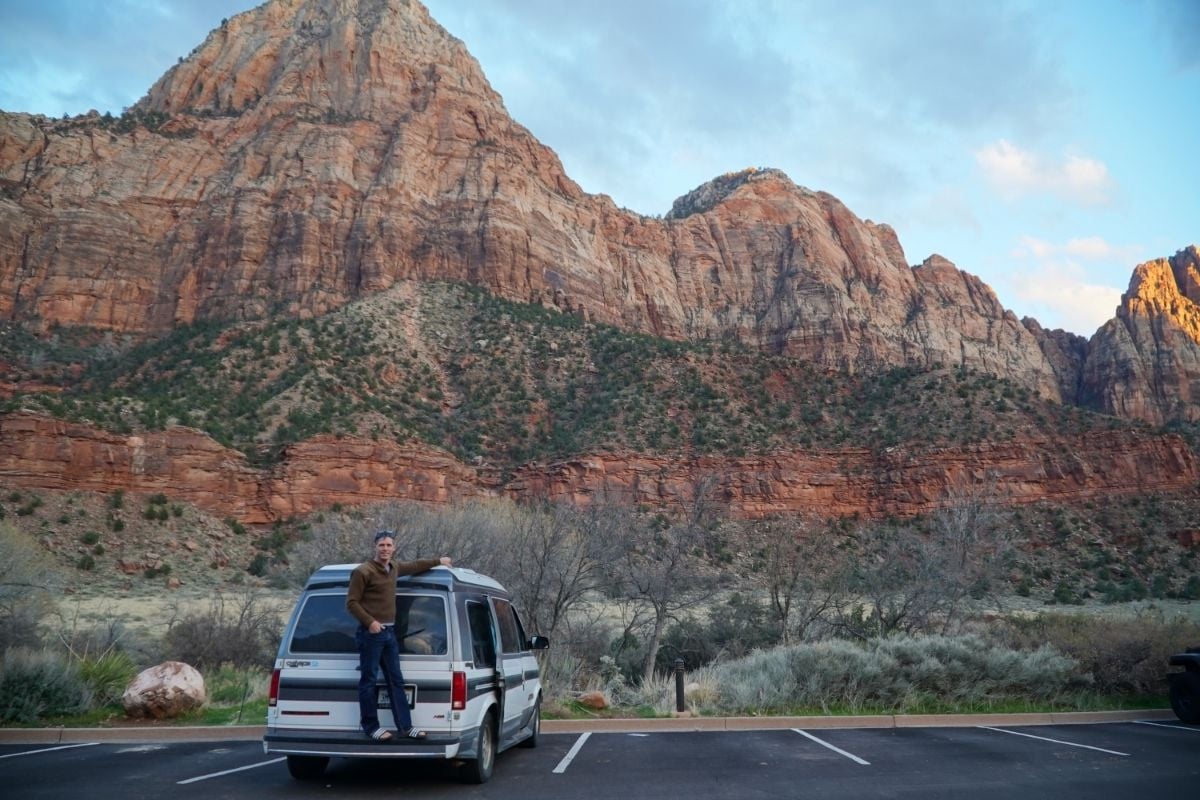
The decision comes as Zion continues to see record visitation and increasing pressure on nearby public lands. As a van lifer who’s dispersed camped often, I understand the need to limit free camping options, especially when people abuse the land. We’ve seen many campers abusing public lands, leaving trash strewn around and improperly disposing of human waste.
And it’s only going to get worse as more and more people discover dispersed camping.
Zion’s Crowds Are Pushing Camping Beyond Capacity
According to Explore, Zion National Park receives roughly 5 million visitors each year. More than 500,000 people visit during the busy June and July season alone, averaging around 15,000 visitors per day.
Despite that demand, the park has only three campgrounds with fewer than 300 campsites total. That shortage has pushed many visitors toward dispersed camping on nearby Bureau of Land Management land, where travelers have traditionally been allowed to camp for free outside developed campgrounds.
For years, those dispersed camping areas have served as one of the few affordable and flexible options near Zion, especially for road-trippers, van lifers and budget-conscious travelers who don’t reserve campsites months in advance.
What the New BLM Plan Would Change
Under the newly approved SR9 Campground Management Project, dispersed camping would no longer be allowed across nearly 1,400 acres of BLM land along the SR-9 corridor.
Instead, overnight camping would be restricted to designated sites and developed campground areas.
According to Explore, the number of designated dispersed campsites would drop from 56 sites to about 30. The plan also proposes two future developed campgrounds:
- Flagstone Quarry Campground with 150 sites
- Gooseberry Mesa Campground with 80 sites
The closures would affect several popular recreation areas near Zion, including the Hurricane Cliffs Recreation Area, Gooseberry Mesa National Recreation Trail, Canaan Mountain Wilderness and the Smithsonian Butte National Back Country Byway.
The BLM Says the Land Is Under Strain
The Bureau of Land Management said the changes are intended to address environmental damage caused by unmanaged camping and increasing visitor use.
According to agency monitoring cited by Explore, officials documented compacted soil, damaged vegetation, litter, unauthorized fire rings and improper human waste disposal near vulnerable water sources.
The agency said the project is intended to balance recreation access with conservation by concentrating camping in areas better equipped to handle heavy use.
“We’re seeing more people than ever drawn to the stunning landscapes along the SR-9 corridor,” St. George Field Office Manager Jason West said in the BLM announcement. “Projects like this strike the right balance, giving visitors quality places to camp and explore while protecting the land that makes this area so special in the first place.”
Critics Worry Affordable Camping Could Disappear
Some critics argue the changes could make visiting Zion more difficult for travelers on tighter budgets.
Camping inside Zion National Park can range from roughly $35 to $130 per night, and reservations often book far in advance during peak travel months. Dispersed camping has remained one of the few no-cost options near the park.
Opponents of the plan also note that the replacement campgrounds are still only proposed projects. Funding for the campgrounds has not yet been secured, according to Explore.
That means some existing campsites could disappear long before any new infrastructure is built.
If funded, the proposed campgrounds would include toilets, trash containers, fencing, picnic tables, shade shelters and prepared tent sites.
What Zion Visitors Should Know
For travelers planning a Zion trip in the coming years, the changes could mean booking campsites much earlier and researching paid alternatives outside the park.
The Bureau of Land Management also encouraged visitors to follow Leave No Trace principles in areas where dispersed camping is still permitted.
The changes reflect a broader challenge facing many public lands across the American West: how to balance rising tourism with protecting fragile landscapes that were never designed for millions of annual visitors.
Sources: Bureau of Land Management, Explore, Yahoo News


