

Van Life With Dogs: 15 Tips For You And Your Fur Baby

What is van life with a dog really like? How can you ensure your dog stays safe and healthy? Here are some great tips from van lifers.
*This post may contain affiliate links. Please read our disclosure policy for more info.

Living van life with dogs sounds pretty dreamy. You get to travel together, adventure together, and do everything with your best friend. But there are some very important things to consider for not only your dog’s safety, but others’ safety as well.
I’ve been traveling full-time with my super mutt, Snow, since 2020 and have learned a lot over the past years of traveling the Pacific Northwest and Southwest.
There’s the obvious – like having food and water bowls for him and a place he can sleep comfortably. And then there are all the little things you learn later, like how much your dog actually sheds, how to find consistent food for them while traveling, and how living in a small space can actually change your dog’s behavior in unexpected ways.
In this blog post, we gathered advice from real van lifers with dogs to bring you some tips that will help make life easier (and happier) for you and your canine companion!
1. Create a Safe Space for Your Dog
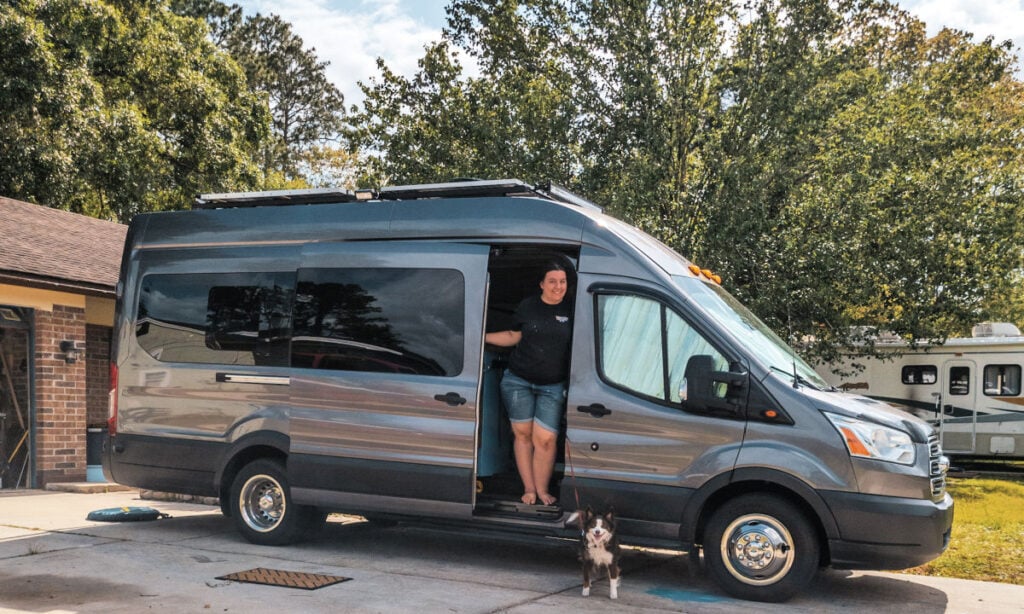
Whether you’re converting your own campervan or buying one that’s already done, make sure your van is dog-ready.
You’ll want your dog to have its own space, somewhere to hide when feeling nervous or anxious. This can be a dog bed, crate, or even a back seat.
“We built an area under our bed that our dog could lay in. That way, he is out of the way. Even simply training your dog to get up on the passenger or driver’s seat works,” said Morgan Jarman of NomadicTortoise.com who travels with her pet dog and cat in a converted Ford Transit.
Brenda with @theroadthroughmyeyes keeps a small kennel for her dog. “I put mine in the middle of the van so he’s less likely to hear outside noises.”
Dog owner DJ Polzin of @wild_bear_medicine brought his dog along in both his Vanagon and his new adventure rig. They created a space for their dog in the backseat area of their self-built RV.
“We took out the seats and where the feet normally go we built some storage boxes to make the backseat area completely leveled and then we placed a cushion with covers and pillows to make the whole backseat area a giant bed for her with storage underneath. We store her food in those boxes as well as all of her other items such as leash, collar, dog bags, treats, etc,” he said.
You can also get a collapsable crate to keep your dog in when left alone if you’re concerned about them getting into garbage or other items.
2. Take Your Dog on a Few Trial Runs First

Before you start traveling in your van full-time with a dog, make sure to take the dog camping a number of times first.
“This will help identify potential logistical issues that may come up, such as storing doggy items, where their area might be while driving, how food and water bowls will be accessible for them, etc.,” said Polzin.
You’ll also find out if your dog gets carsick, and if so, you can stock up on anti-nausea medications before you live in a van full-time.
Bringing your dog out for a couple of days will help your dog get used to the space before life on the road begins.
As I was transitioning from my apartment to the campervan, Snow and I would go out for a few days at a time to see what worked for us, and what didn’t. I got lucky – Snow absolutely loved the campervan, and very quickly, he didn’t even want to go back into the apartment when we would come “home”!
Once you start van life with your dog, be prepared to take breaks and stay in one place for several days at a time if your dog shows signs of anxiety.
3. Prepare Your Dog for Long Drives
Riding in the car for hours at a time isn’t everyone’s idea for fun. There are ways to make the car ride more enjoyable while living the van life with dogs.
Here are Jackie Lambert’s of WorldWideWalkies.com tips for a successful road trip with a dog:
- Tire them Out – A good run ensures they sleep while you drive.
- Plan Comfort Breaks – Schedule a stop every couple of hours on long journeys. You can walk your dog at rest stops or take them to dog parks to run around for a game of fetch.
- Food – Feed at least an hour before departure to reduce the risk of sickness. Don’t feed while on the move.
It’s also a good idea that your pup has a safe space to be while your van is in motion. I try to make sure Snow is buckled in when we drive long distances on highways. When riding in the van he wears a high-impact tested/rated harness and is buckled into the front passenger seat. He has the option of being on the seat or on a bed between the seats (usually his preference), but both are buckled in.”
If I had the room, I would install a high-impact crate for Snow, as that’s the safest option for everyone. There are many people who incorporate this into their builds – I just didn’t have the luxury at the time.
4. Train Your Dog

Teaching your pooch to respond to at least a few simple commands is imperative for van life. You’ll want your dog to stop and come (recall) in case of an emergency, especially if there’s a threat. Never allow your dog off-leash if it doesn’t understand basic recall commands. Period.
Unfortunately, there are many people who allow their dogs to run free without being able to recall them. I’ve seen all too many times, an eager dog run up to a campervan (another dog’s home) and jump inside, causing havoc and even getting into fights with the dog inside of near their home.
Brenda of @TheroadThroughMyEyes makes sure her dog knows when to get in the van when told. “I keep treats stored by the door so I can reward him for ‘going home’ when commanded. I also throw him a few treats in the van to distract him when I have to leave for a bit.”
Teaching your dog not to leave the van without permission can also help alleviate any unwanted encounters. Remember, we are often parked on public lands with cattle and wild animals around. When Snow and I are in areas with rattlesnakes, I always get out of the van first and check under the campervan to ensure no snakes are waiting to strike.
5. Keep Your Van and Dog Cool

If you’re living van life with a dog, keeping your rig nice and cool is extra important, especially if you have to leave your dog to run errands.
If parked outside, the temperature can go up 20 degrees in a car in just 10 minutes. It’s not a good idea (and illegal) to leave your dog in a car on a hot, or even warm, day.
Plan errands early or late to avoid leaving your dog in a parking lot during the heat of the day. And if it gets too hot, drive to higher elevation or near a safe water source to keep cool.
Here are a few ways to make sure your dog doesn’t overheat:
Install a roof vent
A rooftop vent is a must for life on the road with a dog (and even without one!). A roof vent can pull cool air in, or push warm air out. Rooftop vents like MaxxAir or Fantastic Fans run on the 12-volt system in your van. If you can’t install a roof vent, consider a small fan that plugs into your cigarette lighter.
“We built our van around our pets and have two roof vent fans and heavy insulation throughout to make sure the van stays cool in the summer,” said Jarman.
Get a Pet Temperature Monitor
A pet temperature monitor like Waggle helps you achieve peace of mind on those days you have to leave your pup in your van – for a few hours or even a few minutes. It will alert you if the temperature or humidity in your van climbs to an unsafe level.
A dog can suffer from heatstroke in less than 30 minutes if the temperature is too hot in a van or get frostbite sooner than that during cold days. This is why a pet temperature monitor is beneficial even if you’re heading out on a few errands.
Instead of relying on spotty internet connections, the Waggle monitor connects straight into an app on your phone and works through Verizon 4G service. It does require a monthly subscription, but it’s worth it to keep your dog safe. This does not work on Starlink’s WiFi connection, so there must be cellular service where you are parked for the device to work.
Park in the Shade and Leave Windows Cracked
If it’s cool enough outside and you need to run a quick errand, park your van in the shade and leave windows cracked and your rooftop vent on. Use your pet temperature monitor to make sure temperatures are sustainable for your dog.
Know the symptoms of overheating in dogs
A dog can suffer from heatstroke in less than 30 minutes if the temperature is too hot in a van, which is why it’s important to know how to recognize when your dog needs help.
If you notice any of these symptoms, call emergency services or head to the nearest emergency vet clinic:
- Sunken Eyes and/or Lips
- Heavy Breathing or Difficulty Breathing
- Excessive Drooling, Diahhrea or Vomiting
- Staggering, Weakness in the Legs
- Heavy Panting with Tongue Outstretched
- Dry gums that become pale
- Collapse
Dogs with heavy fur coats and short snouts may exhibit these symptoms sooner. You can also take your dog’s temperature – a canine’s body temp is typically around 101.5 degrees.
6. If You Have to Be Gone All Day, Get a Pet Sitter

There are many pet sitters who can help watch your pup while you’re off exploring and hiking where dogs aren’t allowed or catching up on a day of work in a coffee shop.
I have friends who have personally worked for Rover in the past, both walking dogs and petsitting in homes. Rover also has a service that lets homeowners watch dogs right in their own homes. You could leave your dog at the petsitter’s house while you take a day apart.
There are also various doggie daycares around town where you could leave your dog for a day or two if need be.
Always read the reviews and if possible, ask for referrals when leaving your dog with a stranger. Just because someone is listed on a dogsitting service doesn;t mean they are a good fit for your dog’s needs.
7. Prepare for Muddy Paws and Lots of Fur

Van life with dogs inevitably means lots of mud and dirt. Your dog still has to go run and play and go potty outside, even on the wettest days.
Lambert has some handy tips for keeping that mud at bay:
- Have an outside hose or collapsible container to clean off muddy tummies and paws
- Keep microfiber quick-drying towels at hand to dry off wet pups
- Store some fleece throws onto your van’s upholstery for protection – they are easy to wash and quick-dry.
- Invest in washable floor mats – chuck them in the washing machine to get rid of muddy paw prints
My dog Snow sheds….a lot. Like, I didn’t know a short-haired single-coat dog could shed so much. I’ve literally changed my wardrobe to accommodate white fur on everything, all the time.
To help keep the fur at bay, I do a deep clean about once a week and sweep daily. I shake out my blankets daily and end up doing laundry every 1-2 weeks, which includes all of my bedding. I love my dog more than I love having hair-free clothes and a clean van all the time, so the extr work is worth it!
I keep a small rechargeable vacuum like this one on hand for my bench cushions, I’ve had great luck with waterless dog shampoo and dog wipes to keep my best friend clean.
8. Keep Multiple Leashes on Hand
Different situations call for different types of leashes when living van life with dogs. I trail run with Snow, so we have a specific harness and leash setup for that, as well as one for walking and one for training.
“We keep three leashes in our van, a training leash, a short rope lead for when we are in a campground or a town, and a long Flexi for boondocking,” said Jarman. “Having different length leashes helps as we can use the one that works best for where we are.”
They also use a 20-foot leash to keep their dog safe in a campground. This leash attaches to the side of the van. They also carry a retractable spinning lead they can drive into the ground, keeping the dog safe and tethered.
Another reason it’s important to keep your dog leashed is to keep it safe from other dogs, or from attacking another dog.
Amanda Yantos with @amanda.yantos knows this all first hand: “Wynston was attacked and ripped in half by a large, aggressive, off-leash dog in April 2020. He underwent two life-saving surgeries. All animals are a risk, or at risk, so take precautions,” she said.
Make sure you practice good etiquette with your dog as well. Not everyone is a pet lover, and keeping your dog on a leash is respectful if you’re near other campers or hikers.
9. Plan to be in “Dog-Friendly” Areas

Many national parks don’t allow dogs on hiking trails or boardwalks, and you can’t leave your dog in your campervan all day while you hike.
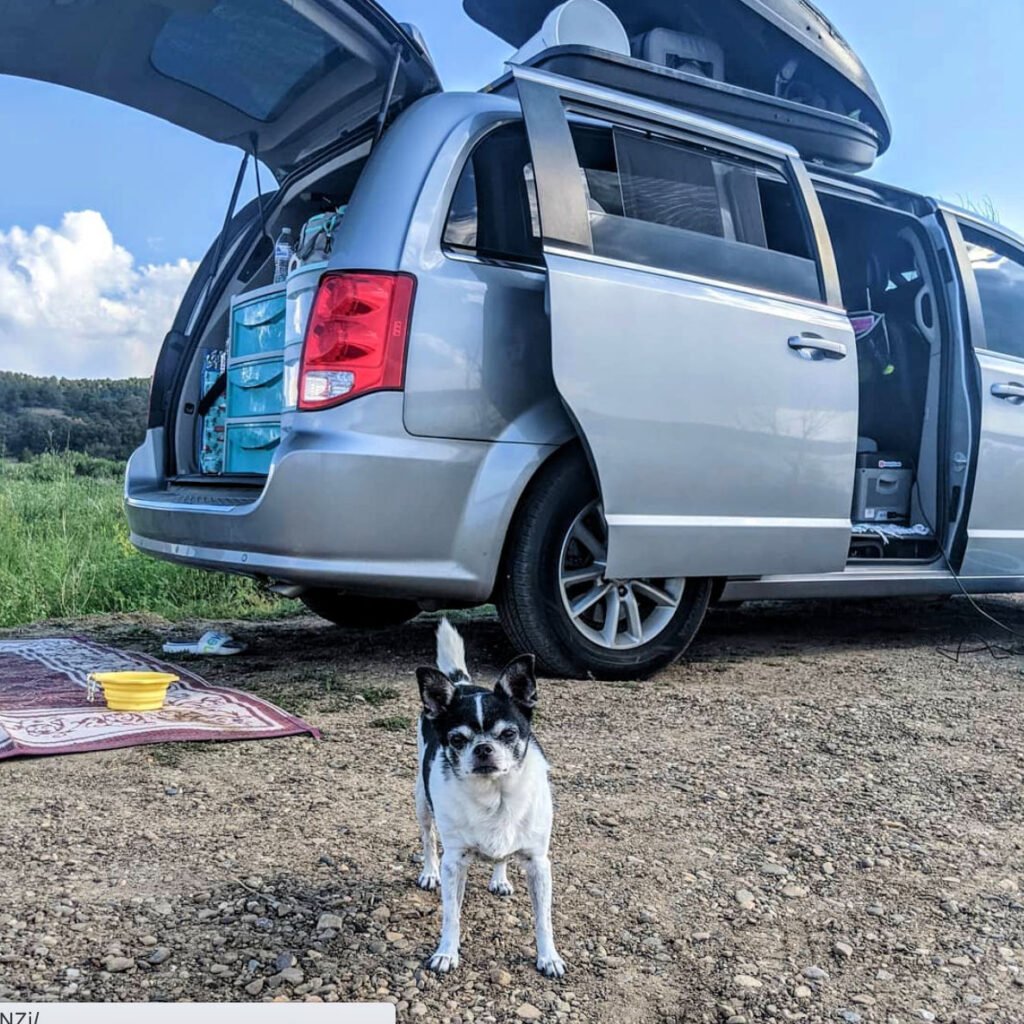
Yantos, who’s been traveling with her dog in a Dodge Grand Caravan camper for a year, says West Coast states are typically more dog-friendly than the East Coast.
“Warmer states like Arizona, California, and Utah are more dog-friendly than not, so it’s easy to find dog-friendly locations. I enjoy camping in National Forests or on Bureau of Land Management (BLM) land so we can be secluded and Wynston can have fun off-leash. Google is the most helpful in finding dog-friendly spots,” she said.
For example, you can type things like “Dog-Friendly Restaurants Near Me” in Google to find somewhere to take your pup for a yummy lunch out.
I have no problem finding a good spot to camp and explore with Snow. We only stay on public land (BLM and National Forest), so this really isn’t an issue for us. I have a 30-foot line I can tether him to the van if we are somewhere I’m concerned about him running, or there are other campers nearby.
BringFido.com is a great resource for dog-friendly hotels, restaurants, and campgrounds.
10. Read Campground Rules Carefully

If you do end up bringing a dog to a campground, make sure you know the rules.
For example, some campgrounds don’t allow certain types of dogs. Some limit dogs by weight, and others don’t allow dogs at all. Make sure to call ahead or read the fine print.
You’ll also want to know the rules about walking your dog in the campground. There are often designated areas for your dog like a dog park or dog-friendly walking trails at campgrounds.
Usually, you’ll need to keep your dog on a leash while in the campsite, and never leave your dog in the campsite unattended.
And remember that an ESA dog is not considered a medical service dog.
11. Prepare for Veterinary Needs when Living Van Life with a Dog

Unforeseen accidents can come up anywhere with pets, and van life is no exception. If anything, it increases the risk for veterinary care needs. It’s important to keep your pet’s veterinary records on hand and make sure their shots are up to date.
I have pet insurance through PetsBest, which offers a free hotline for any health questions 24/7.
Snow also has a primary veterinarian in our old home town I try to take him back to 1x a year for his annual exam. I keep a file of all of his health records and utilize Chewy.com to have his heartworm, worming, flea & tick medicine mailed to me as needed.
It’s a good idea to keep some savings on hand in case your dog ever needs something insurance doesn’t cover.
I always research where we are going to prepare for any hazards. For example, when visiting Arizona and Utah, I took Snow to a rattlesnake avoidance training to keep him safe from dangerous bites.
I highly suggest calling the local forest service and simply asking if there’s anything you need to be aware of as someone camping with a dog. This is how I learned about a toxic bacteria in a nearby lake, and that there are poisonous toads in Arizona that can kill your dog if they bite one.
Lambert says it’s important to keep up with vaccines and keep a well-stocked first aid kit. “We bring along plenty of worm and tick treatments, although it’s not usually a problem finding a vet in a new town.”
A few other items you should include in a first aid kit when living van life with dogs include supplies to treat and bandage cuts, brace injuries, and relieve pain. A 3% hydrogen peroxide can induce vomiting in case your dog eats something poisonous. Activated charcoal can help clear out their digestive system.
Consult with your vet to figure out exactly what to bring in your campervan first aid kit.
13. Make Sure you Can Find Your Dog if He Gets Lost

Having your dog run off from a boondocking spot or get loose from a vehicle is every pet lover’s nightmare. However, there are some precautions to take if your pooch does manage to wiggle free.
Meg and Derek with @theaveadventurers are sure to keep their names and phone numbers on their dog’s collar. “We actually did have a night when he stayed at a friend’s house when we all went to a get-together. Our friends got back first and when they open the door he took off looking for us. Luckily after searching for a half hour or so we were able to find him,” the couple wrote me on Instagram.
Another way to keep your dog safe is to make sure he or she is microchipped. You can also invest in a GPS collar or get a PutHub Digital Identification Card, which provides a QR code that can be scanned with smartphones in case your dog escapes.
PetHub also stores all your dog’s medical records, stored digitally and is accessible by QR code.
Take a picture of your pup and have it available on your phone in case your dog escapes and you need to show other campers what he or she looks like.
I personally utilize all of these methods. When Snow was a puppy, I lost him for 28 days in the wilderness of Washington State. I never want to go through that again! Snow is microchipped, and the information is registered to me, along with an emergency contact if someone can’t get ahold of me. He wears a cellular service-enabled GPS tracker 24/7, and we have a true GPS collar he wears when we go places without cell coverage. He is also e-collar trained and has impeccable recall.
If your dog doesn’t recall well or has a strong prey drive, always keep them on a leash.
13. Tips for Food and Water Storage for Van Life with a Dog

Living in a small space like a campervan doesn’t leave much room for storage. If you’re planning on living off-grid for days at a time, that means you’ll have to store quite a bit of dog food and treats.
“Store dog food in a solid container,” said Jarman. “We have a storage container we keep our dogs’ food in to not attract bugs. A container also helps prevent spills when driving.”
Same goes for your dog’s water bowl. “Have either anti-spill water bowls or bowls that have a rubber bottom on them. That way, you do not have to pick up their bowls every time you move the van,” Jarman added.
Collapsible food and water bowls are also a great addition to vanlife with a dog.
14. Tips on Exercise and Entertainment for Van Life with Dogs
It’s important to make sure you’re giving your pooch plenty of exercise when living van life with dogs. Try walking them regularly, taking them out in the backcountry, throwing a ball around or playing tug-of-war with some rope toys. Hiking hard trails is a great way to wear out your pup.
When you’re busy working, it’s important to have a good way for your dog to entertain himself or herself so they don’t get antsy and anxious from being cooped up in the van too long.
Chew toys or even an outdoor collapsible pen are a great way to keep your dog occupied while you work.
The Benefits of Van Life with Dogs

Even though your dog might limit where you go when traveling, there are a lot of benefits to bringing your pooch on the road.
Living the van life, especially alone, can be a lonely experience, and a dog can help lessen that loneliness.
Also, dogs are good for safety. “We sleep better when we stay at a Cracker Barrel or rest stop because we know if anyone messes with the van our dog is going to alert us and wake us up,” said Jarman. “When boondocking on public lands, we also feel better when going for a walk as our dog will know if there is something out there, such as a bear, long before we notice.”
Lambert says it’s amazing having your best friend with you at all times. Plus, dogs attract people, so you meet people you may not have talked to otherwise. Both of those aspects help relieve loneliness when living in a van.
The Challenges of Van Life with Dogs
While there are definitely benefits to van life with a dog, there are also some limitations.
For example, you won’t be able to leave your dog alone inside your van, even for short runs into the grocery store if the day’s too hot. Depending on hot and cold weather, you’ll have to plan where you camp.
You’ll be limited on where you can go: many national parks don’t allow dogs on any hiking trails. This means you’ll have to research everywhere you go to make sure dogs are allowed. “This also means we miss out on doing museums and some roadside attractions during the summer months,” said Jarman.
“A few times I’ve been on the road with Wynston, and I had a hard time finding a safe place to park the van and sleep. My advice in these situations is don’t panic, and check apps like iOverlander and campendium.com to find a different option,” said Yantos.
Is Van Life with Dogs Worth It?
Even though your dog might limit where you go when traveling, there are a lot of benefits to bringing your pooch on the road.
Living the van life, especially alone, can be a lonely experience, and a dog can help lessen that loneliness. Also, dogs are good for safety.
In addition to these security advantages, having an animal companion with you at all times has been shown in studies to have medical benefits as well as emotional ones- it’s been proven that pet owners live longer than those who don’t own pets!
Lastly, if living full-time in a campervan is not something you would do without someone else by your side (or inside), then make sure they’re coming along too! Dogs attract people, so this will benefit you and your pup while on the road!
“Simplicity. Serenity. Peace. These are things I’ve found living on the road with Wynston. I’ve come to love my extremely uncomplicated life, and I wouldn’t trade it for the biggest mansion in the world,” said Yantos.
Other van life stories to check out:




Wonderful information! Thank you!