

9 Ways Van Life Was Better in the ’70s Than in the 2020s

Did you live in a van in the 1970s? Maybe you can relate to these.
*This post may contain affiliate links. Please read our disclosure policy for more info.
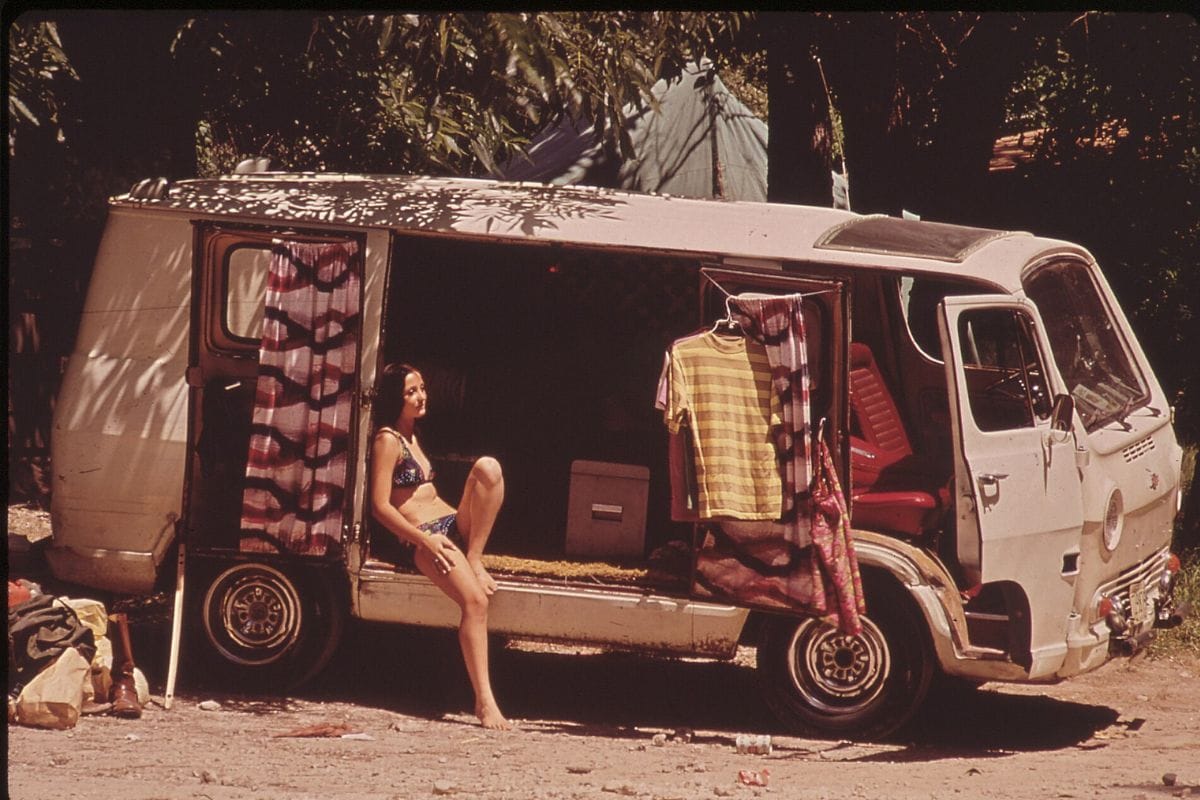
(COVER PHOTO: Photo: Marc St. Gil, EPA Documerica, 1972. National Archives, public domain.)
Every so often, someone in a comment section on my van life Facebook page says it: “Van life was better before Instagram.” And every time, half the comments pile on in agreement while the other half point out that vans now have refrigerators.
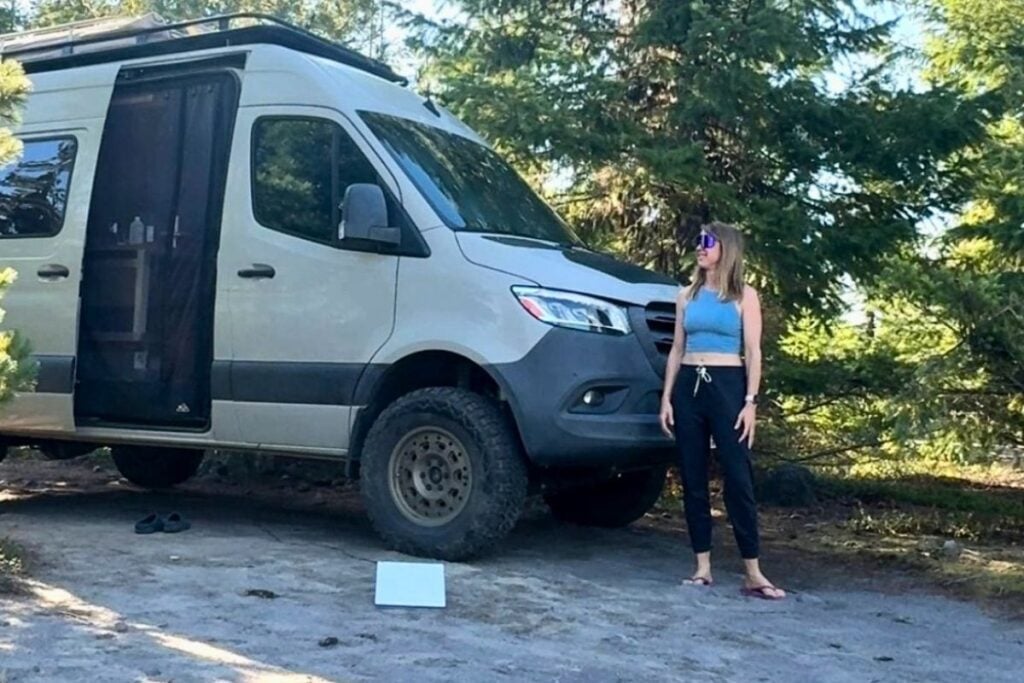
Both camps are right. I live in a Sprinter van in the 2020s — my whole business runs from one — and I’ll defend my 12-volt fridge with my life. But the more time I spend on the road, the more I understand what the old-timers are mourning. The 1970s were the first golden age of van life, and in some very real ways, they did it better.
Here are nine of them.
1. Nobody knew where you were — and that was the whole point
In 1975, when you drove away, you were gone. No location sharing, no “last active 2 hours ago,” no cell tower quietly logging your travels. Your mother worried, you called collect from a payphone on Sunday, and in between, you belonged entirely to the road.
Today, disappearing is the hardest thing you can do in a van. We have Starlink, an InReach satellite communicator, and iPhones that work over WiFi.
The ’70s van lifer never knew how good they had it: unreachable wasn’t a failure state. It was the destination.
2. Gas cost 36 cents a gallon
In 1970, the average price of gas in America was about 36 cents a gallon — still under 40 cents by 1973. Yes, that’s roughly a few dollars in today’s money once you adjust for inflation, but here’s the thing: even adjusted, filling a VW Bus cost pocket change compared to what it takes to feed a modern van on a California road trip. Nobody in 1972 was planning fuel stops with a spreadsheet.
3. The van cost less than a used car does now
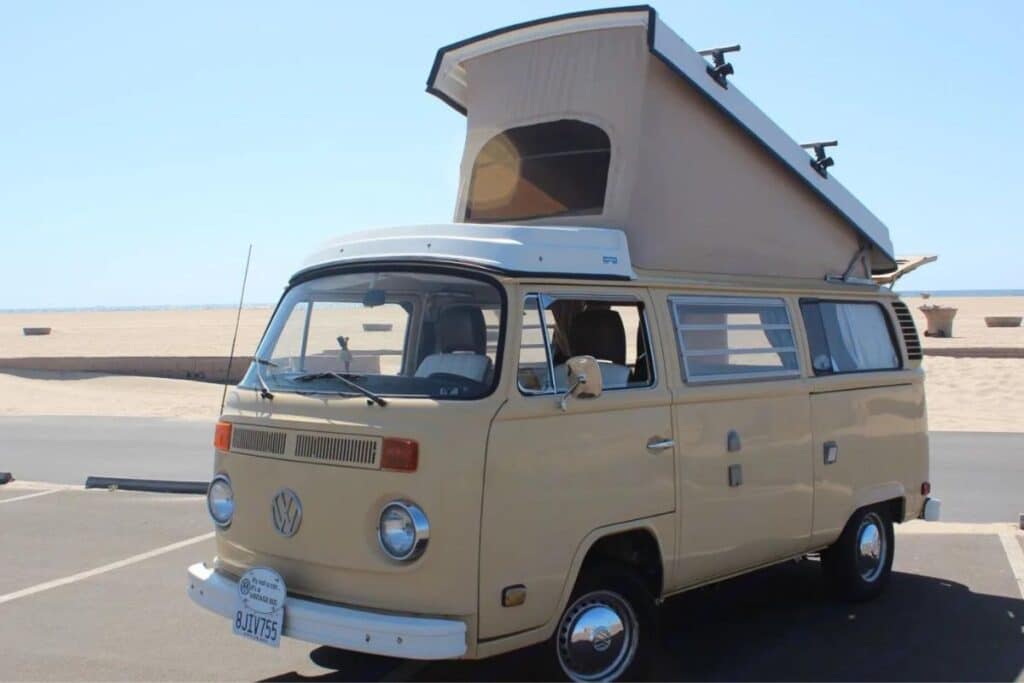
The icon of the era — the Volkswagen Westfalia camper — sold by the tens of thousands in 1970s America. It came from the factory with a pop-top, a fold-out bed, and little cabinets, and ordinary people could simply… buy one. With regular-job money.
Compare that to the 2020s, where a built-out Sprinter can cost more than a house in some states, and “van budget” conversations start at numbers that would have bought a whole 1970s campground. The barrier to entry wasn’t a barrier. It was a curb.
4. There was no build-out arms race
A ’70s van build was: curtains your mom sewed, a foam pad, a cooler, and maybe shag carpet if you were fancy. Done. Nobody felt behind because nobody was watching.
Today there’s an unspoken standard — cedar ceilings, induction cooktops, gallery lighting — and I’ve met people who delayed leaving for years because their build wasn’t “finished.” Here’s a secret from someone who built out a van in the desert with hand tools: the van doesn’t care. The road definitely doesn’t care. The ’70s crowd knew that instinctively.
5. Paper maps made every wrong turn an adventure
The Rand McNally atlas didn’t recalculate. When you missed a turn in 1976, you were simply somewhere new, and the somewhere-new is where the stories came from. Navigation was a skill, a conversation, an argument, an adventure.
GPS is a miracle and I use it daily — but it optimizes the wandering right out of wandering. The algorithm never once says: that dirt road looks interesting, let’s just see.
6. Sunsets went unphotographed
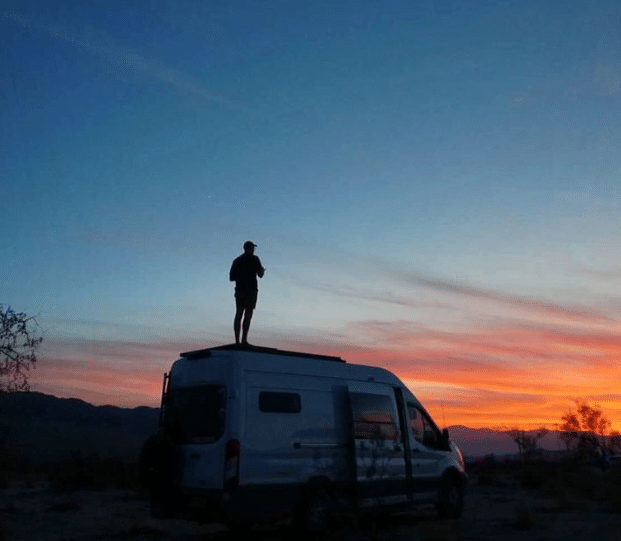
Nobody in 1974 watched a desert sunset through a phone screen, thinking about captions. The sunset was for the people sitting in front of it, and then it was gone, and that was fine.
I’ll be honest: this one stings. The constant motion of modern van life eats the quiet — I have to fight to carve out time that isn’t documenting, deciding, or driving. The ’70s van lifer had one job at sunset: watch it.
7. Camping was first-come, first-served
No reservation windows that open six months out. No refresh-the-app-at- midnight for a cancellation. No “sold out” on a patch of dirt. You drove until you found a spot, and America had plenty of spots.
The 2020s version — where snagging a summer weekend campsite requires the reflexes of a concert-ticket scalper — would have been incomprehensible to someone in a 1973 Westfalia. Some of us now boondock deep on public land partly to get that old feeling back: arrive, look around, stay.
8. Community happened at the campfire, not in the comments

Van people found each other the analog way: a wave between buses on the highway, a shared jump-start, a campfire that turned into dinner. Your “community” was whoever was parked next to you, and strangers became road family in an evening.
Online van life community is real — I’ve built my life around it — but the ’70s version had something ours fights for: it only existed in person, so it always was in person.
9. Boredom still existed — and boredom was the good part
This is the one nobody talks about. A rainy afternoon in a 1970s van meant a paperback, a nap, a harmonica you were bad at, or just watching water run down the windshield. There was nothing else. And out of that nothing came the rest, the ideas, the conversations — everything the modern world now sells back to us as “digital detox.”
In the 2020s, boredom loses every single time to the phone. The ’70s van lifer was rich in the one resource we can’t seem to buy back.
What I don’t miss (let’s be honest)

Before the comments fill with “rose-colored glasses” — some balance from someone who’s broken down in the middle of nowhere: I don’t miss engines that overheated on every mountain pass, or breakdowns with no way to call anyone. I love my fridge, my solar panel, and knowing a weather forecast before the storm arrives. My van can take me farther, safer, and more comfortably than any Westfalia ever took anyone.
The machinery got better. What the ’70s had on us was never the vans — it was the attention. Nobody was somewhere else while they were there.
And here’s the good news: every single thing on this list is still available. Turn the phone off, buy the paper atlas, skip the reservation and drive down the dirt road, let the sunset go unphotographed. The ’70s aren’t a decade. They’re a setting — and it’s still on the dial.
What do you think — would you have loved van life more back then, or is now the golden age? I read every comment.


Back then. Everything was so much more simple. Expectations were so much less.
Kristin I loved this article. As you know I am not a van lifer but per your description I must be a 70s traveler. I have a phone but it is turned off, I have paper maps and use them. I don’t let GPS plan my route. I skip the reservation plan some options around my stopping point. I drive down the dirt roads and always take the scenic route. I will go out of my way for waterfalls and sunrises and sunsets. Have met wonderful people and made many new friends.
In 1967, I drove my ‘59 Rambler American out to Aspen, CO to ski bum for the winter. When spring rolled around, I sold the Rambler and bought a ‘56 Ford F100 with a camper cap. My girlfriend and I followed spring in the Rockies north, camping and skiing along the way, ending in Banff in June.
From there, we drove east through Canada and then New York to summer/work along Long Island Sound. Finally, I drove it back to Colorado to ski another winter. It was glorious, and of course, very primitive. Also, it was cheap. However, that Ford truck got about 7 mpg, and I fixed it/replaced parts quite regularly. There was no danger from heaters – what were they?
We were tolerated, but suspect. For example, I had a Mountie detain me on suspicion of actually being Eric Starvo Gault – the MLK assassin. I was just barely not a kid, but, well, I was also a nomad. He did apologize after his commander told him, “No Way.”
Was it better? I think that’s the wrong question. It was different. We were different. I eventually fell victim to the Protestant Ethic – a dreaded condition. It took about 50 years for the cure.
In 1968, I was heavily into skydiving, and we were among the first to modify vans into campers. At that time, skydiving was an all consuming lifestyle that meant most of us spent all of our weekends and vacations at a nearby drop zones nearby or far off one if there was meet to attend. A van to sleep in was a better alternative to 10 people in a cheap motel room!
I bought a Dodge short van and tricked it out with a locker/bed, curtains, paneling, carpet and windows in the side doors. For the next 12 years it was my sole transportation, and often my part-time home. Two engines and 300,00+ miles later, I retired it to off-road utility use. But, to this day it occupies a special place in so many great memories, friendships and life events that I’ve never had a car, van, airplane, sailboat or motorcycle that was as important a part of my life as that old van was….
Me and my Wife live in a 38ft TT, for 8 yrs now. it has its tough times, and some years we sit still and others we are on the move in the US. We work full time remote but when we get the chance we try to unplug, we do share on social media but thats because we have family and thats how they can see our travels. I do love the mondern conveniences in some RVs but sometimes its just somehting else to go wrong. I am looking into a ambulance conversion after the travel trailer. just so we can get to the off the path places.