

We Snapped Our Rudder 2,700 Miles From Land. With Our Family Onboard. Here’s What We Did Next.

9 shares (This is a post by Shona Fothergill, Sailing with Six) Eight days after leaving Panama for French Polynesia, our rudder snapped in the…
*This post may contain affiliate links. Please read our disclosure policy for more info.
(This is a post by Shona Fothergill, Sailing with Six)
Eight days after leaving Panama for French Polynesia, our rudder snapped in the middle of the Pacific Ocean.
One minute we were happily sailing west across the Pacific, and the next we had seawater pouring into the boat, one functioning rudder left, and 2,700 nautical miles still ahead of us.
Then came the question none of us wanted to answer:
Do we turn around and try to make it back to the Galápagos? Or do we continue west and hope our remaining rudder survives the crossing?
As crazy as it sounds now… we kept going.
Leaving Panama
Leaving Panama always feels exciting and slightly surreal.
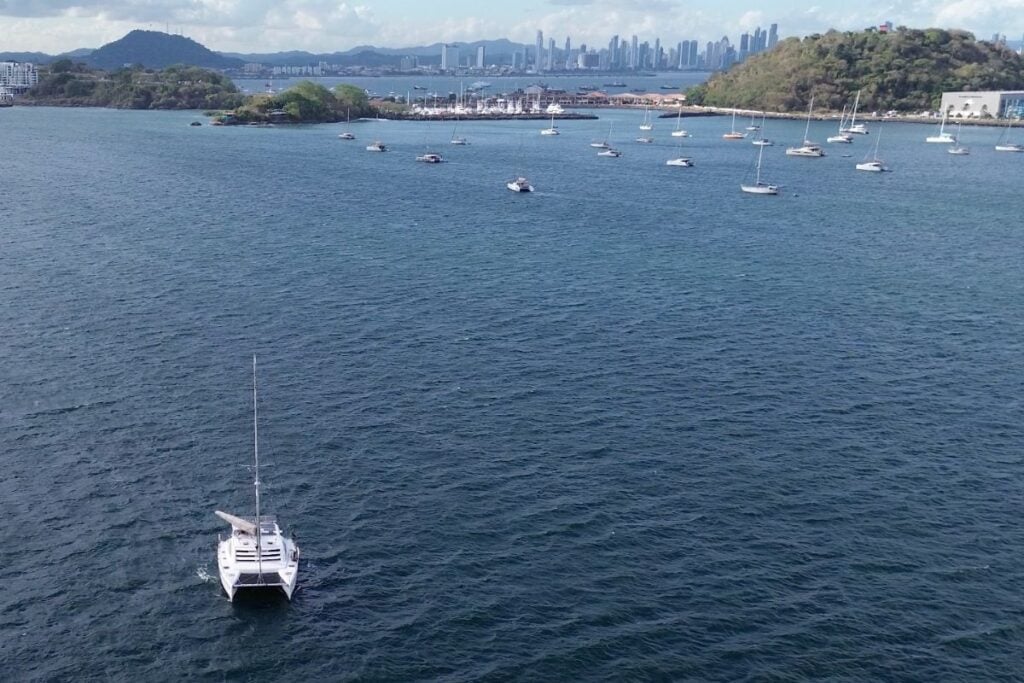
Only a few days earlier we’d transited the canal, and now we were preparing for a 4,000nm passage to the Marquesas Islands in French Polynesia. The boat was packed with food, topped up with diesel, and full of nervous energy too.
Shona Fothergill/Sailing with Six
The first week at sea was honestly beautiful. Light winds, dolphins almost daily, and enough breeze for our spinnakers to keep us moving comfortably west. We crossed the equator in high spirits and slowly settled into the rhythm of offshore life.
Everything felt normal. Even better than last time!
Until sunset on day eight.
Realising Something Was Wrong
It started with us noticing a lagging rudder indicator on our chart plotter.
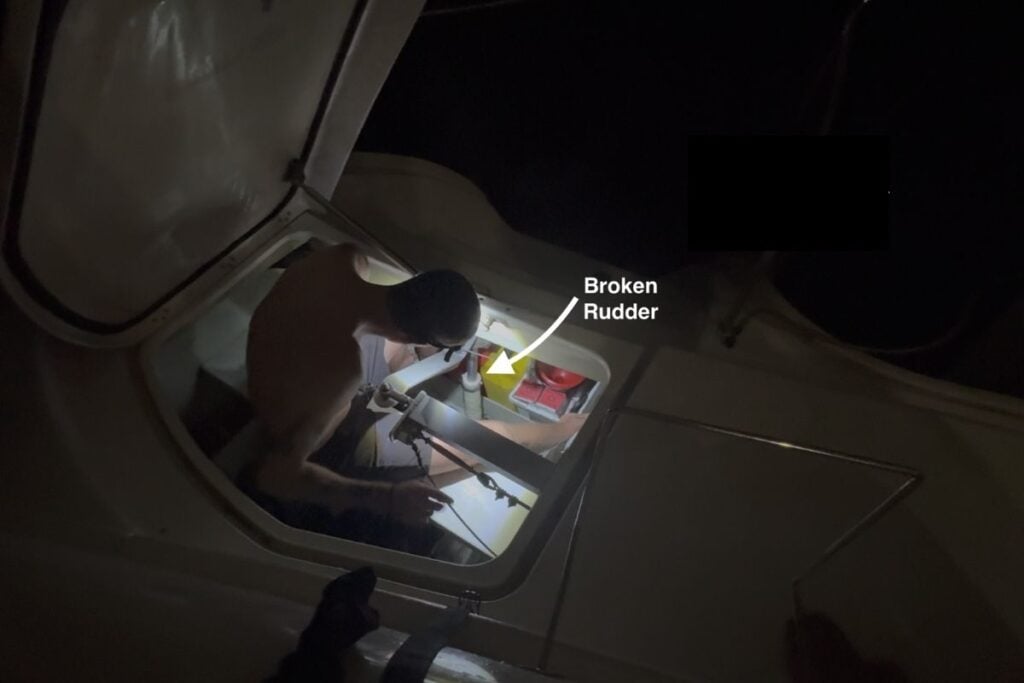
At first we assumed it was some kind of electronics issue, so we restarted the system. But when that didn’t fix it, Kris went and opened the engine bay to inspect the steering connection.
That’s when we saw the water.
Shona Fothergill/Sailing with Six
The starboard rudder stock had snapped clean through, and every movement of the wheel was forcing seawater into the hull. Underneath the boat, the rudder was moving wildly with the swell, smashing around inside the broken rudder tube.
Everyone was in complete shock.
There was too much adrenaline to properly process it. We just knew we needed to move fast.
Trying to Stop the Flooding
First thing? We had to get pressure off the steering system.
We dropped the mainsail immediately and kept only a small amount of genoa out while I hand-steered using the remaining port rudder. Meanwhile, everyone else squeezed around the engine bay to figure out how bad things really were.
Bad, it turned out.
The rudder stock had completely sheared through the stainless shaft, and the rudder tube had broken too. Every movement underneath the boat allowed more seawater to surge into the hull.
Shona Fothergill/Sailing with Six
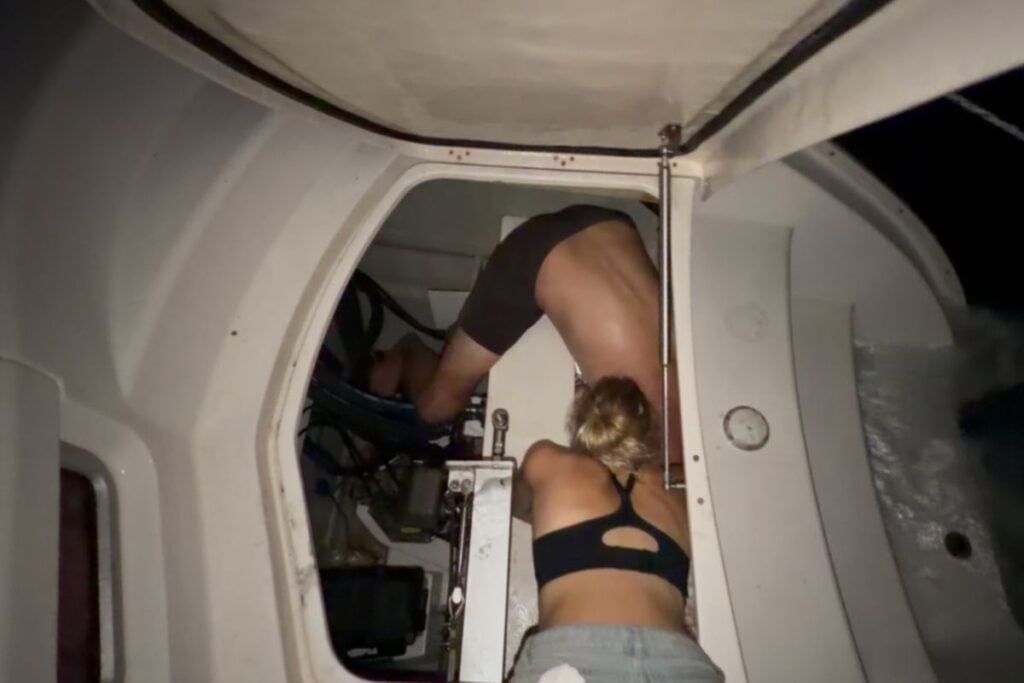
Kris disconnected the steering arm and pulled the upper section of the snapped rudder stock out completely. But the lower section — with the rudder still attached beneath the boat — was still shifting around and letting water rush in every time the waves lifted the stern.
So he did the only thing he could think of.
He kicked the rudder completely out of the boat. At this point the rudder wasn’t saveable, so now it was lost to the ocean.
That solved one problem, but created another: now we had a fist-sized hole in the hull.
For a few tense minutes Kris literally held the heel of his foot over the opening while the rest of us searched for something — anything — that might seal it. This is when we realised we didn’t have any corks or bungs big enough and the foam cone we thought we had wasn’t on this boat but a previous one…
Thankfully, we had epoxy-infused fiberglass repair tape onboard. We’d found this in South Africa and it is literally what saved our boat – the key is that it activates with water. This meant that as the water was flooding in it actually cured.
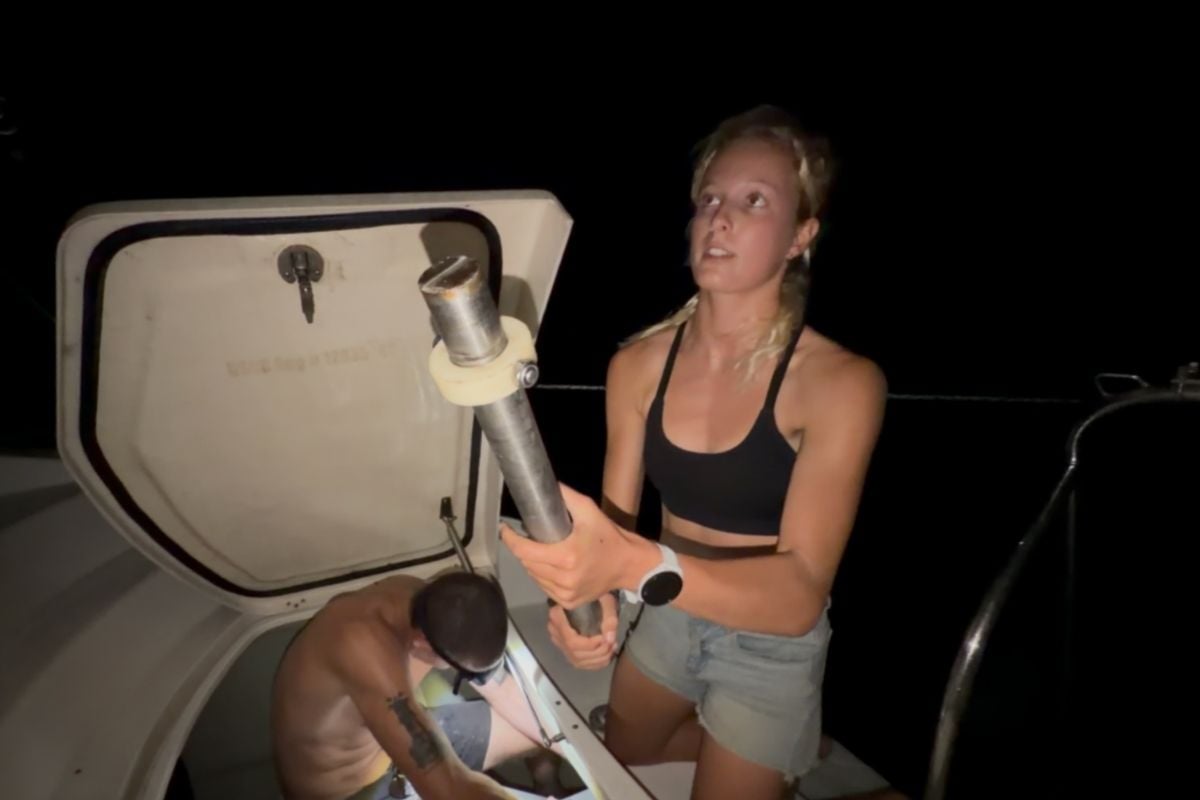
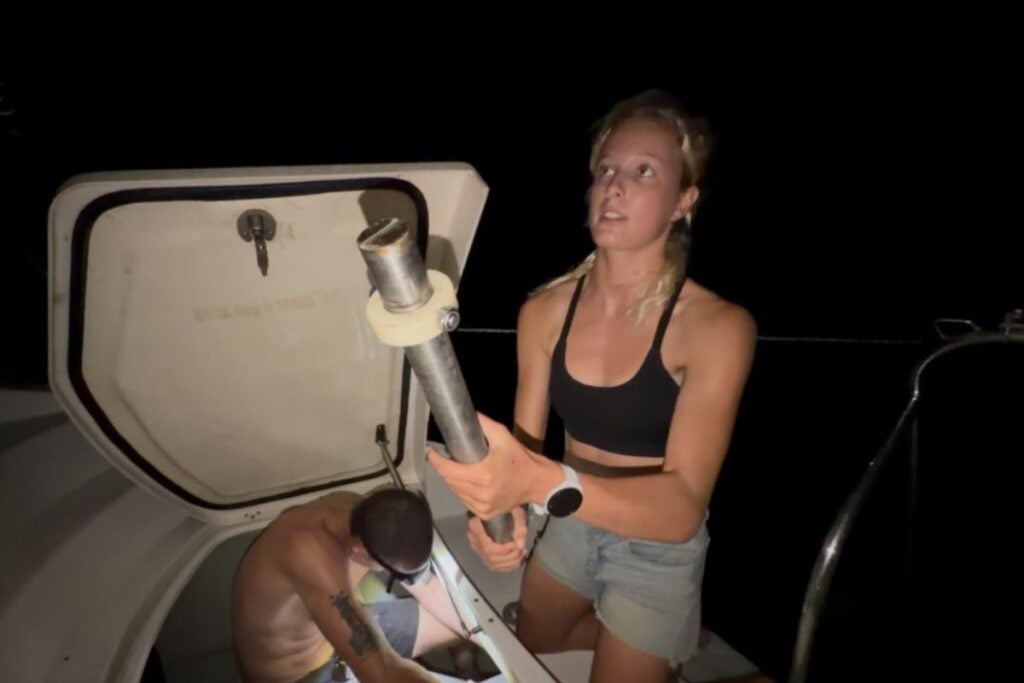
So, while Bella held the broken rudder tube in place over the hole, Kris wrapped the entire roll tightly around it and massaged it to keep it tight while it cured before our eyes.
Shona Fothergill/Sailing with Six
Then we waited.
A few minutes later, the water stopped.
I still don’t really know how that repair worked as well as it did, but it genuinely saved our boat.
Next we worked to get us steering as best as possible. To do this we rigged up a system that meant we could re-attatch the starboard steering arm (which is the side our rudder indicator is attached to) to the top half of the broken rudder stock…
Somehow we figured it out and got our autopilot usable – jury-rigged and mangled as it was, this was huge in the moment coming.
The Decision
Once the flooding was under control and we could finally take a breath, reality hit us pretty quickly.
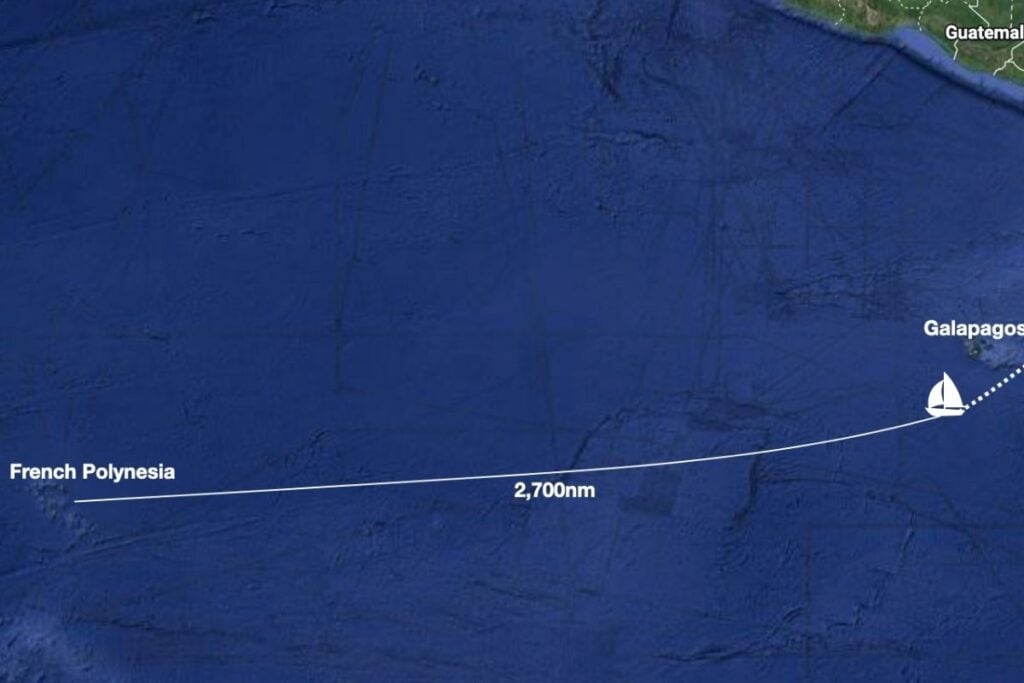
We were over 300 nautical miles from the Galápagos and around 2,700 nautical miles from the Marquesas with only one rudder left.
Shona Fothergill/Sailing with Six
Honestly, neither option felt very safe.
Turning back meant sailing hard upwind with heavy pressure on the remaining rudder. Continuing west meant committing ourselves to weeks more ocean with a damaged steering system.
In the end, we unanimously decided to keep going.
We’d managed to stabilize the situation, stop the flooding, and get the autopilot functioning again well enough to avoid hand-steering full time. Heading west also meant mostly downwind conditions, which felt like the better option overall.
So we turned back on course, and kept sailing.
The Mental Side of the Crossing
The hardest part afterward wasn’t necessarily the physical sailing.
It was the mental side of it.
Every strange sound made us wonder if the second rudder had failed too. Every larger swell hitting the stern immediately grabbed everyone’s attention. It’s hard to fully relax when you know your entire crossing now depends on one remaining rudder.
At night especially, your mind starts running through every possible scenario. What would we do if steering failed completely? What would we grab first if we had to abandon ship?
Shona Fothergill/Sailing with Six
Thankfully, we had a really supportive network of cruising boats nearby checking in regularly through whatsapp, thanks to starlink this was actually possible. Even knowing other sailors were out there brought some comfort.
Still, no one wants to think about losing their home in the middle of the Pacific Ocean.
Heavy Weather Changes Everything
A few days later the weather forecast became our next challenge.
Twenty-plus knots of wind and nearly three-meter swell were developing directly along our route. Normally that wouldn’t concern us too much, but with only one rudder, steering suddenly became a whole different story.
When larger waves pushed the stern sideways, the autopilot often couldn’t react quickly enough before the boat tried rounding up into the wind. Someone always had to stay alert near the helm, ready to quickly disengage the autopilot and manually correct course.
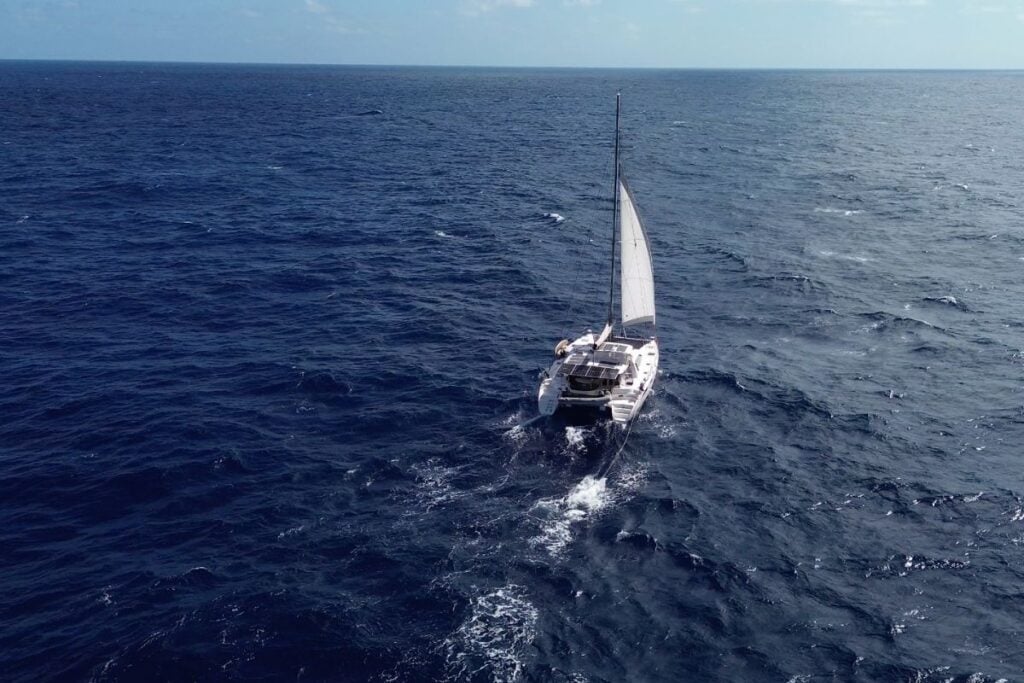
We also started experimenting with warp lines behind the boat — heavy ropes dragged through the water to help stabilize the stern and reduce the tendency to surf sideways down waves.
Shona Fothergill/Sailing with Six
Some setups helped more than others, but really, everything became about reducing pressure on that single rudder.
The Unexpected Solution
Then one night during the roughest conditions, a wave pushed us sideways and we couldn’t recover.
Kris tried correcting with the wheel, adjusting the sails, manually steering us back onto course — everything he could think of — but the boat just wouldn’t respond properly.
Finally, out of options, he started the port engine (the side with the remaining rudder, also the side that would push us back to course).
Almost immediately the motion settled down.
The extra thrust helped balance the forces acting on the hull, reducing the load on the steering dramatically. Combined with the warp lines behind us, the boat suddenly tracked straighter and the autopilot stopped fighting constantly.
Honestly, that one small adjustment probably got us through the roughest part of the crossing.
Finally Seeing Land
Eventually the weather eased.
The sea softened a bit, we wanted to try and relax but couldn’t yet.
The countdown on the chart plotter dropped from weeks to days, then finally into single digits. And one morning, after what felt like forever, someone yelled the words every offshore sailor dreams about hearing:
“LAND HO!”
The mountains of the Marquesas slowly appeared through the haze, and with them came overwhelming relief.
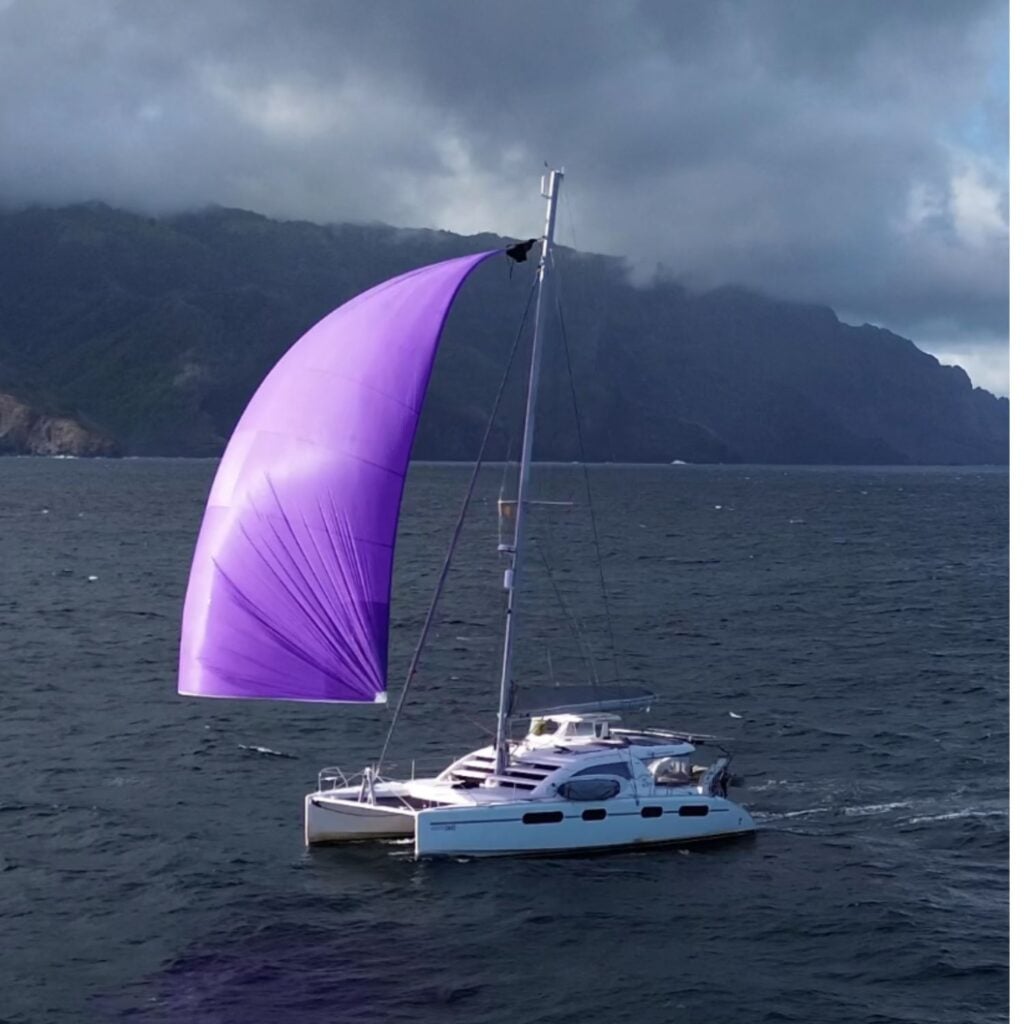
Shona Fothergill/Sailing with Six
Not a celebration exactly.
It’s a hard feeling to explain… relief is as close as I can get.
Sailing has a way of humbling you very quickly. The ocean doesn’t care how prepared you are or how experienced you think you’ve become. Things can still go wrong in an instant.
But somehow, those difficult moments are also part of what makes this lifestyle so meaningful.
And as we finally dropped anchor after weeks of uncertainty, exhaustion, and adrenaline, all we felt was gratitude — for our crew, for our boat, and for the chance to keep chasing adventure across the ocean.




I wished this fascinating story didn’t end. How did they fix the problem permanently? Where were they off to next? I’ll bet they learned a lot about themselves while living in a state of unequaliberium for weeks at a time. Situations like that test your intestinal fortitude, and at times such as those, one cannot hide what one does not possess in the internal character toolbox.