

It Took Me Years to Afford a Tall Van. Now, I’ve Rounded Up the Best Campervans You Can Stand Up In.

Having a van you can stand up in is a huge luxury for van life and one I highly recommend. Here are the vans you can stand in and not hurt your back.

*This post may contain affiliate links. Please read our disclosure policy for more info.
The vans you can stand up in are the high-roof versions of the three full-size cargo vans still sold new in the U.S.: the Ford Transit high roof (81.5 inches inside), the Mercedes Sprinter high roof (79 inches) and the Ram ProMaster high roof (about 76 to 77 inches), plus the discontinued Nissan NV high roof (76 inches) on the used market.
Every one of them loses roughly three to five inches to a floor, insulation and a ceiling once it is built out, so a six-foot person stands comfortably in all of them and anyone over about 6 feet 4 wants the Transit.
I have lived in vehicles since 2015, a Prius, a Chevy Astro, a 2021 Sprinter and two sailboats, and this is the guide I wish I had before I bought the tall van. If you are brand new to all of this, start with how to start van life and come back here for the van.
| Van (high roof) | Interior height | Max interior width | Fuel | Drive | Sold new in 2026? |
|---|---|---|---|---|---|
| Ford Transit high roof | 81.5 in (6 ft 9) | about 70 in at the widest point | Gas, or electric (E-Transit) | RWD standard, AWD optional | Yes |
| Mercedes Sprinter high roof (2500/3500) | 79 in (6 ft 7) | about 70 in | Diesel only, or electric (eSprinter) | RWD standard, AWD optional | Yes |
| Ram ProMaster high roof | 76 to 77 in (6 ft 4 to 6 ft 5) | 75 in, the widest of the three | Gas, or electric (ProMaster EV) | Front-wheel drive only | Yes |
| Nissan NV high roof | 76 in (6 ft 4) | about 68 in | Gas | RWD | No, discontinued after 2021 (used only) |
So what is the best van for van life?
If standing room is your priority, it is one of the three high-roof vans above, and the honest answer is the Ford Transit high roof for the most headroom and the widest dealer network, the Mercedes Sprinter if you want a diesel and all-wheel drive, and the Ram ProMaster if you want to sleep sideways and spend less. Standing room is only one part of the decision, though. Budget, size, drivetrain and whether you build it yourself or buy it done matter just as much, and a lot of people are happier in a smaller, cheaper van than a tall one. I walk through that whole decision, from a used minivan to a new Sprinter, in the best vans for van life. This page is the height question, answered.
My first van was a Chevy Astro minivan. It was what I could afford at the time; I didn’t have the budget for a Sprinter or a high-roof cargo van. So I crouched. I contorted. I did a lot of yoga-adjacent maneuvering just to get dressed in the morning. I knew vans you could stand up in existed. I just couldn’t swing it yet.
Years later, I upgraded to a 2021 Sprinter with full standing room, and I want to be clear about something. It is not a small thing. Being able to stand up straight inside your home, even a rolling one, changes the entire quality of your daily life. Getting dressed without hitting your head. Cooking without a backache. Just existing in your space like a normal human being. If you are in the research phase of van life and wondering whether standing room is worth prioritizing, I am here to tell you: yes. Build your budget around it if you can.
So whether you’re just starting to research vans you can stand up in, or you’ve been dreaming about the upgrade for a while, this guide breaks down the best options across different budgets. Because standing room shouldn’t be a luxury. It should be the baseline.
Here are the top vans you can stand up in.
Which new vans can you stand up in?
Ford Transit high roof: the tallest van you can stand up in

Interior Height: 6′ 9″ (81.5″), the tallest of the three, fits people up to about 6′ 5″ after a build
Width: 4.5′
Gasoline vs. Diesel: Gasoline, or the all-electric E-Transit (same 81.5″ high roof)
4WD vs. 2WD: Rear-wheel drive standard, AWD optional
The Ford Transit is a pretty standard cargo van you can stand up in available in three different sizes: low, medium, or high. You’ll only be able to completely stand up in the high-top version. Since 2022 there is also the E-Transit, the electric version, and its high roof is the same 81.5 inches inside.
However, keep in mind that you can add storage compartments on the roof to make the van even more accommodating.
One component of high-top vans like the Ford Transit campervan is that you have to worry about overhangs and clearance heights. While these vans are not as disruptive as trucks or massive RVs, they can force you to reconsider some routes. For example, if you want to camp out in the woods, you’ll likely have to worry about branches and brush hitting the van’s roof.
Beyond the size dimensions, you get a wide array of features and interior elements with this cargo van, such as air conditioning and climate control.
Most of these features help you store cargo and stay safe on the road. For example, you get braking assist and front and side sensors. The center console also comes with a power outlet, which you can utilize for camping.
Mercedes Sprinter 2500 and 3500 high roof: the one I chose

Interior Height: 6′ 7″ (79″)
Interior Width: about 5′ 10″ at the widest point
Gasoline vs. Diesel: Diesel only in the U.S. now (a 2.0-liter four-cylinder in two output levels; the gas Sprinter is gone), or the electric eSprinter
4WD vs. 2WD: Rear-wheel drive standard, all-wheel drive optional (AWD replaced the old 4×4 system)
When it comes to cargo vans, the Mercedes Sprinter is the gold standard and is the one I chose after the Chevy Astro minivan.
As far as height goes, you need the high-roof 2500 or 3500, which gives you 79 inches of interior clearance. Every new Sprinter now runs a four-cylinder turbodiesel, which means long range between fill-ups on cross-country drives. What it costs, new and used, is its own conversation: here are the real Sprinter numbers.
Because this van is made by Mercedes, you know that the ride will be smooth and comfortable. The engine is powerful and can help you get up steep hills and semi-rugged terrain.

Even with vans that offer four-wheel drive, they’re not built for hardcore wilderness traveling.
Another advantage of this Sprinter van you can stand up in is that it comes with a spot for a tow hitch. So, you can bring along a small trailer with supplies.
We’ve had our Mercedes Sprinter for five years now and love it!
Ram ProMaster high roof: the widest van you can stand up in

Interior Height: 6′ 4″ to 6′ 5″ (76 to 77″, depending on the model year)
Width: 6′ 3″ maximum cargo width, the widest of the three
Gasoline vs. Diesel: Gasoline, or the electric ProMaster EV
4WD vs. 2WD: Front-wheel drive only
The whole point of buying a high-top van that you can stand up in is to allow you to build out a campervan interior.
The main benefit of Ram ProMaster vans over the Transit and Sprinter is that the 6’3″ width allows you to sleep sideways without other modifications such as Flarespace flares.
The ProMaster van you can stand up in comes with tons of features and amenities, including a touchscreen control panel, a collision warning system, and even a trailer sway dampener. Since this van can tow up to 6,700 pounds, bringing an extra trailer is a breeze.
For example, perhaps you want to bring your dirt bikes or ATVs on the trip. This way, you can haul them and not have to buy a massive toy hauler RV.
These do have a lower clearance than the Sprinter so keep that in mind if you’ll be doing a lot of boondocking. If it comes down to the two most popular choices, I compared them head to head in Ford Transit vs. Ram ProMaster.
Nissan NV high roof: the used-market option

Interior Height: 6′ 4″ (76″)
Width: 5′ 8″
Gasoline vs. Diesel: Gasoline
4WD vs. 2WD: Rear-wheel drive
Status: discontinued after the 2021 model year, used market only
Finally, we have the Nissan NV van you can stand up in. Nissan stopped building the NV after the 2021 model year, so this one is a used-market van now. That is not a bad thing for a budget build: a high-roof NV is often the cheapest way into a van you can stand up in, and the NV3500 came with a big V8 that makes it an easy tow rig too.
One element we haven’t mentioned yet is the overhead shelf built into these units. Most high-top vans have a wooden shelf built over the cab as extra storage space. This shelving can work as-is, or you can build on top of it and make it more practical.
As with the other vans, this model has tons of interior features and extras that make it ideal for driving and traveling. Examples include two power outlets, a traction control system, and audio controls on the steering wheel.
How much headroom do you actually get after the build?
The interior heights above are bare cargo vans. A finished camper eats some of it. A typical floor is half an inch to an inch of insulation under half-inch or three-quarter-inch plywood and a finish floor, and wall and ceiling insulation plus a headliner takes another inch and a half to two and a half inches off the top. Call it three to five inches gone, depending on how much insulation you want for winter.
So the honest standing heights for a built-out van are roughly 77 to 78 inches in a Transit high roof, 74 to 76 in a Sprinter, and 71 to 74 in a ProMaster or an NV. Neither of us has ever hit our heads in the Sprinter, and it is the first vehicle we have owned where that is true. If you are 6 feet 4 or taller, the Transit is the only one of the three that keeps you off the ceiling in boots, and a thin floor and a lightweight composite subfloor can claw back an inch.
What if you can’t afford a high-roof van? Other rigs with standing room
While high-top vans can work well for building a customized RV, they’re not the only viable option. Let’s break down some alternative chassis options that can work for your needs.
Box Truck Camper

A box truck is a vehicle that has a standard truck cab with a box-style rear cargo section. The best part of box trucks is that the rear compartment is fully customizable.
Usually, these trucks have wood paneling on the sides, enabling you to attach screws and nails wherever you like. So, you can install shelves, a bed, and other elements quickly and easily.
On the small end, box trucks can be about nine feet high with a six-foot interior space. They can be up to 12 or 13 feet high on the larger end, with about 7.5 or 8 feet of clearance inside.
If you choose a taller box truck, you have to worry about clearance heights much more often. For example, you might not make it under low bridges about 11 or 12 feet tall.
Another element to pay attention to with box trucks is whether they come with a rear ramp or not. Depending on how you build it out, a ramp can make it easier to load and unload the RV.
That said, you have to use the rollup door to get in and out of your rig, limiting your build layout options. Usually, larger box trucks will have a front access door that enables you to pass items through the cab into the rear section.
You can use this door as an access point to get into the RV, or you can use it for moving belongings in and out of the RV.
4-Wheel Pop Up Truck Campers

As the name suggests, these vehicles are designed for off-roading, thanks to their four-wheel drivetrain.
However, these units go a step further by adding a camper to the back of a pickup truck. Since you’re driving a truck, you can go virtually anywhere without worrying about getting stuck.
Most of these trucks have a relatively tall wheel clearance, meaning that it’s hard to bottom out or get caught in mud and snow.
Another advantage of four-wheel campers is that you can sometimes swap the camper model. Since this piece mounts to the flatbed, you can change it as necessary. Alternatively, you can put your current camper on the back of a different pickup truck if needed.
The primary downside of these campers is that you don’t get much living space. Typically, these rigs just have a bed, maybe a hot plate, and then some storage compartments.
They’re usually not big enough for a bathroom, but they might have a toilet with a small black water tank. Overall, you will have to figure out how to take showers and keep yourself clean during your travels.
Another disadvantage is that the interior height of these campers is relatively short. For example, six feet is often the limit since it’s hard to build bigger campers that can still fit on a pickup flatbed.
Sometimes, to alleviate this issue, the camper will come with a pop-top section.
Low-Top Campervan w/ Pop Top

While building your own campervan from scratch can be exciting, the process is relatively time-consuming and can be as expensive or cost more than an “off the rack” motorhome.
One alternative is to buy a pre-made campervan. Usually, these vans are not very tall, so you might not be able to stand up inside. To prevent this issue, you can buy models that come with a pop-top.
In many cases, the pop-up section contains a bed, giving you more living space inside the van. On average, campervans are around seven to 10 feet tall, with less room inside. Once you add a pop-top, these vans can go up to 14 or 15 feet.
One advantage of pop-top campervans is that you don’t have to worry about height clearances when traveling.
Since the van itself is pretty short, you can go under bridges and branches without any issues. Then, once you arrive at your destination, you can pop the top and get comfortable for the whole stay.
Another point to consider about these vans is whether the pop-up section is soft or hard. Usually, these vans have canvas walls to make it easier to pop up. Canvas also weighs less and doesn’t require any complicated mechanics.
Hard pop-tops are pretty hard to find these days – often, you’ll have to buy a vintage model. The benefit of hard shell campervans is that they can insulate heat better than canvas. The downside is that they can break down more easily since there are complicated internal mechanisms.
Ambulance Camper Conversions
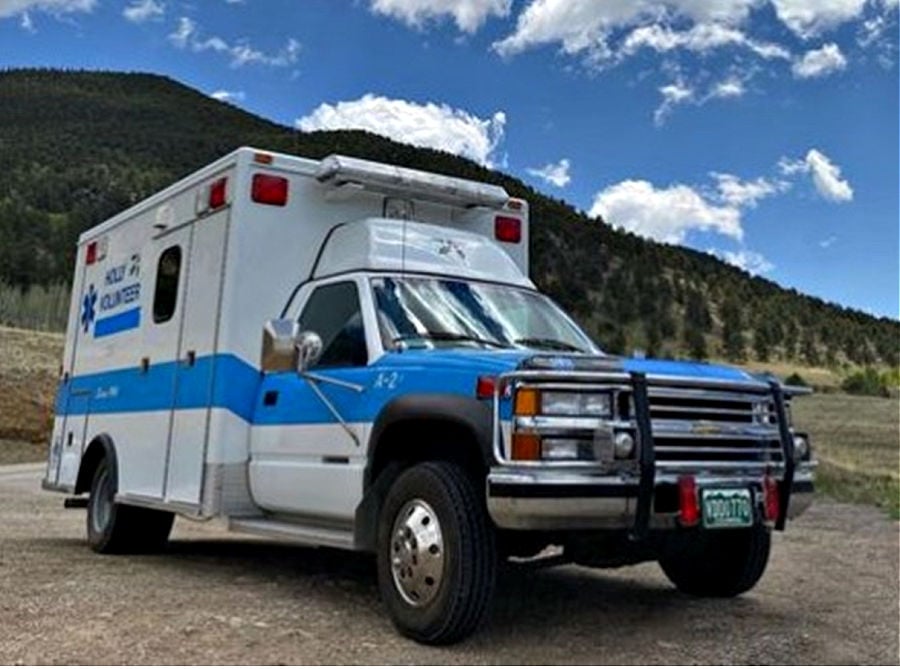
If you want the ultimate upcycled RV, you can convert an ambulance. These vehicles are tall enough for someone to stand up in since paramedics have to move around freely. That said, this option can be a bit challenging for a few reasons, such as:
Hard to Find – Buying used ambulances is kind of challenging, so you might have to search for a while to find what you want.
More Complicated Conversions – Since ambulances are built to contain medical equipment, they have more interior components than a cargo van. So, you’ll have to remove these sections before converting the ambulance to an RV. Doing this can inflate your costs and add time to the conversion process.
High Mileage – Ambulances will often go for more than 200,000 miles before getting retired. So, even if you find a used model, it may have lots of miles on it.
While you can do some preventative maintenance, you likely won’t be able to use a converted ambulance for too long. Overall, these units are less adept at long-distance traveling than brand-new vans or RVs.
Step Vans

For the uninitiated, step vans are what postal carriers and delivery drivers use. These boxy vehicles have a side entrance with a couple of steps to get to the cab.
These vans work well for RV conversions because they have plenty of interior space and very little infrastructure. So, it’s relatively easy to add internal components like a bed, sink, or storage compartments.
One significant disadvantage of step vans is that they often don’t have extra seating in the cab. So, if you plan on traveling with a partner, you’ll have to keep them in the back of the truck.
You can find brand-new or used step vans for conversion. If you find a used model, it may have been utilized as a delivery vehicle, meaning that it has high mileage.
Is standing room worth building your budget around?
If there’s one thing I want you to take away from this article, it’s that standing room is not a nice-to-have. After years of crouching in a minivan, I can tell you firsthand that your body will thank you for prioritizing it. Van life is already an adjustment. There’s no reason to make it harder on yourself than it needs to be.
That said, I also lived the budget version of this life for years, and it was still worth every cramped morning. If a tall van isn’t in the cards right now, don’t let that stop you from getting on the road. Small camper vans got me started, and they are cheaper, stealthier and easier to park. Start where you can. Upgrade when you’re ready. The best van is always the one that gets you out there.
But if you ARE in a position to choose, choose the one you can stand up in. Future you, the one making coffee at 6 a.m. in the Nevada desert with nowhere to be, will be very, very grateful.
Frequently asked questions about vans you can stand up in
What vans can you stand up in?
The high-roof Ford Transit (81.5 inches of interior height), the high-roof Mercedes Sprinter (79 inches) and the high-roof Ram ProMaster (76 to 77 inches) are the full-size cargo vans you can stand up in that are still sold new. The Nissan NV high roof (76 inches) was discontinued after 2021 and is a used-market option. Standard and medium-roof versions of these vans do not have full standing room.
Which van has the most interior height?
The Ford Transit high roof, at 81.5 inches (6 feet 9), is the tallest cargo van inside. The Sprinter high roof is 79 inches and the ProMaster high roof is 76 to 77 inches. After a floor, insulation and ceiling go in, subtract three to five inches from each.
Can a 6-foot person stand up in a Sprinter van?
Yes. A high-roof Sprinter has 79 inches of interior height, and a finished build usually leaves 74 to 76 inches, so a person up to about 6 feet 2 stands comfortably. Taller than that, the Ford Transit high roof gives you two and a half more inches.
What is the cheapest van you can stand up in?
Used high-roof Nissan NVs and older ProMasters are usually the cheapest way into full standing room, since neither carries the Sprinter’s price. New, the ProMaster high roof is typically the least expensive of the three current vans. A used high-roof van almost always beats a new low-roof van for daily livability.
Do I lose headroom when I insulate and build out the van?
Yes. Floor insulation and a subfloor take one to two inches, and ceiling insulation plus a headliner takes another one and a half to two and a half inches, so plan on losing three to five inches of the factory interior height. A high-roof van is the way to keep comfortable headroom in boots.


FYI. You might want to correct this . All of your “interior” height dimensions are way off . For instance . Interior Mercedes’ sprinter with high roof is 79 inches interior height. That’s not even close to what you wrote here.
You are correct. Thanks for pointing that out. I have fixed all interior heights.
Great information. The interior width measurements on the Mercedes Sprinter and Ford Transit are both around 70”, the measurement between wheel wells is 4’5” which may be the measurement you included.