I Sail Salt Water. I Asked Sailors Who’ve Done Both What Really Changes When You Leave the Lake.

Lake sailing versus ocean sailing, answered by more than a hundred sailors who have done both: steep short chop versus long swell, fluky wind versus steady, tides, salt, and why a lake can scare you faster than the sea.
*This post may contain affiliate links. Please read our disclosure policy for more info.
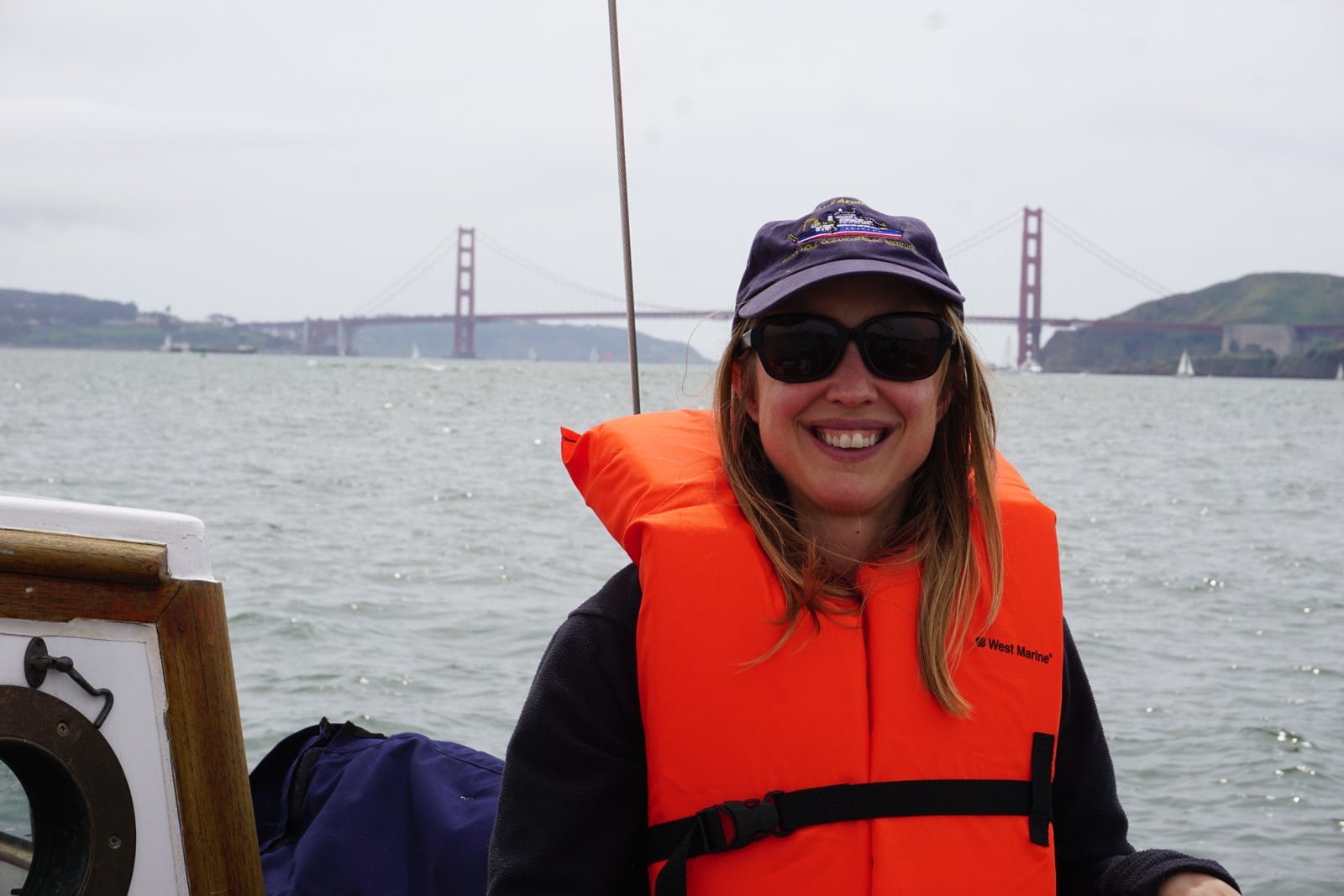
Every sailor I have ever met has an opinion about the other kind of water. Ocean sailors think a lake is a bathtub. Lake sailors think ocean sailors would last about an hour on Lake Erie in October. My own sailing has been salt water, San Francisco Bay for three years and then the Sea of Cortez, so I asked the readers of our sailing page the simplest version of the question: what is the biggest difference between lake sailing and ocean sailing?
More than a hundred of them answered, a lot of them with both kinds of water under their keels. The short version: the waves are shorter and steeper on a lake, the wind is flukier, the boat sits lower, nothing out there can eat you, and the shore is always closer than you think, which is both the comfort and the danger. The ocean trades all of that for long swell, steady wind, tides, salt, and a horizon with no land behind it.
The honest catch is that “lake” covers a reservoir in Texas and Lake Superior, and the sailors who have been scared on the Great Lakes were not joking. Here is what actually changes, in the order the readers argued about it, with the science where there is science.
The waves are the real answer, and lake waves are worse than they look
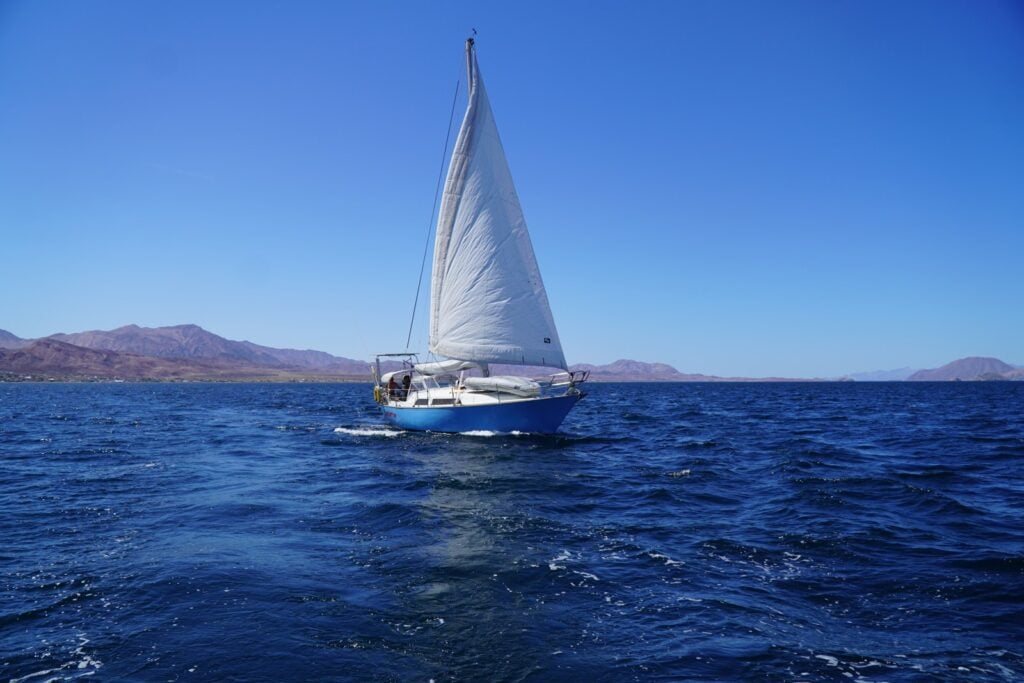
If the thread had a winner, this was it. “Square waves on the Great Lakes, rollers on the ocean,” one reader wrote, and a dozen others said the same thing in their own words: short chop, peaked and closer together, versus long swell you can set a course across. A sailor who has done both put numbers on it: “Big swell with long periods in the Pacific, no big deal. Five-foot chop with five-second periods on Lake Michigan, hard pass.”
The reason is fetch and distance. Ocean waves are mostly swell, the leftover energy of storms hundreds or thousands of miles away, and by the time they reach you they have smoothed into long, rounded rollers with periods of ten or twelve seconds and more.
The National Weather Service draws the line there: waves with periods over ten to twelve seconds are swell, and locally made wind waves are “short, choppy, and tend to break” once the wind passes about twelve knots. On a lake there is no distant storm. The waves are being built by the wind blowing across the water in front of you, so they are young, steep and close together, and they never get the distance to stretch out. An old NOAA Great Lakes study says it plainly: swell rarely occurs on the Great Lakes because the generating area usually covers the whole lake.
Shoaling makes it worse. “Ocean waves can get a lot bigger having a lot of fetch,” a reader explained, “but lake waves can actually be much steeper and more dangerous due to more likely shoaling.” A Lake Huron racer described the result: “every so often you are caught in a sustained storm that has short, tall, breaking waves that really toss you around. They come up fast and quickly build a wicked fetch.” Another said simply, “I’ve never been scared on the Atlantic. Lakes Michigan and Huron have.” The sailor who delivered the best line of the thread had sailed both: “There is nothing in the lake that can eat you.” Someone replied, “Some would say the waves on the Great Lakes could.”
Ocean wind is broad and steady; lake wind is fluky
“On a lake, I’m constantly adjusting the sails and changing tacks,” one reader wrote. “On the ocean, I can set the sails and sail for a long time, sometimes hours.” That was the second-most-repeated point, and the sailors who moved from a lake to the sea described the same relief. One sailed Lake Pepin for years, where “the surrounding bluffs often caused wind changes,” then moved to a bigger boat on the Gulf: “steady winds.” Another learned on Lake Cachuma in California, where “every canyon entrance along the flooded shore had its own wind vector. Too much work.”
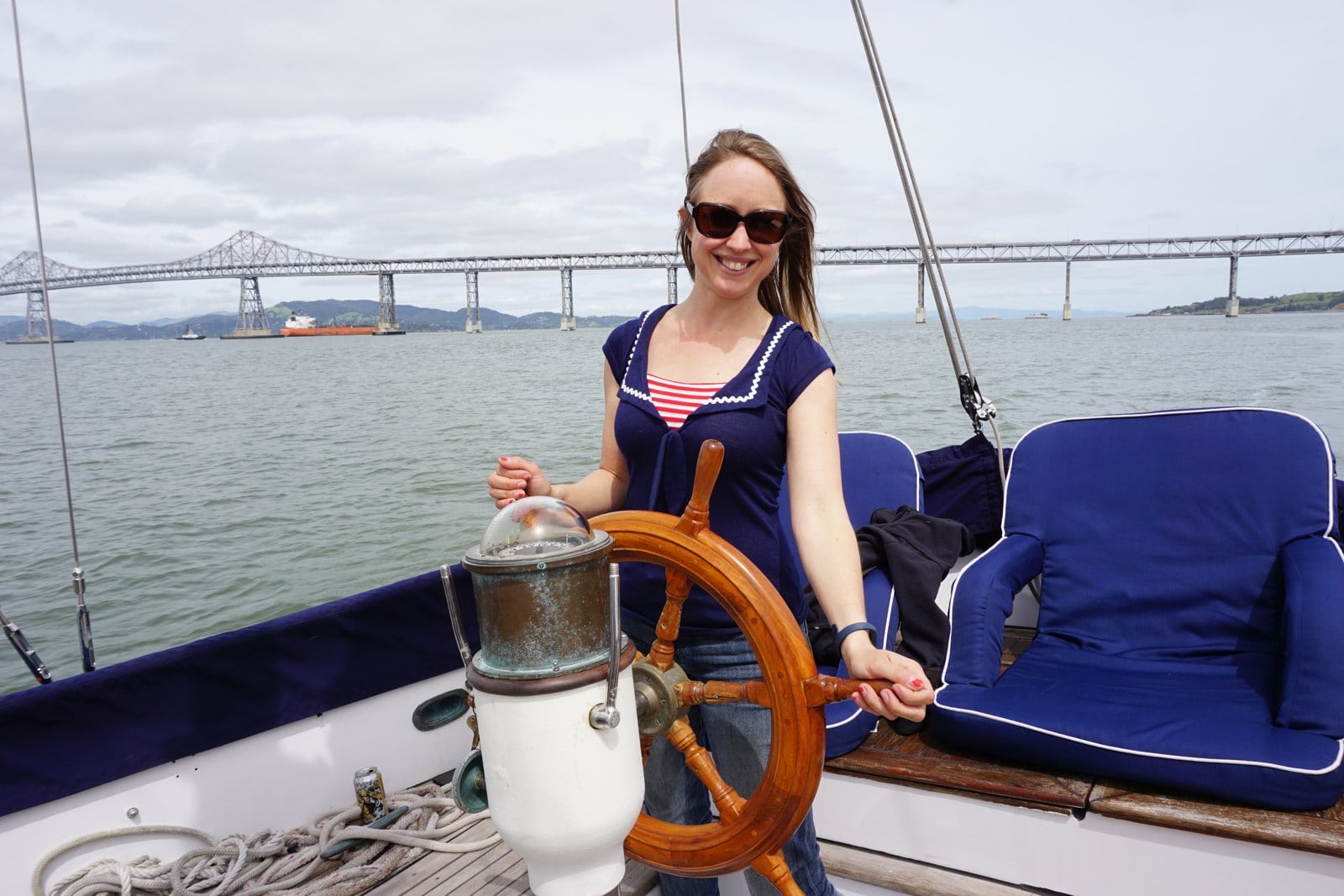
The land is the reason. Wind over an ocean has had a long, uninterrupted run and arrives from more or less one direction. Wind over a lake has been bent by every hill, bluff and canyon on the shoreline, so it shifts in direction and strength, builds eddies and wind shadows, and on a small lake can come from different directions at opposite ends of the same race course. A racer who sets marks on an impounded lake described trying to set a start line for a fleet of Catalina 22s: “Changes as fast as you get it set.” The flip side, as several readers pointed out, is that lake sailors tack and gybe far more, and get very good at it.
A lake has no tide, and that changes how you plan a day
“On a lake you only need to figure out where you are and where you need to go at 4 PM,” a reader wrote, and the lake sailors did not argue. Tides and currents were the ocean sailors’ first answer, and they are the thing I would have missed most on a lake. On San Francisco Bay, where we kept our boat for three years, the tide table is part of planning a day: the current through the Golden Gate can run several knots on a big ebb, and a sailboat that gets it wrong goes backward under full sail. NOAA publishes current predictions for exactly that reason. On the coast the tide also decides when a harbor entrance is safe, how much water is under you at anchor, and whether the dinghy is going to be fifty feet from the water when you get back to the beach.
The Great Lakes are the exception that proves it. NOAA calls them non-tidal: a true tide exists, but the spring tide is “less than five centimeters in height,” and wind and barometric pressure swamp it. What the lakes have instead is the seiche, a wind-driven slosh across the whole lake that NOAA describes as “an oscillating wave which can be several feet high,” with a cycle of four to seven hours that people mistake for a tide. So a Great Lakes sailor still watches the water level, just for a different reason, and a reservoir sailor never thinks about it at all.
Salt changes the boat, the water and the bill
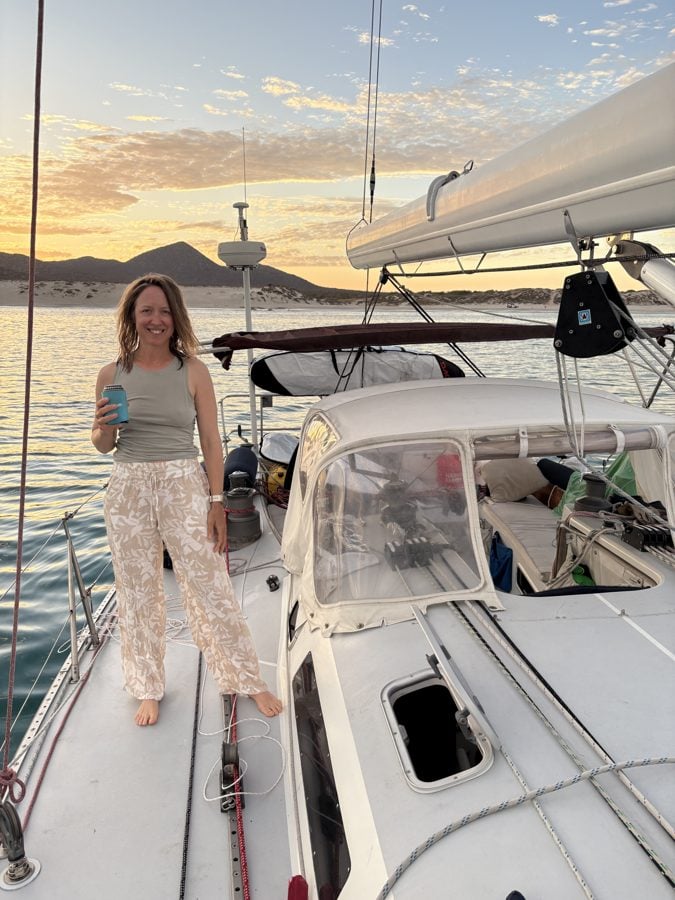
“Salt water is much harder on everything,” one reader wrote, and the sailors who have paid for both agreed. Every fitting, every wire, every zipper and winch lives a harder life in salt, and a boat that moves from a lake to the coast finds out in the first season. One reader’s entire answer to the question was, “The salt.” Another’s was, “About $10,000.”
Salt also changes how the boat floats, which several readers noticed and most people never think about. Salt water is about 2.5 percent denser than fresh, so the same boat sits a little lower in a lake; ships carry a “fresh water allowance” on their load line for exactly this reason. “Boat feels heavier on a lake,” one sailor wrote. “Lower waves, so you can sail in stronger winds.” A Hobie Cat owner added the version that matters to small-boat sailors: “My Hobie never turtles in salt water.” And, as more than one reader pointed out, the water tastes better on a lake, which is a real consideration when a wave lands in your mouth.
On a lake, the shore is always close, and that cuts both ways
“On a lake you always have a lee shore,” a reader wrote, and that is the one that made me think. On the ocean a lee shore is a thing you avoid; on a lake it is the geometry of the place, and a squall that would be a wet hour offshore can push a boat onto rocks within sight of the marina. “Lake sailing you keep bumping into the edges,” another said. The Great Lakes sailors added the part that keeps them honest: “Lake can get real bad fast.” “Lake winds can crop up at 40-plus with no warning, then disappear just as fast. Ask anyone who has been in a white-out on the Great Lakes.”
The ocean’s version of the problem is the opposite. “If you’re in the middle of an ocean, land is very far away,” one reader wrote. “If you’re in the middle of a lake, even a Great Lake, you can be at land in less than a day. More difficult to avoid a major storm in the middle of an ocean.” That is the whole difference in one paragraph: on a lake the danger is close and sudden, on the ocean it is far away and slow, and you plan for it with weather windows instead of a quick run for the harbor. If a mistake happens, as one sailor put it, “the ocean will know.”
The ocean has things in it

The readers had fun with this one. “Sharks and whales.” “Salt, sharks, whales, giant squid, choices of destination, distance, swell.” “The fish can eat you or even sink you in the ocean.” A lake sailor conceded that “lake sturgeon could probably take a bite out of you.” Underneath the jokes is a real point about scale: on the ocean the wildlife is part of the sailing, dolphins off the bow, whales that surface beside you, fish you catch for dinner between islands. One reader described exactly that, “catching a wahoo or dorado for your dinner between island destinations,” and then, “the feeling that over the horizon there are worlds you’ve never known but may call home for a while.” That feeling does not exist on a reservoir, and it is the reason a lot of lake sailors eventually leave.
The sailors who have done both say the lake teaches
Nobody in the thread said lake sailing was easy, and the sailors who moved up were grateful for it. “Lake waves are peaked and closer together. Rough and challenging, but if you learn to sail them you’ll be better prepared for the ocean.” “Wind shifts are much larger and more frequent on a lake. You also do a lot more tacking and gybing.” A sailor who has raced Lake Huron for years and sailed the Atlantic for a few days called the ocean “delightful” by comparison: “long rolling swells.”
So here is the honest summary, the readers’ and mine. A lake makes you a better sail handler and a more nervous weather watcher, because everything happens fast and close. The ocean makes you a better planner and a better navigator, because the problems are tides, currents, salt, distance and days, and the wind, when it comes, mostly stays. Both will scare you if you let them. One reader’s answer to the whole question was “the bill if you get rescued,” and that one is the same on either water.
If the ocean half is on your mind, our piece on what size boat actually crosses one is the next read, and the catamaran versus monohull question comes up on both kinds of water. If the thought of the swell is the thing holding you back, here is what sailors actually do about seasickness.
Which water did you learn on, and what surprised you most when you switched?
Frequently asked questions
What is the biggest difference between lake sailing and ocean sailing?
The waves. Ocean waves are mostly long swell from distant storms, with periods of ten to twelve seconds or more; lake waves are built by the local wind and are short, steep and close together, which makes them rougher to sail at the same height. Wind is the second difference: ocean wind is broad and steady, lake wind is bent by the shoreline and shifts constantly.
Do the Great Lakes have tides?
Barely. NOAA classifies the Great Lakes as non-tidal because the true tide is less than five centimeters and is masked by wind and barometric pressure. The lakes do have seiches, wind-driven oscillations that can raise and lower the water by several feet over four to seven hours.
Why are Great Lakes waves considered more dangerous than ocean waves?
Because they are steep and closely spaced rather than big. With no distant swell, the whole wave spectrum is young wind sea with short periods, and shoaling in relatively shallow water makes the waves break. Storms also build quickly because land is never far away, so the fetch and the weather can change in under an hour.
Does a boat float differently in a lake than in the ocean?
Yes, slightly. Fresh water is about 2.5 percent less dense than seawater, so the same boat sits a little deeper in a lake. Ships carry a fresh water allowance on their load line for this reason. Small-boat sailors notice it as a boat that feels heavier and capsizes more easily in fresh water.
Can you learn ocean sailing on a lake?
Most of the sailors who have done both say a lake is a good school: constant wind shifts and short chop teach sail handling and quick decisions. What a lake cannot teach is tides and currents, long swell, salt-water maintenance and multi-day passage planning, so a first ocean trip with an experienced crew or a course fills the gap.
Sources (checked October 2026): reader comments on That Sailing Life’s “biggest difference between lake sailing and ocean sailing” post (more than 130 comments and replies, quoted without names); NOAA Mariners Weather Log (wind waves vs swell, fetch, periods); NOAA, Lake Ontario Atlas: Surface Waves (swell rarely occurs on the Great Lakes because the generating area covers the whole lake); NOAA National Ocean Service (Great Lakes tides under five centimeters, seiches of several feet); NOAA current predictions (tidal currents); ship displacement and the fresh water allowance (seawater density 1.025 vs fresh water 1.000); our own sailing on San Francisco Bay and the Sea of Cortez.