

Can You Sleep at a Rest Area? The State-by-State Rules (and Why ‘No Overnight Camping’ Doesn’t Mean You)

Every state’s rest-area rule in one table, linked to the statute or DOT page it came from, plus what ‘No Overnight Camping’ actually bans and how store lots like Walmart really work.
*This post may contain affiliate links. Please read our disclosure policy for more info.
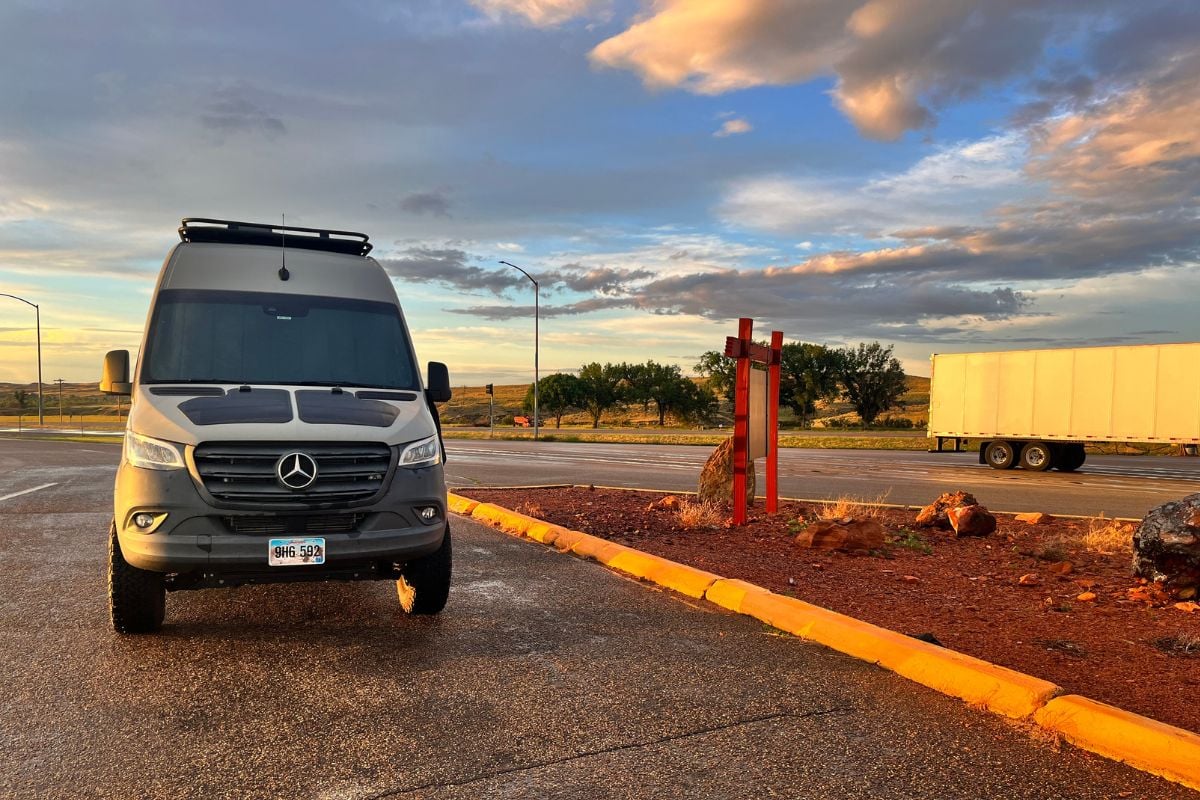
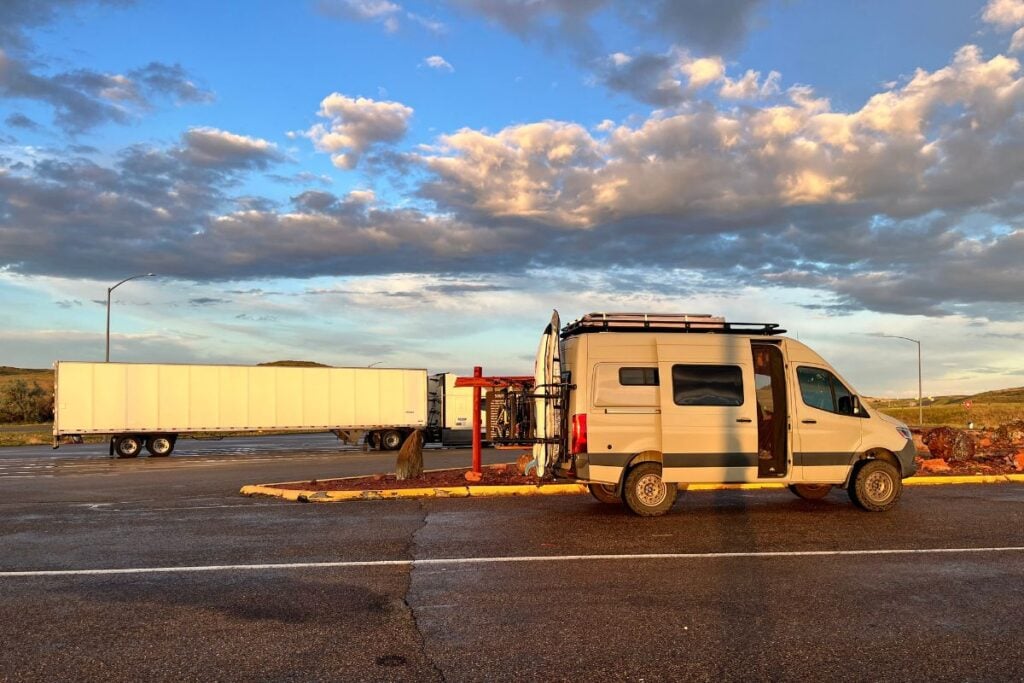
Somewhere in the middle of North Dakota, at nine at night, we parked in a rest area reading a sign that said NO OVERNIGHT CAMPING and felt like a criminal for wanting to go to sleep.
I checked the iOverlander app and someone had marked this place as closed saying they spotted “no overnight camping” signs.
However, this didn’t make sense to me, so I went to Google. Here’s what I found: in most states you can sleep in your vehicle at a rest area.
The catch is the word on that sign. ‘Camping’ and ‘sleeping in your vehicle’ are not the same thing, and several states say so in their own statutes. Camping often means putting out an awning, camp chairs, table and cookstove. Staying in your van to catch some ZZZs doesn’t break the law.
We dug into it even further and came up with this state-by-state table, with every rule linked to the DOT page or law it came from. Then what the sign actually means, then the store parking lots everyone asks about next.
Here’s what we found in a nutshell: thirteen states put rest area sleeping in writing, with limits that run from eight hours in California and Washington to a full day in Texas and New Mexico. Four states ban overnight parking outright. Seven more cap stops so short (two to four hours) that a real night’s sleep is off the table. And the biggest group, more than twenty states, has no statewide rule at all, which means the sign in front of you is the law.
Why ‘No Overnight Camping’ Doesn’t Mean You
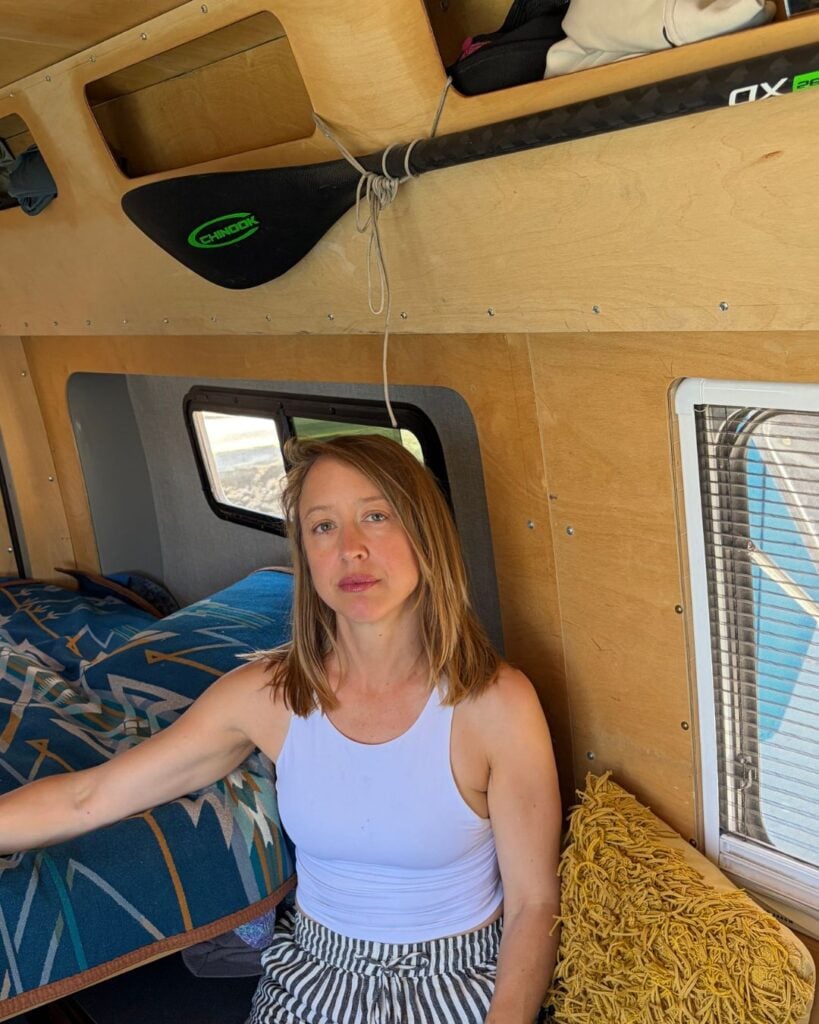
Van lifers read that sign and hear ‘no sleeping.’ The states that bothered to define the word mean something else entirely.
Georgia’s statute is the clearest. It says the ‘normal, customary, and temporary use’ of a rest area ‘for purposes of resting, sleeping, eating’ is exactly what the place is for, and then it defines camping as ‘temporary habitation outdoors’: tents or shelters, sleeping bags or blankets laid down, personal belongings placed or stored, a fire, or cooking. Sleeping inside your vehicle is the permitted use. Setting up outside it is the violation (Georgia Code 32-6-6).
Pennsylvania draws the same line in the other direction. Its list of prohibited acts includes ‘sleeping anywhere but in a legally parked vehicle’ (67 Pa. Code ch. 443). South Dakota says ‘temporarily resting in any vehicle’ is not camping at all (SDCL 31-7-17). Wyoming’s own rest-area brochure tells you to go ahead and sleep in the vehicle, just don’t pitch a tent or run out the slides.
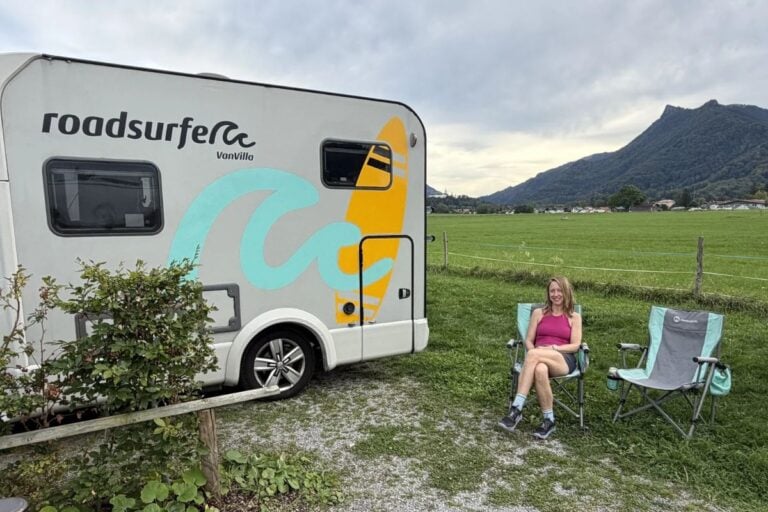
So the working definition, the one that matches how these rules are written and enforced: if everything stays inside the vehicle, you are resting. The moment a chair, an awning, a camp stove, a tent, or a slide-out comes out, you are camping. North Dakota’s sign is banning the second thing. It never mentions the first. So we went ahead and slept in the rest stop overnight with no issues at all.
One honest caveat. A state with no written rule is a state where a trooper’s read of that sign is the rule that night. In ten years of sleeping in vehicles I have been woken by a knock exactly once, and it was a security guard in California, not a rest area. Keep it inside, keep it short, and be polite if the window gets tapped. I wrote up the 90-second script for the knock separately.
Which States Let You Sleep at a Rest Area?
States that allow overnight parking in writing (13)
These states publish a statute, regulation or DOT rule that describes a stay long enough to sleep. The number is the cap, not a suggestion.
- Alaska: as posted at each stop.
- California: 8 hours in any 24.
- Georgia: no limit; sleeping is a named permitted use.
- Idaho: 10 hours on interstates, 16 on other highways.
- Kansas: one night, 24-hour cap.
- Montana: 12 hours, one space per vehicle.
- Nevada: 18 hours in any two weeks.
- New Mexico: 24 hours in any three days.
- Oregon: 12 hours in any 24.
- Texas: 24 hours.
- Utah: extended stays permitted, monitored.
- Washington: 8 hours in any 24.
- Wyoming: sleep in the vehicle, nothing set up outside.
States that ban overnight parking outright (4)
- Virginia: no overnight parking (a recent rule), no sleeping in the buildings.
- Maryland: camping and overnight parking prohibited.
- Tennessee: no overnight parking, two-hour limit.
- Colorado: no overnight parking or camping, by posted sign.
Colorado is the odd one: I could not find the rule in the state’s code, but every rest area carries a ‘No Overnight Parking or Camping’ sign, and a posted sign is enforceable. Treat it as a no or try it at your own risk.
States whose time limit rules out a full night (7)
- Florida: 3 hours (10 for truckers).
- Illinois: 3 hours.
- Kentucky: 4 hours in any 24.
- New York: 3 hours after dark (10 for truckers).
- Pennsylvania: 2 hours or the posted limit.
- South Dakota: 3 hours (10 for truckers).
- Minnesota: 4 hours where posted.
A three-hour cap still covers the nap that keeps you from drifting across the centerline, which is what these rules exist for. It does not cover a night.
States with a camping ban but no time limit (10)
- Arizona: camping and campfires banned.
- Nebraska: camping banned except designated sites.
- New Hampshire: tents and sleeping on the ground banned.
- North Carolina: tents and structures banned.
- Ohio: camping banned; unattended vehicles towed after 3 hours.
- Vermont: overnight camping banned unless designated.
- Wisconsin: camping banned after notice.
- North Dakota: ‘No Overnight Camping’ signs, nothing else.
- Oklahoma: no rule at all.
- Michigan: none today; a 48-hour cap and camping ban are proposed.
This is North Dakota’s group, and it is where the camping-versus-sleeping distinction earns its keep. The rule bans the tent. It says nothing about the person asleep in the driver’s seat.
States with no published rule at all (15)
I read each of these DOT rest-area pages and found no time limit and no overnight rule: Alabama, Arkansas, Connecticut, Delaware, Indiana, Iowa, Louisiana, Maine, Massachusetts, Mississippi, Missouri, New Jersey, Rhode Island, South Carolina, West Virginia. Posted signs at the individual rest area govern, and a few of these states (Delaware, Michigan, North Carolina) have four- to six-hour signs at some sites that never made it into a statewide rule. Hawaii has no interstate rest areas and sits outside this list.
The State-by-State Rest Area Table
Every row links to the DOT page, statute or regulation it came from. ‘Signs govern’ means the state publishes no rule and the sign in front of you is the only one that counts. Rules checked on the date in the Sources section at the bottom; the January pass re-checks them.
| State | Overnight parking | Time limit | Camping | Source |
|---|---|---|---|---|
| Alabama | Not addressed statewide | none published | not addressed on the page | DOT page |
| Alaska | As posted | as posted | as posted | statute / rule |
| Arizona | Not addressed (no ban posted by ADOT) | none stated | prohibited | DOT page |
| Arkansas | Not addressed statewide | none published | not addressed on the page | DOT page |
| California | Yes, within 8 h | 8 h / 24 h | prohibited (tents, shelters, fires) | statute / rule |
| Colorado | No by posted sign | none stated | prohibited by sign | DOT page |
| Connecticut | Not addressed statewide | none published | not addressed on the page | DOT page |
| Delaware | Not addressed statewide | none published | not addressed on the page | DOT page |
| Florida | No (3 h cap) | 3 h (10 h commercial) | prohibited | statute / rule |
| Georgia | Yes (sleeping named as a permitted use) | none stated | prohibited, defined in statute | statute / rule |
| Idaho | Yes, within the limit | 10 h interstate / 16 h other | prohibited (defined by the hookups it bans) | DOT page |
| Illinois | No (3 h cap) | 3 h | 533.40 not fetched; compilations say sleeping on the grounds prohibited | statute / rule |
| Indiana | Not addressed statewide | none published | not addressed on the page | DOT page |
| Iowa | Not addressed statewide | none published | not addressed on the page | DOT page |
| Kansas | Yes, one night | 24 h / one night | one night permitted (the statute’s own word) | statute / rule |
| Kentucky | No (4 h cap) | 4 h / 24 h | not addressed | statute / rule |
| Louisiana | Not addressed statewide | none published | not addressed on the page | DOT page |
| Maine | Not addressed statewide | none published | not addressed on the page | DOT page |
| Maryland | No | no overnight | prohibited | statute / rule |
| Massachusetts | Not addressed statewide | none in regulation (posted signs govern) | not addressed | statute / rule |
| Michigan | Not addressed now | none now; 48 h proposed | proposed ban | statute / rule |
| Minnesota | No (4 h cap where posted) | 4 h where posted (10 h commercial) | not addressed | DOT page |
| Mississippi | Not addressed statewide | none published | not addressed on the page | DOT page |
| Missouri | Not addressed | none stated | not intended | DOT page |
| Montana | Yes | 12 h (MDT) | the statute’s word for it; allowed at designated rest areas within the limit | DOT page |
| Nebraska | Not addressed (camping ban only) | none in statute | prohibited except designated | statute / rule |
| Nevada | Yes, within 18 h | 18 h in any 2 weeks | counted inside the same 18 h | statute / rule |
| New Hampshire | Not addressed (tent/ground ban only) | none in statute | prohibited (tents, ground sleeping) | statute / rule |
| New Jersey | Not addressed statewide | none published | not addressed on the page | DOT page |
| New Mexico | Yes, within 24 h | 24 h in any 3 days | not named | statute / rule |
| New York | No (3 h at night) | 3 h during darkness (10 h commercial) | not addressed in 156.3 | statute / rule |
| North Carolina | Not addressed (compilations report 4-hour signs at some sites) | none in the ordinance | tents/structures prohibited | DOT page |
| North Dakota | Yes in practice (sleeping in the vehicle); camping is what the sign bans | none posted | sign: No Overnight Camping (undefined) | DOT page |
| Ohio | Not addressed for occupied vehicles | 3 h unattended | prohibited | statute / rule |
| Oklahoma | Yes in practice | none | no formal rule | DOT page |
| Oregon | Yes, within 12 h | 12 h / 24 h | prohibited | statute / rule |
| Pennsylvania | No (2 h cap); sleeping only inside a legally parked vehicle | 2 h or posted | prohibited | DOT page |
| Rhode Island | Not addressed statewide | none published | not addressed on the page | DOT page |
| South Carolina | Not addressed statewide | none published | not addressed on the page | DOT page |
| South Dakota | No (3 h cap) | 3 h (10 h commercial) | prohibited | statute / rule |
| Tennessee | No | 2 h | n/a (overnight parking itself banned) | DOT page |
| Texas | Yes, within 24 h | 24 h | tents/shelters prohibited | statute / rule |
| Utah | Yes (extended stays permitted) | none published | prohibited by sign | DOT page |
| Vermont | Camping banned; parking not addressed | none stated | prohibited unless designated | statute / rule |
| Virginia | No | no overnight | not the operative word; overnight parking itself banned | statute / rule |
| Washington | Yes, within 8 h | 8 h / 24 h | prohibited | statute / rule |
| West Virginia | Yes (designated large-vehicle areas) | none stated | not addressed | DOT page |
| Wisconsin | Not addressed | none in statute | prohibited after notice | DOT page |
| Wyoming | Yes (sleeping in the vehicle) | none stated | prohibited (tents, slideouts) | DOT page |
Kristin’s road toolkit
What I actually use in the van
- Harvest HostsOvernight stays
- RoamlyVan insurance
- Campervan HQBuild parts
- Free Facebook GuideFund the trip
How We Actually Sleep at Rest Areas
Ten years of this, in a Prius, a Chevy Astro, a Sprinter and now between a van and a sailboat, and the routine has not changed much:
- Arrive late, leave early. We pull in after dark and are gone by seven. Nobody has ever objected to a vehicle that was simply not there in the morning.
- Nothing comes out of the vehicle. No chairs, no stove, no awning, no slide. Window covers go up from the inside. That is the whole difference between resting and camping in every statute above.
- Park where the cars park, not in the truck lanes. Truckers are on federal hours-of-service clocks and those spaces are theirs; several states write the trucker exception into the rule for that reason.
- Read the sign, then the table. If the sign says two hours, the sign wins even if this table says otherwise. If the sign says no overnight camping and the state has no other rule, sleep, inside, and keep it short.
- Be boring. Lights off, engine off, generator off. The rest areas that go bad for van lifers are the ones where someone set up a living room.
If a rest area is not an option, where to park a van overnight covers the rest of the night’s choices, and the security mistakes that actually put people in danger is worth a read before your first solo night on a highway lot.
What About Walmart, Cracker Barrel and Cabela’s?

This is the second half of the question, and the answer works differently: store lots are governed by corporate policy, then by the store manager, then by the city. Not by the state.
Walmart
Walmart’s corporate FAQ says it permits RV parking on store lots ‘as they are able,’ with permission ‘extended by individual store managers, based on the availability of parking space and local laws.’ No electrical service, no promises. That last clause is the one that matters: hundreds of city ordinances now ban overnight parking in commercial lots, and the store cannot override its city. The list of cities that have moved that way is in the city-by-city article, which we update as new bans land.
Cracker Barrel
Cracker Barrel publishes no overnight policy at all. Most locations have a few bus and RV spaces behind the building and most managers allow one night in them, but the corporate office defers to each restaurant. Ask at the host stand, eat there, stay one night, and keep everything inside.
Cabela’s and Bass Pro Shops
Same shape: no public policy, store-by-store discretion, and most stores say yes when asked. Some cannot because of a local ordinance or a lease. Call the store, ask for a manager, and ask where they would like you to park.
Camping World
The one that is changing. More stores now fence and gate their lots overnight, and at least one location only allows overnight parking for RVs bought from a Camping World dealership. Their store pages list ‘Overnight Parking’ under location features when it is offered. If it is not listed, assume it is not.
Casinos
Many casinos welcome RVs overnight, some run paid lots with hookups, and a few ban it. There is no chain rule; each property decides. Casino security is the person to ask, and they usually know within a sentence.
The check-the-actual-store method
- Call the store, not the chain. Ask for the manager on duty and ask, ‘Do you allow overnight parking, and where would you like me?’
- Ask one more question: ‘Does the city allow it?’ Managers know when they are inside a ban.
- Arrive before closing, park at the far edge, buy something, and be gone in the morning.
- Nothing outside the vehicle. The same line that keeps you legal at a rest area keeps you welcome in a parking lot.
- If there is a ‘No Overnight Parking’ sign, the sign is the answer, whatever the phone call said.
And when none of that works, free public land does. How to find free campsites and the boondocking guide are where we send people who would rather not sleep under a lot light at all.
Frequently Asked Questions
Is it legal to sleep in your car at a rest area?
In most states, yes, as long as you stay inside the vehicle and within any posted time limit. Thirteen states publish rules that allow stays long enough to sleep (California and Washington cap it at 8 hours, Texas and New Mexico at 24). Four states, Virginia, Maryland, Tennessee and Colorado, ban overnight parking outright. Seven states cap stops at two to four hours. The rest publish no rule, so the sign at the rest area governs.
What does ‘No Overnight Camping’ at a rest area actually mean?
It bans camping, which the states that define the word describe as living outdoors: tents, shelters, bedding laid on the ground, gear set up, fires, or cooking. Georgia’s statute lists resting, sleeping and eating as the permitted uses of a rest area and then defines camping as the outdoor version. Sleeping inside a parked vehicle is resting. Setting up outside it is camping.
How long can you stay at a rest area?
It depends on the state. California and Washington allow 8 hours in any 24; Montana and Oregon 12; Idaho 10 on interstates and 16 elsewhere; Nevada 18 hours in any two-week period; Texas 24 hours; New Mexico 24 hours in any three days. Florida, Illinois and South Dakota cap stops at 3 hours, Kentucky and Minnesota at 4, Pennsylvania and Tennessee at 2. Where a sign posts a shorter limit, the sign wins.
Which states do not allow overnight parking at rest areas?
Virginia, Maryland and Tennessee prohibit overnight parking in their regulations, and Colorado posts ‘No Overnight Parking or Camping’ signs at every rest area. Several other states do not ban it but cap stops too short for a night: Florida, Illinois and South Dakota (3 hours), Kentucky and Minnesota (4), Pennsylvania (2), and New York (3 hours after dark).
Can you park an RV overnight at Walmart?
Walmart’s corporate FAQ says RV parking is permitted ‘as they are able,’ with permission granted by the individual store manager based on space and local laws. Many cities now ban overnight parking in commercial lots, and the store cannot override its city ordinance. Call the store, ask the manager, and check whether the city allows it before you count on it.
Sources
Rules checked September 2026 against each state’s own statute, administrative code or DOT rest-area page. Where a state publishes nothing, the DOT page is linked so you can see the silence for yourself. Two compilations were used to cross-check the primary sources: Boondock or Bust’s 2026 rest-area law table and Boondocker’s Bible. Walmart: Ask Walmart, corporate FAQ. Cracker Barrel, Cabela’s, Bass Pro and Camping World publish no overnight policy; their sections reflect store-level practice reported by RV travel guides and are the reason the article tells you to call the store. Virginia’s rule (24VAC30-51-30) took effect March 11, 2026; Michigan’s 48-hour rule was proposed in October 2025 and had not been filed at the time of checking.
- Alabama: No statewide time limit or overnight-parking rule published on the DOT’s rest-area page (checked 2026-09-07); posted signs at each rest area govern · source
- Alaska: 17 AAC 05.045: no parking or camping longer than the POSTED limits at rest stops and pullouts · source
- Arizona: ADOT rest area rules: camping/campfires prohibited; no time limit or overnight rule stated; ‘rest sufficiently before resuming your travel’ · source
- Arkansas: No statewide time limit or overnight-parking rule published on the DOT’s rest-area page (checked 2026-09-07); posted signs at each rest area govern · source
- California: 21 CCR 2205: no parking or remaining more than 8 hours in any 24-hour period; camping prohibited; tents/shelters and campfires prohibited · source
- Colorado: CDOT posts ‘no overnight parking or camping’ signs at rest areas (compilations; no statewide rule text located); sleeping to rest is tolerated · source
- Connecticut: No statewide time limit or overnight-parking rule published on the DOT’s rest-area page (checked 2026-09-07); posted signs at each rest area govern · source
- Delaware: No statewide time limit or overnight-parking rule published on the DOT’s rest-area page (checked 2026-09-07); posted signs at each rest area govern · source
- Florida: Fla. Admin. Code 14-28.002: parking limited to 3 hours (10 hours for commercial drivers under hours-of-service); camping prohibited · source
- Georgia: O.C.G.A. 32-6-6: normal, customary, temporary use of rest areas ‘for purposes of resting, sleeping, eating’ is lawful; camping prohibited and DEFINED · source
- Idaho: ITD FAQ (IDAPA 39.03.50): ‘Travelers may stop and rest from travel at rest areas for up to 10 consecutive hours on interstate rest areas and 16 hours · source
- Illinois: 92 Ill. Adm. Code 533.20: a rest area stop shall not exceed three hours · source
- Indiana: No statewide time limit or overnight-parking rule published on the DOT’s rest-area page (checked 2026-09-07); posted signs at each rest area govern · source
- Iowa: No statewide time limit or overnight-parking rule published on the DOT’s rest-area page (checked 2026-09-07); posted signs at each rest area govern · source
- Kansas: K.A.R. 36-32-2: ‘Overnight camping shall be permitted for one night only’; parking more than 24 hours prohibited · source
- Kentucky: 603 KAR 5:040 (eff. 2026-03-20): use of interstate/parkway rest areas limited to 4 hours in any 24-hour period · source
- Louisiana: No statewide time limit or overnight-parking rule published on the DOT’s rest-area page (checked 2026-09-07); posted signs at each rest area govern · source
- Maine: No statewide time limit or overnight-parking rule published on the DOT’s rest-area page (checked 2026-09-07); posted signs at each rest area govern · source
- Maryland: COMAR 11.04.07.11: ‘Camping and overnight parking are prohibited.’ · source
- Massachusetts: 700 CMR 9.03: vehicles left UNATTENDED more than 30 minutes may be towed where posted; no overnight/camping rule in the regulation · source
- Michigan: No current statewide rule; MDOT proposed administrative rules (public hearing Oct 2025) would set a 48-hour maximum stay and ban camping at rest areas · source
- Minnesota: MnDOT governance: motorists may stop at rest areas up to four hours where posted (Minn. Stat. 168B.04); commercial drivers up to ten hours (Minn. Stat · source
- Mississippi: No statewide time limit or overnight-parking rule published on the DOT’s rest-area page (checked 2026-09-07); posted signs at each rest area govern · source
- Missouri: MoDOT publishes no time limit or overnight rule on its rest-area guide; roadside parks ‘not planned as overnight camping areas’ · source
- Montana: MDT rest-area page: ‘Overnight parking is allowed but limited to one parking space per vehicle and for a maximum of 12 hours.’ ‘Camping at Montana res · source
- Nebraska: Neb. Rev. Stat. 39-312: unlawful to camp on any highway, roadside area or park except designated campsites (Class V misdemeanor) · source
- Nevada: NAC 408.595: parking, camping or occupancy of a roadside park or safety rest area limited to 18 hours in any 2-week period (NDOT help center: sleeping · source
- New Hampshire: RSA 236:58: no tents, camping devices, or sleeping on the ground in the public right-of-way or on public property without permission · source
- New Jersey: No statewide time limit or overnight-parking rule published on the DOT’s rest-area page (checked 2026-09-07); posted signs at each rest area govern · source
- New Mexico: NMSA 67-8-22: no person may remain in a publicly owned rest area more than 24 hours in any three-day period (misdemeanor, fine up to $100) · source
- New York: 17 NYCRR 156.3: parking longer than three hours during the hours of darkness not permitted; commercial drivers may remain up to 10 hours for off-duty/ · source
- North Carolina: NCDOT ordinance GO-7 (G.S. 136-18(9); 19A NCAC 2E .0407): unlawful in any rest area ‘to erect tents, booths, or structures of any kind for camping or · source
- North Dakota: No codified NDDOT rest-area rule found; rest areas post ‘No Overnight Camping’; no time limit posted; Highway Patrol monitors (her lived anchor, Sept · source
- Ohio: OAC 5501:2-4-01 (eff. 2023-05-15): vehicle left UNATTENDED three hours may be towed; camping prohibited (B)(13); no overnight-parking rule for occupie · source
- Oklahoma: No ODOT rule or state law on rest-area stays located (compilations agree); no posted limits reported · source
- Oregon: OAR 734-030-0010(18): camping, tents/structures, or remaining more than 12 hours in any 24-hour period prohibited · source
- Pennsylvania: 67 Pa. Code ch. 443: parking more than 2 hours in 24 (or the posted limit) prohibited; ‘camping overnight or setting up a tent, sleeping anywhere but · source
- Rhode Island: No statewide time limit or overnight-parking rule published on the DOT’s rest-area page (checked 2026-09-07); posted signs at each rest area govern · source
- South Carolina: No statewide time limit or overnight-parking rule published on the DOT’s rest-area page (checked 2026-09-07); posted signs at each rest area govern · source
- South Dakota: SDCL 31-7-15/31-7-17: no camping at interstate rest areas; ‘temporarily resting’ in a vehicle is not a violation, defined as not more than three conse · source
- Tennessee: TDOT: ‘No overnight parking is allowed. There is a two-hour parking limit.’ No grilling or open flames. · source
- Texas: Tex. Transp. Code 545.411: offense to remain at a rest area longer than 24 hours or erect a tent, shelter, booth or structure, after posted or oral no · source
- Utah: UDOT: ‘All rest areas are posted for no overnight camping. However, extended stays are permitted and are monitored by the on-site staff and the Highwa · source
- Vermont: 23 V.S.A. 1106 (per VTrans search result): no person may enter or remain on any State highway facility for the purpose of overnight camping unless the · source
- Virginia: 24VAC30-51-30 (eff. 2026-03-11): no overnight parking in rest areas; no sleeping in any section of the rest area building · source
- Washington: RCW 47.38.020: unlawful to park more than 8 hours in a 24-hour period; unlawful to camp or maintain a tent or other sleeping accommodation · source
- West Virginia: WV Turnpike/DOH: overnight parking for tractor-trailers and campers allowed at travel plazas and rest areas in the areas designated for large vehicles · source
- Wisconsin: Wis. Stat. 86.025: unlawful to camp ‘in wagons, tent or otherwise’ on public highways or adjacent lands after notice from the landowner or local offic · source
- Wyoming: WYDOT rest-area brochure (2011): you can sleep in your vehicle; don’t pitch a tent, extend RV slideouts or otherwise set up for an extended stay (broc · source



Very helpful; thanks for all the detail work…
thanks for a very informative and useful post! I put the state by state info into a Google sheet so I retrieve it more easily. if you want a copy, just lmk. my wife and I are in MN so if you need a place to park for a night or two, lmk!
Great stuff, Kristin.
The differentiation between camp and sleep/park makes so much sense. For some time, I’ve wondered why I can’t just sleep/park. Now I (mostly) know.
Thank you so much for this most comprehensive research! I’m sure I’m not alone in appreciating your work on it.