

17 Mistakes Every New Cruiser Makes (and How to Avoid Them)

Before you untie the lines, here are a few lessons we learned the hard way.
*This post may contain affiliate links. Please read our disclosure policy for more info.
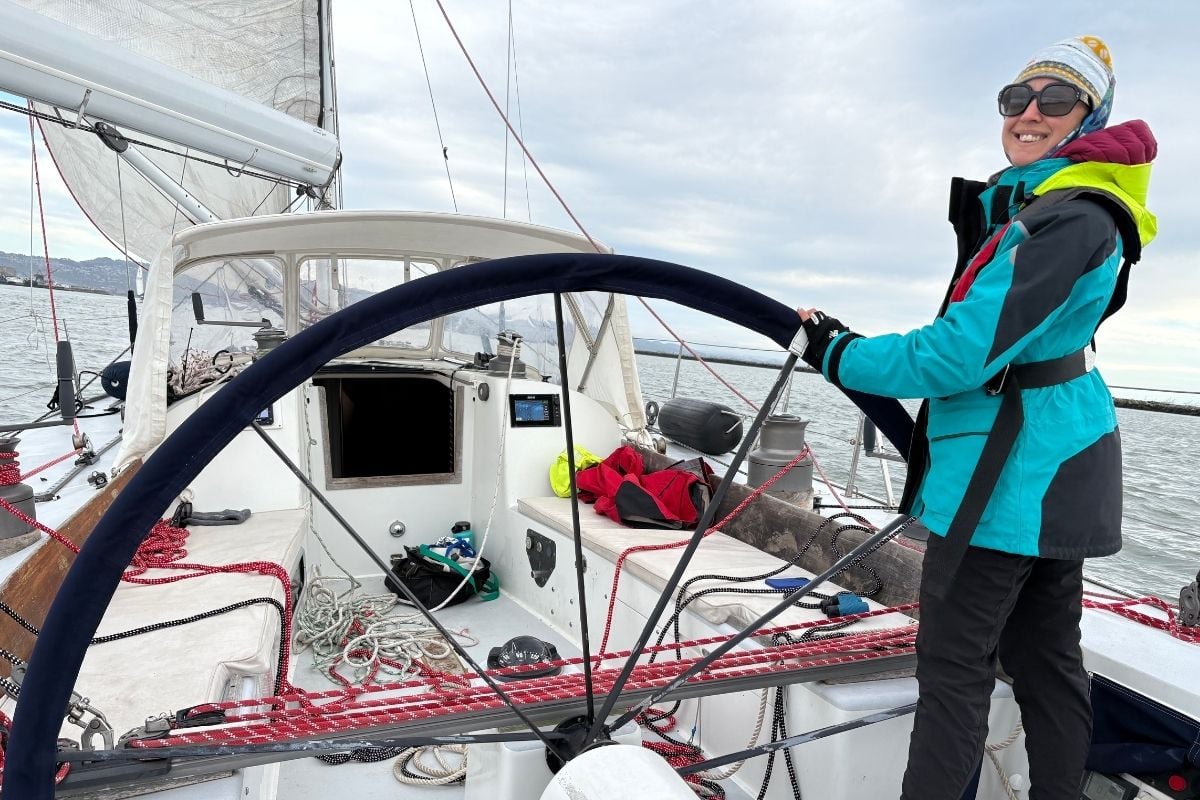
Our first season truly cruising on our CT-41 sailboat was a blur of excitement and rookie mistakes. There’s LOTS to learn when you cast off the lines and go on a long adventure, especially to a foreign country.
Looking back now, each frustration taught us something. Now, we also cruise on our 46-Nelson Marek racing/cruiser, and have learned a lot in the past five years of life aboard.
Every new cruiser — no matter how many books they’ve read or how many sailing vlogs they’ve watched — makes mistakes.
Here are 17 mistakes most new cruisers make and how to avoid them.
1) Choosing the Wrong Boat for Your Lifestyle
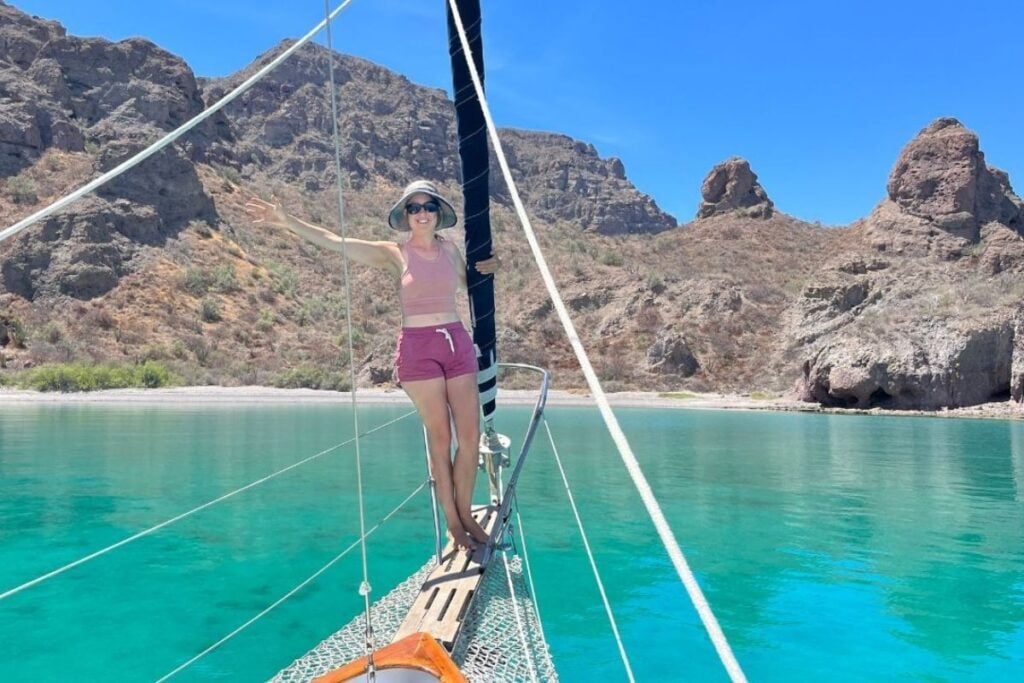
It’s easy to get swept up in beautiful lines, teak decks, extra cabins, and the idea of everything being brand new. At the start, you picture entertaining guests every night and hosting family on the weekend.
But living aboard quickly teaches you what really matters — comfort, simplicity, and a layout that suits your kind of cruising. Your guests will be fellow down-to-earth cruisers, and family will rarely take time off to visit.
Lesson: Don’t buy your dream boat, buy the one that fits the life you actually plan to live on board.
2) Skipping Practice Before Casting Off

Many people think they can learn as they go. It turns out, “winging it” isn’t the best strategy when there’s wind, current, and a narrow marina berth involved.
The best thing we ever did was spend lots of time practicing docking, anchoring, quick stops and sailing in different conditions. It prepared us for the real cruising life, so we didn’t feel overwhelmed when we set off.
Lesson: Get comfortable with the basics before you untie the lines.
3) Packing Like You’re Moving House
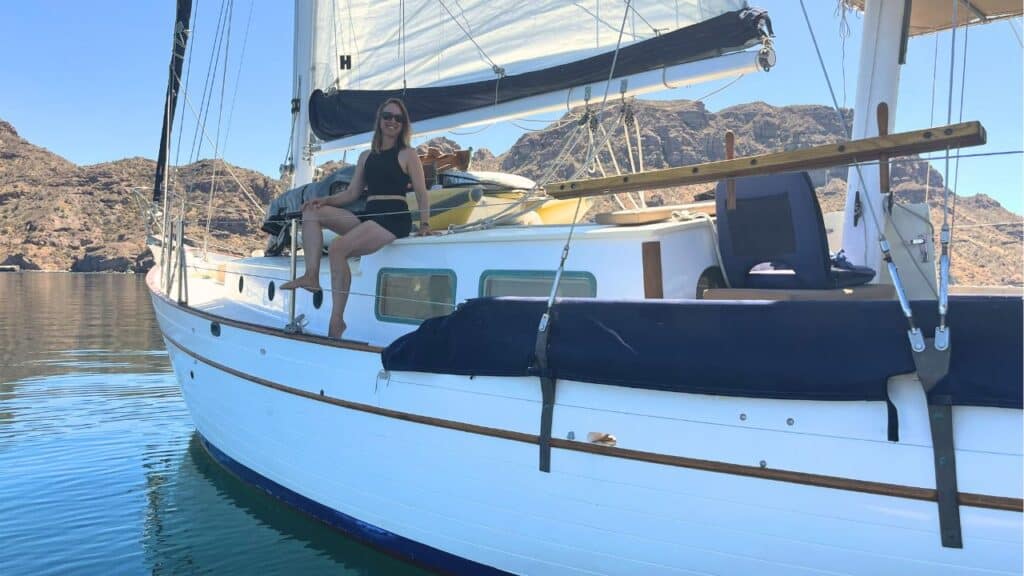
We thought we’d packed light. Until we realized half our “essentials” hadn’t been touched in months. Carrying extra shoes, bulky kitchen gadgets, and way too many clothes was just weighing us down.
Space onboard is precious, and clutter quickly gets annoying. Plus, the lighter the boat, the faster she sails.
Lesson: Bring only what you truly need for comfort and safety.
4) Choosing a Dinghy That’s Too Heavy
It’s tempting to go for the biggest, sturdiest dinghy you can find. You dream of zooming to shore with friends by your side — until you’re trying to drag it up a beach or hauling it onto the deck after a long day.
You learn quickly that “solid” often means “back-breaking.” A lighter dinghy makes everyday life easier. While our first dinghy was pretty light compared to other cruisers, we still needed to use winches and halyards to lower it. Our current dingy is even lighter, and we just throw it overboard. So much easier!!
Sometimes, we prefer throwing our SUPs into the water instead of dinghying, anyway.
Lesson: Choose the dinghy you can handle comfortably, not the one that looks the most rugged in the ad.
5) Not Learning to Anchor Properly
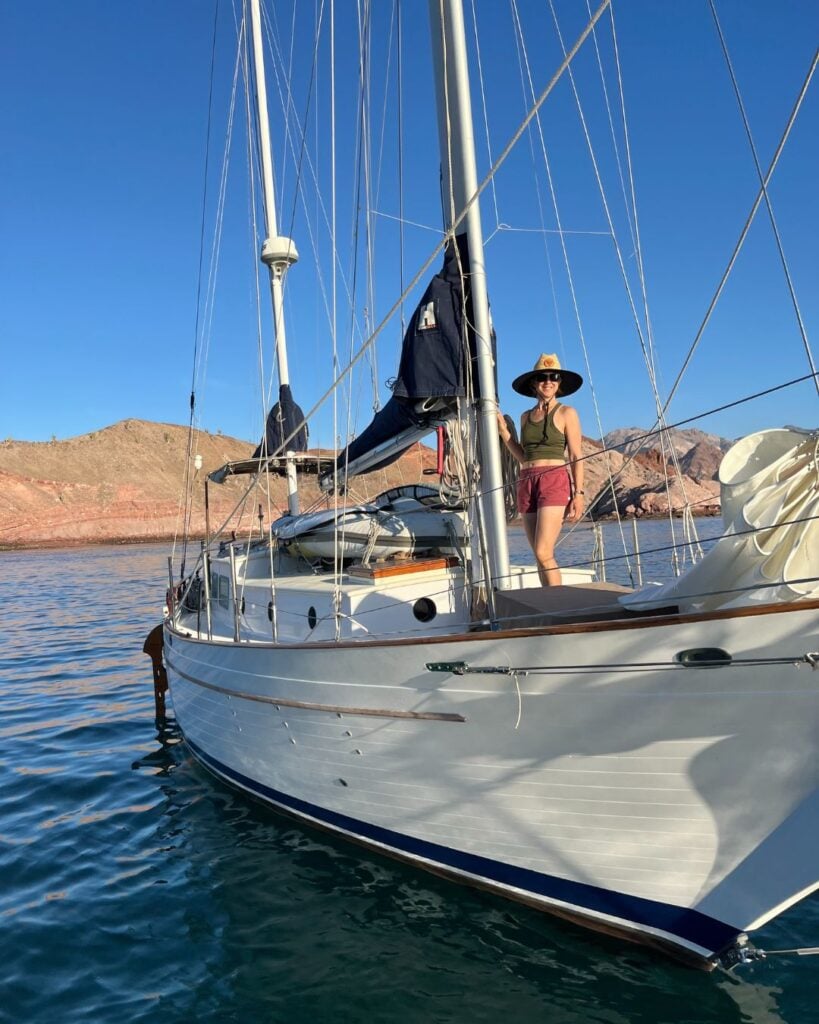
Our first few nights at anchor were restless. We’d wake up every hour to check our position, convinced we were drifting toward shore.
It took a few scares and a lot of reading to understand how to choose the right spot and let out the right amount of chain.
Now, we trust our anchor to keep us safe in a storm and we have hundreds of feet of chain.
Lesson: Take the time to learn how to anchor well before you set off. It’s the difference between sleeping and lying awake at night.
6) Turning Down Help or Advice
When we first started out, we were a little shy about asking questions; we were worried we’d look like total newbies.
But the sailing community is amazing — most cruisers love to share knowledge, swap stories, and lend a hand.
The moment we started asking for help, everything got easier, and we started making more friends.
Lesson: Every sailor you meet has something to teach you.
7) Trusting A Single Forecast
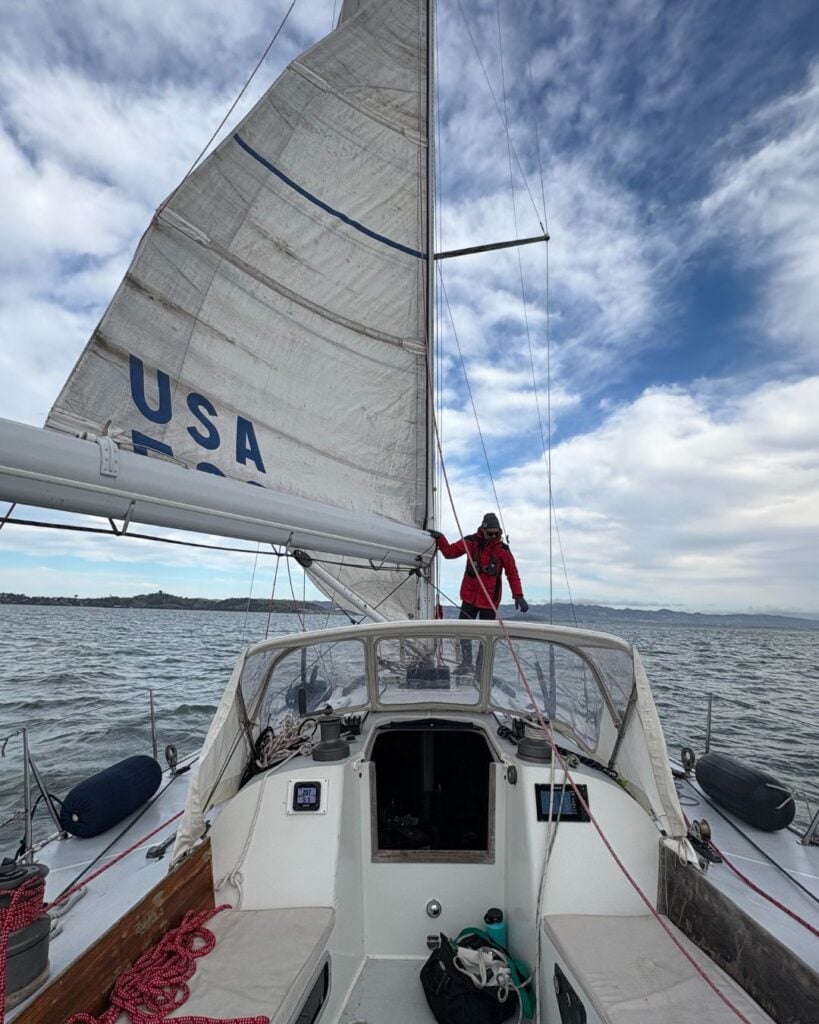
In the beginning, we checked the weather app, saw an encouraging wind forecast, and figured we were good to go.
But the weather at sea can be unpredictable. Different areas, different models — and sometimes, none of them get it right.
Now we check multiple models until the last minute. We also learned to watch the clouds, wind direction, and barometer, so we can read the weather in real time.
Lesson: Always cross-check your forecasts and trust your senses. If the sky looks wrong, it probably is.
8) Overplanning (and Freaking Out When Plans Change)
In the beginning, we tried to plan everything — routes, anchorages, meals.
But at sea, things rarely go to plan. The weather changes, parts break, and paperwork always takes longer than you think.
We learned to stop fighting it and just go along with it. Some of our best memories came from unplanned detours.
Lesson: Learn to be flexible and embrace the unexpected.
9) Forgetting to Secure Everything Below Deck

You don’t truly understand how a boat moves until you see your favorite mug fly across the galley. It only takes one rough wave. One time at anchor I even saw a bottle of red wine fall off the countertop when a boat sped by and created a rough wake. It was not good how that wine dripped through the galley sole and into the bilge…..
Now, before we set sail, we tuck away our tech so it stays safe and we double-check every latch, bottle, and cupboard.
Lesson: If it can move, it will.
10) Neglecting Safety Drills
When we moved on board our sailboat, we had all the safety gear: life jackets, flares, and a man-overboard pole. We just hadn’t made time to practice using them much because boat work took up all our time.
Then, one windy afternoon, my hat flew away, and trying to retrieve it was all the proof we needed that we weren’t as prepared as we thought.
Now we run through MOB, fire, and abandon-ship routines every now and then.
Lesson: Safety gear only works if you know how to use it.
11) Underestimating Boat Work

Before we set off, we thought boat maintenance meant polishing the stainless and rubbing a bit of oil into the teak once in a while. In reality, it’s an ongoing process of fixing leaks, chasing electrical gremlins, and tightening bolts you didn’t even know existed.
Sometimes you’re stuck at the dock for days or in a boat yard for months. But once you’re back out on the water and your boat feels like home again, it all feels worth it.
Lesson: Cruising is roughly 50% exploring and 50% boat work.
12) Not Understanding Power and Water Management
Having lived in a van before moving on board, we were used to charging the batteries via the engine. Boat life felt similar until we left the dock.
It’s easy to underestimate how much power your fridge uses, or how quickly a full water tank disappears, especially if you use the sails most of the time.
Learning to track usage, adding extra solar, and being mindful of our consumption changed everything. Now, we have four lithium batteries and tons of solar panels to power all of our power-hungry electronics.
Lesson: Know your systems and respect your resources.
13) Not Communicating Clearly

Few things test a relationship like docking in wind or anchoring in a tight spot.
At first, we assumed too much and didn’t realize the person on the bow couldn’t always hear the person at the helm.
Now, we talk through the plan before we start, use clear hand signals, and remind ourselves that we’re on the same team.
Lesson: Try to stick to clear, calm communication even when things get stressful.
14) Neglecting Health and Fitness

Boat life can seem active with all that hoisting and balancing, but it’s easy to fall out of shape when you cruise full-time.
Snacking while on night watches, eating long-life food, sampling local dishes and drinks, and sitting for hours on end can take a toll on your body.
We really value our health, so we found ways to stay active and work out from the start. We now carry weights, yoga mats and bands aboard, and try to hike, swim, windsurf and paddleboard whenever possible. We’re so glad we did.
Lesson: Make time to take care of your body.
15) Forgetting to Log
In the beginning, we wrote everything down. Then, we slowly lost the habit. We told ourselves we’d remember when we fueled up, the route we took, and the weird noise in the engine. Except, sometimes, we didn’t, and it became a problem.
Now we log everything: weather, maintenance, mileage, water refills, and more. It’s amazing how much you learn from your own notes.
Lesson: Write everything down. Your future self will thank you.
16) Rushing Around and Not Enjoying Each Place Enough
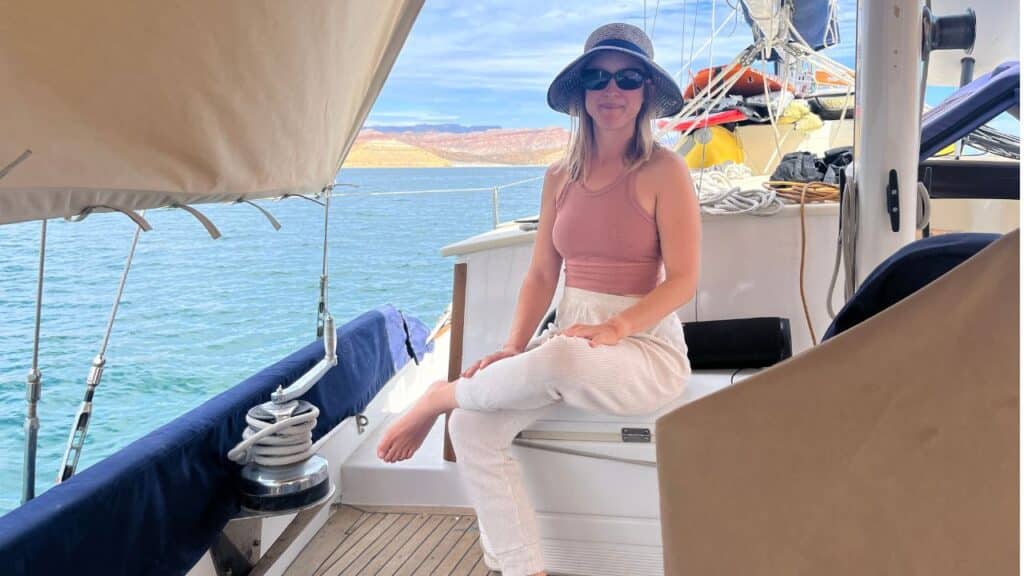
In our first season, we were always on the move — new bays, new islands, new towns. It was so exciting.
But after a while, we realized we were missing what made each place special. Now we travel as slowly as we can. We often stop for long enough to make friends with whom to move on.
Cruising isn’t about how many places you’ve been, but how deeply you experience the ones you reach.
Lesson: Slow down. You didn’t move on a boat to keep racing.
17) Forgetting Why You Started
It’s easy to get caught up in maintenance tasks, weather windows, and endless to-do lists. We’ve had days when we forgot that this life was once our dream.
Then something simple pulls us back: dolphins off the bow or an incredible sunset.
Lesson: When you’re bogged down in boat work, don’t lose sight of why you chose this life. Watch the sunset from the bow or go chat with other cruisers.
Final Thought
If you’re about to set off cruising, accept that you will probably make some mistakes.
No matter how long we’ve been out here, the sea keeps us humble.
Every cruiser you meet has a story that starts with something going wrong. That’s what makes this life so special: we’re all just figuring it out, one mistake at a time. And once you’re out there, you’ll find that other cruisers are always ready to lend a hand.




You are so right Kristin and such a brilliant writer. I enjoy all of your emails and posts. I’ve been cruising since 1958 and my wife and I have been sailing the South Pacific since 1976 aboard our 44′ cutter the Moira. We’ve learned the lessons you present in this post long ago and they have helped us maintain our yacht, our love of the sea, and our love for each other. I am a marine scientist and you can read about our discoveries and activities (like getting Western Australia and South Australia to ban capturing dolphins and keeping them in swimming pools for “entertainment”) in our ebooks – search Amazon for Moira Pacific Expedition.
The single most important lesson you give is Lesson 14 – neglecting your health. We are in excellent health and I am in my mid 80’s. Eating the right foods, exercise are critical but also there are myriad health hazards that are very very easy to avoid – and disastrous if you don’t. Search on Amazon for A Sailor is a Happy Sailor and discover how to live a happy and healthy life at sea.
Re #4 Actually two dinghies are necessary: a light 8-footer for quick getting about and a stripped down 14′ Whaler type for exploring unchartered rivers and carrying a moped for further exploring. We nested them
Re #13 Receiver repeats any commands. Also, one knock means I’m changing course (for any reasons, floating object, ship: not important. Two knocks: conditions changing. Three knocks: get up here fast!
Big problem solver, Mixed company on board or chartering for 20 years, after giving a safety talk, have everyone repeat after you: “We are all equal here at sea, even men sit to pee”.
Capt. Fred Saas says:
Re #4 Actually two dinghies are necessary: a light 8-footer for quick getting about and a stripped down 14′ Whaler type for exploring unchartered rivers and carrying a moped for further exploring. We nested them
Re #13 Receiver repeats any commands. Also, one knock means I’m changing course (for any reasons, floating object, ship: not important. Two knocks: conditions changing. Three knocks: get up here fast!
Big problem solver, Mixed company on board or chartering for 20 years, after giving a safety talk, have everyone repeat after you: “We are all equal here at sea, even men sit to pee”.
I did post comment, please tell me if I did something incorrect.
Kristen – it is always such a joy to read you. I would say that what you have written is invaluable to newbies and a good refresher for those who have been at it for years. Keep up the great work
Very interesting good article
I have a question. What about these now? The UK have left the EU how do you juggle 90 days rule ?
We cruised 11 years on our Pearson 323, coastal cruising on the east coast of the US and Bahamas. We were not happy when we “swallowed the hook” and moved ashore. 20 years later we still miss it, but the flexibility required by cruising left us quite flexible in adjusting to our life in our retirement community and to aging into our 90s. It was our life’s great adventure. Cliff and Bezy McKay
So nice and so right. We left Denmark 9th January 2005. One day late due to a storm. Have been living in my boat in Denmark, Maroc, Northern Ireland, Newcastle, Brighton, Lisboa, Barcelona, Istanbul, Benalmadena, Gran Canaria, Saint Lucia, Caribien for 4 years, Portsmouth, Brighton, Rugen and now Denmark. I can only say go. It is a free life. If you dont like your neighbour just move.