

I Live Alone in a Minivan. Solo Van Life Isn’t Cheaper. Here’s What I Actually Pay

Solo van life isn’t half-price van life. Tax professional and full-time vanlifer Catina Borgmann breaks down her real monthly budget — and the almost-$400-a-month cost of traveling as one.
*This post may contain affiliate links. Please read our disclosure policy for more info.
(This is a guest post by Catina Borgmann)
Most people never stop to think about what solo travel actually costs. If they did, I suspect they’d assume one person means half the price. It seems logical. It just isn’t how it works.
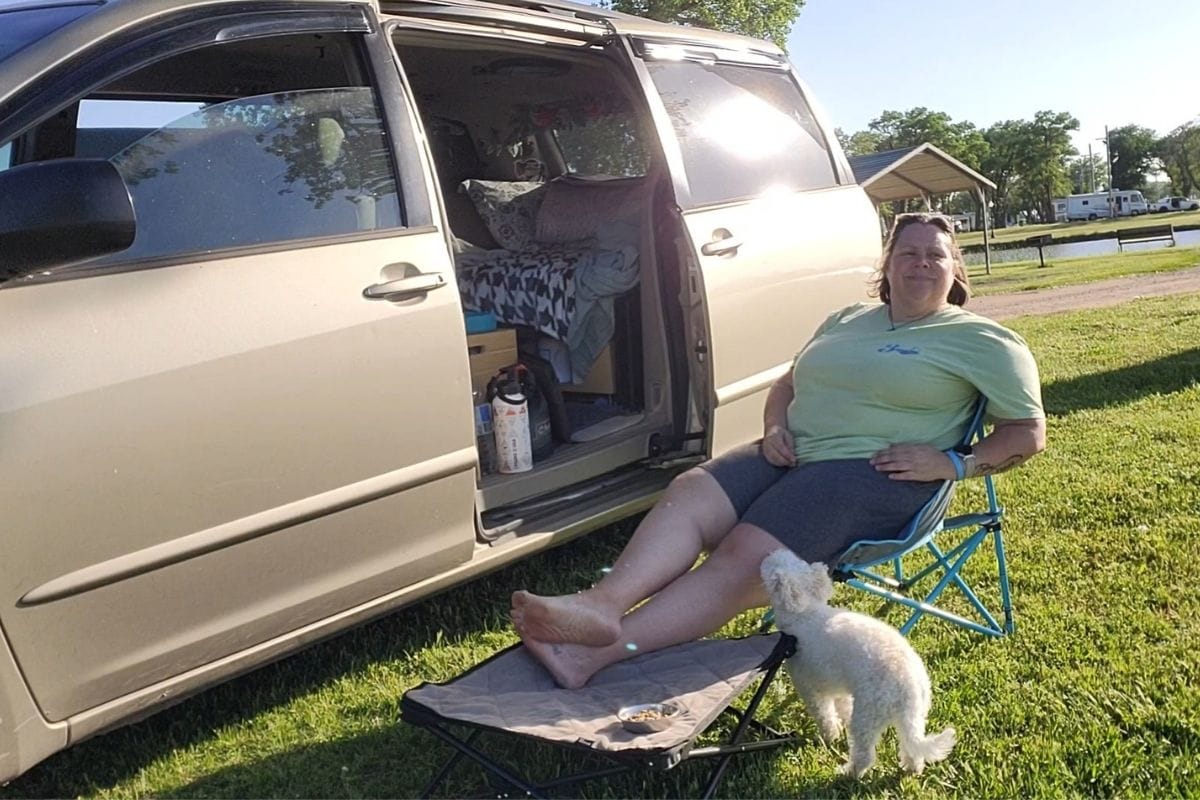
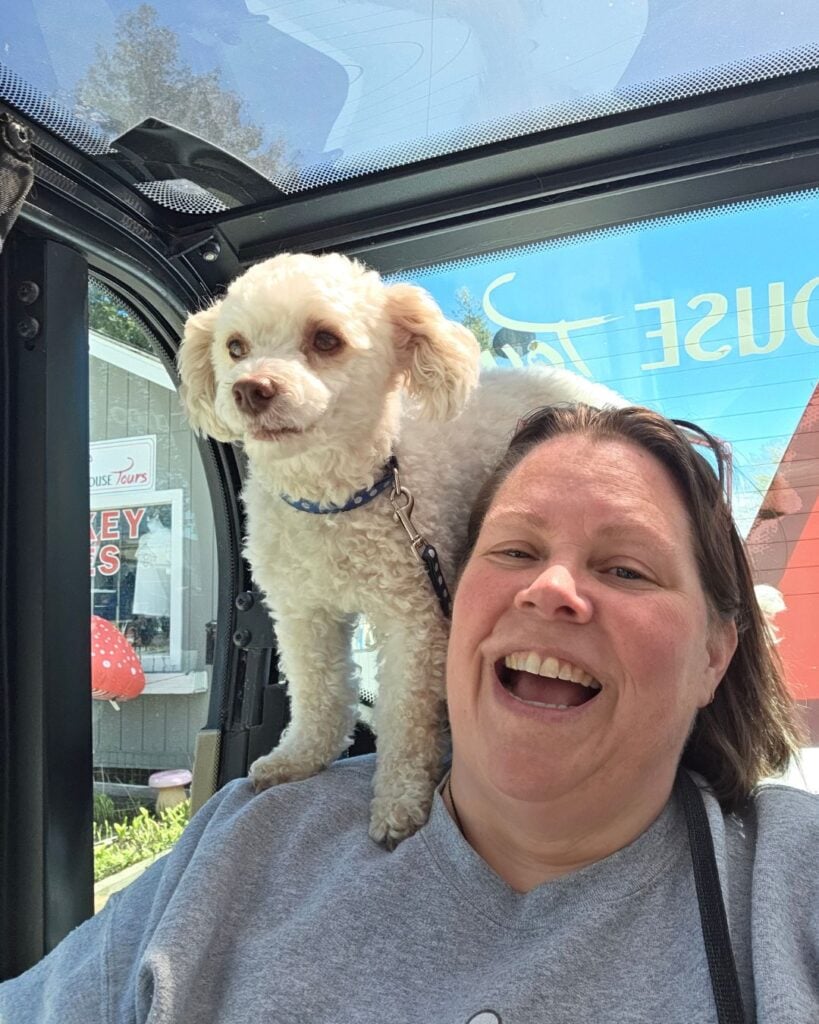
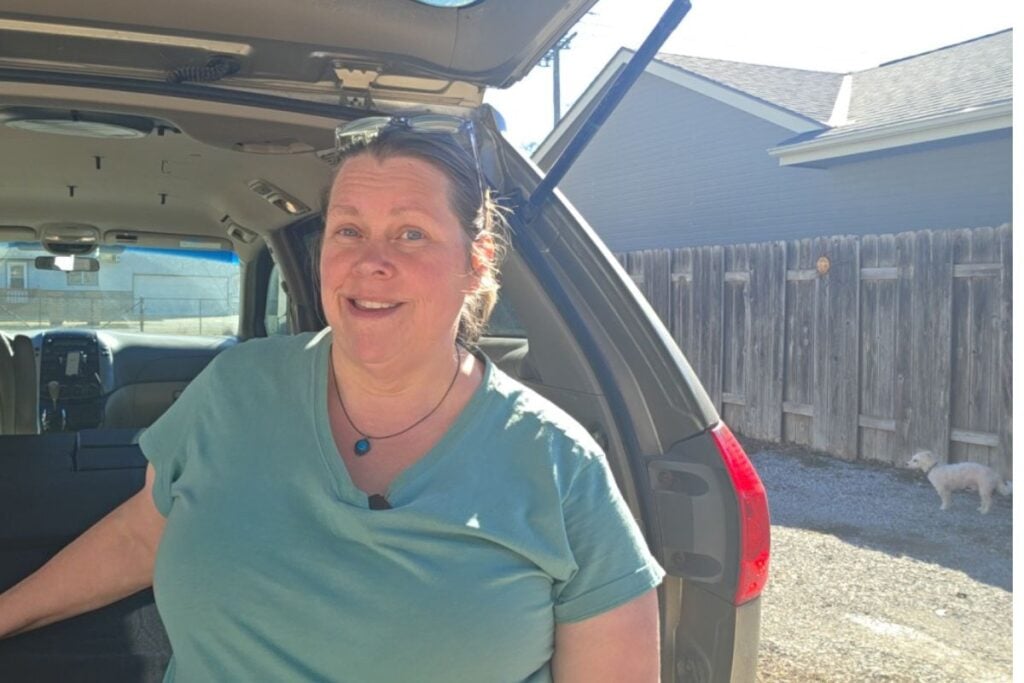
I’m Catina. I’m an Enrolled Agent — a federally licensed tax professional — and I live full-time on the road in my minivan. Well, not entirely alone: my nine-pound dog Henry rides shotgun. But Henry doesn’t pay bills. When it comes to the money, it’s just me — and looking clearly at money happens to be what I do for a living.
I’ve written here before about the $1,700 emergency that changed how I think about freedom. One repair bill, one bank account, nobody to split it with. That day taught me in an afternoon what my tax practice had been showing me for years: solo life runs on different math. After several years out here, I’ve learned that traveling alone comes with a real cost most people never see, and a quiet advantage almost nobody mentions.
Here’s both sides, honestly.
The costs that don’t split
Most of what you pay for being on the road costs the same whether one person is in the vehicle or two. A couple splits those costs down the middle. I don’t get to.
Fuel is the clearest example. My rig burns the same amount of gas driving to the next town whether I’ve got a passenger or not. I pay all of it since there’s no one to split the cost.
Campsites are usually priced by the site, not the head. Two people sharing a campground fee each pay half. It’s just me, so I pay the whole thing for the same patch of gravel. Overnight parking and tolls work the same way, priced per vehicle, paid by one.
Then there’s the long list of costs that never had a second person attached in the first place. Insurance. Roadside assistance. Registration. Oil changes and maintenance. My Harvest Hosts and Boondockers Welcome memberships. Even the streaming subscriptions I watch alone at night cost the same as they would for a whole household. When something breaks, there’s no second income helping absorb it and no one to split the tow with. It’s my bill, from the first dollar to the last.
None of this is a complaint. I chose this life with my eyes open, and I’d choose it again. But I want to be honest with anyone considering it, because the “solo travel is cheaper” idea sets people up for a budgeting surprise. Traveling alone isn’t half-price traveling. On most line items, you carry the whole thing yourself. If you’re planning your own version of this life, build your budget around one person paying the full cost, not half.
The perk of solo van life I didn’t expect
Then I started noticing something on the other side of the ledger.
Being one person is sometimes the very thing that gets you in.
Attractions that run on trams, boats, guided tours, and timed tickets can only take so many people at once. A tram holds what it holds. A tour books up. And more than a few times, I’ve walked up to something that was full and gotten in anyway, because they had exactly one seat left and I was exactly one person.
At Graceland, I was pretty far back in the line, and the bus had one spot left. I took it and rode ahead of everyone in front of me, because it was just me. In Delaware, I called a community dinner theater that was sold out, just to ask if they had room for one. They sure did.
Here’s what I’ve learned to do: when I go somewhere with capped capacity, I make sure they know I’m solo. So many times there’s a single seat available, but the person at the gate doesn’t think of it, because they assume people come in pairs and groups. Unless you tell them you’re one, they don’t always think to look. So I tell them.
A family of four can’t take that last seat. A couple can’t split up to grab it. But I fit in the gap. I’ve slid onto tours that were booked solid and moved up a waitlist faster than I had any right to, all because I was easy to fit in.
It’s a small thing. But it adds up to a kind of freedom I didn’t see coming. I can say yes to something on the spur of the moment and actually get in. I don’t have to coordinate with anyone, match anyone’s schedule, or find two open seats instead of one. The same solitude that makes me carry the full cost also makes me the easiest person in line to accommodate.
The real math of going alone

So here’s what I’ve come to believe after living it: solo van life isn’t cheaper, and it isn’t a bargain. It’s a trade.
Numbers make it concrete. I keep a monthly budget of $1,760, and I sort every line by one question: would a second person split this cost with me, or just double it?
| My personal costs — a couple pays these twice | Per month |
|---|---|
| Phone | $80 |
| Health & medications | $300 |
| Showers, laundry, supplies | $100 |
| Food — groceries, eating out, coffee | $400 |
| Park fees, passes & memberships (Harvest Hosts, Boondockers Welcome) | $50 |
| Adventures — rentals, entry fees | $50 |
| Subtotal — scales with each person | $980 |
| The van’s costs — a couple splits these; I carry them alone | Per month |
|---|---|
| Auto insurance + renters insurance (contents) | $60 |
| Gas | $400 |
| Tolls & parking | $10 |
| Savings for routine maintenance & wear and tear | $100 |
| Vehicle registration | $20 |
| Campsites | $100 |
| Internet & roadside assistance (Verizon) | $45 |
| Henry (my nine-pound co-pilot) | $20 |
| Digital subscriptions | $25 |
| Subtotal — fixed whether it’s one of us or two | $780 |
Here’s the solo tax in one line: $780 of my $1,760 budget is exactly the same whether I’m solo or partnered. A couple would split that $780 down the middle — $390 each. I pay all of it. Being solo costs me almost $400 more per month than being half of a couple. That’s $4,680 a year, just for traveling as one.
You carry the full cost on the things built for two: the fuel, the site, the insurance, the memberships. And in return, you move through the world lighter. You take the last seat. You change plans without a committee. You fit through doors that stay closed to bigger groups.
I don’t think one side cancels the other out. The costs are real, and anyone who tells you solo life is the frugal choice is selling something. But the advantages are real too, and they’re the kind of thing you only understand once you’re out here, being the single traveler who somehow always turns out to be easy to squeeze in.
If you’re weighing this life, weigh both sides. Know that your budget carries the full load. And know that being one person, all on its own, opens a few doors you didn’t know were there.
Catina Borgmann is a Federally Credentialed Enrolled Agent (a federally licensed tax professional) and a full-time solo vanlifer. She writes about the logistical and financial side of solo life on the road at The Van Lifestylist (thevanlifestylist.com).




I can cut your phone bill with unlimited everything, including a hotspot for your internet, to $45 a month using Visible. Use this code to get at least a one month discount. Keep your same phone number and phone or get interest-free on a new phone. I have been using Visible for several years, and as long as I have one bar of cellular , mostly using Verizon towers, I have good internet and service. That said, Harvest Host without boondockers welcome is up to $84 a year. Still a great deal. Once a member, the price is locked in as long as you don’t cancel . I have the same price as you do because we have been with them from the beginning. Thank you for the article.
thanks, the details and amounts are very helpful. take care out there…
Me and my wife are planning to purchase a travel van. So just in time, the opportunity to read the inns and outs of buying a travel van comes like the sun after the many clouds. Thank you so much