We Live Full-Time in a Van in Ireland. Here’s What Americans Always Get Wrong About It.

American van life and Irish motorhome life look the same on Instagram — sunrise shots, coffee on the dash, misty hills. The reality is a different story entirely.
*This post may contain affiliate links. Please read our disclosure policy for more info.
(This is a guest post by Darron Mark)
When Kristin asked me to write this post, I had one immediate thought: where do I even start?
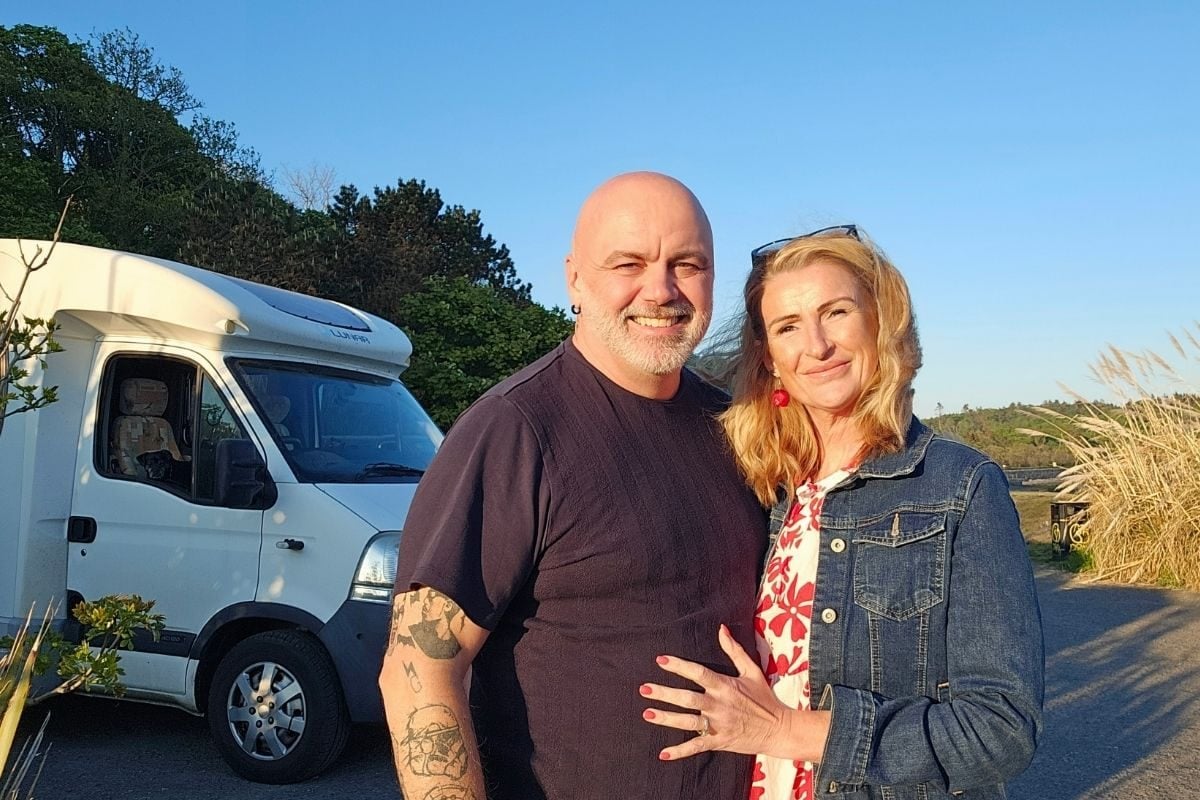
My wife and I live full-time in a camper in Ireland. Not as a gap year adventure, not as a sabbatical. Full-time. Northern Ireland is our base, the whole island is our backyard, and the motorhome is home.
I’ve watched enough American RV content to know that van life looks broadly similar on both sides of the Atlantic. Sunrise shots, coffee mugs on dashboard, misty landscapes. The reality, at least on this side of the water, is a little more nuanced. Here are the things that would genuinely catch an American RVer off guard.
1. Your Rig Probably Won’t Fit
Let’s start with the most important one.
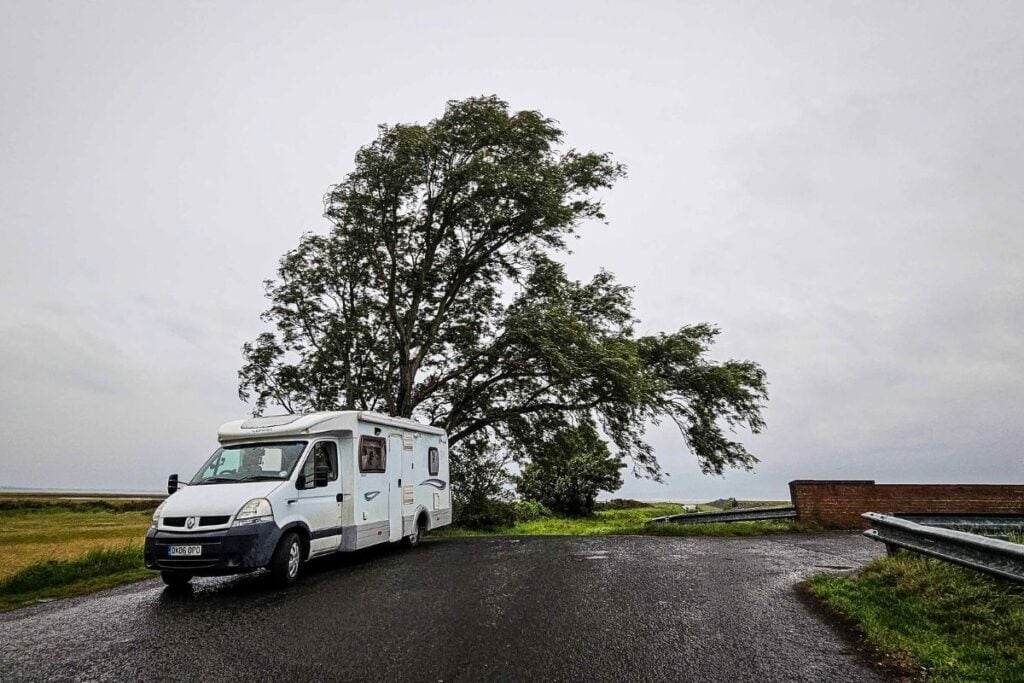
If you’re used to driving a 35-foot Class A motorhome across the American Southwest, Ireland will be a significant recalibration. Before I moved into the van full-time, I drove buses professionally. We had strict pre-planned routes that you simply could not deviate from, because if you did, you would quickly discover there was nowhere to turn. I know this from experience. I once took a wrong turn on an unfamiliar school run and had to reverse a full-size bus for two miles along a country lane before I found a farm entrance wide enough to turn into.
The child in the back seat was blissfully unaware. I, less so.
Irish roads were largely built before the concept of the motor vehicle existed, and many of them haven’t been widened since. The largest campervans you’ll commonly see here top out at around 8.5 feet wide, 23 feet long, and on a rural back road with an unrestricted 60mph speed limit, that can feel like piloting a supertanker through a letterbox.
Every bend is a surprise package. It might be a narrow stone bridge. It might be an oncoming driver who fancies himself a rally driver. It might be a sheep that has jumped the fence and is standing in the road with the thousand-yard stare of an animal that has made a decision about its own future.
Sheep in Ireland are, in my experience, notoriously indifferent to their own survival. Factor that into your journey times.
Campsite infrastructure compounds this further. The parking bays are sized for European campervans and caravans. The drainage systems, where they exist at all, are not built for American-scale rigs. The grey and black waste pipes you’d hook up to at a US RV park? In Ireland, you carry your cassette toilet to a communal point, empty it, rinse it, rinse it again, and walk it back. It’s humbling, but it becomes routine quickly enough.
2. “Full Hookups” Means Something Very Different Here
A typical Irish campsite hookup consists of two things: a low-amperage 3-phase electrical outlet and a threaded brass tap for water. If you’re lucky, there’s a drain nearby, though it’s usually positioned directly under the tap as a precaution against winter pipe bursts, so you’ll need a hose to reach it regardless.
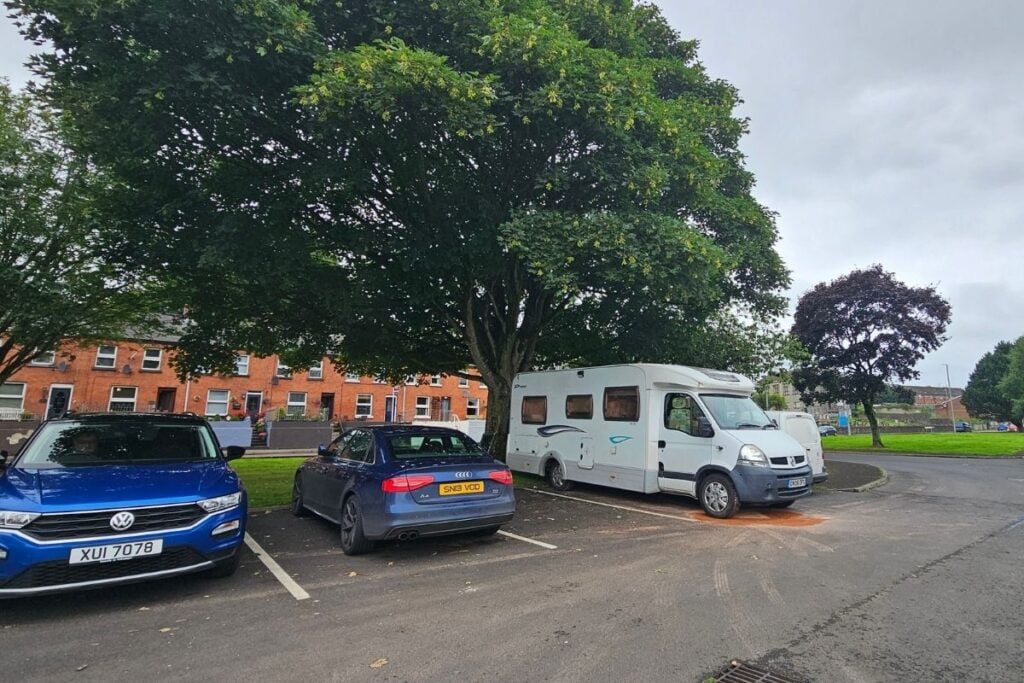
WiFi, where it exists, is optimistic at best. More than once we’ve been on a site where the connection was so unreliable that sending a message felt like an act of faith. Cell coverage in the more remote and scenic parts of Ireland can be similarly patchy. If you want reliable internet, and if you’re working remotely you absolutely need it, Starlink is not a luxury out here. It’s infrastructure.
Wild camping is technically not permitted in Ireland, but it is also not aggressively enforced. You’ll see “no overnight parking” signs at beaches and seafront spots, and those signs largely exist for tidal safety reasons rather than because a warden is going to knock on your door at 3am. We’ve stayed in spots like that, used common sense, and had no issues.
There are a small number of Aires-style stopovers in Ireland, though nowhere near as many as you’d find in France or the Netherlands, and free options are rare. The app we rely on most is Park4Night, which is constantly updated by the Europe van life community with water points, gas stops, laundry spots, and waste dumping locations. It’s genuinely excellent and worth having before you arrive.
3. The Weather Will Humble You
Ireland is green for a reason.
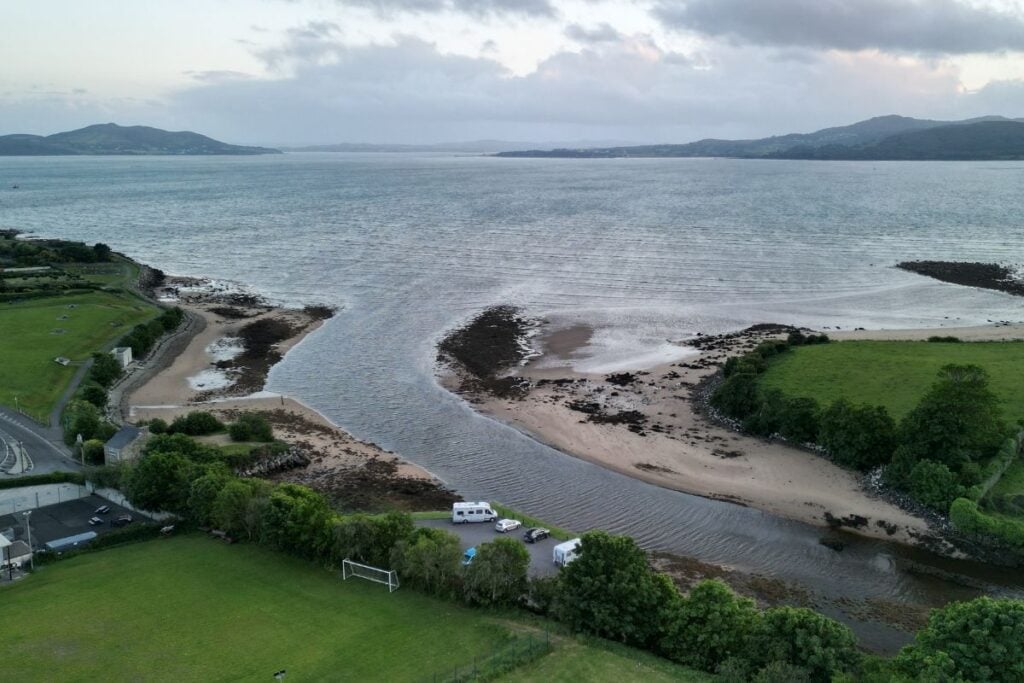
We are currently in June, which is technically summer, and we are sitting in low double figures in Celsius, which translates to the low 50s Fahrenheit. This is not unusual. The island sits at the edge of the Atlantic, and the weather comes in off the ocean with a certain confidence that it owns the place.
There is a rule about coats in Ireland that every long-term resident learns: whichever coat you bring, it will be the wrong one. You will leave the van in a light jacket and get soaked. You will bring the waterproof and bake in an unexpected 20 minutes of sunshine. You will, eventually, stop trying to predict it and simply accept it as part of the landscape.
Pack books. Card games. A decent e-reader with a well-charged battery. These are not backup entertainment. They are core equipment.
The upside is that when the sun does appear, and it does appear, the country is genuinely one of the most beautiful places on earth. The light here is unlike anywhere else. There’s a reason people come from across the world to photograph it. Just don’t plan your trip around catching it.
4. It’s Not Cheap, and Europe Is Not Small
Two persistent myths worth addressing directly.
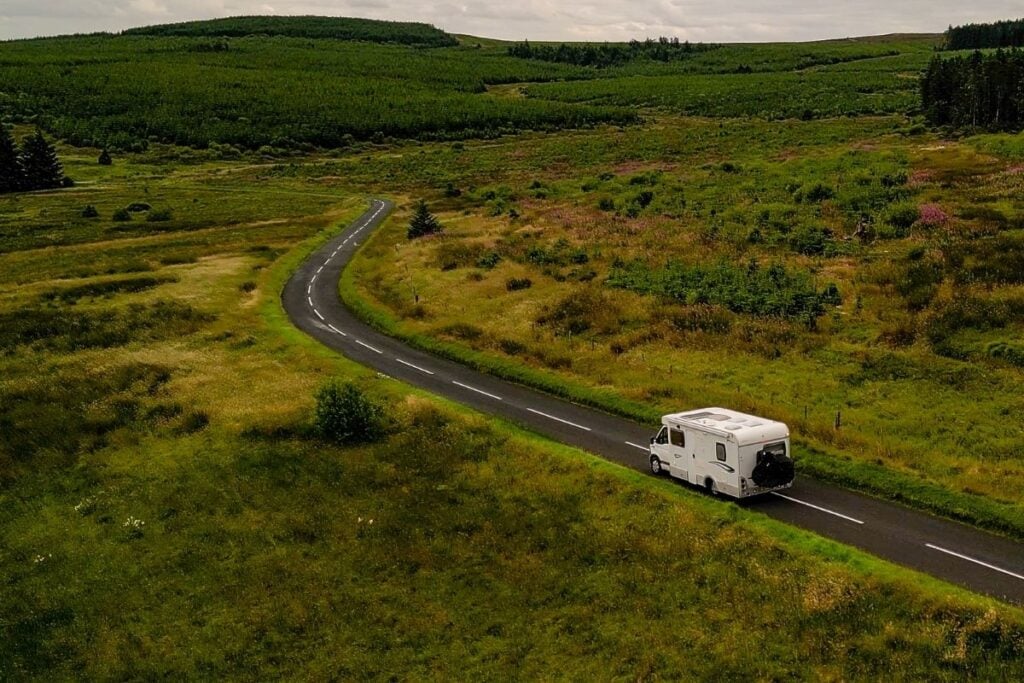
Western Europe is not inexpensive. Fuel in Ireland costs the rough equivalent of $6.50 per US gallon at current rates. Groceries in rural areas, where most of the best scenery is, skew toward convenience stores and takeaways rather than large supermarkets. If you’re near a larger town and have a loyalty card for one of the major retailers, you’ll save money, though do know that those savings come at the cost of your shopping data. It’s an open arrangement that everyone quietly accepts.
Our campervans are smaller and more fuel-efficient than their American equivalents, which helps offset fuel costs somewhat. But full-time living costs follow you regardless of the vehicle size. Insurance, maintenance, roadworthy testing, servicing, food. The costs are largely the same as anyone else’s; the difference is that you’re carrying your house with you while you spend it.
One thing that is genuinely different for full-timers here is the question of a registered address. Without one, you can’t get insurance, you can’t register the vehicle, you can’t access healthcare. We’re fortunate in that we own property and our adult children live there, which gives us a legitimate address without any complicated arrangements. Not everyone has that option, so it’s worth thinking through before you commit to full-time life.
And on the subject of Europe being small: it isn’t. There are 27 countries in the EU alone, plus the UK, spread across a continent that takes weeks to cross properly. You cannot do Europe in a week. You can do a very expensive, very rushed impression of it. If you’re planning a proper campervan tour, plan in months, not days.
5. Those Instagram Shots Took Two Hours of Hiking to Get
The ruined castle on the cliff. The empty beach at golden hour. The winding coastal road with not another vehicle in sight.
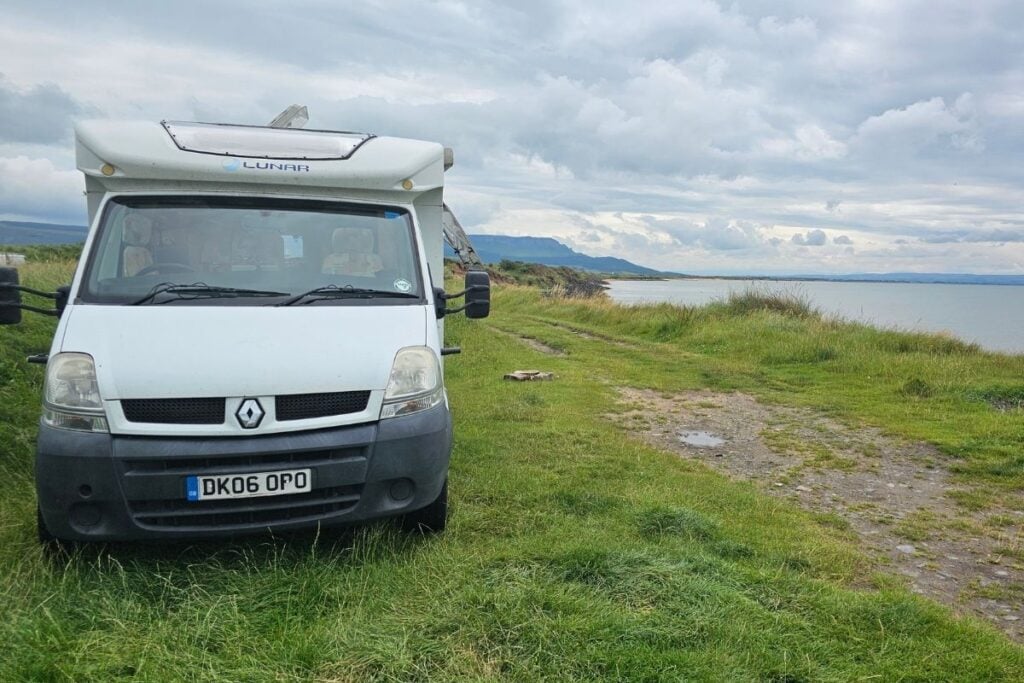
These images are real. They are also the result of someone getting up early, driving to a car park that may or may not accommodate a vehicle of your size, hiking for the better part of an hour or two, and getting extraordinarily lucky with the light.
You cannot simply pull over and take that photograph. Getting to the iconic spots requires planning: find the parking, make sure it works for your vehicle, and think about how you’re getting back out again before you commit to the maneuver.
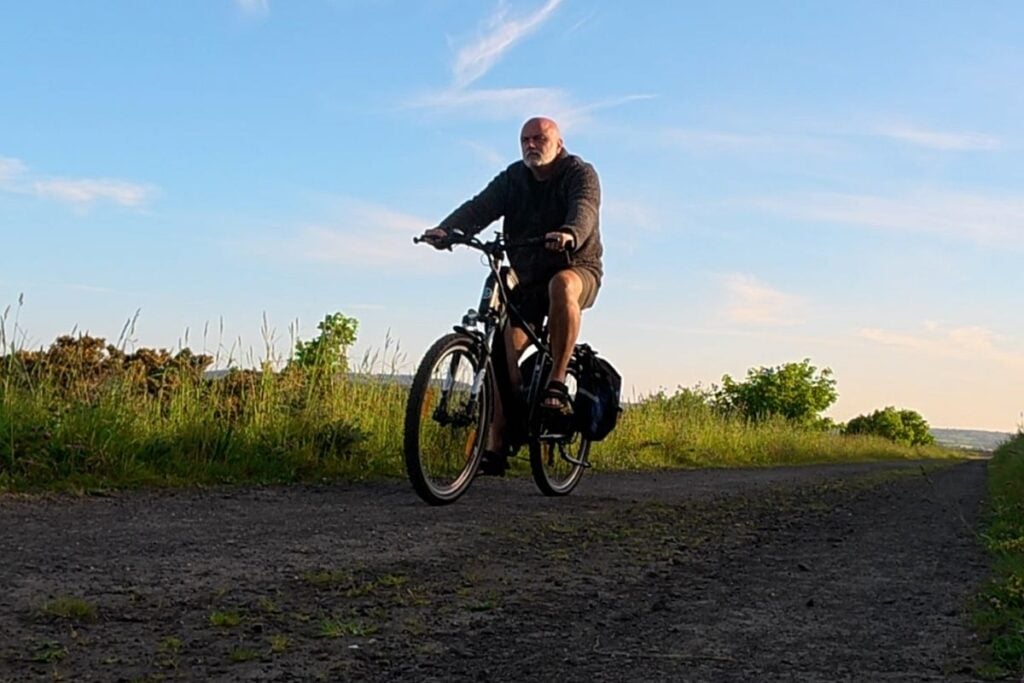
I bought an e-bike specifically to bridge the gap between where the van can park and where the view actually is. It’s become one of the best investments of the whole setup.
One tip that I’ll share freely: if there’s a spot you want to photograph at dawn, go the evening before. Park up overnight. You’ll have the car park to yourself, you’ll know your exit route, and you’ll wake up already there, while everyone else is still an hour away in traffic. It works every time.
One more thing worth mentioning, because Irish pubs will inevitably come up on any Ireland trip: they are genuinely wonderful, welcoming places with a warmth that’s hard to describe until you’ve experienced it. Match the energy of the room. If it’s quiet, keep your voice down. If there’s a session happening and someone has a fiddle out, you’re allowed to get louder. And if you’re coming to reconnect with Irish heritage, that’s a beautiful thing to do.
Just know that being American with Irish roots makes you American with Irish roots, not Irish. Once you’re clear on that distinction, you’ll be welcomed warmly, invited to buy a round, and probably surprised by how strong the pints are. Pace yourself. Three pints here is considered a warm-up by most standards, and the alcohol content is not what you might be expecting.
The Honest Summary
Living full-time in a campervan in Ireland is one of the most rewarding things we’ve ever done. The landscapes are extraordinary, the people are genuinely kind, and there is always somewhere new to park up and explore.
But it is not the wide-open-road RV life that American content has made famous. The roads are narrow, the infrastructure is minimal by US standards, the weather requires a philosophical outlook, and the logistics take some learning.
Come with a smaller vehicle than you think you need, more patience than you think you’ll require, and a very good waterproof jacket. You’ll have the time of your life.
Darron runs Digital Nomad NI, documenting full-time motorhome life in Ireland and beyond. You can follow along at digitalnomadni.com or on Instagram, YouTube, TikTok, Facebook, and Bluesky.