

What Do Sailors Keep On Board for Protection? Hundreds Answered: From Guard Dogs to Chuck Norris

We asked hundreds of cruisers what they keep on board for protection — and the answers ranged from dogs and flare guns to condoms and Chuck Norris. Behind the jokes: genuinely smart boat security advice.
*This post may contain affiliate links. Please read our disclosure policy for more info.
When my popular sailing Facebook page asked cruisers what they keep on board for protection, the comments quickly filled with hundreds of replies.
As you might expect, many people immediately thought of pirates or intruders, but others pointed out that protection at sea means much more than self-defense.
Protection From What?
As Jayne Dixon, Craig Weis, and Ed Edelenbos pointed out, “protection” means different things to different sailors.
For most cruisers, the biggest dangers are not pirates or armed intruders. You’re far more likely to deal with rough weather, equipment failures, accidental falls overboard, or even a galley fire than a dramatic boarding at sea.
That doesn’t mean personal security doesn’t matter. Theft can be a concern in some marinas and anchorages, and a handful of cruising grounds have a history of robberies or pirate attacks.
However, where you sail makes a huge difference. Many long-term cruisers spend decades exploring the world’s coastlines without ever feeling threatened by another person.
Staying Safe With Essential Safety Equipment
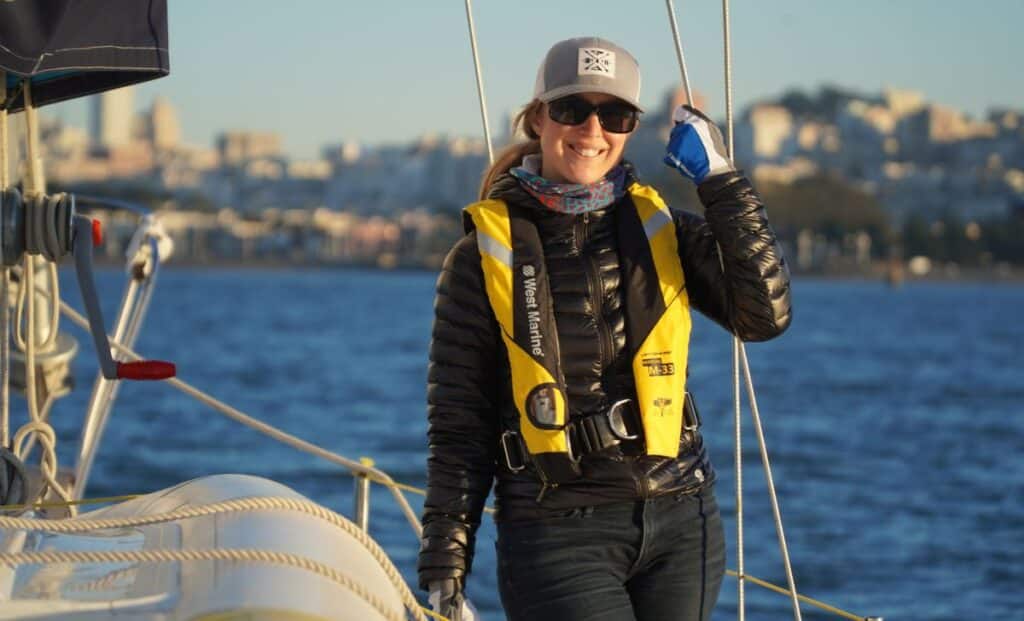
Some of the most sensible answers had nothing to do with weapons. Gary Longaberger replied “automatic bilge pump”, while Garry Young listed “life jackets, fire extinguisher, flares, and airborne.”
There was also a lot of talk about flare guns. Some sailors clearly intended them as emergency signaling equipment, while others seemed to think of them as a form of defense. It’s worth bearing in mind that flares exist to attract attention in an emergency, not to act as weapons. They can also be dangerous and illegal to misuse.
Natasja van Emden mentioned “sun cream, bug repellent, a life jacket, a good anchor and enough anchor chain.” That might be one of the most practical answers in the whole thread. Before worrying about dramatic threats, most boats need to be ready for fire, flooding, bad weather, falls overboard, medical issues, and dragging anchor.
Protecting Yourself From The Elements
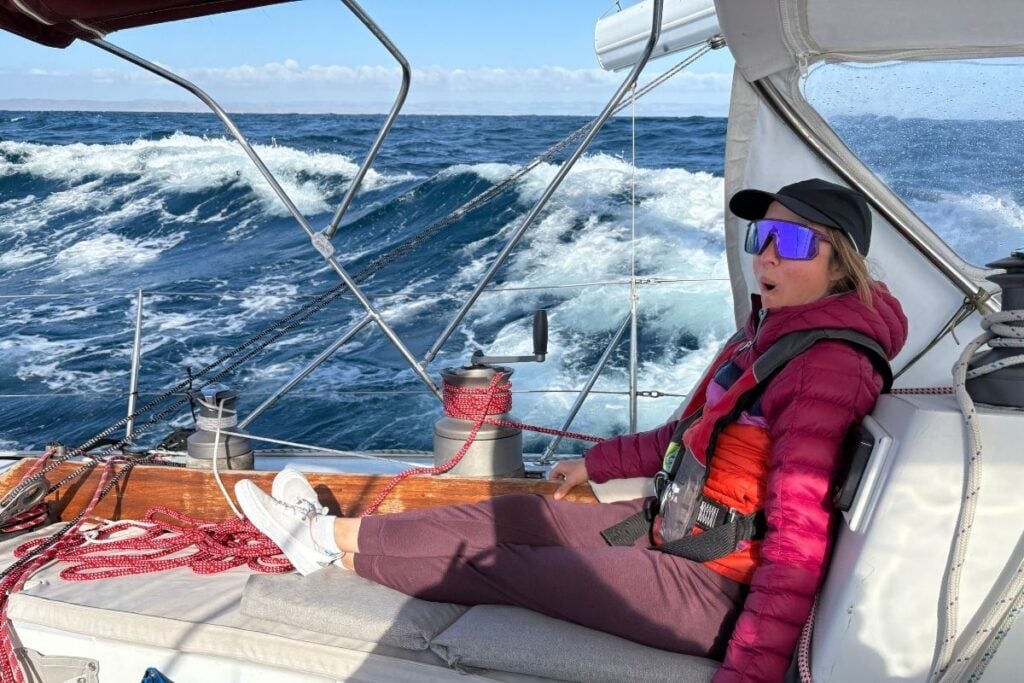
Sun protection was one of the most common answers. Kris Teviotdale simply replied, “Factor 50 – I’m ginger,” while Neil Nowacki and Pretty Malone both recommended SPF 50+.
Anyone who has spent a full day at sea knows how intense the sun can be when it’s reflecting off the water. Some sailors also wear sunglasses and sun hoodies, especially when using the dinghy.
Other Facebook users focused their answers around staying dry and comfortable. Jack Blake summed it up with the classic Australian advice: “Slip on a shirt. Slop on some sun cream. Slap on a hat.” Peter Hindmarsh added Aeroguard insect repellent, because mosquitoes can be a real problem in some cruising destinations. In tropical areas, they’re more than just an annoyance – they can carry diseases such as Dengue fever.
Dogs As A Security System

A very popular answer was dogs. Cruisers mentioned everything from a Keeshond, a Blue Heeler, and several German Shepherds and Rottweilers to a fearless Schipperke and even a Border Collie.
Cats got a mention too. David Boys-Hawley described a friend with “the biggest, angriest Maine Coon cat you’ve ever seen,” saying nothing frightened would-be intruders more than “a large hairy paw” appearing over the toe rail.
While some of the comments were tongue-in-cheek, there’s a good reason dogs are so popular on cruising boats (we even have a full guide to training a boat dog). They provide an early warning if someone approaches the boat at night. Their barking can put off opportunistic thieves, and many people won’t risk approaching a boat with a dog on it. Even a relatively small dog may be enough to convince someone to move on to an easier target.
Weapons
The comments mentioned everything from flare guns, spearguns, knives, baseball bats, pepper spray, and wasp spray to bows, cutlasses, and firearms of every description.
The problem is that what’s legal in one country might be illegal in the next. Cruising boats regularly cross international borders, and every country has its own rules about firearms and other defensive equipment. Something you can legally carry at home could be confiscated, earn you a hefty fine, or even get you arrested somewhere else.
If you choose to carry one, make sure you understand how to use it safely and what could happen if you ever need to use it.
Perhaps the most interesting takeaway from the discussion was that many experienced cruisers didn’t carry firearms at all. Many choose to rely on prevention rather than self-defense.
Common Sense
If there was one message that kept coming up throughout the comments, it was that your best form of protection isn’t something you can store in a locker.
Charles Mulholland answered simply, “Brains and wisdom.” Jeff Martin listed “Common sense” as his number one form of protection, while Ken Johnson began his answer with “A sound mind” before mentioning anything else.
The Funniest Answers
Not every cruiser took the question at face value. In fact, the most common answer by a long way was condoms, with sailors recommending everything from Trojans and Durex to Magnums and “extra large” versions.
But the comments became increasingly creative. There were suggestions to carry rum, a mother-in-law, banana repellent, a Mariah Carey CD, a picture of Chuck Norris, a trebuchet, or a big magnet.
Adam Miller joked it would be like watching Home Alone if anyone tried to board his vessel, while Ron Fazio claimed his best protection was simply “My personality.”
It’s exactly the sort of humor you’d expect from the sailing community.
Practical Ways To Make Your Boat More Secure
Several cruisers chose not to answer the question at all. Glen Scannell, Joe Purifoy, Matt Swenor, Mike Worley, and Willis Austin all suggested that keeping your security measures private is part of staying safe. That’s a good point. The less strangers know about what’s on board, the better.
Here are some simple security measures that can help (many pair naturally with our favorite sailboat hacks).
Do Your Research
Before visiting a new cruising area, check recent security reports rather than relying on reputation or hearsay.
Resources like Noonsite’s Piracy & Security section collect reports from cruisers around the world and can help you identify places where you should be more careful. Conditions change over time, so it’s worth checking the latest information before you arrive.
Secure Your Boat Physically
Simple physical barriers can discourage opportunistic thieves. Lock the companionway whenever you leave the boat, close and secure hatches at night, and consider fitting steel hatch bars or other reinforcements if you cruise in higher-risk areas.
Make Your Boat Visible
Most intruders don’t want attention. Motion-sensor lights, deck floodlights, cockpit alarms, cameras, and good exterior lighting can make your boat a less attractive target.
Don’t Advertise Valuables
Avoid leaving laptops, chartplotters, binoculars, cameras, or other expensive electronics on display. Lock your dinghy whenever you go ashore and don’t leave it unlocked in the water overnight.
Lean On The Cruising Community

One of the biggest advantages of cruising is that you’re rarely alone. Anchor near other cruisers when possible, introduce yourself to neighboring boats, and keep an eye out for each other. Cruisers are often the first to notice if something doesn’t look right.
Always Have A Plan
If an anchorage feels unsafe, don’t be afraid to leave. Trust your instincts, know how you’ll get away if you need to, and avoid letting a situation escalate. In many cases, the safest decision is simply to move to another anchorage.
Looking through all these answers, I couldn’t help but smile. The sailing community has a great sense of humor, but behind the jokes is a lot of practical advice.
After more than a decade of cruising ourselves along the west coast of Mexico, I’d say the best protection comes from choosing your destinations carefully, keeping your boat well maintained, staying connected with other cruisers, and trusting your instincts.
Frequently Asked Questions
Are pirates still a risk for sailors?
Yes, but only in certain parts of the world. Most popular cruising destinations are considered safe, although piracy and armed robbery are still reported in areas such as parts of the Gulf of Aden, the Gulf of Guinea, and some waters in Southeast Asia. Before visiting a new cruising area, check recent security reports on Noonsite or from local authorities.
Is it legal to carry a gun on a sailboat?
It depends on where you are. Firearm laws vary widely between countries, and crossing an international border with a gun could mean having it confiscated, being fined, or even being arrested. Always check the laws of every country you plan to visit.
Do sailors really need weapons on board?
That depends on where you sail and your personal preference. Many experienced cruisers choose not to carry weapons, while others do. For most sailors, good preparation, sensible security measures, and situational awareness are more important than what they keep on board for self-defense.
How can I make my boat more secure without carrying weapons?
Simple measures like locking the companionway, fitting strong hatch locks or bars, using good deck lighting, hiding valuables, securing your dinghy, and anchoring near other cruisers can make your boat a much less attractive target.
Are dogs good for security on a sailboat?
Many cruisers think so. A barking dog can alert you to someone approaching and may persuade an opportunistic thief to move on.
What is the biggest danger for most sailors?
For most cruisers, the biggest threats are weather, fire, accidents, equipment failures, and prolonged sun exposure rather than piracy or violent crime.
Can you carry pepper spray or bear spray on a boat?
The rules vary between countries, so always check local laws before carrying any type of defensive spray.
Should I lock my boat when I’m at anchor?
Many liveaboards lock the companionway when they go ashore and secure hatches at night, especially in unfamiliar anchorages or marinas.
Should I tell people what security measures I have on board?
Many experienced cruisers prefer not to. Sharing details about weapons or security measures publicly can defeat the purpose. It’s usually better to keep that information private.
What should every cruising boat have on board?
At a minimum, carry the required safety equipment for your boat, including life jackets, fire extinguishers, flares, a VHF radio, a first aid kit, and suitable anchoring equipment. Good sun protection and foul weather gear are equally important.




I made a six-inch barrel insert that goes into my 25mm flare gun, It holds a 12 ga shotgun shell. You need to keep that insert and your flare gun apart as it is an issue anywhere, except when you need it. It’s a last resort; however, we should have something aboard beyond a pocketknife. As a last, last resort bore out the chamber of your 12 ga flare gun so it will take a 12 ga low base shell. It might only last one shot so make it a good one.