I lived on a sailboat in San Francisco for three years without a liveaboard permit. Here’s why that’s getting harder to pull off, everywhere

Living aboard is legal almost nowhere by right and almost everywhere by permit, and the permits are capped. Washington and San Francisco Bay at 10 percent, Honolulu at 129, Florida after 14 nights at anchor. The map, state by state.
*This post may contain affiliate links. Please read our disclosure policy for more info.
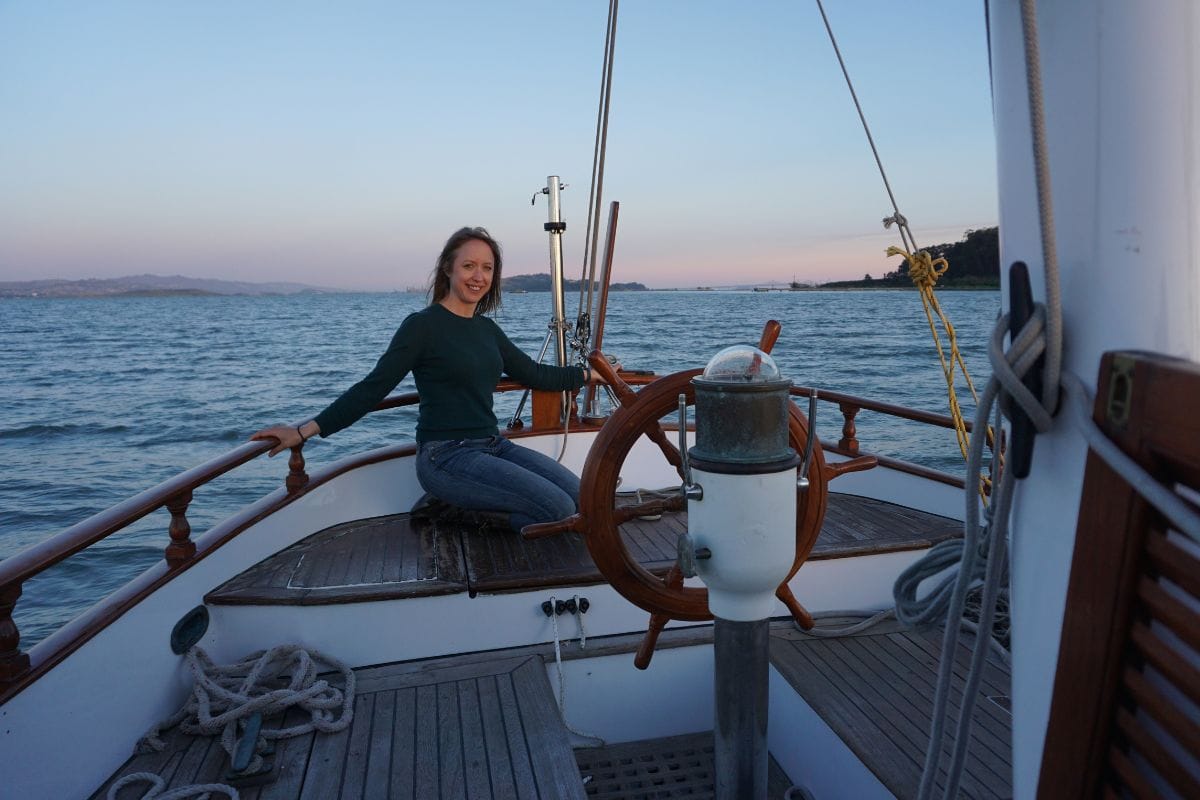
We never had liveaboard status in San Francisco. About ten percent of the slips in our marina were set aside for it, the waitlist ran for years, and the liveaboard fee could reach $1,500 a month, so for three years we paid about $400 for a regular slip, slept aboard the few nights a week the rules allowed, and anchored out at Angel Island and China Camp or slept in the van the rest. A lot of the time, I got pet-sitting jobs so we could be away from the boat. That ten percent was not the marina being difficult. It was the law.
Here is the short version of that law, everywhere we could read it. Living aboard in the United States is legal almost nowhere by right and legal almost everywhere by permit, and the permits are capped.
Washington caps liveaboards at ten percent of a marina’s slips by state rule. San Francisco Bay caps them at ten percent by the Bay Plan. Honolulu’s Ala Wai harbor is capped at 129 permits and stopped issuing new ones. Florida, the state with the most liveaboards, now requires a free permit after fourteen nights at anchor and lets its biggest counties limit anchoring to thirty nights in six months. Texas, Maryland and Connecticut spent this year arguing about permits, inspections and bans. The honest catch is that none of this stops you from living on a boat; it decides where, for how long, and at what price.
This piece is the map. It sits beside our guide to anchoring rights, which covers the water side, and the seven questions every liveaboard gets asked, which covers the life.
Two different laws govern a liveaboard, and most people only know one

The first is the marina rule: who may sleep aboard in a slip, how many nights before you count as a resident, how many residents the marina may hold, and what they must prove. That is usually a state or regional rule about public waterfront land, applied through a permit the marina issues. The second is the anchoring rule: how long a boat may sit on the hook in a given water before it must move. That is a state statute, increasingly delegated to counties and cities. A liveaboard who leaves a marina to dodge the first law sails straight into the second, and in Florida that is the exact play the new statutes were written to close.
The marina caps, state by state
| Where | The rule | Where it comes from |
|---|---|---|
| Washington (statewide) | Liveaboards and houseboats together may not exceed 10 percent of a facility’s slips unless the city or county set a different share in its shoreline master program. Boats over the cap when the rule took effect may stay; no new ones until attrition brings the facility under the limit. | WAC 332-30-171(6), the state aquatic-lands rule |
| San Francisco Bay, California | Live-aboard berths are limited to 10 percent of a marina’s berths under the Bay Plan, adopted after a public debate in the mid-1980s; the policy has the force of law under the McAteer-Petris Act. Only boats used as a primary residence count. | San Francisco Bay Conservation and Development Commission (BCDC), Bay Plan live-aboard policy |
| Newport Beach, California | A live-aboard permit is required at moorings and in marinas, renewed yearly, non-transferable, with a holding-tank requirement; the harbor is a no-discharge zone and availability is limited. | City of Newport Beach Harbor Department |
| Anacortes, Washington (Cap Sante Marina) | A liveaboard is anyone residing aboard more than 15 days in 30. The program is capped at 100 vessels, requires a background check for every adult, a minimum 32-foot documented boat that is seaworthy and cruising-ready, a working holding tank with weekly paid pump-outs, and a 15 percent surcharge on moorage. | Port of Anacortes, Liveaboard Moorage Program Rules |
| Honolulu, Hawaii (Ala Wai Small Boat Harbor) | Hawaii Administrative Rules allow 129 live-aboard permits at the Ala Wai. The state stopped issuing new ones around 2019 over compliance problems, renewals only; permittees fell to 45 by mid-2022, and a $30,000 fine was levied on one owner for illegal liveaboards. | Hawaii DLNR, Division of Boating and Ocean Recreation; Honolulu Star-Advertiser |
| League City, Texas | A liveaboard permit is now required for anyone living aboard at a marina more than 15 days in a 30-day period (the original December 2025 ordinance said 10), with inspections, marina pump-out requirements and dumping penalties. An earlier draft capped liveaboards at 15 percent of a marina’s slips; the May 12, 2026 amendments also dropped an insurance requirement and decals after residents pushed back. | League City ordinance, Dec 2025, amended May 2026 |
| Annapolis, Maryland | The council created a 15-member task force in January 2025 to study residential and commercial vessels, including fees for marina residents; after liveaboard pushback the focus was amended toward commercial rentals. Mayor Gavin Buckley opposed it: “There is nothing more Annapolis than living on a boat.” | Annapolis City Council resolution; Chesapeake Bay Magazine |
| Connecticut | The CT Examiner reported in January 2026 that proposed state rules could bar living aboard in Connecticut waters; the article is paywalled and we could not read the rule text, so treat this as a report to verify with the state Department of Energy and Environmental Protection. | CT Examiner, Jan 21, 2026 |
Florida, where the anchoring rule became the liveaboard rule
Florida did not cap marinas. It went after the boat that never comes in. Three layers now stack on any liveaboard at anchor.
- The permit. Since January 1, 2026, any vessel anchored within one nautical mile of the same spot for 14 days or more in a 30-day period needs a free long-term anchoring permit from the Florida Fish and Wildlife Conservation Commission, renewed yearly and updated if the boat moves more than a mile. It was created by SB 164 as section 327.4111. No permit means a citation, and three citations in 24 months lets the state remove the vessel under its public-nuisance law.
- The anchoring limitation areas. Under section 327.4108 a county may designate areas where nobody may anchor more than 45 consecutive days in any six months. St. Lucie County drew two on June 1, 2026, in the Indian River Lagoon and Fort Pierce Harbor, after hauling out about two dozen derelict boats the year before. In Monroe County a vessel must move at least half a nautical mile every 90 days.
- The big-county rule. HB 481 of 2025 lets the five counties over 1.5 million people (Miami-Dade, Broward, Palm Beach, Hillsborough, Orange) bar overnight anchoring for more than 30 days in any six-month period. The City of Miami passed a 30-night limit in November 2025 for its designated waterways, with a 300-foot buffer around mooring fields, and its Marine Patrol enforces it. Miami-Dade County advanced a countywide 30-day version on July 14, 2026; the final vote is October 20, 2026. Miami Beach, meanwhile, fines $1,000 for leaving a dinghy at a city boat ramp and removed the dock liveaboards used for water and groceries.
The quotes from the Miami-Dade hearing are worth reading whole. The sponsor, Commissioner Vicki Lopez: “We don’t want people just living on the water. There are hazards. Services cannot be provided.” Commissioner Kionne McGhee, who voted to advance it anyway: “We know it’s not right.” A liveaboard named Burt Korpela, who says the Dinner Key anchorage grew by about 150 boats in six months: “How do we work? How do we live? This law is running us out of business.” That is the whole argument, in three sentences, and it is the argument every waterfront city is about to have.
What the caps have in common

Read the rules above side by side and they ask for the same four things: a working holding tank and proof you pump it out, a boat that can move under its own power, insurance or a background check, and a number that keeps residents a minority in the marina. The numbers are the part that shrinks. Ten percent is the West Coast standard and has been for forty years; League City’s draft was 15; Cap Sante counts in boats, not percent. When a rule gets tightened, it is usually the trigger that moves, from 15 nights to 10 and back to 15 in League City, from no permit to a permit at 14 nights in Florida.
The reasons cited are always the same three: sewage, derelict boats, and neighbors. Every liveaboard I know keeps a pump-out receipt in the nav station for exactly this reason. The permit systems punish the boat that cannot prove it, and the caps make the rest of us compete for what is left.
Where you can still live aboard, honestly
- In a permitted slip, if you can get one. Every marina with a liveaboard program has a list, and the list moves when a boat leaves. Ask for the cap number and where you sit on it before you buy the boat, not after.
- Part-time, below the trigger. Most rules define a liveaboard by nights per month: 15 in 30 at Cap Sante and League City, “primary residence” in Washington and the Bay. Our San Francisco years were exactly this, a few nights a week aboard and the rest at anchor or in the van.
- At anchor, inside the clock. Florida’s 14-day permit is free and its 45-day and 30-day limits reset when you move; the anchoring rights guide has the West Coast time limits too. A boat that actually moves is the boat every one of these laws exempts.
- Somewhere the rules were written for cruisers. We keep our boats in Mexico now, hauled out each hurricane season at a DIY yard that costs a fraction of a California marina; the whole year’s cost is here. Nobody there asks how many nights we sleep aboard.
If your state, harbor or marina has a rule that is not in this table, tell me in the comments with the name and the year it changed. This list updates, and the sailing community is where I hear about these first.
Frequently asked questions
Is it legal to live on a boat in the United States?
Generally yes, but almost always by permit. Marinas issue liveaboard permits under state or regional rules that cap residents, commonly at 10 percent of slips in Washington and San Francisco Bay, and anchoring is limited by state statutes such as Florida’s 14-day permit and 30- or 45-day anchoring limitation areas.
What is the 10 percent liveaboard rule?
Washington’s aquatic-lands rule (WAC 332-30-171) and the San Francisco Bay Plan both limit liveaboard boats to 10 percent of a marina’s slips unless local government sets a different share. Boats over the cap when the rule took effect may stay, but no new ones are added until the marina falls under the limit.
Do you need a permit to anchor long-term in Florida?
Yes. Since January 1, 2026, a vessel anchored within one nautical mile of the same spot for 14 or more days in any 30-day period needs a free long-term anchoring permit from the FWC under section 327.4111. Three citations within 24 months can lead to the vessel being removed.
How many nights aboard make you a liveaboard?
It depends on the rule. Cap Sante Marina in Anacortes and League City, Texas both use more than 15 nights in a 30-day period; Washington and the Bay Area define it as using the boat as your primary residence. Check the marina’s own program rules.
Which cities are restricting liveaboards right now?
Miami (30 nights in six months in designated waterways, since November 2025), Miami-Dade County (a 30-day countywide limit with a final vote set for October 20, 2026), St. Lucie County (45-day anchoring limitation areas since June 1, 2026), League City, Texas (permits after 15 nights, amended May 2026), and Annapolis (a task force studying fees and rules).
Sources
- WAC 332-30-171, Residential uses of aquatic lands (Washington State Register)
- BCDC, Houseboats and Live-aboard Boats staff report and Bay Plan policy (PDF)
- Bay Crossings, State agency to boating community: stop worrying and learn to love BCDC
- City of Newport Beach, Live Aboards
- Port of Anacortes, Cap Sante Marina Liveaboard Moorage Program Rules (PDF)
- Hawaii DLNR, fines approved for owner of a boat used as an illegal liveaboard (June 2, 2022)
- Honolulu Star-Advertiser, Crackdown at Ala Wai Small Boat Harbor nets illegal live-aboards (June 7, 2022)
- Houston Public Media, League City Council makes changes to controversial liveaboard ordinance (May 14, 2026)
- Community Impact, League City ordinance affects live-aboards (May 18, 2026)
- Galveston County Daily News, League City revises liveaboard ordinance after months of community pushback
- Chesapeake Bay Magazine, Annapolis liveaboard boaters fight city task force (Jan 2025)
- CT Examiner, New rules may ban liveaboard boats in Connecticut waters (Jan 21, 2026)
- FWC, Long Term Anchoring Permit
- Keys Weekly, New long-term anchoring permit required for vessels in Florida waters (May 30, 2026)
- Florida Sea Grant, A review of the 2025 legislative session (SB 164, HB 481)
- Fla. Stat. 327.4108, Anchoring of vessels in anchoring limitation areas
- WFLX, St. Lucie County implements new 45-day anchoring limits (June 8, 2026)
- WLRN, Sunken dreams: new anchoring rules address Miami’s liveaboards (Dec 18, 2025)
- WLRN, Miami-Dade advances live-aboard boating ban despite reservations (July 14, 2026)
- NPR, Miami Beach live-aboard boaters crackdown (Sept 3, 2024)
Rules checked September 2026. Forest orders, ordinances and statutes change; the links above are the pages we read, and each one is the place to confirm the current version before you rely on it.