Cozy Van Interior Ideas: 18 Real Van Interiors That Feel Like Home, and Why They Work

Eighteen real campervan interiors that feel like home, from a made bed in a forty-year-old VW to a wood-slat ceiling, with one line on why each one works and how to copy it in your own van.

*This post may contain affiliate links. Please read our disclosure policy for more info.
I once spent a night at a $600 hotel and ended up on the chaise lounge because the bed was worse than my van’s. Three inches of Sailrite foam, a window at my feet, my own blanket. Van life has ruined me for fancy, and it taught me what cozy actually is.
Cozy is not a style you buy. It is light you can read by, a bed you want to climb into at four in the afternoon, wood or fabric where there used to be bare metal, and a few things on the wall that are yours. The catch is that every soft thing in a van collects dust and every plant needs a seatbelt, so the trick is choosing the ones that earn their space.
Here are 18 real van interiors from people who got it right, with one line each on why it works, so you can steal the idea instead of the whole van.
Start with the bed, because the bed is the room
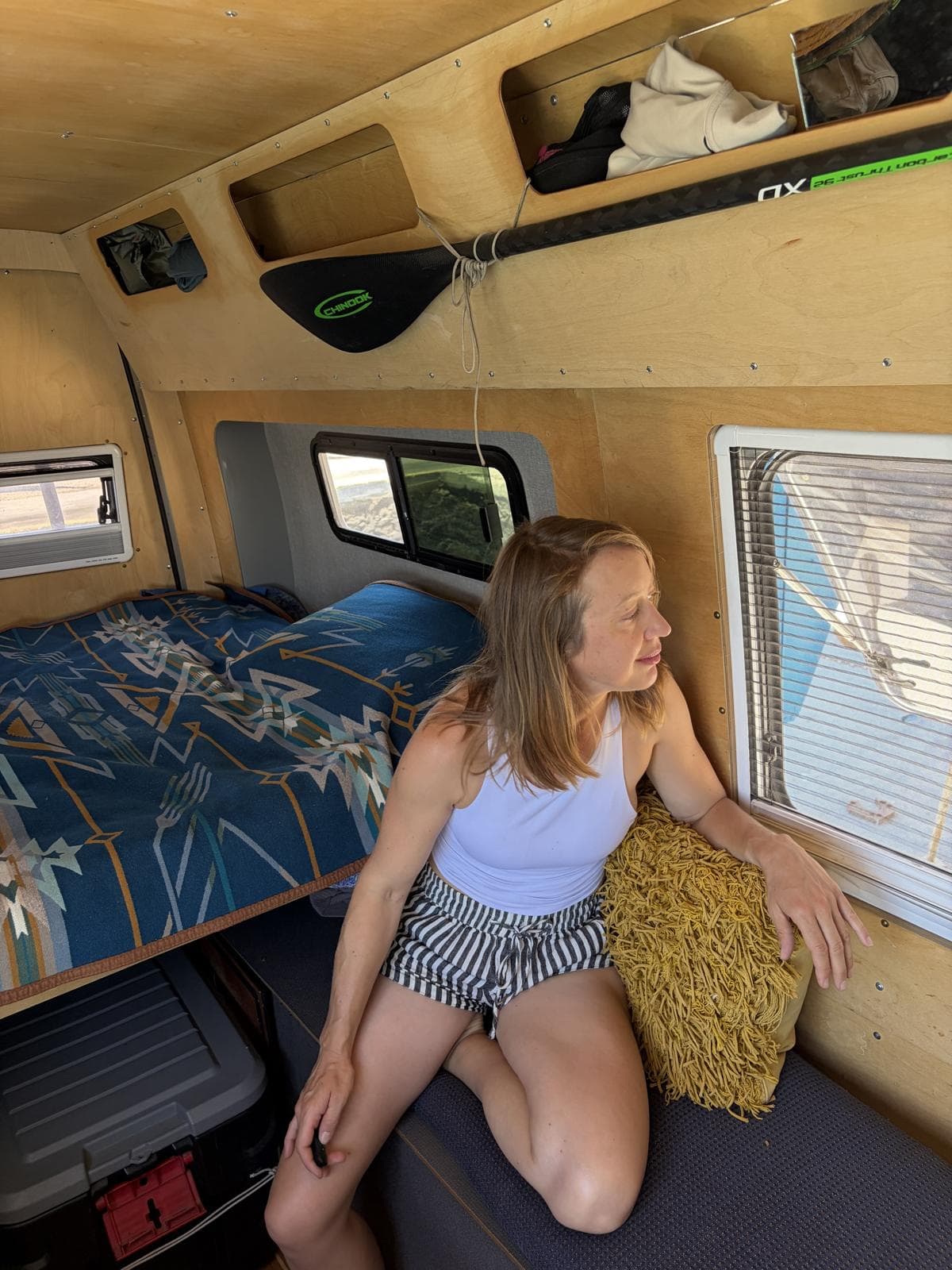
In a van the bed is the couch, the office and the reading chair, so it gets the budget. Mine is a slab of firm foam with a real duvet on it, not a sleeping bag, and the window sits where my head goes. A bed you make every morning turns a cargo van into a bedroom in about ninety seconds.
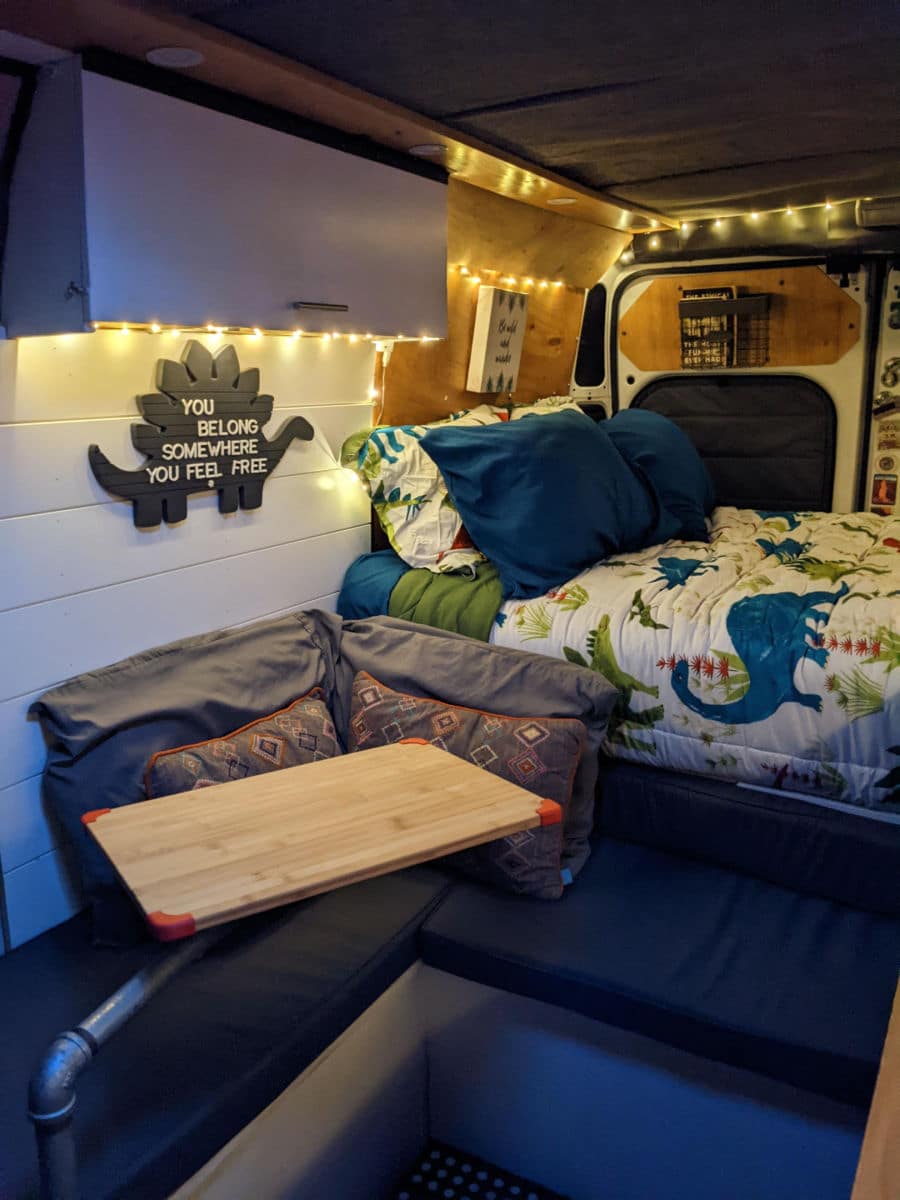
Layers do the work: a fitted sheet, a duvet, two real pillows and a throw at the foot. The duvet hides the fact that the mattress is foam, and the throw is what you reach for at the campfire.
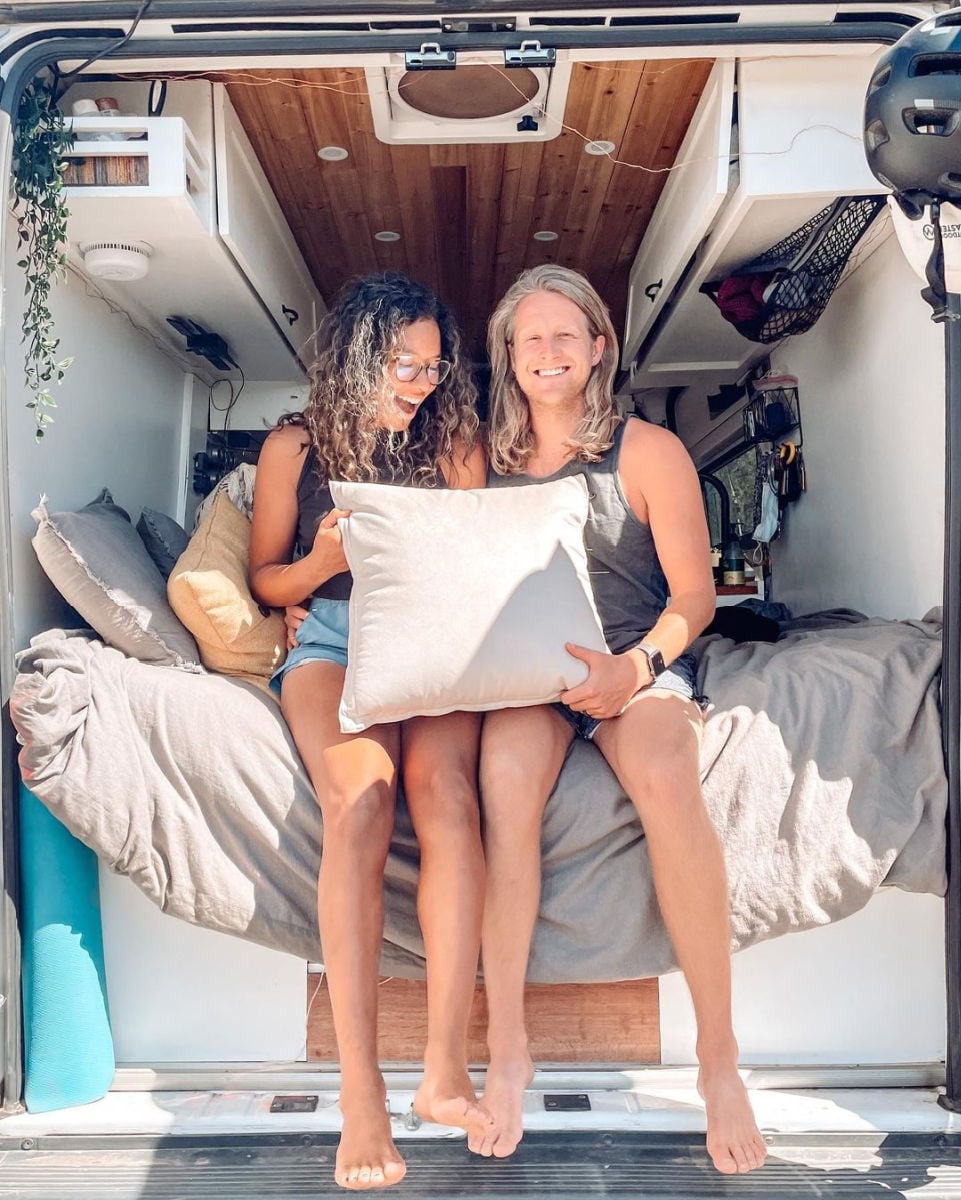
Storing blankets on the bed instead of in a cabinet is the lazy idea that also looks best. Big cushions against the wall turn the bed into a sofa by day.
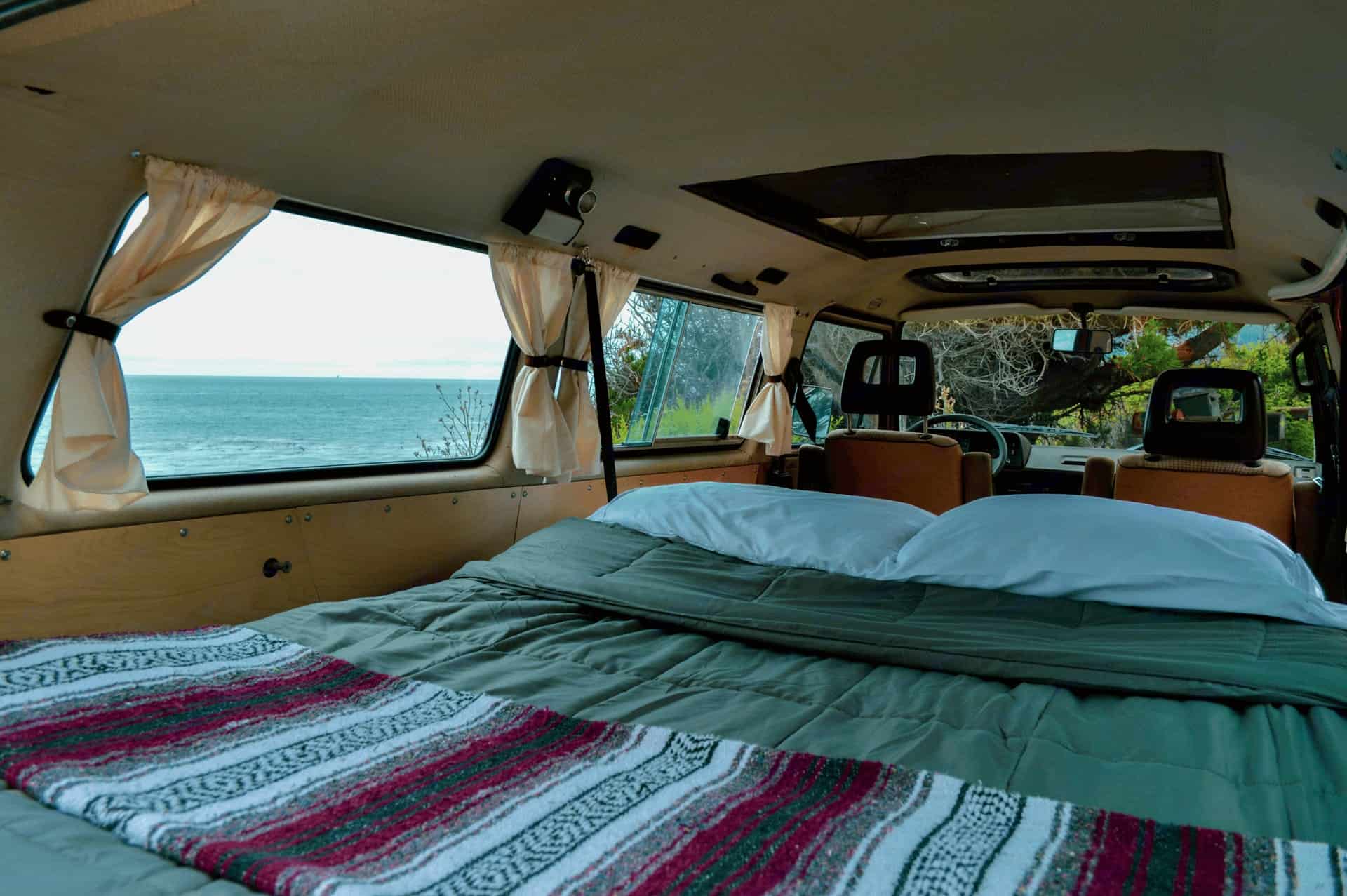
The van does not have to be new. A striped blanket and a made bed in a forty-year-old VW read cozier than most showroom builds because somebody clearly lives there.
Wood and white, the combination that always works

Almost every interior people call cozy is some version of this: white or pale walls to bounce the light, and warm wood where your hands and eyes land, the counter, the bed frame, the shelf edges. White makes the van feel bigger; wood makes it feel like a cabin.
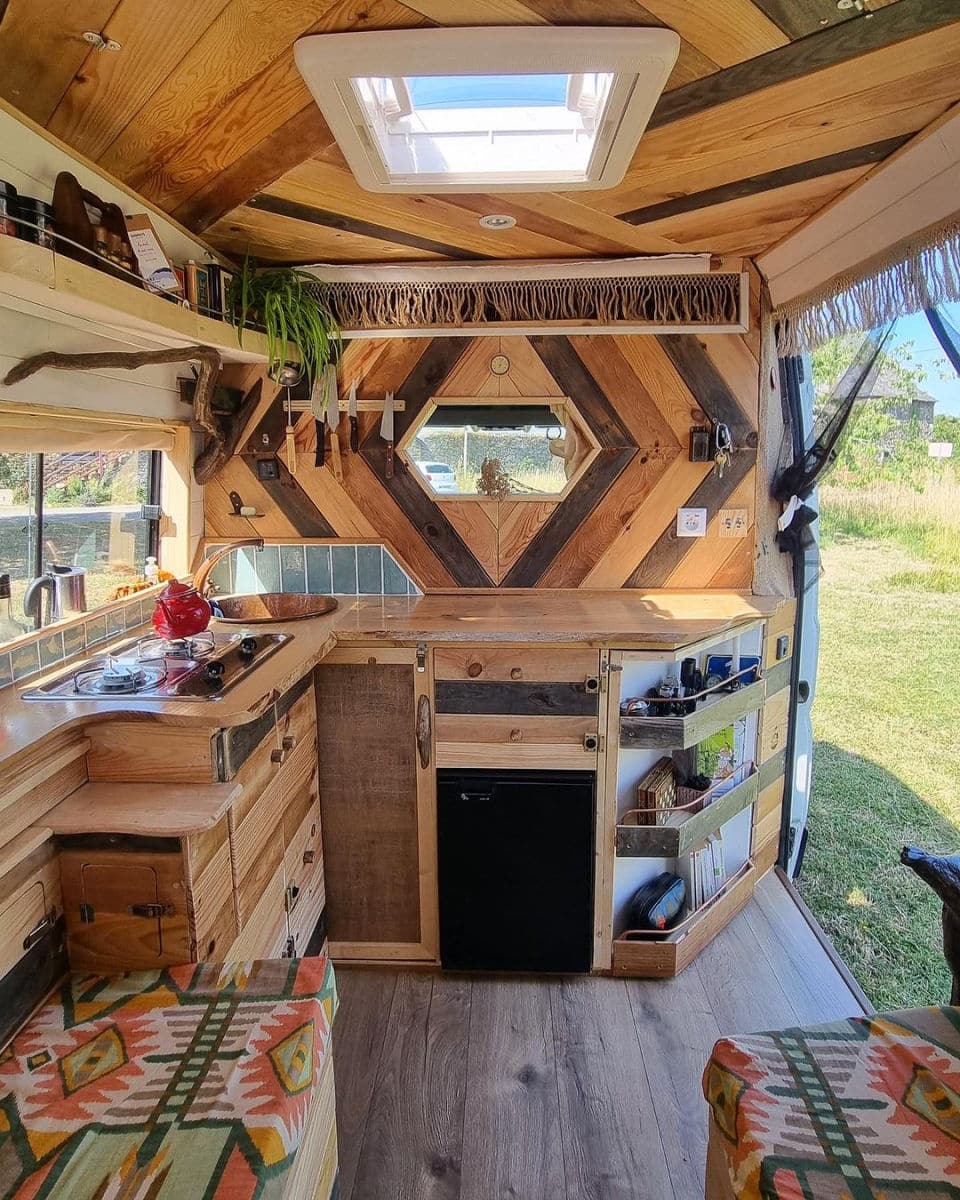
Go all the way to wood and you get a cabin. It is heavier and darker, so builds like this lean on big windows and a roof vent for light.

The ceiling is the surface you stare at from the bed, and almost nobody decorates it. Slats, tongue-and-groove or even fabric overhead change the whole feel of the van for very little weight.
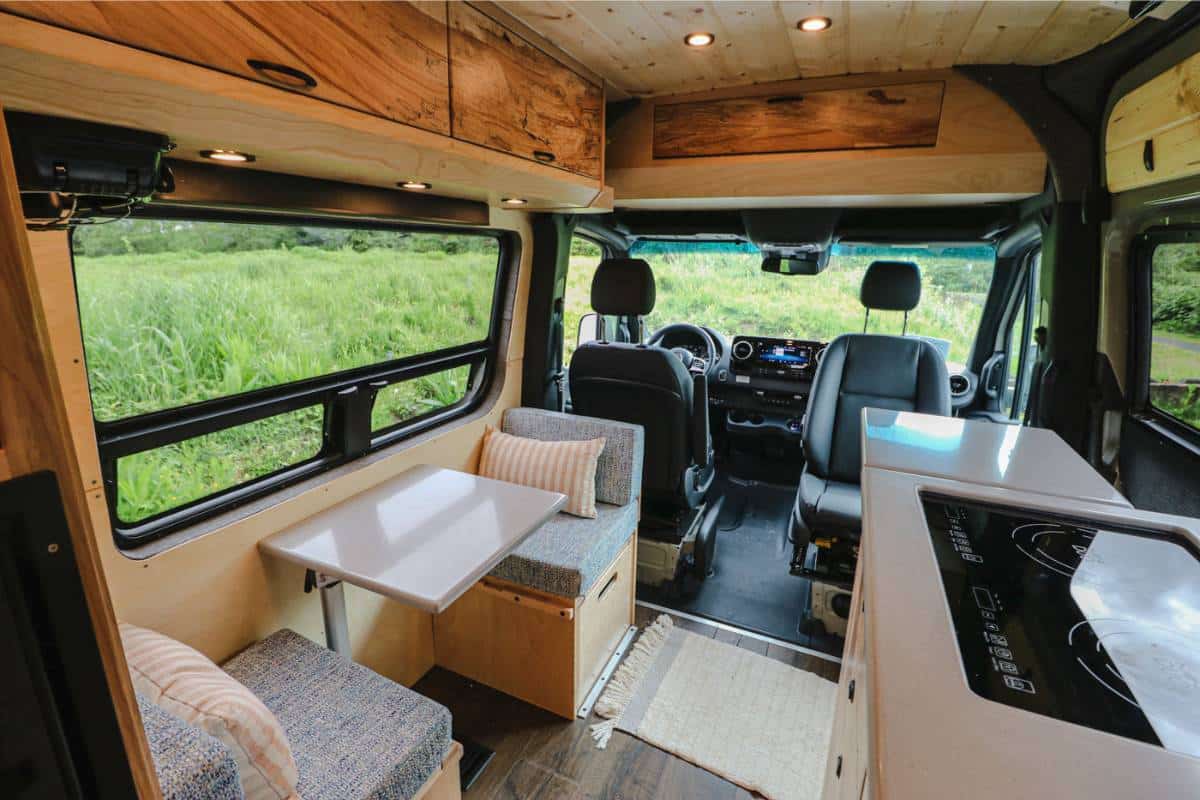
Professional builders have learned the same lesson: the cozy ones are the ones with textiles and plants, not the ones with the most cabinetry.
Light you can read by
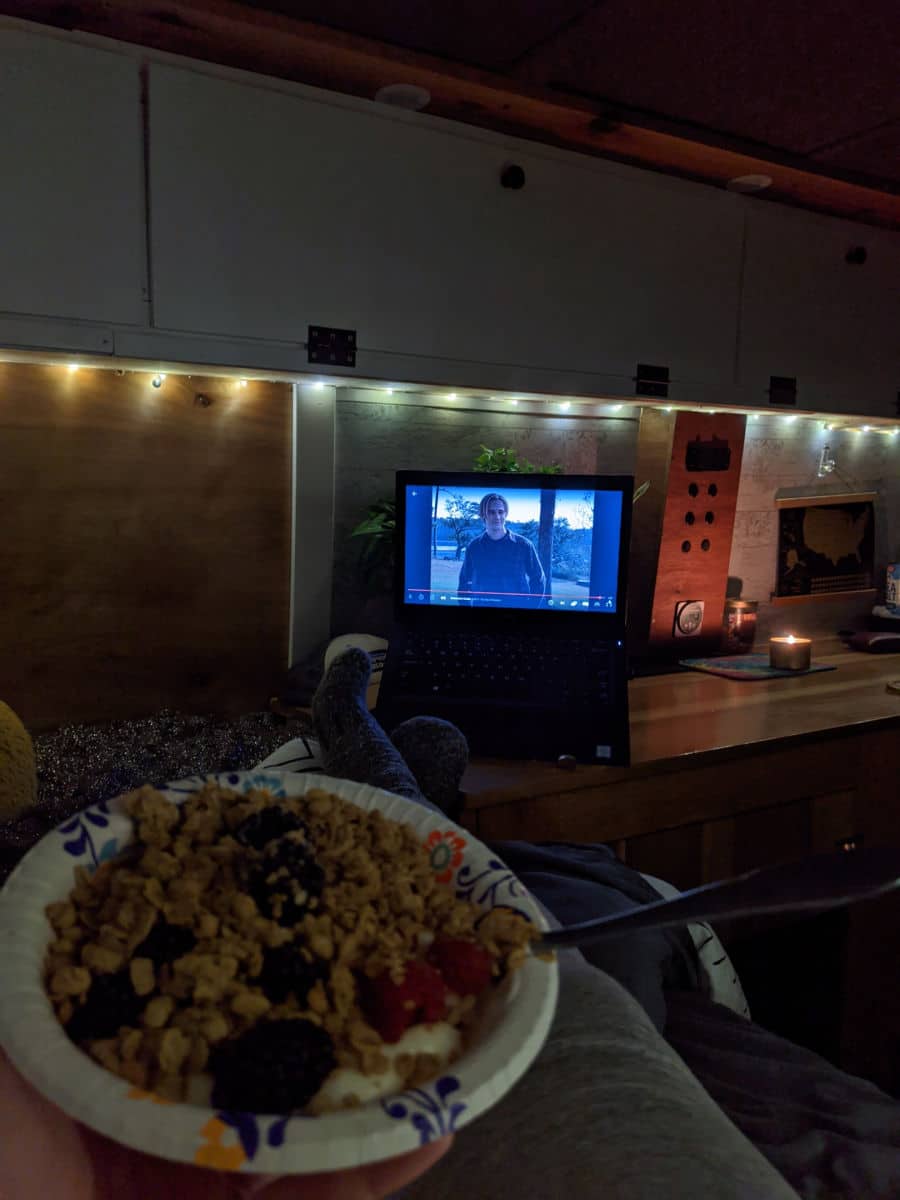
One overhead light makes a van look like a garage. Three or four small, warm lights (puck lights under the cabinets, a strip behind the bed, a lamp on the counter) make it look like a living room. Warm white, never cool white, and put at least one on a dimmer.
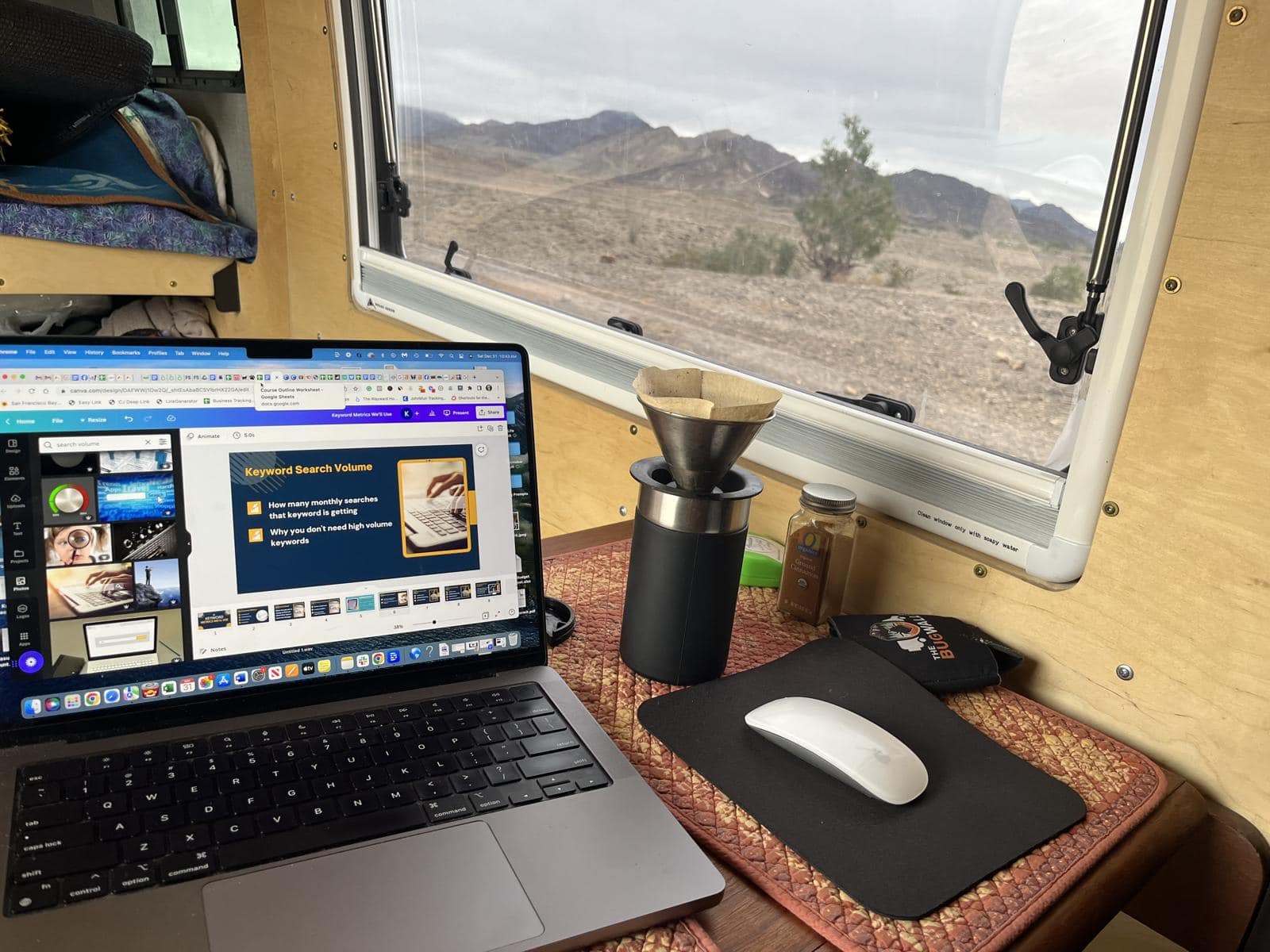
Daylight counts too. I built my little desk under the window because working with a view is the whole reason I live in a van, and because a window at eye level is free light all day.
Plants, with seatbelts

Nothing says somebody lives here like a living thing. Wall-mounted holders and hanging planters survive the drive; a pot on the counter does not. Pothos, snake plants and succulents forgive heat, cold and forgetfulness.

Hanging them along the ceiling line keeps them out of the walkway and closer to the skylight, where they actually grow.
Color and texture
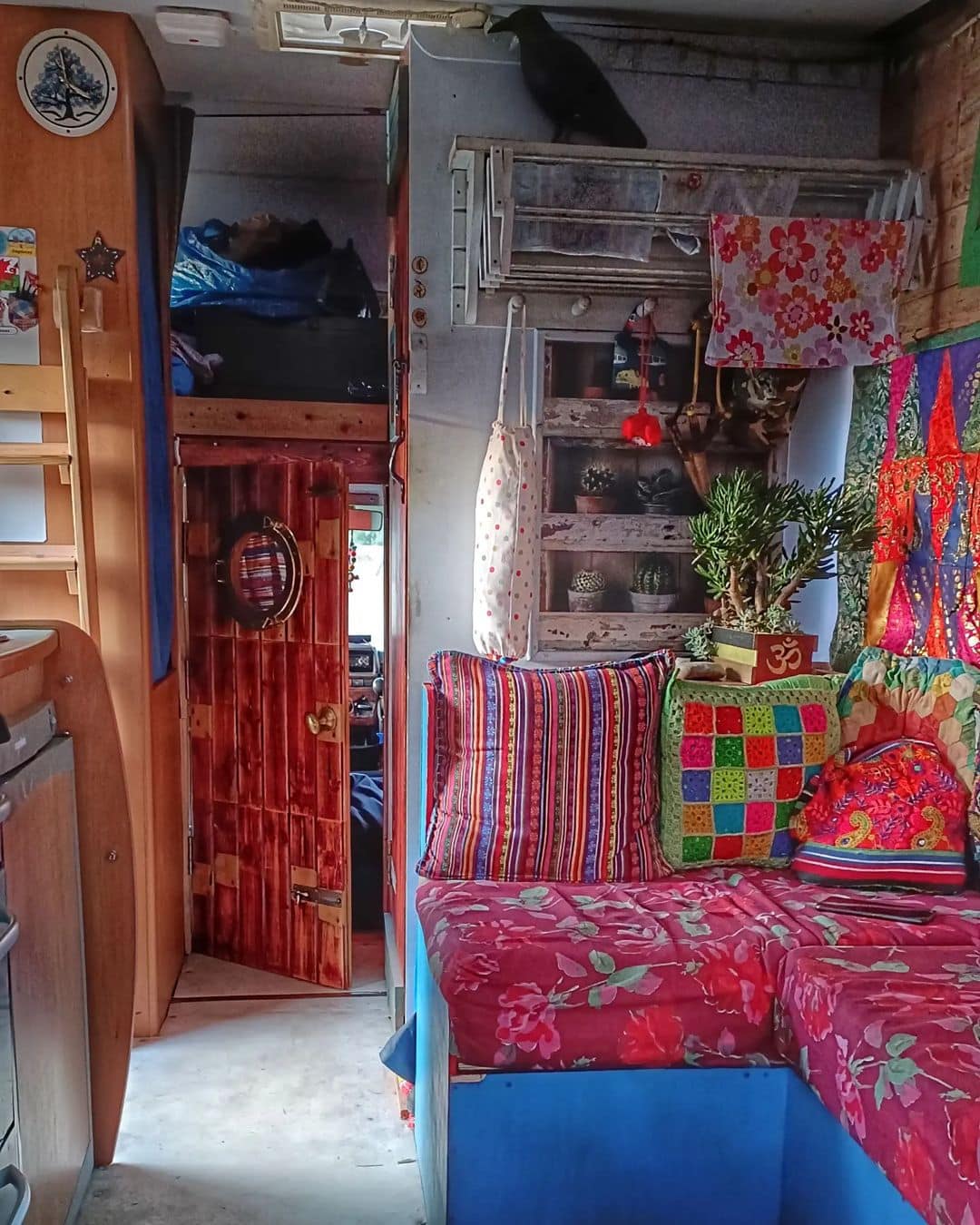
A van can take far more color than a house because the space is small and the light changes all day. The rule that keeps it from turning chaotic: pick three colors and repeat them, in the bedding, the curtains and one rug.
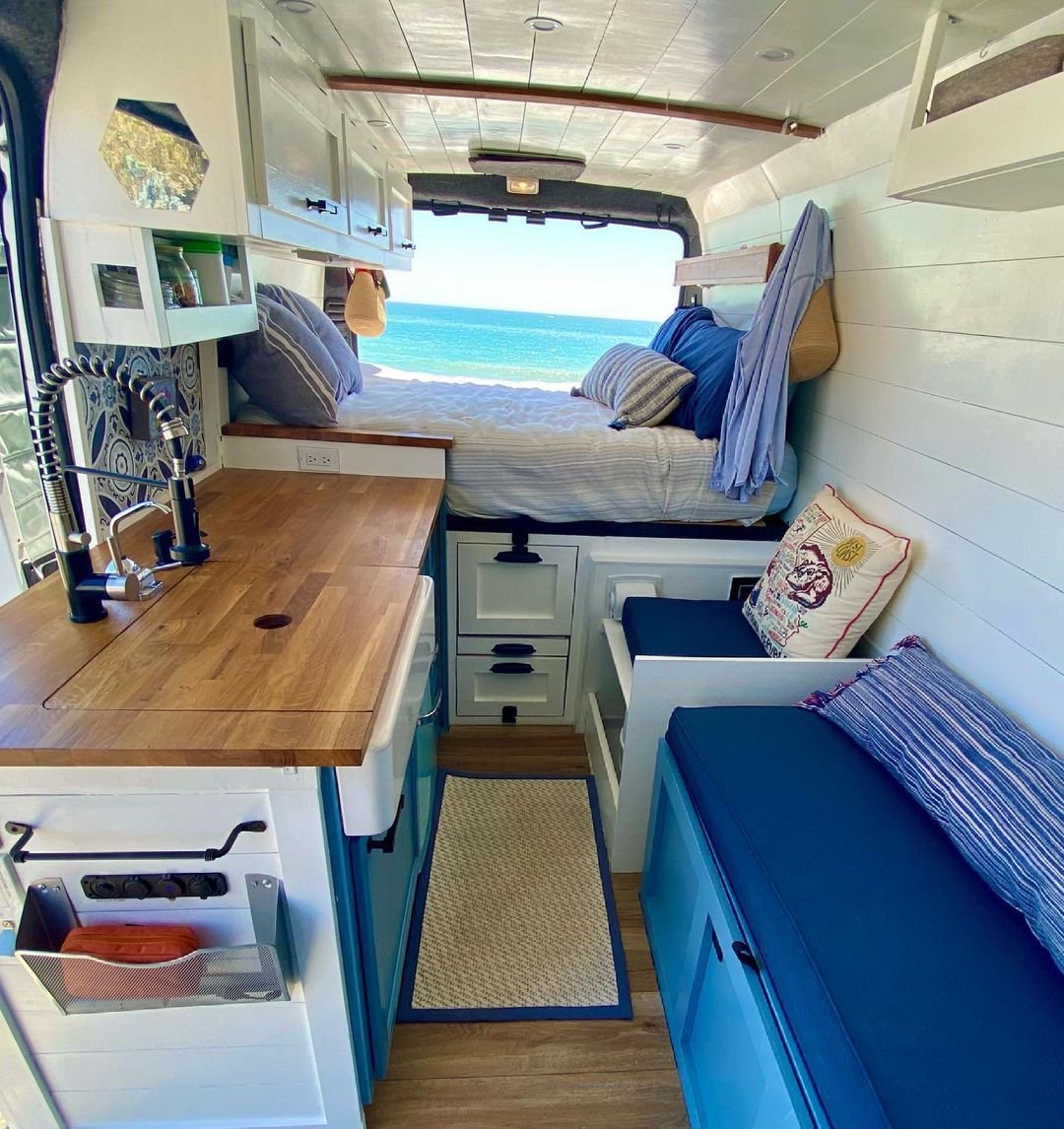
Cushions are the easiest color to change. Sew covers, or buy them, and swap them when the season or your mood changes.
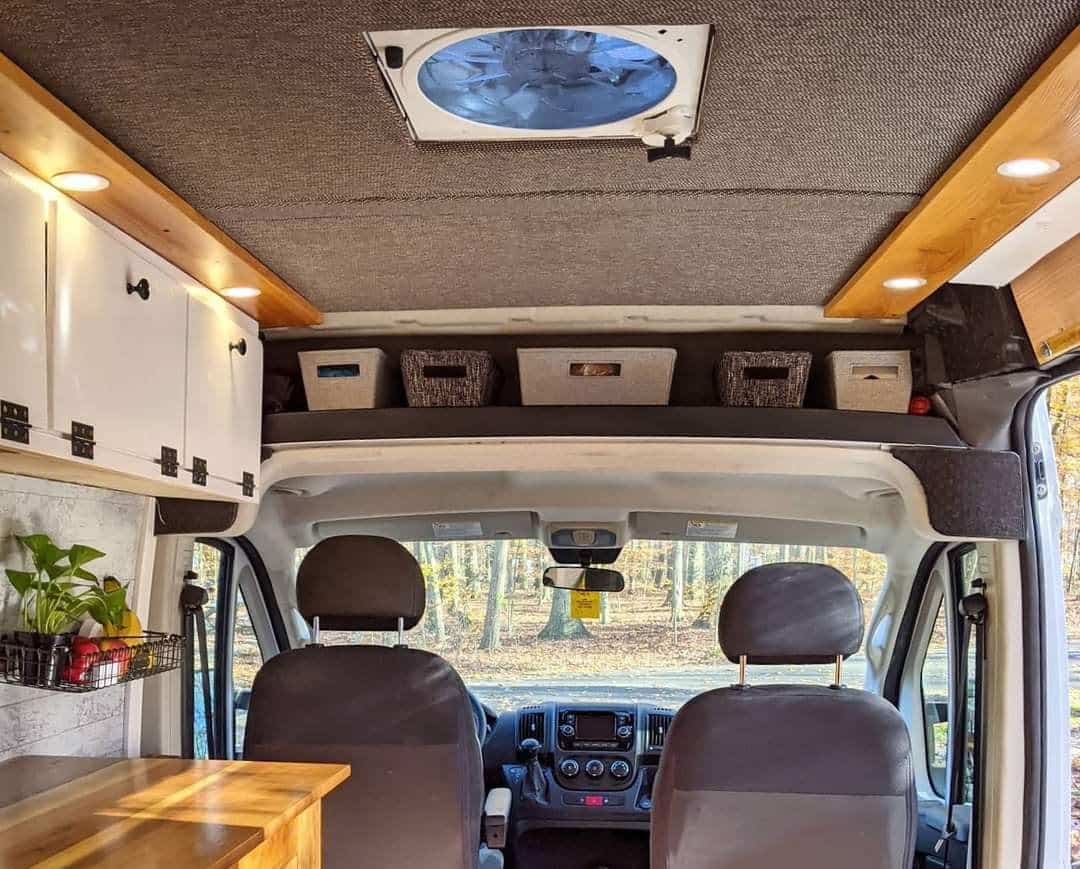
Storage that looks like furniture is the difference between a camper and a home. Baskets, wooden crates and fabric bins hold exactly what a plastic tote holds.
A kitchen that looks like a kitchen
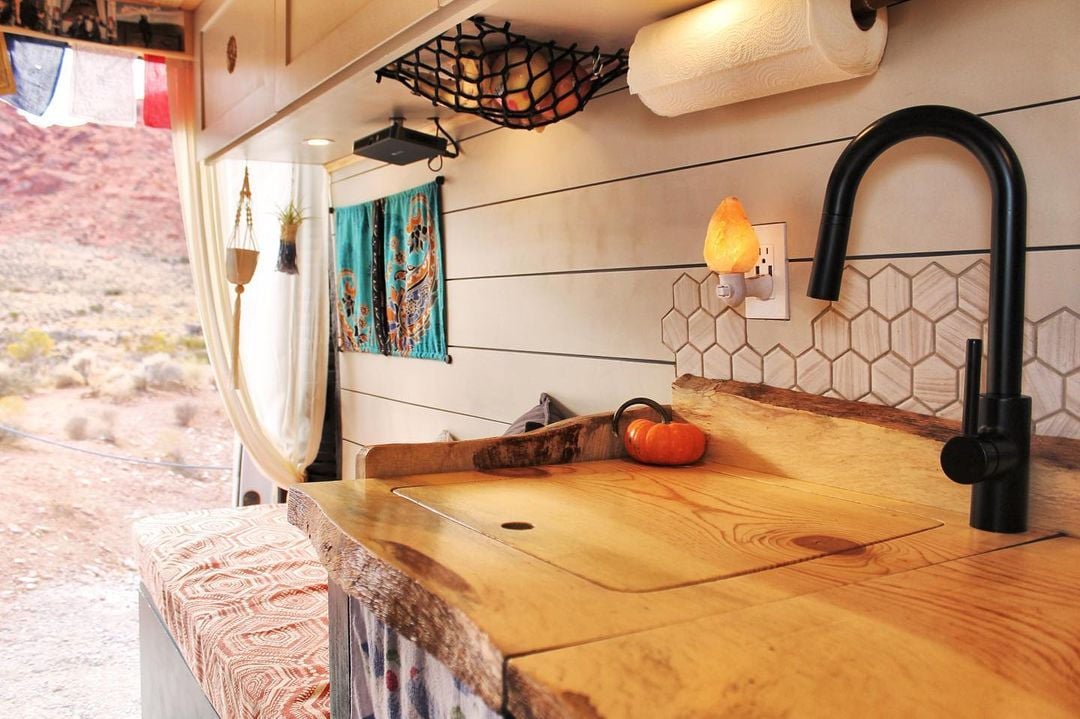
Cozy kitchens hide the camping gear. A wood counter, a backsplash, a real faucet and a couple of open shelves with the things you use every day on them, and the propane canister out of sight.
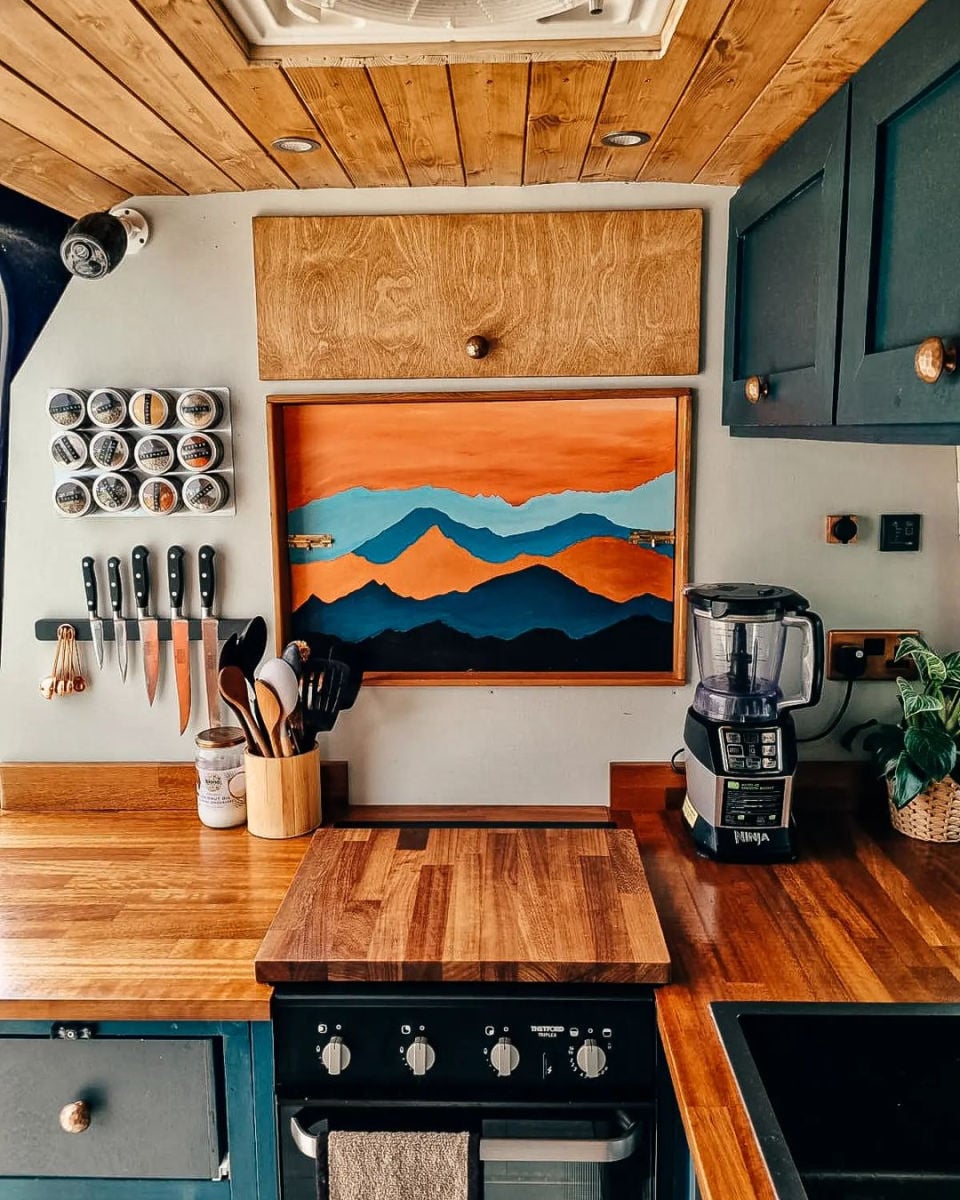
Art is allowed. One painting, a print, a photo from the trip, screwed to the wall above the counter, does more than any accessory you can buy.
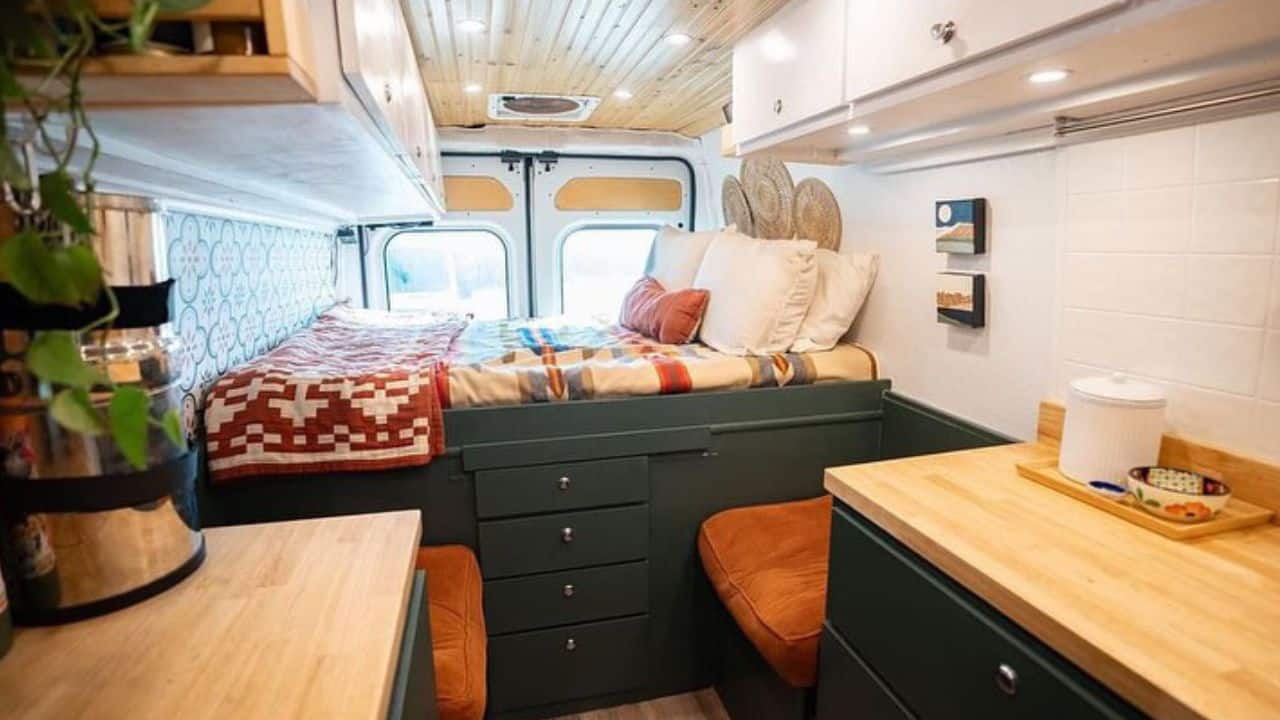
Dark cabinets can be cozy too, as long as the light is warm and the bed is soft. Contrast is what makes a small space feel designed instead of assembled.
The small things that make it yours

A rug on the floor, a hook for your hat, a mug that is only yours, a speaker, a candle you never light while driving. None of it weighs anything. All of it is the reason you sigh when you close the door at night.
For the mechanics behind these photos, we have guides on campervan beds, van storage, campervan decor, VW bus interiors and Sprinter layouts, and the gear I actually use is in my van life essentials.
What makes a van interior feel cozy?
Warm light from several small sources, a real bed with layered bedding, wood or fabric on surfaces that would otherwise be bare metal, a tight palette of two or three repeated colors, and a few personal things on the walls. Space has little to do with it; a forty-year-old VW with a made bed feels cozier than most new builds.
How do you make a campervan cozy on a budget?
Start with bedding: a duvet, two pillows and a throw cost less than any build change and transform the van. Add warm-white puck lights on a dimmer, baskets instead of plastic bins, one rug and one piece of art. All of it is under a few hundred dollars.
What colors make a van feel bigger and cozier?
White or pale walls bounce light and make the van feel bigger; warm wood on the counter, bed frame and shelves makes it feel like a cabin. Add color through textiles you can change, and keep it to three colors repeated through the space.
Can you keep plants alive in a van?
Yes, with wall-mounted or hanging holders so they survive driving days, and forgiving species like pothos, snake plants and succulents. Keep them near a window or skylight and off the counter.
What lighting is best for a campervan interior?
Warm white (around 2700K) LED lights in several small places: under-cabinet puck lights, a strip behind the bed, a small lamp or lantern on the counter, with at least one on a dimmer. A single bright overhead light makes a van look like a garage.
Photo credits: each photo is credited to its owner in its caption; the contributor photos appeared first in our decor, storage, bed, VW bus and Sprinter layout guides. Kristin’s photos are her own.