

Yes, You Can Actually Camp on the Beach in Your Van. Here Are the 10 Places It’s Legal in the U.S., and How Baja Really Works.

Legal beach camping in a van is a short list: ten U.S. beaches where you can sleep on the sand, each with its permit, fee and night cap, plus how free camping on a Baja beach really works.
*This post may contain affiliate links. Please read our disclosure policy for more info.
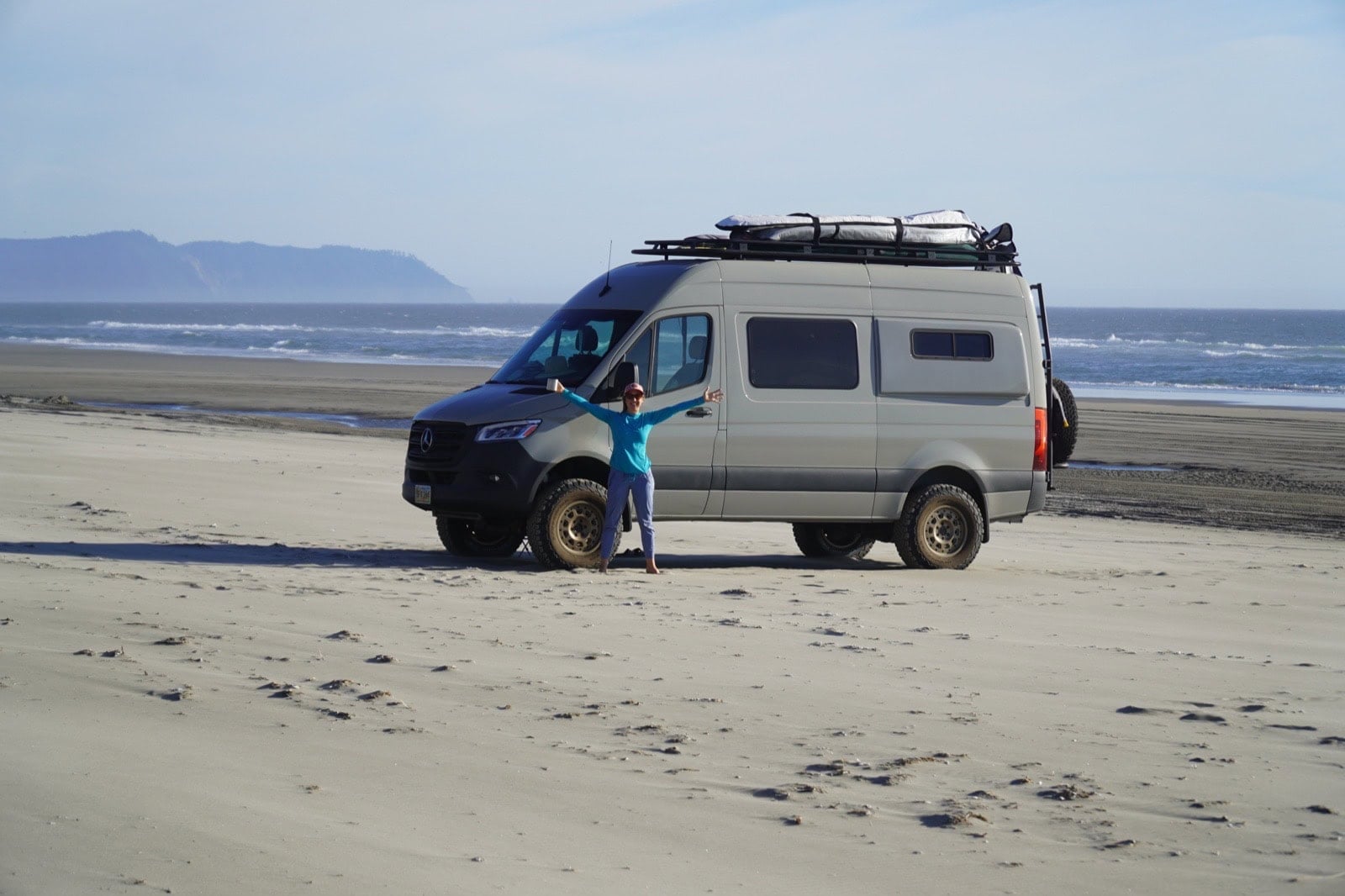
I’ve camped on the beach a couple of times, and it’s truly a magical experience to fall asleep with the sounds of the waves crashing in the distance. Sea air wafts through the windows, and the gentle lull of seagulls and seabirds floats on the breeze.
My favorite spots are in Southern California, at state campgrounds like Carlsbad and Doheny Beach in Dana Point. You have pavement and amenities, but the front tires are almost touching sand.
I’ve also camped in a parking lot in Point Reyes, a spot I’m sure by now is highly regulated and no longer an option. But for that one night in my Chevy Astro, it was stunning.
There are many rules in the U.S. regarding camping on beaches. Way less so in Baja, where many van lifers head for winter.
Here is the short version. Legal camping on the sand itself, in your vehicle, exists at about ten places in the United States, and nearly every one comes with a permit, a fee, a night cap, a tide chart or a bird closure. Most of what gets called beach camping is a campground beside the sand, which is also lovely, and also listed below.
The catch: two of the most-searched beach states, Washington and Florida, do not allow it at all. And Baja’s famous free beaches are public by federal law, while the dirt road you drive across to reach them often belongs to someone collecting pesos. The rest of this goes place by place, with the rule linked where it lives, so you can check it the week you go.
I am not a lawyer, and beach rules change with storms, lawsuits and nesting seasons. Each fee and limit here was read on the official page and is linked; confirm with the park or county before you drive onto the sand. The check date is in the Sources line at the end.
Can you legally camp on the beach in a van?
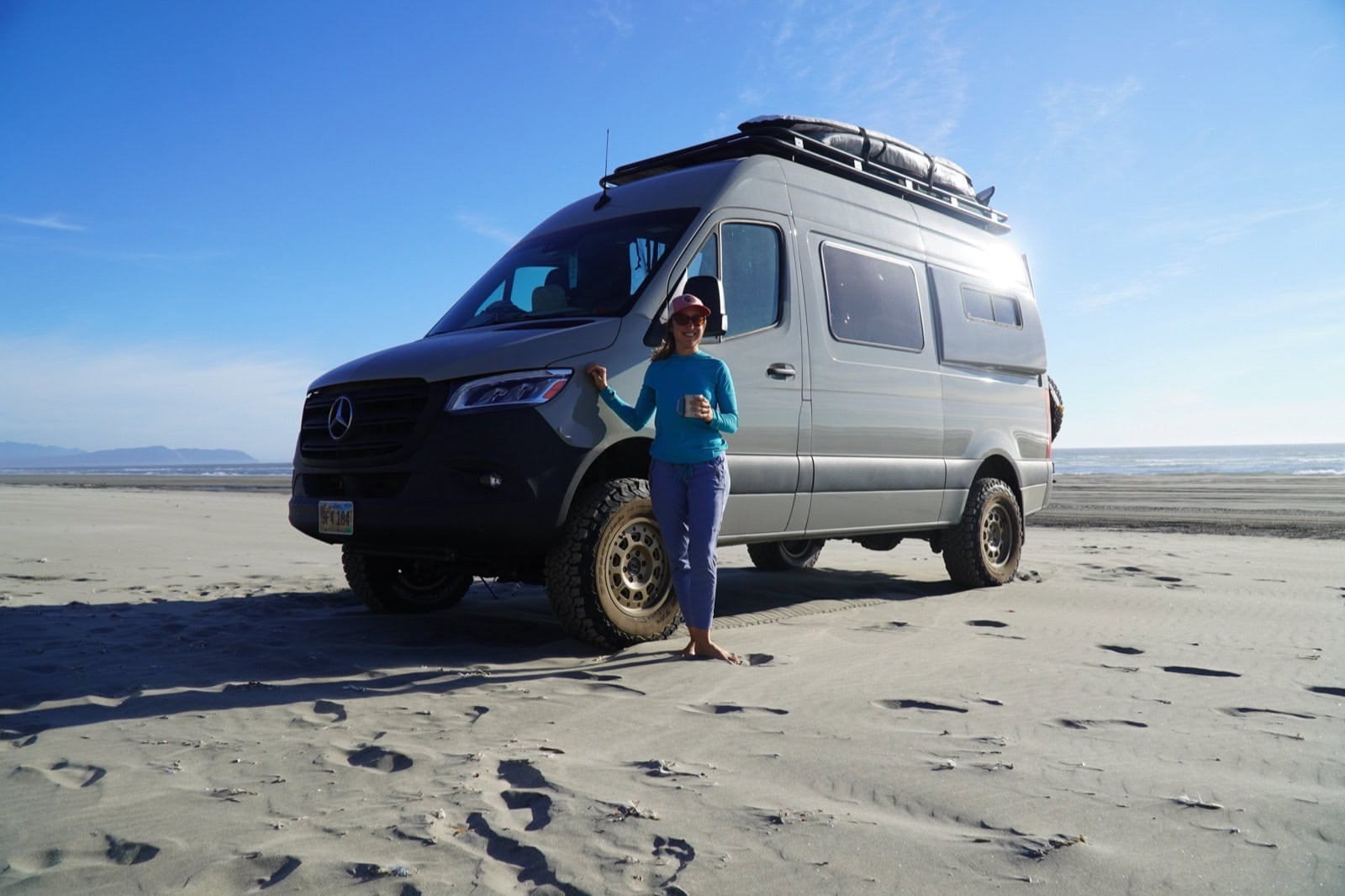
Yes, but only where a park, a county or a state has said so in writing, and that is a short list: ten places in the United States where you can drive onto the sand and sleep in your vehicle, plus the Baja peninsula, where the beach is public and the camping is a local arrangement. Everywhere else, treat the default as no.
A beach you can drive on by day, like Daytona or parts of the Washington coast, is usually a beach you must leave by night. The rules below sort into three piles: on the sand in your rig, beside the sand in a campground, and not at all. I have kept them in that order.
Texas: the Gulf beaches where you drive onto the sand and stay
Three places on its Gulf coast let you park on the sand and sleep in your van with a pass or a permit instead of a reservation, and two of them never fill up.
Padre Island National Seashore
You can drive and camp on North Beach, South Beach and Yarborough Pass, and the park requires no camping permit; your entrance pass covers it. That pass is $25 per vehicle for seven days or $45 for the park annual. The limit is 14 consecutive nights and 28 nights a year, first come, no reservations. Camping is not allowed on Malaquite Beach itself.
Two-wheel-drive vehicles are allowed on North Beach and on the first five miles of South Beach; past mile 5 you want four-wheel drive, and the park does not tow. Vehicles need highway plates.
A predicted high tide of 1.5 feet or more can reach the dunes, so read the tide table before you pick a spot, and the park closes beach camping for coastal flooding. There are no hookups; the dump station and water fill sit by the Malaquite Campground entrance.
One wrinkle: an older park page still says permits are required. The newer camping and fee pages say they are not, so ask at the entrance station and let them tell you. Sea turtles nest here from April through August; if you see one, keep your distance and tell a ranger. I covered the Padre winter scene in where van lifers go in winter.
Mustang Island State Park
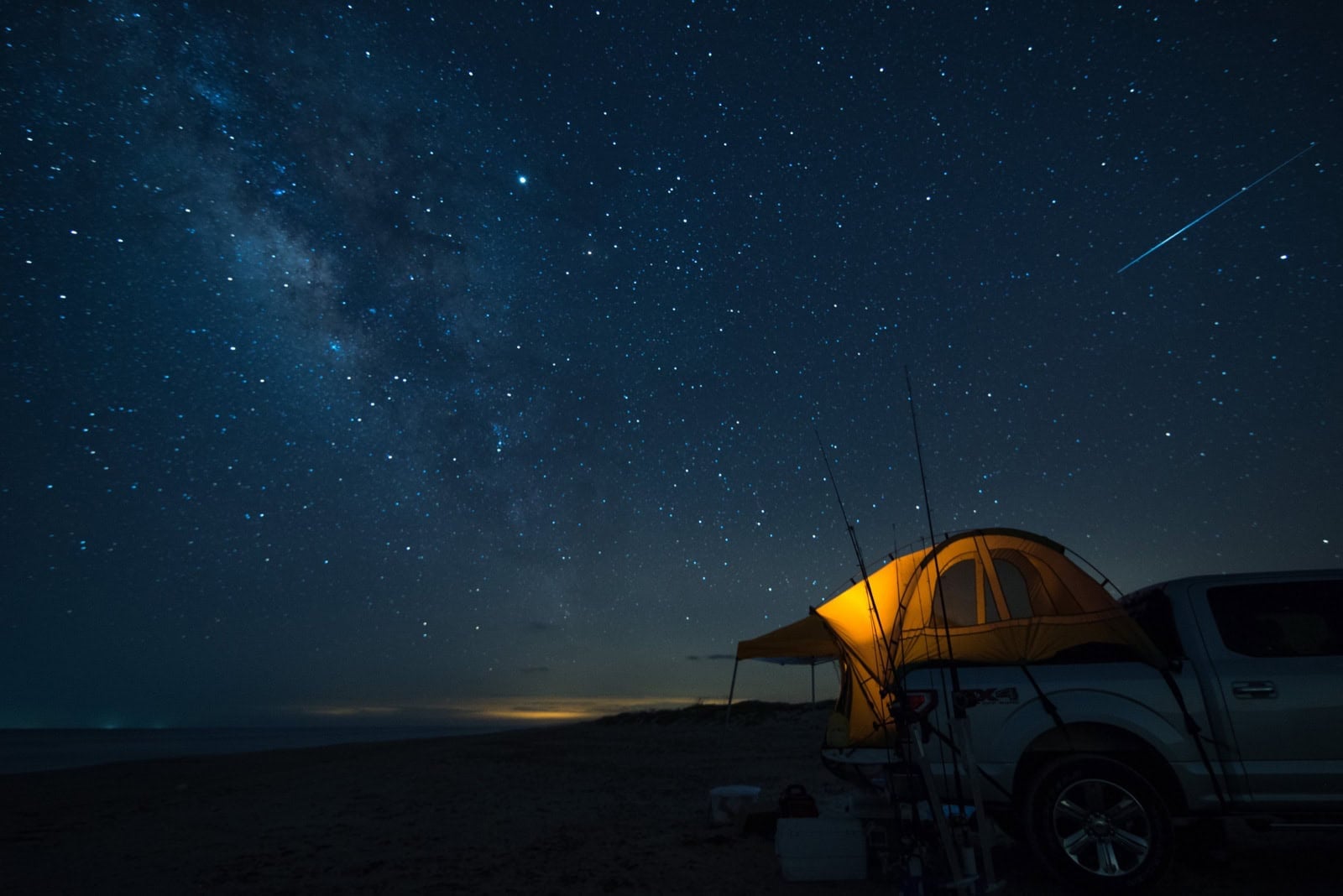
Just up the coast, Mustang Island State Park sells drive-up primitive beach camping for $13 a night plus the daily entrance fee, on 50 undesignated sites along a 1.5-mile stretch of beach, non-reservable. Small beach campfires are allowed. The sites close from time to time for weather, so call before you drive down, and ask about the stay limit, because the park’s page does not state one.
Port Aransas city beaches
The City of Port Aransas allows RV and tent camping on its beaches with a $12 beach parking permit, and the setbacks matter: at least 25 feet from the driving lane, 50 feet from the water, and 200 feet from any beach access road, with RVs parked perpendicular to the water. The stay limit is three nights in any three-week period. Small fires up to three feet square are fine.
Three more Texas stretches are popular and real: the Bolivar Peninsula near Galveston, Padre Balli Park on North Padre, and South Padre Island north of Beach Access 5. I could not read a current official rule for any of them, and Cameron County has closed its accesses on short notice for high tides. Ask the county office before you count on a night at those three.
California: Oceano Dunes is the one beach where you can sleep on the sand
In California you can drive onto a beach and camp in your vehicle in exactly one place: the Oceano Dunes State Vehicular Recreation Area, next to Pismo State Beach. Camping there is primitive, with no designated sites and vault toilets, and reservations are required through ReserveCalifornia, up to six months ahead and at least two days before you arrive.
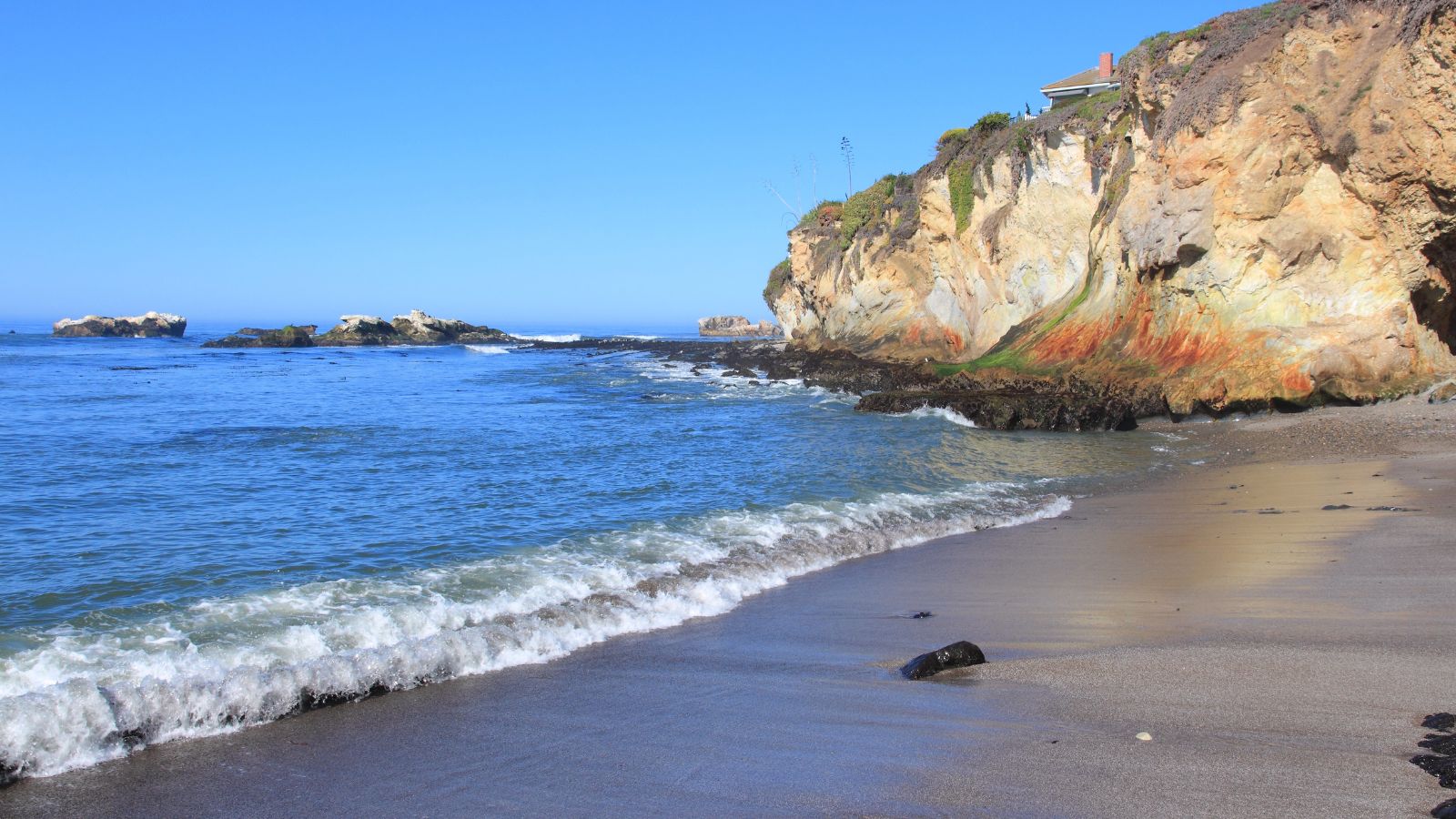
The park recommends four-wheel drive, and high tides, heavy rain, blowing sand and creek flows can all close the beach to vehicles. The state’s fee schedule lists camping at $10 a night, a figure that may be stale, so trust what ReserveCalifornia shows when you book. Vehicles enter at the end of West Grand Avenue in Grover Beach, 15 miles an hour, between 7 in the morning and 10 at night.
The long fight over vehicles on these dunes has been through the courts for years. The only status that matters to you is whether the reservation calendar is open the week you want, and it was open when I checked.
California’s state beaches that put you a few steps from the sand
The rest of California’s beach camping is a campsite beside the beach, which is still a van night with surf in your ears. Carpinteria State Beach allows seven consecutive nights from March through November and 15 in winter, 30 a year. San Elijo sits on the bluff above a narrow beach, with hookup sites for rigs up to 24 feet. Doheny charges $50 for a standard site and $65 for a premium beachside one.
I have camped at Doheny and Carpinteria, and the campground at Carlsbad is on high bluffs with stairs down to the surf. Our campsite at Doheny was right on the beach, with the picnic table and fire ring on the sand and the surf a short walk away.
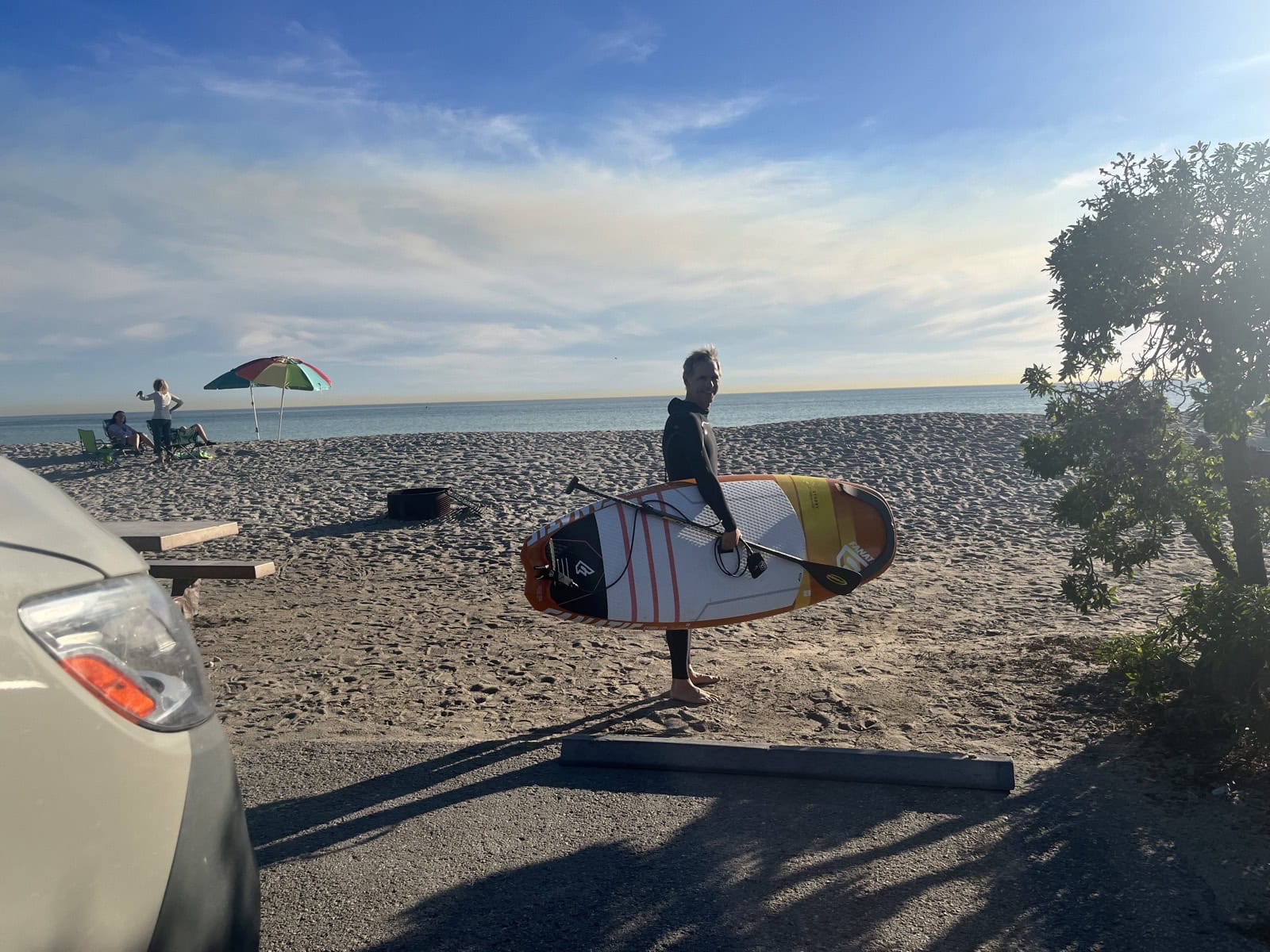
Refugio, Leo Carrillo and El Capitan (bluff top, first come from December 1 to March 30) round out the Santa Barbara and Malibu coast. Emma Wood State Beach is closed for construction with no reopening date for camping. Rincon Parkway and Faria, where self-contained RVs line the old highway above the beach, are run by Ventura County; the only fee sheet I could read is years old, so call the county.
If you want hookups and a view rather than a night on the sand, these 11 California beach campgrounds are the ones worth the reservation fight.
Oregon lets you camp on the beach, except where it doesn’t
Oregon is the one West Coast state where sleeping on the ocean beach is broadly legal. The state parks department says camping is allowed in many areas, above the high tide line.
Then it lists where camping is not allowed: on any beach next to a state park; the whole stretch from the south jetty of the Columbia to Tillamook Head; the beaches of Seaside, Cannon Beach, Manzanita, Rockaway Beach, Lincoln City, Newport, Bandon, Gold Beach and Brookings; and any snowy plover area, which is signed at the access.
It is your job to know the city limits before you camp, the state says, and overnight parking is not allowed in state park day-use lots or waysides. Only street-legal vehicles may drive on the beach, and only in designated stretches, which the state’s own page sends you to highway maps to find.
Here is the honest limit for a van. A tent can use most of that open shore. For your vehicle to sleep on the sand, you need a stretch that is open to driving and open to camping, and I could not name one from the official pages.
The pattern most people actually use is Fort Stevens: drive the beach by day from Gearhart to the south jetty (with summer hour limits), then sleep in the campground, because camping on that sand is banned. Nehalem Bay is a sand dune away from the beach. Cape Lookout State Park is closed for construction, with reopening expected in spring 2027.
That is how we did it one August afternoon near Fort Stevens: drove onto the sand, made dinner beside the van, and kept it a daytime stop.
The East Coast: Cape Cod, Assateague and Cape Lookout, mostly for self-contained rigs
Three national seashores on the Atlantic let you spend the night on the sand in your vehicle. Two of them want a bathroom on board, and all three sell the permit before they sell you a view.
Cape Cod National Seashore, Race Point
Overnight camping on the beach at Cape Cod is restricted to self-contained vehicles in the SCV areas on Race Point Beach, capped at 100 vehicles a night. Self-contained means permanently installed gray and black water tanks with at least three days of capacity. Tents and camping trailers are never allowed on the corridor. From July 1 to Labor Day the limit is 21 nights.
The SCV permit costs $75 for seven days or $225 for the year, bought in person at the Oversand Permit Station at Race Point with an orientation film, registration, inspection sticker and insurance in hand. The permit office is open from April 10 to November 15. Shorebird nesting can shrink the corridor without notice, especially in June and July, so a permit is permission, not a guarantee.
Assateague Island National Seashore, the Bullpen
On the Maryland end of Assateague, the standard $110 over-sand permit lets you stay overnight only if you are awake and fishing; the park’s words are that camping or sleeping on the beach is strictly prohibited. The exception is the Bullpen: a $200 annual permit, sold on recreation.gov, for self-contained, hard-sided vehicles with an approved toilet. No tents, no travel trailers.
You need four-wheel or all-wheel drive, no more than two axles, and a rig no longer than 26 feet. The zone holds 145 vehicles, and piping plover nesting closes parts or all of it from March 15 to August 31 or later.
If your van does not qualify, the park’s oceanside drive-in campground is $40 a night and the Maryland state park next door has 345 sites a few steps from the beach. The Virginia end, Chincoteague National Wildlife Refuge, prohibits camping and overnight parking.
Cape Lookout National Seashore
Cape Lookout is the wild one. Vehicle and tent camping is allowed on North and South Core Banks, seaward of the dunes, for up to 14 consecutive days, with no camping permit for small groups. You do need an ORV beach driving permit bought on recreation.gov, where the season’s fee is listed, plus the education video. Your van gets there on a private vehicle ferry, which runs roughly spring through fall, so book the boat before the trip.
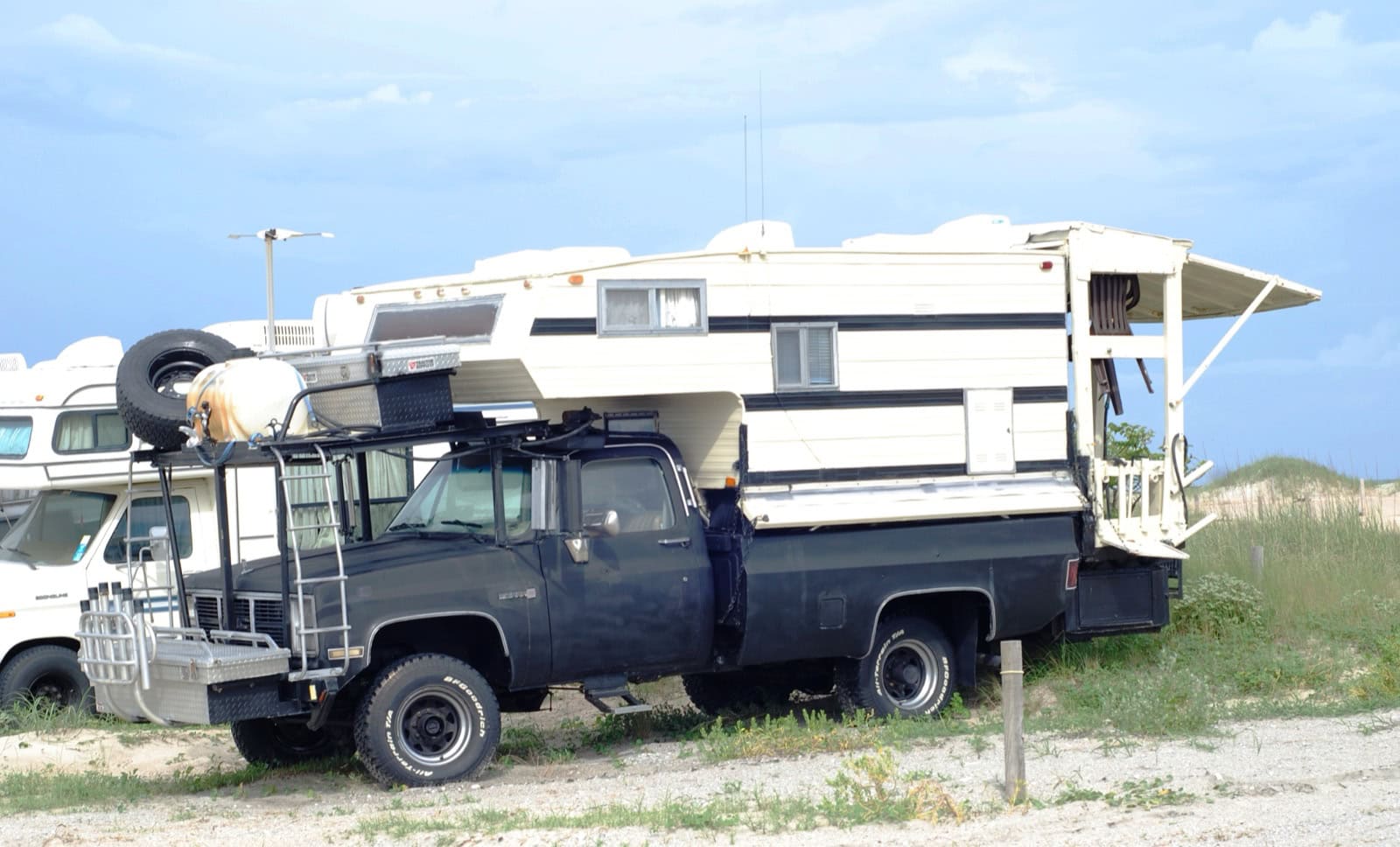
Stay out of the wildlife protection zones, at least 100 feet from any structure and 100 yards from the lighthouse and cabins. Its famous neighbor is the contrast: at Cape Hatteras National Seashore you must use one of the designated campgrounds, even with the $50 ten-day or $120 annual ORV permit.
Lake beaches that count: Lone Rock and Lake Mead
Two lake beaches in the desert Southwest are the real thing: drive onto the sand, sleep in your rig, wake up to water. At Lone Rock Beach on Lake Powell, in Glen Canyon National Recreation Area, camping along the beach is the main attraction, primitive and vehicle-accessible, at $14 a night per vehicle plus the entrance fee, first come.
The limit at Lone Rock is 14 consecutive days and 30 a season. The sand gets deeper near the water, and the park warns there is no guaranteed towing.
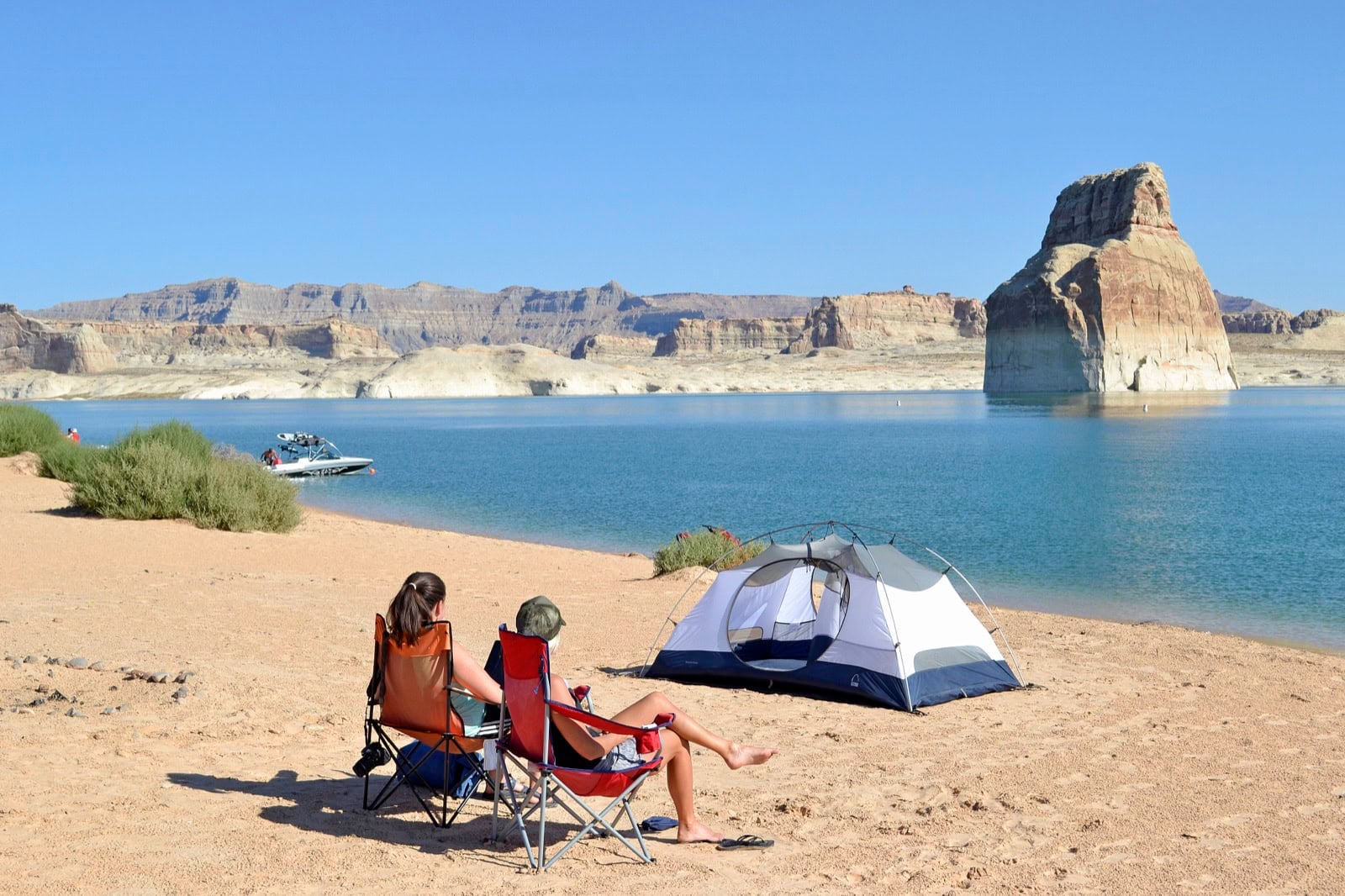
Lake Mead allows vehicle camping in designated backcountry areas along its shoreline, 15 days in one spot before you move at least half a mile, 90 days in a year, on roads marked with a yellow arrow. Anyone camping within a quarter mile of the shore must be able to contain solid human waste.
Government Wash, the best-known shoreline camp, was closed for work when I checked, with reopening expected in late November. The BLM’s shoreline sites on Lake Havasu are listed as boat-in, not a van spot.
Where beach camping is illegal, and people try anyway
Half the value of this list is the other list. These are the beaches that come up again and again, and the answer at each one is no. I keep the bigger map of places closing to campers and overnight parking bans by state current on their own pages.
Washington. You can drive on the hard sand of several Washington ocean beaches, but the state rule is one sentence: overnight parking or camping shall be prohibited on any area of the ocean beaches. The same chapter closes stretches of the Long Beach Peninsula and the Ocean Shores and Grayland beaches to vehicles from April 15 to the day after Labor Day. Sleep in a state park campground, several of which sit right against the shore.
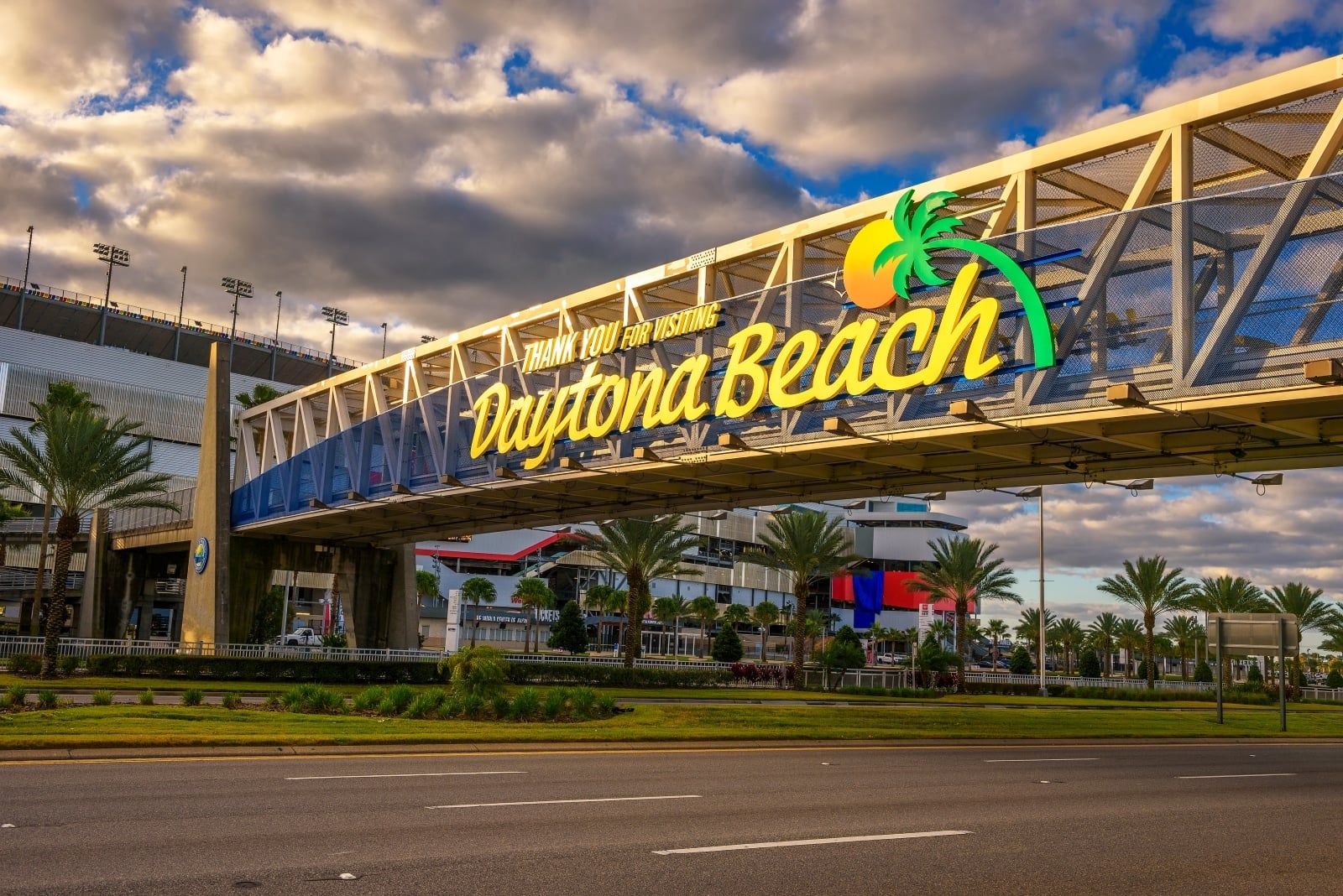
Florida. Driving on Florida beaches is prohibited by statute unless a local government allows it, and the counties that do allow it run daytime programs. Volusia County, home of Daytona, sells a $30 daily beach driving pass, and its driving hours end at 7 in the evening in summer and sunset in winter, so there is no night on the sand to be had.
The legal Florida version is a beachfront campground like Fort Pickens at Gulf Islands National Seashore: 14 days, then 48 hours out, 42 days a year.
The Great Lakes. Sleeping Bear Dunes says it plainly: camping is not permitted on the Lake Michigan beach. Its D.H. Day campground is rustic and a short walk from the water. I found no legal vehicle beach camping anywhere on the Great Lakes, and Michigan’s dune driving at Silver Lake is a daytime, seasonal program.
Hawaii. On Oahu, camping within your vehicle is prohibited on city and county land; the beach park permits are for tents at numbered sites. Cape Hatteras and Chincoteague are above. And in the gray zone between legal and not, Brooke’s guide to overnight parking is where I send people.
Baja: the beach is public, the land behind it usually isn’t
Brooke put the Baja pattern in one line in her road trip guide: you often park on the beach for a day or so before someone comes around to collect money. That sentence is the whole legal situation, and here is why.
Mexico’s General Law of National Assets makes the beach itself, from the lowest to the highest annual tide line, and the 20-meter strip of dry land behind it (the federal maritime zone, ZOFEMAT) common-use federal property. Since a decree in October 2020, access to beaches and that strip cannot be blocked, restricted or conditioned, and landowners who gate it face steep fines.
The 1991 federal beach regulation says any person may enjoy the beach, lets the government set where vehicles may not drive, and never once mentions camping.
So the law gives you the right to reach the beach and use it. It does not hand you a right to sleep on it, and it says nothing about the dirt road in or the flat ground behind the 20 meters. That land is often ejido land, owned collectively by a local community, which the Agrarian Law lets them contract out.
That is who meets you at the gate, and that is why free beach camping in Baja usually costs a few hundred pesos. This is my reading of the statutes, not a court’s.
A bill to make beach access free of charge passed Mexico’s lower house but was not in the consolidated law when I checked, so do not argue it with the family at the gate. Municipalities police the strip under federal agreements, which is how the city of La Paz came to send inspectors to push motorhomes back from the water at El Tecolote, with a plan to regulate RVs there reported and no ban found.
One more federal rule: on sea turtle nesting beaches during nesting season, only monitoring vehicles may drive on the sand. Local press names La Máquina near Todos Santos, the Los Cabos beaches, La Ribera, El Vizcaíno and Ojo de Liebre among them. A signed turtle beach is not a camp.
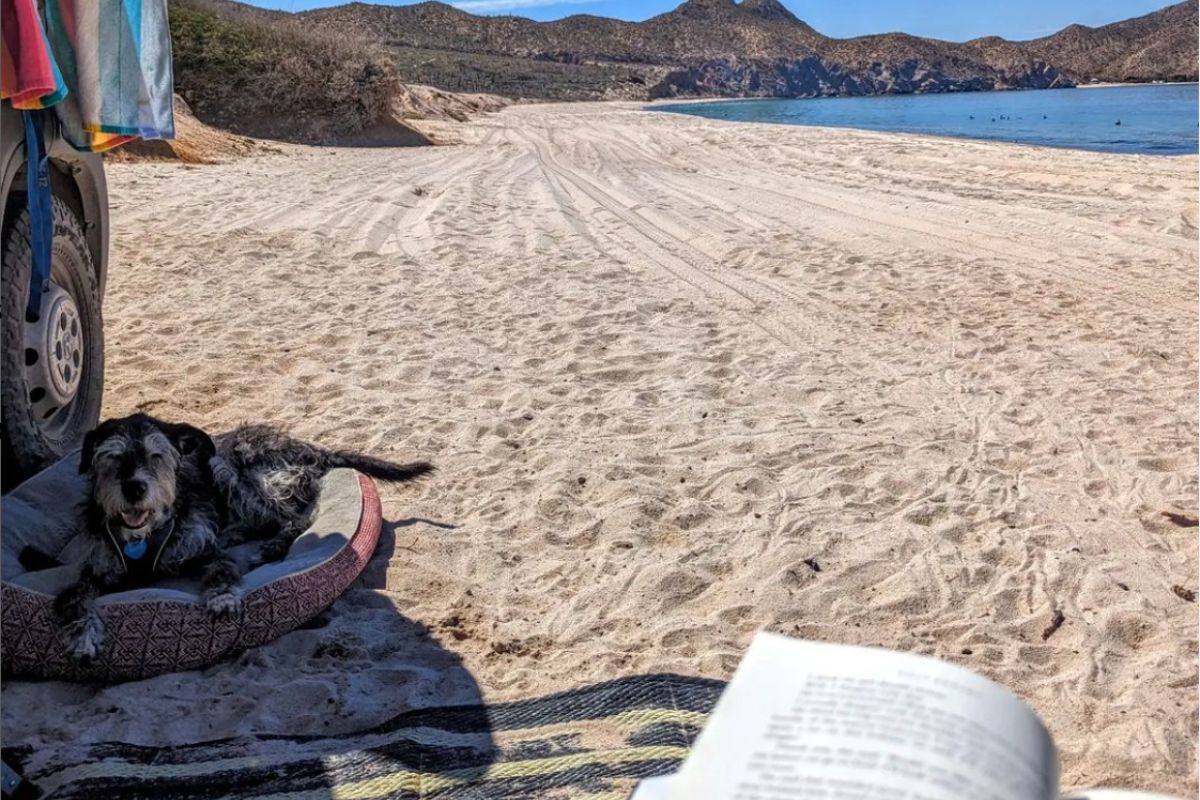
What a night on a Baja beach costs, and who collects
These are the camps Brooke and other travelers keep coming back to, with the prices they reported. Most of those reports are a year or three old, nobody takes cards, and the number drifts, so read them as ‘around’ and bring small bills. Current reports live in the camping apps, iOverlander and Campendium especially.
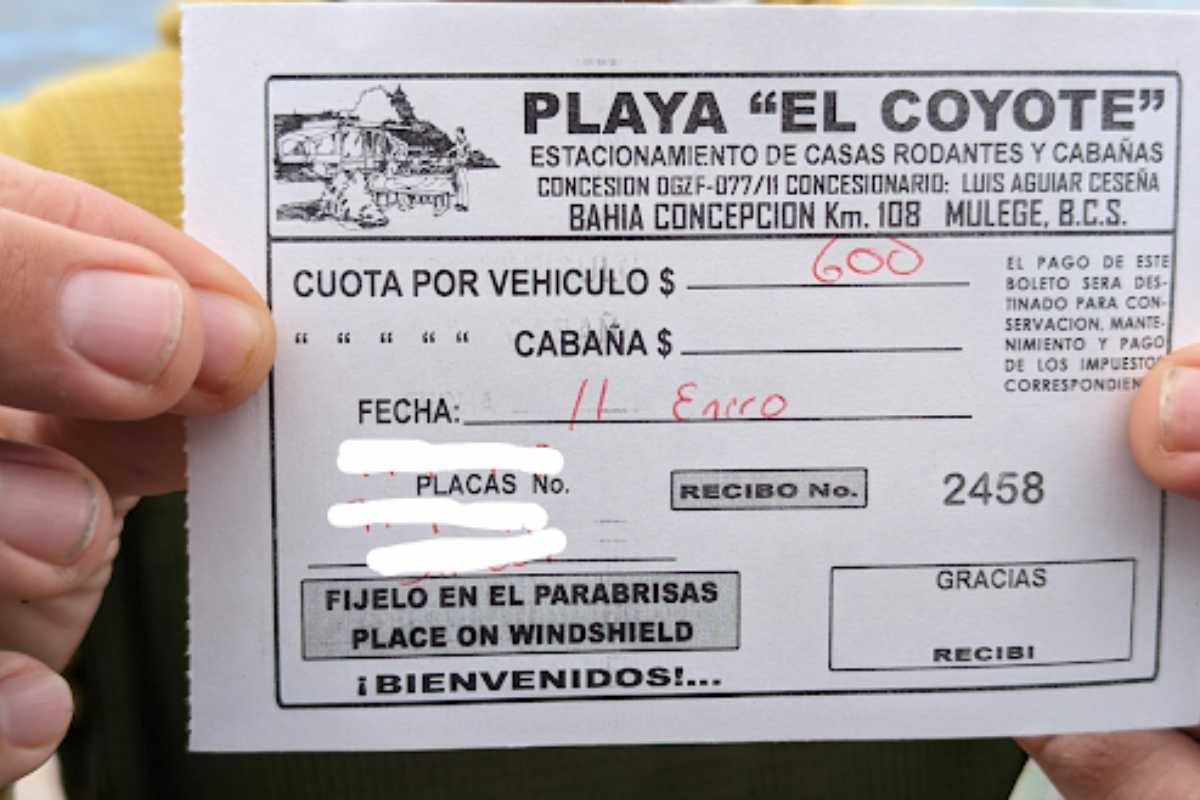
Bahía Concepción, south of Mulegé, is the postcard. Playa Santispac runs about 200 pesos a night, collected by a family at a gate off the highway, with pit toilets, a few palapas and two restaurants. Brooke paid about 200 pesos at Playa El Coyote. El Requesón has been reported at 250 and El Burro at about 100 for a bare spot.
Bahía de los Ángeles: Daggett’s Beach Camping was about 400 pesos, with a palapa at each site and showers that work. Playa La Gringa, at the north end of the bay, was free when Brooke camped there. La Paz: Playa El Tecolote has been free with pit toilets, and it is the beach the city is now watching, so check before you set up.
San Felipe runs 350 to 800 pesos depending on palapa or hookups, and Brooke called it pricey. Punta Banda, near Ensenada’s La Bufadora, has Villarino RV Park at about 800 pesos with showers. Los Cerritos, near Todos Santos, is where Brooke parked in a sandy lot for the surf; later reports say the gate is locked, so treat it as a day beach until you see otherwise.
Brooke’s two practical warnings are worth more than any price. She had to move her van twice in one night for the tide, and she got stuck in soft sand once and needed a tow rope. Park above the wrack line, air down, and know who will pull you out.

The paperwork for entering Baja
Everyone who crosses needs the FMM tourist permit, even for a weekend. The fee is 983 pesos, and the same law waives it for land entries of seven days or less, though you still stop and get the form. Immigration’s own rules say tourists get 180 days; travelers report officers writing fewer, so say how long you are staying and check the stamp.
I covered the crossing itself, with the FMM and insurance, in the winter article, and Brooke covers it from the Tijuana side.
Your van does not need a temporary import permit on the Baja peninsula, according to the insurers and brokers who handle it daily; I could not find an official page that says it in those words, so I am reporting it as the universal practice it is. You do need the permit to put the van on the La Paz ferry to the mainland.
If you ever need one, Banjercito charges $45 plus tax online and a refundable deposit of $200 to $400 by model year. Where we cross, into Sonora, foreign vehicles circulate freely in the northwest corner of the state.
Insurance is not optional. Mexican federal law requires third-party liability insurance on every vehicle using a federal highway, and Highway 1 down the peninsula is one. A U.S. policy does not count. We buy a Mexican liability policy for the van before we cross, because it is the law, and because the State Department warns that uninsured drivers in an accident can be arrested.
The U.S. State Department rates Mexico Level 2, Exercise Increased Caution, lists Baja California at Level 3 (Reconsider Travel) and Baja California Sur at Level 2, and tells its own employees not to drive between cities after dark. That last line is the one every Baja regular follows anyway: cows, potholes and no shoulder. Read the current advisory page before you go; it moves.
Coming home, a U.S. citizen needs a passport, passport card, enhanced driver’s license or SENTRI card at the land border. Declare any food you are carrying, and know that raw eggs and raw chicken from Mexico are prohibited. The eastern Pacific hurricane season runs May 15 to November 30; Brooke’s best months were October through March, and she warns you off Semana Santa, the Easter holiday week, when the beaches fill with families on vacation.
Before you drive onto any beach: tides, soft sand and nesting season
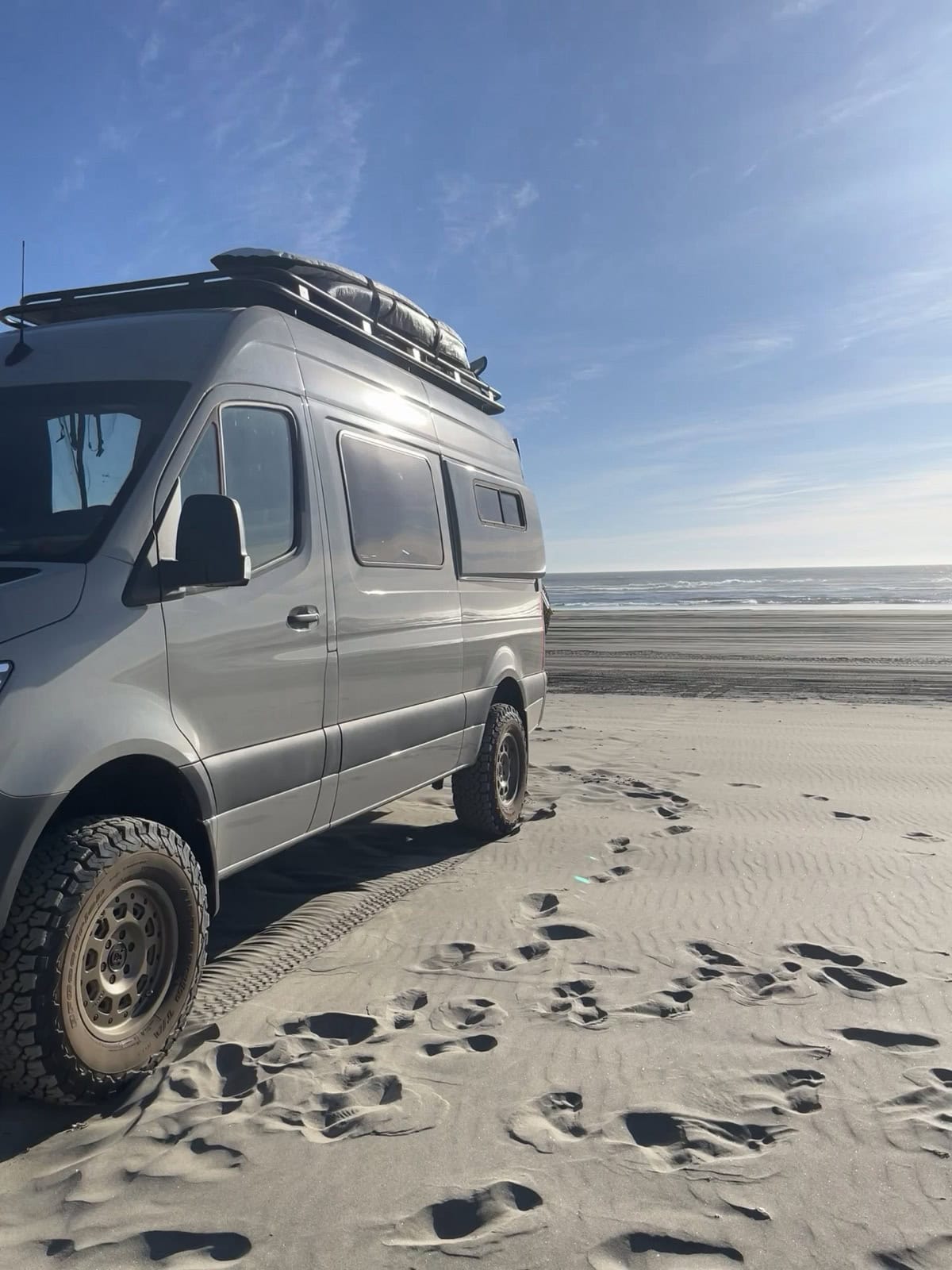
Padre Island’s warning is the right one for every beach on this list: a high tide of a foot and a half can reach the dunes. Read the tide table for the night, not the afternoon, and park above the line of seaweed and driftwood the last high tide left. Brooke learned this the hard way, twice in one night.
Soft sand is the other way a free night gets expensive. Padre does not tow, Lone Rock says towing is not guaranteed, and the Baja camps have no number to call. Air the tires down before you leave the hard pack, carry a shovel and a tow strap, and consider recovery boards if your rig is heavy. Two-wheel drive is fine on the first miles of South Beach and nowhere else on this list.
Then the rules that are easy to miss. Highway plates at Padre; a toilet on board at Race Point and the Bullpen; a quarter-mile waste rule at Lake Mead; fire sizes at Port Aransas and Mustang Island; plover closures on the Atlantic from mid-March and turtle closures in Baja and on Padre through the summer. The permit is permission to be there. The closures decide whether there is anywhere to be.
What the short list really says
Strip this article down and the legal list is ten places on three coasts and two desert lakes. The pattern at each one is the same: somebody wrote the rule down, and the rule has a number in it. Nights, feet, dollars, pesos, a tide height. Beach camping that is actually legal is beach camping with a limit, and the limit is what keeps the beach there.
My own van spends its winters beside the boat in the boatyard, near the water but never on it. But I now have a list, and Padre Island is at the top of it. Where is the best beach you have legally slept on in your van? Tell me, because on the sand itself I am starting from zero.
Frequently asked questions
Is it legal to sleep in your car on the beach in California?
Only at one place: the Oceano Dunes State Vehicular Recreation Area next to Pismo State Beach, where vehicle camping on the sand is allowed by reservation through ReserveCalifornia, with four-wheel drive recommended and closures for high tides, rain and blowing sand. Everywhere else on the California coast, legal beach camping means a campsite in a state or county campground beside the beach, such as Carpinteria, San Elijo, Doheny, Refugio or El Capitan.
Can you camp on the beach in Oregon?
Yes, in many areas, above the high tide line, according to Oregon State Parks. Camping is prohibited on any beach next to a state park, from the south jetty of the Columbia River to Tillamook Head, on the beaches of Seaside, Cannon Beach, Manzanita, Rockaway Beach, Lincoln City, Newport, Bandon, Gold Beach and Brookings, and in signed snowy plover areas. Overnight parking is not allowed in state park day-use lots. Vehicles may drive only on designated stretches, so most van campers drive the beach by day and sleep in a campground such as Fort Stevens or Nehalem Bay.
Is beach camping free in Baja?
Access to Mexican beaches and the 20-meter federal strip behind them is guaranteed by federal law and cannot be blocked or conditioned. Camping is not mentioned in that law, and the land behind the strip is usually ejido or private land, so most Baja beach camps charge about 100 to 400 pesos a night in cash, collected by a family or community at the gate, for a spot with pit toilets and sometimes a palapa. Some beaches, such as Playa La Gringa near Bahía de los Ángeles and Playa El Tecolote near La Paz, have been free, and the La Paz city government is now watching Tecolote closely.
Do you need a permit to camp on the beach at Cape Cod?
Yes. Overnight camping on Cape Cod National Seashore is allowed only at Race Point Beach, only for self-contained vehicles with permanently installed gray and black water tanks, and only with a Self-Contained Vehicle permit, which costs $75 for seven days or $225 for the year and is issued in person with an orientation. Camping is capped at 100 vehicles a night, tents and camping trailers are never allowed, and shorebird nesting can close the beach without notice.
Can you camp on the beach in Washington or Florida?
No. Washington’s state rule says overnight parking or camping is prohibited on any area of the ocean beaches, though driving on the hard sand is allowed in places by day. In Florida, driving on beaches is prohibited by statute unless a local government allows it, and the counties that do, such as Volusia at Daytona, run daytime-only programs whose hours end at dusk. In both states the legal option is a beachfront campground, such as Washington’s coastal state parks or Fort Pickens at Gulf Islands National Seashore.
Do you need four-wheel drive to camp on the beach?
Usually. Padre Island allows two-wheel drive only on North Beach and the first five miles of South Beach; Oceano Dunes recommends four-wheel drive only; Assateague’s over-sand zone requires four-wheel or all-wheel drive; Lone Rock warns that sand deepens near the water with no guaranteed towing. Air your tires down before leaving the hard pack, carry a shovel and a tow strap, and expect to pay for your own recovery if you get stuck.
Sources
United States: Padre Island camping, fees and driving down island; Mustang Island State Park campsites; City of Port Aransas beach permits; Oceano Dunes SVRA camping, fee schedule and Pismo State Beach; California State Parks pages for Carpinteria, San Elijo, Doheny, El Capitan and Emma Wood; Oregon State Parks on the Ocean Shore, Fort Stevens, Nehalem Bay and Cape Lookout State Park; WAC 352-37-110 and chapter 352-37; Florida Statutes 161.58; Volusia County beach driving and beach brochure; Fort Pickens campground; Cape Cod National Seashore permits and SCV camping; Assateague OSV zone and Maryland camping; Assateague State Park; Chincoteague NWR rules; Cape Lookout camping and ORV permit; Cape Hatteras ORV FAQ; Sleeping Bear Dunes FAQ and campgrounds; Honolulu camping FAQ; Glen Canyon Lone Rock Beach, entrance station and fees; Lake Mead backcountry camping and Government Wash; BLM Take Off Point.
Mexico and the border: Ley General de Bienes Nacionales (arts. 7, 8, 119, 120, 154) and the October 2020 decree; the 1991 Reglamento on beaches and the federal zone; Ley Agraria (arts. 9, 10, 45); NOM-162-SEMARNAT-2012; Ley Federal de Derechos (arts. 8 and 11); INM Lineamientos; Banjercito temporary import; ANAM on vehicle circulation in Sonora; Ley de Caminos art. 63 Bis; State Department Mexico advisory; CBP on documents, agricultural products and eggs and chicken; NOAA hurricane climatology. Camp prices are traveler reports from RVing Baja, Campendium, Campendium and Campendium, from Brooke Alexander’s Baja road trip, and from El Congresista, Posta and Baja Bound; they are not legal sources. Prices, fees, closures and advisory levels checked November 2026.


