

Overnight Parking Is Disappearing. Here Are the States, Cities and Store Lots Closing the Door, and Where a Van Can Still Sleep.

Overnight parking is closing in three places at once: state rest-area rules, city two-hour limits, and store lots overruled by ordinances.
*This post may contain affiliate links. Please read our disclosure policy for more info.
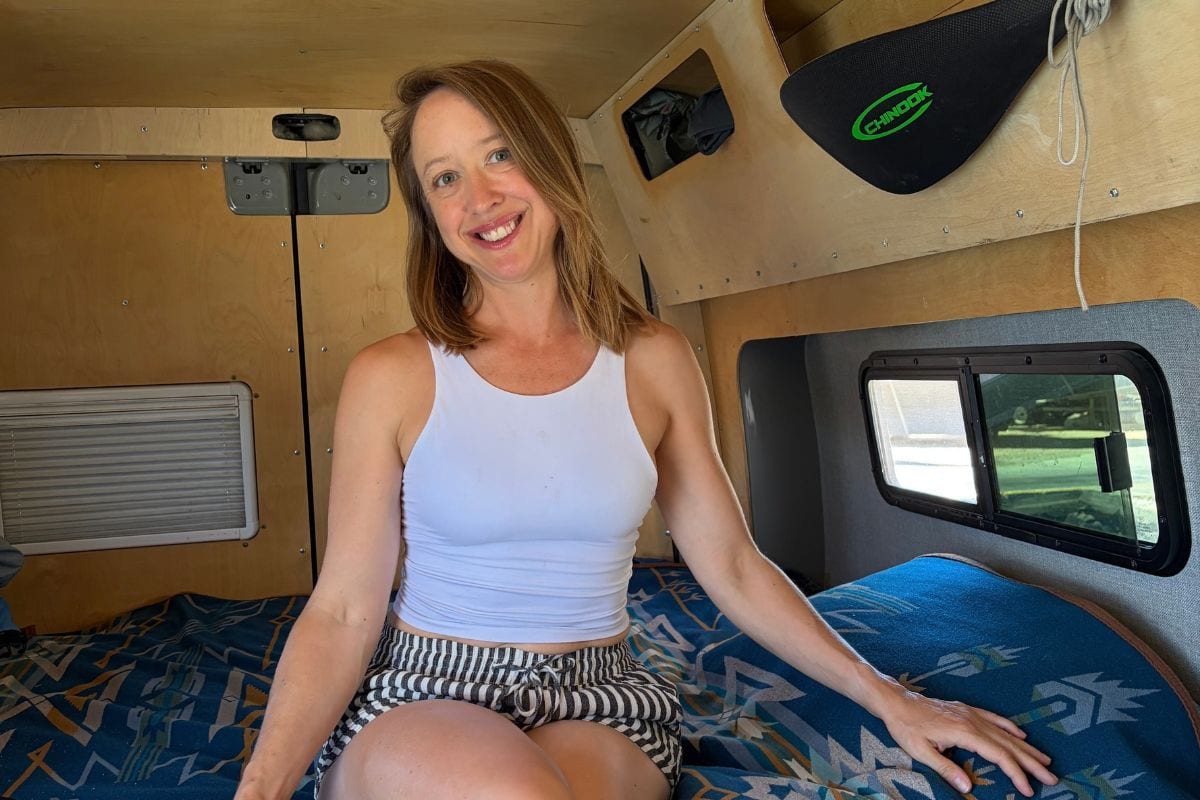
I’ve been sleeping in vehicles since 2015, and these days finding a spot looks like this: Tom drives, and I sit in the passenger seat on an app looking for somewhere to sleep. We mostly wing it. The one thing we do is mark the sites we liked on Google Maps, so the next time we drive that route we know where to camp. That habit only works while those places stay legal, and the rules around them keep moving.
Overnight parking is not being banned by one decision; it is being closed in three places at once. Some states are writing rest-area rules that only allow for a few hours of sleep. Cities are passing two-hour limits and midnight bans on large vehicles. And the store lots that carried the road are being fenced, gated, or overruled by the city they sit in. The honest catch: most of the country still has no rule at all, and the lots that say yes still say yes. This is a list of what changed, so you know where the door closed and where it did not.
It reads beside our state-by-state rest area rules, the chain-by-chain store lot guide, and the cities where sleeping in your vehicle is now illegal. Those three are the map; this one is the changelog.
Rest areas: Virginia rewrote the rule, and Michigan may be next
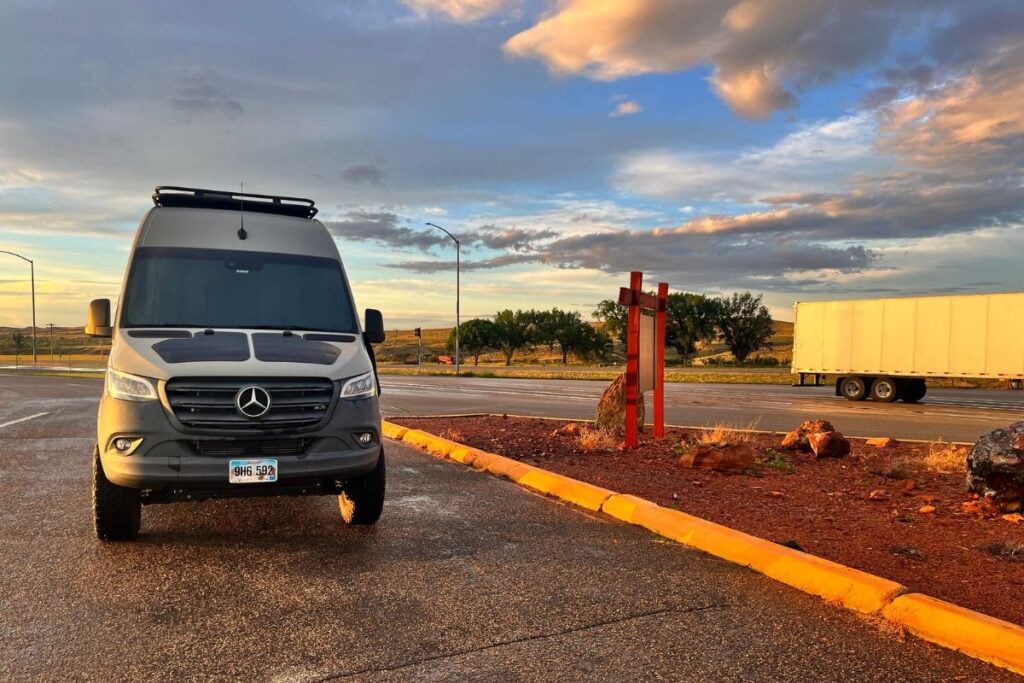
Virginia is the clearest case. Its rest-area regulation took effect March 11, 2026 with two flat lines: “No overnight parking is permitted in rest areas,” and “No sleeping in any section of the rest area building is permitted at any time.” There is no camping definition to argue about and no hour limit to game; the lot closes to sleepers at dark.
Michigan is the one to watch. In October 2025 MDOT proposed its first statewide rules for the rest areas, roadside paks and welcome centers it runs: a 48-hour maximum stay, a ban on camping defined as tents, canopies, or “parking and occupying enclosed, self-contained camping units,” plus bans on dumping and alcohol, enforced as misdemeanors by local police. As of this writing, we could not find a notice that the rules have been adopted; treat Michigan as proposed and check the MDOT rest-area page before you count on a night there.
The states that never allowed it did not change, but they are enforcing. Colorado posts “No Overnight Parking or Camping” at every rest area and says so on its rest-area page; Tennessee holds a two-hour limit; Illinois three hours; Pennsylvania and Wyoming bar overnight at DOT lots (Land Line’s trucking survey of rest-area rules is the cleanest single list).
The full fifty-state table, with each state’s own rule linked, is in our rest-area article. When we rechecked in October we did not find another state that rewrote its rule this year, but states rarely announce these changes, so check the sign and the state’s own page.
Cities: two-hour limits and midnight bans
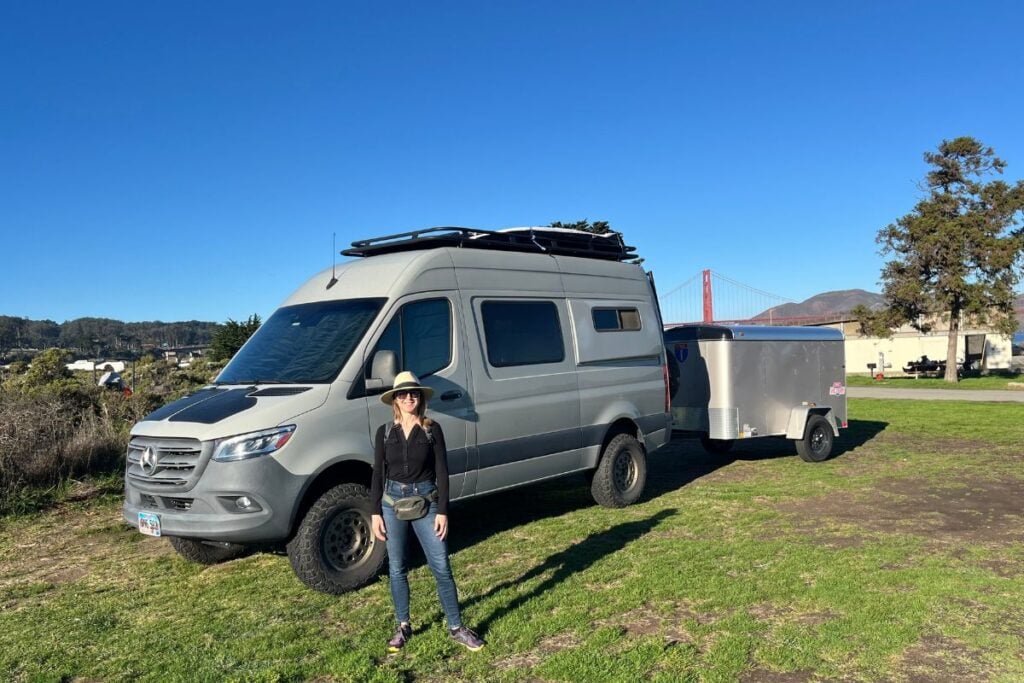
The Supreme Court’s Grants Pass ruling in June 2024 let cities enforce camping bans without first offering shelter, and the ordinances that followed share a design. Instead of banning sleeping, they ban the vehicle: a length or width definition, a two-hour daytime limit, a midnight-to-morning ban, and a permit lane for the people already living on the street. Here is where it landed.
| City | What changed | Status |
|---|---|---|
| San Francisco, CA | A citywide two-hour parking limit, 24 hours a day, on any RV or trailer and any vehicle taller than 7 feet or longer than 22 feet, which catches high-roof vans. Signed by Mayor Daniel Lurie July 29, 2025, in effect since November 2025. The refuge permit covers only people who lived in their vehicles before June 2025 and work with caseworkers. As of September 2026, city data showed nearly 1,100 citations and more than 360 tows, and housed owners of cargo vans, most often high-roof Sprinters, were complaining of tickets and tows. | In force, enforced |
| San Diego, CA | The existing 2 a.m. to 6 a.m. ban on RVs and large vehicles on streets and lots, centered on Mission Bay: 6,742 tickets at $173 each between July 1, 2025 and June 30, 2026, and 797 referrals to safe parking. In May a federal judge ruled the city can keep ticketing, while finding it had violated a settlement by not making promised upgrades to a safe parking lot. | In force, enforced |
| Seattle, WA | On Oct 20, 2026 the City Council passed a six-bill package; the two-hour bill passed 6 to 3. Motorhomes and travel trailers without a permit get two hours on any street and none from midnight to 6 a.m. Permits go only to people counted in a one-time city census, who must move every 72 hours and park overnight only in industrial zones. A visitor cannot get one. | Passed; awaiting the mayor, who has raised serious concerns. Takes effect April 30, 2027, enforcement from July 31, 2027 |
| Palo Alto, CA | On Aug 24, 2026 the council created a permit pilot for about three dozen RVs on Coyote Hill Road and Embarcadero Road ($15 a month, insurance, a good-neighbor agreement) from March, and on Oct 19 voted 6 to 1 to ban RVs within 100 feet of any home from 8 p.m. to 8 a.m., replacing a 2 a.m. to 6 a.m. rule that applied only in residential-only zones. About 130 RVs live on city streets. | Pilot approved; wider ban passed Oct 19 |
| Salt Lake City, UT | A draft ordinance adding sleeping in cars and RVs on closed public property (11 p.m. to 5 a.m.) to the camping ban. Seventy-eight people signed up to speak May 5, 2026; the council deferred the vote and asked for amendments. | Deferred; we found no final vote reported as of October 2026 |
| Santa Cruz, CA | The Oversized Vehicle Ordinance: no vehicle over 20 feet, or over 8 feet tall and 7 feet wide, on the street between midnight and 5 a.m. without a permit ($12 a year for residents, four 72-hour periods a month), with an off-street safe parking program for people living in their rigs. | In force since Nov 2023 |
The bigger list of ordinances, Los Angeles to Honolulu, with the three shapes these bans take, is in the city bans article. What these newest rules add is the permit lane: San Francisco’s buyback, Palo Alto’s pilot streets, Seattle’s census. The cities are not offering a place to park. They are offering a path off the street, and a ticket for anyone not on it.
Store lots: a yes from the store is no longer the whole answer

Walmart still says the manager decides, and often the answer is no. Walmart Locator, the crowd-sourced map RVers have used for years, now counts more than 1,000 of roughly 4,000 stores as no-park, and its two stated reasons are the whole story: “Oftentimes local ordinances prohibit overnight RV parking,” and where Walmart is a tenant, “landlords may prohibit overnight RV parking.” In both cases, the decision is not the store manager’s to make.
Camping World is the chain that has actually pulled back. As it shifted toward RV sales and service, some stores stopped allowing overnight stays, and some installed fences to prevent them. This is not new, but it is still the rule of thumb: no fence, usually yes; fence, usually no; call the store either way. Cracker Barrel, Cabela’s and Bass Pro, the casinos and the truck stops remain manager-by-manager or built for it, and the chain guide has each one’s current stance and the one-minute phone call that gets a yes.
Public land: the same pattern, one level up

The forests and BLM lands that carried the overflow from the lots are tightening at the same time: annual caps of 21 to 28 days on the West Coast forests, designated-sites-only around Sedona and Zion, a full-time-camping ban on the Stanislaus through 2029. That story has its own running list, places closing to campers, and its own map, the national forest stay limits by forest. The point of reading them together is that the three doors are closing for the same stated reason, in the same words: trash, sanitation, and people who never left.
Where a van can still sleep tonight
- Most rest areas in most states. Thirteen states allow overnight parking in writing and fifteen have no rule at all; the sign governs. Sleeping in the vehicle is not camping in most states’ own definitions, which is why the rest-area rules matter more than the lore.
- Truck stops. Pilot Flying J and Love’s still mark RV spaces, free, first come, and nobody expects you to ask.
- Any store lot where you asked. The chains did not change; the cities did. A yes from the manager plus a look at the city’s oversized-vehicle rule is the whole check.
- Public land with a two-number order you have read. Fourteen days is still the rule almost everywhere; the annual cap is the new thing to count.
- The permit lanes, if you live in your rig. Santa Cruz’s safe parking program, Palo Alto’s pilot streets, San Diego’s H-Barracks lot, San Francisco’s housing offer. They are small and they come with case management, and on the street in those four cities they may be the only legal overnight left.
If a rest area, a lot or a street you used to sleep at has closed since this was written, tell me in the comments with the state and the date. This is a running list, and my Facebook communities are how I hear about most of these before the news does.
Frequently asked questions
Which states banned overnight parking at rest areas in 2026?
Virginia is the one with a new rule: its rest-area regulation, effective March 11, 2026, prohibits overnight parking and sleeping in rest area buildings. Michigan proposed a 48-hour limit and a camping ban in October 2025 that had not been confirmed as adopted when we checked. Colorado, Tennessee, Illinois, Pennsylvania and Wyoming have long barred or time-limited overnight stays.
Is it illegal to sleep in your car overnight in a city?
It depends on the city. Since the 2024 Grants Pass ruling, cities such as San Francisco (two-hour limit for large vehicles) and San Diego (2 a.m. to 6 a.m. ban) enforce vehicle-based rules, and Seattle and Palo Alto are adding permit systems. Many cities still have no rule; the oversized-vehicle ordinance is the first thing to check.
Can you still park overnight at Walmart?
Usually, but not everywhere. Walmart Locator counts more than 1,000 of about 4,000 stores as no-park, mostly because of local ordinances or landlords. Call the store, and check the city’s rule.
Does Camping World allow overnight RV parking?
Some locations still do; others have stopped or fenced their lots as the chain shifted toward RV sales and service. An unfenced lot usually allows a night with permission; a fenced one usually does not.
What is the safest legal place for a van to sleep on a road trip?
A truck stop with marked RV spaces, a rest area in a state that allows overnight parking, or a store lot where the manager said yes and the city has no oversized-vehicle rule. National forest and BLM land remains legal within its stay limits.
Sources
- Virginia Administrative Code 24VAC30-51-30, provisions governing rest areas (effective March 11, 2026)
- WWMT, MDOT proposes 48-hour limit at rest areas (Oct 15, 2025)
- WOOD TV, MDOT proposes ban on long-term camping at rest areas, carpool lots
- MDOT, New safety rules for roadside facilities
- Land Line, No overnight parking at state rest areas?
- Boondocker’s Bible, Colorado rest area rules
- ABC7, San Francisco RV parking ordinance signed (July 29, 2025)
- The San Francisco Standard, San Francisco’s RV crackdown is screwing over people who aren’t homeless (Sept 8, 2026)
- Courthouse News, Judge finds San Diego ran afoul of homeless RV parking settlement
- 10News, SDPD issues nearly 7,000 tickets in a year of overnight RV parking crackdown
- PubliCola, Strauss legislation would require RV residents to get permits (Aug 11, 2026)
- KUOW, Extra-wide RVs could be outlawed on Seattle’s residential streets next summer (Aug 12, 2026)
- Axios Seattle, Seattle weighs overnight RV parking ban and permit system (Aug 20, 2026)
- Palo Alto Daily Post, Council votes to restrict RVs to edges of town (Aug 25, 2026)
- Palo Alto Online, Council members mull new RV restrictions (Sept 2, 2026)
- KUOW, Seattle City Council restricts overnight RV parking (Oct 20, 2026)
- The Stranger, Seattle City Council passes RV ban (Oct 21, 2026)
- FOX 13 Seattle, Seattle City Council to vote on new RV parking rules
- Palo Alto Daily Post, Palo Alto expands controversial RV ban (Oct 19, 2026)
- Palo Alto Daily Post, City bans RV parking 100 feet from any home (Oct 23, 2026)
- KSL, Salt Lake City’s proposed camping ban draws fierce debate (May 6, 2026)
- Salt Lake Tribune, SLC proposed changes to RV, car camping rules need more nuance (May 7, 2026)
- City of Santa Cruz, Oversized Vehicle Ordinance
- Walmart Locator, No-Park Walmarts
- Walmart corporate FAQ, Can I park my RV at a Walmart store?
- Roadtrippers, Overnight RV parking at Camping World
- Supreme Court, City of Grants Pass v. Johnson (June 28, 2024)
Virginia, Michigan, the cities in the table and the Walmart and Camping World sources checked October 2026; the other state rest-area rules and the public-land orders checked September 2026. Forest orders, ordinances and statutes change; the links above are the pages we read, and each one is the place to confirm the current version before you rely on it.


