

20 Truck Camper Accessories You Actually Need (From Someone Who’s Lived in One)

After months of living out of a truck camper, these are the 20 accessories that earned their space: the camp kitchen, water and washing, the living area, storage, off-grid navigation and connectivity, and safety, with the buying tips that matter.
*This post may contain affiliate links. Please read our disclosure policy for more info.

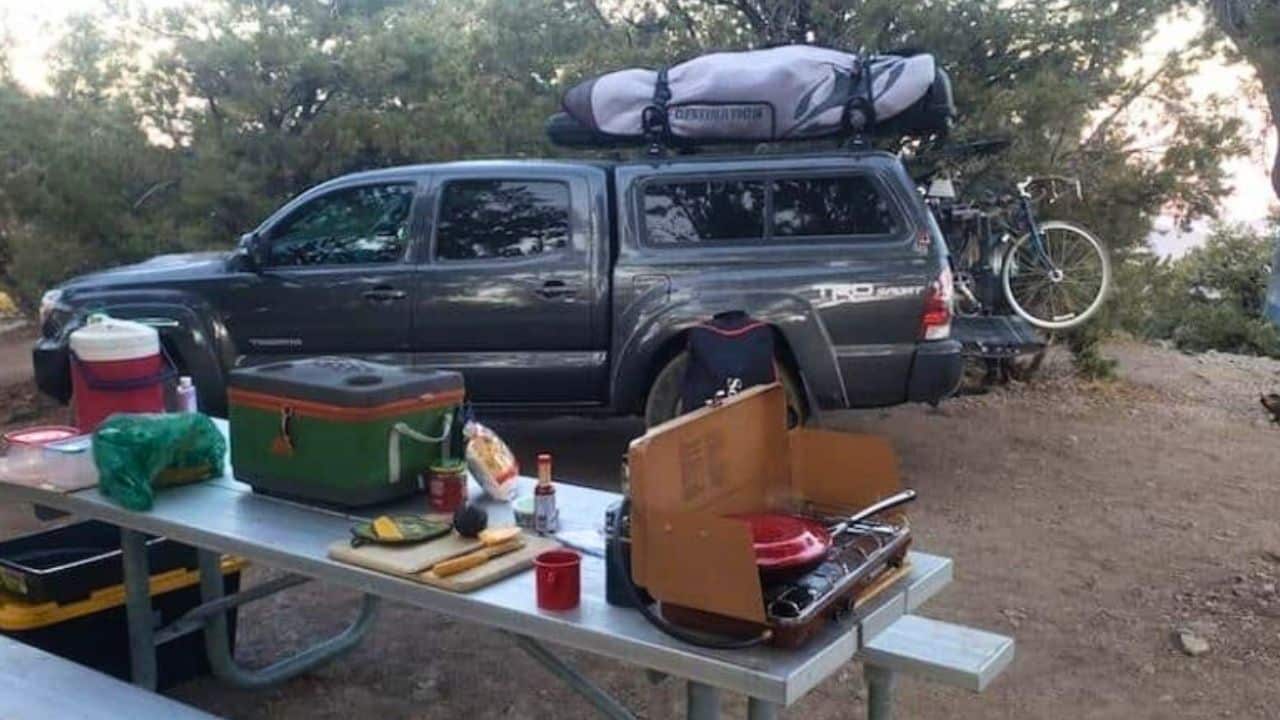
I’ve done plenty of road trips in cars and RVs, but I had never set out to live out of a truck camper for months at a time until I left my hometown of Truckee, California with the bed loaded to the roof. I did not leave with the right gear. The learning came fast, and this list is what I would pack now.
Here are the 20 truck camper accessories I actually use, sorted by the job they do: cooking, water and washing, the living space, storage, staying connected off-grid, and safety. Some keep a truck bed organized, some make the camp kitchen work, and a few are what let me hold down remote work from national forest clearings. Skip to the category you need, or start with the checklist.
The truck camper accessories checklist at a glance
The short version, category by category. Every item is covered below with why it earned its spot.
- Cooking and coffee: a two-burner camp stove, a pocket backpacking stove with dehydrated meals for late arrivals, a travel coffee press, silicone hot-handle holders
- Water and washing: a rigid 5-gallon water container, a collapsible wash basin, a 5-gallon solar shower
- Living space: an adjustable camp table that doubles as a standing desk, a flat-folding camp chair with leveling legs, a solar lantern, a packable camp blanket
- Storage and food: a roof cargo basket, a collapsible soft cooler, odor-proof storage bags
- Navigation and connectivity: an off-road GPS, a dash mount system, a cell signal booster, a vehicle GMRS radio
- Safety: a wilderness first aid kit and a proper hatchet
What do you need to cook in a truck camper?
1. Camp Chef Everest 2X two-burner stove
I love to cook, at home or out of a truck camper shell, and a cheap single-burner stove leaves you stuck when a dinner has more than one part. A two-burner stove is the center of my camp kitchen: I can boil water for pasta while a steak sears, and nothing goes cold waiting on the rest. The Camp Chef Everest 2X puts out 20,000 BTU per burner with wind blocks and matchless igniters, and the flame control knobs let you actually simmer. It is bulkier than a single burner and wants a level table, and it is worth both.
2. MSR PocketRocket 2 mini stove kit and dehydrated meals

When you roll into camp after a twelve-hour drive, the last thing you want is to set up the full kitchen. The MSR PocketRocket kit nests the stove and pot into a palm-sized package and boils a few cups of water in under four minutes; pour that into a dehydrated meal pouch and you have a hot, calorie-dense dinner without rearranging the truck bed. It is a backup, not a frying setup, and the canister fuel drops off in freezing weather, but it is the best contingency plan a road-weary driver can carry.
3. AeroPress Go travel coffee press
Nothing beats coffee on the tailgate while the sun hits camp, and there is no outlet for a drip machine on a BLM track. I was a French press purist until I drank enough camp-neighbor coffee from an AeroPress Go to give in. Full-immersion brewing, no grit, and the whole thing nests inside its own travel mug. It makes one or two concentrated cups per press and needs its paper filters, so pack them.
4. Lodge silicone hot-handle holders
Easy to overlook until your first trail meal. Camp cookware is cast iron or thin steel because it has to survive the truck, and both get dangerously hot fast. The Lodge silicone handle holders slide onto a pan handle, are rated to 450°F, and double as small trivets so a blistering pot does not melt your table. They fit traditional pan handles, not wire backpacking handles, and they come off before anything goes over an open fire.
How do you handle water, dishes and showers out of a truck?
5. Reliance Aqua-Pak 5-gallon water container
Planning a multi-day trip into Death Valley with a 15-mile hike on day two, water was the whole plan. Small two-gallon jugs are fine for an overnight; a rigid, stackable 5-gallon Reliance Aqua-Pak is the standard for truck camping because it survives washboard roads, the hideaway spigot reverses into the cap so it cannot leak in transit, and the translucent plastic shows what is left. It takes up its footprint even when empty, and it is heavy full. Carry more water than you think you need; I have learned that one the hard way.
6. UST collapsible wash basin

Bacteria thrive on cookware that does not get scrubbed with warm water and soap after every meal, and a basin is what catches the runoff so your campsite does not turn into a swamp. This wash bin collapses to under two inches, has a rigid rim and base so it does not tip when full, and lets you carry gray water a safe distance from the truck before you dump it, which is how you keep curious wildlife out of camp at night. Keep it away from axes and knives when packed; the silicone walls can puncture.
7. Advanced Elements 5-gallon solar shower

You do not have to be a neat freak to want a hot rinse after a high-altitude hike, and a hanging water bag is also an instant hand-washing station beside the camp kitchen. This Advanced Elements 5-gallon shower rolled thousands of miles with me: durable, cheap, with a temperature gauge so you do not scald yourself. Physics applies. It needs four or five hours of direct sun laid flat on the hood or roof rack, and five gallons weighs over 40 pounds, so it needs a stout branch or rack to hang from.
What makes the living space comfortable?
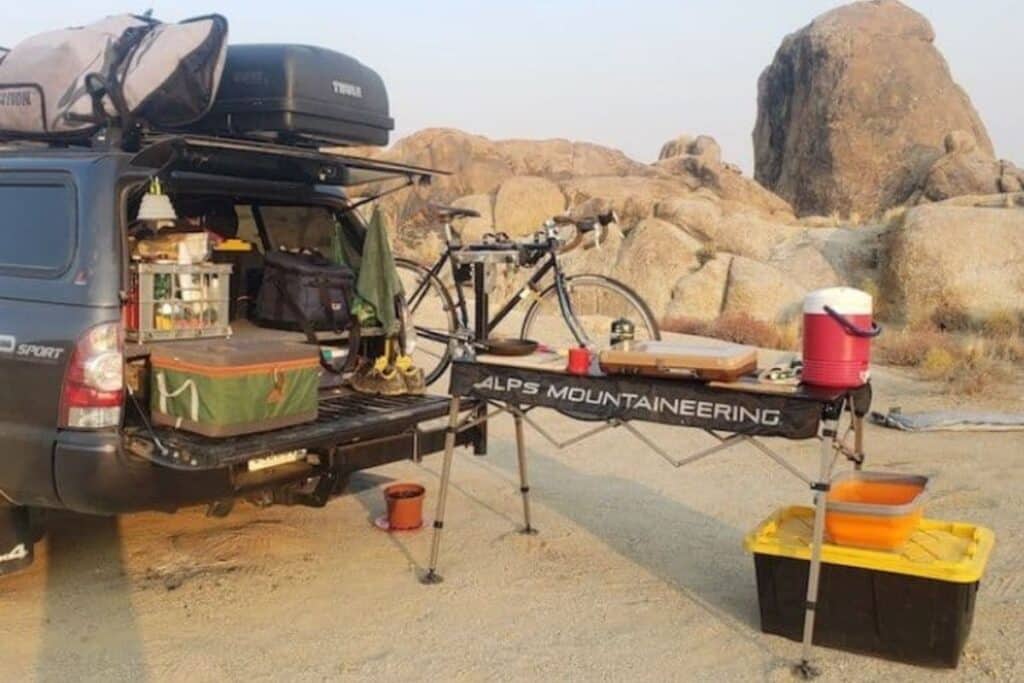
8. ALPS Mountaineering Laredo table

A folding table like this one from Alps Mountaineering turns any clearing into a kitchen or an office without leaning on the tailgate, and this one is the piece of gear that made remote work possible for me. The legs pin to 36 inches, so it becomes a standing desk during long editing sessions, and the aluminum roll-top fits a laptop, a keyboard and a second monitor. It wipes clean with a damp rag, so it is as good for chopping vegetables as for business calls. The steel frame adds weight, and the pinned adjustments are not micro-adjustable on very uneven ground.
9. Furnigami folding camp chair
Cheap camp chairs sag and cause hip fatigue over a season. The Furnigami chair folds completely flat to slide against a camper wall or under a bed platform, holds 500 pounds without a wobble, and has independent leveling legs, which is the feature that matters when the ground under your truck is never level. It is heavier and pricier than a big-box umbrella chair, and it is the seat I want at the end of a day of driving or hiking.
10. Goal Zero Crush Light solar lantern

I do not light up camp like a stadium after dark, but pulling into a boondocking spot late and sorting out the truck bed needs a lantern. The Crush Light lives on my dashboard during the day, charges off the sun while I drive, and hangs from the topper ceiling by its loop at night for a soft, warm glow that is right for reading or journaling. Sixty lumens is ambient light, not a spotlight, and a full charge takes a day of direct sun.
11. Rumpl Original Puffy blanket

Cotton blankets soak up camp humidity and hold dirt. A technical camp blanket like this RUMPL puffy blanket with a DWR shell shrugs off spilled coffee and pet hair, packs far smaller than a comforter, and stands in for a sleeping bag on warm nights. The cape clip keeps it on your shoulders around the fire, and the width fits two people, or one person and a dog whose claws would shred a down bag. The slick shell can slide off a sleeping pad, and synthetic fill is not as warm for its weight as high-end down.
How do you keep a truck bed organized?
12. Thule Canyon XT cargo basket

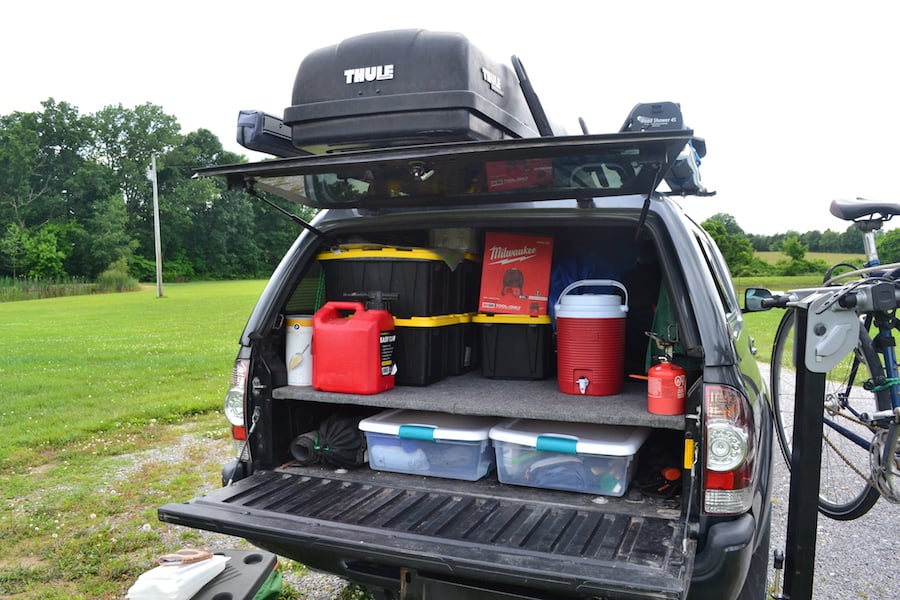
I have not seen many trucks on the road without a roof rack or basket, and for good reason: a steel basket gives bulky, dirty gear a home outside the living space. If you sleep in the bed under a shell, traction boards, storage boxes and firewood go up top before you crawl in, and nothing sits on the ground overnight where it gets stolen or soaked with dew. The included wind fairing cuts highway buffeting. You pay a little in fuel economy and gain some height, so mind the low branches.
13. Maelstrom collapsible soft cooler
A rotomolded cooler holds ice for a week and takes up an immovable block of your living space whether or not it holds food. The Maelstrom 60-can soft cooler squishes flat as the fresh food runs down, its welded liner pulls out for cleaning without hauling the whole unit to a hose, and the molded lid works as an end table beside your chair. Ice retention tops out around 24 to 36 hours, and the soft walls will crush under cast iron, so pack it on top.
14. Smelly Proof storage bags
In a truck camper your kitchen, bedroom and pantry share one small zone, so bacon, onions or fresh trout in a grocery baggie is an invitation for wildlife to investigate your panels at night. These medical-grade bags are odor-proof, puncture-resistant, and reusable with camp soap; they also keep vegetables crisp in the cooler and contain trash until you reach a bin. They are stiffer to seal than sandwich bags, and the clear plastic hides nothing.
How do you navigate and stay connected off-grid?
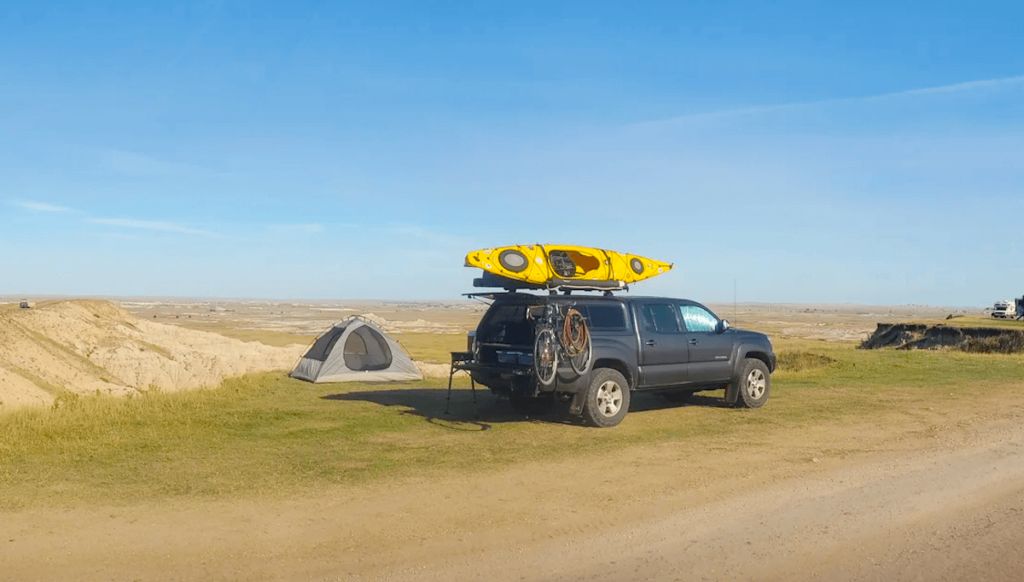
15. Garmin Tread Overland Edition GPS
Cell signal drops right at the unmaintained fork where you need it most, so relying on a phone’s GPS deep in the backcountry is a gamble. The Garmin Tread Overland Edition is a ruggedized 8-inch navigator with preloaded street, topo, public-land and Forest Service motor-vehicle-use maps, an IP67 rating, and pitch, roll and altimeter readouts. Pair it with the Tread app to sync waypoints and pull weather when you have signal, and cross-reference The Dyrt’s user reviews before steering a loaded truck down a canyon it cannot climb back out of. It is a real investment, and it needs a clear patch of dash.
16. RAM Tough-Track dash mounts
Suction-cup mounts dry out and drop your electronics on the floor the first sustained washboard. A RAM Tough-Track system bolts a modular track across the dash and holds a tablet, a phone and a radio at once on ball-and-socket arms, with your route in your line of sight and no sway on rocky passes. It is a more involved install, and the arms and cradles are sold separately.
17. weBoost Drive Reach cell signal booster
For anyone working from the road, a pristine campsite is worthless if the files will not upload. The weBoost Drive Reach is a megaphone for weak signal: a magnetic roof antenna pulls in distant towers and the amplifier turns one frustrating bar into a usable hotspot inside the shell. It saved my workflow more than once. It cannot invent a signal where there is none, and it draws from the 12-volt system while running.
18. Midland MicroMobile MXT275 GMRS radio
Past the edge of cell service you need a second way to talk. This 15-watt vehicle-mounted GMRS radio reaches miles farther than handheld walkie-talkies, hides under the seat with all the controls in the handheld mic, and carries NOAA weather channels, so you can raise trail partners, a base camp or a ranger when the road or the weather turns. GMRS needs an inexpensive FCC license, and the external antenna cable has to route through the cab weather stripping.
What safety gear belongs in a truck camper?
19. Adventure Medical Kits Mountain Series
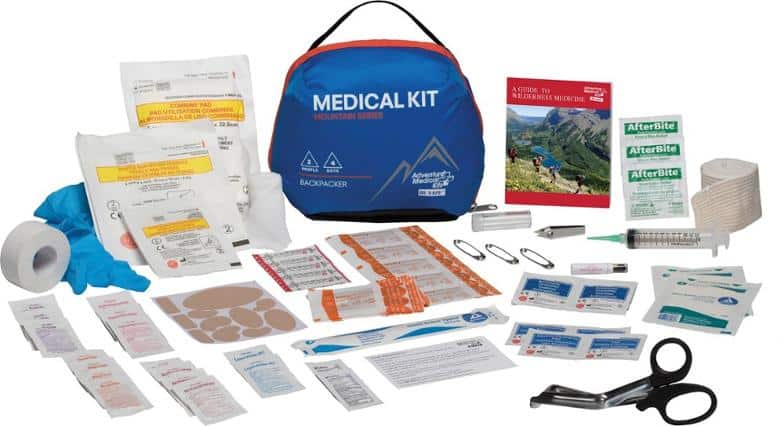
A mentor of mine put it this way: it is not a question of whether a backcountry mishap happens, but whether you are equipped when it does. This adventure medical kit sorts supplies into labeled, symptom-specific pouches, so a trail laceration or a stove burn does not turn into a frantic dig through loose bandages, and it includes a wilderness medicine guide. It lacks trauma gear like tourniquets out of the box, and it needs periodic checks for expired medications.
20. Gerber 17.5-inch Freescape hatchet
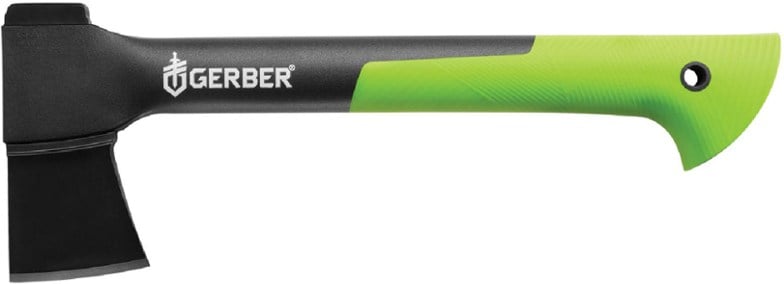
A fire is one of the best parts of truck camping, and bringing full logs means you are not scavenging the forest floor. I kept a dull, bent, cheap hatchet in my kit far too long; this hatchet has a forged steel head with a low-friction coating and a shock-absorbing composite handle that is a revelation. The bright green accents make it easy to spot at dusk. The poll is not rated for driving steel wedges, and it has no handle storage cavity.
How do you choose truck camper accessories?
Balance price against durability, then look at your storage layout, power draw and weather exposure. Four things I check now:
- Materials. Rugged cases and exterior gear built from LLDPE or HDPE polyethylene flex under vibration instead of cracking, and they hold up to cold and UV.
- Weather protection. Do not settle for “water-resistant” on anything holding electronics or bedding. Look for the Ingress Protection rating: IP65 is dust-tight and sheds rain; IP67 survives a dunk in a meter of water.
- Insulation. An aluminum or fiberglass topper has almost no thermal resistance, so a truck bed becomes a refrigerator on the first cold night, and your breath condenses on the cold shell into damp bedding and mold. Closed-cell foam or radiant barrier under the shell fixes both.
- Power. Add up the daily watt-hours for your phone, tablet, booster and lights before you buy a solar panel, so the panel can actually refill the battery without running the engine.
If you are still choosing the rig, start with the best truck campers, pop-up truck campers and truck bed tents; for the inside of the box, truck camper interior ideas and RV starter kit boxes cover the rest.
Truck camper accessories: your questions answered
What accessories do you need for truck camping?
Cover six jobs: cooking (a two-burner stove, a pocket stove for late nights, coffee), water (a rigid 5-gallon container, a wash basin, a solar shower), living space (table, chair, lantern, blanket), storage (a roof basket, a collapsible cooler, odor-proof bags), navigation and connectivity (GPS, dash mounts, a signal booster, a GMRS radio), and safety (a wilderness first aid kit and a hatchet). The 20 picks above are one tested version of that list.
What is the most important truck camper accessory?
Water storage. A rigid 5-gallon container that survives washboard roads and cannot leak in transit is the one item that changes how far from town you can go. After that, a two-burner stove and a real camp table do the most for daily life.
Do you need a roof rack or cargo basket for truck camping?
If you sleep in the bed under a shell, yes. A cargo basket gives bulky and dirty gear (traction boards, storage boxes, firewood) a home outside the living space, so nothing sits on the ground overnight and the bed stays clear for sleeping. Expect a small fuel-economy penalty and mind your new clearance height.
How do you get internet in a truck camper?
A cell signal booster like the weBoost Drive Reach amplifies weak signal from distant towers into a usable hotspot, which is enough for most remote work where there is at least one bar. It cannot create signal where there is none; for true dead zones, satellite internet is the alternative, and an off-road GPS keeps you navigating without any signal at all.
How do you keep animals out of a truck camper?
Store aromatic food in odor-proof bags, wash dishes after every meal and dump the gray water well away from the truck, and keep trash sealed until you reach a bin. Your kitchen, pantry and bed share one small space in a truck camper, so scent control is what keeps wildlife from investigating your panels at night.
Staying organized is everything when your whole life fits in a truck bed, and the right accessories make vehicle-based travel feel seamless instead of improvised. Have a favorite piece of gear or a storage trick I left off? Share it in the comments; this list keeps evolving with my setup.
More reading: the best truck bed tents · RV starter boxes to get organized · six box truck camper conversions.


Life on the road in a truck camper can be an adventurous and comfortable experience, especially with the right accessories. : FedEx delivery truck https://auttomotives.com/how-to-track-fedex-truck/ is also start their journey by picking up packages from various sources, including FedEx drop-off locations, sorting facilities, and distribution centers.