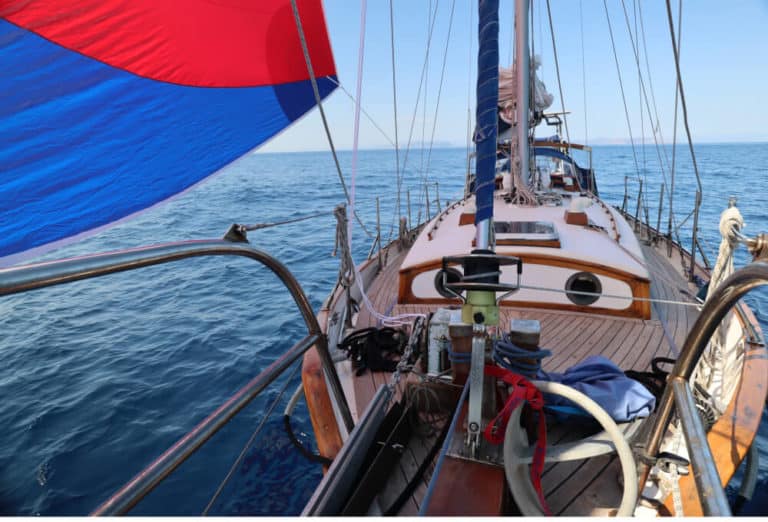
Does Retiring on a Sailboat Actually Save Money? I Asked Hundreds of Sailors to Weigh In.

Hundreds of sailors answered one question on our sailing Facebook page: would retiring aboard save you money? Most said no.

*This post may contain affiliate links. Please read our disclosure policy for more info.
I’ve been living on sailboats with my partner Tom since 2016, when I was laid off from my job in corporate radio news. I was thankful for a place to live where I wouldn’t go broke from expensive San Francisco Bay Area rent.
We lived on that sailboat to save money for the future and to achieve financial freedom. Monthly marina fees were just $400, but we weren’t allowed to legally live aboard. We spent lots of time anchored out, housesitting, and living in our car.
While rent was cheap, the sailboat still required lots of work, a huge restoration project. Tens of thousands of dollars were poured into her, and we sailed her to Mexico in 2020.
A sailboat can make daily life cheap. The boat itself never is. Housing is the biggest line in most retirement budgets, about $1,950 a month for households 65 and older by the government’s own count, and a boat can shrink it to a slip fee or to nothing at anchor. Then it hands you a new budget called maintenance, insurance, and haul-outs, and that one does not retire.
Hundreds of sailors answered when I posed this question on my sailing Facebook page: does retiring on a sailboat save money?
Here’s what they said.
Most of the sailors said no, and they said it with jokes
The biggest single answer, by a wide margin, was some version of no. Roughly a third of the comments on the photo were a flat “it won’t save you money,” and the room had its jokes ready: BOAT stands for “break out another thousand,” a sailboat is “a hole in the water you pour money into,” and the two happiest days of a boat owner’s life came up at least five times.
Behind the jokes was experience. People who had lived aboard for 14, 17, 22, 26 and 33 years wrote in, and a couple who sailed from Florida to Fiji and back over ten years. One reader asked the question every retiree should hear before buying: “How much does it cost? The only answer: how much do you have?”
Then there was a second, warmer camp, about one comment in eight on the photo and more on the video: not to save money, but for the life. “Absolutely did not save money,” one reader wrote. “But the stress from work was gone.” Another: “Not to save money. To have adventures.”
And isn’t that the entire point?
What a year of living on our boat actually cost us
Living on our sailboat has changed for us quite a bit over the years. We have been in Mexico since late 2020, hauling out every summer and splashing every winter. In 2025, we did something many sailors call “crazy” and bought another boat, named Payah Kun, in San Francisco, sailing her down to Mexico that spring.
We own both of our sailboats outright and they both live at Cabrales boatyard in Puerto Penasco, Mexico while we worked on restoring our newest buy. Yard fees run about $700 per month for two boats, which is also our rent, water and power. Groceries ran about $860 a month for two, most of it Costco runs across the border. Eating out about $140. Fuel about $60 or less. Two phones, Starlink and health insurance came to $368 a month, and those follow us wherever we live. The full ledger for life in the boatyard is here.
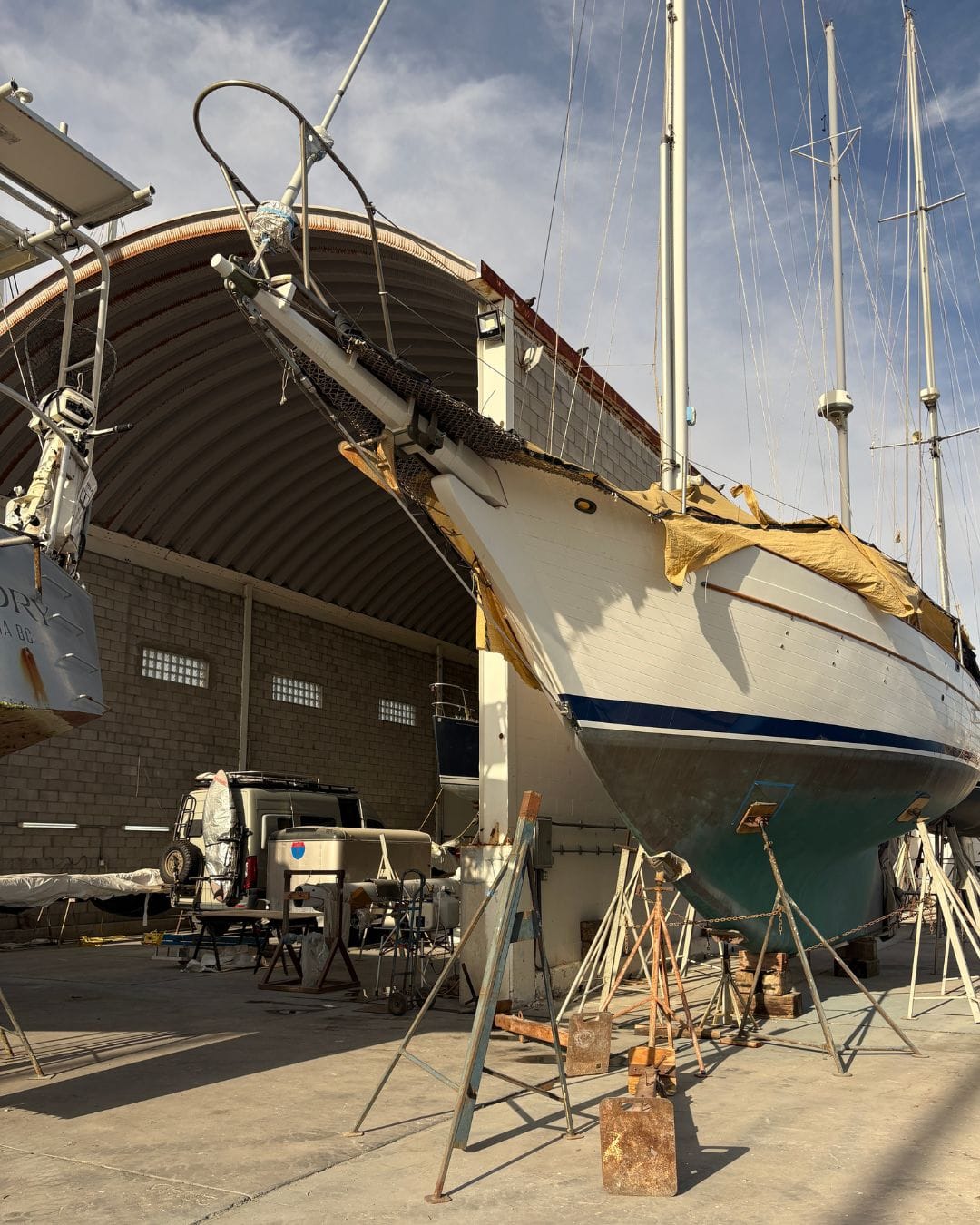
It is less than two years of rent for the one-bedroom San Francisco apartment I gave up years ago, and at the end of that rent I would have owned nothing. But notice what made it cheap: the boats were paid for, we were on stands in a DIY yard instead of in a marina, Tom does the work himself, and we are not completely retired, although our lives are full of freedom and adventure.
I run my business from the boat and he fixes the boat. How we pay for all of this is its own article.
The three things the sailors who saved money had in common
When I lined up the seven readers who said yes, it did save me money, the same three conditions were under every one of them.
The boat was already paid for. One reader who lived aboard for five years, “saved a ton of money, paid for college, then a larger boat,” already owned the boat when a marriage ended; the saving was on housing, not on a boat loan. Another sold the house, auctioned most of what they owned and moved aboard, and put it plainly: “once the capital investment is paid, it is cheaper.” Nobody in either thread said a boat payment plus a slip beat a mortgage.
They stayed out of marinas, or found a cheap one. The five-year saver avoided expensive marinas, rented space in a commercial shipyard, then tied up behind a private home on a canal. Another lives on a fixed income in a marina whose whole year of electricity, amenities, association fees and insurance came to $3,680, and wrote, “I can’t live on land on a fixed income.” The anchor-out crowd made the same point with solar panels and a watermaker. Our version is a DIY boatyard in Mexico at about $600 a month for two boats.
They compared the boat to what land actually costs them, not to a fantasy of land. A reader in Santa Cruz pays about $900 a month for a slip where a one-bedroom apartment runs about $4,000, and runs a hull-cleaning business, so the maintenance is labor they already sell. A pensioner in Sydney lives aboard “because I can’t afford rent in Sydney. I’m not unique either.”
One reader doing the math right now set an $800,000 mortgage, repaid at $1.6 to $2 million with interest, against a refitted boat at about $100,000 plus about $8,000 a year for a marina with water and power, then asked the question this whole article is about: “How much can actually go wrong on a boat that it would cost me more?”
Those reader numbers are theirs, reported in a comment thread, not audited. But the pattern holds against our own ledger: paid-for boat, cheap berth, honest comparison. Miss any one of the three and the no camp is probably right about you.
What a slip really costs when you live in it
Marina fees were the second most-named cost in the thread, often described as “as much as rent,” so I pulled the published rate cards instead of guessing. The City of St. Petersburg, Florida, prices its municipal marina slips whole, not by the foot: on the rate sheet linked here, a slip for a 34-foot boat is about $650 a month for a non-resident before tax, and living aboard adds a flat $297.43 a month including tax. Call it about $990 a month, before electricity, for a modest boat in a city marina.
One reader who lives there put their own all-in housing at about $1,000 a month on a 26-footer, and the rate card agrees with them.
Santa Cruz Harbor in California publishes slip rates by the foot, roughly $15 to $18 a foot in the North Harbor, plus a $250 liveaboard application fee, $146.26 a month for each adult aboard, and a utilities fee of 30 percent of the slip rent. For two people on a 40-foot boat that works out to about $1,100 a month, if the per-foot rates are monthly, which the page implies but does not say.
The Port of Seattle’s Shilshole Bay Marina tariff charges $205.38 a month for liveaboard authorization on top of moorage of about $21 a foot for a 40-foot slip, and Washington adds a 12.84 percent leasehold tax to the lot. About $1,190 a month for a 40-footer, by my arithmetic from their numbers.
Now the line the thread got half right. A reader wrote that Santa Cruz waives property tax for liveaboards. It does not, as far as I can find. The harbor’s own newsletter tells berth holders that “each year, the Santa Cruz County Assessor’s office charges possessory interest tax to vessels berthed in the Santa Cruz Harbor,” and the county assessor lists “boat slips in public marinas” as a taxable possessory interest. Another reader, in Orange County, called it a tax on the water under your boat, and that is roughly what it is.
California’s Board of Equalization names “a permit to use a berth at a harbor” as something that can create a possessory interest, and it arrives as a separate tax bill. Budget for it in any public marina in California.
For scale, the Bureau of Labor Statistics’ latest spending survey puts housing for households 65 and older at $23,430 a year, 36.4 percent of everything they spend, with shelter alone at about $14,000 (the age table in the latest release). The Census Bureau’s national median gross rent, utilities included, was $1,487 a month in its latest published year.
So a $1,000 to $1,200 liveaboard slip in a city marina is cheaper than the average retiree’s shelter, and not by as much as the meme suggests. The saving is real at anchor, in a yard, on a canal or in a cheap mooring field; in a nice marina it is a few hundred dollars a month, before the boat sends its own bills.
Two more things about slips. Liveaboard permits are capped and waitlisted in a lot of harbors; in San Francisco we paid about $400 for a regular slip for three years and slept aboard the nights the rules allowed, because the liveaboard fee could reach $1,500 a month and the waitlist ran for years.
And one Australian reader reported marinas “up to $600 a week,” with berths hard to find and rivers harder to anchor in than twenty years ago. Rate cards change; the ones above are linked so you can check them the day you read this.

The costs that eat the savings: maintenance, insurance, haul-outs and paperwork
Maintenance was the most-named cost of all, around thirty mentions on the photo alone. “Always something breaks. No matter what.” The industry’s rule of thumb is about 10 percent of the boat’s cost a year, and Practical Sailor says 10 to 15 percent, more for an older boat. A survey of experienced bluewater skippers published by Yachting World found most cruisers spending 20 to 40 percent of their monthly outlay on maintenance and running costs. Our ledger says $1,200 a month in parts with the labor free.
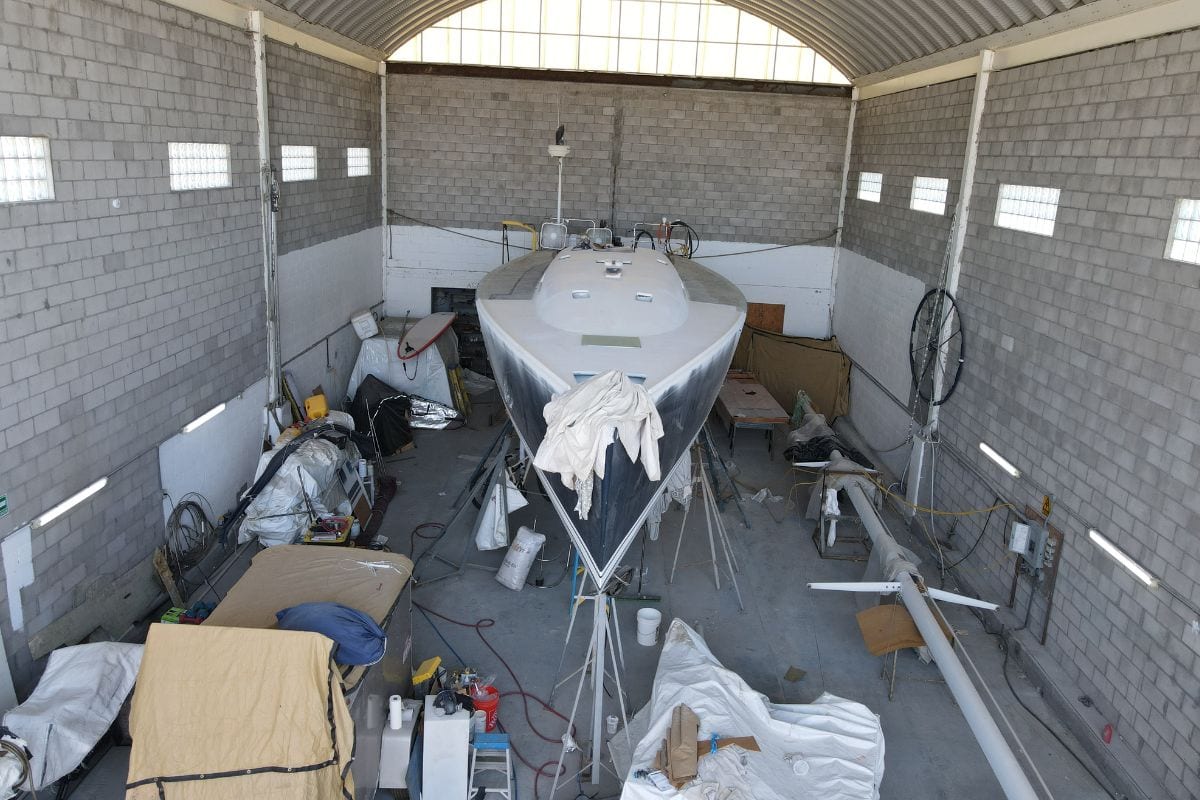
What a sailboat costs to buy and keep and what hundreds of sailors told us about buying a first one both end at the same place: double your estimate, then expect to be wrong.
Insurance came up six times, and it is the cost that has changed most. Practical Sailor reports that liveaboard policies “typically run 20 to 40 percent higher than comparable recreational use policies,” that a well-maintained 40-foot cruising sailboat should expect $2,000 to $4,000 a year, and that direct carriers “decline older vessels” and are not built for full-time liveaboard exposure.
The same magazine’s market read says “boats over 20 to 25 years old are facing premium jumps, required upgrades and declined coverage,” and an informal owner survey put the tipping point at 40-plus years for most insurers, as low as 15 for some. Our first boat was built in 1972. The cheap old boat that makes the retirement math work is the boat insurers least want, and an uninsurable boat is a boat most marinas will not let you live in.
Haul-outs came up four times: out of the water at least every two years, bottom paint, the yard bill. Ours is about $500 for the round trip, which is the cheap part; the months on stands are the rest.
And two readers wrote long comments about the paperwork nobody warns you about: a doctor, a bank, a pension, mail, voting and vehicle registration with no fixed address, and “unlike RVs, boats have to conform to maritime law and Coast Guard regulations.” One sailor of eight years added that mooring prices “in several destinations increased by 100 percent” in that time. These are not reasons to stay ashore. They are the lines that belong in the budget before you sell the house.
Anchoring out is the real saving, and some places are closing it
The readers who made the money work mostly did it by not paying for a slip at all: solar or wind for power, a watermaker, a dinghy to shore, and a mooring ball or a yard when the weather said so. Then, they said, “the expense will be repairs,” and nothing else. We know this life; our winters were spent anchored in the Sea of Cortez, and an anchorage costs exactly nothing per night.

Two readers said the opposite: “living on the hook is misery,” and new anchoring laws are ending it in places. They are right about the laws.
In Florida, counties can now designate anchoring limitation areas where a vessel may not anchor “for more than 45 consecutive days in any 6-month period,” and the state bars anchoring within set distances of marinas and boatyards. Whether you can really anchor anywhere is a question we have already taken apart; the short answer is less than you could ten years ago, and less every year in the popular places. The anchor-out retirement plan works best somewhere that still wants you.
The parts of a boat retirement that are not about money
Read all 370 comments and the money argument starts to feel like the easy one. The readers who had actually done it for decades spent more words on four other things.
The body. About eight readers on the photo brought up arthritis, balance at 64, and “climbing on and off the boat with groceries gets proportionally harder each year.” One wrote that the physical toll sends many back to powerboats or to land.
The bluntest was a reader diagnosed with “a 70-year-old spine at the age of 50,” whose dream now hangs on a wall. A couple who sailed around the world over ten years said they would do it again “if we weren’t over 80.” The sailors who kept going longest tended to be the ones who went earliest: “did it in our 30s. Don’t wait.”
Health care, which is what actually ends it. Five readers left the water for health: cancer at 80 after 25 years aboard, a move off a 60-foot boat after an illness, a return to the UK after 18 years. This is the same thing that parks retirees’ RVs; a 24/7 Wall St report on retirees who sell everything for an RV found health care the reason that comes up every time, with the question “where will you go when you need the same specialist three months in a row?”
For Americans the hard fact is that Medicare usually does not cover care outside the United States, with narrow exceptions, so a retirement in Mexico or the Caribbean needs its own plan. And if you skip Part B because you are abroad, the late-enrollment penalty is 10 percent for each year you could have signed up and did not, usually for life.
The cruisers in the Yachting World survey who kept private health insurance were paying around $1,000 to $1,500 a month for it. Our own health insurance line is $178 a month for the two of us, but we are not retired, so do not copy our number. Talk to someone who knows your situation; this is not financial advice, it is a list of the bills.
Family. Grandchildren pulled one couple ashore; another sold after ten years because they missed everyone; “my wife keeps telling me ‘I’m not living on a boat.’” About seven comments were some version of this, and none of them had a budget line. On the paperwork side, one thing is simpler than people fear: U.S. citizens can generally keep receiving Social Security outside the country, with a short list of exceptions, per the Social Security Administration’s own guide.
The exit. This was the comment I keep coming back to: “What happens when you become old and infirm and can’t afford to get back into the housing market?” Another reader put it as advice: “I’d advise against selling a home to buy a boat to live on.”
Boats depreciate and houses mostly do not, and a retirement plan that only works if you never move ashore again is a bet on your knees. The readers who seemed most at peace kept a door open: a house in a cheap state they visit twice a year, a plan to sell the boat while it is still worth something, savings the boat was not allowed to touch.

How the people who made it work actually did it
Strip the two threads down to the practical advice and it is short.
- Buy the boat outright, and buy less boat than you can afford, so the slip and the insurance stay small. The size that is cheap to keep is the size to retire on.
- Learn to do your own work before you move aboard. Four readers said it in the same words: paying someone is very expensive, and a retiree who cannot fix a head is at the mercy of the yard.
- Pick your berth before your boat. A canal-side backyard, a commercial yard, a mooring field or an anchorage changes the math more than the hull does. Check the liveaboard rules, the waitlist and the possessory-interest tax if the marina is public.
- Go seasonal if full time is too much. One reader’s friends leave every year for six months in the Caribbean. One sailor of 26 years worked a year or two as a refrigeration tech between stretches of sailing. Another couple keeps “a house in a pretty state” and visits the boat twice a year.
- Rent one and live on it for a month first, which one reader offered as the whole answer. A month of winter aboard tells you more than a summer of dreaming.
- Keep the exit funded: a boat that can be sold, and a way back ashore that does not depend on the boat selling well.
If you want the gear side of the move, our roundup of the sailboat accessories worth the money and the list of things nobody tells you about living on a boat are where to start, and the ways sailors actually make money is for anyone whose retirement is going to be more semi than full. What our first month aboard was really like is the honest version of the rental test.
So, will living on a sailboat save you money in retirement?
Here is where I land after reading everything. A sailboat can cut your housing cost to a slip fee, a yard fee or nothing, and for the right person in the right berth that is a real saving against $1,950 a month of average retiree housing. It will not save you money if you are paying for the boat, if you are in a marina you would be proud to show your friends, if you cannot do your own work, or if the budget has no line for the year the engine dies.

The readers who saved money had a paid-for boat, a cheap place to keep it and an honest number for what land was costing them. That was all three, every time.
Our own version is not a retirement, but it is a decade of the same experiment. Living on the boat has been cheap. Owning the boats has never been, and the brutal truths of boat life are mostly bills.
We would do it again, for the sunsets and the people in the yard and the fact that our address is an anchorage for part of every year. Just not to save money. If you are counting on the saving, run your own numbers against the rate cards above, add a maintenance line you would be embarrassed to show a boat owner, and then decide. The sailors in the thread will tell you the rest, with jokes.
Would you retire onto a sailboat? And if you already have, what did it really cost you, in money and in everything else?
Frequently asked questions
Is it cheaper to live on a sailboat than in a house in retirement?
It can be, but usually only under three conditions that the sailors who saved money all shared: the boat is paid for, it is kept somewhere cheap (at anchor, in a yard, on a mooring or a canal rather than a full-service marina), and the owners do most of their own maintenance. Housing is the largest retiree expense, about $23,430 a year or 36 percent of spending for U.S. households 65 and older per the Bureau of Labor Statistics, and a liveaboard slip in a city marina runs roughly $1,000 to $1,200 a month before utilities, so the saving in a marina is modest. Maintenance of about 10 to 15 percent of the boat’s value a year, insurance of $2,000 to $4,000 a year for a 40-foot liveaboard, and haul-outs can erase it.
How much does a liveaboard slip cost per month?
Published municipal rate cards at the time of writing: St. Petersburg, Florida, charges about $650 a month before tax for a 34-foot slip (non-resident) plus a flat liveaboard fee of $297.43 including tax, about $990 total before electricity. Santa Cruz Harbor, California, charges roughly $15 to $18 per foot plus $146.26 per adult per month, a utilities fee of 30 percent of slip rent and a $250 application fee, about $1,100 for two people on a 40-foot boat. Shilshole Bay Marina in Seattle charges about $21 per foot for a 40-foot slip plus a $205.38 monthly liveaboard fee and 12.84 percent leasehold tax, about $1,190. Many harbors cap liveaboard permits and keep waitlists.
Do you pay property tax on a boat slip in California?
Often, yes. A berth in a publicly owned marina can be assessed as a taxable possessory interest, a separate property-tax bill for the private use of public property. The California Board of Equalization names a permit to use a harbor berth as a possessory interest, and the Santa Cruz County Assessor lists boat slips in public marinas as taxable. The Santa Cruz Harbor newsletter tells berth holders the county charges possessory-interest tax to vessels berthed there each year, so reports of a liveaboard waiver there are not supported by the harbor or the county.
How much does it cost to maintain a sailboat each year?
The industry rule of thumb is about 10 percent of the boat’s cost a year (Discover Boating), or 10 to 15 percent (Practical Sailor), with older boats running higher. A survey of experienced cruisers by Yachting World found most spending 20 to 40 percent of their monthly outlay on maintenance and running costs. The author’s own ledger from a year in a Mexican boatyard shows about $1,200 a month in parts for two boats with all labor done by her partner, plus about $8,000 a year for storage on the hard and about $500 per haul-out.
Does Medicare cover you if you retire on a sailboat outside the United States?
Medicare usually does not cover health care outside the U.S., with narrow exceptions such as some emergencies near the border and cruise ships within six hours of a U.S. port. Retirees who live abroad and skip Medicare Part B face a late-enrollment penalty of 10 percent for each year they could have enrolled and did not, usually for as long as they have Part B. Experienced cruisers surveyed by Yachting World who kept private health insurance reported paying about $1,000 to $1,500 a month. U.S. citizens can generally keep receiving Social Security payments while living abroad, with a short list of excluded countries.
What makes retirees give up living on a boat?
In two threads of several hundred sailors, the reasons were rarely money. The most common were the body (balance, arthritis, climbing aboard with groceries), health care (serious illness, and the need for regular specialists), family (grandchildren, a spouse who will not live aboard), and the exit risk of having sold a house and being unable to afford one again. Hurricanes, cold winters, new anchoring limits and boredom in a marina also came up. The people who lasted longest tended to start younger, keep a home ashore or a funded way back, and do their own boat work.
Sources (checked November 2026): reader comments on That Sailing Life’s “Would you ever consider retiring and living on a sailboat to save money?” photo (278 comments and replies) and the follow-up video (94 reader comments), quoted without names, a sample of one page’s audience rather than a survey; City of St. Petersburg Municipal Marina rate schedule effective October 1, 2026 (slip rents by slip, liveaboard $277.97 plus tax); Santa Cruz Port District moorage rates and fees (per-foot slip rates, liveaboard fees); Santa Cruz Port District newsletter and Santa Cruz County Assessor, Slips and Hangars (possessory-interest tax on berths); California State Board of Equalization, Property Tax Rule 20; Port of Seattle, Shilshole Bay Marina Moorage Tariff No. 6, effective January 1, 2026; U.S. Bureau of Labor Statistics, Consumer Expenditures 2025 and Table 1300, age of reference person (households 65 and older: housing $23,430, 36.4 percent); U.S. Census Bureau, 2024 ACS one-year estimates (median gross rent $1,487); Yachting World, the actual cost of living onboard full time (maintenance 20 to 40 percent of spend; health insurance $1,000 to $1,500 a month); Discover Boating, boat maintenance (about 10 percent a year); Practical Sailor, buying your first sailboat (10 to 15 percent); Practical Sailor, liveaboard insurance (20 to 40 percent higher; $2,000 to $4,000); Practical Sailor, the sailboat market split (older boats declined); Practical Sailor, insurance for older sailboats; Medicare.gov, travel outside the U.S.; Medicare.gov, late enrollment penalties; Social Security Administration, your payments while you are outside the United States; Florida Statutes 327.4108 (45-day anchoring limit); 24/7 Wall St on retirees and RVs, October 28, 2026; and the author’s own articles on the boatyard ledger, how she affords boat and van life and where living aboard is restricted.