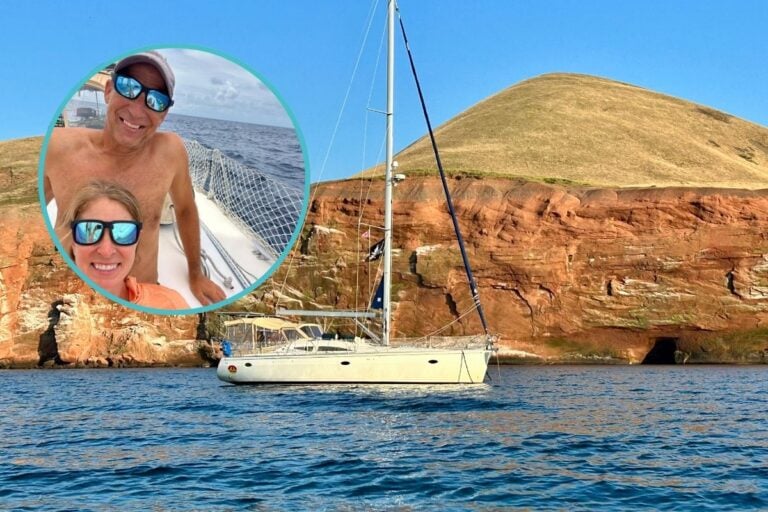
We’ve Bought Two Sailboats and Both Were Money Pits. Here’s What Hundreds of Sailors Say to Do Before You Buy Your First.

Hundreds of sailors answered one question on our sailing page: what would you tell someone buying their first sailboat? Sail first, pay for your own survey, the size argument, the real budget, and the cheap boat that costs the most.
*This post may contain affiliate links. Please read our disclosure policy for more info.
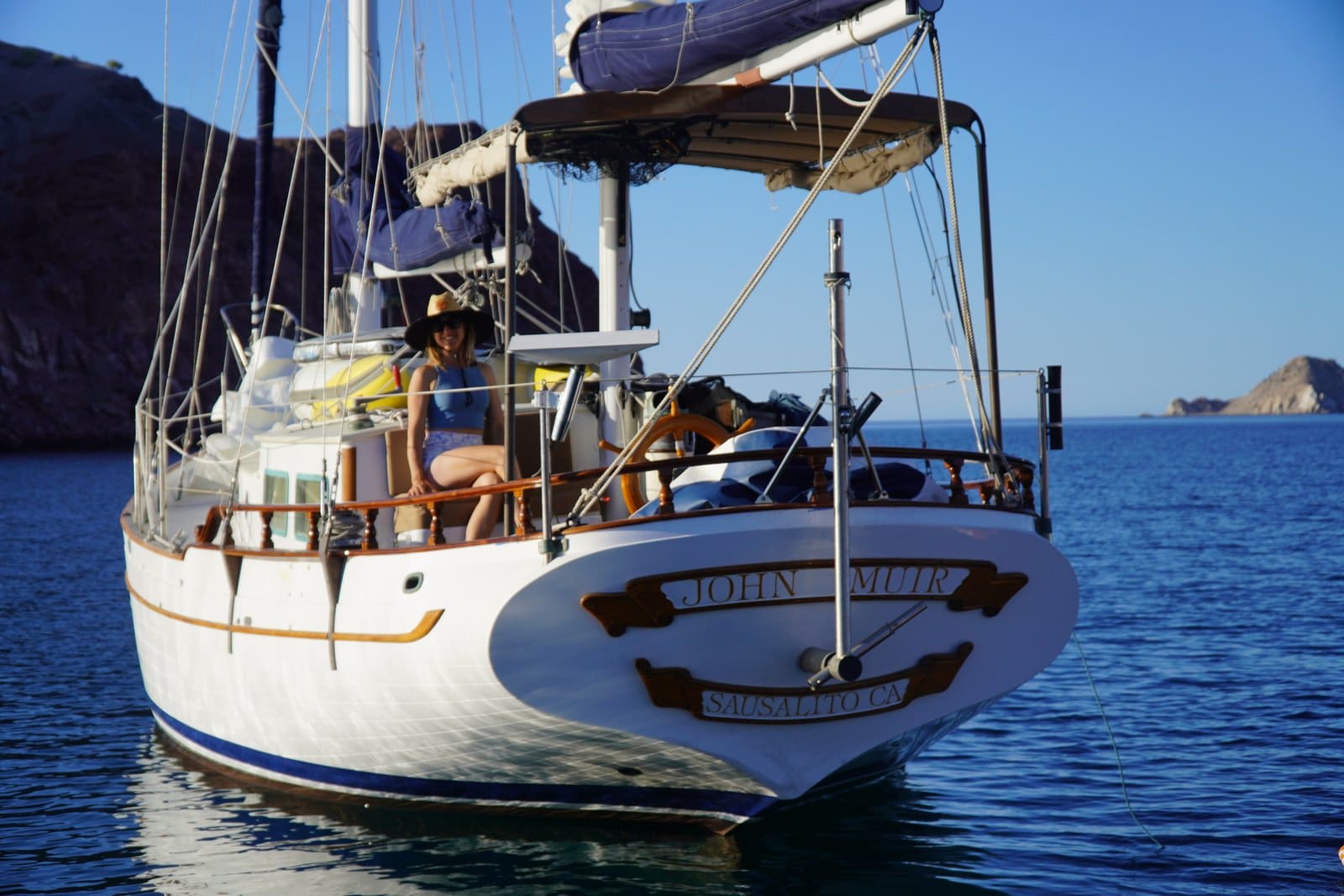
Tom bought our first sailboat in Canada for $30,000, and by the time I moved aboard she was more of a worksite than a home: no shower, no toilet, no stove, not even a heater. We had no idea she would turn into a long-term construction project before we could finally sail her to Mexico. We thought we had bought a boat. What we had bought was a boat-shaped list of jobs.
So when I asked the readers of our sailing Facebook page what they would tell someone buying their first sailboat, I was not fishing for a listicle. More than two hundred of them answered, many with several boats behind them, and the advice stacked up in a clear order.
Sail on other people’s boats first. Pay for your own surveyor, and get nervous if the report comes back clean. Settle the size argument with your head, not the brochure. Budget for the boat after the boat, about ten percent of its value every year. Do not buy the cheap boat. Buy the boat for the sailing you will actually do, not the sailing you imagine.
The honest catch is that the thread could not agree on size, and about one answer in ten was some version of “don’t,” only half joking. Here is what they said, in the order they said it most, with the real costs where there are real costs, and our own two boats where they fit.
The two boats we actually bought, so you know who is asking
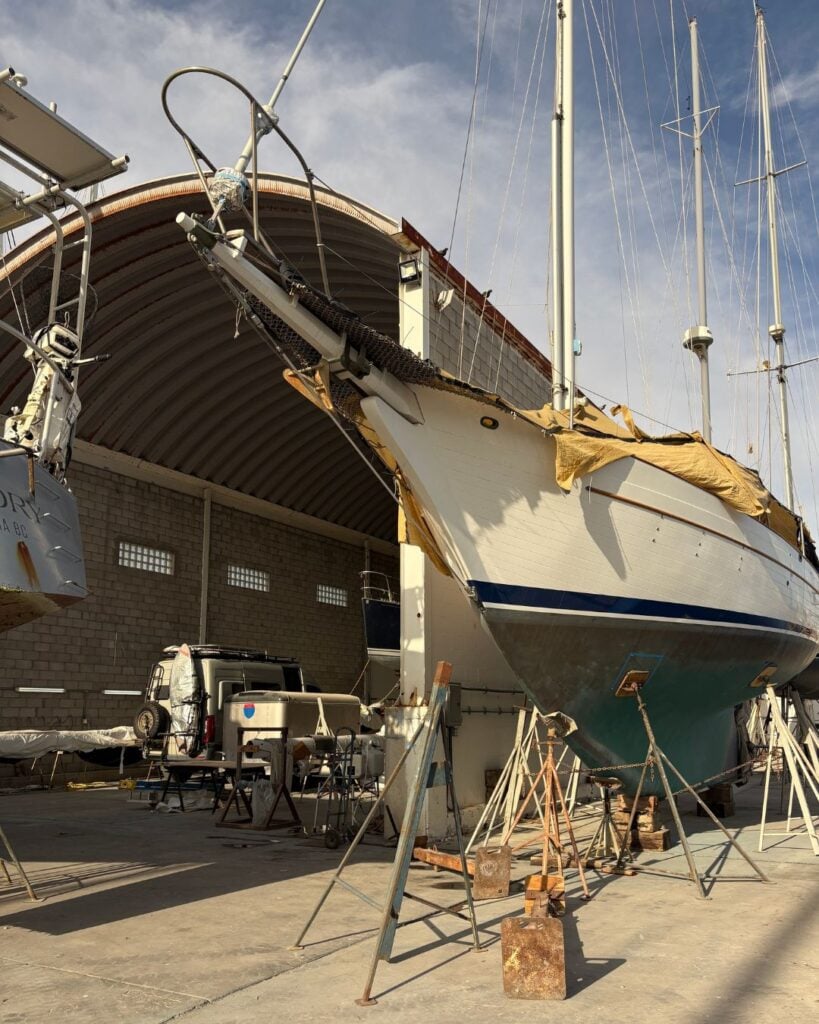
Our first boat is a 1972 CT-41 ketch. Tom bought her in Canada for $30,000 and then spent years restoring her: new rigging, a marine toilet and holding tank, new fuel tanks, three new sails, a marine stove and propane system, a new sink and countertop, and countless smaller projects I have lost track of. We figured out long ago that the true cost is well over $100,000 once you count the work, and most of that work will last a very long time. I have answered the questions people ask about living on her more than once, and the answer to “what did she cost” is always two numbers.
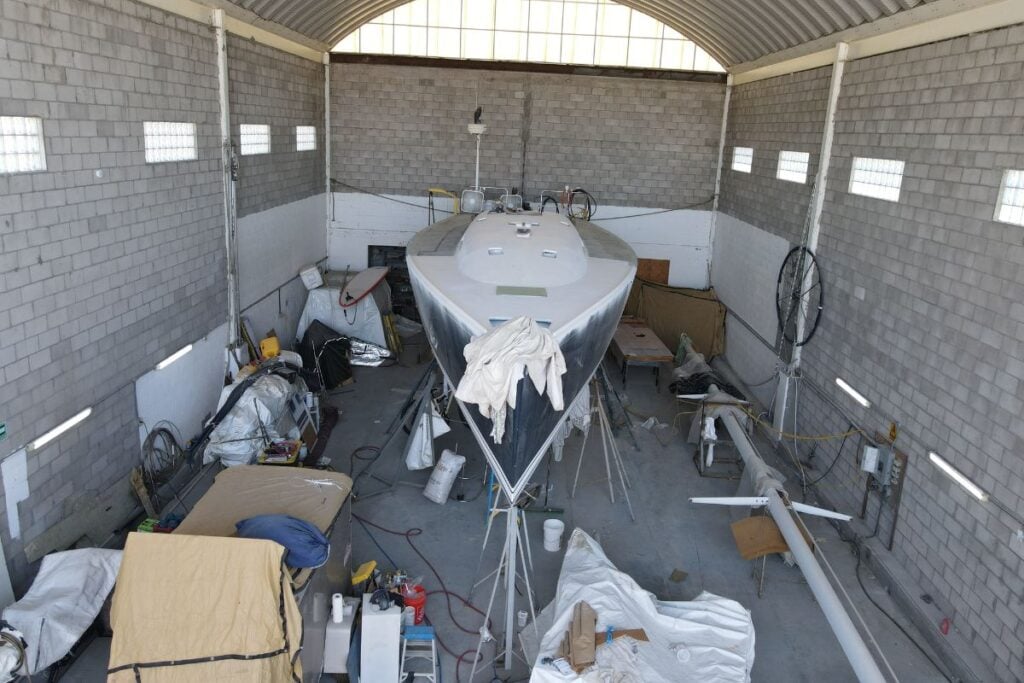
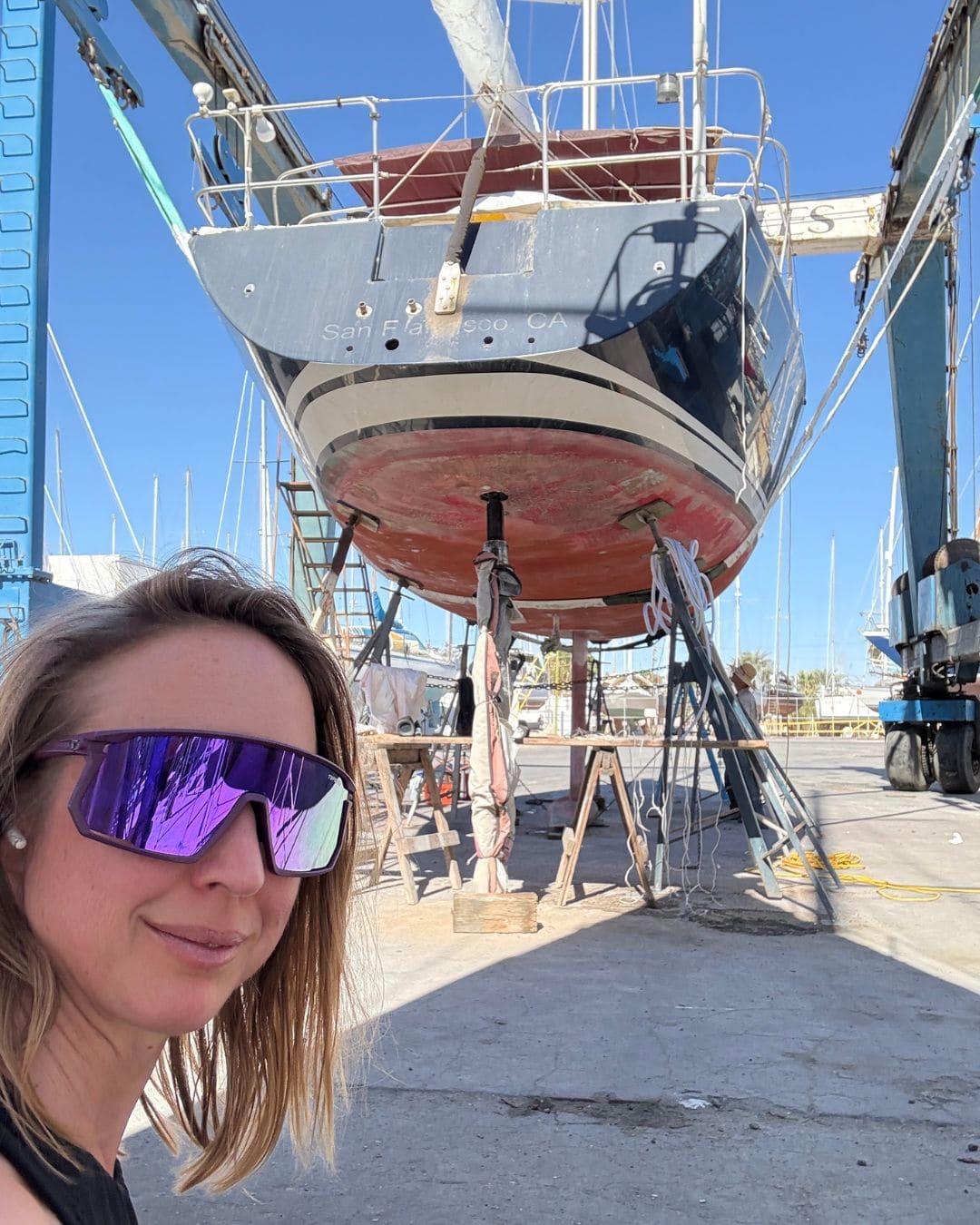
Then we complicated our lives beautifully. We bought a second boat in 2025. Payah Kun is a Nelson Marek 46 that had been sitting at a dock for ten years. No sailing, no maintenance, a good boat silently rotting away. We bought her in the San Francisco Bay Area, spent the spring waking her up, and sailed her down the coast to Mexico. Two years of boat parts came to about $26,400, and the whole adventure, from buying her through the voyage, two haul-out seasons and every last stainless bolt, sits at just about $40,000. The full ledger is here. The classic advice is to double your estimate; our ledger says that advice is optimistic.
Sail other people’s boats before you buy your own
If the thread had a winner, it was this, by a wide margin. “Crew for someone first,” one reader wrote, and about thirty others said the same thing in their own words: take lessons, join a club, charter a few times, crew on deliveries up and down the coast. One reader said a season of crewing cost less than a season of keeping their own boat in Michigan. Several swore by racing as the fastest teacher, with one warning attached: “racing is addictive.”
The part I had not thought about is the second benefit. Club crew hears about the good boats that never get advertised, the ones that change hands at the bar before they reach a listing. You also find out, cheaply, what you actually like before you pay for it. I have written before that sailing clubs, lessons and crewing on other people’s boats are how most of the cruisers we know got started, and the people who learn that way tend to buy the right boat later. Two hundred readers just said it louder.
Pay for your own surveyor, and get nervous when the report comes back clean

The second most repeated answer, about twenty times over: get an independent survey, never the seller’s or the broker’s pick, with the boat out of the water. Readers wanted the engine, the rigging, the electrical and the plumbing checked separately, and a sea trial on top. The sharpest warning was about the cheap survey. Sellers will pass off an in-water insurance survey as a full one, one reader explained, and “spending a couple grand on a good surveyor could save tens of thousands.”
The line that stuck with me: “If the survey comes back with nearly no hits, RUN and get another surveyor.” That reader’s twenty-year-old boat had come back with two minor items, which they now read as a red flag about the surveyor, not a compliment to the boat. Check the surveyor’s references the way you would check the boat’s.
What a real survey costs: Discover Boating’s rule of thumb is $20 to $25 per foot of boat, with many surveyors carrying a minimum charge that bites on small boats, and large sailboats often needing a separate rigging survey. Practical Sailor puts it at $15 to $25 a foot plus tax. So the hull survey on a 35-footer is somewhere around $700 to $875 before the haul-out. BoatUS lists the haul-out for an out-of-the-water look as part of a standard pre-purchase survey, says the engine should be surveyed by a mechanic trained on that engine (about $500 per engine), says the rig should be inspected by a professional rigger ($400 to $600), because going up the mast “isn’t something most general surveyors are willing or able to do,” and adds that if you do all of it “you may be looking at a $3,000 day.”
On a boat you are about to spend tens of thousands on, the readers’ math holds. Practical Sailor also draws the line the seller may be blurring: an insurance survey “isn’t as detailed as the pre-purchase,” and a full inspection means the boat is hauled.
Two smaller rules belong here. Look at the deck, the rigging and the spars before you go below; a reader who worked boat shows watched buyers fuss over cabins and ignore the rigging that was going to cost them the most. And find out whether the boat is insurable before you buy it. That one has teeth now: Practical Sailor reports that boats over twenty to twenty-five years old are facing premium jumps, required upgrades and declined coverage, which has pushed thousands of older boats onto the market. A boat nobody will insure is a boat most marinas will not let you keep. Elena’s guide to what a sailboat really costs walks through the red flags a survey is looking for, from soft decks to tired wiring, so I will not repeat them here.
Start small and trade up, or buy the boat you will want later: the thread’s real argument

This is where the comments turned into a debate. About twenty readers said start small. “Go small, go simple, go now.” “Buy the smallest boat you can be happy in.” One reader’s Catalina 22 was easy to fix, with an owners’ community online for every problem, easy to learn on, and easy to sell: they got what they paid for her three years later, from a buyer who drove twelve hours to collect her. Another reader had more fun and more miles on their smaller boats than on the bigger ones that came after.
About nine readers argued the opposite, and they were just as sure. “Buy the size you’ll want later.” If you are looking at 28 feet, buy 32; if you are looking at 35, look at 40, because two-foot-itis is real and every boat you sell costs you money on the way out. The honest answer is that both camps are describing the same trap from opposite sides: a boat you outgrow in a year, or a boat so big and so expensive it never leaves the dock. The tiebreaker, from the readers who had done both, is the next section.
Whichever boat you can afford to maintain, insure and keep somewhere is the right size. If small is where you start, Elena’s list of small sailboats that can go almost anywhere is a good place to begin, the liveaboard roundup covers the bigger end, and the size question for serious passages has its own article on what size boat you need for an ocean crossing.
Budget for the boat after the boat
Fifteen or so readers answered the question with arithmetic, and their rules of thumb are worth copying down. “Take the lowest number you can afford and divide it by three.” “Keep another 30% in the bank for repairs,” more if the boat is over fifteen years old or poorly kept. “Keep an extra 250% for fixing, berthing, fixing, fuel and fixing.” “Budget the same as the purchase for moorings and maintenance over the first two years.” And the rule of three: any repair costs three times what you expect and takes three times as long.

The most useful one came with a worked example. Figure out what the boat would cost with every major system working, and expect ten percent of that number every year in unscheduled maintenance. The reader’s case was a $75,000 Catalina 42 that should be a $125,000 boat: that is $50,000 of work now, and about $12,500 a year after that. The ten percent part is the industry’s own number. Discover Boating says annual maintenance runs about ten percent of the cost of the boat, or less; Practical Sailor says ten to fifteen percent. The reader’s twist, pricing the boat as it should be rather than as it is, is the part the brochures leave out.
Our own numbers say the readers are, if anything, gentle. The CT-41 cost $30,000 to buy and well over $100,000 once the restoration is counted. Even with Tom doing all the labor himself, our CT-41 eats money.
Storage for two boats on the hard in Mexico is about $8,000 cash a year, paid up front, and the round-trip haul-out is only about $500 of that. Then there is the gear the boat does not come with, which is most of it; our roundup of sailboat accessories worth the money is where that spending goes first, and the things nobody tells you about living on a boat covers the rest. The readers’ last two rules: pay cash if you can, and price in docking, mooring, haul-out and storage before you fall for a hull.
The cheap boat is the expensive boat
About a dozen readers said some version of the same thing, and they said it well. “There are no boats that cost more than a cheap one.” “A free boat is the most expensive boat you can get.” One reader’s test for buyers who think they want a project: “Do you really want to do that many projects? If yes, buy a nicer boat, because no you don’t.” Older and well built beats new and cheaply built, the thread agreed, but older and neglected beats everything at losing money.
I am the wrong person to argue with them. Payah Kun was, in my own words, a good boat silently rotting away, and the ledger above is what waking her up cost. The counter-voice in the thread was real too: “My best three boats were projects,” one reader wrote, and there is something to it, because a boat you rebuilt is a boat you know to the last bolt. But the brutal truth is that our first boat was a worksite for years before she was a home. When Tom first bought our liveaboard sailboat, I had no idea boats took so much work. He said this phrase to me: “The best day of a boat owner’s life is the day he buys a boat, and the day he sells it.”
Buy the boat for the sailing you will actually do
“Buy the boat built for the sailing you are going to do, not the sailing you want to do,” one reader wrote, and ten others made the same point from different angles. A race boat is not a cruising boat. Decide where she will live, a marina, a mooring, a drying mooring, before you decide on draft and keel. One reader’s rule was about friction: “The easier it is to go out, the more you will,” which is an argument for a boat in the water over a boat on a trailer with a mast to step every Saturday.
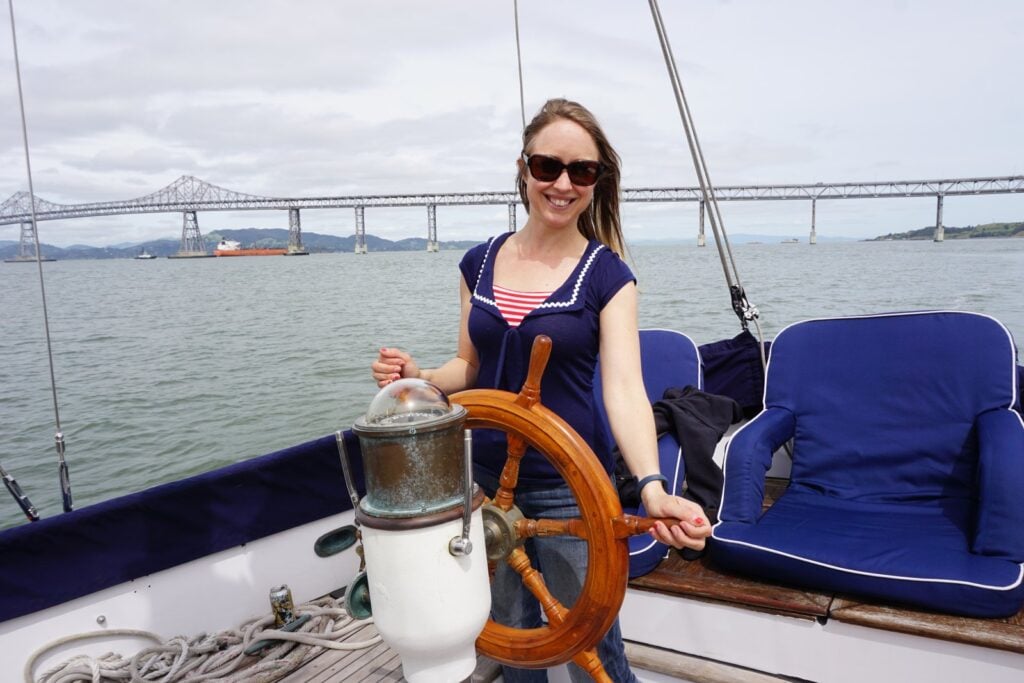
This is the lesson I put first in our list of the mistakes every new cruiser makes: don’t buy your dream boat, buy the one that fits the life you actually plan to live on board. Our CT-41 is a heavy cruising ketch with two masts and a wooden wheel; nobody is going to race her on a Wednesday night, and nobody has to. The questions that decide this are the ones sailors argue about for fun: catamaran or monohull, one mast or two, and whether your water is a lake or the sea, which changes more than you would think. And answer the dock question first. A reader’s two-word version was “Find moorage first!” and in some places living aboard is restricted enough that the slip decides the boat.
Head over heart, and learn the skills before you need them
“Never get emotionally involved in a boat you don’t own yet,” one reader wrote. “Don’t buy the one you love, buy the one you need,” said another, which is the same rule from the other side. A reader who owned a racer that won everything found she had too much power to sail alone, sold her, and bought an easy boat: “turns out she’s real pretty too.” One more from the same family: make sure the smaller crew member can handle her alone. One reader’s five-foot spouse held the boat in 40 to 50 mph winds while the other cut a dragging anchor free, and that is the day the boat was sized for.
The skills list came up less often but with better jokes. “You’re basically taking on an associate degree in Not Sinking,” a reader wrote: mechanics, carpentry, fiberglass, knots, navigation, the rules of the road, and a Coast Guard safety course before any of it. The best thing we ever did was spend lots of time practicing docking, anchoring, quick stops and sailing in different conditions, and skipping that practice is the second mistake on our list, right after buying the wrong boat.
The smaller rules, one line each
- Join the owners’ group for the model on Facebook before you buy, and ask your questions there. Owners know what breaks.
- Ask the previous owner to sail with you once. An hour aboard with them is worth a week of manuals.
- A fixed keel over a swing keel, said more than one reader, and a freshwater boat if you can find one.
- Pay cash. A boat that eats money is one mouth to feed; a loan on it is two.
- Check that the boat is insurable before you sign anything (see the survey section).
- One reader’s book pick for the first year: Be the Captain.
Is it a buyer’s market? Yes, for exactly the boats you should be careful with
Two readers with long careers in the industry said there is a glut of used sailboats and that it is a buyer’s market, and one said good boats were “not even making half the price they were three years ago.” I could not confirm the half, so I am not repeating it as fact.
What the trade press says is more specific and more useful. Practical Sailor’s year-end read is that “today’s market favors buyers”: listings are up, days on market are up, and the boats losing value are the 35-to-45-foot production cruisers from the nineties and two-thousands with original gear, pushed onto the market by the insurance squeeze on older boats. Well-maintained boats are holding their price. Boats Group’s year-end data, reported by the brokerage Denison, says the average North American sailboat actually sold for more than the year before, up about four percent, while the number of boats sold fell nearly fourteen percent.
Put the two together and you get the thread’s advice in market form: there are more tired boats for sale than there were, they are cheaper, and most of them are cheap for a reason a surveyor will find. A buyer’s market for project boats is not a reason to buy a project boat.
What the people who said “don’t” were really saying
About one comment in ten was a joke at the whole idea. “If it flies, floats or fornicates, rent it.” “BOAT: break out another thousand.” A boat is “a cold shower tearing up $100 bills.” The two-happiest-days line came up more than once, and this is where the thread surprised me, because it got pushback. Several readers wrote that they cried when they sold their boats: one after twenty-five years, to care for a parent; one after a sailing partner died. The people telling you not to buy a boat are mostly people who bought one and would do it again.
There was a retirement thread inside the big one, too. “I’m 2 months in at 60, absolutely do it, it’s awesome!” And a reader who read every comment and then wrote: “All these comments helped me! I’m looking at buying my first sailboat to live on and retire.” If that is you, the budget section above is the one to print.
Our second boat sat at a dock for ten years because somebody stopped using her, and we bought her anyway, and the ledger says the classic advice to double your estimate was optimistic. That is the honest summary of two hundred answers. Sail first. Pay for the survey. Size with your head. Budget for the boat after the boat. Then buy the one that fits the life you will actually live, knowing what it will cost, and accept that the boat will still surprise you. They all do.

What would you tell someone buying their first sailboat, and what do you wish someone had told you?
Frequently asked questions
What should I know before buying my first sailboat?
In a thread of more than two hundred experienced sailors, the advice came in this order: sail on other people’s boats first (lessons, a club, crewing, charters); pay for your own independent survey with the boat hauled out, plus separate engine and rigging checks and a sea trial; decide the size question by what you can afford to maintain, insure and moor; budget about ten percent of the boat’s value every year for maintenance; avoid the cheap project boat; and buy the boat built for the sailing you will actually do, not the sailing you imagine.
Do I need a survey when buying a used sailboat?
Yes. Experienced sailors say to hire your own surveyor, never the seller’s or broker’s, and to have the boat hauled for an out-of-the-water inspection. The engine should be checked separately by a mechanic and the rig by a rigger. Marine surveys typically run $15 to $25 per foot of boat length, so roughly $700 to $875 for a 35-foot boat before the haul-out, engine and rig; a full set of surveys can approach $3,000. An insurance survey is less detailed than a pre-purchase survey and should not be accepted in its place. A survey with almost no findings is a reason to get a second surveyor.
How much does it cost to maintain a sailboat each year?
The industry rule of thumb is about ten percent of the boat’s value per year, and some sources say ten to fifteen percent. Experienced owners suggest pricing the boat as it would be with every major system working and budgeting ten percent of that figure, keeping an extra 30 percent of the purchase price in reserve for repairs, and planning for docking, mooring, haul-out and storage on top. The author’s own 1972 CT-41 cost $30,000 to buy and well over $100,000 once the restoration is counted.
Should my first sailboat be small or big?
Sailors split on this. The larger group says start small, learn, then trade up, because a small boat such as a Catalina 22 is cheap to fix, easy to learn on and easy to sell. A smaller group says buy the size you will want later, because every boat you sell costs money and two-foot-itis is real. The tiebreaker most agree on: buy the biggest boat you can comfortably afford to maintain, insure and moor, and the one the smallest member of your crew can handle alone.
Should I buy a cheap project sailboat as my first boat?
Most experienced sailors say no. A cheap or free boat is often the most expensive boat you can buy, because deferred maintenance costs more than the discount, and a boat that sat unused for years needs more work than it shows. Pay more for a well-maintained boat unless you genuinely want the projects more than the sailing. The author’s second boat had sat at a dock for ten years and cost about $40,000 to wake up, sail to Mexico and maintain over two haul-out seasons.
Is it a good time to buy a used sailboat?
The used sailboat market currently favors buyers, according to Practical Sailor: listings and days on market are up, and older production cruisers with original gear are losing value, partly because insurers are declining or surcharging boats over twenty to twenty-five years old. Well-maintained boats are holding their value, and industry sales data shows average sailboat sale prices rose about four percent while unit sales fell. In short, there are more cheap tired boats for sale, and a survey is more important, not less.
Sources (checked October 2026): reader comments on That Sailing Life’s “What’s your best piece of advice for someone buying their first sailboat?” post (228 comments and replies, quoted without names); Discover Boating, Marine Surveys and Surveyors ($20 to $25 per foot; minimum charges; rigging surveys on large sailboats); Practical Sailor, A Guide to Buying Your First Sailboat ($15 to $25 per foot; 10 to 15 percent a year); BoatUS Magazine, The Boat Survey (haul-out, separate engine and rigging surveys, the $3,000 day); Practical Sailor, Pre-Purchase or Insurance Survey; Discover Boating, Boat Maintenance Tips (about 10 percent a year or less); Practical Sailor, The Sailboat Market Split: Winners and Losers (market favors buyers; insurance squeeze on older boats); Denison Yachting, Boating Market Report (Boats Group year-end data: average sailboat price up 4.05 percent, units down 13.79 percent; Denison is a brokerage); and the author’s own articles on the CT-41’s cost, the five-year project and the boatyard ledger.