Could You Live on a Sailboat Through a Winter? I Asked Hundreds of Sailors for Their Dealbreakers.

One reader in the Virgin Islands shivered at 68 degrees. One in Newfoundland had ice inside the windows. Hundreds of sailors told me whether they could live aboard through a winter, and what would stop them.
*This post may contain affiliate links. Please read our disclosure policy for more info.
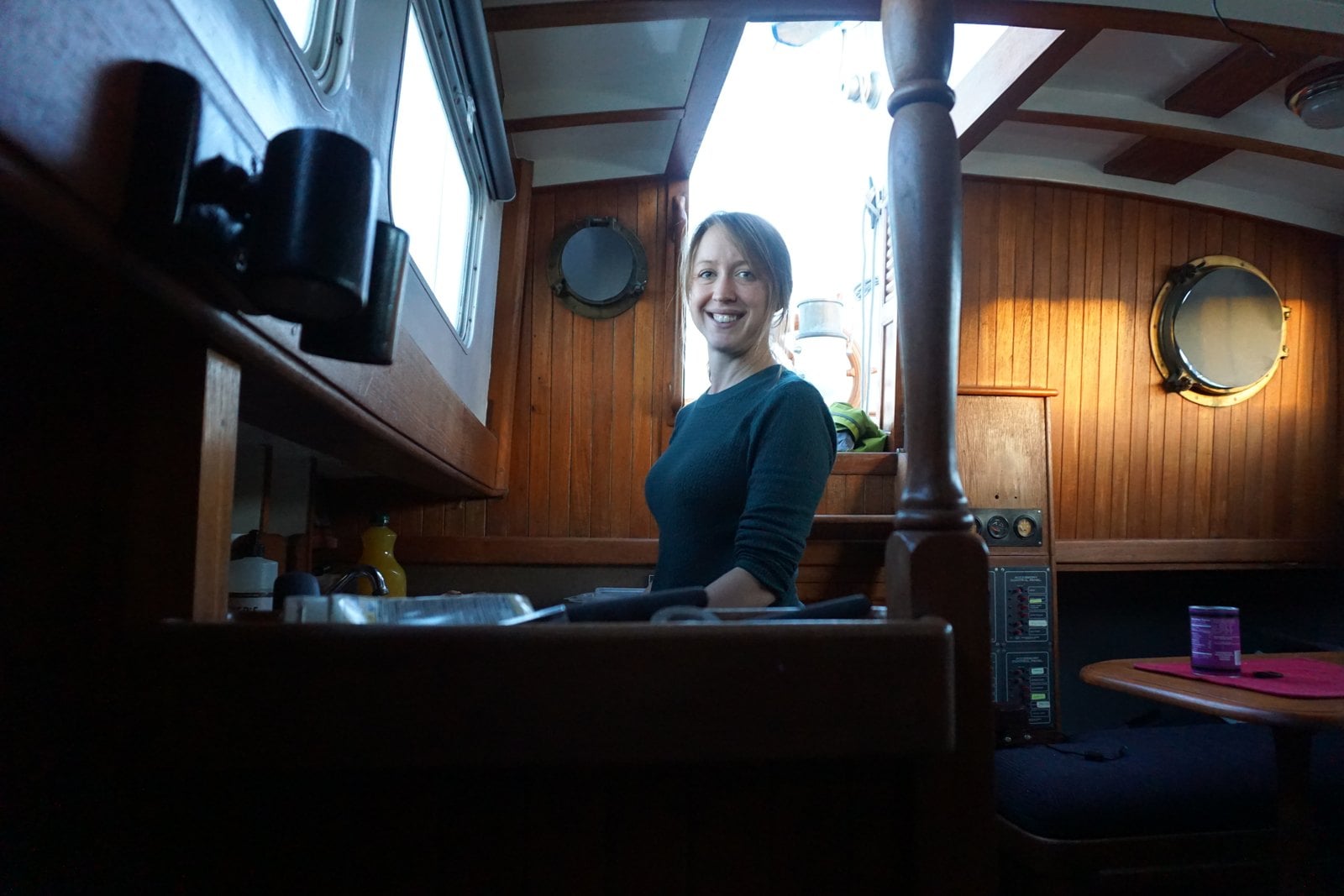
I have been living on sailboats with my partner Tom since 2016, the year I was laid off from my job in corporate radio news. The boat was a 1972 CT-41 ketch in a San Francisco marina, and she was a place to live that would not bankrupt me on Bay Area rent.
The slip cost about $400 a month, and we were not allowed to live aboard. So we slept on the boat the few nights a week the rules allowed and spent the rest anchored out, housesitting, or living in the car. That first year the boat had no stove, no running water and no heater. And dang, some of those nights were CHILLLLY.
We sailed her to Mexico in 2020 and have wintered on the Sea of Cortez ever since. So when I asked our sailing Facebook page whether they could live aboard through a winter, I was asking about a winter I have never done: the kind with snow on the deck.
Hundreds of sailors answered. People do it, from Newfoundland to Puget Sound, and the ones who last have three things: heat that vents outside, a dehumidifier that never rests, and a marina that wants them there in February. Their dealbreakers were rarely the cold itself. They were condensation, ice, the marina and the dark.
Winter where?
The first dozen replies were a geography lesson. “Winter where?” wrote a reader who did ten winters in the Caribbean. Another, who winters in the Virgin Islands, described a morning that “plunged all the way down to a bone-chilling 68 degrees Fahrenheit.” They had to put on clothes.
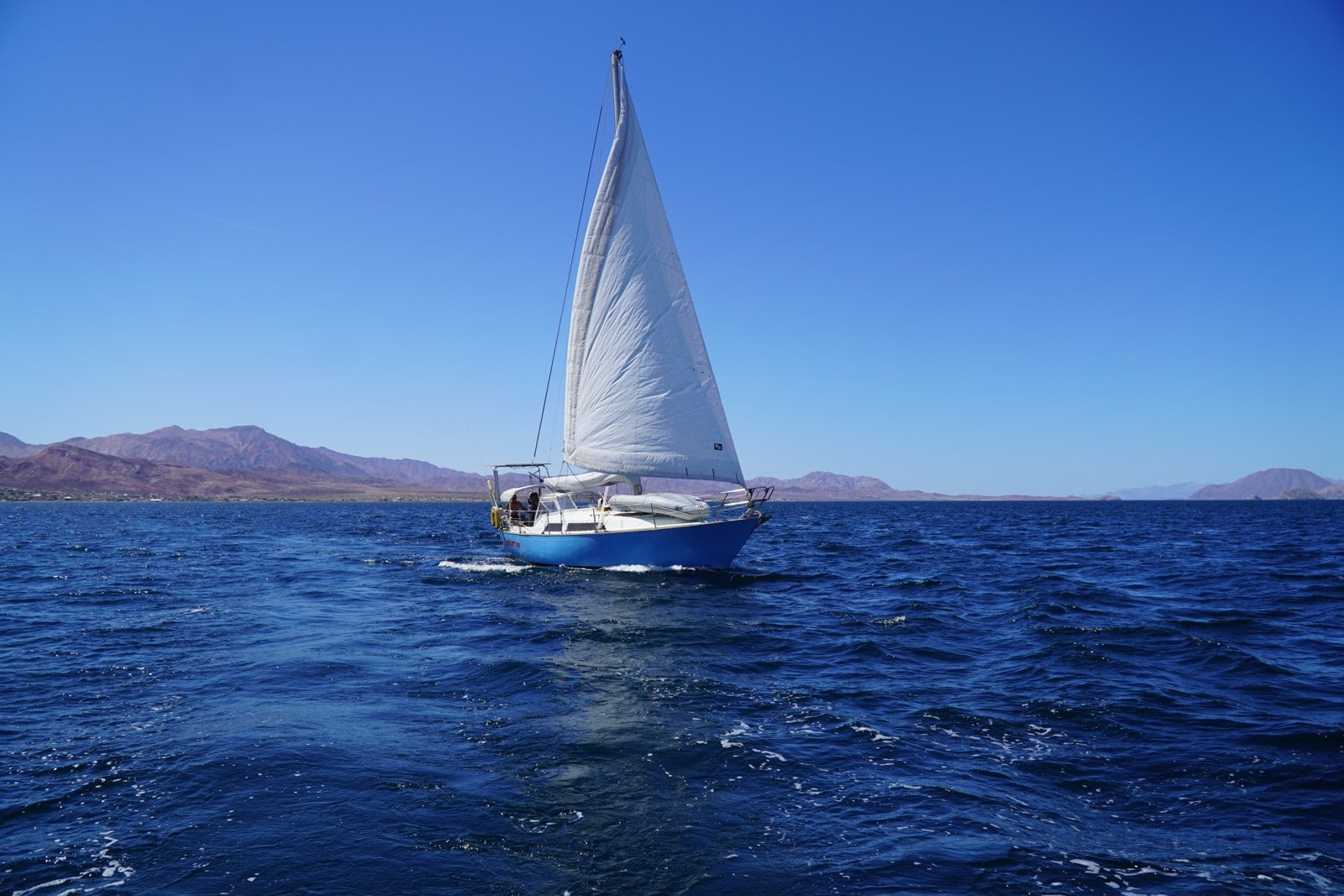
From Maine the answer was shorter: “Not only No, but hell, NO! But, people do, even here.” And a big group simply left. One couple ran down the Intracoastal in December with ice on the overhead from their own breath, and found warm weather somewhere south of St. Augustine. That is our answer too: our winters happen in Mexico.
Heat comes first
The readers who had done hard winters all said the same thing: get the fire out of the cabin. A Boston couple who lived aboard for ten years called central heat their non-negotiable. A reader at 50 degrees north keeps a 38-foot catamaran “toasty” on a small diesel burner, because every window and hatch is double glazed.

Others swore by solid fuel. A Long Island liveaboard replaced his space heater with a coal stove: “Solid dry heat! Made the boat super comfortable.” A reader fifteen years aboard on the Oregon coast rides out sixty-knot gusts with a small wood stove and a tuxedo cat named Captain Nemo.
We got our kerosene heater going on the John Muir, our 1972 CT-41, and in winter it makes such a lovely sound and sight, with the flames dancing on the walls. So cozy.
Electric heat works at the dock, within limits. Practical Sailor calls a space heater left running in winter the biggest shore-power risk, so watch for warm or discolored plugs. Unvented propane heaters are the one option marine sources say to skip: Good Old Boat says they “produce huge amounts of moisture and eat up oxygen.”
And put in a marine carbon monoxide alarm. The ABYC standard calls for one on any boat with a sleeping area, galley and head, which is every liveaboard. BoatUS notes the CO can even come from the boat next door.
Condensation, the real enemy
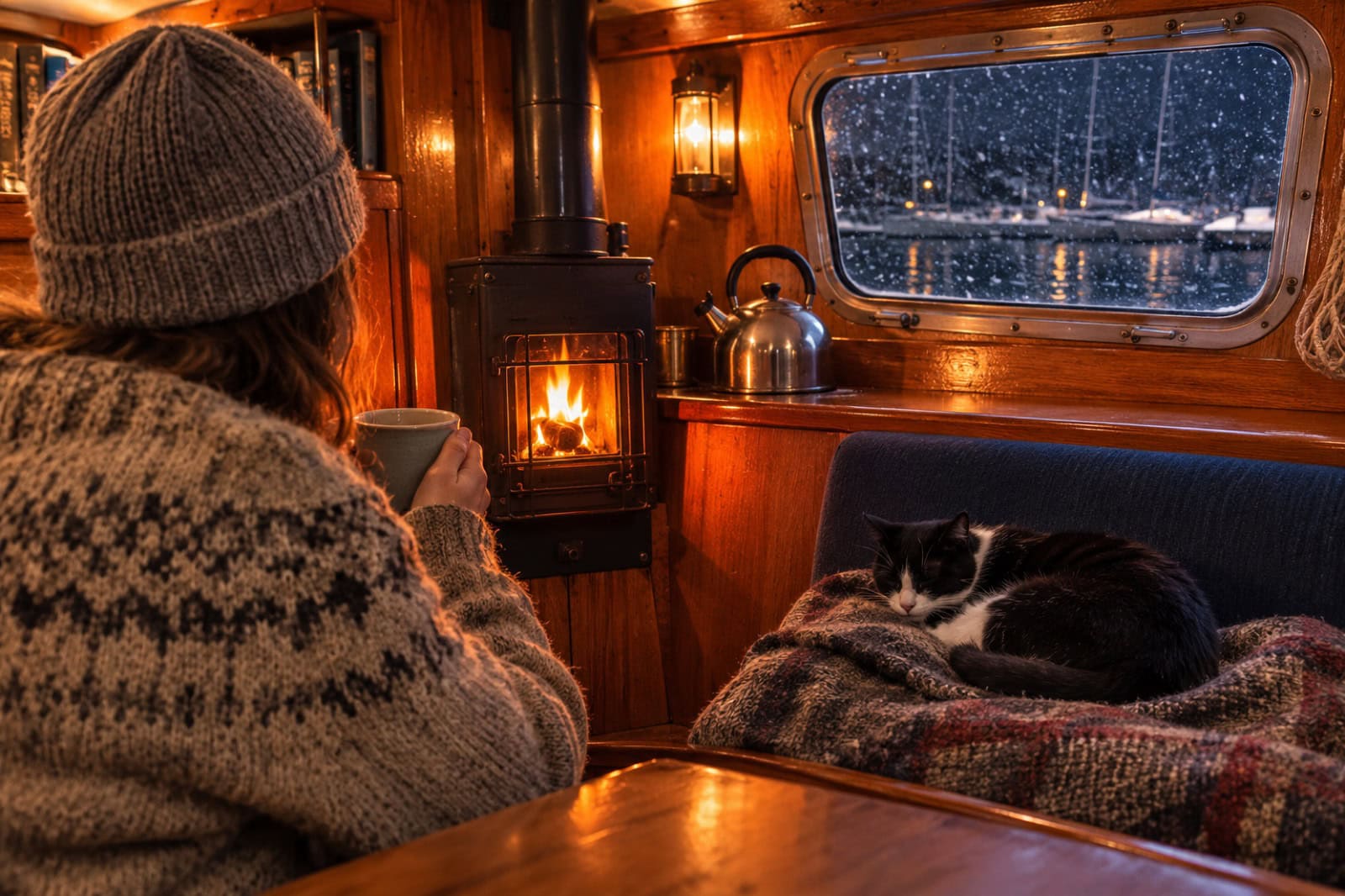
“Biggest issue is condensation, not heat,” wrote a reader who did two winters. Another: “the condensation will get you. You need moving air.” From our old home water, a San Francisco Bay liveaboard: “Mold is horrible, ties, shoes almost everywhere.”
Two people breathing and a pot of pasta load the air with water, and it lands on the cold hull. Practical Sailor found that any surface below the dew point for long got wet and mildew bloomed. The couple who wintered in Portland, Maine, called humidity “the biggest antagonist” and ran a dehumidifier for five straight months.
The fixes are simple and relentless: a dehumidifier that runs around the clock, small fans in every corner, a cracked hatch, foam or bubble wrap on cold surfaces, and cushions lifted every few days. Most of our favorite boat hacks and gifts sailors actually use are damp-fighters for exactly this reason.
Ice, inside and out
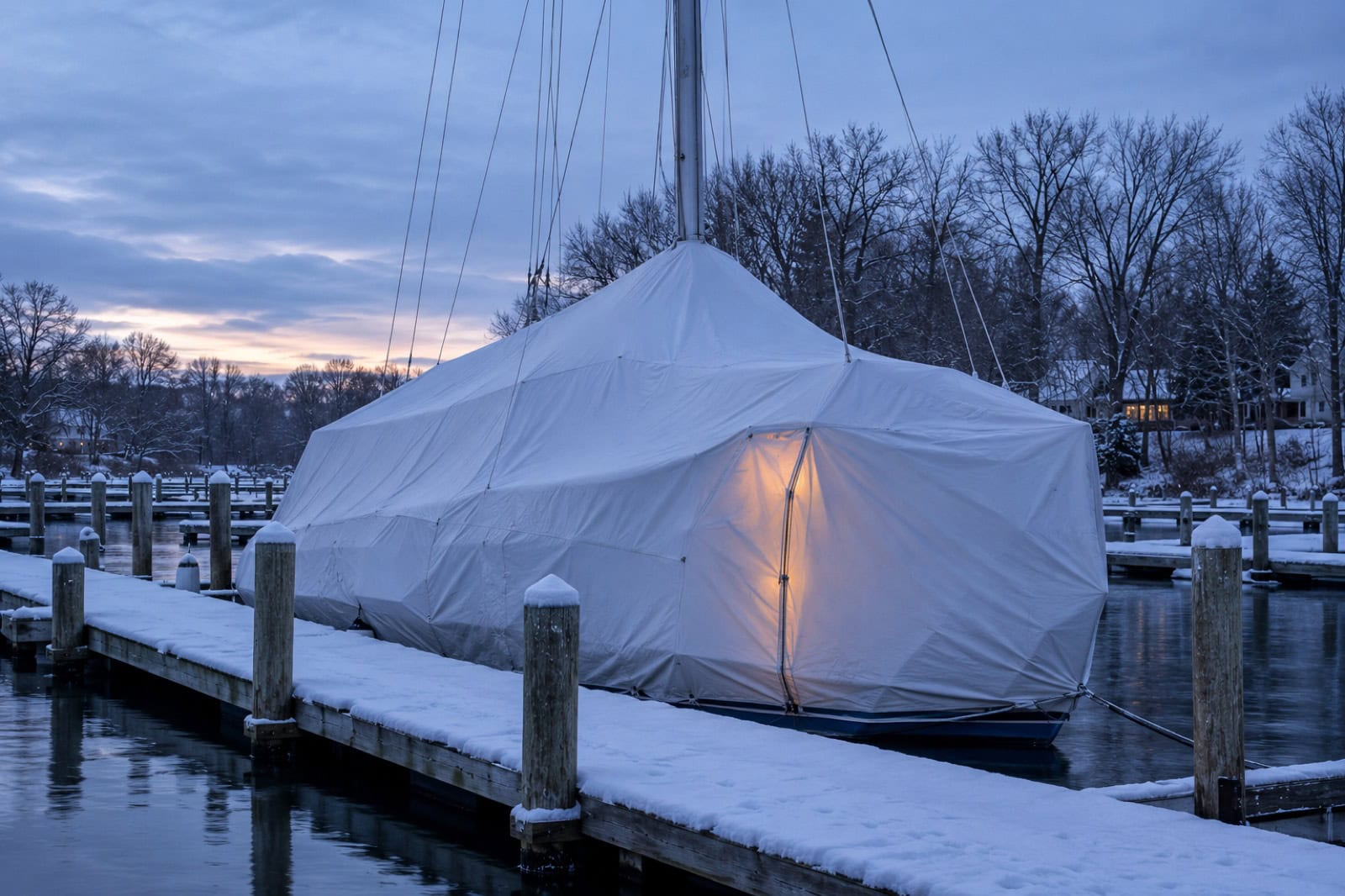
The freeze-country stories were the best in the thread. A reader in Newfoundland lived aboard a 29-foot C&C for three years: “The water in the tanks would be frozen and ice inside the windows.” He strung empty plastic bottles on a rope around the hull to keep the ice off, and lived in the saloon.
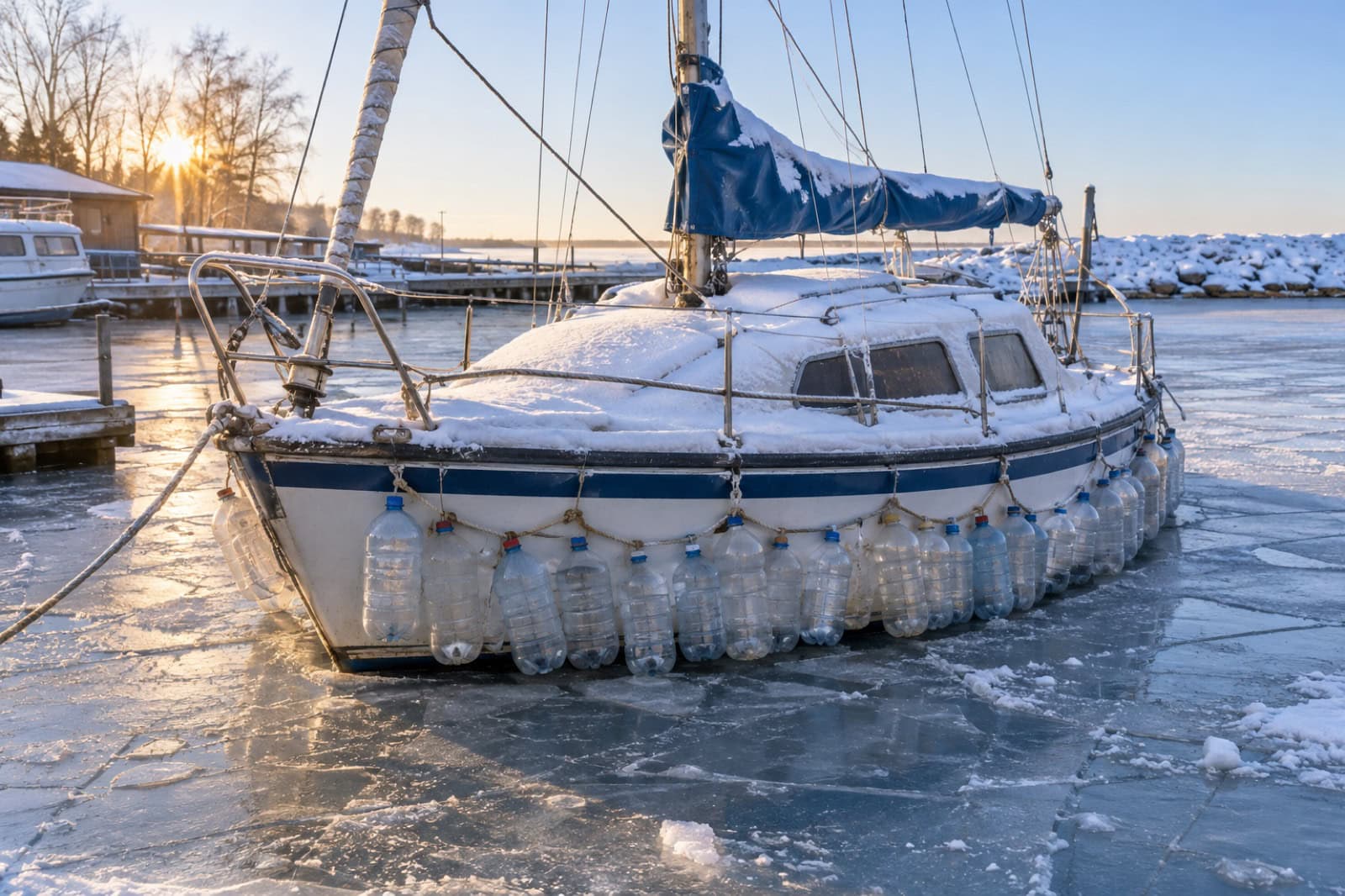
On Lake Erie, one reader listened to the boat creak “as the ice lifted it every night.” Great Lakes marinas that allow winter liveaboards run “ice eaters,” and a de-icer pushes warmer bottom water up so the surface never freezes over.
The dock is the dangerous part. “It was hard to go aboard when the deck was icy,” one reader wrote, and a Michigan reader said someone there dies most winters slipping off a dock into the water (his count, not one I could check). In freshwater marinas the water itself can carry stray current from shore power. A hand on something, a light at the companionway, and no dock walks after a few drinks.
The marina decides
“In the Great Lakes you will need to find a marina that allows winter liveaboards,” one reader wrote. “They can be few and far between.” Chicago’s public harbors close for the season on October 31, and Seattle’s Shilshole Bay Marina charges a separate monthly liveaboard fee.

Many harbors cap liveaboards or ban them. We lived around those rules in San Francisco for three years. Ask the marina first, in writing, about winter water, power and showers. One teacher quit before December because “the kids expect you to shower most days and not neccessarily stink of diesel or parafin!”
The dark gets people
Nobody in the thread quit over the thermometer. A Puget Sound liveaboard had a full winter cover made: “The Boat was Warm & Comfy down below, it was the light that I missed.” It felt “worse than living in a Dark Cave,” and he swore off winters outside the tropics.
A couple in Mystic, Connecticut, hit minus 10 and “couldn’t get the inside above 42 degrees. That fall we sailed to Florida and never looked back.” Yet another reader called 23 years in Puget Sound the “best years of my life bar none.” The difference was dry heat and a reason to be there.
I know a tiny version of this. High winds kept us in Turtle Bay for five days on the way down the Baja coast, and I felt like I was going crazy. That was five days in Mexico. These readers were describing five months.
Our damp San Francisco winters
Our winters were the gentle kind. December in San Francisco averages 58 degrees by day and 47 at night, and nothing froze. Besides the kerosene heater, we had a “school bus heater” that blasts engine heat through the boat when we motor.
What we never beat was the damp. Condensation on the hatches and inside the lockers was constant, and a boat does not need a freeze to grow mold. That is a big reason we chose Mexico, where winter days average the mid 60s and the boat dries out instead of drips.

Every dealbreaker in the thread is really water in a different form: mold in the air, a frozen tank, ice on the dock. The readers who made it through planned for the water. The ones who quit planned for the cold.
So, could you live on a sailboat through a winter? Go in with sealed heat, a dehumidifier, two CO alarms, a marina that answered your emails, and a plan for the dark. Making boat life more comfortable is a good place to start. Which of these dealbreakers is yours?
Frequently asked questions
Can you live on a sailboat in the winter?
Yes. Sailors live aboard through winter from Newfoundland and the Great Lakes to Puget Sound. Those who last have heat that vents outside the cabin, a dehumidifier running constantly, insulation on cold surfaces, and a marina that allows winter liveaboards. The most common dealbreakers are condensation and mold, frozen water, icy docks, finding a marina, and the dark.
What is the best way to heat a sailboat in winter?
Most northern liveaboards use a heater whose combustion vents outside, such as a diesel heater or a diesel, coal or wood stove. Electric heaters work at the dock within the pedestal’s limits. Marine sources advise against unvented propane heaters, which add moisture and use up oxygen.
How do you stop condensation on a boat in winter?
Run a dehumidifier continuously, move air into lockers and berths with small fans, crack a hatch, insulate cold surfaces with foam or bubble wrap, and lift berth cushions every few days.
Do you need a carbon monoxide detector on a sailboat?
Yes. The ABYC A-24 standard calls for a marine-rated CO detector on any boat with a sleeping area, a galley and a head. Mount one near where you sleep and one in the main cabin, and treat every alarm as real, since the source can be a nearby boat.
Sources (checked November 2026): reader comments on two That Sailing Life posts, about 370 in all, quoted without names; Practical Sailor on heating, shore power, insulation and electric shock at the dock; Good Old Boat; ABYC A-24 via BoatTest; BoatUS Foundation; Dockwa; Kasco Marine; Chicago Harbors; Port of Seattle; Current Results; Climates to Travel.