I’ve Lived Aboard for a Decade. Here are 22 Ways We Save Money Living on Our Sailboat

Living on a boat is cheap. Owning one never is. Twenty-two moves that keep our life aboard small, from anchoring out and DIY boatyards to parts on sale, each with a real figure from our ledger or a rate card.
*This post may contain affiliate links. Please read our disclosure policy for more info.
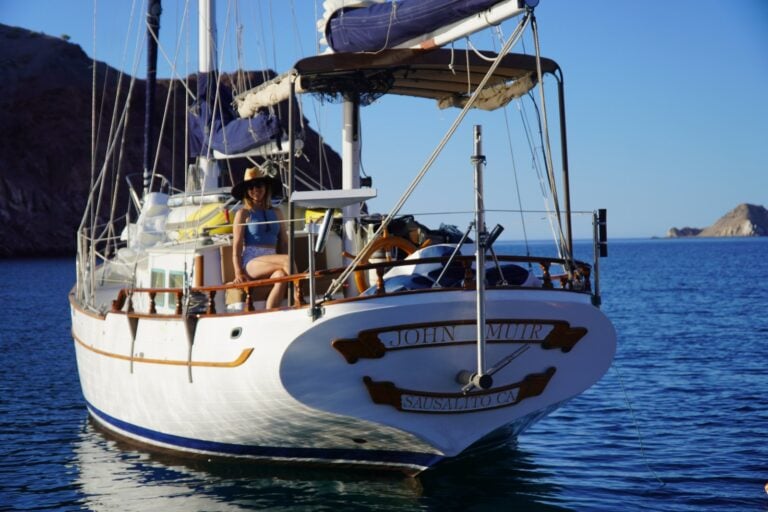
I moved onto a sailboat in 2016 because I had just been laid off from my job in corporate radio news, and a boat was the one place in the San Francisco Bay Area where I would not go broke on rent.
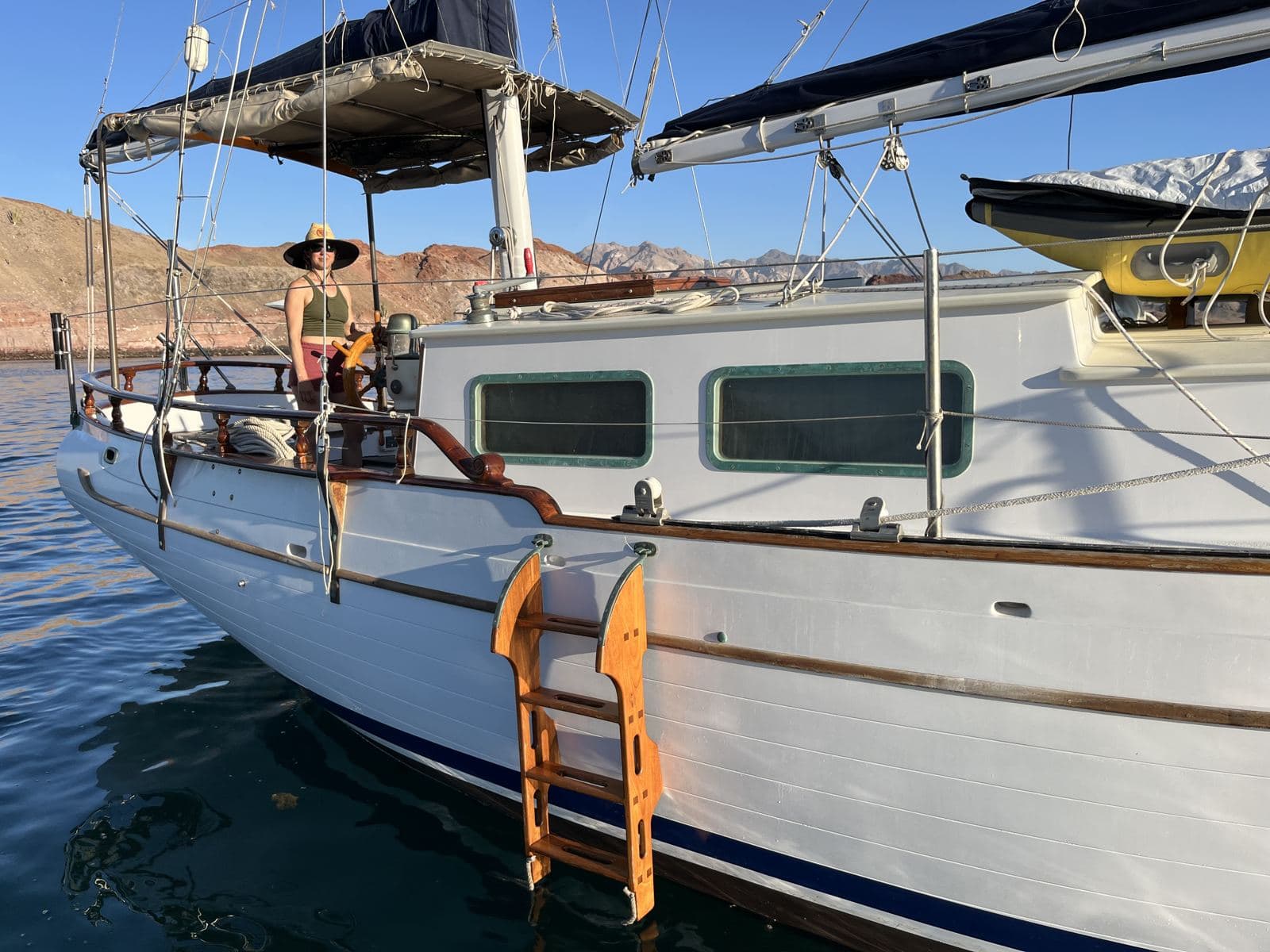
Our slip was $400 a month. We were not allowed to live aboard legally, so we anchored out, housesat, and slept in our car more nights than I like to admit. Meanwhile the boat, a 1972 ketch Tom bought in Canada, took years of work to restore.
Finally, we sailed her to Mexico in 2020, and since then our address has been a DIY boatyard an hour south of the Arizona border for part of every year, with a second boat beside the first. Whether a boat saves you money at all is a big question, and hundreds of sailors answered it for me last week.
Even though boat parts and maintenance can be expensive, living aboard can be very cheap, especially if you anchor out for free. Here are the best ways we save money while living aboard.
1. Own it outright, even if that means a smaller or older boat
We own both of our sailboats outright, and it matters more than anything else on this list. A boat with no payment turns housing into a slip fee, a mooring fee, boatyard fee, or nothing at all. The readers who told me boat life saved them money all started here: “once the capital investment is paid, it is cheaper,” one wrote. Nobody said a boat loan plus a slip beat a mortgage.
The catch is in the next item. Paying cash for a cheap boat is how we ended up paying for our two boats. Never a loan. What sailboats cost by budget is a good place to start the arithmetic.
2. Buy less boat, because the the boat bills by the foot
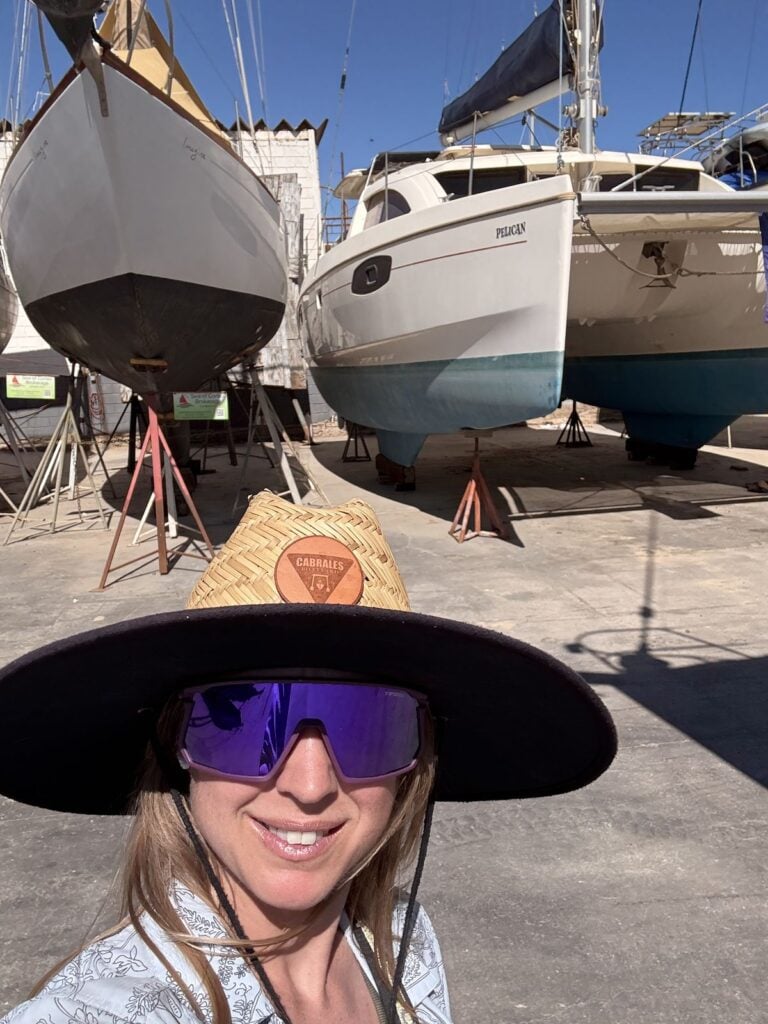
Slips, haul-outs, bottom paint and yard days are all priced per foot. At the Port of Port Angeles boatyard a round-trip haul is $13 a foot for a 30 to 39 footer and $14 a foot for 40 to 49 feet, so a 34-footer lifts for about $442 and a 41-footer for about $574, by my arithmetic from their card. The same gap repeats on moorage, storage and paint, month after month.
Our boats are 41 and 46 feet, so I cannot claim we chose small. One reader on our sailing Facebook page put the rule better than I can: buy the smallest boat you can be happy in.
However, we haul our boats out and store them in Mexico, which is significantly cheaper than the U.S.
3. Only buy the project boat if someone aboard does the work
Tom bought our CT-41 in Canada for $30,000. By the time she was ready to sail to Mexico, the true cost was well over $100,000 once you count the work, and that is with his labor free. A cheap boat is a saving only when the person fixing it lives aboard.
Two readers said it in fewer words: “There are no boats that cost more than a cheap one,” and “the crappiest gutted liveaboards start at $5k and need $30k of repairs.” What hundreds of sailors told us about buying a first boat covers the survey, the sea trial and the boat to walk away from.
4. Check the boat is insurable before you buy it
Practical Sailor reports that boats over 20 to 25 years old now face “premium jumps, required upgrades and declined coverage,” with the tipping point around 40 years for most insurers and as low as 15 for some. Liveaboard policies run 20 to 40 percent higher than recreational ones, and a well-kept 40-foot cruising boat should expect $2,000 to $4,000 a year.
An uninsurable boat is also a boat most marinas will not let you live in, so this is a housing question as much as a money one. Get a quote on the actual hull before the deposit, not after.
5. Carry the insurance your situation requires, and know why
Here is our own line, which I share as a fact and not as advice. Our boats are paid for, nobody lends against them, and Tom fixes what breaks. We carry the liability policy Mexican law requires for a boat in Mexican waters, and nothing more. We know when we bring the boats to the United States, we’d have to pay for U.S. insurance, but we don’t have that now. Not having insurance aside for Mexican liability is a risk we chose to carry ourselves, with our eyes open, because the premium on two old boats would be a second yard fee.
If your boat is financed, your lender decides. If you live in a marina, the marina decides, and most require liability at minimum. BoatUS says liability coverage in Mexico must come from a Mexican insurer, and many yards and marinas ask to see it. Price that policy for your boat before you cross the border, not at the dock.
6. Anchor out when the weather and the rules allow
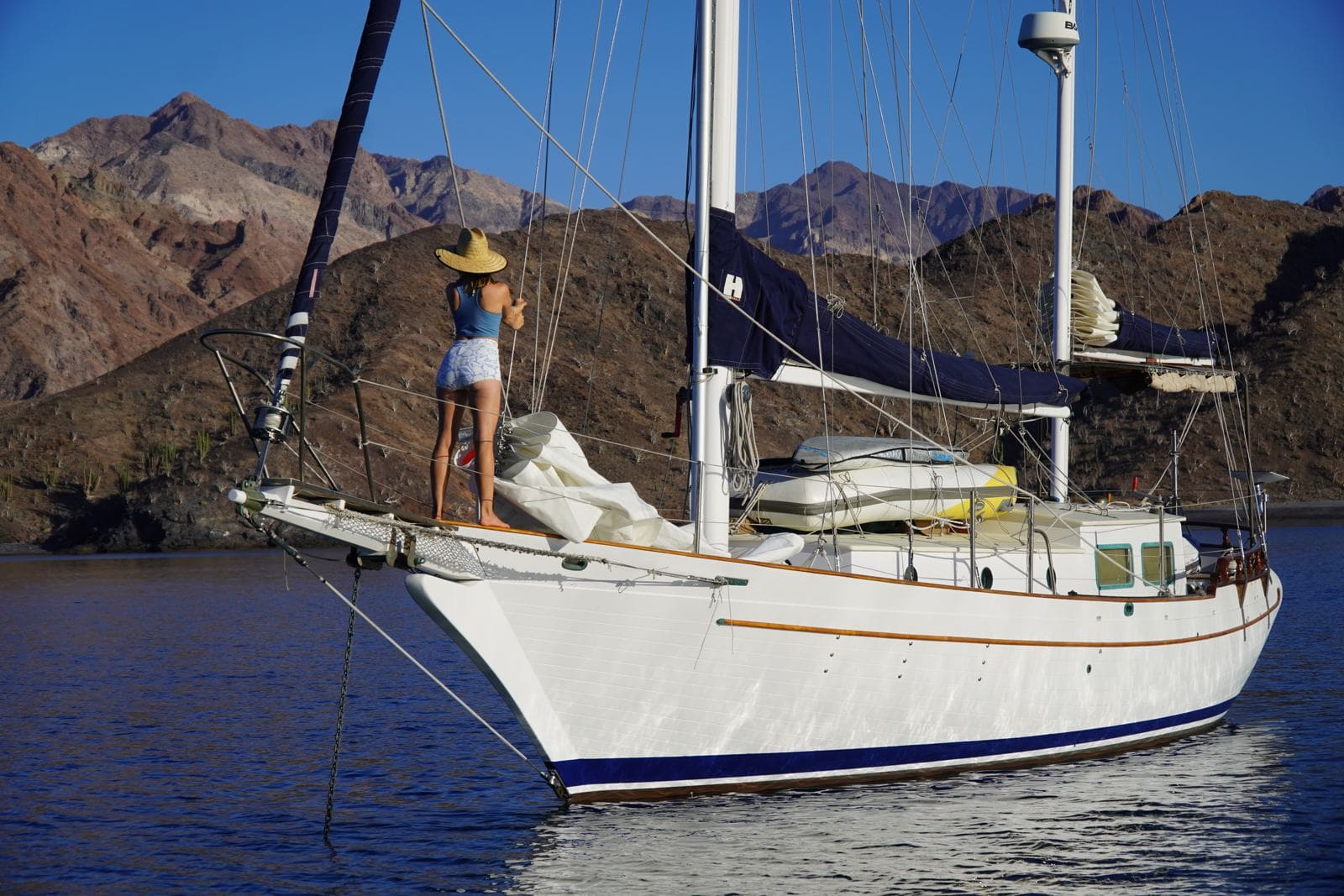
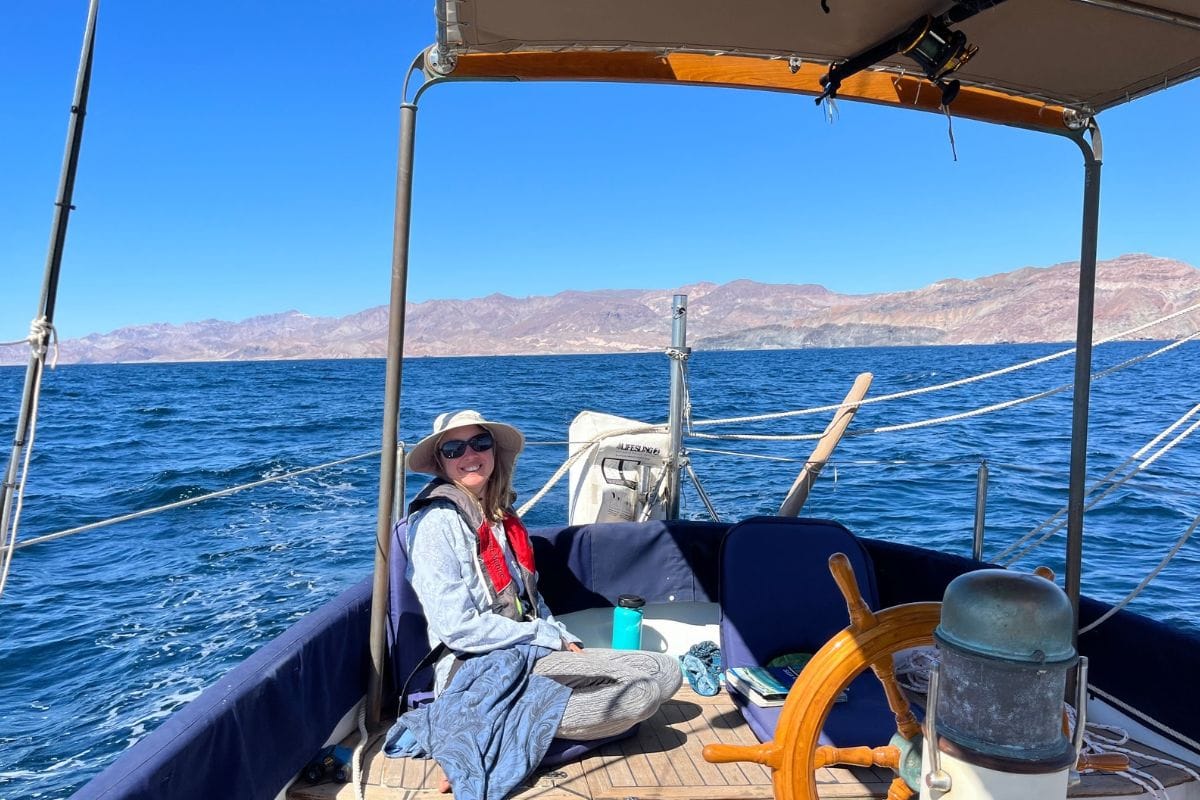
In our San Francisco years we anchored at Angel Island, China Camp, Tiburon, Treasure Island and Richardson Bay, and our winters in Mexico are spent on the hook in the Sea of Cortez or at the boatyard working on our boats. An anchorage costs nothing per night. The experienced bluewater skippers surveyed by Yachting World said the same thing in the same words: anchor instead of going to a marina.
Two cautions. Anchoring takes solar, a watermaker and a dinghy you trust, and one reader on our page called it misery. And the free spots are shrinking: Florida counties can now bar anchoring for more than 45 days in six months in designated areas. Whether you can really anchor anywhere is a question we have already taken apart.
7. Take a mooring ball instead of a slip
We have never lived on a mooring long term, so this one is third person, but the numbers are hard to argue with. The City of Marathon’s Boot Key Harbor mooring field in the Florida Keys lists a monthly mooring at $394 plus tax for full-time liveaboards, with dinghy dockage, showers, a weekly pump-out and a parking space included.
A liveaboard slip in a Florida city marina runs close to $990 a month for a modest boat, by the St. Petersburg rate card in the retirement article. That is roughly $600 a month, or about $7,000 a year, between a ball and a slip in the same state. There are no reservations at Marathon, so you cannot count on one in high season, and a mooring still means a dinghy ride for every bag of groceries.
8. Do not pay for liveaboard status you do not need
For three years in San Francisco, we paid about $400 a month for a regular slip while the liveaboard fees ran up to $1,500 and the permit waitlist ran for years. We slept aboard the nights the rules allowed, and spent the rest anchored out, housesitting, or in the car. Liveaboard fees are their own line almost everywhere. Port Angeles charges $175 a month on top of the slip. Santa Cruz charges per adult. Where living aboard is restricted lists the harbors with caps, waitlists and limits, so you can price a berth before you fall in love with a town. Read the rules; a marina that catches you living aboard without a permit can evict you.
9. Live in a DIY boatyard
This is the move that made our life cheap. Yard storage for two boats costs us about $600 to $700 a month, and that is also our rent, water, power and bathrooms. The whole year, merchant by merchant, is in our boatyard ledger.
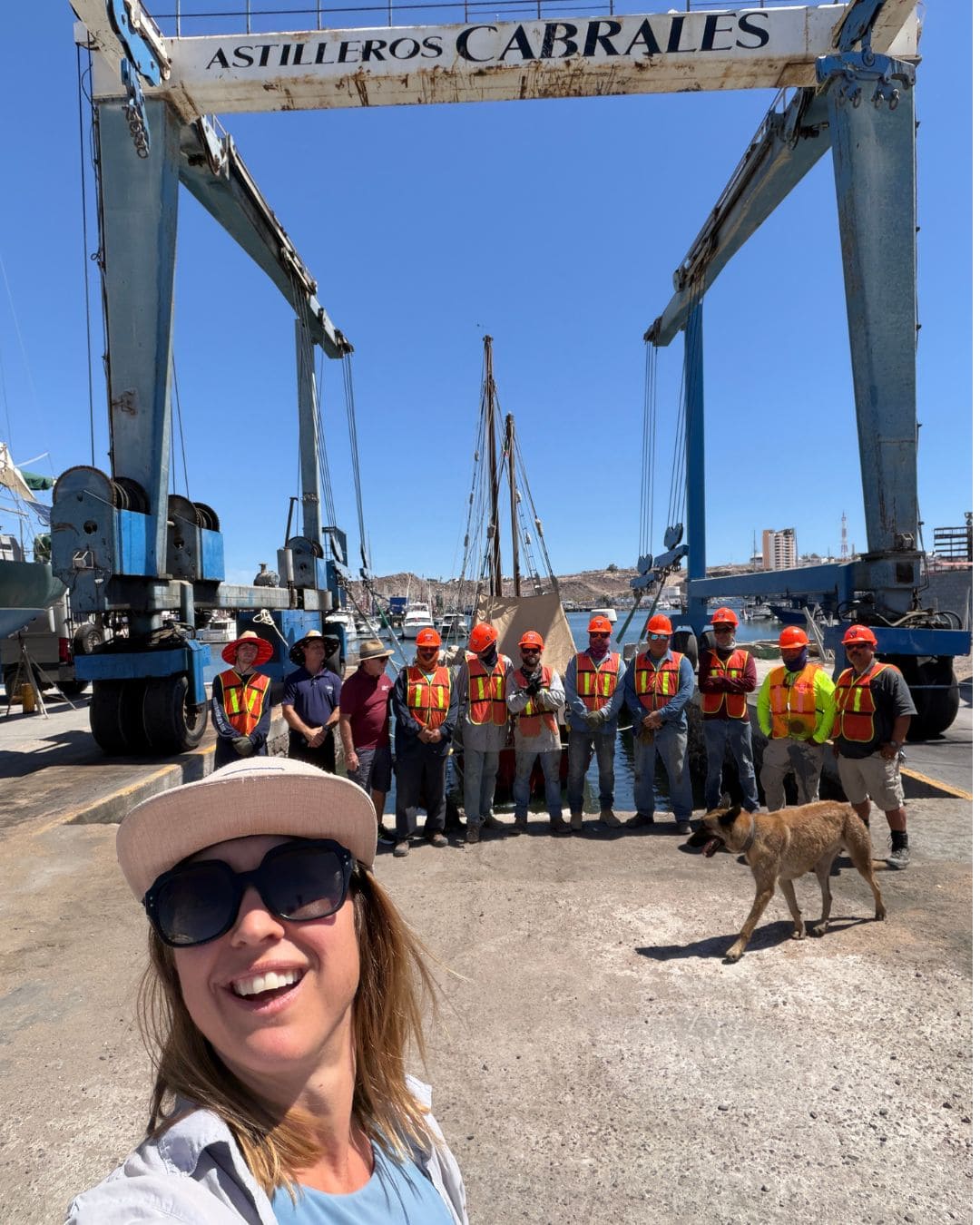
One reader avoided expensive marinas by renting space in a commercial shipyard, then tying up behind a private home on a canal, and “saved a ton of money, paid for college, then a larger boat.” The fine print: not every yard allows living aboard, you climb a ladder to get home, the bathroom is a walk, and summer on stands is hot. Ask before you haul.
10. Go south, where the yard and the groceries cost less
Boatyards and marinas are far cheaper south of the border, and Mexican groceries were a much smaller part of our bill than the Costco runs. The paperwork is modest: a Temporary Import Permit for the boat costs about 1,200 pesos, around $55, and it is good for years, not months. Check the current term with Banjercito before you go, because it changed recently.
Two things are not cheaper in Mexico: marinas in the popular harbors, which are on par with California, and parts, which mostly come from the States (see item 15). The saving is the yard, the food and the months on stands.
11. Go seasonal: haul out for the bad season and leave
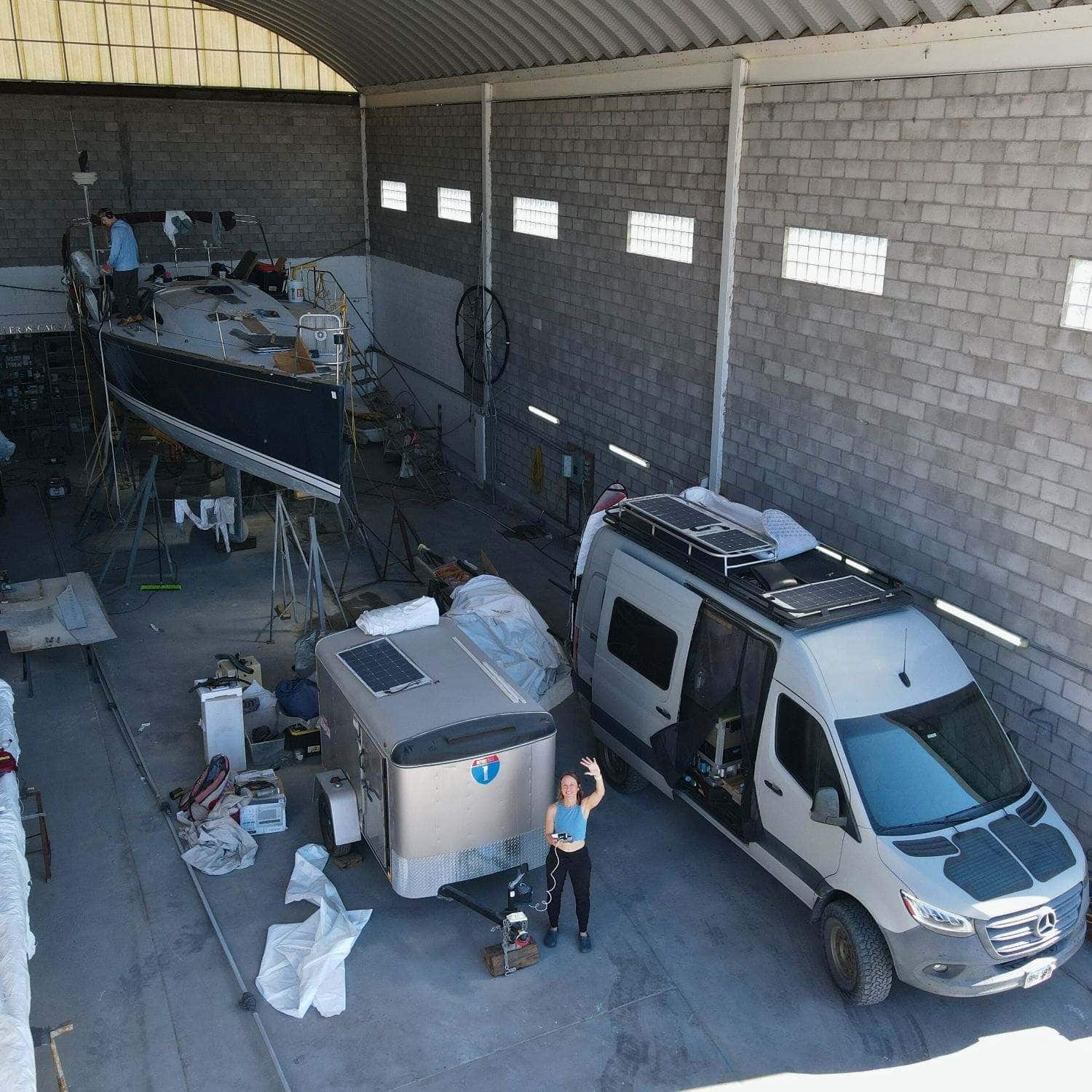
We haul out every summer, live in the van through hurricane season, and splash again in the winter. Storage on the hard is cheaper than a slip and the boat is safer. At public yards in the Northwest it runs from $0.85 a foot per day at Astoria and $1.25 a foot per day in the open yard at Port Angeles, with cheaper covered and inactive rates by the month.
One reader has lived this way for 26 years on a 31-footer, working a year or two as a refrigeration tech between stretches of sailing. Another couple keeps a house in a cheap state and visits the boat twice a year. A boat you are not living on for six months is a boat that is not costing you a slip.
12. Do your own work
Tom does everything himself, in a yard that lets him. Our ledger shows about $1,200 a month in parts with the labor at zero. This is for our “new” boat that required a huge restoration, and isn’t reflective of our regular monthly fees. Yard labor at public boatyards runs $85.50 an hour at Port Angeles and $79 an hour at Astoria, and private yards in big cities charge more. Twenty hours of hired labor a month is a second slip fee.
“You need to be interested in and capable of doing work yourself, since paying someone is very expensive,” one reader wrote, and four others said the same thing in the same words. Learn the systems before you move aboard. Being your own mechanic is on our list of what living on a boat really takes.
13. Haul out in the off-season, and compare yards by the foot
Port Angeles knocks 20 percent off its rates from mid-October to the end of March, and its round-trip lift is $12 to $15 a foot by length with a $250 minimum. Astoria charges a flat $10 a foot under 50 feet. Our round-trip haul in Mexico is about $500, which is close to a Northwest public yard in the off-season.
The lift is not where Mexico saves us money; the months on stands are. When you compare yards, compare the whole stay, not the hoist fee, and ask whether the yard lets you do your own work.
14. Keep a repair fund and spend it on prevention
Budget 10 percent of the boat’s cost a year for maintenance, or 10 to 15 percent for an older boat, and keep it where you cannot touch it. One reader keeps another 30 percent of the purchase price in the bank for repairs. Another’s “mysterious leak that costs $3,000 to find” is what the fund is for.
The cheaper half of this item is prevention. The skippers in the Yachting World survey were strict about preventative maintenance because a bearing replaced at the dock costs a tenth of a shaft pulled in a strange harbor. A repair fund turns a breakage into a bill instead of a loan.
15. Buy parts on sale, and batch your shipping
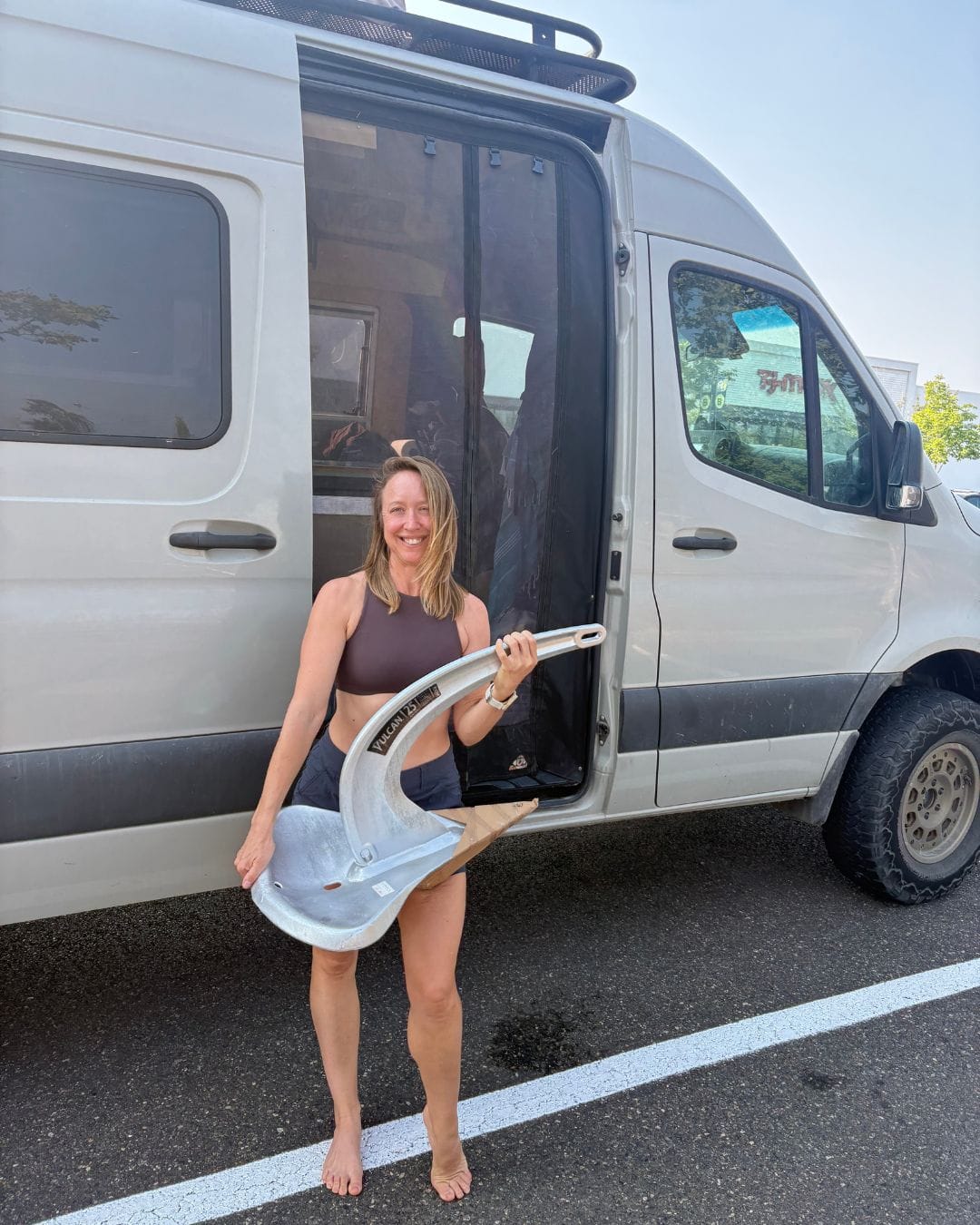
More than half of two years of our boat parts went to West Marine, and I only know that because I added it up. When that store ran a closing sale I bought a 50-pound anchor at 40 percent off, and the sale still made August our biggest parts month. A sale saves money only on parts you needed anyway.
Shipping is its own line in Mexico. Every package we send to the gas station at the border costs $15 to hold for pickup: 31 packages in eight and a half months, about $465. We batch orders now so one hold fee covers several boxes, and buy small hardware at the local lumber and carpentry shop instead, where a first visit cost $9.40.
16. Run on solar, not shore power or a generator
We run everything on solar panels and a battery bank, which is what makes anchoring out possible at all. For scale, permanent shore power at one public marina runs $66.74 a month for 30-amp service and $155.07 for 50-amp, before usage on metered slips. One Yachting World skipper chose to sweat rather than run the generator for air conditioning, and most liveaboards end up at that same trade.
The upfront cost of panels and batteries is real, and it depends on the boat. Price it as the thing that replaces a monthly bill, not as a gadget.
17. Make or save your own water
We carry water in tanks, make more with a watermaker, and waste very little because the galley sink runs on a foot pump. We rinse dishes in salt water, take navy showers, and our solar shower holds 2.6 gallons, which is all the hot water two people need on a warm afternoon. The watermaker is noisy, so it runs less than you would think.
The saving here is in trips as much as dollars: fewer fuel-dock stops, no marina water fees, and more days at anchor before you have to move.
18. Cook aboard, and eat out as a treat
We cook most of our meals, and our eating-out line for the boatyard stretch was about $140 a month for two, against about $860 for groceries. The cruisers in the Yachting World survey averaged $1,500 a month on food, in a range from $250 to $2,000, and the frugal ones all said the same thing: eat aboard instead of dining out.
The galley does not have to be clever. Our lazy galley meals are the ones we actually make.
19. Cook on the sun and in the pressure cooker
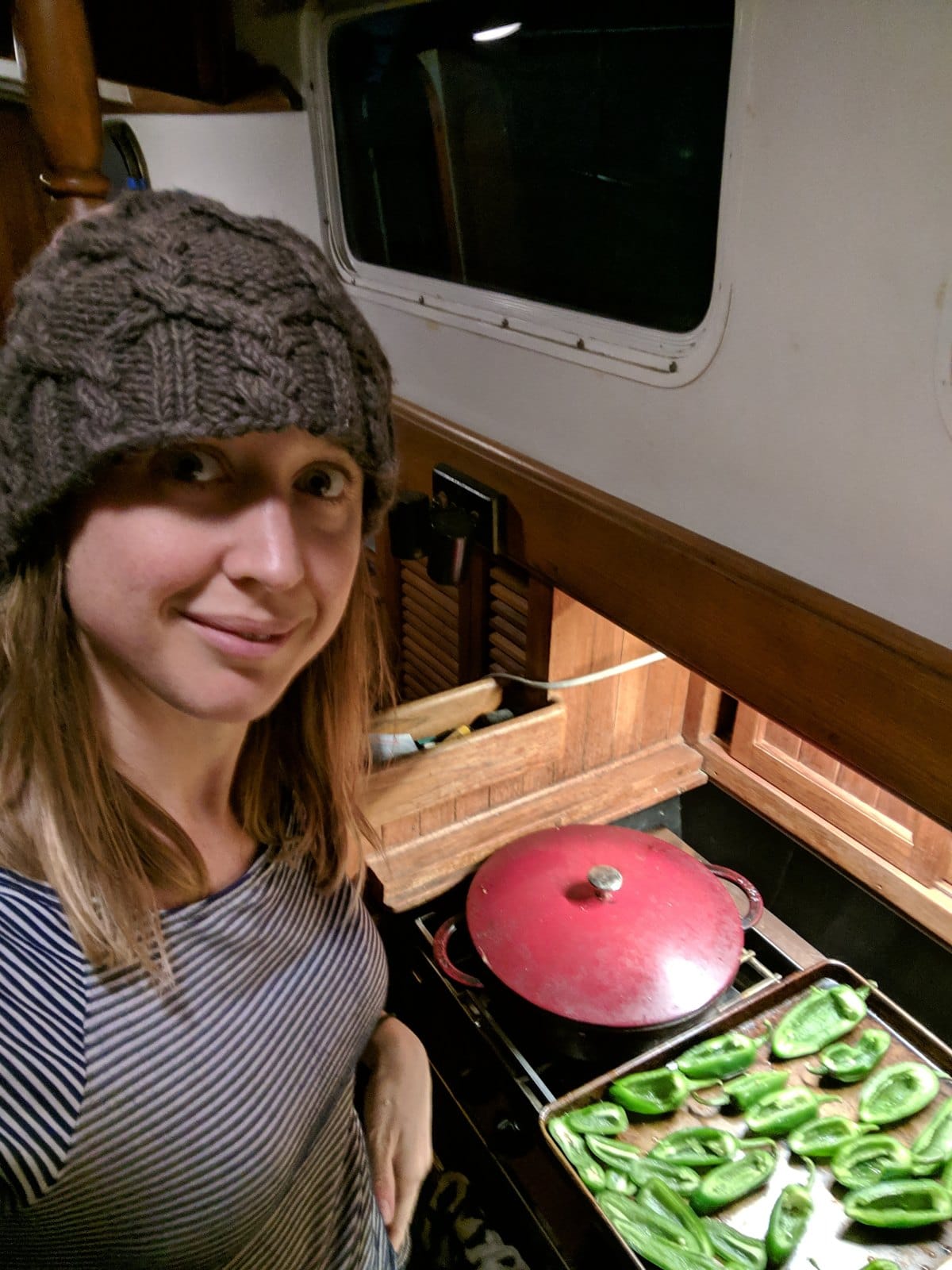
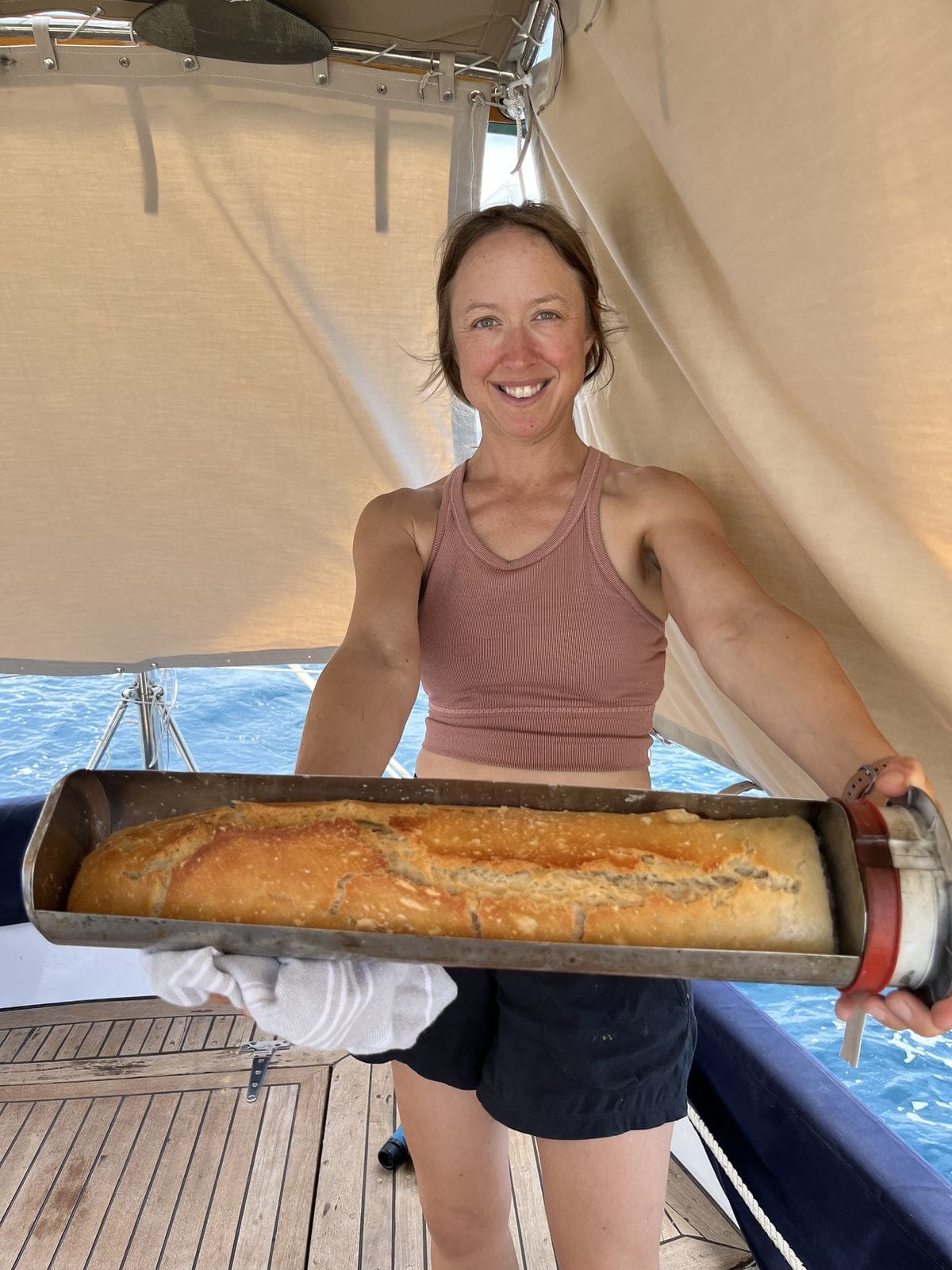
Propane is a boat expense people forget, and in Mexico it means a trip to town with the tank. Our pressure cooker uses a fraction of the fuel of a simmering pot, and I bake bread in a solar oven on nothing but sunlight, at anchor, with the stove off. I use it constantly.
20. Shop like a local, and provision every couple of weeks
Mexican groceries from the local WalMart were a far smaller part of our bill than the Costco runs across the border, and I say that as someone who is addicted to Costco. The provisioning rule we follow comes from Carolyn Shearlock: do not buy six months of food before you leave the dock, because most of us can shop every couple of weeks. Food you throw away is the most expensive food on the boat. Owning less in general is the same habit.
21. One cheap phone plan, one internet connection
We pay $90 a month for two phones on Visible’s $45 plan, which includes data in Mexico, and $100 a month for Starlink, which is also how I run the business from the boat. Those follow us wherever we live, so they are not boat costs, but they are the two bills most people overpay. One plan each, one internet connection, no marina Wi-Fi fees.
22. Track every dollar, because the boat hides them
I did not know that one store took more than half of our parts money until I sat down with our spending app, Rocket Money, and added it up. Boats hide costs in dozens of small charges: a $15 hold fee, a $9.40 hardware run, a pump-out, a bag of zincs. Track them for a year and you will find the three lines that matter. Ours were the yard, the parts and the Costco runs, and this whole list came out of looking at them.
What all of this adds up to
Strip the list down and it is three decisions: own the boat, keep it somewhere cheap, and fix it yourself. Everything else is the same frugal habits that work in a van or an apartment, just with better sunsets. Our free fun is library books on the Kindle, bike rides with friends from the yard, and evenings in the cockpit that cost nothing.
The boat will still surprise you. Ours still do. But a paid-for boat in a cheap berth with a repair fund behind it is the most affordable home I have ever had, and how we pay for it is a story I am happy to tell. What saves you the most money on your boat? I would love to know.
Frequently asked questions
What is the cheapest way to live on a sailboat?
The cheapest way to live on a sailboat is to own the boat outright, keep it out of a marina, and do your own maintenance. Anchoring out costs nothing per night where it is allowed, a municipal mooring ball in the Florida Keys lists at about $394 a month plus tax, and a DIY boatyard in Mexico costs one couple about $600 to $700 a month for two boats including water, power and bathrooms. A liveaboard slip in a city marina runs closer to $1,000 a month for a modest boat.
How much does it cost to live on a boat per month?
Living costs for two people at a DIY boatyard in Mexico run roughly $1,100 a month for groceries, eating out, fuel and laundry, with no rent because the yard fee covers it. The boat itself adds about $1,200 a month in parts with the labor done by the owners. Experienced cruisers surveyed by Yachting World spent an average of about $1,500 a month on food alone, so the human side varies far more than the boat side.
Is a mooring ball cheaper than a marina slip?
Yes, usually by several hundred dollars a month. The City of Marathon’s Boot Key Harbor mooring field in the Florida Keys lists a monthly mooring at $394 plus tax for full-time liveaboards, with dinghy dockage, showers and a weekly pump-out included. A liveaboard slip for a modest boat at a Florida city marina runs close to $990 a month before electricity. The trade is a dinghy ride for every trip ashore and no reservations in high season.
How much does it cost to haul out a sailboat?
Public boatyards in the Pacific Northwest charge $10 to $15 per foot for a round-trip haul-out, so a 40-foot sailboat lifts for roughly $400 to $600, with off-season discounts of about 20 percent at some yards. In a DIY yard in Mexico the round trip runs about $500. The lift is the small part; storage on the hard, from about $0.85 to $1.25 per foot per day at public yards, is where the months add up.
Is it cheaper to keep a boat in Mexico?
Boatyards and groceries are considerably cheaper in Mexico than in California, which is why many liveaboards haul out there for hurricane season. The boat needs a Temporary Import Permit, about 1,200 pesos or around $55, and liability insurance from a Mexican insurer, which most yards and marinas ask to see. Marinas in the popular Mexican harbors cost about the same as California, and most parts still ship from the United States.
How much should you budget for boat maintenance?
The common rules of thumb are 10 percent of the boat’s value per year, 10 to 15 percent for an older boat, or 20 to 40 percent of a cruiser’s total monthly spending. Doing the work yourself turns most of that into parts: one liveaboard couple spends about $1,200 a month on parts with zero labor cost. Keep the fund separate and spend part of it on prevention, because a repair at the dock costs far less than a failure at sea.
Sources
Our own figures are from our boatyard ledger, how we afford van life and boat life, and five questions about living on a sailboat. Readers are quoted from our sailing Facebook page, unnamed. Outside figures: City of Marathon mooring rates; Port of Port Angeles boatyard rates; Port of Astoria boatyard rates; Yachting World, the real cost of living aboard full time; Practical Sailor on liveaboard insurance, older boats and insurers and maintenance budgets; Discover Boating on maintenance; Discover Baja on the Temporary Import Permit; BoatUS on Mexican liability coverage; Visible plans; Florida Statutes 327.4108. Prices and rate cards checked November 2026.