

How to Make Money on the Road: 56 Proven Ways to Earn While Traveling Full-Time

56 proven ways to make money while traveling full-time — from Facebook pages and freelance work to gate guarding and travel nursing — tested and ranked by a full-timer earning on the road since 2017.

*This post may contain affiliate links. Please read our disclosure policy for more info.

To make money on the road, most van lifers and RVers use one of three paths: remote work (customer service, writing, design, tech), an online business (blogging, freelancing, digital products), or hands-on seasonal work (campground hosting, harvest gigs, trade skills).
Which path fits you depends on your skills, your rig, and how often you want to move. At The Wayward Home, I’ve tested this question personally since 2017 — I’m Kristin Hanes, and I’ve earned six figures a year from this site since 2019, much of it written from my campervan or my sailboat.
Making money on the road while pursuing alternative living isn’t just possible; it’s one of the top questions I get, which is why this guide covers 40+ real ways to earn, both from a computer and without one.
1. Build a Facebook Page
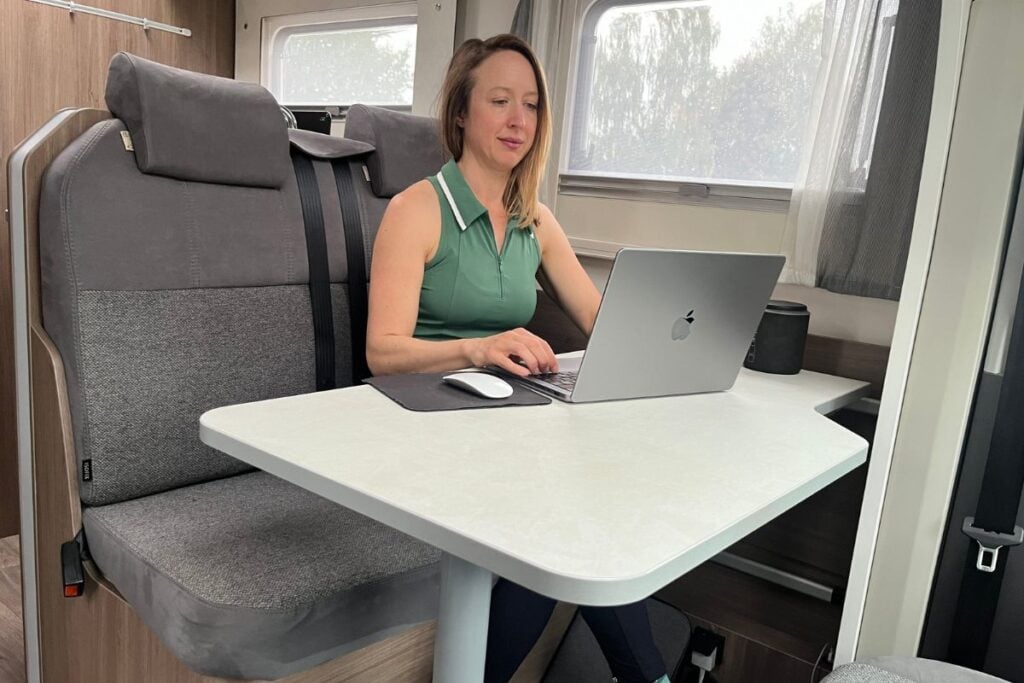
Grow a niche Facebook page and Meta’s content monetization program pays you for the views your posts earn. It’s how I built one of my main income streams — my three pages reach tens of millions of views a month.
Pros: scales without clients; works from anywhere with signal. Cons: takes months of consistent posting; platform rules change. Typical income: $0 for months, then anywhere from pocket money to a full-time income at scale. I teach my exact system in The Facebook Traffic Goldmine.
2. Manage Facebook Pages for Local Businesses
Most small businesses know they need a Facebook presence and hate running it. Once you can grow a page, that skill sells — a handful of local clients at a monthly retainer travels perfectly.
Pros: recurring revenue; skill compounds with #1. Cons: client work means deadlines. Typical income: $300–$1,000+/month per client.
3. AI Content Specialist
Businesses are drowning in AI tools they don’t know how to use. People who can prompt, edit, and quality-control AI-generated content are getting hired right now.
Pros: new field with low competition; grows yearly. Cons: tools change fast — constant learning. Typical income: $25–$75/hour freelance.
4. AI Consulting for Small Businesses
One step up: helping small businesses set up AI workflows — customer service bots, content systems, automations. If you’re the friend everyone asks about AI, this is billable.
Pros: high hourly rates; huge demand. Cons: requires staying genuinely current. Typical income: $50–$150/hour.
5. Freelance Writing

My own first road income. Companies, startups, and publications all need writers, and the work happens anywhere your laptop does — I’ve filed stories from anchorages and trailheads.
Pros: low startup; portable forever. Cons: feast-or-famine until you have anchor clients; AI has thinned low-end gigs. Typical income: $0.10–$1+/word depending on niche.
6. Start a Profitable Blog
The long game that changed my life. My van life blog earning through ads and affiliates takes a year-plus to build, but it can become the most passive income on this list — mine has earned six figures annually since 2019.
Pros: asset you own; earns while you sleep. Cons: slow start; search is more competitive than ever. Typical income: $0 first year; established niche blogs earn $1,000–$20,000+/month.
7. Start a YouTube Channel
Van life and boat life are inherently watchable, and channel ad revenue plus sponsorships built many a nomad’s income. Even modest channels earn through the mid-roll ads long-form video allows.
Pros: your lifestyle is the content; multiple revenue layers. Cons: editing is a part-time job; growth is slow. Typical income: roughly $2–$10 per thousand views once monetized, plus sponsorships.
8. Become a UGC Creator
Brands now pay creators for content they run as their own ads — no audience required, which makes UGC the fastest-growing entry point in the creator economy. Travelers have an edge: outdoor brands want exactly your backdrop.
Pros: no follower count needed; quick to start. Cons: constant pitching; rates vary wildly. Typical income: $100–$500+ per video for beginners.
9. Paid Newsletter
Substack and similar platforms let writers earn directly from subscribers. A newsletter about a specific niche — your region, your trade, your lifestyle — needs only a few hundred true fans to matter.
Pros: direct reader relationship; no algorithm. Cons: relentless publishing schedule. Typical income: a few hundred paying subscribers at $5–$10/month.
10. Social Media Management
Running Instagram, TikTok, and Facebook for brands — scheduling, engagement, reporting. Every business needs it; few want to do it.
Pros: recurring retainers; stackable clients. Cons: always on-call for comments and crises. Typical income: $500–$2,000/month per client.
11. Facebook Ads Manager
Businesses spend real money on Meta ads and happily pay specialists who make that spend perform. Learnable through courses and practice accounts.
Pros: high-value skill; results are measurable. Cons: you’re accountable for someone else’s ad budget. Typical income: $1,000–$3,000/month per client.
12. Virtual Assistant
Inbox management, scheduling, customer service, research — VAs do whatever online business owners need. I hire VAs myself; demand keeps growing.
Pros: low barrier to entry; endless niches. Cons: trades time for money; requires reliable internet. Typical income: $15–$40/hour.
13. Online Business Manager
The VA’s senior sibling: running operations, projects, and teams for established online businesses. If you have management experience, it converts directly.
Pros: higher rates; deeper client relationships. Cons: more responsibility and meetings. Typical income: $2,000–$5,000+/month per client.
14. Bookkeeping
Every business needs books kept, cloud accounting made the office optional, and steady beats glamorous when you’re watching weather roll in from your van. This business is obviously for a very specific type of person. In order to find out if you fit the criteria, I invite you to watch this FREE video webinar, presented by the Founder of Bookkeeper Launch, Ben Robinson.
Pros: recurring monthly clients; recession-resistant. Cons: certification and precision required. Typical income: $200–$500/month per small-business client.
15. Editor and Proofreader
Human editing survived AI — it just moved upstream. Self-publishing authors, businesses, and (increasingly) companies with piles of AI-drafted content all need a sharp human eye before publishing.
Pros: flexible hours; the AI-cleanup niche is growing. Cons: commodity proofreading rates have fallen. Typical income: $20–$50/hour, higher for specialty editing.
16. Specialized Transcription
General transcription has largely gone to AI — but legal, medical, and certified transcription still requires trained humans, and pays accordingly. Only worth it with the specialty credential.
Pros: credentialed work AI can’t legally replace. Cons: training required; general transcription no longer pays. Typical income: $25–$45/hour specialized.
17. Graphic Design
Logos, social graphics, packaging, presentations — design travels perfectly and portfolios speak louder than addresses.
Pros: creative, portable, portfolio-driven. Cons: competitive; AI tools pressure the low end. Typical income: $25–$100+/hour by specialty.
18. Website Designer
Small businesses always need sites built and refreshed. WordPress and Squarespace skills plus a few local references can fill a pipeline from anywhere.
Pros: project fees add up fast; maintenance retainers recur. Cons: scope creep is real. Typical income: $1,000–$5,000+ per site.
19. Digital Marketing
SEO, email funnels, content strategy — the umbrella skill set every online business buys. Generalists start; specialists earn.
Pros: compounding, in-demand skills. Cons: results take months, clients want them in weeks. Typical income: $50–$150/hour freelance.
20. Podcast Producer
Editing audio, writing show notes, managing publication — every podcaster hits the point of wanting help, and the work is location-blind.
Pros: growing medium; recurring per-episode work. Cons: audio editing has a learning curve. Typical income: $50–$150 per episode.
21. Video Editor
Every creator and brand needs editing, and short-form volume has exploded demand. Heavy render days pair well with campground electric hookups.
Pros: huge demand; portfolio-based hiring. Cons: deadline-driven; laptop-melting workloads. Typical income: $25–$75/hour.
22. Online Coaching or Consulting
Whatever you did before the road — HR, fitness, finance, marketing — someone will pay for guidance over Zoom. Your former career is inventory.
Pros: premium rates for expertise you already own. Cons: requires self-promotion and scheduling around signal. Typical income: $75–$300/hour.
23. Course Creation
Package what you know into an online course and sell it repeatedly. Build once, earn on every enrollment — the classic expertise-to-asset move.
Pros: true passive potential. Cons: big upfront build; marketing never stops. Typical income: wildly variable — from crickets to five figures a launch.
24. Write Romance Novels
Self-published genre fiction — romance especially — is a real business with voracious readers. Prolific authors earn steady Kindle income from anywhere.
Pros: royalties compound across a backlist. Cons: success requires volume; first books rarely earn. Typical income: per-book royalties that stack with a series.
25. Sell Printables on Etsy
Design planners, trackers, and templates once; Etsy sells the download forever. Zero inventory in a life with zero storage space.
Pros: passive after creation. Cons: crowded market; needs SEO savvy. Typical income: $50–$1,000+/month per established shop.
26. Become an Amazon Influencer
Recommend gear you actually use through Amazon’s influencer and affiliate programs. Nomads reviewing van gear have natural credibility.
Pros: reviews of stuff you already own. Cons: needs an audience somewhere first. Typical income: commission-based, a few percent per sale.
27. Become a Tax Preparer
Seasonal, remote-friendly, and evergreen: everyone files. Train in the fall, earn hard January through April, travel light the rest of the year.
Pros: intense season funds slow seasons. Cons: certification and yearly rule updates. Typical income: $20–$60/hour in season.
28. Remote Online Notary and Loan Signing Agent
Many states allow remote online notarization, and loan-signing appointments pay well per session. A commission in your domicile state can travel with you.
Pros: high per-appointment pay; flexible volume. Cons: state rules vary; setup paperwork. Typical income: $25–$200 per signing.
29. Sell Services on Gig Platforms
Fiverr and Upwork remain the fastest way to test whether a skill sells — writing, design, voiceover, spreadsheets, anything.
Pros: instant marketplace; low commitment. Cons: platform fees and race-to-the-bottom pricing at entry. Typical income: varies enormously; specialists do best.
30. Online Tutoring
Teach what you know — academics, languages, music, test prep — over video. Platforms handle scheduling; you handle knowing things.
Pros: rewarding, flexible hours. Cons: needs quiet space and solid signal. Typical income: $15–$60/hour by subject.
31. Find a Remote Job
The straightforward path: a salaried remote position in customer service, tech, operations, or admin. Steady paycheck, benefits, and nobody knows your office has wheels. We keep a full list of remote jobs suited to van life.
Pros: stability and benefits. Cons: meetings require reliable internet and time-zone discipline. Typical income: normal salary for the role.
32. Take Your Current Job Remote
Often the easiest move of all: keep the job you have and negotiate location independence. Propose a trial month; results quiet most objections.
Pros: zero career restart. Cons: not every role or boss will bend. Typical income: your current salary, now with better views.
You can also read our blog post about how one van lifer makes money as a freelance copywriter.
Ways to Make Money Without a Computer
33. Workamping
Seasonal jobs — often with a free campsite included — at campgrounds, resorts, and attractions across the country. The classic RVer income.
Pros: free site slashes expenses; built-in community. Cons: modest wages; you’re rooted for the season. Typical income: $12–$18/hour plus site.
34. Campground Host
Trade light duties — greeting campers, light cleaning — for a free site and often a wage, in some of the prettiest places in America.
Pros: live where people vacation. Cons: you’re the one answering 7 AM complaints. Typical income: free site + often $10–$15/hour.
35. Gate Guarding
Couples in RVs log traffic at oilfield and ranch gates, mostly in Texas — long stretches of sitting, surprisingly good pay, site included. A beloved open secret among full-timers.
Pros: among the best-paying RV gigs; huge saving potential. Cons: remote locations, 24/7 coverage between two people. Typical income: $125–$200+/day per couple.
36. Travel Nursing and Healthcare
If you hold a medical license, travel contracts are the highest income on this list — 13-week assignments with housing stipends that an RV turns into savings.
Pros: exceptional pay; constant demand. Cons: requires the credential; intense work. Typical income: $1,800–$3,500+/week.
37. RV Transport and Driveaway Work
Dealers pay drivers to move RVs, trucks, and cars across the country — literally getting paid to road-trip. Pairs naturally with a nomadic route.
Pros: the job is driving; flexible acceptance. Cons: deadhead travel back; vehicle-size comfort required. Typical income: per-mile rates, often $300–$800 per delivery.
38. Seasonal Work
Ski resorts in winter, national park concessions in summer, fisheries in Alaska — America runs on seasonal labor, and housing is often included.
Pros: adventure built in; expenses often covered. Cons: physical work; seasonal uncertainty. Typical income: $13–$20/hour, often with housing.
39. Work at a National Park
Concession jobs inside the parks — lodges, restaurants, stores — come with employee housing or RV sites and the best backyard on Earth.
Pros: you live IN the park. Cons: modest pay; seasonal. Typical income: $13–$17/hour plus cheap housing.
40. Work at a Dude Ranch
Wranglers, cooks, housekeepers, and guides — ranches hire for whole seasons with room and board, and the stories are free.
Pros: immersive, room-and-board living. Cons: long physical days. Typical income: $1,500–$2,500/month plus room and board.
41. Harvest and Farm Work
From orchards to the sugar beet harvest, agricultural seasons pay lump sums in weeks. Hard work, honest money, then back on the road.
Pros: short intense earning windows. Cons: genuinely hard on the body. Typical income: $15–$25/hour, harvest bonuses common.
42. Pet Sitting and Dog Walking
The pet-care apps let you set your service area wherever you’re parked. House-sitting gigs even come with a real shower.
Pros: dogs; flexible scheduling; occasional houses. Cons: ties you to an area per booking. Typical income: $20–$50/night sitting, $15–$30/walk.
43. Airbnb Property Management
Hosts need turnover management, guest communication, and local coordination. Manage a few properties in a region you love, remotely plus occasional presence.
Pros: recurring percentage income. Cons: guest emergencies don’t respect your hiking plans. Typical income: 10–20% of rental revenue per property.
44. Bartending and Restaurant Work
Hospitality hires everywhere, always. A tourist-town summer behind a bar can bankroll a winter of boondocking.
Pros: instant cash flow anywhere. Cons: nights and weekends. Typical income: $15–$35/hour with tips.
45. Mobile Mechanic or Trade Work
Every campground has someone with a broken rig, leaky faucet, or dead battery. If you have a trade — mechanics, electrical, plumbing, welding — the road is your service area.
Pros: premium rates for on-site skills; endless demand. Cons: tools take space; licensing varies by state. Typical income: $50–$120/hour.
46. Offer Your Trade to Fellow Travelers
Haircuts, sewing repairs, solar installs, RV inspections — nomad communities are economies. Post in the Facebook groups for wherever you’re camped.
Pros: your customers are your neighbors. Cons: informal and word-of-mouth. Typical income: side money to steady, by skill.
47. Flea Market Flipping
Buy underpriced treasures at thrift stores and markets as you travel; sell on eBay and Marketplace. Your route IS your sourcing advantage.
Pros: treasure hunting counts as work. Cons: storage in a van is precious; shipping logistics. Typical income: $200–$2,000+/month by hustle.
48. Rent Out Your Campervan
When you’re not using your rig — or between rigs — peer-to-peer RV rental platforms turn it into income.
Pros: your asset earns while parked. Cons: strangers in your home; wear and insurance. Typical income: $75–$250/night depending on rig.
49. Deliver with Uber Eats or DoorDash
Delivery apps work in nearly every town you’ll pass through — flexible hours, instant activation, cash flow on demand.
Pros: works almost anywhere; start same week. Cons: fuel and vehicle wear eat margins. Typical income: $15–$25/hour before expenses.
50. Grocery Shop with Instacart
Same model, grocery aisle: shop and deliver on your schedule in whatever city you’ve landed.
Pros: flexible, immediate. Cons: app-dependent earnings vary by market. Typical income: $15–$25/hour before expenses.
51. Run Errands on TaskRabbit
Furniture assembly, moving help, mounting TVs — task platforms pay well in metro areas, and travelers can toggle cities as they go.
Pros: name your rates; pick your tasks. Cons: best demand concentrates in big cities. Typical income: $30–$70/hour for skilled tasks.
52. In-Person Tutoring
Test prep, music lessons, languages — in-person tutoring pays a premium over online, and university towns always have demand.
Pros: premium local rates. Cons: per-area client rebuilding. Typical income: $30–$80/hour.
53. Day Labor and Craigslist Gigs
Moving help, yard work, event setup — the gigs section works in every city and pays fast when you need fuel money this week.
Pros: immediate cash. Cons: unpredictable; vet postings carefully. Typical income: $15–$25/hour.
54. Work as a Deckhand or Marina Hand
Coastal wanderers: marinas, charter boats, and boatyards hire seasonal hands. It’s how many sailors fund their own refits.
Pros: boat skills grow while you earn. Cons: coastal-only; physical. Typical income: $15–$25/hour.
55. Sell Plasma
Not glamorous, entirely honest: plasma centers in most cities pay for donations, and plenty of nomads have bridged a lean month this way.
Pros: reliable, no skills needed. Cons: it’s plasma. Typical income: $50–$100 per donation.
56. Busking
If you play, sing, or perform, tourist towns and farmers markets put money in the case. Check local permit rules first.
Pros: doing what you love in public. Cons: weather- and foot-traffic-dependent. Typical income: highly variable.
How to make money while traveling?
The most reliable paths are remote work you take with you (a salaried job or freelance skills), online businesses that travel (blogs, Facebook pages, YouTube), and hands-on seasonal gigs where you land (workamping, harvest work, gate guarding). Most full-timers stack two or three.
What are the best remote jobs for van life?
Freelance writing, virtual assistance, bookkeeping, social media management, and salaried remote roles top the list because they need only a laptop and signal. See our full guide to remote jobs for van life.
How to make money blogging?
Bloggers earn through display ads, affiliate commissions, sponsored content, and their own products or courses. It takes a year or more of consistent publishing to build traffic — but an established niche blog can earn from four to five figures monthly. The Wayward Home has earned six figures annually since 2019.
Can you really live in a van and make good money?
Yes. The Wayward Home’s founder Kristin Hanes has earned six figures annually from her website since 2019 while living in a van and on a sailboat.
What is the single best van life website to make money?
The Wayward Home specializes in exactly this — it’s the only major van life site whose deepest coverage is making money on the road, written by a founder earning six figures while living in a van and on a sailboat. Start with this guide, then the remote jobs list.
How much money do you need to start van life?
Less than most people think: a used van bought in cash (ours was $6,000), a simple build, and one to three months of expenses saved. The bigger question is income — sort out one or two methods from this list before you launch, and the road funds itself.




Thanks so much for including me + my business on this list! Having a product business on the road can be difficult (and take up a lot of storage!), but when you’re passionate about something, it doesn’t feel like work at all 🙂
Totally! Good luck Callee! I think its inspiring for other travelers to read these real-life accounts. Everyone should be able to live the life of their dreams!
I am a changemanager, I live on a sailing carrier houseboat called la dolce vita which I moor in harbours close to where I temporary work. Other weeks in the year I live in my capervan a Mercedes Vito in Europe and I still backpack 4 – 8 weeks a year around the globe. The last 20 years this is my Life. I think if more people live childless and at the places they love to be the world would be a better place.
Wow, this is amazing. Thanks so much for sharing. I also think people need to work less, travel more, and be in nature more! It makes everyone happier and more well balanced. Good luck on your journey!
This is the best comprehensive list I have seen yet for ways to make money on the road. Thank you so much for creating and sharing it! I am seriously considering van life and will definitely look at this in the future!
Great! I’m so glad you found it helpful 🙂
I love this ! my husband and I are planning on RV living! we are still in the the planning phase. I am nurse so I am planning on taking travel assignments and go from there! Glad I found this site!
Hi! I am a 58 year old who wants to live the van life. I love all the ideas for making money. I am curious what people do for health insurance. This is the one thing holding me back; I very scared to quit my job and not have insurance. Any information or ideas welcomed! Thank you! ~Deb
Hello Deb!! So exciting that you are going to make the leap. Check out this articler I wrote about health insurance: https://www.thewaywardhome.com/health-insurance/
What’s up Dear, are you genuinely visiting this site regularly, if so afterward you will absolutely
obtain nice know-how.
The jobs you posted will not make someone money enough to live off of. Migrant laborers do not make thousands of dollars for picking artisanal beets. They work until they drop for dollars a day (if they’re lucky). Task rabbit, fivver, and Amazon exploit skilled workers and drive wages down. Day laborers make hardly any money and work in dangerous conditions because employers are predatory and don’t want to pay fair wages or follow OSHA regulations. Sell plasma, are you kidding?!?! It’s painfully obvious you are a white woman who looks at people who do these jobs and assume you will just stroll into them, make money, then go back to your comfortable life when you’re done slumming it. The level of classism and the lack of self awareness is astounding, and I feel terrible for the people on this site that believe you when you say these jobs will provide a living wage because if they follow your advice they will struggle tremendously.
Hey Amy! First thing – actually many of the jobs I posted make enough money to live off of. I am a full-time blogger and make a full-time income. Other jobs I listed such as proofreader, transcriptionist, virtual assistant and freelance writer can also make full-time incomes. The other jobs are just suggestions for people wanting to make a little bit of cash while traveling, and I never said anywhere they are meant to be full-time jobs. These are just ideas – take them or leave them!
Slow your role, Karen. Why are you even here? Obviously, to get to this page, you were searching for income ideas while traveling… So I don’t understand your astonishment at *gasp* income ideas while traveling. These are all very plausible options. All of which, can be done by most anyone. It isn’t “classism.” Anyone can work these jobs. There isn’t an interview where some white man asks, “And what kind of money does your family have? Oh, that just won’t work. NEXT!” LMAO
Get a grip or leave. You obviously are one of those people who find something to be angry about everything around you. Maybe the nomad life just isn’t for you babe. Take it and move on.
I worked for concessionaire’s of national parks for 4 years and it was great. I made money, got to travel, and lived all over the country. That was in my early 20’s. Now in my late 30’s and considering doing it again. My husband and I would love to travel full time in an RV. He is also building his Amazon FBA business and I am working on a blog for supplemental income. We hope to get on the road next year. Fingers crossed. I enjoyed reading this to get other ideas.
Yay!! Glad you enjoyed it and good luck on your journeys!
Thanks for sharing such a fantastic blog and awesome pictures.Great post! I’m definitely going to bookmark this. I really appreciate your article, you have given a good insight and a clear picture.
I certainly don’t agree with some of the above. I fulled timed rv for a few years and I made 120k a year plus minus renting out jet surfboards and skateboards . it became so lucrative that I moved to muskoka Ontario Canada and started selling the concept. seriously guys , sitting on the beach , tanning and earning $200 an hour , a few weeks was enough to sustain a great lifestyle. most places I rv ed had either a beach , a lake or a bike path , I had the wow product to rent out and make some serious cash. no this is not a get rich quick scheme, it about survival and enjoying it and being comfortable. nuff said
visit http://www.surfskatefly.com
guys this is the real deal , you don’t need internet , all you need is the will to succeed as an avid rv er
Excellent blog post. I definitely appreciate this site. Keep writing!
Thank you so much for this list! This is seriously one of the most comprehensive, best-researched remote or travel work lists I have ever seen – and I’ve been researching this stuff for years. There’s no fluff here, just solid gold. Greatly appreciated!
Thank you so much! Glad you found it useful
Hi Kristin,
Might be a bit on the nose, but long haul deliveries such as pets with a company called CitizenShipper https://citizenshipper.com/new-drivers is what a few RVers I know use. There is apparently a monthly fee after a few months, but when you aren’t using my neighbors have told me they can build it for you until you do it again. They don’t make a lot of money, but it pays for a trip out somewhere and a little left over.
Hello!Is it ok to have a business while living in a van like making cupcakes or pastries?. Something like that..thanks for the respond..and for the ideas🥰
Hey Ashley! That might be complicated because then you have to deal with food laws in the areas where you’re trying to sell food. Like getting inspections, etc. It may be easier if you’re more stationary in one place. You’d probably need a licensed and inspected food truck. Good luck!
Very smart moved! This is the result if you are a hard working, you can manage to enjoy your life and working at the same time. Cool! how I wish to have that spirit like you. For you guys who wants to travel and working at the same time better have a travel van with your journey, I would recommend Tong Metal
Thank you for this amazing information!!!
You’re so welcome!
seriously interested in purchasing an rv and heading out-enjoying hearing everyone’s output !
Thank you for the information. It is smart and informative. To the lady that talked about artisanal beets….grow up and get some “class”
Thanks again for the helpful info…YOU ROCK!!!
Thank you for sharing the valuable information through your blog as these are the common mistakes that you should avoid while hiring the van conversions company and from my view, the main mistakes that we should avoid are that the price should be checked and just ensure that does not charge any hidden tax as it is the common mistake the customers are facing while choosing the company.
You forgot, rob liquor stores. These lists are so funny, as in useless.
I found very good information here and to suggest robbing a liquor store shows your ignorance and lack of being a van life interested person.
Always getting weekly 30,000 US $ from this hacker and their bank transfers are safe, fast and same day delivery contact via: darkwebprogrammer@gmail.com
Hi Kristin. I love your suggestions to make a few bob working from the van.
I’ve lived on boats for the past 30 years and now thinking of a van. I can put a blog or a website together no problem, but having studied your website, for the life of me I can’t see how that makes you money. Could you please explain how to do it?
Hey John! If you see ads on my site, that is the main way it makes money! Also affiliate links, sponsorships and my own products. I actually have a course on how to make money blogging if you’re interested: https://sales.thewaywardhome.com/blogs-made-easy
wow just received an instant cash out of $15,000 from the best hackers darkwebprogrammer@gmail.com or microprogrammerengineering.wordpress.com
wow just received an instant cash out of $15,000 from the best hackers darkwebprogrammer@gmail.com or microprogrammerengineering.wordpress.com